Kori Trek Guide
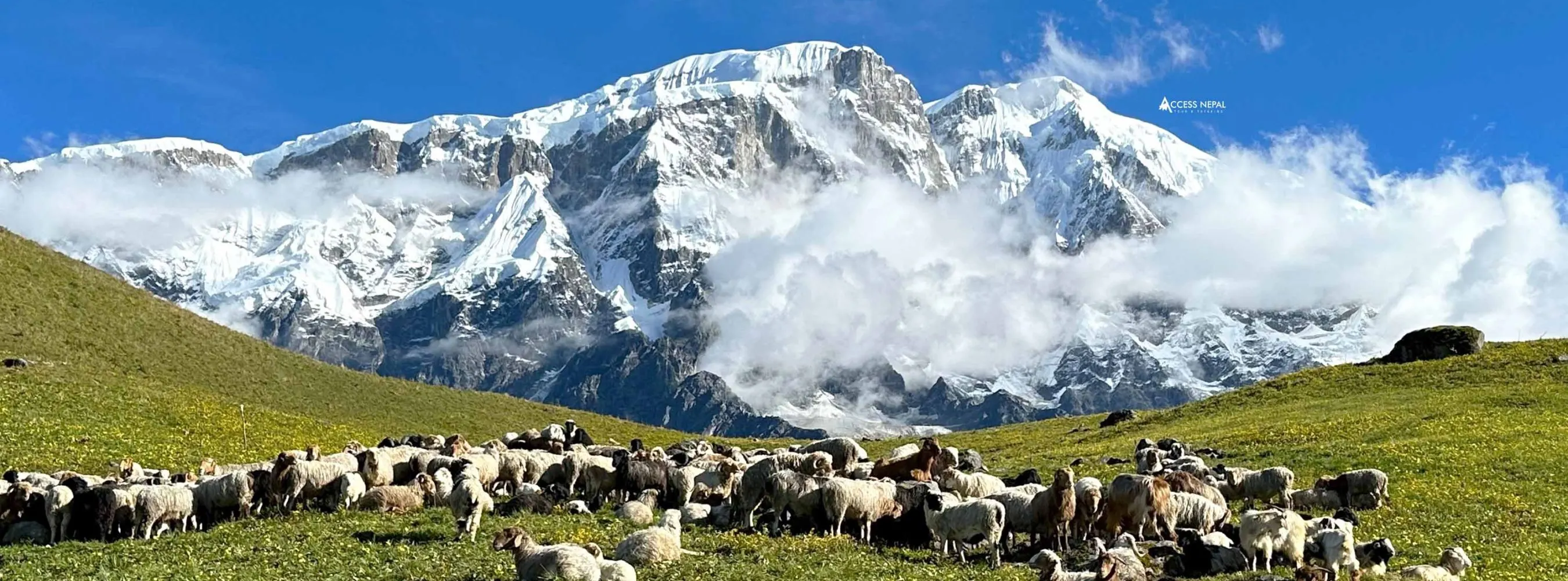
Kori Trek is a short and sweet off -the-beaten-path adventure. The trek takes you to the Annapurna Conservation Area and offers the most scenic views. The highlight of the Kori Trek is the grassy Kori Danda (Kori Hill) viewpoint (3,800 m). The trek officially starts from Sikles after a drive from Kathmandu/ Pokhara and passes by Gurung villages, rhododendron forests, streams, and lakes.
The Kori Danda Trek trail is one of the most breathtakingly beautiful adventures. Throughout the journey, views of Machhapuchhre, Annapurna II, and Lamjung Himal greet you with a smile. So, to help you enjoy this beautiful adventure safely, we have developed this Kori Trek Guide just for you. It will cover all the details regarding altitude, itinerary, permits, gear, safety, costs, and tips. With the help of this travel guide, you can enjoy this adventure to the fullest.
Which District is Kori Nepal in?
Kori Danda Trek is in the Kaski District. With a height of 3,800 meters, this hill is a grassy alpine meadow and the highest viewpoint located in the Kaski district. It is one of the best places to visit in November.
The trek starts from Sikles Village, which is at 1,980 m, and takes you to Kori Hill. From here, the elevation gain is strong (nearly 2,000 m). Many include a few stops in between or some direct climbs up.
Along the route, another good side trip is Kapuche Lake (2,546 m), famous as the world’s lowest-altitude glacier lake. Another highlight along the route is the clifftop tea-houses at “Nho-ta” (3,050 m) before topping out at Kori.
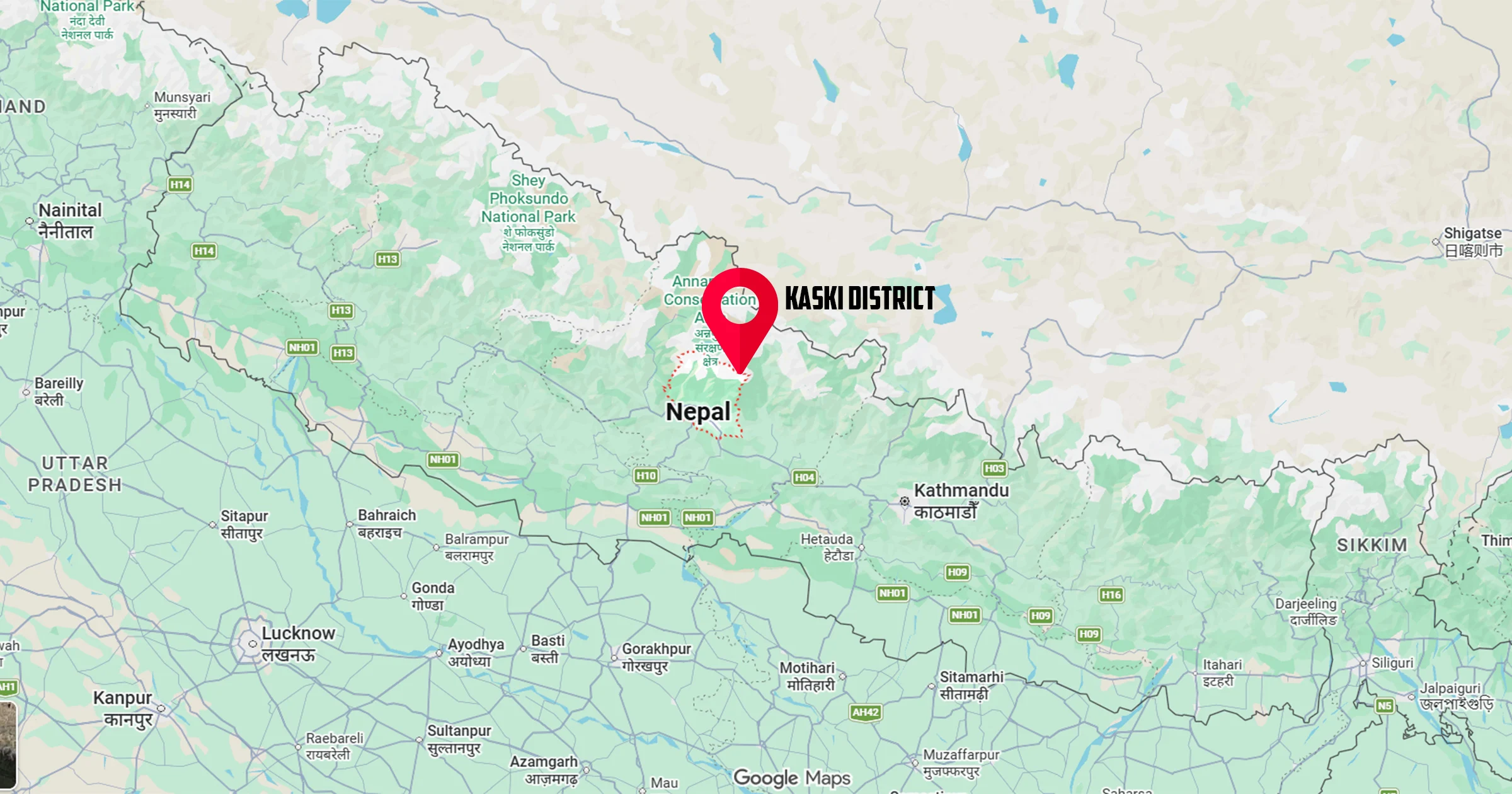
Locating the Kori Trek route in the Kaski District
To avoid altitude sickness, acclimatize well, drink lots of water, and follow the climb high, sleep low rule. The panoramic views throughout the journey are the best visual treat.
How far is Kori Hill from Pokhara?
Kori Hill is about 50 kilometers away from Pokhara. It is on the northeast side of the Pokhara valley. From Pokhara, you have to take a jeep ride about 40 km up to Sikles (trek gateway) and move ahead on foot.
The elevation gain is drastic, starting from Pokhara’s lakeside at 822 m to Kori Danda at 3,800 m. The altitude gain is nearly 3,000 m vertically. The drive to Sikles is off-road, making it challenging. For a round trip, it can take up to 80 km. For the hiking part, the total hiking distance from Sikles to Kori Hill (Sikles→Kori→Sikles) is about 30-40 km.
How many days is the Kori trek?
At Access Nepal Tours and Trekking, the Kori Trek is a 10-day package. Its itinerary goes at a gradual pace and altitude, safe with no drastic altitude gain. With acclimatization days and stops, this trek is done in 10 days. It is customizable to shorter or longer, however you want. Shorter itineraries, like the Kori Trek itinerary 4 days, are also available, but it’s not altitude safe.
The fastest Kori Trek itinerary, 3 days, follows this route: Pokhara→Sikles→Tasa→Kori→Sikles→Pokhara.
The standard itinerary of the Kori Trek at Access Nepal Tours and Trekking is:
- Day 01: Arrival in Kathmandu
- Day 02: Tourist Bus transportation from Kathmandu to Pokhara
- Day 03: Drive from Pokhara to Sikles
- Day 04: Trek from Sikles to Hugu Goth
- Day 05: Trek from Hugu Goth to Nohtha
- Day 06: Trek from Nohtha to Kori Danda
- Day 07: Trek from Kori Danda to Sikles
- Day 08: Drive from Sikles to Pokhara
- Day 09: Drive from Pokhara to Kathmandu
- Day 10: Final Departure from Kathmandu
How do you plan the Kori Hill Trek?
You can plan the Kori Hill Trek by choosing the ideal seasons, itinerary, and trekking agency. A good plan leads to a good adventure. Therefore, this is the essential part of the trek before going. The tips that will help you plan the Kori Hill Trek are given below:
- Choosing Optimal Season: Choose a travel window that offers perfect conditions. The peak trekking season in Nepal is spring (March-May) and Autumn (September-December). Both of these seasons offer favorable conditions for trekking. It brings stable weather conditions, blue skies, great surrounding mountain views, and colourful flowers dotting the whole region. It is best to avoid trekking in the monsoon (June-August) and winter (December-February) due to rain and poor visibility.
- Book your transport: Due to limited ticket availability and schedule conditions, it is best to book your transportation early. This helps you to follow the itinerary on time. If you are coming from Kathmandu, you have two choices: flying or bus. By flying, it takes 25-30 min to reach Pokhara, but a bit costly, and by bus it takes 7-8 hours, but much cheaper. You can choose either transportation depending on how much time you have and your budget. From Pokhara, you have to take another 3-5 hrs jeep drive (40 km) up to Sikles Village (1,980 m).
- Permits: Permits required for the Kori Danda Trek are the Annapurna Conservation Area (ACAP) and Trekker’s Information Management System (TIMS) card. You can easily obtain permits after arrival from the Nepal Tourism Board in Kathmandu or Pokhara.
- Local Guide: Having a guide for the Kori Danda Trek is strongly recommended. This route of Kori is a newly opened and poorly signposted route. Having a guide helps you to navigate the route, handle logistics, obtain permits, and know more about the region in detail. For more convenience, it is good to book with a trekking agency as they will handle and organize everything. At Access Nepal Tours and Trekking, the Kori Danda Trek package is all-inclusive and includes transportation, accommodation, meals, guides, porters, and permits.
- Physical Fitness: This is one of the most important parts of trekking. Kori Trek is a moderate-level trek. You have to be in good physical fitness, so you can complete this trek successfully. Therefore, to prepare for the trek, start training your body 1 or 2 months prior by doing exercises like walking and cardio (running, cycling). If you have previous trekking experience, then that will be perfect.
- Plan Itinerary: Do not choose an itinerary that is popular. Choose an itinerary that is sustainable and comfortable for you and your body. The 10-day itinerary is perfect for beginners, other experinced can customize it into 6,5,4, or 3-day trips as well. But the longer the itinerary, the better cause fast altitude gain can easily cause altitude sickness.
Kori Trek Guide on Gears and Packing List
Always pack smart and light. Carry only essentials and avoid overpacking. Packing list and tips for this trek are:
- Moisture-wicking base layers
- Warm fleece jacket
- Down jacket (provided)
- Waterproof jacket
- Mufflers, warm hat, gloves, & thermal socks
- High-mountain trekking boots
- Sleeping bag (rated to -5°C) (We provide free of cost upon request)
- Trekking poles
- Sunglasses & sunscreen (SPF 50+)
- Refillable water bottles (min. 2 L capacity)
- Purification tablets
- Energy bars and snacks
- First-aid kit
- Power bank and charger (carry extra batteries)
- Plastic bags for wet clothes
- Quick-dry towel
- Toilet paper & wet wipes
- Hand sanitizer
Above Sikles, rarely any shops are avilable and items are pretty expensive due to remote location. And only cash is accpeted, there is no ATMs above Pokhara.
Can I use an ATM card during the Kori Danda Trekking?
No, you can’t use an ATM card during the Kori Danda Trekking. ATMs and cards are only accepted in Kathmandu and Pokhara. For this trek, you must carry Nepalese rupees for transactions. Otherwise, there are no cards, and the online payment system is not available.
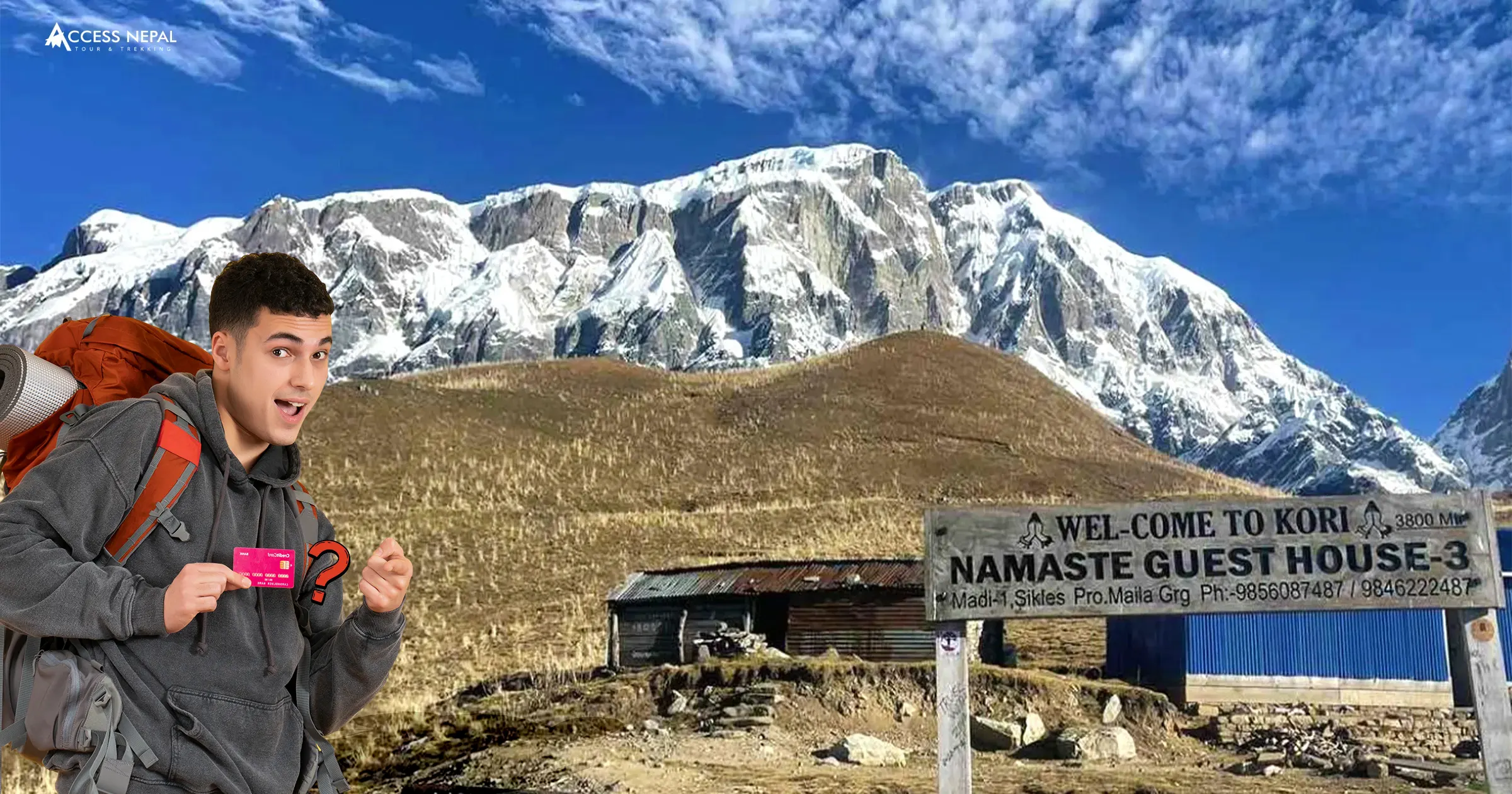
For convenience, allocate the cash needs depending on the typical daily cost. Carry an extra amount to be safe. It is best to withdraw or exchange money once you are in Kathmandu or Pokhara. Once you leave the cities, these facilities are not available.
Where to Store Items that are not Required during the Kori Danda Hike?
You can store items that you won’t need for the Kori Danda Trek at Access Nepal Tours and Trekking free of cost. Our package also includes porters, so besides your backpack, other items will be carried by your porter. But this is only applicable if you are trekking with us. Some hotels can also store your baggage for free or might cost small amount as well.
During the trek, it is best to carry a daypack with only the essential items you will need for the trek. Trekking with a heavy load won’t be easy or good, and it can drain your energy fast.
What are the Permits Required for the Kori Danda Trek?
You will need two permits for the Kori Danda Trek that are:
- Annapurna Conservation Area (ACAP) Permit: Cost around NPR 3,000 for foreign trekkers.
- Trekkers’ Information Management System (TIMS) card: Costs around NPR 2,000, which is also mandatory.
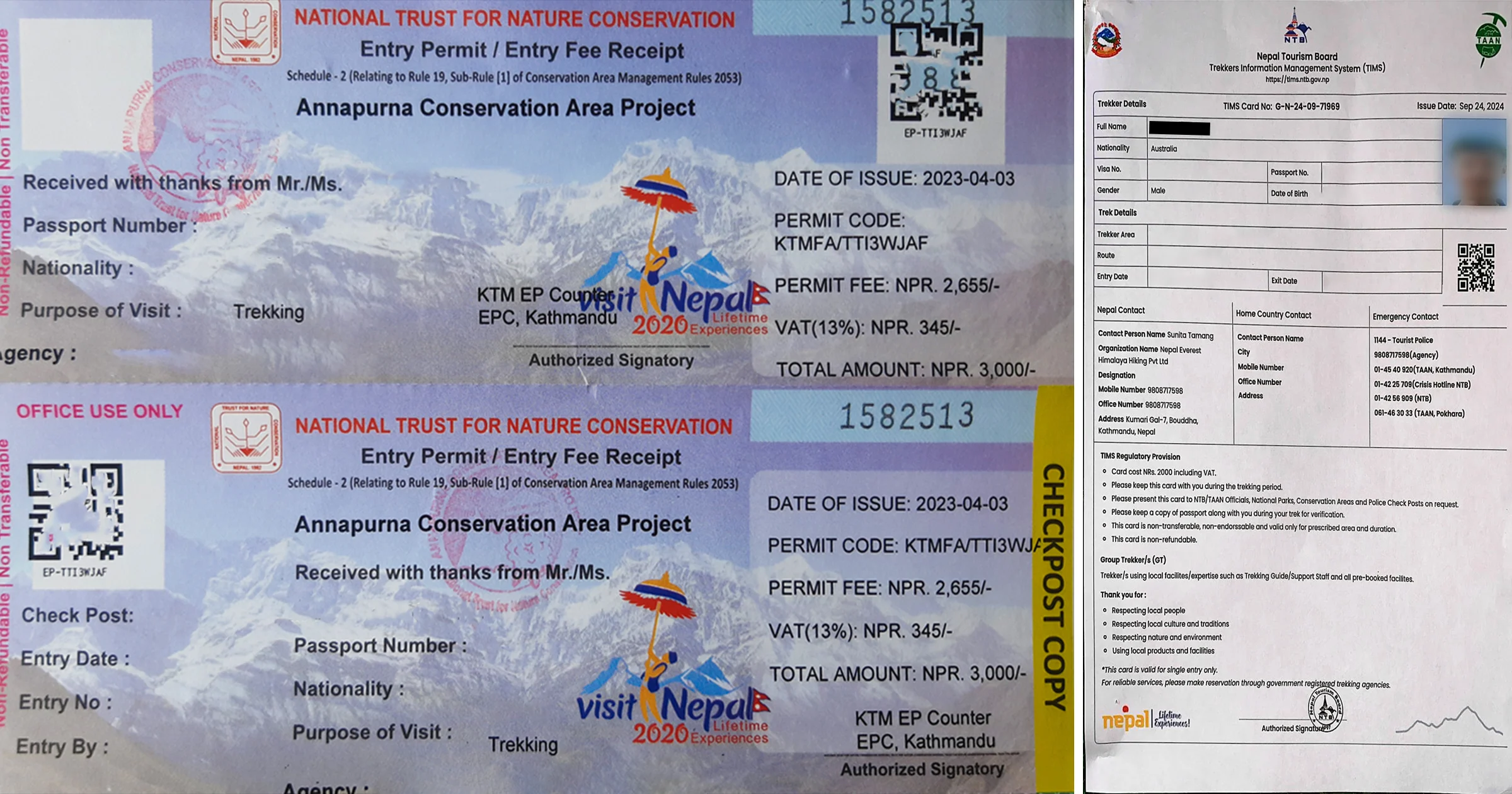
Sample of permit needed for Kori Trek
All these permits are included in the Kori Danda Trek package. Our team will handle all the applications and the obtaining process. However, if you are trekking solo, you can get it from Kathmandu or Pokhara at the Nepal Tourism Board office. To get permits, you must have a valid photocopy of your passport, visa, and passport-size photo. Always carry passport and permit copies in your pack.
What to Expect During the Kori Himal Trek?
The Kori Himal Trek is most famous for its scenic landscapes and grassy meadows. The less the crowd, just you and nature feels like trekking into your own adventure novel. It is one of the good budget trips to Nepal. The major highlights of this trek are:
- Gurung culture: During your Kori Danda Trek, you will trek through Gurung villages. Among many, Sikles is one of the largest Gurung villages. You can stay here and enjoy the authentic Gurung culture and the influence of Buddhism and Bon. It will be a good opportunity to learn something new and beautiful.
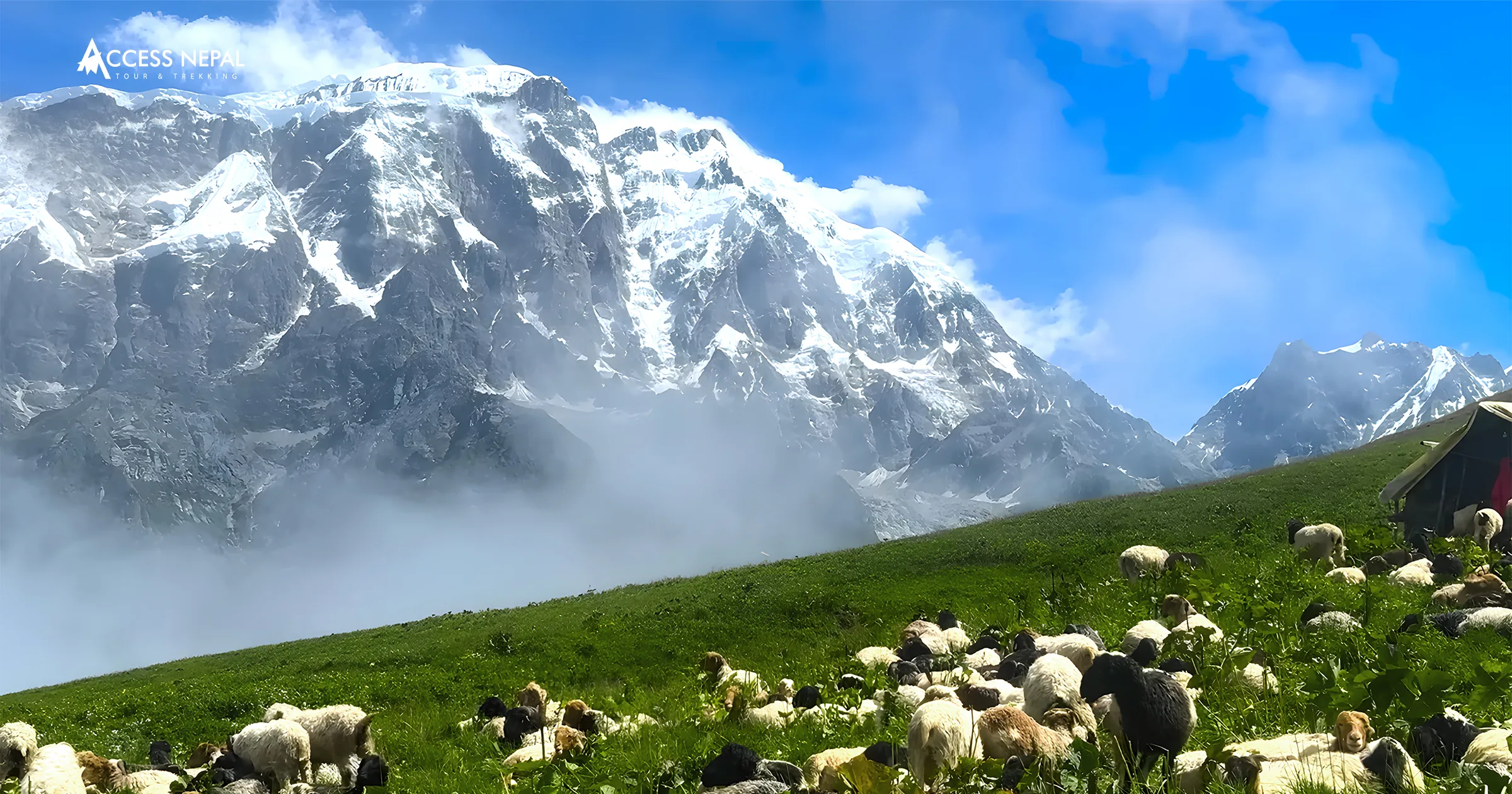
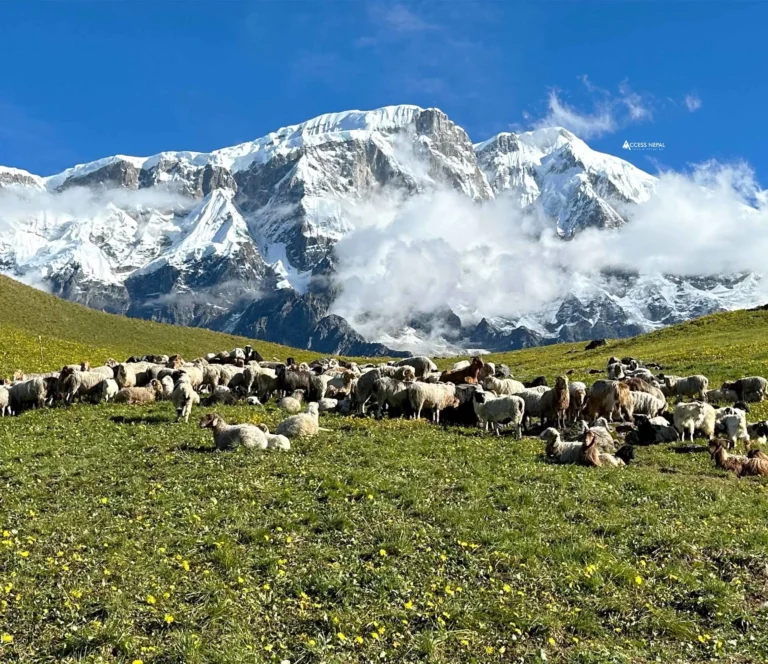
- Kori Danda: The main highlight is Kori Danda itself. It’s grassy meadows dotted with wildflowers surrounded by giant Himalayas. It’s an absolute picture-perfect. The whole open and wide meadow looks completely out of a movie. It’s best to visit in the spring. Monsoon is also fine, but the surrounding visibility can be poor.
- 360-Degree Panorama: From the top of Kori Danda, you will be surrounded by panoramas of the Himalayas like Machhapuchhre, Annapurna ranges, Manaslu, Lamjung, Poon Hill, and many more. Along the journey as well, mountains will accompany you.
- Forest and flora: The Kori Danda Trek route passes through oak and rhododendron forests. If you trek in the spring season, it feels like you are in paradise. The trails are dotted with colorful rhododendrons (red, pink, white) and wildflowers.
How Difficult is the Kori Himal Trek?
Kori Himal Trek is a moderate-level trek. It is beginner-friendly and suitable for anyone looking for adventure, which is gentle yet thrilling. Kori Trek is just a 10-day trek that offers majestic views and experiences within a short time. Its itinerary is suitable for trekkers who have a short time but still want some enjoyment and adventure. This Kori trek guide covers everything you need to get during this trek.
On average, the Kori Trek requires you to walk 4 to 6 hours daily. The trek won’t be comfortable but manageable. Trekkers who are in good physical fitness can do this trek easily. The highest point of this trek is Kori Dand at 3,800 m/ 12,467 ft. At this height, there are risks of getting altitude sickness, but if done safely, it can be prevented.
To do this trek safely, start preparing your body mentally and physically. Training 1 month ahead of the trek helps you tackle it easily. If you have any heart or lung issues, consult with your doctor first, and it’s not suggested. Though it is moderately difficult, it doesn’t require any technical skills. It’s mostly hiking trails. You will love Kori absolutely if you are into hiking, love nature, and culture.
Do I get Altitude Sickness while doing the Kori Himal Trek?
Kori Himal Trek does have a risk of getting Altitude Mountain Sickness (AMS), but it can be prevented. Above 2,500 m to 3,000 m, the chances of getting altitude sickness are higher. This trek goes above 3,500 m. So, the probability of getting altitude sickness is high. Beware of the common symptoms like headache, dizziness, weakness, and nausea.
To prevent getting altitude sickness, follow these steps:
- During the trek, walk slowly and gradually with frequent breaks.
- Include acclimatization/ rest days in your itinerary, as this helps your body to adjust to altitude.
- Limit altitude gain (300 to 500 m) and do not push too hard just to reach faster.
- Drink lots of water (at least 2-3 ltrs).
- Avoid alcohol and smoking.
- Eat high-carbohydrate meals and do not skip meals.
- Carry acetazolamide (Diamox) after consulting with your doctor.
- Always carry some paracetamol/ibuprofen for headache and anti-nausea meds (promethazine).
- If symptoms do not go away and get more serious, descend immediately.
- Update about your health condition daily to your guide.
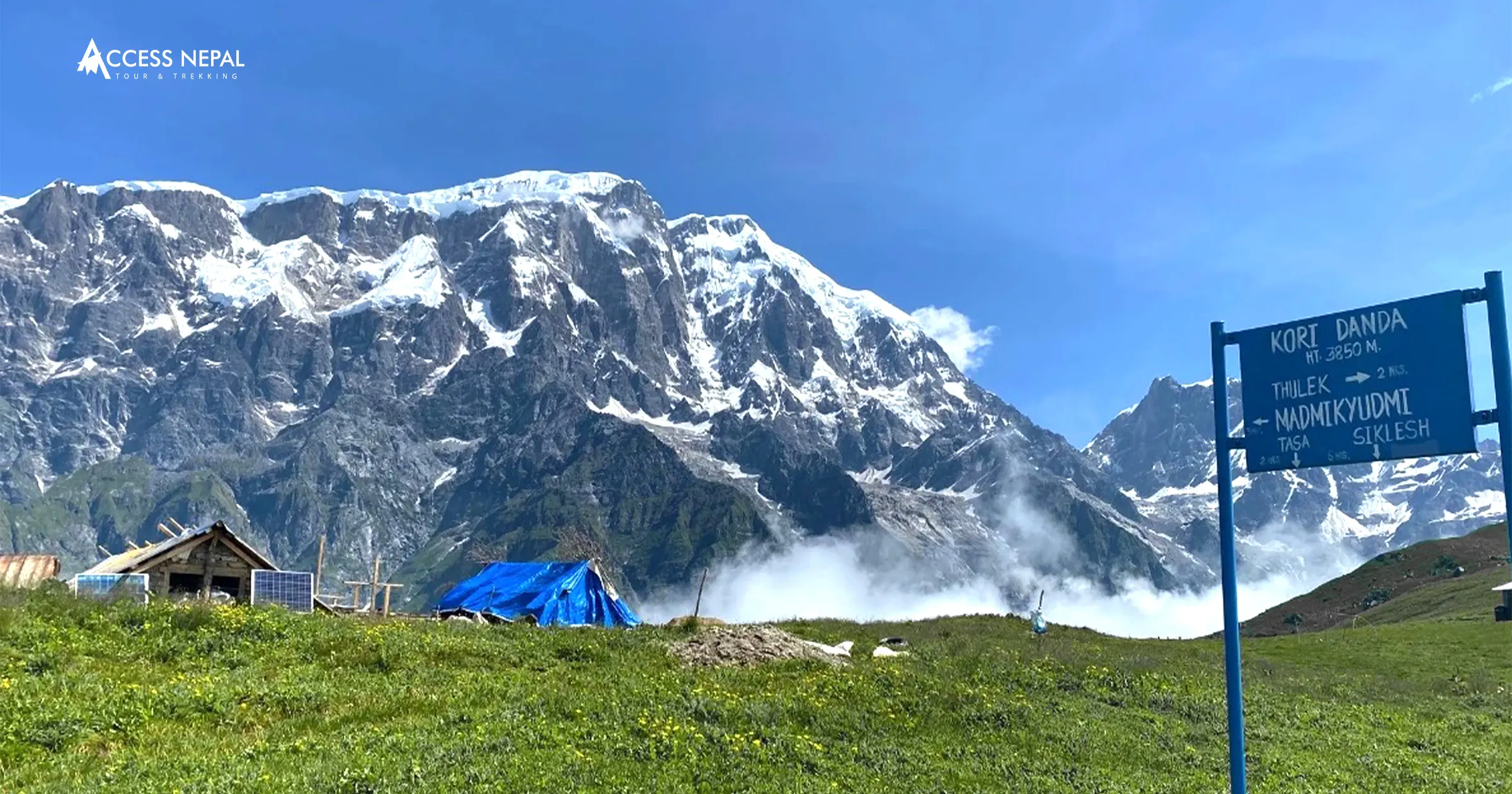
On the Way to Kori Trek
Kori Trek Guide and Safety:
When it comes to safety, we can’t compromise at all. If you are safe, then only you will be able to enjoy the trek more intimately. Safety guides and rules to follow during the Kori Himal Trek are given below:
- Daily Health Update: The guide will carry first-aid kits, and they will monitor your health condition daily. In case of emergency, they will arrange medical service or emergency helicopter evacuation.
- Slow Pace: The itinerary follows an ideal pace. The guide will instruct on breaks and pace speed, so you can trek comfortably without overexertion.
- Logistics: The only thing you should focus on is trekking and enjoying the views. All the logistics of accommodation, meals, permits, and transportation are handled by your guide.
- Know the Route: This is another essential part to know. You must know the route beforehand. These are newly opened trekking trails, so there are not many signboards and marked routes like in the Everest Base Camp. You will need a local person or guide to do this trek for this reason.
- Travel Insurance: Insurance is mandatory for trekking in Nepal. This works as a backup in case of emergencies, medical help, flight delays, or last items as well.
- Choose a Reputable Local Company: This is another crucial part of safety. Trekking with a reliable tour operator provides safety, assurance, and more fun. Choose a company taht are local and offers good customer service and other offers in their package.
Can I do the Kori Hike Without a Guide?
Yes, you can do the Kori Hike without a guide, but it’s not highly recommended. For trekking in Nepal, a guide is mandatory if the destination is restricted for all foreign travelers. But Kori Trek is not located in a restricted region, so you can do it without a guide. However, it’s not safe. This route is newly opened and unmarked. This makes the guide more essential as they help in navigation and handling all your logistics.
Related Packages
Kori Trek - 10 Days
 3800 Meters/12,467ft
 Moderate
 All
Inclusive Plan
All
Inclusive Plan
The trek route passes through remote Gurung villages, dense forests, and ridges with merely any signboard. Google Maps is usually blank and often does not work here. Similarly, the settlements here are also sparse with few teahouses. All the local people here have their own culture and religion. They do not speak English, so communicating with them will also be hard.
In case of an emergency situation like a landslide, injury, or altitude sickness, it will be very dangerous for solo trekkers. Having a local guide is highly recommended and essential.
Does the package include a professional trekking Guide and Porters?
Yes, our Kori Danda Trek includes experienced, licensed, English-speaking, first aid-trained guides. They are local and understand the region’s culture and language. They can help you understand the people, places, culture, and religion of local living there in detail. They are all insured, and all required cost of the are also included in the package.
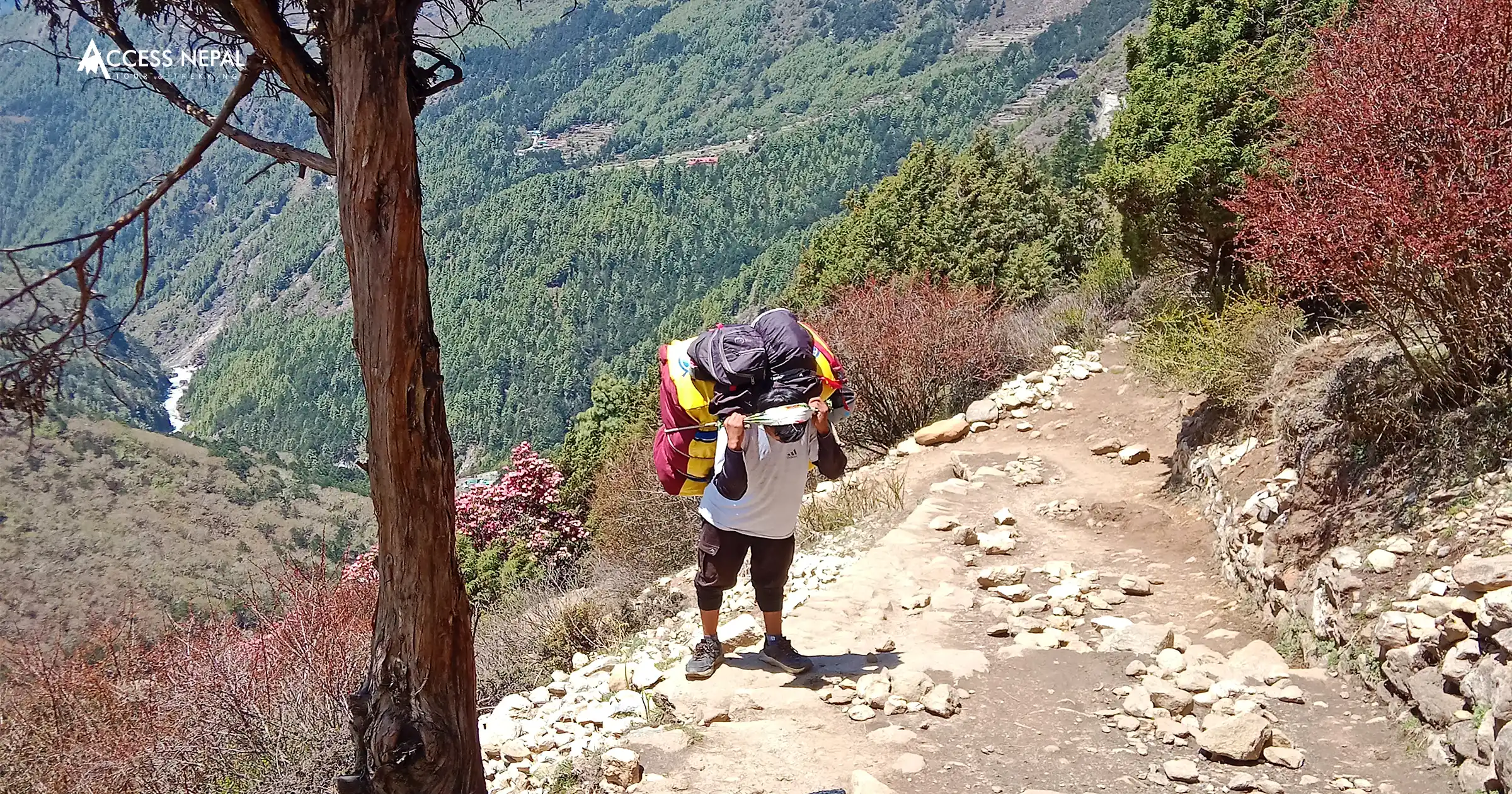
Porter carrying a duffel bag during the trek.
Along with the guide, the Kori trek package also includes porters. They will carry your duffel bag throughout the journey, so you can enjoy the adventure without worrying about carrying a load.
Benefits of Booking the Kori Danda Trek with Access Nepal Tours and Trekking:
Choosing us for the trek to Kori Dand means choosing a quality experience, prioritizing safety, and great customer service. With over decades of trekking experience, Access Nepal Tours and Trekking works to give you an authentic and unforgettable trekking experience.
- Our Kori Danda Trek package is all-inclusive and guaranteed.
- Provide private airport pickup/drop transportation services.
- All required transportation is included.
- Sleeping bag and down jacket are available to use free of cost (must return after the trek)
- Duffel bag, maps, and a T-shirt as a souvenir.
- All meals are included along with tea and seasonal fruits, a welcome and farewell dinner.
- Arrangement of emergency medical support and helicopter evacuation.
- Handles all required logistics and permits.
- Provides highly experienced, English-speaking, first-aid trained, and Government-licensed local guides.
- Includes porters.
What is the Kori Trek Cost for Nepali?
The cost of the Kori Trek is around Nrs 25,000 to Nrs 30,000. The trek price can vary depending on the package itinerary, group size, timing, and trek operators. For Nepalese, prices are usually lower than for foreigners. Most Nepali trekkers do the Kori Trek on their own, so the cost totally depends on their personal spending style or the number of days. Otherwise, for a package like 4 days and 5 nights, Nrs 19,000 will be enough.
Related Packages
Khopra Danda Trek - 13 Days
- 4,620 m/ 15,175 ft
-
Easy
- All
Inclusive Plan
In conclusion, the Kori Nepal Trek is a perfect beginner-friendly adventure. It’s ideal for travellers who love peace, nature, culture, tradition, and views. This newly opened Kori Dand Trek is worth experiencing at least once in your life. With these details, Kori Trek Guide, I hope you will be able to plan the trip without much stress. So, if you are ready, Book our Kori Trek for 2026/2027 now. With peak season running, reserve your seat now and give this adventure a chance to shock you in the most beautiful way.
Awards and Achievements
Access Nepal Tour and Treks has been recognized with TripAdvisor’s prestigious Travelers’ Choice Award for multiple consecutive years, reflecting our unwavering commitment to quality and clients’ satisfaction.