OFF
Discounts are solely based on your group size. We do not add anyone to your group.
- Best Price Guarantee
- Hassle-Free Booking
- Team of highly experienced Experts
- Your Happiness Guaranteed
Book Now. No Booking or Credit Card Fee
- Schedule Your Own Dates
- Group Discounts
- Guaranteed Departures
- Easy Cancellation
- 60% Repeated Customers
-

- Duration
- 30 Days
-

- Transportation
- Car & Tourist Bus
-

- Trip Grade
- Challenging
-

- Max-Altitude
- (7,126m)
-

- Accomodation
- Tent
-

- Primary Activity
- Trekking, climbing
-

- Meals
- All meals during the trek
-

- Best Season
- Mar-May | Sep-Nov
-

- Distance
- 579 to 584 Km
Overview
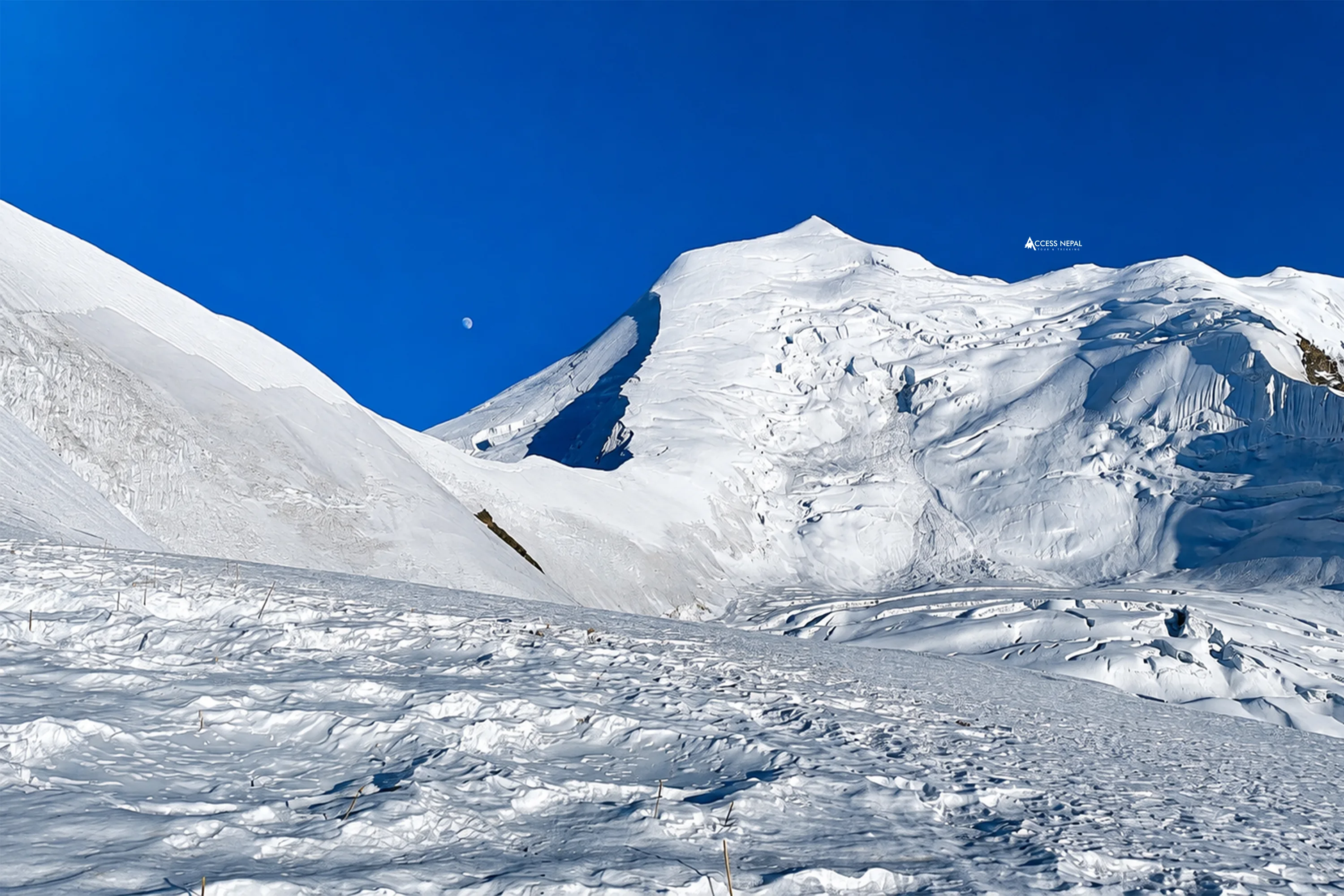
Himlung Himal (7,126m) is an iconic climbing peak in between the Manaslu and Annapurna ranges in Nepal’s Himalayan region. The peak opened to foreign climbers in 1992 and has since been a popular choice for mountaineers across the globe who want to get an experience of what climbing mountains at 7,000-meter altitudes or higher is like.
To give you a short rundown of what Access Nepal’s Himlung Expedition looks like: we begin with a drive from Kathmandu, after which we trek through the restricted Nar Phu Valley. The valley started allowing in tourists only in 2001 and is a relatively remote and less crowded region when compared to the other popular trekking routes in Nepal.
While climbing up, we pass through traditional Tibetan-influenced villages including Koto, Meta and Phu Village, where you can see the local mountain lifestyles closely.
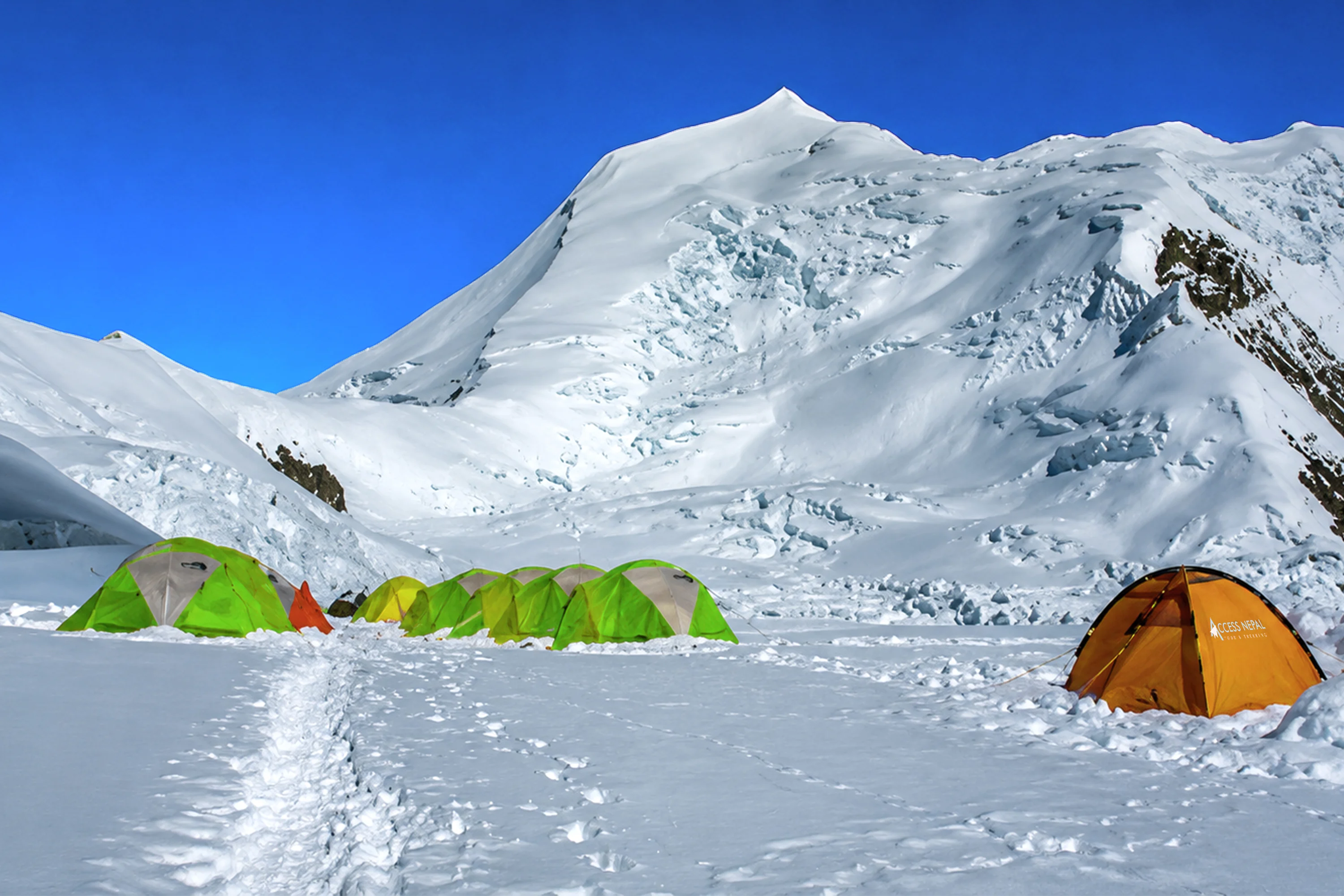
The base camp is at 4,900m in the upper border of the pastures of Phu Village. From here, our climbing route takes us up to the three higher camps: Camp I at 5,450m, Camp II at 6,000m and Camp III at 6,350m.
We have designed it to follow a rotational acclimatisation system, with climbers moving between camps and returning to lower elevations to allow the body to adjust properly to the altitude. This follows the commonly practised ‘Climb high, sleep low’ principle.
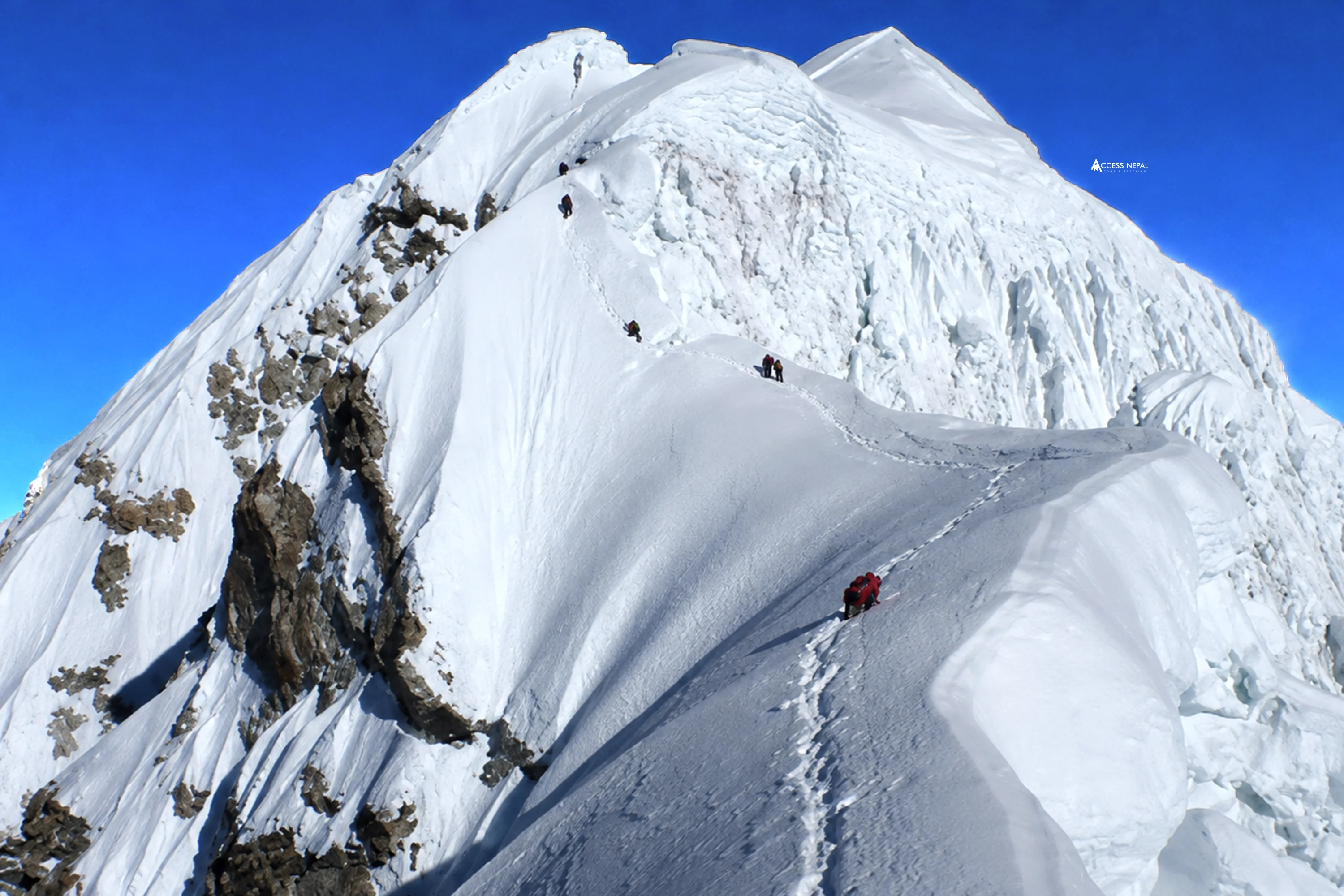
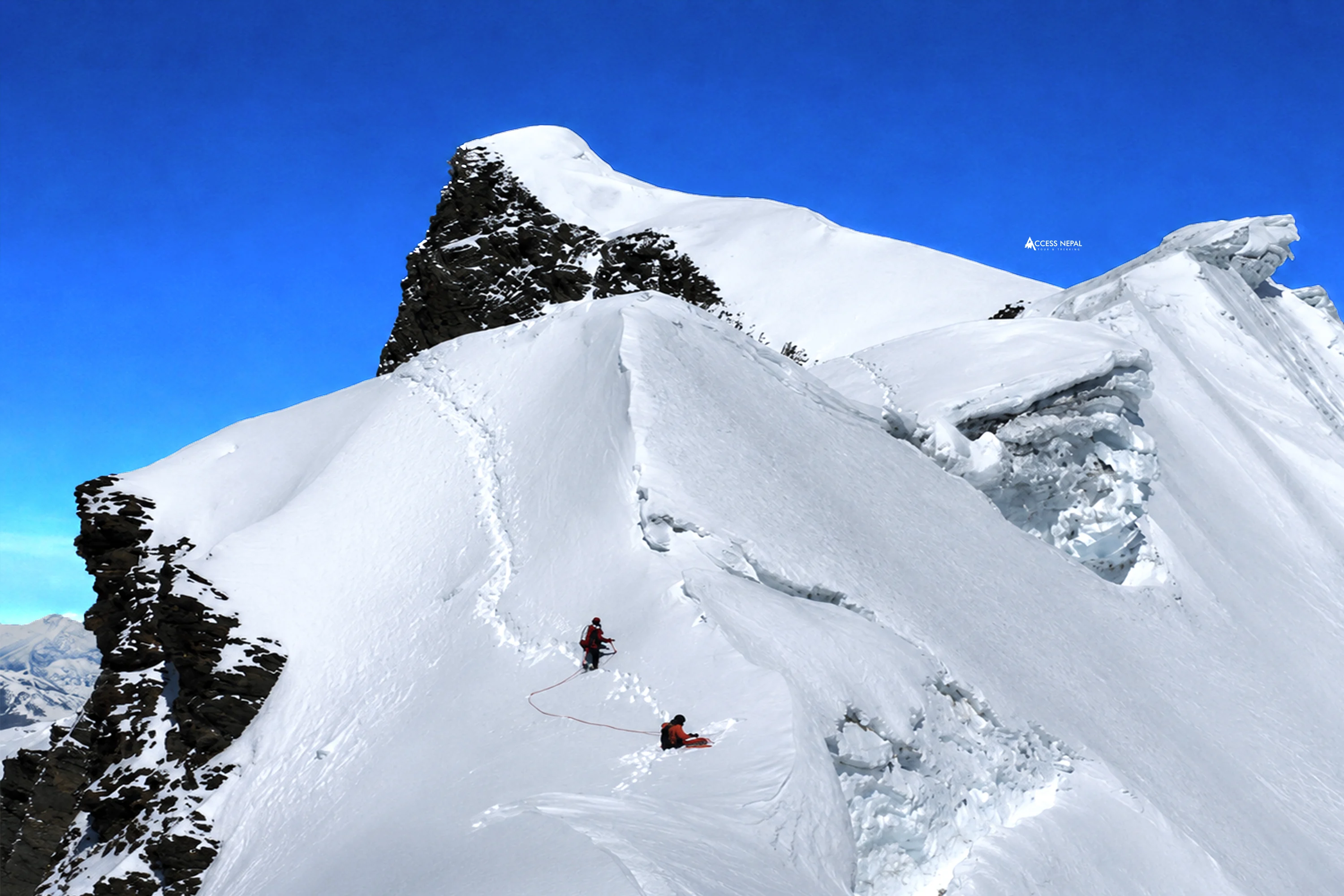
Himlung Himal is considered a moderately technical climb and the route is mixed terrain of rock, ice and snow with slopes that can get a little steep. The steepest sections are near the summit. This climb is generally doable for climbers with basic mountaineering experience who have previously summited at least one 6,000-meter peak.
Himlung Himal Expedition Highlights
- Summit Himlung Himal (7,126m), a popular 7,000-meter expedition peak in Nepal
- Trek through the restricted and culturally rich Nar Phu Valley, which opened to tourists in 2001
- Experience remote and less crowded climbing routes compared to other popular expedition peaks
- Walk through ancient Tibetan-influenced villages, including Koto, Meta and Phu Village
- Visit Buddhist monasteries, chortens and traditional prayer walls along the trail
- Gradual acclimatisation with planned rest days at Phu Village and Base Camp
- Spectacular views of the Annapurna and Manaslu Himalayan ranges from the summit
- Trek through yak pastures, deep gorges, suspension bridges and high mountain trails
- Climbing period with rotational acclimatisation to higher camps for safer summit preparation
Why Book with Access Nepal Tour and Treks?
Access Nepal Tour and Trekking is a woman-led tourism company, registered and affiliated with the Trekking Agencies’ Association of Nepal (TAAN), Nepal Mountaineering Association (NMA) and the Tourism Department of Nepal.
We provide a fully guided expedition with a Sherpa for easy climbing. Our staff includes government-licensed English-speaking guides and porters who are trained in first aid and eco-practices. They are well-equipped and experienced to deal with anything that you face during the expedition.
For your safety and ease, we do a detailed pre-trip briefing and gear-checking session in Kathmandu before your departure. We help you with all the necessary trekking equipment, including down jackets, sleeping bags and duffel bags.
The package includes all necessary permits, entry fees and TIMS cards you will need during your trip, plus a full board meal plan (breakfast, lunch, dinner with tea and coffee) during the trek and climbing period.
As you can gather, we will make sure you have a safe and enjoyable trip. As a company running for over 15 years, we know the most efficient ways of handling the logistics so that the entire expedition goes very smoothly for you. In case a situation does arise, our trained and licensed guides will take care of it well.
You can explore the Everest Expedition Package if you want to climb the world’s highest mountain, Mount Everest (8,848.86m), via the legendary South Col and Southeast Ridge route from Nepal.
Who is Himlung Himal Suitable for?
Himlung Himal is best suited to climbers who have already summited one 6,000m peak and want their first 7,000m summit on a route that is technically easier than most other 7,000m objectives in Nepal. It is not a beginner mountain, but among 7,000m peaks, it is one of the most achievable.
You’re a strong fit if:
- You’ve summited at least one 6,000m peak (Island Peak, Mera Peak, or Lobuche East) and are comfortable with crampons, ice axe, harness, and fixed-rope technique
- You want a 7,000m summit without the sustained technical difficulty of peaks like Ama Dablam
- You’re using Himlung as a stepping stone toward 8,000m objectives such as Manaslu, Cho Oyu, or Everest
Secondary fits, same prerequisites apply: Alpine club or mountaineering association members organizing a guide-supported group objective
Climbers with 6,000m experience who specifically want minimal technical exposure at 7,000m, rather than no technical exposure at all
Himlung Himal Climbing is not right if: You have no prior mountaineering experience above 6,000m, or if you’ve never used crampons, an ice axe, or fixed ropes. Consider Island Peak or Mera Peak climbing first, then return to Himlung.
Let’s Climb High and Live Your Story.
Himlung Expedition Itinerary
Day Day 01Arrival In Kathmandu
-
- 1400m/4,593ft
-
- 30 minutes ride to hotel
Day 02Kathmandu Preparation And Sightseeing
Day 03Drive Kathmandu To Besisahar
-
- 820m/2,690ft
-
- 7 hours drive
-

- 820m/2,690ft
Day 04Drive Besisahar To Koto
-
- 2,675m/8,776ft
-
- 5-6 hours drive
-
- 2,675m/8,776ft
Day 05Trek Koto To Meta
-
- 3,560m/11,680ft
-
- 6-7 hours walk
-
- 3,560m/11,680ft
Day 06Trek Meta To Kyang
-
- 3,740m/12,270ft
-
- 6-7 hours walk
-
- 3,740m/12,270ft
Day 07Trek Kyang To Phu Village
-
- 4,050m/13,287ft
-
- 5-6 hours walk
-
- 4,050m/13,287ft
Day 08Acclimatisation Day At Phu Village
-
- 4,050m/13,287ft
-
- Rest day
-
- 4,050m/13,287ft
Day 09Trek Phu Village To Himlung Base Camp
-
- 4,900m/16,076ft
-
- 5-6 hours walk
-
- 4,900m/16,076ft
Day 10Rest And Acclimatisation At Base Cam
-
- 4,900m
-
- Rest day
-
- 4,900m
Day 11-22CLIMBING PERIOD (12 DAYS)
-
- 7,126m
-
- Varies (Maximum is on summit day: 10-14 hours)
-
- 7,126m
Day 23Rest Day At the Base Camp
-
- 4,900m
-
- Rest day
-
- 4,900m
Day 24Trek Base Camp To Phu Village
-
- 4,900m
-
- 4-5 hours walk
-
- 4,900m
Day 25Trek Phu Village To Meta
-
- 4,050m
-
- 5-6 hours walk
-

- 4,050m
Day 26Trek Meta To Koto
-
- 4,050m
-
- 5-6 hours walk
-
- 3,560m
Day 27Drive Koto To Besisahar
-
- 3,560m
-
- 5-6 hours drive
-
- 2,675m
Day 28Drive Besisahar To Kathmandu
-
- 2,675m
-
- 7-8 hours drive
-
- 1,400m
Day 29Rest Day In Kathmandu
-
- 1,400m
-
- Rest Day
-
- 1,400m
Day 30Final Departure
-
- 1,400m
-
- -
-
- -
- All airport and hotel transfers in Kathmandu by private vehicle as per the itinerary.
- Deluxe twin-sharing accommodation in Kathmandu with breakfast (as per itinerary).
- Welcome and farewell dinners in Kathmandu (alcoholic beverages excluded).
- Round-trip transportation from Kathmandu to the trailhead and return.
- Full board meals (breakfast, lunch, dinner, tea and coffee) during the trek and expedition period.
- Seasonal fruits during the trek.
- Comfortable and clean accommodation in teahouses/lodges during the approach trek.
- Tented accommodation at Base Camp and higher camps during the climbing period.
- Government-registered, English-speaking trek guide (First Aid and eco-trained).
- Sherpa porter (one porter for two trekkers) for carrying gear during the approach and descent phases.
- 1:1 Sherpa guide-to-client ratio during the climbing period (summit push).
- All necessary paperwork, entry fees, permits and TIMS card.
- Down jacket, four-season sleeping bags, Access Nepal duffel bag and trekking map (down jacket and sleeping bag to be returned after trip completion).
- Comprehensive first aid kit and medical kit bag.
- Emergency oxygen, oxygen masks and regulators for altitude-related emergencies.
- Satellite phone for emergency communication (available at Base Camp).
- All government and local taxes.
- Climbing equipment for group use (ropes, ice screws, snow bars, etc.) for group climbing gear.
- International airfare to and from Kathmandu.
- Nepal visa fees (available on arrival at Tribhuvan International Airport; bring accurate USD cash and two passport photographs).
- Lunch and dinner in Kathmandu (except for welcome and farewell dinners).
- Any extra night accommodation in Kathmandu due to early arrival, late departure or early return from the mountain (for any reason) beyond the scheduled itinerary.
- Travel and rescue insurance (mandatory; must include emergency helicopter evacuation coverage).
- Personal climbing gear (harness, helmet, carabiners, ice axe, crampons, ascender/descender, summit down suit, headlamp, etc.).
- Personal expenses (snacks, drinks, hot showers, Wi-Fi, charging electronics, souvenirs, etc.).
- Tips for guides, porters and support staff.
- Additional oxygen beyond what is provided for emergencies.
- Charges for satellite phone calls (billed per minute).
- Medical evacuation and treatment costs (covered by your insurance).
- Trip extensions or additional days in Nepal beyond the scheduled itinerary.
- Gear rental or purchase costs.
Note on Insurance: You need comprehensive travel and rescue insurance as it is mandatory for all wishing to take on the Himlung Expedition. Please make sure your policy includes emergency helicopter evacuation coverage for altitude-related emergencies (AMS, HAPE, HACE) where alternative transportation may not be available.
The policy should also cover medical treatment and hospitalisation, trip delays and cancellations, loss of baggage and personal belongings and death and repatriation coverage.
Fixed Departure
Our groups are small with maximum 14 people. We create groups of independent travelers, friends and families which maintains close interpersonal connection, engage more and get into depth of the journey. Choose a date from the calendar to reserve your spot.
Himlung Expedition Route Map

Useful Information
Things to Know before Booking Himlung Himal Expedition
- Experience Requirements
Climbers should have prior experience climbing at least one 6,000-meter peak before attempting Himlung Himal. Basic mountaineering skills are essential for this journey. You should know the safe use of crampons, ice axe, harness systems and fixed rope techniques.
While we do review the key skills during the expedition, that should not be your introduction to mountaineering techniques and tools.
Climbers who have previously summited slightly shorter peaks such as Island Peak, Lobuche East or Mera Peak and are confident on using the basic climbing equipment are better prepared for this expedition.
- Physical Fitness Demands
There is no question about the fact that this expedition is physically demanding. The itinerary has multiple days of trekking and climbing at high altitudes, so climbers should be prepared for 6 to 8 hours of walking during the trekking phase and up to 10 to 14 hours on the summit day.
o have to carry your personal climbing gear, which usually weighs between 10 to 15 kilograms. We recommend you do some preparatory physical training for at least 4 to 6 months in advance.
- Altitude and Acclimatisation
The base camp is located around 4,900 meters and the summit reaches the heights of 7,126 meters. So our itinerary includes multiple planned acclimatisation days at different locations including Phu Village (4,050m) and Base Camp (4,900m). We add this to help climbers adjust to increasing altitudes.
The climbing days have a rotational system which follows the ‘Climb high, sleep low’ principle. You climb to a higher altitude and then return to slightly lower elevations to rest. This helps your body adapt safely to altitude.
- Technical Difficulty
Himlung Himal is regarded as a moderately technical expedition. The route has a mixed terrain with slopes and the steepest sections near the summit.
From Base Camp to Camp II, the route goes mostly through the rocky trails and moraine terrain. Above Camp II, the route has snow slopes with sections of mixed ice climbing.
So it is not super difficult but as we mentioned earlier, you need to have some prior experience before attempting this.
- Insurance Requirements
A comprehensive travel and rescue insurance is mandatory for all trekkers for the Himlung Expedition.
Your insurance policy must include emergency helicopter evacuation coverage for altitude-related medical emergencies, medical treatment and hospitalisation, trip delays and cancellations, loss of baggage and personal belongings as well as death and repatriation coverage.
- Documents Required
- International ID or passport
- Two passport-style photographs (less than six months old)
- Home address
- Insurance policy copy
- Mountaineering experience record
- Booking Timeline
We recommend that you book early–ideally 6 to 12 months in advance or at the very least 3 months before your expected departure date. Your booking is only confirmed once you deposit 30% advance payment of the total cost of the trip.
A copy of your passport and travel insurance are also required for the permit processing. The second installment for the due amount should be paid within 24 hours of your arrival in Nepal.
- Medical and Emergency Support
The expedition team with you carries a first aid kit throughout the entire expedition. Our guides can expertly give first aid treatment, specifically for high-altitude related symptoms and situations.
Other things like high-quality oxygen, masks and regulators are also available for emergency purposes at the Base Camp.
- Remote Environment
For this expedition, we travel through the restricted Nar Phu Valley which is a remote region that doesn’t have all the modern facilities you are accustomed to. The valley was opened to tourists only in 2001.
So climbers should mentally prepare themselves for basic living conditions, limited communication options and an isolated mountain environment.
- Climbing Period Duration
The climbing period from the Base Camp to the summit and return is approximately 12 days. The Himlung expedition has three high camps beyond the Base Camp. They are: Camp I at 5,450m, Camp II at 6,000m and Camp III at 6,350m.
We do a couple rounds of rotations between camps and Base Camp for acclimatisation before we attempt to take on the summit.
Which is the best time to do the Himlung Expedition? Season Wise Guide
| Season | Months | Weather | Climbing Conditions |
| Spring | April – May | Stable weather, clear skies, moderate temperatures | Favourable trail and climbing conditions; clear mountain views; most popular season |
| Autumn | September – November | Stable weather, clear skies, good visibility, moderate temperatures | Good climbing conditions; suitable for climbers who prefer cooler weather than spring |
| Winter | December – February | Extreme cold, heavy snow, icy conditions | Unsafe and highly challenging; routes may be snowed in |
| Monsoon | June – August | Heavy rainfall, increased cloud cover, landslides possible | Increased avalanche risk; poor visibility; trails may be slippery and unsafe |
Spring (April to May)
Spring is the perfect season for the Himlung Expedition as during this season, the weather is generally stable with clear skies and moderate temperatures. Trail conditions are also pretty good for climbing and you get clear views of the surrounding Himalayan peaks.
There is a reason this season is particularly popular among climbers everywhere.
Autumn (September to November)
Autumn is arguably the second best climbing season. Weather conditions around this time are stable with clear skies and good visibility and the temperatures are moderate–just right for activities like trekking and climbing.
This season is better suited especially for those climbers who prefer cooler temperatures compared to spring.
Winter and Monsoon Considerations
The winter months (December to February) have harsher conditions with more intense cold, heavy snow and ice. This can make the climbing slightly challenging for you. Some tea houses, lodges and local businesses also close up shop during these off-season months.
The monsoon season (June to August) means heavy rainfall and increased risk of landslides, snow and avalanches. We do not recommend climbing during these months for your safety.
What type of Experience and Physical fitness are required for the Himlung Expedition?
Previous Experience Required
As we mentioned earlier, to join the Himlung Expedition, climbers need to have prior experience climbing at least one 6,000-meter peak. You should know the basic mountaineering skills, this includes knowing how to use climbing equipment such as crampons and ice axes.
You will use crampons, ice axes, harness systems and fixed rope techniques during this expedition. Although you will be with our guides throughout the journey, you should be capable of moving independently on this terrain with the use of the essential mountaineering equipment.
Skills such as jumaring, rappelling and self-arrest will also come in handy on the mountain, so prior familiarity with these techniques is expected.
Physical Demands
As it is above the 7,000-meter mark, this is a physically demanding expedition. The itinerary includes many long trekking and climbing days at high altitudes. Average trekking days are around 6 to 7 hours and this increases during the summit push to 10 to 14 hours.
You will be carrying your personal climbing gear during the ascent, which usually weighs between 10 to 15 kilograms. During the trekking section to and from base camp, porter support is available for transporting personal gear and expedition equipment.
Altitude Considerations
You will be trekking up to 7,000 meters and this significant of an altitude gain needs proper acclimatisation. Our itinerary has planned rest days and a rotational climbing system (with multiple nights at progressively higher camps) to help your body to adjust.
Mental Preparedness
Climbing at this altitude is also mentally demanding, so you should mentally prepare yourself for long hours of physical exertion, basic living conditions, variable weather and the isolating feeling of a remote mountain environment. Please note that teamwork and self-sufficiency are important throughout the expedition.
Himlung Himal vs Other Nepal Expedition Peaks
| Himlung Himal | Ama Dablam | Manaslu | Island Peak | Mera Peak |
| Altitude: 7,126m | Altitude: 6,812m | Altitude: 8,163m | Altitude: 6,189m | Altitude: 6,476m |
| Technical Grade: Moderate | Technical Grade: Technical | Technical Grade: Moderate to Technical | Technical Grade: Beginner to Moderate | Technical Grade: Beginner |
| Prior Experience Needed: One 6,000m summit | Prior Experience Needed: Prior technical climbing, ice and mixed skills | Prior Experience Needed: One 7,000m summit recommended | Prior Experience Needed: None, guided training provided | Prior Experience Needed: None, guided training provided |
| Typical Duration: 28 to 31 days | Typical Duration: 25 to 29 days | Typical Duration: 35 to 40 days | Typical Duration: 15 to 19 days | Typical Duration: 15 to 18 days |
What You Need to Know About Physical Fitness During the Himlung Expedition?
Cardiovascular Endurance
You need to have strong cardiovascular fitness to complete this expedition. You should essentially be able to walk for 6 to 8 hours per day on uneven terrain while carrying a daypack. On summit day, this increases to 10 to 14 hours of continuous climbing.
So you should be doing regular cardiovascular training like running, cycling or stair climbing in the months before the expedition.
Strength and Stamina
Climbers should have good lower body strength to go up the steep sections while carrying your equipment. Your core strength and upper body strength will be useful when using ice axes, fixed ropes and jumar devices.
Prior to the trek, you could train with some weighted packs on inclines as this helps you simulate expedition conditions.
Acclimatisation Capacity
Each climber responds very differently to the high altitude. While our itinerary does include built-in acclimatisation days, each individual’s susceptibility to Acute Mountain Sickness (AMS) is different.
For optimal caution, you could consult a doctor about altitude medication like Diamox before the expedition. Remember that maintaining good hydration and pacing is essential during the climb.
Recommended Training Timeline
Your training should begin at least 4 to 6 months before the expedition. You should focus on building your endurance through regular cardiovascular exercise, strength training your legs and core, and practising with loaded packs on uneven terrain.
We have noticed over the years that those climbers who arrive well-prepared physically usually find the expedition less difficult and more enjoyable.
Minimum Number of Climbers
We usually do the Himlung Expedition with small group sizes. Our groups typically range from 2 to 10 members. This small number is good for better coordination and safety management of all climbers. You also get personalised attention during the climb.
All Access Nepal Tour guests on the Himlung Expedition are also assigned a Sherpa guide. No matter the size of the group, we have a 1:1 Sherpa guide-to-client ratio during the climbing.
All our Sherpa guides assigned to the expedition are experienced mountaineers themselves who have previously summited peaks including Everest and other 7,000-meter and 8,000-meter mountains.
Climbers will be introduced to their Sherpa guide and other team members before the climbing starts.
The exact group size each time around may vary depending on the number of bookings for a given departure date. We have guaranteed departure dates available and we operate expedition with the confirmed group size for that departure.
What to Expect When Camping on Himlung?
- Accommodation when we are climbing up through Nar Phu Valley is in basic, family-run teahouses and lodges with simple rooms and shared bathrooms. Hot showers can cost extra.
- At Base Camp and above, accommodation is entirely in expedition-grade tents, including sleeping tents (shared, with some singles at Base Camp), a dining tent, kitchen and toilet facilities.
- Base Camp has a dining tent, communication gear, medical supplies and limited solar charging. But even these facilities get more scarce above Base Camp.
- At Camps I, II and III, accommodation is in small mountaineering tents with minimal facilities. You only get shelter and sleeping arrangements for rest between climbs.
- Teahouses on the approach are basic but comfortable for the region, while at Base Camp and above there is no Wi-Fi and no hot showers.
- Nighttime temperatures drop below -5°C at Base Camp and above Camp II they range from -15°C to -25°C during the summit push.
Food at the Higher Camps During Expedition
- Full board meals (breakfast, lunch and dinner) are provided during the trekking days. They are served at teahouses along the route and the menus typically include Nepali and international dishes like dal bhat, noodles, pasta, rice dishes and soups, plus seasonal fruits when and where available.
- At Base Camp, all meals are freshly cooked by the expedition kitchen staff. This is the case throughout the expedition period. You are served hot, nutritious meals for high-altitude energy needs with tea and coffee available.
- At higher camps (Camp I, II and III), food options become more limited because it is more difficult to get it there. You might have to rely on pre-packed meals and snacks that carried up from Base Camp, hot drinks (tea, coffee, hot water), high-energy foods like nuts, dried fruits and energy bars as well as lightweight easy-to-prepare meals, with a simple menu that is entirely focused on calories and hydration. Climbers are advised to bring their own lightweight, high-energy snack preferences.
Drink Water During the Expedition
Drinking water is available on the expedition but needs to be treated before drinking. Water purification tablets or filters are the best ways to do this. We advise you to also get a lightweight steel thermal bottle to carry hot water in during the climb.
What You Should Expect from Teahouse Accommodation?
- On the way to Base Camp, your accommodation is in teahouses and lodges along the route, including Besisahar, Koto, Meta, Kyang and Phu Village. These are mostly family-run with basic but clean rooms and shared bathrooms
- We can upgrade to an en-suite wherever it is available if you request it with your guide for an added fee.
- In Kathmandu, you get deluxe accommodation with breakfast upon arrival, a preparation day before departure.
- At lower elevations from Besisahar to Koto, you get basic guesthouses and teahouses with standard facilities.
- In higher villages like Meta, Kyang and Phu, teahouses are simpler with limited facilities and often no hot water or electricity.
- Above Base Camp, there are no teahouses and all accommodation is in tents.
Amenities
Wi-Fi may be available in some teahouses, though this is not guaranteed and you may have to pay an additional charge to use it. Mobile network coverage can also be limited or unreliable in the more remote sections of Nar Phu Valley.
Communication
Due to the remoteness and sheer altitude of the peak, the cell network isn’t available for communication in the Himlung Base Camps. So, we will help you maintain communication through a satellite phone (available to use for $4 per minute) for emergency contact, which is available at the Base Camp.
Again, please remember that you travel through remote Himalayan regions far from modern facilities during this expedition. So teamwork and endurance are extremely important. Please communicate everything clearly with your guide.
Emergency Evacuation
You will have to get comprehensive travel insurance with emergency helicopter evacuation coverage mandatorily before we begin our expedition. Helicopter evacuation is available for medical emergencies like Acute Mountain Sickness (AMS) where alternative transportation is not available. Please make sure your insurance policy covers helicopter evacuation from high altitudes beforehand.
What are the permits required for Himlung Expedition?
The following are the permits required for the Himlung Expedition.
| Permit | Issuing Authority | Purpose | Cost |
| Himlung Himal Climbing/Expedition Permit | Department of Tourism, Nepal | Permission to climb Himlung Himal (7,126m), an officially opened Himalayan peak | Spring (Apr-May): USD 800/person; Autumn (Sep-Nov): USD 400/person |
| Garbage Management Deposit | Department of Tourism, Nepal | Environmental deposit for expedition waste management | USD 2,000 per expedition/team (for 7,001–8,000m peaks in Annapurna range) |
| Nar-Phu Restricted Area Trekking Permit | Department of Tourism / Nepal Tourism Board | Access to the Narpa Rural Municipality restricted area (normal approach route) | Sep-Nov: USD 100/person/week; Dec-Aug: USD 75/person/week; Beyond 1 week: USD 15/person/day |
| ACAP Entry Permit | Annapurna Conservation Area Project | Entry to the Annapurna Conservation Area | Varies (check current rates at time of booking) |
| TIMS Card | Nepal Tourism Board | Trekker tracking and safety; required for Nar Phu–Annapurna Circuit route | Foreign trekkers: NPR 2,000; SAARC nationals: NPR 1,000 |
- diplomatic mission or embassy before traveling to Nepal.
- After getting your visa from a Nepalese embassy abroad, you have to enter Nepal within six months of the issue date.
Landscape, Culture and Wildlife You Will Experience on This Expedition
Landscape
During this expedition you move through some diverse terrain from subtropical valleys to alpine tundra. The approach trek is through the Nar Phu Valley which is a relatively remote region that opened to tourists only in 2001.
The valley has some deep gorges, yak pastures, rugged cliffs and high mountain trails and as you gain more altitude, the landscape turns into moraine terrain, glaciers and snow-covered slopes. The summit has great panoramic views of the Annapurna and Manaslu ranges.
Culture
The region is home to communities that are strongly influenced by Tibetan culture. Villages like Koto, Meta, Kyang and Phu Village have Buddhist monasteries, prayer walls, chortens and mani walls, too.
You will also get to visit Samdu and Cholang monasteries in the Phu Valley during this trip.
Although it might sound unbelievable to some guests that this is the case to this day, the local economy of most of this region is based on agriculture, livestock herding and trade.
The Tharu community of Terai or the lowlands is known for its fishing, weaving and traditional stick dance performances, but these aspects are more relevant for lowland cultural tours than the actual expedition itself.
Wildlife
As the Himlung region falls in the broader Annapurna Conservation Area, the surrounding forests are home to many Himalayan wildlife species including:
- Himalayan tahr and blue sheep at higher elevations
- Snow leopards (rarely sighted) and other predators
- Pheasants and other high-altitude bird species.
In the lower elevations of the region, you can spot a variety of deer, monkeys and bird species.
Expenses You Should Calculate For Himlung Expedition
There isn’t much extra expense you need to calculate for during the Himlung Expedition as our package covers your accommodation, permits and food throughout the journey. However, if you wish to take back souvenirs for your loved ones and want to extend your trip for any reason, you should carry some extra cash.
The airfare to and from Kathmandu is also not included in the package so please manage that beforehand. Additionally, lunch and dinner in Kathmandu are not included in our package, except for the welcome and farewell dinners. We suggest you budget about USD 5-15 per meal for restaurant dining.
Any additional nights in Kathmandu due to early arrival, late departure or early return from the mountain are also not included in the package.
Tips
The most important part of your personal expense may be tipping guides and porters. While it is not mandatory, it is customary and would convey to our guides and porter that you are thankful for their help over the past month.
Usually, a tip of 10-15% of the total expedition cost is considered standard for satisfactory service.
Personal Expenses
Besides these, you could spend some money on the following things too:
- Snacks, drinks and personal items along the route
- Hot showers at teahouses (additional fee)
- Wi-Fi (where available, additional fee)
- Charging electronics (additional fee in some teahouses)
- Souvenirs and shopping.
Gear Rental or Purchase
While our package includes things like down jackets and sleeping bags (that you have to return as the trip ends), you may need some additional gear, too. Rental or purchase costs of gear alone can add about USD 100-500, depending on the items. So please budget for these expenses too when you are planning.
Hiring Porter for Himlung Himal Expedition
Access Nepal Tour’s Himlung Expedition package itself includes porter support during the trek to and from base camp. We provide one Sherpa porter for two trekkers. Porters can carry your personal gear and expedition equipment, so that the climb is less strenuous for you.
What Porters Carry
- Personal gear and expedition equipment for the climb up during the trek
- Luggage is limited to about 10-15 kg per trekker
- Porters do not carry your climbing gear during the final summit push. You have to carry your own personal climbing equipment during this part of the ascent.
Climbing Period
During the climbing period (Days 11-22 from our itinerary), climbers have to carry their own personal climbing gear, which usually weighs between 10-15 kg. Sherpa guides will help you with fixed ropes and route establishment during this phase.
Cost of Hiring Additional Porter
In case you absolutely need additional porter support, you will have to pay approximately USD 20-25 per day, which includes food, accommodation, and insurance for the porter.
Nepalis missing on Himlung after avalanche as bad weather hampers rescue.
Himlung Expedition FAQs
Where is Himlung Himal located?
As is the case with mountains in Nepal, Himlung Himal is located in the remote Nar-Phu Valley in the Manang district. It lies near the border with Tibet and between the Manaslu and Annapurna ranges.
What is the elevation of Himlung Himal? How high is Himlung Himal?
How many camps are there on Himlung Himal?
What is the nearest settlement to Himlung Himal?
How far is Himlung Himal from Kathmandu?
Can I visit Nar Phu village during the Himlung Expedition?
How difficult is the Himlung Himal Expedition?
Is Himlung Himal good for beginners?
What climbing experience is required for Himlung Himal?
Is a climbing guide mandatory for Himlung Himal? Can I climb Himlung Himal independently?
What does "non-technical" mean for Himlung Himal if I still need climbing experience?
What is the difference between Himlung Himal and a trekking peak like Island Peak or Mera Peak?
What is the best time to climb Himlung Himal?
What happens if the weather prevents a summit attempt?
What is the weather like in the Himlung Himal region?
What is the best month for the Himlung Himal Expedition?
How does Himlung Himal compare with other 7,000-meter peaks in Nepal?
What permits are required for the Himlung Himal Expedition?
How far in advance should I book the Himlung Expedition?
Can I join a group Himlung Expedition?
Can I extend my trip after the Himlung Expedition?
What rescue and emergency support is available during the expedition?
Do I need travel and helicopter rescue insurance for Himlung Himal?
Is Wi-Fi or mobile network available during the Himlung Expedition?
Is electricity available at Himlung Base Camp?
Awards and Achievements
Access Nepal Tour and Treks has been recognized with TripAdvisor’s prestigious Travelers’ Choice Award for multiple consecutive years, reflecting our unwavering commitment to quality and clients’ satisfaction.