Which is the Best Season for Annapurna Circuit Trek?
Planning a trek during the Annapurna Circuit Trek best season is essential to make or break a great experience. The best time to do the Annapurna Circuit Trek is spring (March to May) and autumn (September to November). These are the popular seasons to do the Annapurna Circuit Trek. These seasons are the top trekking window because they offer stable weather, clear views, and dry trails. Colourful blooming rhododendron in spring and crisp mountain air in autumn make the journey perfect.
Choosing the travel window is a key part of any adventure. If you pick a good time and season, you will be safe and get a great experience. For the maximum fun, it is best to pick ideal seasons. Most importantly, we can’t just climb high mountain roads in whatever season we like. It risky and dangerous.
- Pros of Autumn: Clear skies, mild temperatures, stable weather, great mountain visibility, cool nights, and festival season (Dashain and Tihar).
- Pros of Spring: Long daylight, warm days, colourful rhododendron and wild flowers along the trail, favorable temperature, and great visibility.
- Cons: Peak season, which means good crowds and limited teahouse options due to high demand.
But basically, autumn and spring are the best choices for trekking the Annapurna Circuit Trek with Tilicho Lake as well. You will have excellent fun and memories. But knowing only the surface level of the Annapurna Circuit Trek best time won’t be enough. This travel guide for choosing the best season for the Annapurna Circuit Trek will help you know everything in more depth and detail. So, keep scrolling for more information.
When is the Best Time to do the Annapurna Circuit Trek?
The best time to do the Annapurna Circuit Trek is in autumn and spring. These seasons are the popular trekking season in Nepal. The weather and temperature conditions are perfect for outdoor activities. It is highly recommnded time to do the Annapurna Circuit Trek.
Avoid trekking in the peak monsoon and winter seasons. The season offers poor trekking conditions and increases the high safety risks.
- Autumn is a popular season to do the Annapurna Circuit Trek due to clear skies, low humidity, and stable weather. Days are cool, though nights can be chilly, but comfortable enough. However, expect some crowd; otherwise, this season is the best time to do a trek in the Annapurna region.
- Spring is another peak season in Nepal to do the Annapurna Circuit Trek. The whole valley and trails glow with wildflowers and rhododendrons bloom. Forests, trails, rivers, and streams get lush. Trails are also dry, and days are mild. It is the perfect time for high-altitude trekking.
 4,130m/13,549ft
 Moderate
 All
Inclusive Plan
All
Inclusive Plan
Related Packages
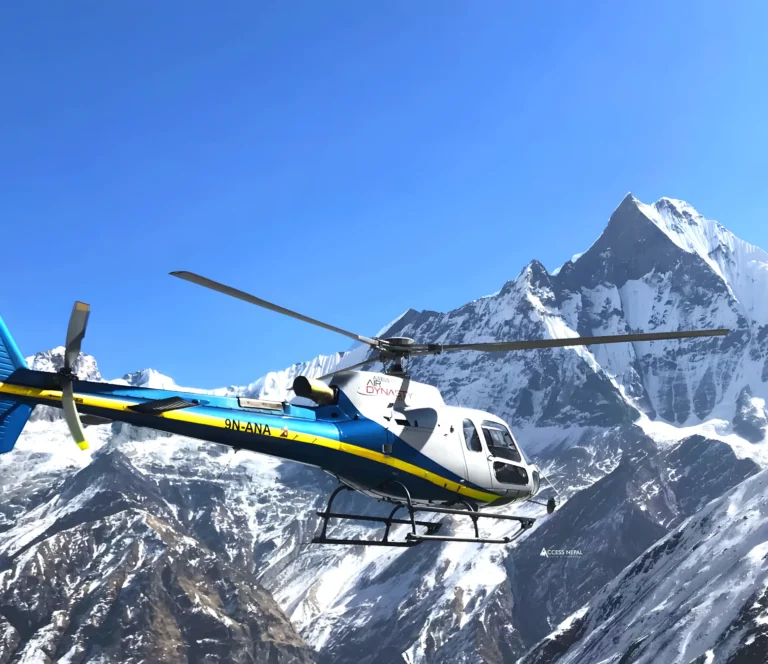
Annapurna Base Camp Luxury Trek - 11 Days

What’s the Worst Season to do the Annapurna Circuit Trek?
The worst season to do the Annapurna Circuit Trek is Mid-summer (monsoon). And to pick just one worst period is July during the heavy monsoon rainfalls. Along with July, June, and August, trekking is not good due to risky trail conditions. But once you reach Mustang, it gets good since half of the route in the middle falls in the rain-shadow.
Why is it worse? Because rainy season hazards are severe along the route:
- Monsoon Rains: Especially in the lower valleys, roads and trails get washed out. Wooden bridges along the route can be swept away. Trails get very slippery and muddy, which can lead to injury. The route also gets blocked often due to landslides and poor trail conditions during the monsoon.
- Leeched & Bugs: The Annapurna Circuit Trek route passes through dense forests and jungles. The wet environment attracts leeches, and during the trek it get suck all over the legs. They are unavoidable during the monsoon.
- Poor Trail Conditions: Due to heavy rainfall, the trails are almost blocked. Hilly areas are prone to landslides, mudslides, and floods. Trekking in the rainy season is quite bad.
Besides July, the deep winter season is also not so good for trekking. Temperature get extremly cold, and the weather is unstable. Similarly, Thorong High Pass also gets closed in winter due to heavy snowfall. But the winter trek is also quite popular, though they do not include high passes. In winter, trails are at least dry, and the crowd is less. The region becomes a snow wonderland, so people also choose the winter season for the Annapurna Circuit Trek.
Which is the Best Season for Annapurna Circuit Trek?
The best month for the Annapurna Circuit Trek starts from March to May and from September to November. These months are the peak trekking season in Nepal. These months offer the crystal-clear views, dry trails, mild days, and chilly nights.
- October: It starts right after the end of the monsoon. After the monsoon rain clears all the dust, it brings crisp mountain air, crystal-clear views of surrounding mounatins, very few clouds, dry trails, stable weather, and perfect temperature. Hardly any rainfall, and it is the festival month (major Nepali festival Dashain/Tihar).
- April: This month is the spring equivalent of October. Warm daytime, long days, and forests bloom with rhododendron. Moderate level of crowd, and it is also the month of the Nepali New Year.
Not good months are December and January due to extreme cold and snowfall on Thorong La Pass. It gets closed down as even the highest it can range during the day is barely 10 °C. So, December and January are two of the worst months to do the Annapurna Circuit Trek.
Is the spring season (March-May) the Best Time to do the Annapurna Circuit Trek?
Yes, spring is one of the best seasons to do the Annapurna Circuit Trek. Starting from March to May, it is the peak trekking season in Nepal. This season is popular due to longer trekking days, mild temperatures, stable weather, clear blue skies, and great surrounding views. And the main highlight is wildflowers and rhododendron dotting the trails, surrounded by the giant Annapurna ranges.
Spring is best for trekking due to mild temperature even in the day. At high elevation, the temperature ranges between 15 and 25 °C during the day. The route is also dry and in good condition. Trekkers can enjoy the surrounding views throughout the trek. In comparison to autumn, spring has much less of a crowd.

Related Packages
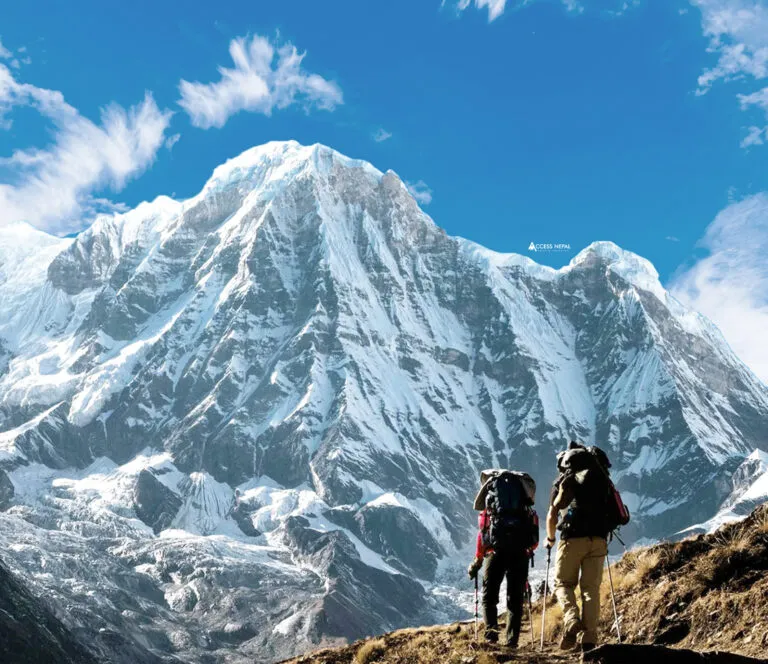
Annapurna Base Camp Trek - 11 Days
- 4,130m/13,550ft
-
Moderate
- All
Inclusive Plan
And you know what, you can still get to see snow at the pass. Even if days are warmer, carry layers of clothing as nights and mornings are chilly above 3,000 m. At higher elevations, everything is perfect during the spring. In the lower valley, by late May, the temperature rises, and the humidity will increase. Also, expect some occasional pre-monsoon clouds or rain to appear. Otherwise, spring is the peak and famous trekking season in Nepal.
Is Autumn (September-November) the Best Season for the Annapurna Circuit Trek?
Yes, autumn is one of the Annapurna Circuit Trek’s best seasons. It is an ideal period for all trekkers. Autumn in Nepal starts after the summer and monsoon rainfall. This makes the air clean and crisp, dry trails, few clouds, and stable weather. It is a peak season for trekking or any kind of expedition in Nepal. Autumn starts from September to November. From October to November, everything is in perfect condition for trekking.
The best part of doing the Annapurna Circuit Trek in Autumn is the visibility. The Annapurna range, Dhaulagiri, accompanies you throughout the journey. The clear October morning offers spectacular surrounding views that are hidden in green haze. Temperatures are also good, with daytime being around 18-23 °C. At Thorong La Pass (5,416 m), the average temperature is roughly between -5 and -10 °C. Nights and mornings are cold during the trek, but they are manageable. Rainfall is rare, and the weather is stable, so trekking in Autumn is very good.

A major highlight of trekking in Autumn is that this season coincides with Nepal’s biggest festivals, called Dashain and Tihar. It will be a great cultural experience. The whole nation celebrates with unique rituals and ceremonies. Therefore, book early if you are doing the Annapurna Circuit Trek in Autumn. Flights, accommodation, and other services can be busy, and trails will be a little more crowded. However, it offers one of the best trekking experiences.
Is the winter season (December-February) Ideal for the Annapurna Circuit Trek?
Winter is the least favorable time to do the Annapurna Circuit Trek. This season is fine around lower valleys, but at higher elevations (above 3,000 m), and especially at Throng La High Pass is extremely cold. During peak winter time, it is not possible to cross the passes, and it gets closed down. During winter, the Annapurna region experiences heavy snowfall, cloudy weather, freezing temperatures, and icy trails.
It’s not like winter trek is completely impossible. It is possible, but recommended for experienced trekkers only who are looking for a solitude experience. The Annapurna Circuit Trek becomes breathtakingly beautiful in the wintertime. The trails get covered by snow, the trails get quiet, the surrounding mountains shine, and the days are still warm and sunny.
After trekking above 4,000 m, the whole surrounding area gets covered with freshly fallen snow, especially near high camps and passes. During the wintertime, Thorong La (5,416 m) becomes impassable due to a thick snow blockade. It gets highly risky and dangerous to cross it. Even lower villages see subzero nights. Expect daytime temps around 0-10 °C at 3,000 m in January, and well below 0°C at night.

But the advantages of trekking in winter is less crowd. You will rarely spot any tourists along the way, and teahouses are also empty. Those who prefer peacefulness often choose this season. Winter has a different kind of beauty with snowy landscapes and the chance to spot migratory wildlife.
Winter is not an ideal time to do the Annapurna Circuit Trek due to extreme cold and possible closures. However, with good preparation, it is doable and offers a fun experience.
Is the Summer (Monsoon) Season Optimal for the Annapurna Circuit Trek?
No, the summer/monsoon season is not optimal for the Annapurna Circuit Trek. Summer in Nepal coincides with the monsoon. June to August are especially the least favorable time for trekking due to heavy rainstorms, which makes trekking difficult. Due to heavy rainfall, it affects the trails, making them muddy and slippery, rivers swell, and landslides can block passes.
Similarly, visibility of surroundings is also very poor and cloudy. Most of the time mounatins view gets hidden by clouds and fog. Although half of the trail lies in a rain-shadow region, the lower valleys are heavily affected by monsoon rains. Along the wet forests, you will also get lots of leeches.
The only con of trekking in the monsoon is no crowd. The trails are almost empty as it’s not peak season. So, if you are an experienced trekker and seeking some solitude, this season can be good for you. Otherwise, it’s not recommended. Due to summer rain, the whole region gets intensely green and alive.
If you are sure to do this trek in summer, keep in mind. Above the Manang district, those areas fall in the rain-shadow of Annapurna, so rainfall is quite rare. Places like Muktinath, Jomsom, and Mustang are very dry even in July. It is best to use this route in the monsoon for quiet trails. But be aware that the majority of the circuit (Dharapani→Muktinath) receives heavy rain. In short, the monsoon is not optimal.
Annapurna Circuit Trek Temperatures, Season-Wise
Temperature along the Annapurna Circuit Trek varies with elevation and seasonally. You will experience different temperature depnding on the time you visit this region. Given below, we have the breakdown for the Annapurna Circuit Trek Temperature to make your planning easier:
- Spring/Autumn (March-May, September-November) Temperature:
- Lower Region (around 1,000-2,500 m) experince day time temperature as high as 15 to 25 °C.The
- Middle Region (around 2,500-4,000 m) temperature ranges from 5 to 15 °C.
- Higher Elevation (at High Pass) temperatures are still below the freezing point, ranging roughly around -5 to -10 °C.
- Summer/Monsoon (June-August) Temperature:
- Lower Region (around 1,000-2,500 m) temperture go high as 20 to 28 °C and can drop a little with sudden downpour.
- Middle Hills (around 2,5000-4,000 m) are much cooler and milder as the temperature hovers around 15 to 22 °C.
- Higher Region (above 4,500 m) is cool even in summer, and the temperature ranges between 5 to 15 °C, and at night it easily drops to below freezing point.
- Winter (December-February) Temperature:
- Lower Areas (around 1,000 m-2,500 m) daytime temperature goes as high as 5 to 20 °C.
- Hilly Areas (around 2,500-4,000 m) temperature goes as high as 1 to 10°C during the day and sometimes even drops to below freezing point.
- High-altitude Area (beyond 4,500 m) goes high as -5 to 0 °C only during the day, and it drops to below freezing point around -10 to -20 °C at night.
Thorong La High Pass completely closes during the winter due to extreme temperature and snow fall. Higher you go more the tenperature drops down. Pack clothes depending on season. Nights and mornings are cold throughouth the year at higher elevation areas.
What Weather Conditions to Expect on the Annapurna Circuit Trek?
Just like temperature, the weather in the Himalayas is unpredictable. One minute, the clouds clear up, rewarding with great mountain views, and a few minutes later, it gets all cloudy. So, expect sudden cloudy or sunny days, wind, snow, or storms. Below the 3,500 m, the weather are quiet stable, but beyond 4,000 m it’s unknown. Similarly, it also differs depending on which season you are doing the Annapurna Circuit Trek.

Stunning rhododendrons are usually in full bloom in March and early April
The weather conditions during the Annapurna Circuit Trek best time which is spring and autumn is most stable weather conditions. Days are mild and nights are chilly. It offers the best visibility of the surrounding mountains, and the skies get clear blue with very few clouds. Weather conditions are at their peak during the Annapurna Circuit Trek’s best season. It is perfect for outdoor activities like trekking.
During the off trekking season, the weather gets more unstable and unpredictable. Expect rainy and cloudy weather during summer and extreme cold, snowfall, and foggy weather conditions in the winter season.
Likewise, at high passes (Thorong La), checking the weather before the trek is suggested. For better and more stable conditions, cross the high pass early in the morning. Afternoon at the mountain can be fiercely windy and difficult. Due to stable weather conditions in the peak season of the Annapurna Circuit Trek, crossing Thorong La is safe. Winter is not recommended for crossing due to harsh weather conditions, and it’s also not allowed.
Packing Notes: Carry layers of clothing that can tolerate Himalayan cold and weather. A down jacket, fleece, windproof shell, themal layers, trekking shoes, crampons, trekking pants, hat, sunprotection, personal toiletries, and gloves are must have.
Annapurna Circuit Trek Best Time of Year
The best time of year to do the Annapurna Circuit trek is from March to May and September to November. These months are the peak time for trekking in Nepal. The good weather conditions and environment make it a popular time to do the Annapurna Circuit Trek.
Even among these, the best time to do the Annapurna Circuit Trek is from October to November. Along with good trail and trekking conditions, it also coincides with Nepal’s major festivals, Dashain and Tihar, as well as the Nepali New Year. So, it will be a great cultural experience together with trekking.
Is the Annapurna Circuit Trek Still Worth It?
Absolutely, the Annapurna Circuit Trek is worth everything. This classic and iconic trek takes you to the home of the 10th-highest peak in the world. The culture, people, views, nature, and Himalayas make it one of kind of expereince. The Annapurna Circuit Trek is highly recommended for trekking enthusiasts. It’s an epic Himalayan voyage full of wilderness and a breathtakingly beautiful experience.
Annapurna Circuit Trek is one of the must-do treks, a once-in-a-lifetime trek. With the well-established routes, this trek is also beginner-friendly.
Why is the Annapurna Circuit Trek popular? It offers a variety of trekking experiences. Starting from the city through subtropical forests and terraced farms, then climbing to high-altitude deserts and holy mountain passes, all in about two weeks. Throughout the trekking journey, trekkers will be accompanied by peaks like Annapurna I-IV, Dhaulagiri, Nilgiri, Machapuchare, and many more.
The Annapurna Circuit Trek route is one of the most diverse trekking routes of Nepal. Circling around the Annapurna, the Tibetan plateau, and the cultural experience at Gurung villages is otherworldly.
How Difficult is the Annapurna Circuit Trek?
Annapurna Circuit Trek is a moderate to difficult level adventure. However, it doesn’t require any technical skills. Anyone with good physical fitness and preparation can find the Annapurna Circuit Trek doable.
The most difficult part of this trek is the high-elevation, rough terrain, and crossing the high pass. On a daily average, trekkers have to walk for 6-7 hours over 10 to 15 days regularly and cross a high mountain pass called Thorong La Pass at 5,416 m. So, it’s not that simple like walking on a flat road.
Annapurna Circuit Trek Challenges
- High Altitude: This is the most challenging part of doing the Annapurna Circuit. Beyond 2,500 m, there is a risk of getting altitude sickness. And this adventure takes you to the highest at 5,416 m. At this much, the risk of AMS increases a lot. If not taken care of properly, it can lead to fatal consequences. Therefore, an acclimatization day at Manang (3,500 m) is a must.
- Demanding Trail: The roads of the mountainous region are not good and are in potched. Terrains are rough, rocky, and have steep ascents and descents. Hiking all day for so many hours is physically demanding. Sometimes you have to cross suspension bridges, stone-paved terraces, staircases, and sometimes with relentless uphill or downhill (especially the descent from the pass to Muktinath). Trekkers must be physically fit and prepare themselves mentally.
- Weather: Choosing the best time for an Annapurna Circuit Trek is key to a successful adventure. Trekking in the best season offers the best conditions. If you trek in off-season, like in monsoon and winter, snow or rain can make the route physically harder. Moreover, the trails are not smooth and change frequently from smooth dirt paths to stone stairways to scree fields depending on location.
The good news is that the Annapurna Circuit is not completely impossible. If you start preparing for the trek early and doing physical training 2 to 3 months prior, it is definitely doable. In the end, it depends more on your own fitness and preparation than anything.”
Can Beginners do the Annapurna Circuit Trek?
Yes, beginners can do the Annapurna Circuit Trek. People who are in good physical shape can complete this trek comfortably. However, if you are completely novice and have not prepared, it can be challenging for you.
To preoare you body, start training your body 2-3 months ahead of the trek. Doing exercises like aerobic fitness, leg strength, and stamina is highly recommended. However, many first-time trekkers have done the Annapurna Circuit Trek successfully every year. With the support of a good team, even a novice can complete this adventure safely and soundly.
Tips for beginners:
- Build endurance months ahead (cardio, hiking with a pack).
- Do it at the best time for the Annapurna Circuit Trek.
- Don’t rush and trek gradually.
- Add acclimatization days.
- If symptoms of altitude sickness appear, descend immediately.
- Drink lots of water, eat nutritious food, sleep properly, and avoid smoking and alcohol.
- Hire a guide or tour operator if it’s your first time.
In conclusion, the key to success for the Annapurna Circuit Trek is doing it during the popular time. Knowing the best season for the trek helps narrow down the challenges you will face along the way. So, book now and enjoy this world-class adventure, the Annapurna Circuit Trek. At Access Nepal Tours and Trekking, we offer all-inclusive Annapurna region packages. Choose or customize your own Annapurna Circuit Trek itinerary and enjoy our Annapurna Circuit Trek cost-friendly package. With this hope, you had found the best time for the Annapurna Circuit Trek.
Awards and Achievements
Access Nepal Tour and Treks has been recognized with TripAdvisor’s prestigious Travelers’ Choice Award for multiple consecutive years, reflecting our unwavering commitment to quality and clients’ satisfaction.