OFF
Discounts are solely based on your group size. We do not add anyone to your group.
- Best Price Guarantee
- Hassle-Free Booking
- Team of highly experienced Experts
- Your Happiness Guaranteed
Book Now. No Booking or Credit Card Fee
- Schedule Your Own Dates
- Group Discounts
- Guaranteed Departures
- Easy Cancellation
- 60% Repeated Customers
-

- Duration
- 10 Days
-

- Transportation
- Car & Tourist Bus
-

- Trip Grade
- Moderate
-

- Max-Altitude
- 4,100 meters (13,450 feet)
-

- Accomodation
- Lodge during the trek
-

- Primary Activity
- Trekking, Sightseeing & Hiking
-

- Meals
- All meals during the trek
-

- Best Season
- March to May, September to December
-

- Distance
- 45 to 55 Km
Overview
So you’ve been scrolling through trek after trek, and honestly, they all start to blur together after a while. Everest Base Camp Trek, Annapurna Circuit Trek, and Langtang Valley. Great treks, all of them, but you keep seeing the same photos, the same crowded teahouses, the same “must book six months ahead” warnings. Maybe you’re a family in Germany trying to plan a trip that doesn’t feel like a theme park queue.
Maybe you’re a solo traveler from Brazil who wants a real story to tell, not just a selfie everyone else already has. Or maybe you’re in your sixties in the UK or Australia, still fit, still curious, and tired of being told that “real” trekking is only for twenty-five-year-olds with knee braces and Instagram followings.
If any of that sounds like you, stick around. We’re going to walk you through the Panch Pokhari Trek, a 10-day journey to five sacred lakes tucked into the mountains northeast of Kathmandu. By the end of this, you’ll know what the trail actually looks like, how hard it really is, what it costs, what to pack and why, where you’ll sleep, and whether your phone will even work up there.
We’ll also answer the questions people really ask before they book a trek like this, the kind of stuff you’d type into Reddit or Quora at 1 a.m. when you can’t sleep because you’re too excited (or too nervous) about the trip. We’re Access Nepal Tour and Treks, based right here in Kathmandu, and we’ve put this together the way we’d explain it to a friend, not the way a brochure would.
What is the Panch Pokhari Trek?
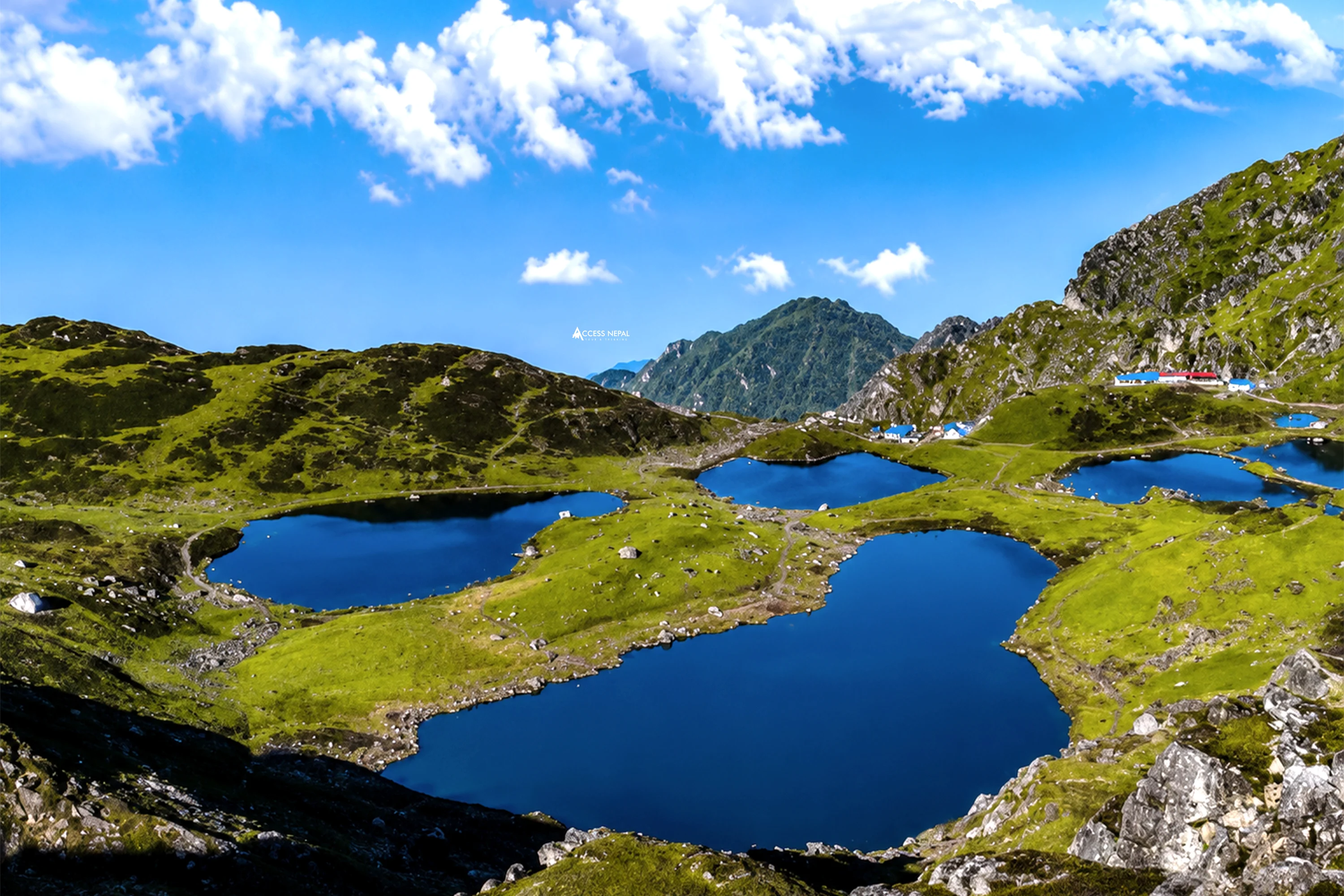
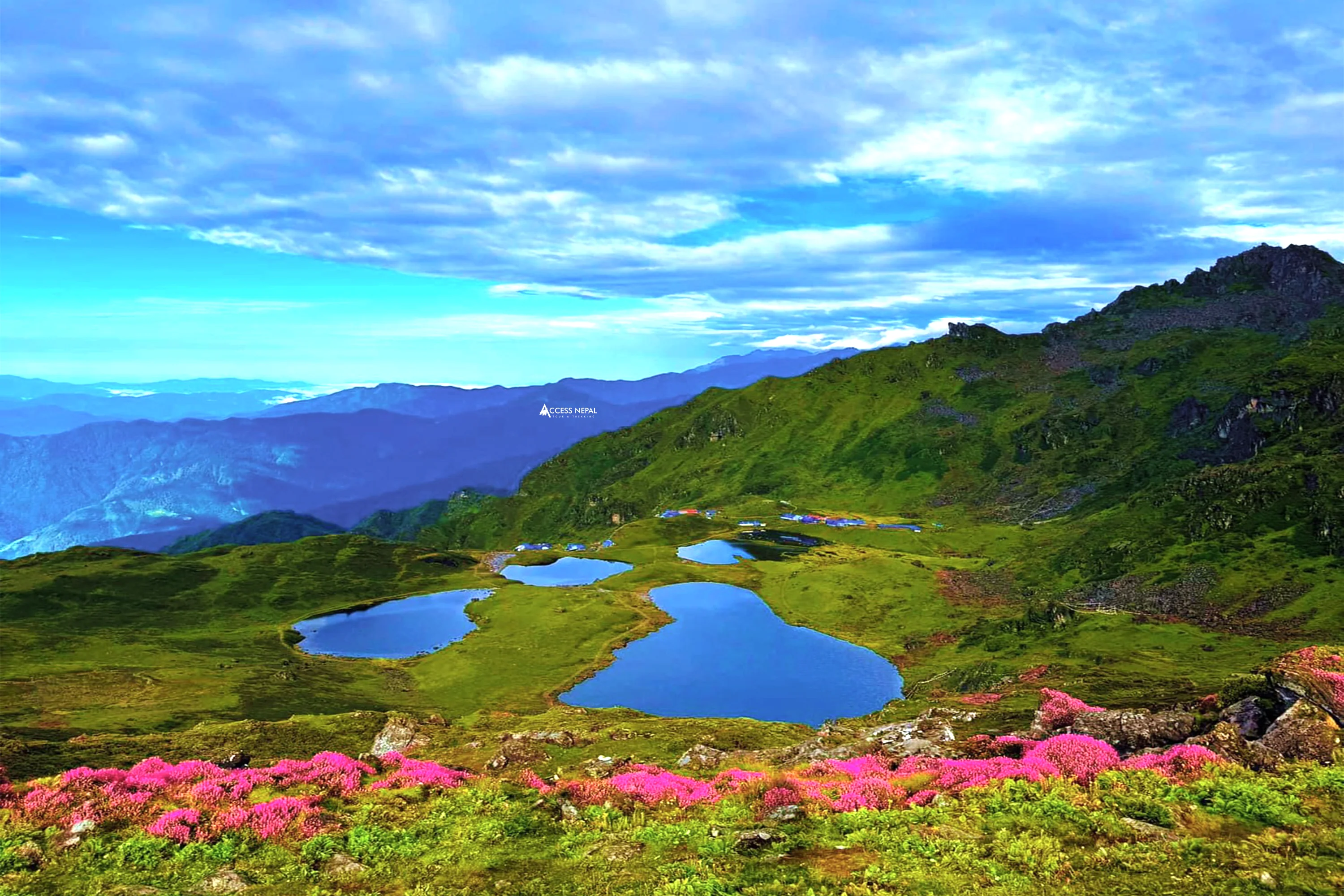
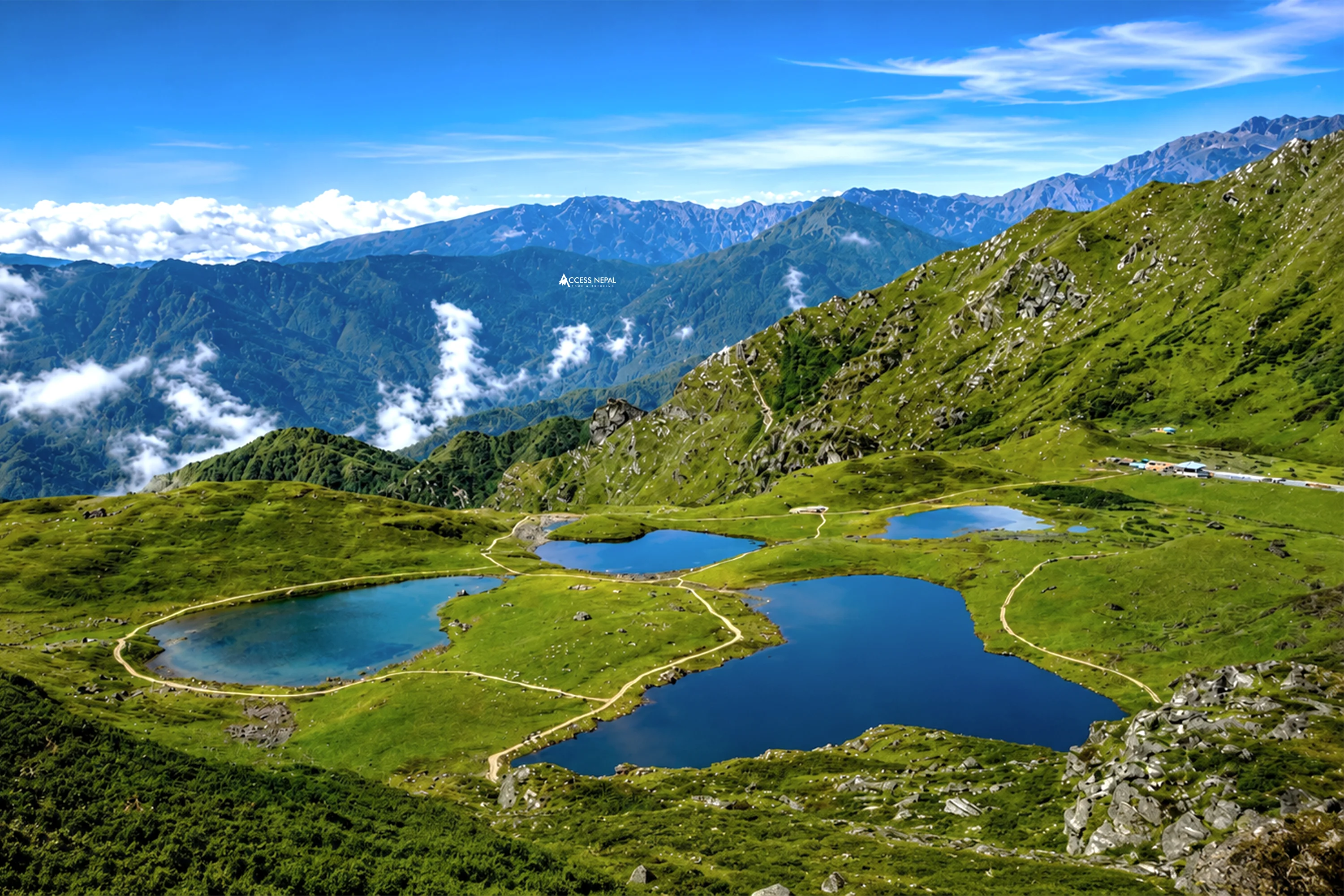
Panch Pokhari means “five lakes” in Nepali, and that’s exactly what you’re walking toward. Five glacial lakes sitting at about 4,100 meters, up in the Sindhupalchowk district, inside Langtang National Park. For Hindus and Buddhists, this place is holy ground.
Every August, during the full moon of Janai Purnima, pilgrims climb up here to bathe in the lakes, believing the water washes away more than just trail dust. You don’t need to be religious to feel it. There’s something about a lake at 4,100 meters, dead still, mountains stacked up behind it, that makes most people go quiet for a minute.
Here’s the part that makes this trek special: almost nobody does it. Everest Base Camp sees thousands of trekkers a season. Panch Pokhari sees a trickle. Same mountain range area, same kind of jaw-dropping Himalayan views, a fraction of the people.
You’re not walking behind a line of forty other hikers trying to get the same photo. You’re walking through Tamang and Sherpa villages where kids still wave because they’re curious, not because they’ve seen a thousand tourists that week.
What You See On Panch Pokhari Trail?
From different points on the trail, you get views of the Jugal Himal range, including Dorje Lakpa at 6,966 meters and Phurbi Chhyachu at 6,637 meters. On clear days you can pick out the Langtang range and even glimpses toward Gauri Shanker and the Rolwaling range. These aren’t distant blurry peaks either. Because the trek stays close to this range the whole way, the mountains feel like they’re right there with you, not something you’re squinting at through a zoom lens.
Then there’s the walk itself. You’ll pass through thick rhododendron forests that turn the hillsides red and pink if you time your trip for spring. You’ll cross rivers on wobbly suspension bridges, walk past waterfalls, and wander through oak and pine forests that smell like nothing you get back home.
Keep your eyes open, and you might spot a red panda, a musk deer, or a troop of monkeys moving through the trees. Birdwatchers get a treat too, with pheasants and all sorts of Himalayan bird species along the way.
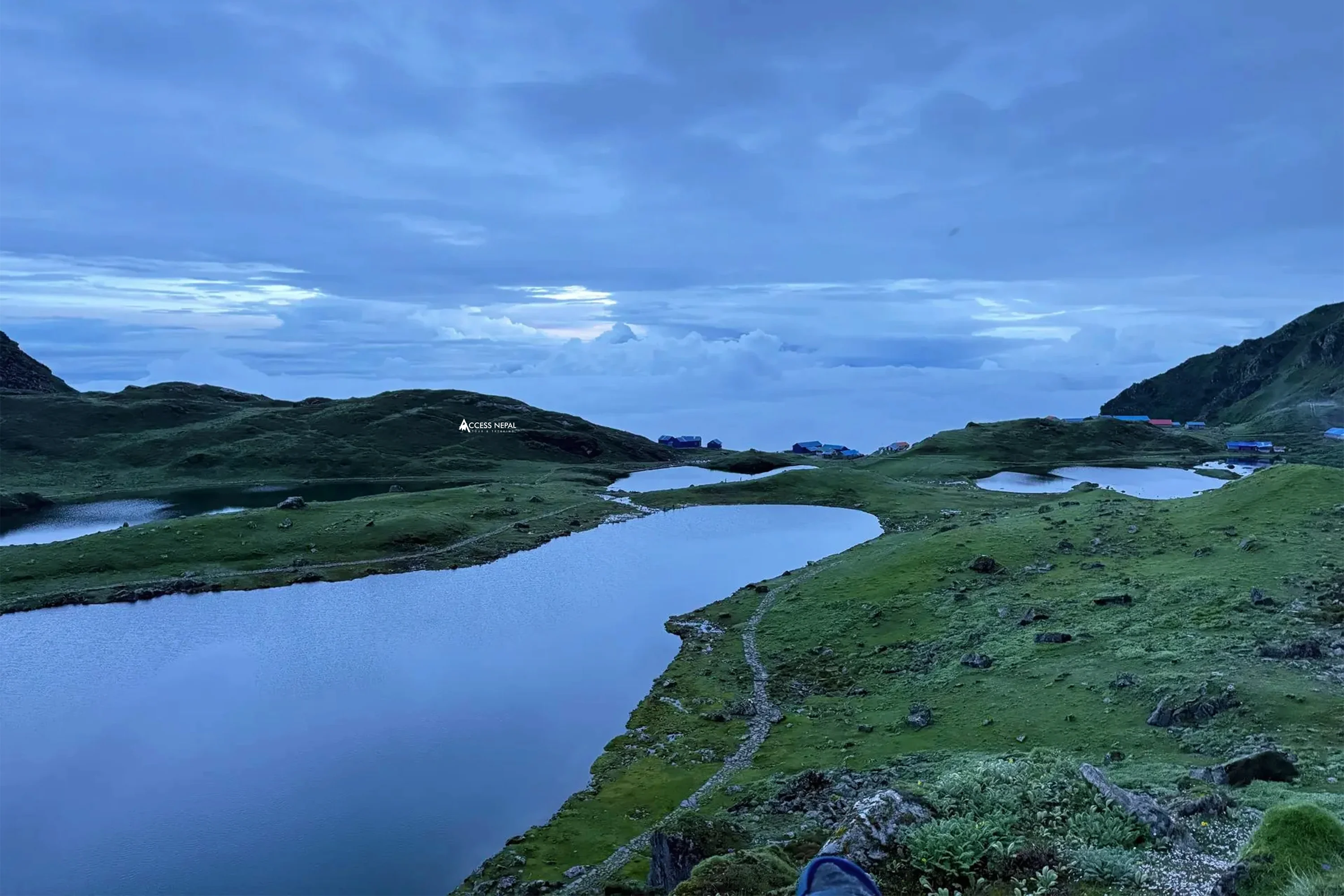
And then, of course, there’s the payoff: five lakes sitting quietly at the base of a mountain wall, the biggest one called Surya Kunda, all of them fed by glacier melt and considered deeply sacred.
Most people say the sunrise here, watching the light hit the water and the peaks at the same time, is the moment that makes the whole trip worth it.
Major Trip Highlights of Panch Pokhari Trek
- Reach five sacred, glacier-fed lakes sitting at 4,100 meters, the holiest spot for Hindu and Buddhist pilgrims during the Janai Purnima festival every August
- Walk right up to the Jugal Himal range, with Dorje Lakpa (6,966m) dominating the skyline for much of the trek
- Catch clear-day views toward the Langtang range, Rolwaling, and Gaurishankar too
- Pass through real Tamang and Sherpa villages that see a fraction of the tourists on busier routes like the Everest Base Camp trek route.
- Wander through thick rhododendron forest, especially colorful if you go in spring
- Cross rivers on swaying suspension bridges and walk through oak and pine forest that smells like nowhere back home
- Watch for wildlife along the way, including red pandas, musk deer, and troops of monkeys
- Trek a loop route, meaning you see new scenery on the way down instead of retracing your own footsteps
- Experience one of Nepal’s quietest, least-crowded high-altitude treks, without giving up big Himalayan views
Panch Pokhari Trek Itinerary
Day 1Arrival in Kathmandu
-
- 1,400 meters,
Day 2Drive from Kathmandu to Bhotang
Day 3Trek from Bhotang to Kami Kharkha
Day 4Trek from Kami Kharka to Pauwa Bas
Day 5Trek from Pauwa bas to Narsimpati
Day 6Trek from Narsimpati to Panch Pokhari
Day 7Exploration Day at Panch Pokhari
Day 8Trek from Panch Pokhari to Tupi Danda
Day 9Trek from Tupi Danda to Dhap
Day 10Trek from Dhap to Melamchi, then Drive to Kathmandu
- Airport arrival and departure transfer (Pickup and drop-off).
- A welcome dinner (Day 1) in Kathmandu featuring Nepali food and cultural performances.
- Twin-sharing accommodation at Apsara Boutique Hotel in Kathmandu with breakfast (Upgrade available with additional cost).
- Twin-sharing accommodation with breakfast.
- Full-day sightseeing of Kathmandu Valley by tour guide and private transportation (monument fees covered).
- Public Hiace (If the group is more than 4 people, we will provide private transportation as per the itinerary.
- Drive from Pokhara to Kathmandu on a deluxe tourist bus.
- Accommodation at teahouses during the trek (attached toilet and bathrooms for 7 nights).
- Full board meals during the trek (Breakfast, lunch, and dinner), seasonal fruits after dinner, and 3 cups of tea/coffee during the trek.
- One trekking guide per 7 trekkers (Experienced, first-aid trained, government-licensed, and English-speaking) with all expenses.
- One Porter for two members during the trek with their insurance and all expenses.
- Adequate Chlorine Tablets for water purification.
- Access Nepal Duffel bag, Panch Pokhari Trek map, and T-shirt as souvenirs.
- Down Jackets and sleeping bags during the trek upon request.
- Adventure certificate for completing the trek.
- First-aid kits (oximeter included).
- A farewell dinner.
- All the trekking permits
- All applicable government taxes
- Nepal Visa on Arrival
- Meals in Kathmandu and Pokhara (Welcome and Farewell dinner included).
- Personal expenses, such as travel insurance, costs for an extra porter, Wi-Fi, charging of electronic devices, and extra meals.
- Tips for guides, porters, drivers, and other field staff.
- Any extended trips and stays in Nepal.
Fixed Departure
Our groups are small with maximum 14 people. We create groups of independent travelers, friends and families which maintains close interpersonal connection, engage more and get into depth of the journey. Choose a date from the calendar to reserve your spot.
Panch Pokhari Trek Route Map

Useful Information
Best Time to Visit Panch Pokhari
Spring, from March to May, and autumn, from September to November, are your best windows. Both give you stable weather, clear mountain views, and comfortable daytime temperatures for walking.
Spring adds rhododendron forests blooming red and pink across the hillsides, which is genuinely one of the prettiest backdrops you’ll get on any Nepal trek. Autumn brings crisp, clean air right after the monsoon rains clear out, so visibility tends to be excellent.
Winter, December through February, is technically possible, but you’re dealing with real cold and snow at higher elevations, and the trail can get harder to follow if it’s covered.
Monsoon season, June through August, brings heavy rain, leeches on the lower trail, and clouds that block a lot of the mountain views, so most people, including us, steer clients away from that window unless they’re specifically there for the Janai Purnima festival in August and are prepared for wet conditions.
Panch Pokhari Trek Difficulty
Let’s not sugarcoat this, and let’s not scare you either. Panch Pokhari is graded as a moderate trek. That means you don’t need mountaineering skills, ropes, or ice axes. You don’t need Everest-level experience.
But it does mean long walking days, some steep climbs, and a fair bit of up-and-down on rough trail, especially compared to more developed routes like Everest Base Camp or Annapurna.
Think of it this way. If you can comfortably walk five to seven hours a day, several days in a row, with a daypack on your back, you can do this trek. You don’t need to be an athlete. You do need decent fitness and a bit of mental toughness for the days when the trail climbs steadily for hours before it lets you rest.
Kids as young as their early teens have done treks like this with their families, and plenty of trekkers in their sixties and seventies handle it just fine, as long as they’ve prepared their legs and lungs beforehand with regular walking, stairs, or light hiking in the months before the trip.
One thing worth being upfront about: because teahouses thin out the higher you go, some nights involve camping, and that adds a bit more physical and logistical weight to the trip compared to a pure teahouse trek. We’ll get into that in a minute.
How much does it cost to trek Panch Pokhari?
Guided 10-day packages for Panch Pokhari, including transport, guide, porter support, permits, meals, and accommodation, generally land somewhere between 650 and 950 US dollars per person, though the exact number shifts with group size, season, and exactly what’s included.
Independent trekking without a guide can be cheaper on paper, but on a trail this remote, with limited signage and patchy teahouse coverage, most people (including plenty of experienced trekkers) don’t recommend going without local support.
Two permits are required no matter who you book with: the Langtang National Park entry permit and a TIMS card (that’s the Trekkers’ Information Management System, basically Nepal’s way of keeping track of who’s on the trail in case anything goes wrong). A good trekking company handles this paperwork for you as part of the package.
Beyond the package price, budget some pocket money for things that aren’t usually included: bottled drinks, snacks, hot showers where available, Wi-Fi charges, souvenirs, and tips for your guide and porters. Ten to twenty US dollars a day covers most people comfortably for these extras.
We won’t pretend Access Nepal Tour and Treks is the only company that can get you up this trail. What we will say is that we’re based right here in Kathmandu, we build our itineraries around actual trail conditions rather than copy-pasting a generic template, and the same trust we’ve built with trekkers heading out on bigger routes like Everest Base Camp carries over to a quieter trek like this one. If something changes on the trail, weather, health, timing, we’re a phone call away, not an email into the void.
What to Pack, and why it actually matters?
Packing lists are everywhere online, and most of them just dump forty items on you with no explanation, so you end up either overpacking out of anxiety or underpacking because you didn’t understand why something mattered. Let’s fix that.
Start with your feet, because they’re doing all the work. A solid pair of broken-in hiking boots matters more than almost anything else on this list.
New boots straight out of the box on day one of a ten-day trek is a recipe for blisters that can genuinely ruin your trip, so wear them around your neighborhood for a few weeks before you fly out. Bring two pairs of good hiking socks and rotate them, since wet socks in the mountains are miserable and slow to dry.
Layers matter more than one giant jacket. Mornings and evenings at altitude get properly cold, even in spring or autumn, while midday sun on an exposed ridge can have you sweating in a t-shirt.
A base layer, a warm mid layer like fleece or light down, and a windproof or waterproof outer shell let you adjust as the day swings between extremes, which it will, sometimes within the same hour.
A warm sleeping bag isn’t optional here. Because some nights are spent camping rather than in a heated teahouse room, you want a bag rated for genuinely cold temperatures, not just “cool evening” comfort.
If you don’t own one, most trekking companies, including us, can rent you a proper one rather than you buying something you’ll never use again.
Trekking poles feel like overkill to first-timers and then become everyone’s best friend by day three. The trail has real elevation changes, and poles take a surprising amount of strain off your knees, especially on the way down, which is honestly harder on your joints than climbing.
Sunscreen and sunglasses matter more at altitude than people expect, since the sun up there is stronger than it feels, and snow or lake glare can genuinely hurt your eyes without proper protection. A headlamp is essential too, not optional, since electricity is unreliable and mornings often start before sunrise.
Bring a basic water purification method, whether that’s tablets, a filter bottle, or both. Tap and stream water along the trail needs treating before you drink it. And pack a small dry bag or a couple of sturdy plastic bags to keep essentials protected if it rains, since afternoon showers aren’t unusual depending on the season.
Last thing: bring a bit of cash in Nepali rupees. Card machines don’t exist on this trail, and foreign currency generally isn’t accepted once you’re out of Kathmandu.
Accommodation during the Trek
Here’s the honest picture. The lower and middle sections of the Panch Pokhari trail have basic teahouses and lodges, simple rooms, simple food, warm enough hospitality from Tamang and Sherpa families who’ve lived in these hills for generations. As you climb higher toward the lakes themselves, teahouses become rare, and for a couple of nights near Panch Pokhari, camping is genuinely the more reliable option because the infrastructure just isn’t built out yet the way it is on busier routes.
This isn’t a downside so much as a different kind of experience. Waking up in a tent with the Jugal Himal range lit up gold at sunrise, no other trekkers in sight, hits differently than a crowded lodge dining room. On a guided trip like ours, the camping is properly set up: sturdy tents suited to wind and cold, a cook preparing hot meals, and a crew handling the logistics so you’re not the one pitching a tent after seven hours of walking.
Sleeping Arrangements: What your Night Actually Looks Like?
In teahouses, expect simple twin rooms, a bed with a mattress and blankets, and shared bathrooms that are usually located outside the main building rather than attached to your room. Hot showers are sometimes available for a small extra fee, though don’t count on one every single night, especially higher up.
While camping, you’ll be in a two-person tent with a proper sleeping mat underneath you and your own sleeping bag doing the real work of keeping you warm. It’s cozier than it sounds, and after a long day of walking, most people sleep surprisingly well despite the cold, mostly because they’re genuinely tired in the good way.
Picture this, just as an example of how it can feel, not something that happened to a specific guest of ours: you zip open your tent at five in the morning because you can’t quite sleep through the excitement, and the lake outside is glass-still, catching the very first orange light hitting the peak above it. Nobody else is awake yet. That’s the kind of moment this trek is built around.
Network and Internet: Set Your Expectation Now
Let’s be straight about this one, because it trips people up. In the lower villages of the trek, mobile signal from Nepali providers works reasonably well, and some teahouses offer paid Wi-Fi for basic messaging.
As you climb higher, coverage gets patchy fast, limited to a handful of spots like Tuppi Danda and Nosyampati, and near the lakes themselves, don’t expect much of anything.
If you need to check in with family, do it from lower altitude villages or before you leave Kathmandu, and let people back home know you’ll likely be quiet for a few days near the top. Honestly, most trekkers end up appreciating the break.
Charging your phone or camera happens mostly through solar panels or generators at teahouses, usually in the evening, and sometimes for a small fee, so bring a power bank and maybe a spare battery if photography matters to you.
Altitude Sickness During the Trek and How to Handle Altitude Sickness?
Let’s talk about this honestly, because it matters more than most packing lists. Altitude sickness, also called AMS, can affect anyone above roughly 3,000 meters, and since Panch Pokhari reaches 4,100 meters, it’s a real part of planning this trek, not something to brush off. It has nothing to do with fitness level, plenty of strong athletes get it while less experienced trekkers sail through fine, because it’s really about how your individual body responds to lower oxygen levels.
The early warning signs are headache, nausea, dizziness, and feeling unusually tired or short of breath. If that happens, the answer is almost always the same: stop climbing, rest, drink plenty of water, and let your guide know immediately rather than pushing through and hoping it passes.
Our itinerary already builds in a gradual climb and a rest day at Panch Pokhari specifically to give your body time to adjust, since a slow, steady ascent is still the single best way to avoid AMS in the first place.
If symptoms get worse rather than better with rest, descending to a lower altitude is the right move, and your guide is trained to make that call quickly rather than waiting it out. Some trekkers also talk to their doctor before the trip about altitude medication as a preventive option, which is worth a conversation with a medical professional rather than something to figure out on the trail.
Route Overview of the Panch Pokhari Trek
The trek starts with a drive northeast out of Kathmandu, through Melamchi Bazaar, into Sindhupalchowk district, ending at the trailhead village of Bhotang.
From there, the trail climbs steadily through forest and Tamang villages, passing through Kami Kharka, Pauwa Bas, Hile Bhanjyang, and Narsimpati before reaching the lakes at Panch Pokhari.
After a rest day exploring the lakes, the descent takes a different path back down through Tupi Danda and Dhap, following the Indrawati River back to Melamchi Bazaar before the drive returns you to Kathmandu.
The loop shape of the route means you see different scenery on the way up and the way down, rather than just retracing your own footsteps.
Elevation Gain and Loss During the Trek
You’ll start the trekking portion at Bhotang, around 1,800 meters, and climb steadily to the highest point of the trip at Panch Pokhari, 4,100 meters, a total elevation gain of roughly 2,300 meters spread across five days of walking.
That gradual pacing is intentional, since climbing slowly gives your body real time to adjust rather than shocking it with a fast ascent.
Coming down, the descent drops you from 4,100 meters at the lakes all the way to around 800 meters near Melamchi Bazaar before the drive back to Kathmandu, a loss of roughly 3,300 meters across four days, including some genuinely steep sections that are harder on your knees than your lungs.
Panch Pokhari Trek Distance and Time Taken
All in, you’re covering somewhere between 45 and 55 kilometers round trip, depending on the exact trail conditions and any detours your guide takes for viewpoints.
Daily walking time runs between 4 and 7 hours depending on the day, with the longer, harder days falling in the middle of the trek as you approach the lakes, and the shortest day built in deliberately as your rest and exploration day at Panch Pokhari itself.
It’s not a race, and a good guide paces the group so nobody’s sprinting up switchbacks just to hit a number on paper.
Panch Pokhari Trek FAQs
How long is the Panch Pokhari trek?
The standard package runs 10 days total, door to door from Kathmandu and back, with about 8 of those days spent actually walking and the rest split between arrival, driving to and from the trailhead, and a rest day at the lakes.
Is Panch Pokhari trek difficult?
Which month is best for Panch Pokhari trek?
How much does it cost to trek the Panch Pokhari?
What is the altitude of Panch Pokhari?
In which district is Panch Pokhari located?
What is the weather like in Panch Pokhari?
What is the temperature in Panch Pokhari, Sindhupalchowk?
What is the Panch Pokhari trek in Nepal?
Awards and Achievements
Access Nepal Tour and Treks has been recognized with TripAdvisor’s prestigious Travelers’ Choice Award for multiple consecutive years, reflecting our unwavering commitment to quality and clients’ satisfaction.