OFF
Discounts are solely based on your group size. We do not add anyone to your group.
- Best Price Guarantee
- Hassle-Free Booking
- Team of highly experienced Experts
- Your Happiness Guaranteed
Book Now. No Booking or Credit Card Fee
- Schedule Your Own Dates
- Group Discounts
- Guaranteed Departures
- Easy Cancellation
- 60% Repeated Customers
-

- Duration
- 19 Days
-

- Transportation
- Private Vehicle & Flight
-

- Trip Grade
- Moderate
-

- Max-Altitude
- 5,644m/18,517ft
-

- Accomodation
- Teahouse & Hotel
-

- Primary Activity
- Trekking
-

- Meals
- Trek: B|L|D, KTM: |B|
-

- Best Season
- Spring & Autumn
-

- Distance
- 130 km/ 80 mi
Everest Base Camp Trek With Kids 2026 Overview
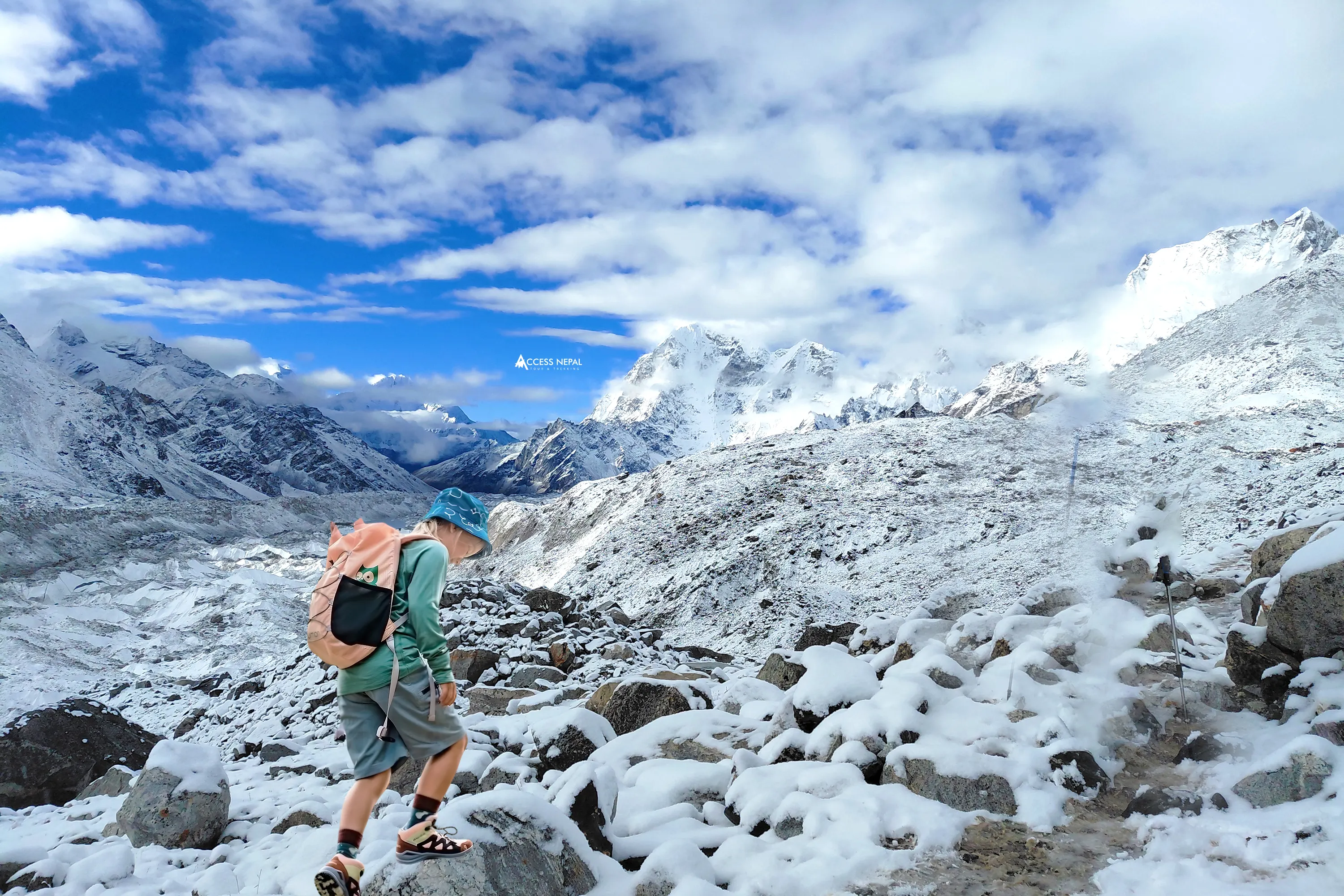
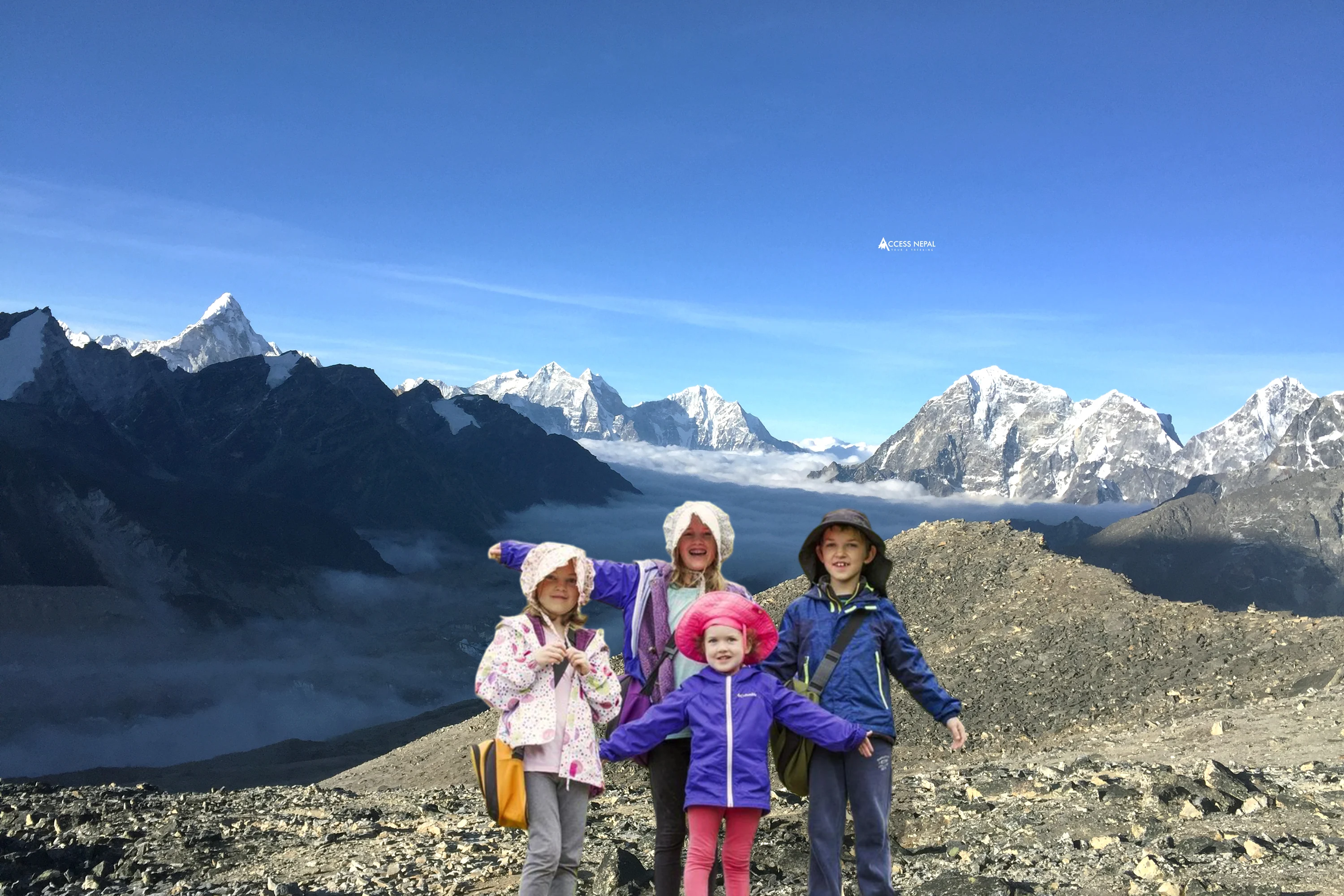
Our Everest Base Camp Trek With Kids is a carefully designed package, prioritizing the safety of children. Now, even kids can join their parents and stand at the foot of Mount Everest (8,848 m), the tallest peak in the world.
The Everest Base Camp Trek with Kids takes you to the heart of the Everest region. Young trekkers can also experience the jaw-dropping mountain views, Sherpa culture, and alpine landscapes with ease. The Everest Base Camp Trek with kids itineraries move slowly with lots of acclimatization days and short trekking hours under the guidance of experienced Sherpa Guides.
Every corner of this trek is a delight for the eyes. Trekking through wooded paths decorated with prayer flags, following the rhythm of yak bells, and breathing crisp, pine-scented air hits the soul.
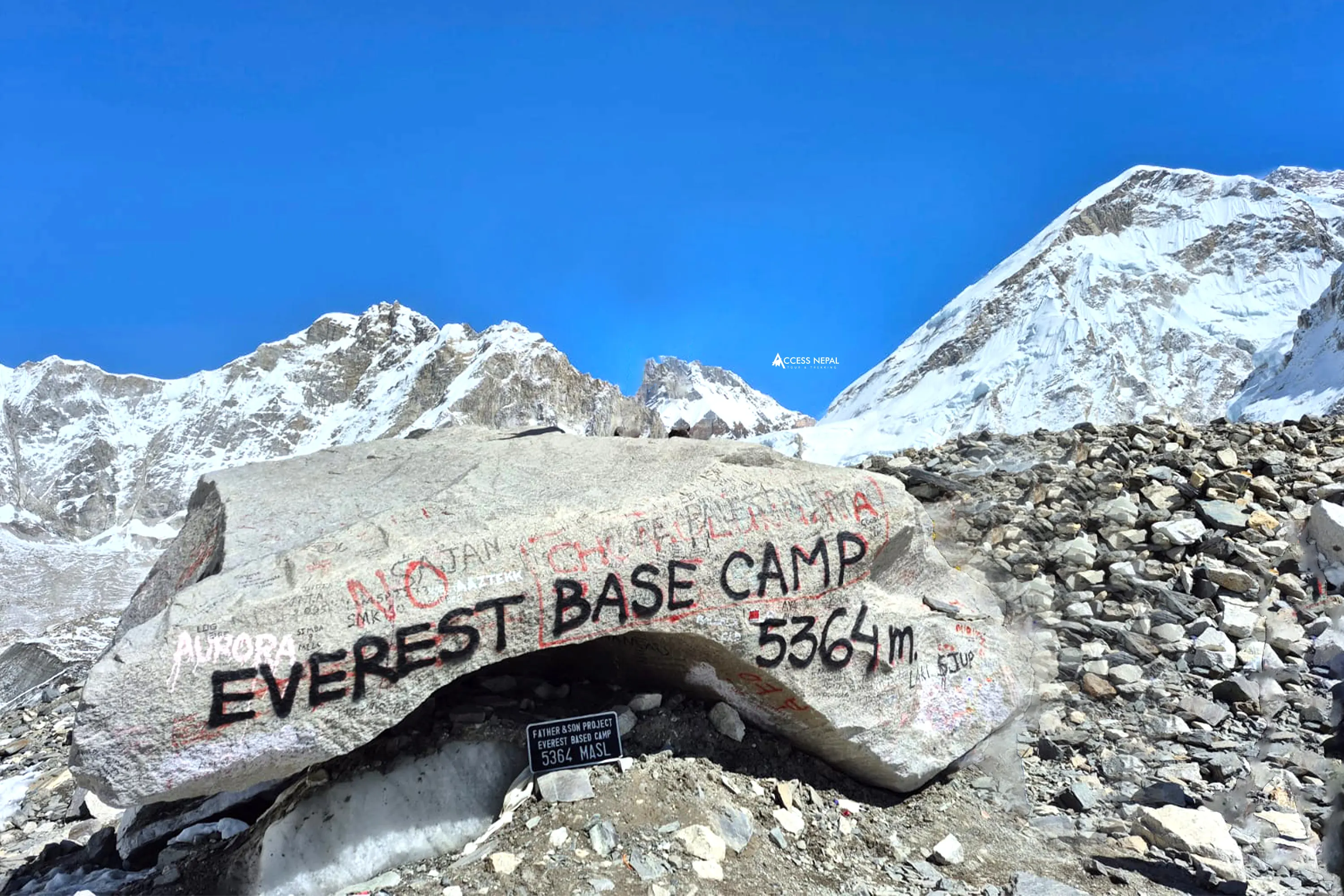
Though the Everest Base Camp Trek with Kids itinerary is made for children, it offers equal adventure and enjoyment as in the standard Everest Base Camp Trek. Kids can comfortably reach Everest Base Camp (5,364 m) and hike to iconic viewpoint Kala Patthar (5,555 m) for a 360-degree panaromic sunrise and mountain views.
The Everest Base Camp Trek with Kids route follows the same classic EBC route. The only difference is the gentle space and more acclimatization days. Families can do this trek with peace of mind and just enjoy the magical Himalayan beauty. Our kid-friendly Everest Base Camp Trek is an all-inclusive 19-day package. It offers one of the best and most memorable experiences with your kids. Book and enjoy the classic adventure to the Himalayas with your children.
Note: This Everest Base Camp Trek with Kids itinerary is applicable for seniors also who prefers walking for return journey as well. You can compare this package to our Everest Base Camp Trek for Seniors for further understanding.
Everest Base Camp Trek with Kids Highlights
- Morning hike to Kala Patthar (5,555m) for a sunrise panorama.
- Trek to Everest Base Camp (5,364m), the base camp of the world’s highest peak.
- 360-degree Himalayan panorama of Mount Everest, Lhotse, Nuptse, Pumori, Ama Dablam, Khumbu Glacier, and many more.
- Tengboche Monastery is the largest hilltop gompa in the Everest region.
- Namche Bazaar (3,440m), a popular Sherpa market town, and the Sherpa Cultural Museum.
- Crossing suspension bridges and walking among colorful prayer flags.
- Trek through Sagarmatha National Park.
- Wildlife tour spot: Himalayan tahr, and blooming rhododendrons and native flowers along the trail.
- Cultural immersion and experiencing the lifestyle of the Sherpa people.
For those looking to avoid crowded trails, the Pikey Peak Trek offers a quiet journey through Sherpa villages and scenic hill landscapes.
How does the Everest Base Camp Trek with Kids compare to other family treks?
Not every family is ready for Everest Base Camp, and that’s okay. Nepal has several lower-altitude, shorter treks that work well for younger children or first-time trekking families. Here’s how EBC with Kids compares to two of the most popular alternatives.
| EBC with Kids | Ghorepani poon hill trek | Langtang Valley Trek | |
| Duration | 19 days | 7-10 days | 8-11 days |
| Maximum altitude | 5,644m (Kala Patthar) | 3,210m (Poon Hill) | 3,870- 4,984 m (Kyanjin Gompa / optional Tserko Ri) |
| Altitude sickness risk | Real risk: managed with acclimatization days | Vey low | Low to moderate |
| Getting there | Flight to Lukla (weather-dependent) | Drive from Pokhara | Drive from Kathmandu |
| Recommended Age | 5 years and up | 4-5 years and up | 6 years and up |
| Daily walking | 3-8 hours, varies by day | 4-6 hours | 5-6 hours |
| Difficulty | Moderate to strenuous | Easy to moderate | Moderate |
| Best for | Families set on reaching Everest Base Camp itself | Younger Kids, shorter holidays, first Himalayan trek | A middle-ground trek with real mountain scale, no flights |
Ghorepani Poon Hill is the easiest of the three. It stays under 3,210m the whole way, so altitude sickness is barely a concern. It can even work for kids as young as 4 or 5, with porters.
Langtang Valley Trek sits in the middle. It’s closer to Kathmandu than Everest (just a drive, no domestic flight), reaches proper high-altitude scenery near 3,870m at Kyanjin Gompa, and gives a real sense of Himalayan wilderness without time and altitude commitment of EBC.
Everest Base Camp Trek With Kids Itinerary
Day 01Arrival Day in Kathmandu
Day 02Sightseeing and Trek Preperation in Kathmandu
-
- 1,440 m/ 4,724 ft
-
- 6 to 7 hrs of tour
-

- 1,440 m/ 4,724 ft
Day 03Fly to Lukla; Trek to Phakding
-
- 8 km/ 5 mi
-
- 2,860 m/ 9,383 ft
-
- 35 min flight, 4 hrs trek
-
- 2,610 m/ 8,562 ft
Day 04Trek from Phakding to Monjo
-
- 4 km/ 2.5 mi
-
- 2,835 m/ 9,301 ft
-
- 2 to 3 hrs of trek
-
- 2,835 m/ 9,301 ft
Day 05Trek from Monjo to Namche Bazaar
-
- 8 km/ 5 mi
-
- 3,440 m/ 11,286 ft
-
- 3 to 5 hrs of trek
-
- 3,440 m/ 11,286 ft
Day 06Acclimatization in Namche Bazaar
-
- 4 km/ 2 mi
-
- 3,440 m/ 11,286 ft
-
- 2 to 3 hrs of trek
-
- 3,440 m/ 11,286 ft
Day 07Trek from Namche Bazaar to Tengboche
-
- 10 km/ 6 mi
-
- 3,860 m/ 12,664 ft
-
- 3 to 5 hrs of trek
-
- 3,860 m/ 12,664 ft
Day 08Trek from Tengboche to Dingboche
-
- 12 km/ 7.5 mi
-
- 4,410 m/ 14,470 ft
-
- 5 to 7 hrs of trek
-
- 4,410 m/ 14,470 ft
Day 09Acclimatization in Dingboche
-
- 3 km/ 1.8 mi
-
- 4,410 m/ 14,470 ft
-
- 2 hrs of trek
-
- 4,410 m/ 14,470 ft
Day 10Trek from Dingboche to Thukla
-
- 5 km/ 3 mi
-
- 4,620 m/ 15,157 ft
-
- 2.5 hrs of trek
-
- 4,620 m/ 15,157 ft
Day 11Trek from Thukla to Lobuche
-
- 6 km/ 4 mi
-
- 4,940 m/ 16,210 ft
-
- 1.5 to 2 hrs of trek
-
- 4,940 m/ 16,210 ft
Day 12Trek to Gorak Shep, Hike to Everest Base Camp and back to Gorakshep
-
- 11.5 km/ 7.1 mi
-
- 5,364 m/ 17,598 ft
-
- 8 to 9 hrs of trek
-
- 5,364 m/ 17,598 ft
Day 13Early morning Kala Patthar & Trek to Thukla
-
- 10 km/ 6 mi
-
- 5,644 m/ 18,515 ft
-
- 7 to 8 hrs of trek
-

- 4,620 m/ 15,157 ft
Day 14Trek from Thukla to Tengboche
-
- 15 km/ 9 mi
-
- 4,620 m/ 15,157 ft
-
- 5 to 6 hrs of trek
-
- 3,860 m/ 12,664 ft
Day 15Trek from Tengboche to Namche Bazaar
-
- 11 km/ 7 mi
-
- 3,860 m/ 12,664 ft
-
- 5 to 6 hrs of trek
-
- 3,440 m/ 11,286 ft
Day 16Trek from Namche Bazaar to Phakding
-
- 8 km/ 5 mi
-
- 3,440 m/ 11,286 ft
-
- 5 to 6 hrs of trek
-
- 2,610 m/ 8,562 ft
Day 17Trek fromPhakding to Lukla
-
- 7.5 km/ 4.6 mi
-
- 2,860 m/ 9,383 ft
-
- 3 to 4 hrs of trek
-
- 2,860 m/ 9,383 ft
Day 18Fly from Lukla to Kathmandu
-
- 135 km/ 84 mi
-
- 2,860 m/ 9,383 ft
-
- 35 min flight
-
- 1,440 m/ 4,724 ft
Day 19Departure from Kathmandu
- Airport Transfer via private tourist vehicle.
- Twin-sharing accommodation for 3 Nights at Apsara Boutique Hotel with breakfast in Kathmandu (customized option available at extra fees).
- Traditional Nepali style with cultural performances, welcome dinner (Day 1) in Kathmandu.
- Private tourist vehicle and tour guide during the sightseeing in Kathmandu (all required monument fees included).
- Kathmandu to Lukla round-trip ticket with airport transfer and tax fees covered. (round-trip ticket for Ramechhap to Lukla and drive to Ramechhap from Kathmandu during peak season).
- Twin-sharing teahouse accommodation throughout the trek.
- Hot showers and an attached toilet bathroom are available for 5 nights along the trek (bucket of hot water available for extra cost).
- 1 Highly experienced, professional, first-aid trained, government-licensed, English-speaking local guide for 7 trekkers (expenses and insurance covered).
- 1 Porter for 2 trekkers with cost and insurance included.
- Farewell dinner (Day 18) at one of the fine restaurants in Kathmandu.
- Enough chlorine tablets for water purification.
- Everest Base Camp Trek for kids map, a T-shirt, and a duffel bag as a souvenir.
- Down jackets and sleeping available for free (must return after trek).
- First aid kit with an oximeter.
- Helicopter evacuation and emergency medical services (covered by your insurance).
- All required permit fees.
- Government fees and taxes.
- Nepal Tourist Visa.
- Personal expenses like snacks, extra luggage, internet, charger, etc.
- Travel insurance.
- Tips for guides, porters, and other staff members.
- Additional trip or days in Nepal.
- Meals in Kathmandu (welcome and farewell dinner included).
Fixed Departure
Our groups are small with maximum 14 people. We create groups of independent travelers, friends and families which maintains close interpersonal connection, engage more and get into depth of the journey. Choose a date from the calendar to reserve your spot.
Everest Base Camp Trek With Kids Route Map

Altitude Chart
Things to Know on Everest Base Camp Trek With Kids
Lukla Flight Delays and Cancellations
Flight delays and cancellations to Lukla are common, especially during the busy spring and autumn seasons, and families should plan for this possibility rather than be surprised by it.
The main reason is Lukla’s airstrip itself. Tenzing-Hillary Airport sits at 2,860m with one of the shortest runways in the world, hemmed in by mountain walls on one end and a steep drop on the other. Pilots need cleared, low-wind conditions with good visibility to land safely, so even light cloud cover, fog, or crosswinds can ground flights for hours or, in bad stretches, for several days in a row. Congestion at Kathmandu’s single-runway international airport adds a second layer of delay risk, particularly during the September-to-November peak.
During peak months (March-May and September-November), flights to Lukla are usually rerouted through Ramechhap/Manthali airport rather than Kathmandu, since Kathmandu’s runway can’t handle the added traffic.
Manthali is roughly a 4-5 hour drive from Kathmandu, so on the day of your flight you’ll likely leave your hotel around 1-2 AM to reach the airport in time for the first flying window. This adds a long, early travel day before the trek even begins and is worth mentally preparing kids for, since it’s a jarring start compared to the rest of the itinerary’s gentle pacing.
What this means for families specifically
A delay is an inconvenience for any trekker, but for families it can mean losing a rest day you were counting on for acclimatization, or arriving in Lukla later than planned with less daylight to reach the first overnight stop. Because of this, we build extra buffer into the kids’ itinerary and recommend families keep at least one or two additional unscheduled days free at the end of the trip, before any international flight home, purely as insurance against a Lukla delay.
If flights are grounded for multiple days, options include waiting it out, taking a shared helicopter transfer (usually at extra cost, sometimes reclaimable through travel insurance), or, in rare cases, driving partway and trekking in from a lower village.
Our guides make this call in real time based on group size, kids’ energy levels, and how much schedule buffer remains. We don’t rebook onto the first available option automatically if it means rushing children.
How to reduce the risk of Lukla flight delays and cancellations?
- Fly in the shoulder days of your trip rather than the very first available slot, if your schedule allows.
- Keep 1-2 spare days unbooked at the trip’s end before your international flight.
- Make sure your travel insurance explicitly covers helicopter evacuation and trip-delay costs, not just medical emergencies.
Everest Base Camp Trek With Kids
Access Nepal Tour and Trekking has brought the Everest Base Camp Trek package, which can now also be done by families with children. Now, everyone can do this iconic trek safely. From children to grown-ups, everyone’s dream of making it to the base camp of Mount Everest (8,848 m), the world’s tallest peak, is now gonna be true. Trek through the classic Everest Base Camp route, Sagarmatha National Park, rhododendron forests, enjoy the Himalayan views, and experience Sherpa culture.
Everest Base Camp Trek with kids is a family-focused adventure. It is operated with great care, safety, gradual pacing, and child-centered care. It offers great learning opportunities and creates beautiful memories with your children.
Why Trek to Everest Base Camp with Kids?
Located high in the mountains, this adventure can also be done with the family. Doing the Everest Base Camp Trek with kids exposes them to a new environment. They can experience the remote lifestyle of people living in the mountains and a diverse culture.
The trek to Everest Base Camp with kids offers many educational benefits and cultural immersion. By trekking daily, meeting friendly Sherpa people, visiting monasteries, and watching Nepalese children going to school in high mountain villages, kids can learn how people live here.
Since. It’s a popular trekking destination all over the world, with facilities. Modern comforts are easily accessible, like deluxe hotel rooms, hot showers, electricity, and Wi-Fi at lower regions. This trek is a safe, managed adventure suitable for children.
Why Everest Base Camp Trek with Kids Route Safe?
Access Nepal Tours and Trekking’s Everest Base Camp Trek with kids package is carefully designed following the internationally recognized family trekking and child-safety standards.
Our 19-day Everest Base Camp with Kids route follows the same classic route of EBC, but with longer days, gradual acclimatization days, comfortable walking distances, and continuous guide supervision.
This trek is professionally designed and suitable for kids above 5 years old and physically fit children.
Key Safety Factors we follow during the Everest Base Camp for Kids Route:
- Gradual Altitude Gain: The Everest Base Camp Trek with Kids itinerary is designed in accordance with international altitude-acclimatization guidelines. The long duration and acclimatization day with gradual elevation gain are strategically placed. Rest stops in Namche Bazaar and Dingboche are included to give enough time for the kids’ bodies to adapt to the high altitude. It is essential for safety and helps to prevent the risk of altitude sickness in children.
- Short and Flexible Walking Days: Unlike the classic EBC route, our Everest Base Camp Trek for kids route has short daily trekking hours. We intentionally have included extra rest breaks, stops, and hydration pauses. These are key to preventing physical and mental fatigue among kids.
- Established and Well-Marked Trail: The Everest Base Camp Trek route is well-established and one of the safest routes in the world. Being one of the most popular trekking destinations, the trails are well-maintained and safe. It’s not remote and has lots of villages, teahouses, and medical support points along the way.
- Immediate Access to Medical Assistance: The base camp is also within helicopter evacuation range and available for 24-hour medical support. Medical services are also available along the trekking route
- Professional Supervision at All Times: Our package provides licensed, highly experienced trekking and first aid-trained guides. Children are monitored and under the guides’ supervision throughout the trek.
- Descending on the Same Route: We will follow the same familiar route when returning. This helps families and children to hike over familiar paths.
Our Everest Base Camp Trek with Kids route and itinerary is made with care. It offers altitude safety and professional support, so kids can make it to the top safely and comfortably.
What Parents Can Expect in the Everest Base Camp Trek With Kids?
At Access Nepal Tours and Trekking, your children’s comfort and safety are the main priorities. This package is made for kids. It’s not an endurance race but a safe family adventure under expert supervision.
- Child-Focused Trek Pacing: We do not compete or rush. We hike everyday in children friendly speed. The itinerary includes frequent rest stops and flexible schedules suitable for children.
- Light Loads for Children: Most of your heavy backpacks are carried by porters (provided by Access Nepal Tours and Trekking). Children can just carry a small daypack with a water bottle and their favorite snacks.
- Daily Health Monitoring: Throughout the trip, our guides will monitor the children’s oxygen levels, hydration, appetite, and sleep quality before starting the day. This helps to notice any discomfort or altitude sickness among children.
- Comfortable Accommodation & Warm Meals: All the teahouses where we stay are Family-friendly. We provide nutritious and organic meals only, which are essential for energy to support growing bodies.
- Clear Emergency Protocols: During emergencies, we make immediate helicopter evacuation and medical support arrangements.
- Positive & Supportive Environment: To reassure kids and make them comfortable, our guides are trained likewise. They are child-friendly and always help to build confidence, curiosity, and a sense of achievement throughout the trek.
Therefore, parents can enjoy the Everest Base Camp Trek at ease. Your children are safe in our hands. With support physically, emotionally, and medically at every stage, children are suitable for this trip.
Follows International Family Travel Standards
The Everest Base Camp Trek with Kids package is designed to maintain the children’s travel safety standards. The package practices conservative planning and child-centered care. We follow:
- Strictly includes international altitude-acclimatization rules for minors.
- Designed as family adventure travel, keeping safety principles like risk management, supervision, and pacing.
- Operates treks under tourism standard especually at protected areas such as Sagarmatha National Park.
- Child-appropriate expedition planning, logistics, and rest scheduling.
- Includes first-aid-trained guides and emergency helicopter evacuation arrangements.
Youngest Person to do the Everest Base Camp Trek
The youngest person to do the Everest Base Camp Trek is Siddhi Mishra from India. He achieved this milestone at just 2 years, 11 months, 15 days in March 2024.
Likewise, Carter Dallas from Scotland is also believed to have achieved this feat at around 2 years old in late 2023. He was carried on his father’s back in between. Reaching the top is now possible for everyone. The only thing you will need is significant family support, preparation, and Sherpa guidance.
Accommodation during the Everest Base Camp Trek With Kids
The package includes all required accommodations throughout the Everest Base Camp Trek with kids. All the provided accommodations during the adventure are comfortable and come in twin-sharing rooms. The accommodation services may change as you climb higher.
During your stay in Kathmandu, hotel rooms are twin-sharing with attached toilets and bathrooms. Hot showers and internet are available for free in Kathmandu.
On the trek, you’ll stay in Nepali teahouses, family-run guesthouses with basic twin-bed rooms (often on multiple-bed dormitory floors) and shared bathrooms.
Lower in the Khumbu (Lukla, Phakding, Namche), teahouses can be quite comfortable, with warm dining rooms, hot showers (for a small fee), and even solar-charged Wi-Fi. Higher up (Dingboche, Lobuche, Gorak Shep), amenities are spartan: no showers or electricity after dark, single rooms lit by kerosene or solar lights, and few lodges, so booking is wise.
Throughout the trek, guides will book your rooms in advance to ensure availability. Kids usually share a room with parents or same-sex peers. Rooms typically come with pillows, blankets, and a mattress; we strongly recommend bringing a good down sleeping bag rated below -10°C, as nights at altitude can drop to -10°C or colder.
On average, basic teahouse rooms cost about $10-25 per night for two people (rates rise at higher altitudes). The industry-standard view is that “accommodation on the actual trek is quite cheap, making family budgeting easier. Each evening, warm meals are served family-style in the common dining hall.
Dietary Guidelines during the Everest Base Camp Trek With Kids
Teahouse menus are simple but child-friendly. Expect dal bhat (rice, lentils, veggies), noodle soups, pasta, omelettes, pancakes, and occasional “pizza” (flatbread with cheese). One trekking family noted that with a child’s peanut allergy, menus posed no problem; Nepali cooks rarely use peanuts, and their kids happily ate toast, rice, soup, and potatoes.
Vegetarians and vegans are well-cateredto (dal bhat is inherently vegan), and gluten-free diets can usually be managed with prior notice. Nevertheless, we advise bringing favorite snacks (granola bars, dried fruit, trail mix, etc.) and any special foods or supplements. Encourage kids to eat well each day (three meals plus snacks) to maintain energy, and drink plenty of water (bottled or purified). Tea houses also sell hot tea, coffee, and electrolyte drinks.
Note: above Namche Bazaar, menus drop meat and cheese options, focusing on simple carbs and veg for high altitude. We will plan children’s meals and caloric needs carefully; balanced nutrition is a key safety measure at elevation.
Things to Know Before Booking this Family Everest Base Camp Trek with Juniors
Everest Base Camp Trek is a moderate-level adventure. This trek takes you into the high-altitude and remote mountain villages. And if you are preparing for the Everest Base Camp Trek with Kids, you must prepare mentally and physically.
- Physical training for 2 or 3 months before the trek.
- Trek with a licensed and professional guide only.
- Pre-prepare your family mentally and physically beforehand.
- Consult your kids with a pediatrician
- Choose the safest and best trekking season.
- Go through the trip inclusions and their safety protocols.
- Book with an experienced and licensed local agency that provides good child care.
Ideal Age to do the EBC Trek With Kids
Children above 5 years old can do the Everest Base Camp Trek. Children below 5 have also done this trek, with the youngest being 2 years 11 months old. But it requires great preparation and guidance.
Young kids are not suitable because they are vulnerable to the harsh conditions. Therefore, choose an itinerary like ours, which has extra days, a safe trekking duration, acclimatization stops, and follows a gradual elevation gain strategy.
If the logistics are not planned properly, your children have a high risk of getting altitude sickness. Access Nepal Tours and Trekking operates a trek under supervision.
Best Time to Do the Everest Base Camp Trek With Kids
The best times for the Everest Base Camp Trek are spring (March to May) and autumn (September to November). Spring and Autumn seasons are the peak trekking time in Nepal.
Due to the stable weather conditions, great visibility, and comfortable temperatures, this time of year is popular for the Everest Base Camp Trek.
During the spring season, the whole trail blooms with colourful rhododendrons and wild flowers. Trekking through the green and colourful forests in mild temperatures offers a great trekking experience.
Similarly, the autumn season brings great visibility, blue skies, and crisp mountain air. It is peak trekking season in Nepal. Since it falls around the major festivals of Nepal (Dashain and Tihar), you might get a chance to experience it firsthand.
It is best to avoid trekking to Everest Base Camp with kids in winter (December to February) and the monsoon (June to Aug). Trekking with kids during this season is not recommended. Winters are extremely cold and harsh at himalayas. Monsoon brings heavy rainfall and causes muddy trails, leeches, etc.
Therefore, the Everest Base Camp Trek with Kids is best done around the main window (spring/fall). It is safer, more comfortable, and minimizes weather risk.
Everest Base Camp Trek Permits for Kids
To do the Everest Base Camp Trek with juniors, you will need two permits: the Sagarmatha National Park Entry Permit and the Khumbu Pasang Lhamu Rural Municipality Permit. These permits are essential for the conservation of national parks and funding local communities.
Both of these permits have costs, and arrangements are included in the package. However, if you are doing this trek by yourself, you can obtain them from the Nepal Tourism Board office in Thamel. The Sagarmatha National Park Entry Permit costs around NPR 3,000 (US$26) per person, and the Khumbu permit is NPR 2,000 (US$17).
Otherwise, we will arrange everything required before the Everest Base Camp Trek. To get permits, you have to provide passport photocopies and 2 passport photos. Your permits will be carried by your guide. You have to show the permit during the checkpoint inspections.
Note: Children’s trek permits costs are same as adults. All foreign visitors must have an arrival visa before trekking.
How is the Everest Base Camp Trek for Kids Trail?
The Everest Base Camp Trek With Kids is a child-oriented package highly recommended for families. This 19-day-long adventure offers breathtaking views and a new cultural experience that children love.
Hiking through calm pine forests to Buddhist stupas and mani walls, spotting the first peaks of Everest and Ama Dablam provide a new thrill for your young hearts. Visiting shops, bakeries, museums, and playgrounds built high in the Himalayas presents a different kind of enjoyment for kids.
Likewise, you will also pass through Pangboche and Tengboche villages, home to ancient monasteries and Mani Rimdu festival rituals. Another major highlight is trekking inside the Sagarmatha National Park, a UNESCO World Heritage site.
Children will love the breathtaking landscapes, Himalayan glaciers, waterfalls, snowfields, alpine meadows, and rhododendron forests. Along the route, kids can spot mountain goats, Himalayan pheasants, and other wildlife.
Due to the established route and services, even high-altitude trekking areas have a suitable environment for families with kids.
Further on, reaching the Base Camp (5,364m) and Kala Patthar (5,555m) gives a great sense of achievement and fond memories for children. The Everest Base Camp Trek with Kids is a great cultural immersion destination.
The encouragement from guides along the way makes them more passionate. Singing Nepali songs and hiking above the sky, this route offers families and children a real-world education in geography, ecology, and Sherpa culture.
Is Travel Insurance Required for the Everest Base Camp Trek for Kids?
Yes, travel insurance is mandatory for kids to do this trek. All the travellers doing a trek in Nepal must have insurance.
When buying insurance, make sure it covers high-altitude trekking, medical services, and emergency helicopter evacuation. Insurance is very helpful in case of flight cancellation, delays, baggage loss, or robbery.
For more detailed information regarding what to look for when buying travel insurance, go through this: Nepal Travel Insurance.
Altitude Sickness & Prevention When Trekking with Kids
Altitude sickness is a major challenge when trekking with children. It equally affects the kids as it does adults. But the reassuring fact is that, naturally, kids are less prone to altitude sickness. However, unlike adults, children do not voice their symptoms clearly, especially young ones below 10.
Access Nepal Tours and Trekking strictly follows the “Climb High, Sleep Low” rules for the children’s safety. Our itinerary goes slowly and gradually with frequent stops to prevent altitude sickness. Gradual elevation is another key step to prevent AMS. Our itinerary also includes acclimatization days at Namche Bazaar and Dingboche.
The per-day altitude gain in the Everest Base Camp Trek with kids is about 300m to 500m. Unlike classice route of Everest Base Camp, the junior trekking itinerary includes extra stops in between, like Lukla, then trek to Phakding, Monjo, and Namche Bazaar.
Our Everest Base Camp Trek with Kids is 19 days long, which is a very safe duration for children. Your children will be under the supervision of guides throughout the trip. Guides will teach them to report any headache, dizziness, or nausea immediately.
As parents, make sure to make them drink enough water to stay hydrated and feed them. Similarly, all guides provided for the Everest Base Camp Trek for kids are professional and first-aid trained.
Everest Base Camp (EBC), amid the towering Himalayan peaks, is an ideal destination for hikers and mountaineers alike. At an astounding height of around 5,364 meters (17,598 feet), Everest Base Camp (EBC) is the starting point for travelers hoping to summit Mount Everest, the world’s highest mountain. Trekking to the foot of Everest is a pilgrimage experience that offers breathtaking vistas of snow-capped peaks, serene valleys, and the vibrant culture of the Sherpa people that inhabit the Khumbu region. It’s more than simply a physical challenge.
FAQs on Everest Base Camp Trek With Kids
Can kids do Everest Base Camp trek?
Yes, kids can do the Everest Base Camp Trek. Children above 5 years old with good health and physical fitness can complete this trek. Access Nepal Tours and Trekking’s Everest Base Camp Trek for Kids package is designed by professionals to give maximum safety for children.
Is the Everest Base Camp Trek educational for Kids?
Can a 10 year old climb Mount Everest?
What is the minimum age recommended for kids?
Can a beginner do the Everest Base Camp trek?
Is Everest Base Camp difficult?
Why Take Kids on the Everest Base Camp Trek?
How Difficult Is the Everest Base Camp Trek with Kids?
When is the Best Time for the Everest Base Camp Trek With Kids?
How to prepare kids for the Everest Base Camp Trek?
How difficult is the trek for children?
What about altitude sickness in children?
Can kids stay in teahouses comfortably?
How many days are ideal for trekking with Kids?
Do kids need special permits for the Mount Everest Base Camp Trek?
Should kids carry their own backpacks?
What if my child cannot continue the trek?
Reviews
Amazing time doing EBC trek with Access Nepal! I went with Access Nepal for my Everest Base Camp 14 day trek, and I had an incredible experience! From my very initial inquiry, Sadhana was quick to respond and answer any questions. She made me feel very comfortable and connected throughout the entire process, and provided me with all the relevant information leading up to my arrival. When we finally met in Kathmandu to discuss the trek, she was just as friendly and kind and made me feel at ease knowing I was starting the next morning. I was met by my guide Om Prakash at the Kathmandu airport. From there he was with me the entire time as we traveled to Lukla to begin our trek and until I returned to Kathmandu. Om Prakash was an excellent and friendly guide, with so much knowledge of the area, the culture, the route, where to stay and safe places to eat and drink, and he also took the best photos! It was very helpful to have a local speaking guide to handle flight and accommodation logistics on my behalf, making sure I have somewhere to stay and eat every night. Throughout the trek, he managed my health and recommended me the best course of action when I wasn’t feeling 100%. He set the trekking pace accordingly to ensure my best success. Our porter, Bidur, was also extremely lovely during the trek. He handled my things with proper care, always made sure to have it ready on time by the evening, was extremely friendly and nice to talk to, and provided excellent service and companionship. Overall I had a 10/10 experience with Access Nepal: the trip coordinator Sadhana, my guide Om Prakash and my porter Bidur. I would recommend going with Access Nepal if you are looking to conquer the EBC trek or any similar in Nepal!
Emmanuel Saulog Nepal
Awards and Achievements
Access Nepal Tour and Treks has been recognized with TripAdvisor’s prestigious Travelers’ Choice Award for multiple consecutive years, reflecting our unwavering commitment to quality and clients’ satisfaction.