OFF
Discounts are solely based on your group size. We do not add anyone to your group.
- Best Price Guarantee
- Hassle-Free Booking
- Team of highly experienced Experts
- Your Happiness Guaranteed
Book Now. No Booking or Credit Card Fee
- Schedule Your Own Dates
- Group Discounts
- Guaranteed Departures
- Easy Cancellation
- 60% Repeated Customers
-

- Duration
- 8 Days
-

- Transportation
- Private and Public vehicle
-

- Trip Grade
- Moderate
-

- Max-Altitude
- 3,850 meters (12,631 feet)
-

- Accomodation
- lodge during the trek
-

- Primary Activity
- Trekking
-

- Meals
- All meals during the trek
-

- Best Season
- Mar-May, Sep-Dec
-

- Distance
- 70 to 90 kilometers
Introduction to Ruby Valley Trek
The Ruby Valley Trek is an 8-days moderate-difficulty trek in Nepal’s Ganesh Himal region, between the Langtang and Manaslu areas. It runs from Syabrubesi to Dhading Besi through Tamang and Gurung villages, crossing Pangsang La Pass at 3,850 m. It is a homestay-based, low-crowd alternative to Everest Base Camp and the Annapurna Circuit.
Two hours outside Kathmandu, the crowds vanish.
The traffic noise fades. The souvenir shops disappear. What’s left is terraced hillside, wood-smoke curling from a farmhouse chimney, and a trail that climbs quietly into the clouds. That’s the Ruby Valley Trek, and it’s one of the last places in Nepal where you can still feel like the first trekker to arrive.
The valley sits wedged between two Himalayan giants: Langtang to the east, Ganesh Himal to the west. It takes its name from the raw ruby stones once dug out of these hills. The name Ruby Valley is the perfect name, because the whole valley feels like something you had to go looking for to find.
No queues at the viewpoint. No twenty guesthouses competing for your dinner order. Just you, the trail, and a mountain view that most trekkers in Nepal will never see.
You drive from Kathmandu to Syabrubesi, the same trailhead used for the famous Langtang Valley Trek and Tamang Heritage. From there, you walk. The trail climbs through pine forest to the Tamang village of Gatlang, where a sacred lake catches the morning light. It pushes on to Somdang, an old mining outpost where the mountains start closing in around you.
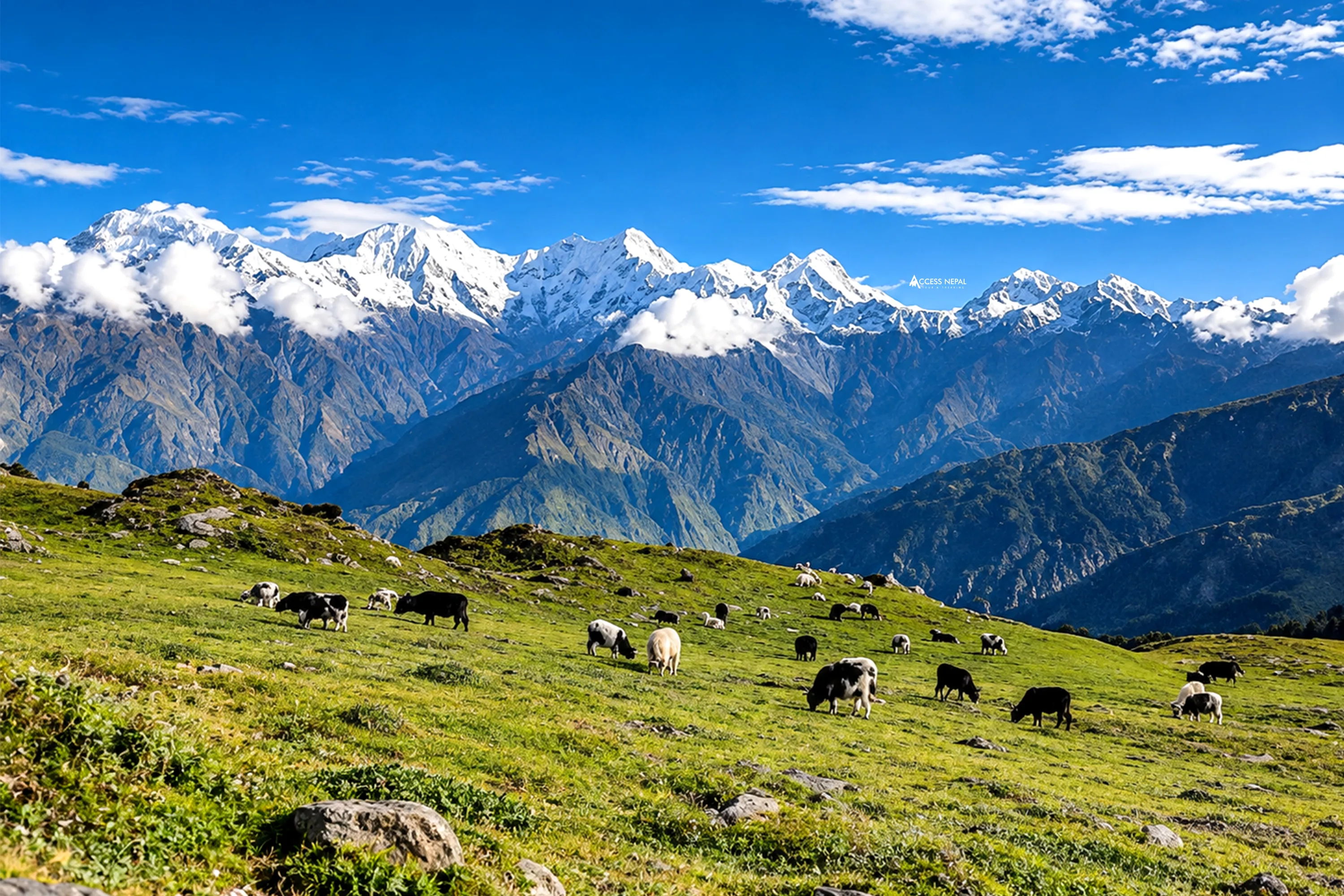
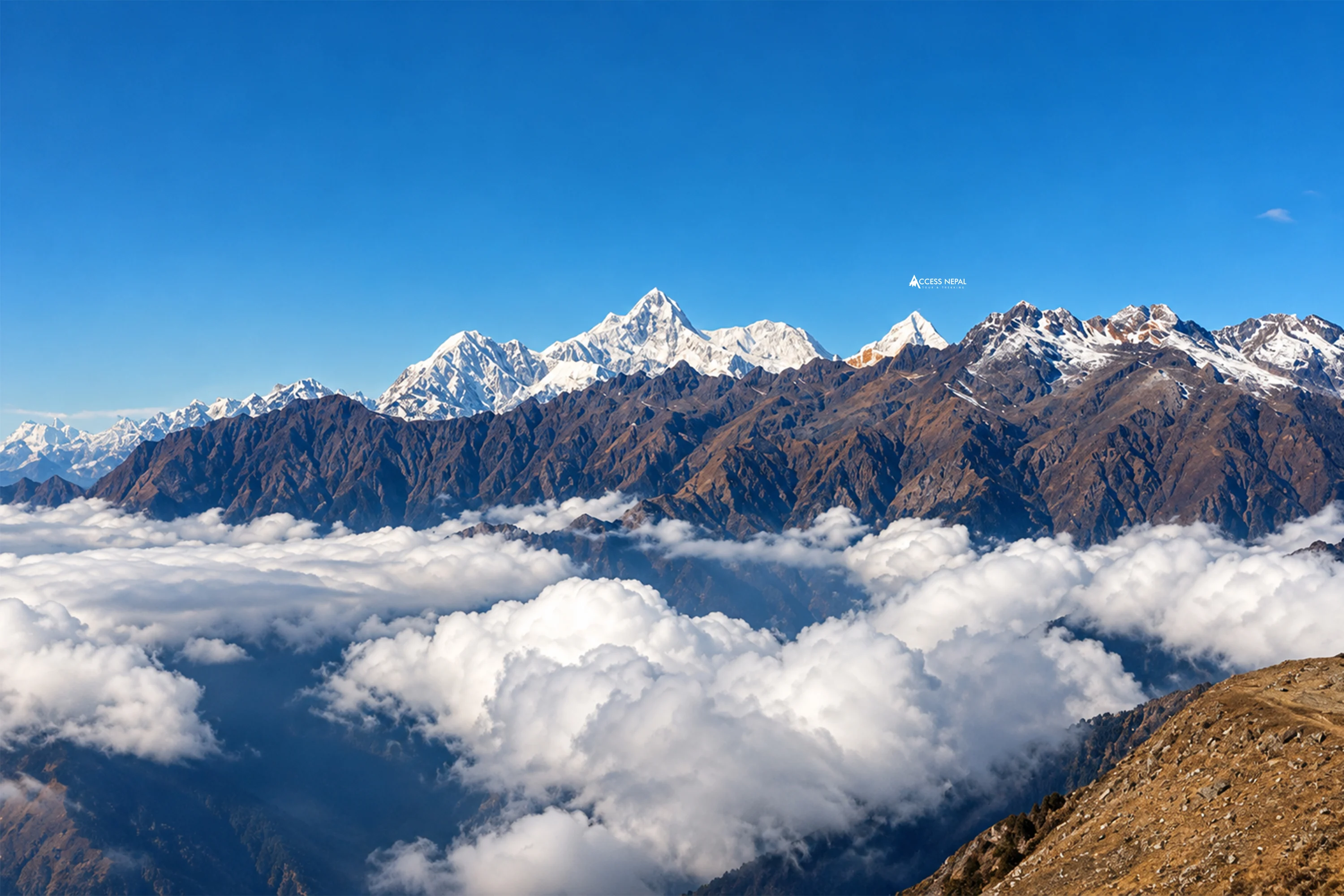
Then comes the big one: Pangsang La Pass, 3,850 metres up, where Ganesh Himal, Langtang Lirung, and Manaslu line up across the horizon like they’re posing for you. From the pass, the trail drops through rhododendron forest into Tipling, then Chalish Gaun and Sertung and Gurung villages where hot springs wait at the bottom of the hill. From there, it’s a gentle wind-down through Borang to Dhading Besi, and a scenic drive back to Kathmandu.
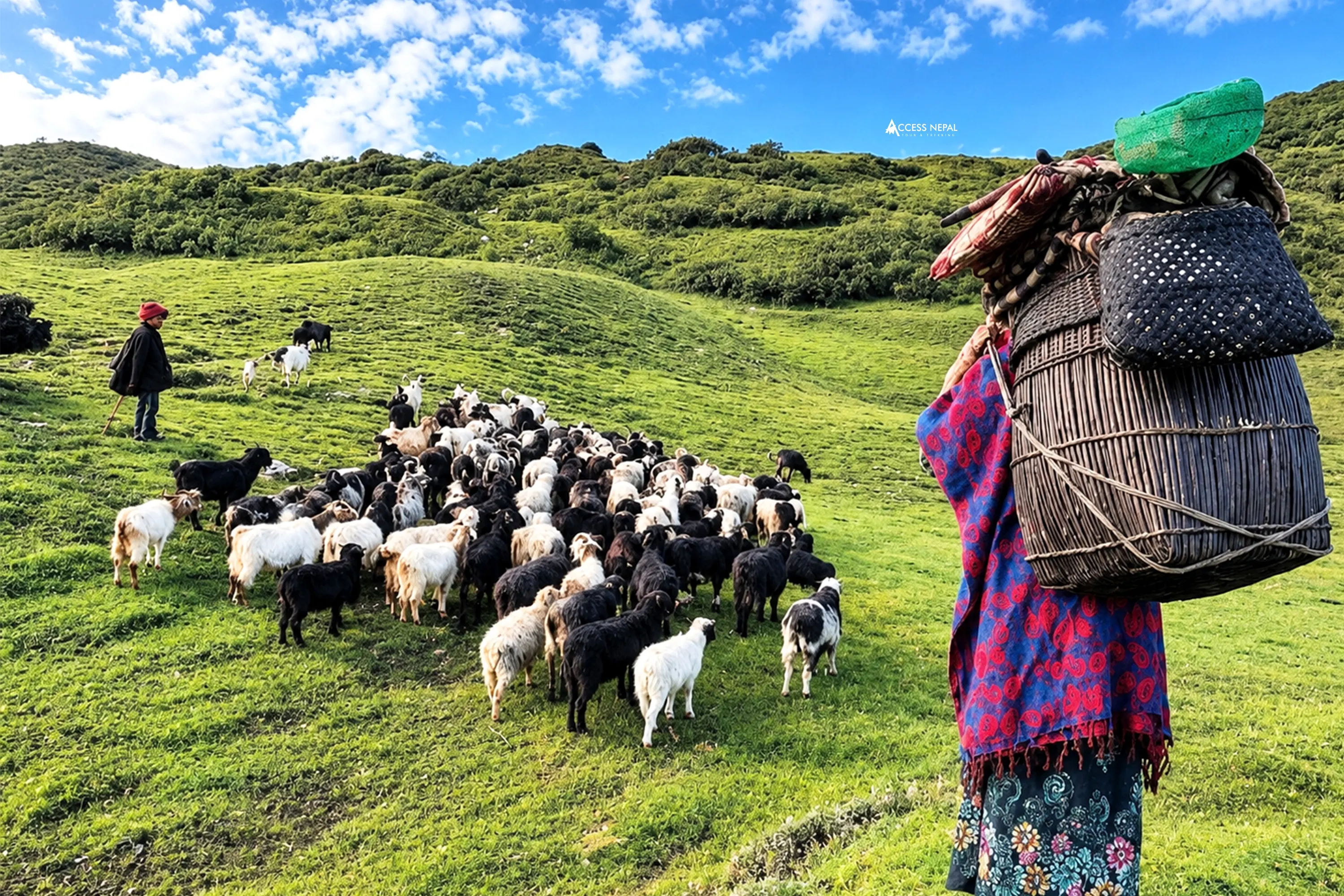
On the trail, you’re swinging across suspension bridges over glacial rivers. Terraced fields stacked like green staircases up the hillside. Prayer flags snapping in the wind at every pass and ridge. Waterfalls you’ll hear before you see. And villages where the “restaurant” is someone’s kitchen, and the “hotel” is someone’s spare room.
You can compare Ruby Valley Trek with Everest Base Camp or the Annapurna Circuit, where you’re often trekking in a slow-moving line of hundreds of people, and the difference is obvious. Ruby Valley doesn’t have crowds. It has silence, space, and mountains that feel like they belong to you for the day. That’s not a small thing.
That’s the entire reason to book the Ruby Valley Trek 8 Days instead of another one.
Highlights of the Ruby Valley Trek – 8 Days
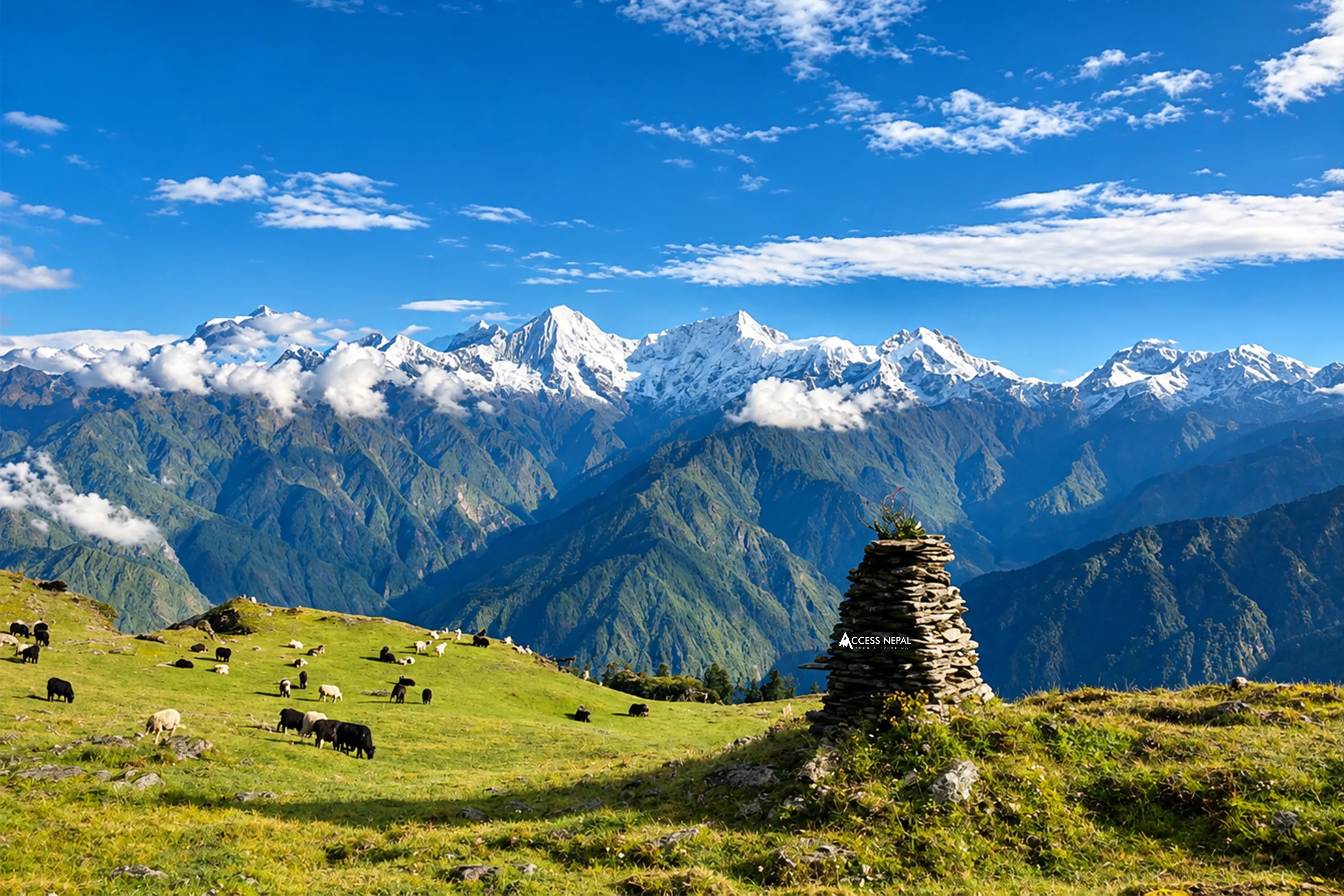
- Cross Pangsang La Pass (3,850 m), with panoramic views of Ganesh Himal, Langtang Lirung, Manaslu, and on a clear day we can see the far-off Annapurna range
- Sleep in genuine Tamang and Gurung homestays, not just teahouses built for tourists
- Walk trails where you’ll meet more yaks than trekkers
- Visit the sacred Parvati Kunda lake near Gatlang
- See the old zinc and ruby mining settlement of Somdang
- Soak tired feet in the natural hot springs at Tatopani
- Spot rhododendron forests in bloom (March to April) or crisp mountain light in October
- Learn firsthand how Tamang, Gurung, Ghale, Magar, and Dalit communities share this valley, each with a slightly different dialect, dress, and dinner table
- Combine culture and altitude in a combo trek that rewards curiosity as much as fitness
Why Ruby Valley Trek – 8 Days with Access Nepal Tour and Treks?
Before booking Ruby Valley Trek, there is a most usual questions in mind of most visitor is, “Why book Ruby Valley Trek with Access Nepal?” and not a dozen other agencies with a similar-looking website? Here’s the honest answer.
Nearly 15 years on the ground in Nepal. Access Nepal Tour and Treks has been organizing treks, tours, and expeditions across the Himalayas for well over a decade. We are experienced enough to know which Ruby Valley homestay families are the most welcoming, which section of trail floods first in a heavy monsoon, and which guide has the patience to slow down for a nervous first-time trekker without making them feel like they’re holding the group back.
Recognized, not self-declared. Access Nepal Tour and Treks has received TripAdvisor’s Travelers’ Choice Award for multiple consecutive years, including the “Best of the Best” Travelers’ Choice honor in 2021 and 2023, plus Certificate of Excellence awards in earlier years among 406 traveler reviews on TripAdvisor alone. These aren’t awards a company gives itself; they’re built entirely on verified guest feedback.
Properly licensed and affiliated. The company is registered with Nepal’s Ministry of Culture, Tourism and Civil Aviation, and holds affiliations with the Nepal Tourism Board (NTB), the Trekking Agencies’ Association of Nepal (TAAN), and the Nepal Mountaineering Association (NMA). These government bodies actually regulate safety and standards in this industry, not just marketing claims.
Real guides, real porters, real support. Every trek includes a government-licensed, first-aid-trained guide and fairly compensated porters. People from these very hill communities who know the terrain because it’s their home turf, not a script they memorized.
Ruby Valley Trek 8 Days Itinerary
Day 1Landing in Kathmandu
-
- 1,350m
Day 2Drive from Kathmandu to Syabrubesi
-
- 1,503m
-
- 6-7 hours
Day 3Trek from Syabrubesi to Gatlang
-
- 2,238m
-
- 5-6 hours
Day 4Gatlang to Somdang via Parvati Kunda
-
- 3,270m
-
- 6 hours
Day 5Somdang to Tipling via Pangsang Pass
-
- 3,850m
-
- 6-7 hours
Day 6Tipling to Borang via Sertung
-
- 1,920m
-
- 3-4 hours
Day 7Borang to Kathmandu via Dhading Besi
-
- 1,920m
Day 8Departure from Kathmandu
-
- 1,350m
- Airport pickup and drop-off in Kathmandu, private vehicle
- All ground transportation: Kathmandu–Syabrubesi and Dhading Besi–Kathmandu
- An English-speaking, government-licensed trekking guide
- A porter (1 per 2 trekkers), including their wages, food, accommodation, and insurance
- Homestay and teahouse accommodation for the full trek, three meals a day (breakfast, lunch, dinner) while on trail
- TIMS card and Langtang National Park entry permit
- A pre-trek briefing and gear check in Kathmandu
- First-aid kit and basic medical supplies
- A farewell dinner on return to Kathmandu
- All government and local taxes
- International airfare and Nepal visa fee
- Hotel and meals in Kathmandu (before/after the trek, unless a city package is added)
- Travel and rescue insurance (recommended with helicopter evacuation cover)
- Tips for guide and porter
- Any extra costs from itinerary changes due to weather, illness, or road closures
- Extra nights in Kathmandu from early arrival or delayed departure
Ruby Valley Trek Departures 2026 & 2027
Secure your spot on one of Nepal's genuinely uncrowded treks. Access Nepal Tour and Trek the same TripAdvisor recognized team as Traveler's Choice award-winning company now runs the Ruby Valley Trek, a homestay route through the Ganesh Himal that most operators still don't offer. Group sizes are kept deliberately small. Book early to secure your place.
Ruby Valley Trek - 8 Days Route Map

Ruby Valley Trek Altitude Chart
Thinks to Know on Ruby Valley Trek
How difficult is Ruby Valley Trek?
The Ruby Valley Trek difficulty rating is Moderate. The words “moderate difficulty” are thrown around a lot in trekking brochures, so let’s actually clarify what moderate difficulty means.
You’ll walk 5 to 7 hours most days, on trails that climb and drop steadily rather than staying flat. There’s no technical climbing, no ropes, no crampons, no scrambling over rock faces. But the terrain does test your legs. Steep ascents through forest, stone staircases between terraced fields, and one genuinely tough day crossing Pangsang La Pass at 3,850 m. Think of it less like a walk in the park and more like a multi-day stair-climbing challenge with mountain views as your reward at the top of every flight.
This trek is suitable for a person who can comfortably hike 15–18 km with a daypack, on back-to-back days, without needing a rest day between them, will be fine here. You do not need prior high-altitude experience, but a baseline of regular walking, hiking, or cardio fitness in the months before you fly out will make a real difference to how much you enjoy those uphill stretches rather than merely survive them.
You can see the Ruby Valley Trek Guide, including accommodations, difficulty, and safety tips.
How many hours will you actually walk?
Most days, you’re looking at 5 to 7 hours of walking. That’s your typical school day, minus the boring parts, spent moving through forests, terraced fields, and mountain trails instead of sitting at a desk. Some days run shorter, some run longer, depending on the terrain and how many photo stops you can’t resist taking.
How is the terrain during Ruby Valley Trek 8 Days?
The trail during Ruby Valley Trek 8 Days combines flat farmland walks with genuinely steep, rocky climbs. On the trail, you’ll cross suspension bridges over rushing rivers, wind through pine and rhododendron forests, and tackle some serious uphill stretches, especially on your way to Pangsang Pass. It’s not technical climbing; you won’t need ropes or crampons, but your knees and calves will absolutely know they did something by the end of each day.
Pangsang Pass During the Trek
If there’s one day that separates “I did a nice walk in Nepal” from “I actually trekked,” it’s the crossing of Pangsang Pass. Sitting at around 3,850 meters, this is the highest point of the whole Ruby Valley Trek route, and getting there involves a solid climb through changing terrain, from forest to alpine landscape. It’s tiring, sure, but the payoff is a view of more than twenty Himalayan peaks stretched out in front of you. Trekkers who’ve done it usually say it’s the day they’ll remember most, tired legs included.
Ruby Valley Trek difficulty lands right in that sweet spot: challenging enough to feel like a real accomplishment, manageable enough that you don’t need mountaineering experience to pull it off.
Access Nepal Tour and Treks has guided plenty of trekkers through this exact route, and our advice is simple: come with decent fitness, sturdy boots, and a bit of patience for uphill sections, and Ruby Valley will reward you with some of the quietest, most authentic mountain scenery Nepal has to offer.
This blog covers a complete Ruby Valley Trek Guide, from accommodation, route, best time, preparation tips, and everything needed for the trek.
Who is this Ruby Valley Trek best suited for?
If this is your first trek ever, the Ruby Valley Trek is honestly a perfect choice for beginners and intermediate adventure seekers to experience the Himalayan region of Nepal. This trek is best suited for trekkers with good physical and cardiovascular fitness who want to experience the high-altitude adventure in Nepal.
It’s got everything that makes Himalayan trekking special: mountain views, remote villages, forest trails without throwing you into the deep end like Everest Base Camp would. You get a genuine taste of Nepal’s mountains without needing years of hiking experience behind you.
Many professional trekkers skip acclimatization to save time. This 2-week-long itinerary is not suitable for anyone who wants to rush their journey and cover more than the average daily walking distance without any rest day. So we prepared a short Ruby Valley trek itinerary for you.
What should we pack for Ruby Valley Trek?
Depending on the season of your trek, you will need to adjust your essential packing list, like clothing and gear. However, we’ve prepared this essential packing list considering your comfort and usefulness. We recommend bringing only the necessities, while any extra luggage can be stored for free at the Access Nepal Tour and Treks store.
While packing your luggage, please note that one porter is assigned for two trekkers, and the maximum weight carried by a porter is 18 kg. This limits luggage to 9 kg per trekker.
Ruby Valley isn’t Everest Base Camp, and it isn’t the Annapurna Circuit either. You won’t find rows of gear shops or bakery cafes selling apple pie at every stop. This is homestay country, where you’re staying with Tamang and Gurung families instead of tourist lodges. That means fewer extra blankets on hand, no guaranteed hot showers, and almost zero chance of buying forgotten gear once you’re past Syabrubesi. Pack smart before you leave Kathmandu, because there’s no running back to the store once you’re deep in the valley.
Clothing: Layers Are Everything
Nepal’s mountains don’t care what season it is back home. You could be sweating in a t-shirt at 10 a.m. and shivering in a down jacket by sunset, especially once you’re climbing toward Pangsang Pass at nearly 3,850 meters. The trick is layering, not packing one giant coat.
- Base layers: 2-3 moisture-wicking T-shirts and one thermal top for cold mornings
- Mid layers: A fleece or light wool sweater for chilly evenings in Somdang and Tipling
- Outer layer: A warm down or synthetic jacket for the pass crossing and night temperatures
- Rain jacket: Waterproof and packable, since mountain weather flips its mood fast
- Trekking pants: 2 pairs, quick-dry, comfortable for both walking and cooler evenings
- Shorts: One pair for warmer, lower-altitude days near Syabrubesi
- Thermal leggings: For sleeping and layering under pants on cold nights
- Underwear and socks: Pack more than you think you need, trekking socks especially
- Warm hat and gloves: Non-negotiable for the pass day
- Sun hat or cap: For the lower, sunnier stretches
Footwear
- Your boots make or break this trek, full stop. Ruby Valley’s trail mixes rocky hillsides, forest paths, and suspension bridges, so comfort and grip matter more than looks.
- Broken-in, sturdy hiking boots with ankle support (never bring brand new boots)
- Comfortable camp shoes or sandals for evenings at the homestay
- Good quality trekking socks, wool or synthetic blend, at least 4-5 pairs
- Gaiters if you’re trekking in winter or right after monsoon, when trails can get muddy
Gear and Equipment
- Sleeping bag rated for at least -10°C (14°F): homestay blankets are often thin, and nights near Somdang and Pangsang Pass get properly cold
- Daypack (25-35 liters) for carrying daily essentials while your porter handles the main bag
- Duffel bag for your porter to carry, roughly 12-15 kg limit is standard
- Trekking poles: genuinely useful on the steep, rocky sections heading up to the pass
- Headlamp with spare batteries, since village electricity can be unreliable
- Reusable water bottle, at least 1 liter
- Water purification tablets or a filter (don’t count on bottled water in remote villages)
- Dry bags or ziplock bags to keep clothes and electronics safe from rain
Health and Personal Care
- Basic first-aid kit: blister plasters, pain relievers, any personal prescriptions
- Sunscreen (high SPF) and lip balm with SPF, the sun at altitude is stronger than it looks
- Sunglasses with UV protection, especially important on Pangsang Pass
- Hand sanitizer and a small pack of wet wipes, since showers aren’t guaranteed every night
- Toilet paper and a small quick-dry towel
- Any altitude sickness medication your doctor recommends, just in case
Documents and Money
- Passport with photocopies (keep one copy separate from the original)
- Passport-sized photos, for permits like TIMS
- Nepali rupees in cash: there are no ATMs once you leave Syabrubesi, so budget enough for the entire trek, including tips
- Travel insurance details that cover trekking and emergency evacuation
Electronics
- Power bank, fully charged, since charging opportunities are limited and sometimes cost extra
- Universal travel adapter (Nepal uses Type C, D, and M sockets)
- Camera or phone with plenty of storage, because you’ll want to remember Pangsang Pass’s view of over twenty Himalayan peaks
Extras Worth Packing
- Snacks from home: energy bars, electrolyte powder, or your favorite trail mix, since options get limited once you’re deep in the villages
- Earplugs, handy for homestays with shared walls or early rooster wake-up calls
- A small notebook or journal, trust us, you’ll want to write down how it felt crossing that pass
- A few small gifts or school supplies if you’d like to leave something for the villages you pass through, always appreciated but never expected
What NOT to Overpack for Ruby Valley Trek?
New trekkers often bring way too much. You don’t need five pairs of jeans or a hairdryer. Remember, your porter (or you, if you’re going without one) has to carry this. Stick to the essentials, layer smart, and leave room in your bag for the souvenirs you’ll probably pick up in Thamel before you fly home.
Quick Note From Access Nepal Tour and Treks: The weather here doesn’t care about your home climate. Pack for cold mornings, warm afternoons, and everything in between. If you’re unsure about anything on this list, our team is happy to walk you through a personalized packing plan based on the season you’re trekking in and where you’re traveling from.
Where to get last-minute gear?
Thamel is essentially the last real gear stop before this trek. Syabrubesi (the trailhead) only has a handful of basic general stores, not real trekking shops.
Syabrubesi, where the trek begins, has a few small general stores but not trekking shops. Past that, along the Ruby Valley trail itself, there’s nothing. No gear shops. No quick fixes. Just homestays and hills.
Does altitude Sickness affect the 8-Day Ruby Valley Trek?
No, altitude sickness barely affects the 8-day Ruby Valley Trek itinerary. The Ruby Valley Trek tops out at Pangsang Pass, sitting around 3,850 meters.
That sounds high, but compare it to Everest Base Camp, which sits above 5,300 meters, and you’ll see Ruby Valley is playing a whole different game. Most of your walking days actually stay below 3,000 meters, which is generally considered the zone where altitude sickness starts becoming a real concern.
That said, “low risk” doesn’t mean “zero risk.” Once you get up near Pangsang Pass, some trekkers notice mild symptoms: a dull headache, feeling a bit more tired than usual, maybe some trouble sleeping the night before the crossing. That’s your body adjusting to thinner air, and for most people, it passes without much fuss.
Why does Ruby Valley Trek get off easy compared to other treks?
The major reason the Ruby Valley trek as a easier trek compared to other treks like Everest Base Camp Trek, Annapurna Base Camp Trek, Manaslu Circuit Trek, and other high-altitude treks in Nepal.
- The first reason for being Ruby Valley trek is an easier trek is that the elevation gain happens fairly gradually across the 8 days, giving your body time to adapt instead of getting rushed upward.
- The second reason, you’re only briefly at the highest point. You cross Pangsang Pass and head back down the same day, rather than sleeping at that altitude, which is usually when altitude sickness hits hardest.
Ruby Valley trek temperature and climate
Ruby Valley’s weather is shaped by where you are on the trail on any given day. The valley floor near Dhading Besi feels almost subtropical, while Pangsang La can feel like stepping into a walk-in freezer, even in the same week.
Month-by-month Ruby Valley trek temperature Breakdown
Here’s a general range of daytime highs and nighttime lows you can expect on the trek, based on typical conditions in the region:
Ruby Valley Trek Month-wise Temperature Guide

Ruby Valley Trek Month-wise Temperature Guide
Season-by-Season temperature breakdown
Spring (March to May) for Ruby Valley
This is one of the two best windows to trek Ruby Valley, and temperature-wise, it’s pretty forgiving. Days are mild and pleasant for walking, while nights stay cool but manageable. Add in blooming rhododendron forests, Nepal’s national flower, and you’ve got comfortable weather plus gorgeous scenery. Pack layers, but you won’t need your heaviest gear unless you’re crossing the pass.
Summer/Monsoon (June to August) for the Ruby trek
Temperatures climb, sometimes into the mid-20s Celsius during the day, but this is monsoon season, meaning frequent rain, muddy trails, and leeches in the forested lower sections. It’s warmer on the thermometer, but honestly one of the trickier times to trek because of trail conditions rather than cold.
Autumn (September to November)
This is Access Nepal Tour and Treks’ most recommended season alongside spring. Skies clear up after the monsoon, visibility is at its best for those Ganesh Himal and Langtang views, and temperatures sit in a comfortable range for both walking and sleeping. Early morning starts will still feel crisp, so that warm layer still earns its place in your bag.
Winter (December to February)
This is when things get genuinely cold, especially at higher points like Somdang and Pangsang Pass, where nighttime lows can drop well below freezing. Daytime walking is often fine if you’re dressed right, since Himalayan sun is surprisingly strong even in winter, but mornings and evenings demand serious warm gear. Snow can occasionally block the pass, so flexibility matters more this time of year.
| Season | Months | Daytime Temp | Nighttime Temp | Conditions |
| Spring | March–May | 15–20°C | 2–8°C | Warm days, blooming rhododendron forests, occasional afternoon showers |
| Summer / Monsoon | June–August | 20–25°C (lower elevations) | 10–15°C | Heavy rain (200–400 mm/month), leeches, muddy trails, obscured mountain views |
| Autumn | September–November | 12–20°C | 0–10°C | Clear skies, crisp air, the region’s most reliable mountain visibility |
| Winter | December–February | 5–12°C | Below 0°C at Pangsang La | Cold, possible snow at the pass, quiet trails, sunny days at lower altitudes |
Summary of season-wise temperature information on the Ruby Valley Trek
Do You Need Travel Insurance for the Ruby Valley Trek?
Yes. Travel insurance is required for the Ruby Valley Trek. Not just recommended. Required and is Mandatory.
Ruby Valley Trek Itinerary crosses Pangsang La Pass at 3,850 metres. There’s no hospital up there. No pharmacy. No road, either. If something goes wrong, help arrives on foot, on a mule, or by helicopter.
Most homestays along this route sit hours from the nearest vehicle track. That’s part of what makes Ruby Valley beautiful. It’s also exactly why you need a safety net.
Your policy must cover:
- Trekking up to at least 4,000 metres (Ruby Valley’s highest point is 3,850 m)
- Emergency helicopter evacuation
- Medical treatment for altitude sickness
- Trip cancellation or interruption
A standard travel insurance policy like you buy for a beach holiday or a city break usually will not cover high-altitude trek emergency evacuation. Most insurance policies are for 2,000–3,000 metres. Pangsang La sits well above that altitude.
Why does helicopter evacuation coverage matter?
Helicopter rescue in Nepal is not cheap. A single evacuation flight can cost between USD 3,000 and 7,000, depending on the location and weather.
Without insurance, you pay that bill yourself. On the spot. In cash or by card, before the helicopter is dispatched, in some cases. With the right policy, your insurer or your trekking agency handles the cost directly. That single fact is worth remembering more than almost anything else in this guide.
Good Insurance Providers for This Trek
A few well-known providers offer policies that suit a trek like the Ruby Valley Trek are listed below:
World Nomads: This is popular worldwide and covers trekking up to 6,000 m on its Explorer plan.
True Traveller: This is a strong choice for trekkers in the UK and Europe.
IMG Global: This is a flexible plan, popular with long-term travelers.
Global Rescue: It is a rescue membership, not full insurance; best paired with a standard policy
Always check the altitude limit written in the policy, not just the marketing page. Ask the provider directly, in writing, if you’re unsure. It takes five minutes and can save you thousands of dollars.
When should you buy the insurance policy for this trek?
The insurance policy for any trek should be bought before you leave home. Not after you land in Kathmandu. Most policies won’t cover an injury or illness that happens before the policy exists. so, we recomend you to buy it as soon as your trek dates are confirmed.
Permits Required for the Ruby Valley Trek
The Ruby Valley Trek needs two official permits. Both are simple to get. Neither takes more than a few hours to arrange.
1. TIMS Card (Trekkers’ Information Management System)
TIMS can be considered your trekking ID, which explain about you trekking details to the concerned authorities for emergency evacuation. It tells the Nepali authorities who you are, where you’re going, and roughly when you’re expected back.
- Cost (through a registered agency): NPR 1,000 per person (about USD 7–8)
- Cost (independent trekker): NPR 2,000 per person (about USD 15)
- Issued by: Nepal Tourism Board or the Trekking Agencies’ Association of Nepal (TAAN), Kathmandu
You’ll need a copy of your passport and one or two passport-sized photos. All the permits required for the treks are managed by Access Nepal Tour and Trek.
2. Langtang National Park Entry Permit
Part of the Ruby Valley route runs through the Langtang National Park buffer zone, near Syabrubesi. That means you need this permit too.
- Cost for foreign nationals: NPR 3,000 (about USD 23–27), VAT included
- Cost for SAARC nationals: NPR 1,500. Children under 10: Exempt
- Issued by: Nepal Tourism Board in Kathmandu, or at the park entry checkpoint in Dhunche/Syabrubesi
Do You Need a Guide for Ruby Valley Trek 8 Days by Law?
Yes. Since the latest update in February 2025, foreign trekkers are required to trek with a licensed guide in this region. Solo, unguided trekking is no longer permitted on this trekking route.
This isn’t just red tape. On a quiet trail like Ruby Valley, where signage is minimal and phone signal disappears for hours at a time, a local guide is the difference between a good story and a genuine emergency.
FAQ's for Ruby Valley Trek
What is the Ruby Valley Trek?
The Ruby Valley Trek is a quiet, off-the-beaten-path trekking route in Nepal that takes you through Tamang and Gurung villages in the Ganesh Himal region. Think of it as the Everest Base Camp trek’s low-key cousin: fewer crowds, more homestays, and a real look at how mountain communities actually live.
At Access Nepal Tour and Treks, we run this as an 8-day package from Kathmandu and back, covering everything from your airport pickup to your final send-off.
Where is the Ruby Valley located?
Why is Ruby Valley considered an off-the-beaten-path trek?
Why is it called Ruby Valley?
How many days is the Ruby Valley Trek?
How difficult is Ruby Valley Trek?
Do I need a special permit for the Ruby Valley Trek?
Is the Ruby Valley Trek suitable for beginners?
When is the best time to trek Ruby Valley?
What is the highest point of the Ruby Valley Trek?
Is the Ruby Valley Trek crowded?
What are the peak seasons for the Ruby Valley Trek?
Which is the worst season for the Ruby Valley Trek?
What accommodation is available during the Ruby Valley Trek?
Is altitude sickness a concern on the Ruby Valley Trek?
What mountains can I see during the Ruby Valley Trek?
What culture will I experience on the Ruby Valley Trek?
Who can experience Ruby Valley Trek Nepal off-the-beaten path?
How many hours do you walk each day on Ruby Valley Trek?
Do I need a guide for the Ruby Valley Trek?
Do I need travel insurance for the Ruby Valley Trek?
Are there natural hot springs on the Ruby Valley Trek?
Is the Ruby Valley Trek safe for solo female travelers?
What is the standard 8-day itinerary for the Ruby Valley Trek?
Why choose the Ruby Valley Trek over the other treks in Nepal?
Awards and Achievements
Access Nepal Tour and Treks has been recognized with TripAdvisor’s prestigious Travelers’ Choice Award for multiple consecutive years, reflecting our unwavering commitment to quality and clients’ satisfaction.