

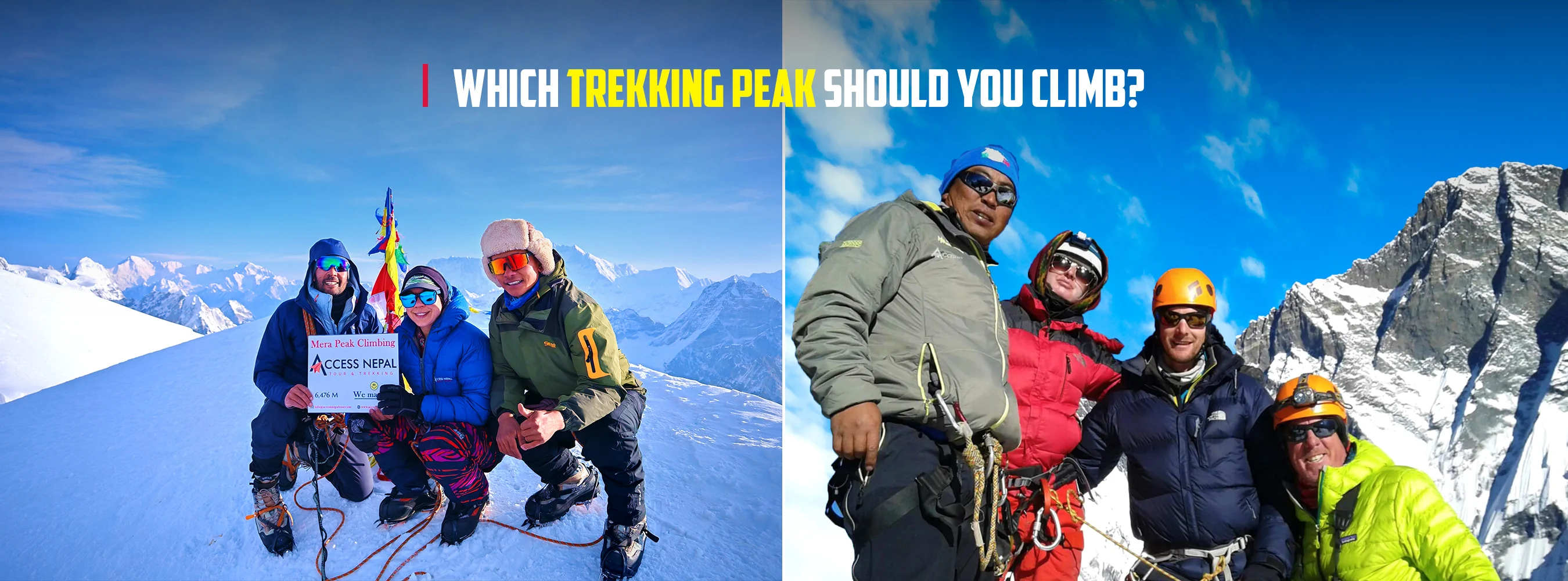
Mera Peak vs Island Peak: Which Trekking Peak Should You Climb First?
- Places
- Edited By: Accessnepaltour .Updated on: 23 Jul 2026
Mera Peak vs Island Peak: Which Peak Should You Climb First in 2026/2027?
You’ve decided you want to stand on top of a genuine Himalayan summit, but now comes the harder question. Nepal’s two most popular trekking peaks, Mera Peak and Island Peak, both promise the same thing: a real 6,000m+ summit without the cost or danger of a full mountaineering expedition. But they deliver that promise in very different ways.
One is higher, quieter, and technically simpler. The other is lower, busier, and demands genuine climbing skill near the top. Neither is objectively “better”. The right choice depends entirely on what kind of climber you are, and what you actually want out of the experience. This guide covers everything: altitude, technical difficulty, history, cost, route, required skills, and a clear answer to the question everyone asks: which one is actually harder.
Which One Should You Choose among Mera Peak vs Island Peak?
You can choose Mera Peak If you want the higher summit, prefer a quieter and more remote trekking experience, and are comfortable with a longer, more physically demanding trek in exchange for an easier technical climb.
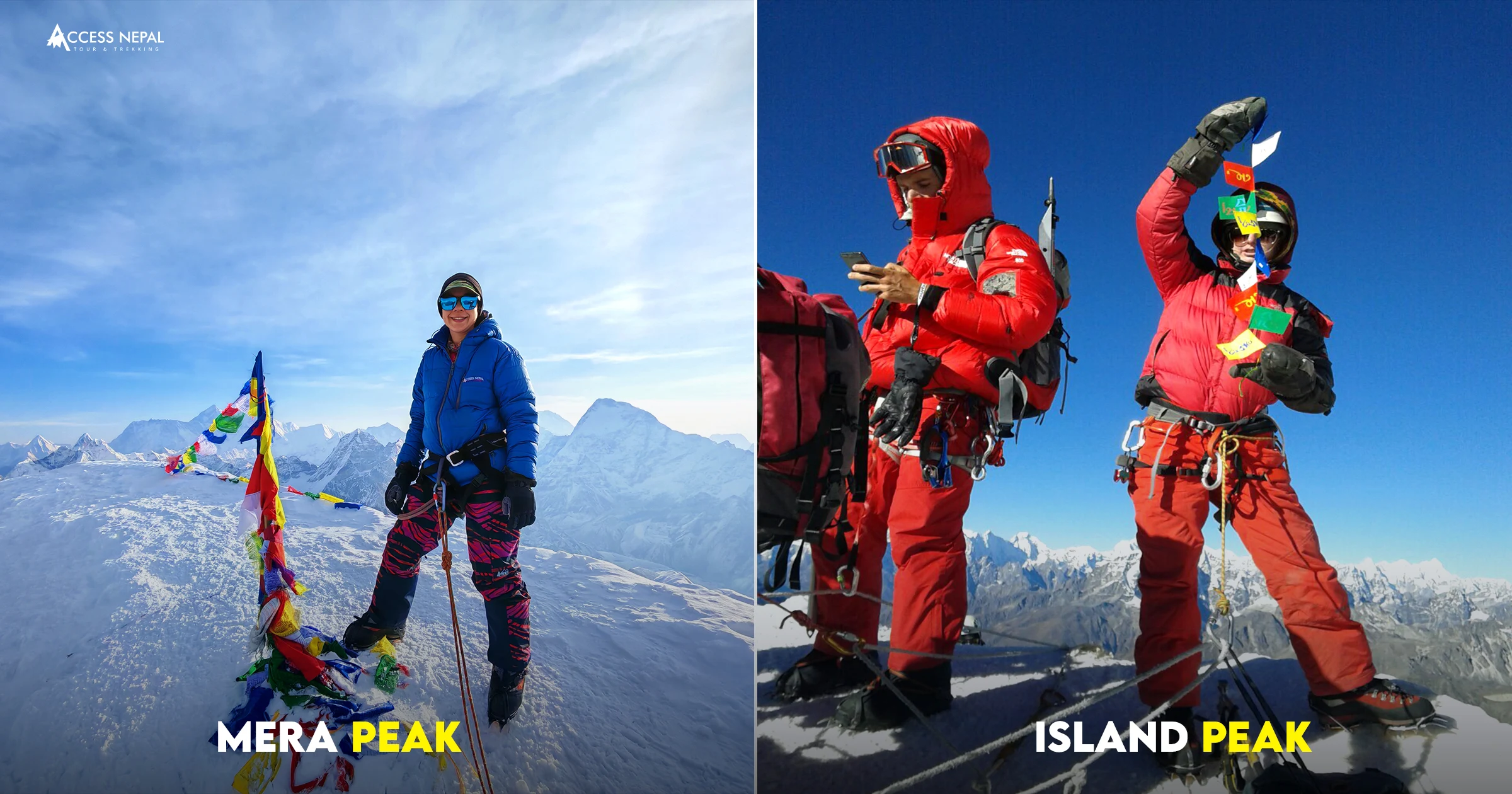
Image taken on the summit of Mera Peak and Island Peak. Which will you choose first?
You can choose Island Peak: If you want a shorter trip, don’t mind sharing the trail with Everest Base Camp trekkers, and are excited by (or want practice for) genuine technical climbing, steep ice, fixed-line ascents, ladder crossings, and a proper headwall.
| Factor | Mera Peak | Island Peak |
| Summit altitude | 6,461 m (Central) / 6,476 m (North) | 6,189 m |
| Also known as | — | Imja Tse |
| Technical difficulty | Low — non-technical, steady slopes | Moderate to high — steep ice headwall (45–50°) |
| Typical duration | 10–18 days | 12–16 days |
| Base camp altitude | ~5,300–5,350 m | ~5,087 m |
| Region | Hinku/Hunku Valley, Makalu region | Khumbu, Everest region |
| Trail crowds | Quiet, remote | Busy, shares EBC trail |
| First ascent | Mera Central: May 20, 1953, by Col. J.O.M. Roberts and Sen Tenzing | 1953, climbed by a British Everest reconnaissance team including Tenzing Norgay |
| NMA permit cost | Varies by season and route | USD 70 (winter/summer) to USD 250 (spring) |
| Garbage deposit | Included in most packages | ~USD 250–500 per team, refundable |
| Best for | First-time 6,000m climbers wanting the “easier” summit | Trekkers wanting genuine technical climbing exposure |
History of Mera Peak and Island Peak
Both peaks share an origin story tied to Everest itself. Island Peak was climbed in 1953 by members of the British Everest expedition team, including Tenzing Norgay, as a training and acclimatization exercise before their historic Everest summit.
Viewed from Dingboche village, the mountain appeared to rise like an island out of a sea of ice, which is exactly how it earned its English name; locally, it’s known as Imja Tse. Mera Peak’s main summit, Mera Central, was first climbed that same year, on May 20, 1953, by Colonel J.O.M. Roberts and Sen Tenzing, who made both peaks products of the same extraordinary Himalayan climbing era, before either was ever opened to commercial trekking groups.
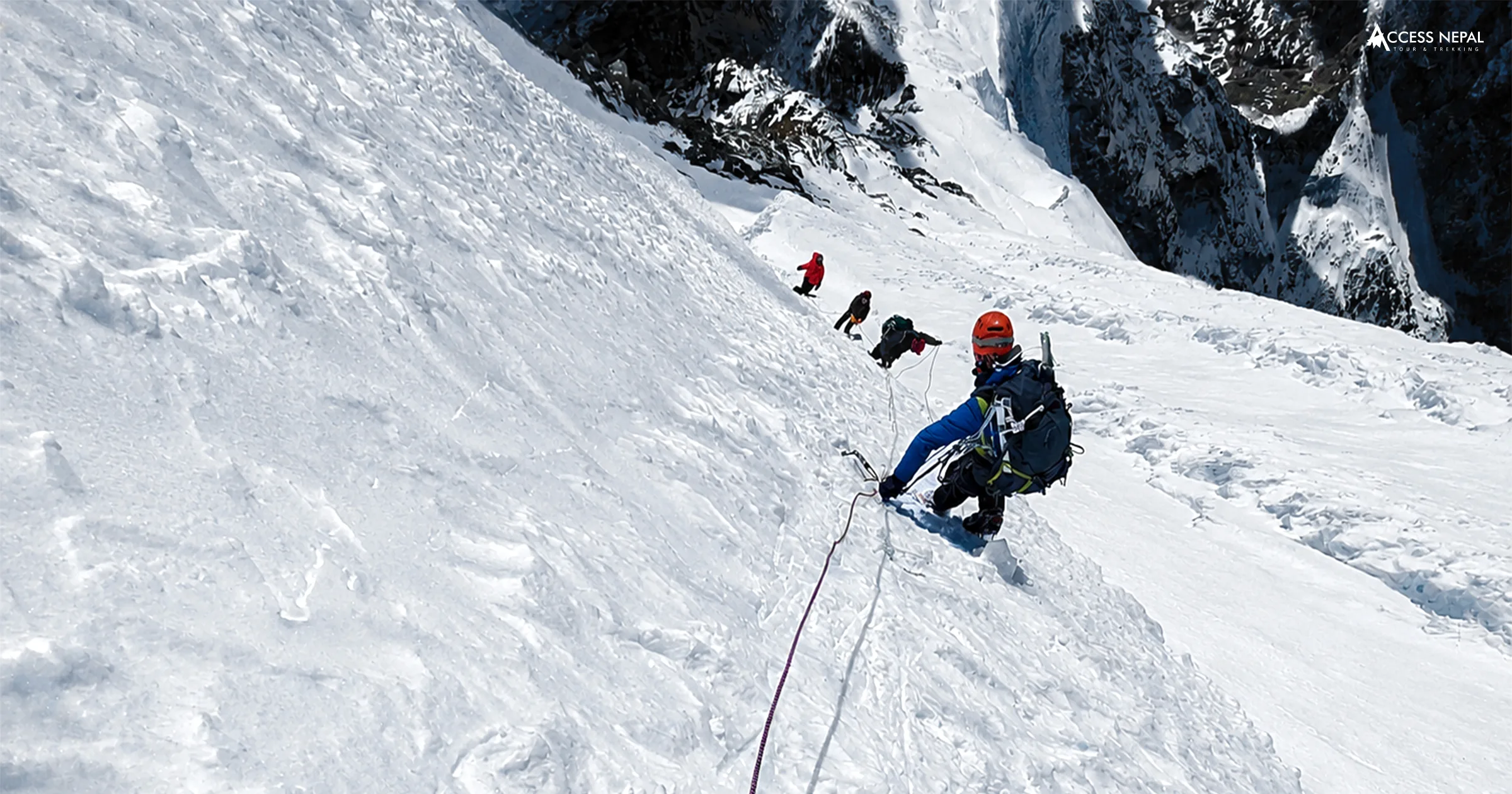
Climbing Island Peak the Everest Region Gem
Altitude: Mera Wins on Height, Island Peak Wins on Accessibility
Mera Peak is the taller of the two by a meaningful margin. Mera Peak summits sit at 6,461 m (Central) and 6,476 m (North), compared to Island Peak’s 6,189 m. If bragging rights and altitude gain matter to you, Mera has the clear edge; it’s genuinely one of the highest points a non-technical climber can reach in Nepal.
That said, higher altitude means a longer, harder acclimatization process, and more time spent above 5,000 meters. Island Peak’s lower summit means a shorter overall exposure to extreme altitude, even though the final push is technically tougher. Experienced operators generally recommend building in extra acclimatization nights for Mera specifically — commonly three nights around Khare (4,950–5,000m) and two nights near Base Camp (5,300–5,350m) before pushing to High Camp — precisely because the altitude gain, not the technique, is what makes Mera demanding.
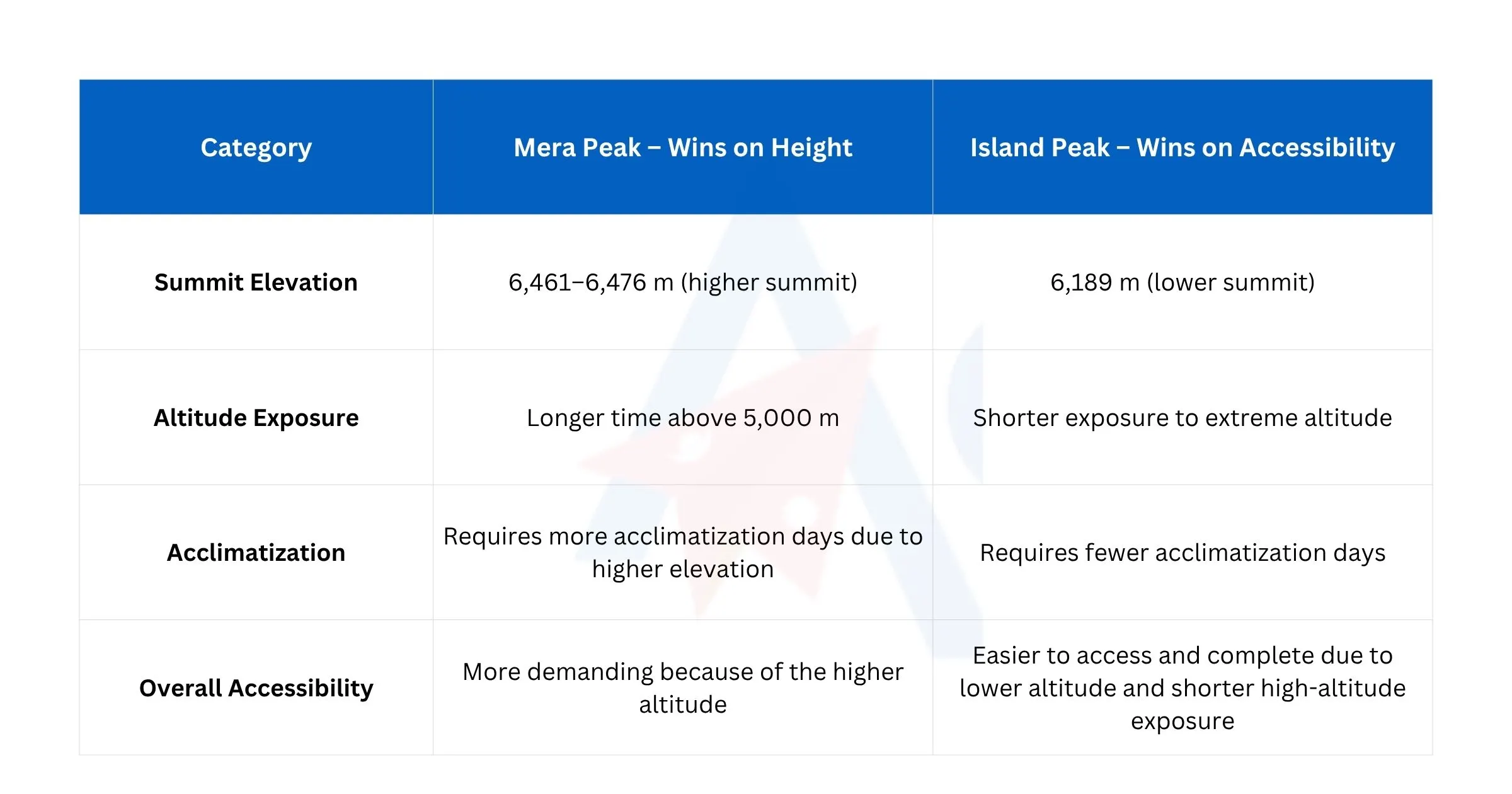
Mera Wins on Height, Island Peak Wins on Accessibility
Which Is Harder: Mera Peak vs Island Peak?
This is the single most-searched question about these two peaks, and the honest answer is: it depends on what kind of “hard” you mean.
In terms of pure altitude and endurance, Mera Peak is harder. You’ll gain more elevation on the trek itself, spend more days above 5,000m, and face colder, windier conditions on summit day since Mera sits higher and more exposed.
In terms of technical climbing, Island Peak is harder. Despite being 300 meters lower, its final summit push involves a steep ice and rock headwall — sections reaching 45 to 50 degrees — along with a narrow rocky ridge, glacier traverse, and multiple icefalls to navigate.
In terms of the trek to base camp, Mera is harder. The approach into the Hinku Valley involves more elevation gain and loss, rougher trail conditions, and far more basic teahouse facilities than the well-developed Everest region route leading to Island Peak’s base camp.
So while Mera Peak tests your lungs, patience, and cold tolerance, Island Peak tests your technique, nerve, and upper-body strength. Many experienced climbers who’ve done both describe Island Peak’s headwall as more intimidating in the moment — but Mera’s longer, higher, colder overall experience as more physically draining across the full trip.
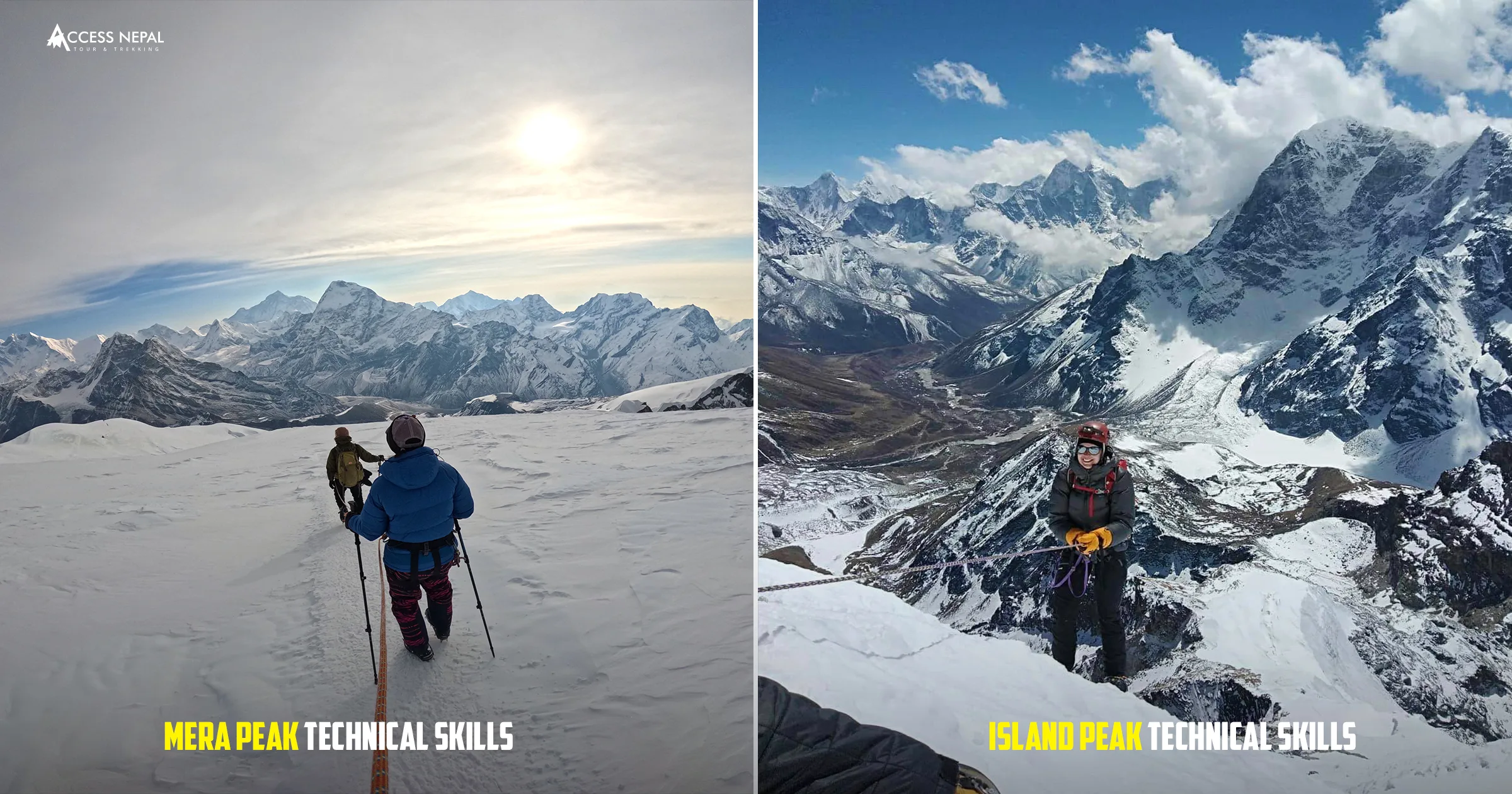
Look which is more technical to climb Mera Peak vs Island Peak
Technical Skills Required for Island Peak vs Mera Peak Comparison
This is where the two climbs diverge most sharply, and it’s worth being specific about exactly what each mountain demands.
| Skill | Mera Peak | Island Peak |
| Crampon use | Basic, on moderate glacier slopes | Essential, including on the steep headwall |
| Ice axe | Basic self-arrest awareness | Required, active use on ascent |
| Fixed rope / jumar (ascender) | Minimal — mostly walking with rope as a handrail | Essential — active jumaring up the headwall |
| Abseiling (rappelling) | Not typically required | Required for the descent, using a figure-8 device |
| Ladder crossings | Rare | Possible, depending on crevasse conditions |
| Glacier travel / crevasse navigation | Present but straightforward | Present, with narrow ridges and icefalls adding complexity |
| Pre-climb skills training | Brief refresher, usually at Khare | Dedicated training day, usually at or near base camp |
Neither peak requires prior mountaineering certification, and both provide hands-on skills training from your guide before the summit push. But if you’ve never used a jumar, practiced abseiling, or worn crampons on steep ice, Island Peak is where that inexperience will actually be tested — Mera’s technical demands are comparatively minimal by contrast.
Route and Scenery: Solitude vs. the Classic Khumbu Trail
Mera Peak: The Quiet Path
Mera’s route runs through the Hinku and Hunku valleys — remote, sparsely trekked terrain well away from the busy Everest Base Camp trail. You’ll pass through small Sherpa villages, ancient monasteries like Lungsumgba Gompa (where the climbing route is literally carved into rock), and days of trail with far fewer fellow trekkers. Facilities here are noticeably more basic than in the Everest region. This is part of what gives the trip its genuine expedition feel. If solitude and a genuine off-the-beaten-path experience matter to you, Mera delivers it in spades.
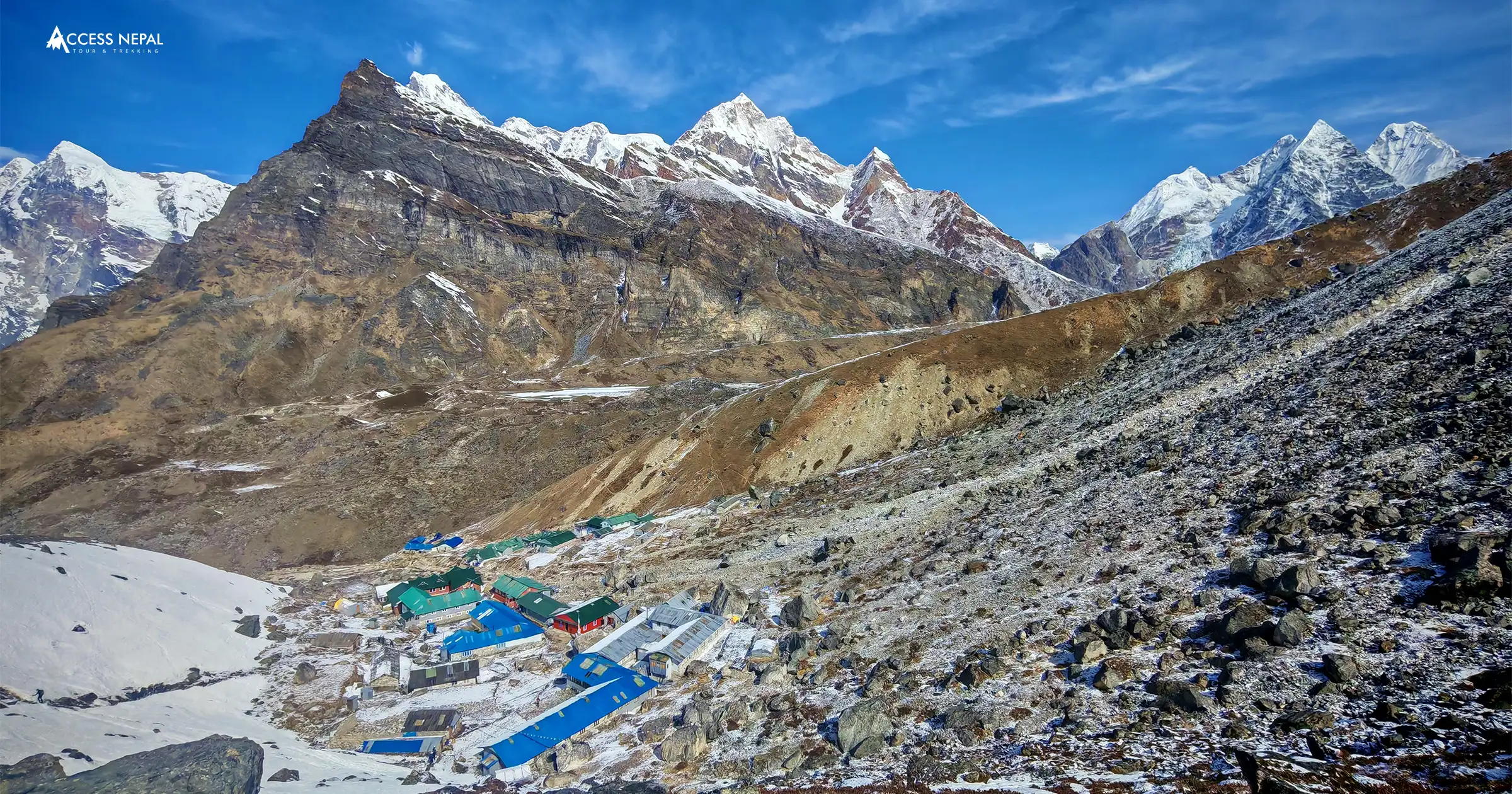
Quiet path on the way to Mera Peak Summit
Island Peak: The Everest Region Classic
Island Peak’s approach largely follows the same trail as Everest Base Camp — through Namche Bazaar, Tengboche Monastery, and Dingboche — before branching off toward Chukhung and the peak itself. This means more infrastructure, more teahouses, better resupply options, and considerably more company on the trail. It also means you’ll pass through some of the most iconic scenery in Nepal, including close-up views of Everest, Lhotse, Makalu, and Ama Dablam along the way, plus the option to stop at the famous Hotel Everest View at 3,880m and visit Tengboche Monastery.
The tradeoff: Mera offers solitude and a wilder experience; Island Peak offers more comfort, more classic Khumbu scenery, and the option to combine it directly with an Everest Base Camp trek — many climbers add Island Peak onto an existing EBC itinerary specifically because the acclimatization overlaps so well.
Cost Comparison
| Cost Factor | Mera Peak | Island Peak |
| NMA climbing permit | Varies by season and route | USD 70 (winter/summer) to USD 250 (spring) |
| Garbage deposit | Included in most packages | ~USD 250–500 per team (refundable) |
| Typical package price | Roughly USD 1,500–3,600 depending on duration and group size | Roughly USD 1,950–2,950 depending on group size and inclusions |
| Combined with EBC trek | Less common | Frequently bundled, since it shares the same trail |
Costs on both peaks vary significantly based on group size, season, and whether you choose a shorter helicopter-assisted itinerary or the full walking route — but Island Peak, especially when bundled with an Everest Base Camp trek, can sometimes offer better overall value if you want both experiences in one trip.
Best Season for Island Peak and Mera Peak
Both peaks share Nepal’s two prime climbing windows:
Spring (March–May): In the spring season, there is stable weather and good visibility, though permit costs (especially for Island Peak) are highest in this season
Autumn (September–November): In the autumn season, the weather is widely considered the best overall window for both peaks, with the clearest skies and most reliable conditions
Both peaks can technically be attempted in winter or monsoon, but neither is recommended outside spring and autumn for anyone without significant high-altitude experience.
Physical and Mental Demands for Island Peak and Mera Peak
Mera Peak Demands:
- Strong cardiovascular endurance for a long, high-altitude trekking approach
- Patience and mental resilience for a longer expedition (especially on the 15–18 day versions)
- Comfort with extended time above 5,000m and the associated altitude sickness risk
- Tolerance for cold, wind, and exposure on a higher, more weather-exposed summit day
Island Peak Demands:
- Genuine climbing technique — jumar use, crampon skills, fixed-rope confidence, and abseiling
- Upper-body strength and comfort with exposure on the steep headwall
- Mental composure navigating a narrow ridge and glacier traverse near the top
- The ability to learn and apply new technical skills quickly during a short on-site training session
Insurance and Safety Considerations for Summit
Both peaks require climbers to carry travel insurance that specifically covers high-altitude trekking and emergency helicopter evacuation. This is especially worth double-checking for Island Peak, since its 6,189m summit sits right at or above the altitude ceiling excluded by many standard travel insurance policies — always confirm your policy explicitly covers activity up to at least 6,500m before booking either climb. Both require a licensed guide and NMA permit; independent, unguided ascents are not permitted on either mountain.
You should learn about the gear needed for climbing, hiking, and trekking before starting your climbing journey. So your curiosity about what to wear on hiking can be addressed first.
Can You Climb Both Mera Peak and Island Peak?
Yes, Mera Peak climbing and Island Peak climbing both are possible and popular among adventure seekers. It’s more common than you might expect. Access Nepal Tour and trekking company can offer combined Mera Peak and Island Peak itineraries for climbers who want both the altitude challenge and the technical experience in a single extended trip. This route typically appeals to climbers building toward bigger technical objectives (7,000m+ peaks or eventually Everest itself), since it covers both core skill sets, high-altitude endurance and technical glacier climbing in one expedition.
Which One Should You Actually Choose?
Here’s how to think about it honestly:
When to Choose Mera Peak Summit?
- You want the highest point you can reasonably reach without technical climbing skills
- You’re drawn to quiet, remote trails over crowded, well-trodden ones
- You have strong fitness and altitude tolerance but no interest in learning ice-climbing technique
- You want a genuinely different, less “touristy” slice of the Himalayas than the Everest region offers
When to Choose Island Peak Climbing?
- You want a taste of real technical mountaineering, jumars, fixed lines, abseiling, a proper headwall — as a stepping stone toward bigger, more technical peaks later
- You’d like to combine your climb with the classic Everest Base Camp trail and its iconic scenery
- You prefer a shorter overall trip with more infrastructure and company along the way
- You’re building toward a future 7,000m or 8,000m expedition and want genuine technical practice, not just an altitude test
You can add both peaks on your itinerary; we can customize both treks for you. A combined Mera Peak + Island Peak itinerary is a natural next step if you’re not ready to choose just one, and it builds a genuinely well-rounded skill set for future high-altitude climbing.
Mera Peak vs Island Peak Frequently Asked Questions
Which is harder, Mera Peak or Island Peak?
It depends on the type of difficulty. Mera Peak summit is harder in terms of altitude, trek length, and cold exposure, while Island Peak is harder technically, with a steep ice headwall requiring jumar and abseiling skills.
Do I need climbing experience for Mera Peak or Island Peak?
No prior mountaineering experience is required for either, though good physical fitness is essential. Both itineraries include hands-on skills training with your guide before the summit push, with Island Peak’s training session being more extensive due to its technical demands.
Which peak is better for beginners?
Mera Peak is generally considered more beginner-friendly overall, since its technical demands are minimal and the main challenge is altitude and endurance rather than climbing skill.
Can I climb Island Peak without prior ice climbing experience?
Yes, but expect a genuine learning curve. Guides run a dedicated training session covering crampon technique, jumar use, and abseiling before the summit attempt — arriving with zero technical background is possible, but arriving with at least some prior trekking-peak or via ferrata experience will make the headwall considerably less intimidating.
Is Mera Peak or Island Peak more expensive?
Costs are broadly comparable, though this varies significantly by operator, season, and group size. Island Peak permits alone can range from USD 70 to USD 250 depending on season, and it’s often bundled with an Everest Base Camp trek, which can affect overall package value.
Which peak has better mountain views?
Both offer exceptional Himalayan panoramas. Mera Peak’s summit is known for views of five 8,000m peaks — Everest, Lhotse, Makalu, Cho Oyu, and Kanchenjunga — from a single vantage point. Island Peak offers closer, more dramatic views of Everest, Lhotse, Makalu, and Ama Dablam throughout the approach trek itself, in addition to summit views.
Summary
If your goal is simply to say you’ve stood above 6,400 meters, with the easiest possible technical demands and the quietest possible trail, Mera Peak is the clear choice. If your goal is to genuinely test and build climbing skills — the kind that matter if you’re eyeing bigger mountains down the road, Island Peak climbing, despite its lower altitude, is the more honest training ground.
Neither is the “easy” option in absolute terms. Both demand real fitness, real preparation, and real respect for the mountain. The right one for you comes down to a simple question: are you chasing altitude, or are you chasing skill? Answer that honestly, and the choice tends to make itself.
Costs, permit fees, and route conditions can shift by season and operator. Confirm current details with a licensed Nepali trekking agency before booking either climb.
Awards and Achievements
Access Nepal Tour and Treks has been recognized with TripAdvisor’s prestigious Travelers’ Choice Award for multiple consecutive years, reflecting our unwavering commitment to quality and clients’ satisfaction.













Leave Your Comment