

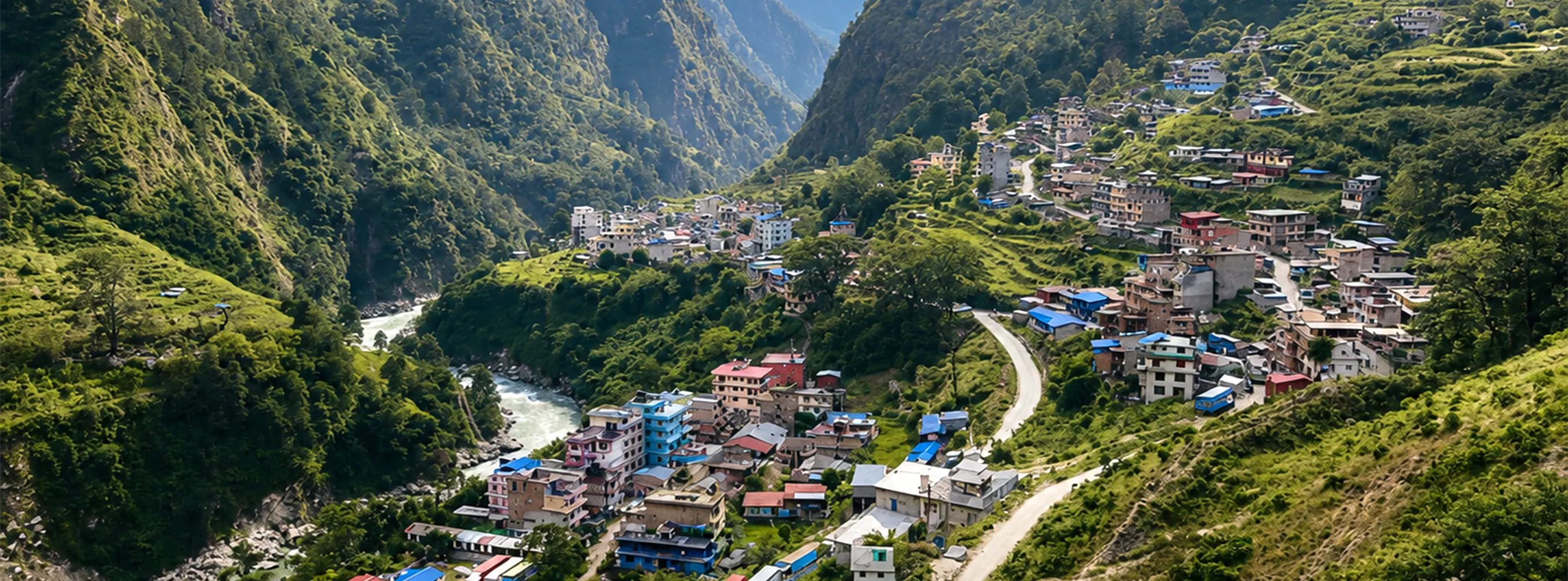
Syabrubesi | Gateway to Tamang Heritage Trek
Syabrubesi |The Gateway to Langtang Valley
The bus groans around the last hairpin bend, brakes squealing against a road that clings to the hillside like it’s not entirely sure it wants to be there. Below, the Bhote Koshi River churns white over grey stone. Above, forested ridges stack up into cloud. And then, almost without warning, the valley opens, and you’re in Syabrubesi, a strip of guesthouses, prayer flags, and mountain light, humming quietly at the edge of the Himalayas.
Most people arrive here on their way to somewhere else. Few realize this small Rasuwa village is worth a story of its own. In this guide, you’ll learn exactly where Syabrubesi is, how to get there, whether it’s safe, what makes it special, and how to plan a trip, whether you’re heading deep into Langtang Valley or simply passing through.
Major Highlights of Syabrubesi
- Syabrubesi is located in Rasuwa District, Bagmati Province, Nepal. The distance is 122 km / 6–9 hours north of Kathmandu by road.
- The altitude of Syabrubesi is roughly 1,460–1,500 m (4,790–4,930 ft).
- Syabrubesi is popular as a gateway to the Langtang Valley Trek, Tamang Heritage Trek, and Ganesh Himal Trek; Tamang culture; proximity to the Kerung (Rasuwagadhi) Nepal–Tibet border; nearby Tatopani hot springs.
- Best time to visit Syabrubesi is March–May (spring) and September–November (autumn).
- Langtang National Park entry permit and TIMS card are needed for trekking in this region, and both are obtainable in Syabrubesi or Kathmandu.
- How to reach Syabrubesi? Local bus, shared jeep, or private jeep from Kathmandu’s Machhapokhari/Gongabu area.
Where Is Syabrubesi Located?
Syabrubesi sits in the Rasuwa District of Bagmati Province, tucked into a narrow valley carved by the Bhote Koshi River. The village sits at roughly 1,503 meters (4,930 ft) above sea level, low enough that acclimatization isn’t a concern in the village itself but high enough to remind you you’re in the mountains.
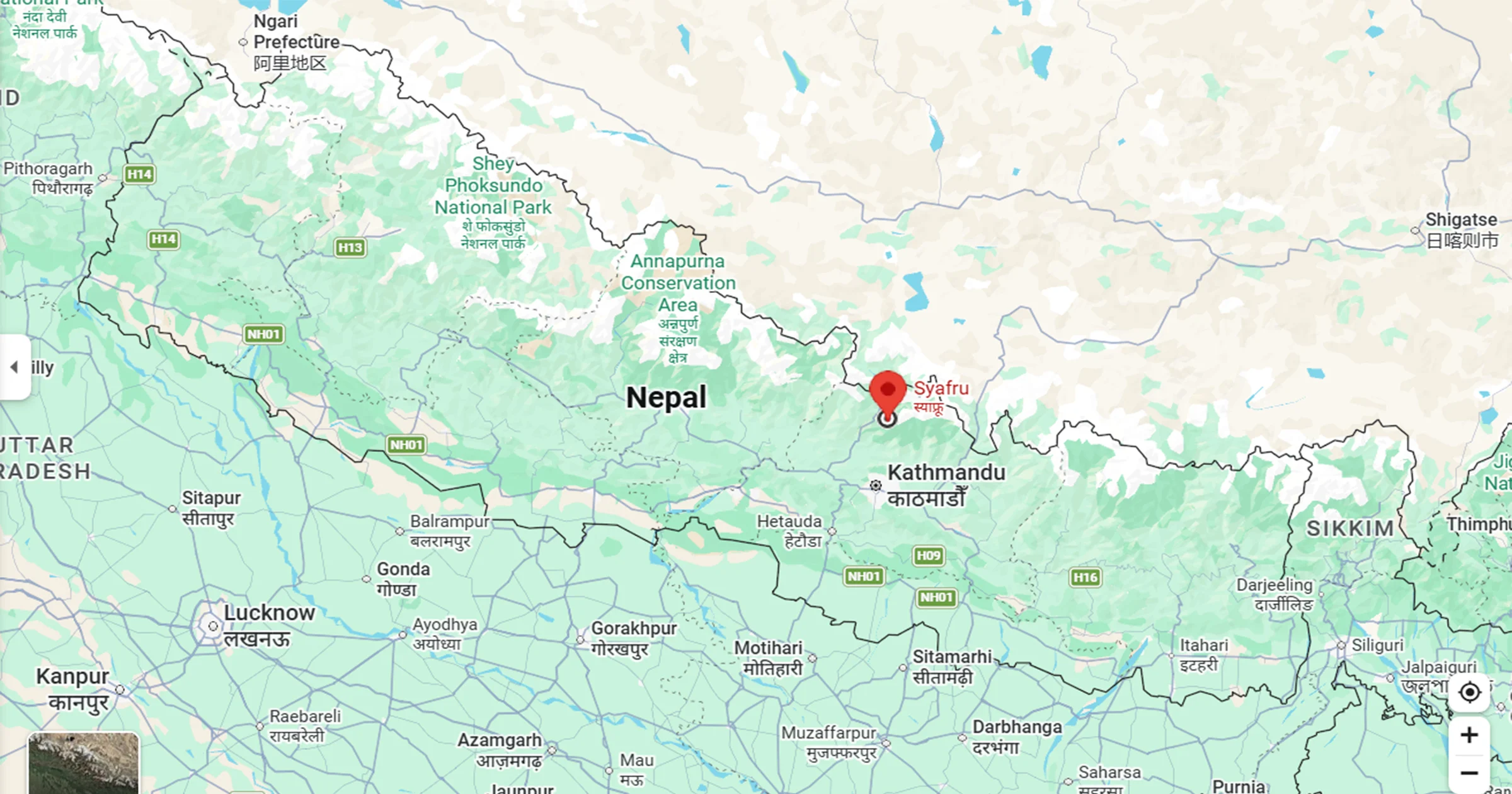
Location of Syabrubesi on the map of Nepal
Syabrubesi as a Village at a Crossroads
What makes Syabrubesi’s location genuinely interesting isn’t just its altitude. It’s what surrounds it. The town lies within a deep valley of the Bhote Koshi River, ringed by peaks including Langtang Lirung, Ganesh Himal, and Dorje Lakpa, all towering well above 6,900 meters. Syabrubesi also sits on one of the old trade routes connecting Nepal with Tibet, a path merchants and pilgrims used for centuries before trekking tourism ever existed.
Today, that same route runs as a paved highway. The Pasang Lhamu Highway passes directly through the Syabrubesi village, connecting Kathmandu to the Rasuwagadhi–Kerung border crossing into Tibet, which remains one of Nepal’s key overland trade links to China. You’ll share the road with cargo trucks as often as tourist jeeps, a small reminder that Syabrubesi has always been about movement, long before backpackers showed up.
How to Get to Syabrubesi from Kathmandu?
There’s no shortcut here; the road is part of the experience. The journey from Kathmandu to Syabrubesi takes roughly 6–9 hours depending on road conditions and your mode of transport.
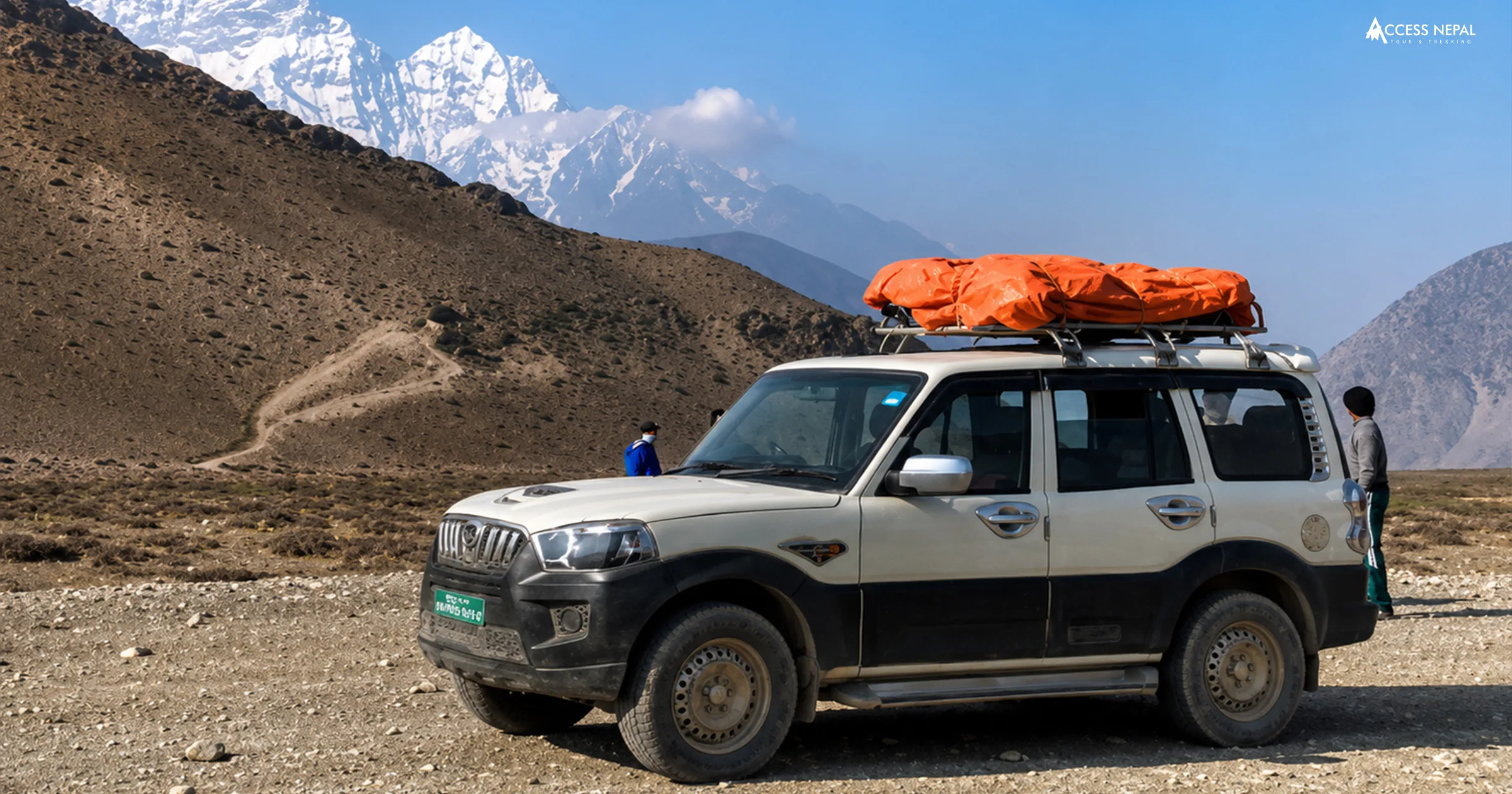
One of the transport options to reach Syabrubesi
Transportation Options to Reach Syabrubesi
| Option | Duration | Cost | Best For |
| Local Bus | 8-9 hours | $10-$20 | Budget travellers, solo backpackers |
| Shared Jeep | 7-8 hours | $20-$30 | Slightly more comfort, still social |
| Private Jeep | 6-7 hours | $200-$300 | Groups, families, those with gear |
Local buses depart daily from Machhapokhari Bus Park in Kathmandu, and most trekking agencies can also arrange jeep transfers directly from your hotel.
How is the road conditions to reach Syabrubesi?
Don’t expect a smooth highway ride the whole way. Sections are paved, others are dusty and pockmarked, and switchbacks climb steadily out of the Kathmandu Valley before dropping toward the Trishuli and Bhote Koshi river valleys. It’s tiring, occasionally bumpy, and completely worth it. The views of terraced hillsides, river gorges, and distant snow peaks unfold gradually, like the country is easing you into the mountains rather than dropping you into them.
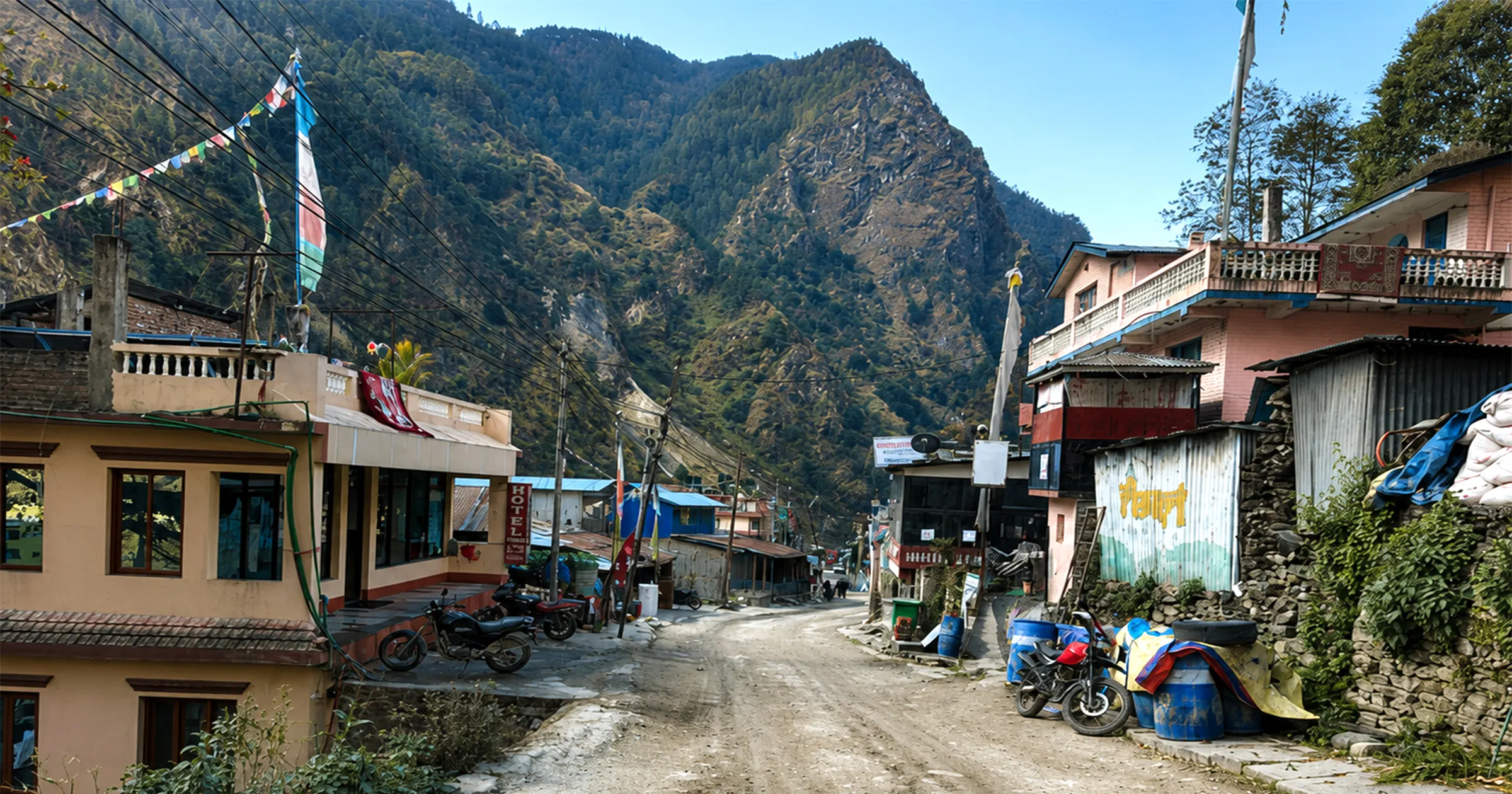
Road to reach Syabrubesi
If you get travel-sick easily, sit toward the front of the vehicle and pack motion-sickness tablets. A jeep ride broken into two days (with an overnight stop in Dhunche or Trishuli Bazaar) is also an option if you’d rather not spend a full day in transit.
Is Syabrubesi safe for Travelers?
Yes, Syabrubesi is a well-established trekking hub used to hosting international visitors, and it’s generally considered safe. That said, “safe” here means the usual mountain-travel common sense rather than zero risk.
Before booking any Trek to reach Syabrubesi, like the Langtang Valley trek and any other, you have to make sure of the road conditions, altitude, border proximity, and general village safety.
- Road conditions: The Kathmandu–Syabrubesi highway is the biggest variable. Landslides and monsoon rain can cause delays or closures, particularly June through August.
- Altitude: Syabrubesi itself sits low enough that altitude sickness isn’t a concern, but if you’re continuing into Langtang Valley, standard acclimatization rules apply once you climb higher.
- Border proximity: Being near the Kerung/Tibet border means occasional security checkpoints. This is routine, not alarming; just carry your passport and permits.
- General village safety: Petty crime is rare. Guesthouses are used to travelers, and the community’s income depends heavily on tourism, which tends to keep things welcoming and low-risk.
As with anywhere in rural Nepal, register your trek details (via TIMS), let someone know your itinerary, and consider travel insurance that covers trekking at altitude.
Why Visit Syabrubesi?
Syabrubesi’s fame is easy to explain in one sentence. It’s the front door to some of Nepal’s best trekking. But that undersells it slightly.
Syabrubesi as more than a bus stop
Syabrubesi is the point where the Langtang Valley trek, Ganesh Himal trek, and Helambu Circuit Trek start or pass through, which alone makes it one of the busiest trailheads in the country. But the town has also developed real infrastructure to meet trekkers’ needs: restaurants, shops, guesthouses, and gear rental, while locals remain tied to traditional Tamang practices rather than becoming purely tourist-driven.
That combination, modern trekking convenience layered over an unmistakably traditional village, is what gives Syabrubesi its character. You can charge your phone, get a hot shower, and eat a decent dal bhat, all while watching prayer flags snap over a river that’s been a trade route for centuries.
What Makes Syabrubesi Unique?
It would be easy to lump Syabrubesi in with every other trailhead town in Nepal, like Lukla as a gateway for Everest region treks, Besisahar as a gateway to the Annapurna region. But a few things set it apart.
1. The Tibet connection
Few Himalayan trekking hubs double as active border towns. Syabrubesi is a functioning border gateway, with the Pasang Lhamu Highway continuing on to the Rasuwagadhi to Kerung crossing into Tibet, a route that’s carried renewed trade significance since discussions reopened following the 2015 earthquake. That cross-border traffic gives the village a slightly different energy than a purely trekker-focused town.
2. Three Trails, One Trailhead
From Syabrubesi you can start three of Nepal’s best-known routes, the Langtang Valley Trek, the Tamang Heritage Trail, and the Ganesh Himal Trek, all without needing to relocate to a different town. Few trailheads offer that kind of route flexibility from a single base.
3. A Living Tamang Village
This isn’t a town built purely for tourism. The area is predominantly Tamang, one of Nepal’s indigenous communities with deep Tibetan cultural roots, and that presence shapes the monasteries, food, festivals, and general rhythm of daily life here.
Is Syabrubesi Worth Visiting If You’re Not Trekking Langtang Valley?
Yes. You don’t need a multi-day trekking itinerary to justify the trip. Non-trekkers can have a slower, more culturally immersive experience in Syabrubesi. Short hikes to nearby villages like Khangjim or Sherpagaon offer panoramic views without requiring a full trek, and the natural hot springs in nearby Tatopani provide a relaxing retreat a short drive or hike away.
A Day (or Two) Without a Trek
If you’re short on time or not up for a multi-day hike, consider:
- A half-day hike to a nearby viewpoint village for mountain views without the commitment
- An afternoon soak at the Tatopani hot springs
- A homestay evening with a Tamang family
- Simply wandering the village, watching the river, and eating well
Even without trekking, spending a day or two in Syabrubesi is worthwhile; it has its own cultural appeal through Tamang monasteries, traditional architecture, and a genuine mountain atmosphere that doesn’t require altitude gain to appreciate.
What Is Syabrubesi Famous For?
If you ask any Kathmandu trekking agency, the answer comes fast: Syabrubesi is famous as the primary starting point for the Langtang Valley Trek, one of Nepal’s most popular trekking routes, and it’s equally known for its Tamang culture, its role as a Nepal–Tibet border gateway, and its access to multiple trekking routes throughout the Langtang region.
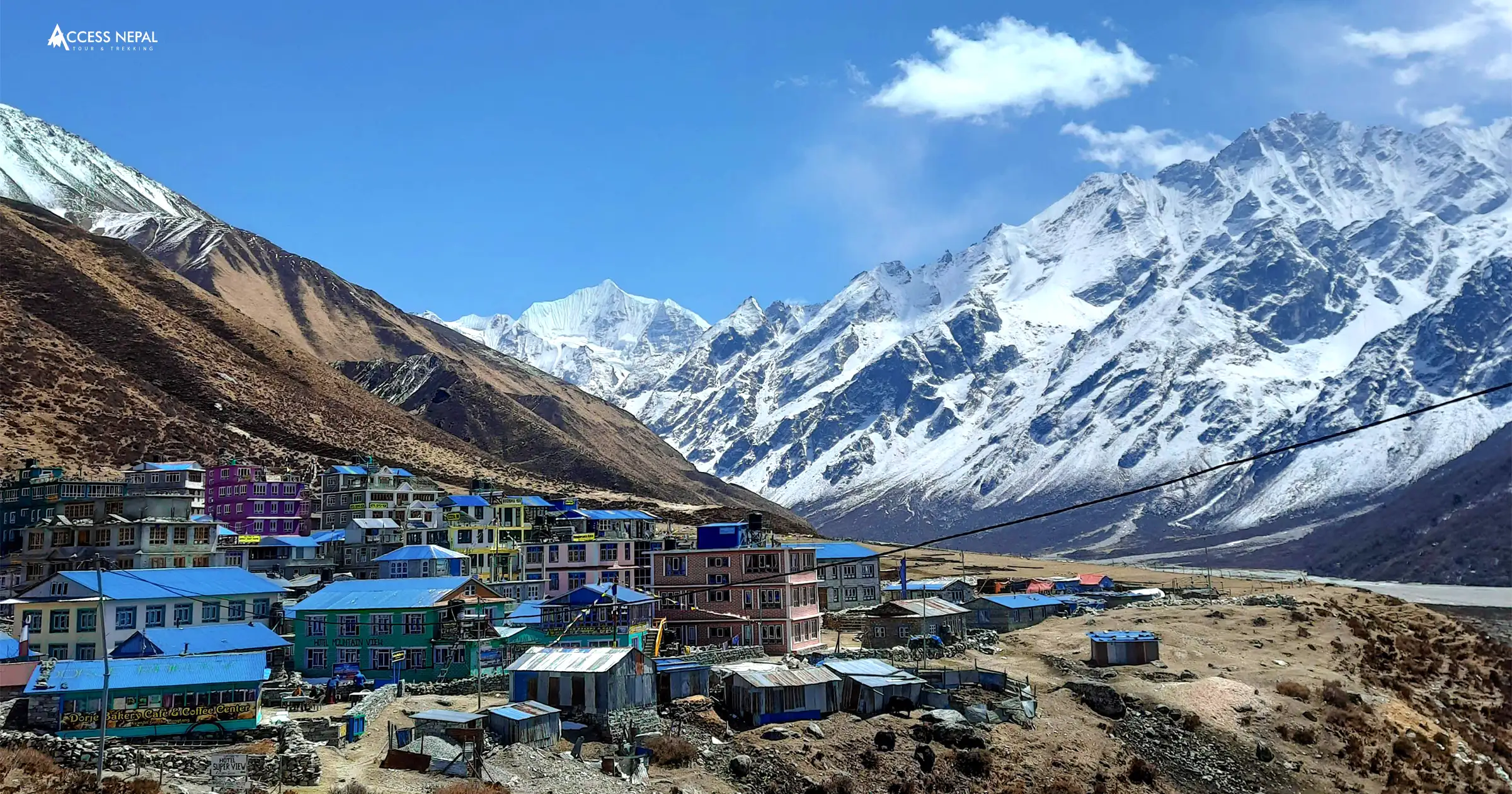
Syabrubesi: The Gateway to Langtang Valley
Syabrubesi as the Trekking Hub of Langtang and the Tamang Heritage Trail
The two flagship routes both begin, and for Langtang, also end, right here.
Langtang Valley Trek:
Starting at 1,460 meters in Syabrubesi, the trek climbs to around 4,984 meters at Tserko Ri near Kyanjin Gompa, covering roughly 80 km round trip over about a week. The route passes through Langtang National Park, traditional Tamang villages, forested river valleys, and high alpine pastures beneath Langtang Lirung, using the same trail for both ascent and descent, which keeps navigation simple and supports gradual acclimatization.
Tamang Heritage Trail:
This trek typically starts from Syabrubesi and follows a circular route through Gatlang, Tatopani, and Briddim, prioritizing cultural immersion, homestays, monasteries, and everyday Tamang village life, over high-altitude drama.
Natural Hot Springs
About a 45-minute walk from Syabrubesi, and also accessible along the Tamang Heritage Trail route, the Tatopani hot springs are genuinely worth the detour, especially after a few dusty days on the trail. Hot spring cleanliness can vary, so it’s worth avoiding submerging open wounds and using general caution when bathing.
Tamang Culture and Hospitality
This is arguably Syabrubesi’s most underrated draw. Guesthouses here are often family-run, meals are cooked in the same kitchens locals eat from, and it’s common to see monasteries and prayer wheels woven into ordinary village life rather than staged for visitors. Homestay options nearby let you go a layer deeper, sharing meals, chores, and conversation with a Tamang household rather than just passing through.
Best Time to Visit Syabrubesi
Season Months Conditions
| Season | Months | Conditions |
| Spring | March-May | Clear skies, blooming rhododendrons, warm days, peak trekking season |
| Summer | June-August | Heavy rain, higher landslide risk on the access road, leeches on trail |
| Autumn | September-November | Crisp, stable weather and the clearest mountain views, the busiest season |
| Winter | December-January | Cold, quieter trails, possible snow at higher elevations on the Langtang route |
Spring and autumn are the sweet spots for both scenery and road reliability. If you’re set on visiting during monsoon, build in flexible travel days in case the highway is temporarily blocked.
Accommodation in Syabrubesi
Syabrubesi has grown into a proper trekking town, and its guesthouses reflect that. Expect simple, clean teahouse-style lodging rather than luxury:
Budget teahouses, basic twin rooms, shared bathrooms, hot showers usually available for a small extra fee
Mid-range guesthouses, attached bathrooms, better bedding, occasionally Wi-Fi
Homestays, a more immersive option in and around the village, staying directly with a Tamang family
Most lodges include a dining hall serving Nepali staples, dal bhat, noodle soups, momos, alongside basic Western comfort food for trekkers. Booking ahead isn’t usually necessary outside peak autumn weeks, but arriving early in the day gives you the best pick of rooms.
Things to Do in Syabrubesi
- Trek into Langtang Valley or along the Tamang Heritage Trail
- Day-hike to a nearby viewpoint village like Khangjim or Sherpagaon
- Soak at the Tatopani hot springs, roughly 45 minutes away on foot
- Visit local monasteries and observe Tamang religious life
- Try Himalayan cuisine, yak cheese, dhindo, and other regional dishes
- Photograph the river confluence and surrounding peaks, especially at sunrise
- People-watch at the border-town bustle, where trekkers, traders, and trucks share the same road
Which Treks Start From Syabrubesi?
Three major routes commence directly from Syabrubesi: the Langtang Valley Trek, the Tamang Heritage Trail, and the Ganesh Himal Trek. Some itineraries also route through Syabrubesi en route to Helambu. Broadly:
- Langtang Valley Trek, 7–10 days, high alpine scenery, glacier views, moderate-to-challenging
- Tamang Heritage Trail, 5–7 days, culture-focused, gentler terrain
- Ganesh Himal Trek, a quieter, more remote alternative for experienced trekkers seeking fewer crowds
- Combined Langtang + Tamang Heritage, increasingly popular for travelers who want both scenery and cultural depth in one trip
Do You Need Permits for Syabrubesi?
Yes, if you’re heading into the surrounding national park and trekking routes. You’ll need to pay a TIMS fee, $15 for SAARC nationals, $30 for other foreign travelers, and show your passport at the checkpoint to enter Langtang National Park, both of which can be arranged on your way through Syabrubesi.
Practically, this means:
- Sort your TIMS card in Kathmandu (through a trekking agency) or on arrival in Syabrubesi
- Carry your passport for the Langtang National Park entry checkpoint
- Keep photocopies of your permits separate from the originals, just in case
If you’re trekking independently rather than with an agency, double-check current permit costs and requirements before you travel, as fees are periodically revised.
Things to Pack for Syabrubesi
Whether you’re passing through for a day or launching a multi-day trek, pack with the mountains, and the unpredictable access road, in mind:
Essentials
- Passport and printed/photocopied permits
- Cash in Nepali rupees (see the ATM note below)
- Layered clothing; warm mornings can turn cold fast once you gain elevation
- A good daypack and, for trekking, a duffel for porters if applicable
- Sturdy trekking shoes, broken in before you arrive
- Rain jacket, especially outside the dry season
- Basic first-aid kit and any personal medication
- Reusable water bottle and purification tablets or a filter
- Power bank, charging can be inconsistent or fee-based at higher elevations
- Sunscreen, sunglasses, and a hat, reflection and altitude both intensify sun exposure
For the road journey specifically
- Motion sickness tablets if you’re prone to car sickness
- Snacks and water for the 6–9 hour drive
- A light blanket or scarf for early morning departures
Banking, ATMs, and Mobile Signal in Syabrubesi
Don’t count on reliable banking infrastructure here. There is an ATM in Syabrubesi, but it shouldn’t be relied upon, it’s best to withdraw all the rupees you’ll need while still in Kathmandu.
Mobile signal is generally available in the village itself through Nepal’s main carriers (NTC and Ninecell/Ncell), and many guesthouses offer Wi-Fi, though speeds are modest and connectivity often drops once you head into Langtang Valley proper. Treat Syabrubesi as your last reliable point of connectivity before trekking further into the mountains.
Practical Travel Tips for Visiting Syabrubesi
- Carry more cash than you think you need. ATMs are unreliable this far from Kathmandu.
- Book your jeep or bus a day ahead during peak trekking season (autumn especially).
- Start early. Road conditions and mountain weather are both more predictable in the morning.
- Confirm your TIMS and park permits before you arrive, or budget time to sort them on-site.
- Pack layers, not just a heavy jacket. Temperature swings between the drive, the village, and any hiking you do can be significant.
- Respect local customs. Ask before photographing people, and dress modestly around monasteries.
- Build in a buffer day. Monsoon-season landslides can delay the return journey to Kathmandu.
Syabrubesi Frequently Asked Questions
Where exactly is Syabrubesi located?
Syabrubesi lies in Rasuwa District, Bagmati Province, Nepal, at an elevation of approximately 1,500 meters, within a valley carved by the Bhote Koshi River.
How long does it take to get to Syabrubesi from Kathmandu?
The distance from Kathmandu to Syabrubesi is 122 kilometers, i.e, 76 miles, and it takes roughly 6–9 hours depending on your mode of transport and road conditions, with private jeeps generally faster than local buses.
Is Syabrubesi only useful as a trekking trailhead?
No. Beyond trekking, Syabrubesi has genuine cultural appeal, Tamang monasteries, traditional architecture, a scenic river confluence, and nearby hot springs, making it worth a day or two even without a trek.
What permits do I need to visit Syabrubesi and Langtang National Park?
You’ll need a TIMS card and to pay the Langtang National Park entry fee, arranged either in Kathmandu or upon arrival in Syabrubesi.
Are there ATMs in Syabrubesi?
There is an ATM, but it isn’t reliable, withdraw the cash you’ll need while still in Kathmandu.
Syabrubesi rarely gets the spotlight; it’s usually just the place you pass through on the way to Langtang’s glaciers or Tamang Heritage’s village trails. But spend even a day here, and you’ll notice it has its own pulse: a border town, a trade route, a Tamang stronghold, and a trailhead all at once. Whether you’re lacing up boots for a multi-day trek or simply want a slower, more authentic slice of the Himalayas, Syabrubesi earns its place on the itinerary.
Planning a Langtang or Tamang Heritage trek? Plan your trip with us to build an itinerary around your dates, fitness level, and how deep into the mountains you want to go.

Mera Peak vs Island Peak: Which Trekking Peak Should You Climb First?
Prev
What to Wear Hiking? | 15 Things to Wear for Hiking
NextAwards and Achievements
Access Nepal Tour and Treks has been recognized with TripAdvisor’s prestigious Travelers’ Choice Award for multiple consecutive years, reflecting our unwavering commitment to quality and clients’ satisfaction.












Leave Your Comment