

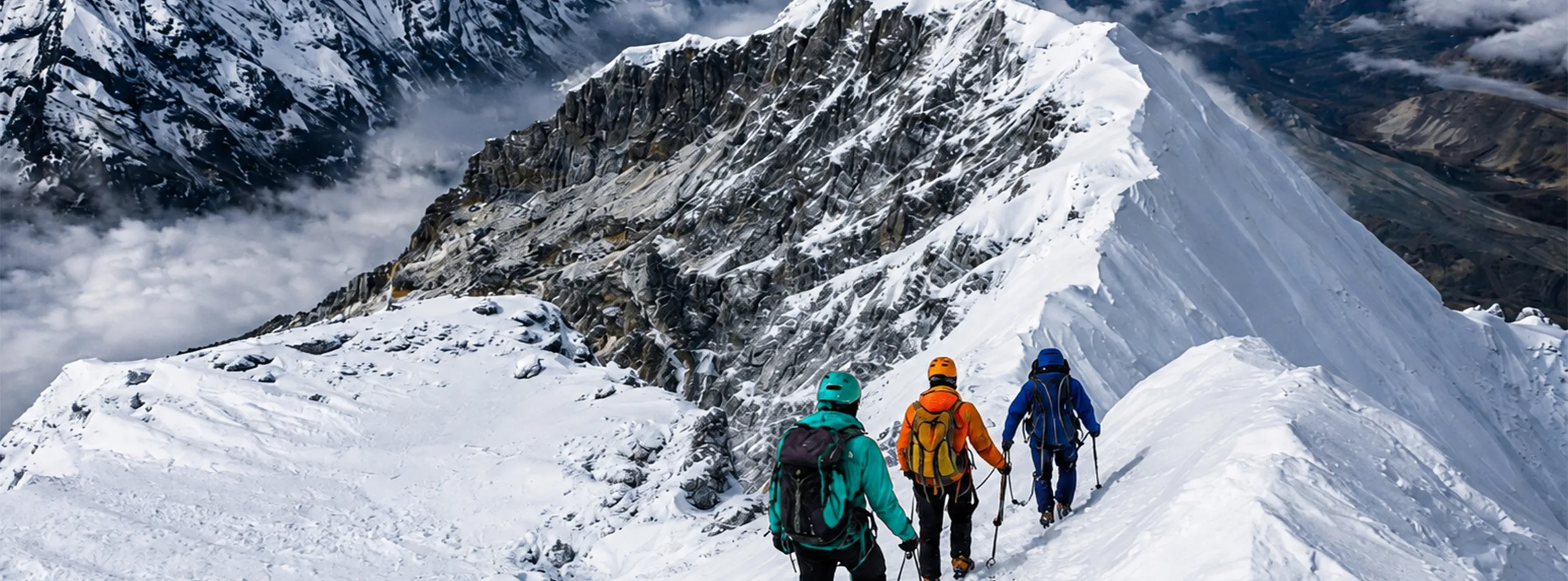
Lobuche East Peak
Lobuche East Peak is among the most widely trekking peaks of the Everest region of Nepal. It’s located at 6,119 meters (20,075 feet), offering trekkers the opportunity to enjoy both a typical trek in the Himalayas as well as a genuine mountain climbing experience.
The trek is quite near the Everest Base Camp, the trip is filled with beautiful mountainous landscape, Sherpa culture, high altitude trekking and is thrilling due to reaching a Himalayan summit.
People who have thought long and hard about trekking above the Everest area but have not prepared well for such a large scale expedition, can make Lobuche East as their small adventure aiming towards the excitement. The ascent is physically demanding with a correct acclimatization, basic mountaineering skills and proper mountaineering gear.
There are also fantastic views of the heights up the route, including the rest of the Himalayas: Mount Everest, Lhotse, Nuptse, Ama Dablam, Pumori, Cholatse and more.
Access Nepal Tours and Treks creates a Lobuche East Peak climbing tour with trekking, acclimatization, climbing support, experienced guides, Nepal permits, accommodation and more.
The route also includes Everest Base Camp and Kala Patthar, so you have the opportunity to more fully enjoy the region of Everest before you tackle the heights.
Lobuche East Peak at a Glance:
- Peak height: 6,119 m (20,075 ft)
- Location: Khumbu region, Solukhumbu District, Nepal
- Protected area: Sagarmatha National Park
- Peak category: Group B trekking peak according to the Nepal Mountaineering Association
- Nearest settlement: Lobuche Village
- Best climbing seasons: Spring (March to May) and autumn (September to November)
- Main attractions: Everest Base Camp, Kala Patthar, Khumbu Glacier, Sherpa villages, monasteries, and Himalayan views
- Main mountain views: Mount Everest, Lhotse, Nuptse, Ama Dablam, Pumori, Cholatse, and Thamserku
- Typical trip length: Around 18 to 19 days for the itinerary described below
- Climbing requirements: Good physical fitness, proper acclimatization, basic mountaineering skills, suitable equipment, permits, and experienced climbing support
- Popular combination: Lobuche East Peak with the Everest Base Camp trek
Where Is Lobuche East Peak Located?
Lobuche East Peak Location
Lobuche East Peak is situated in the Khumbu region of north eastern Nepal, in the Everest area in Sagarmatha National Park. The mountain is situated above the Lobuche Village, which is an important stop on the route to Everest Base Camp.
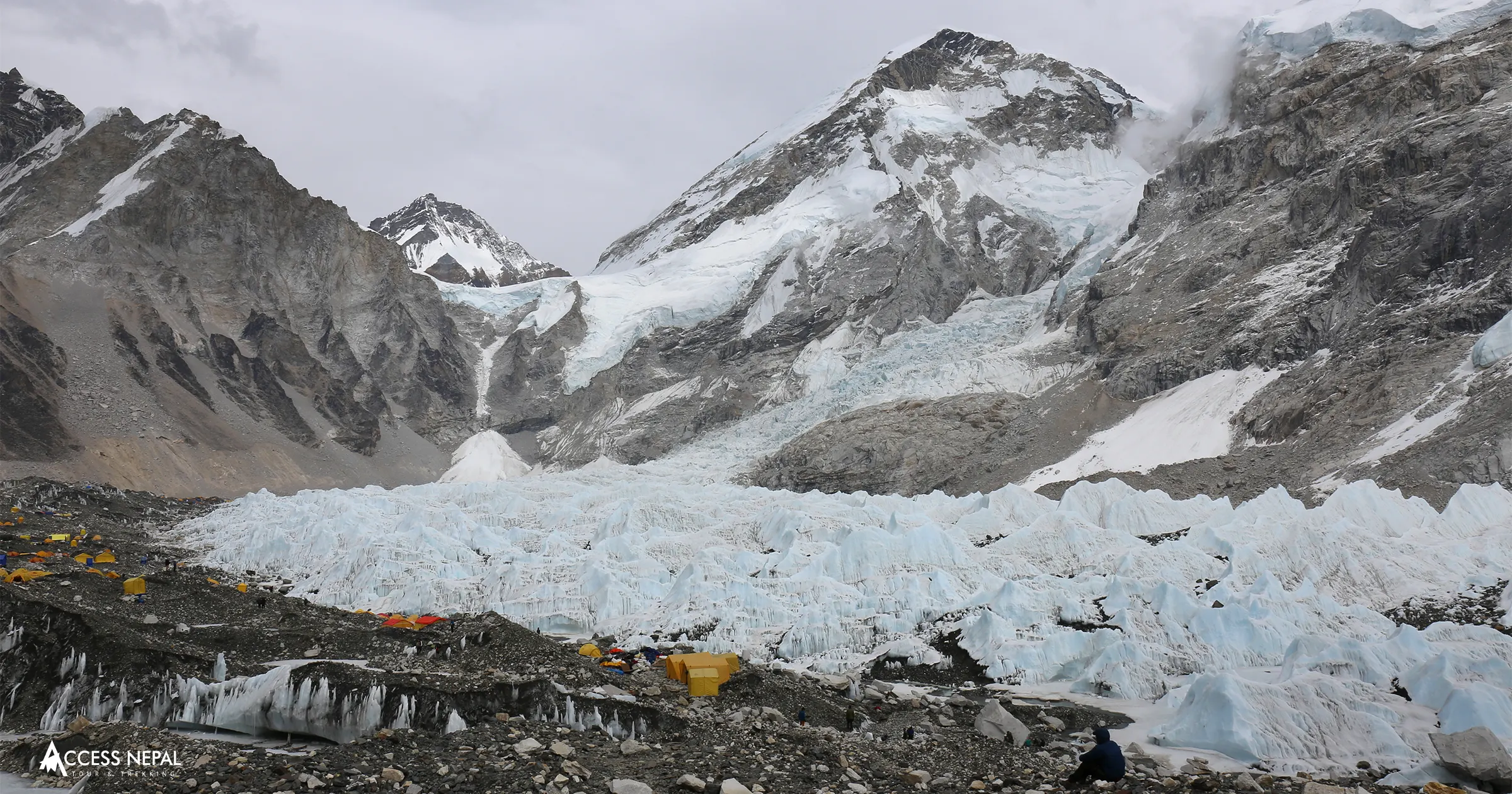
One of the major highlights of Nepal
One of the main reasons for the popularity of the peak is the location. It is not necessary to journey to a remote area of Nepal to attain the mountain. The route passes through the famous Everest Base Camp trekking route and goes through Lukla, Namche Bazaar, Tengboche, Dingboche, Lobuche and Gorak Shep.
Which District Is Lobuche East Peak In?
Lobuche East Peak is situated in one of the most popular trekking and mountaineering districts of Nepal, in Solukhumbu District. There are a lot of aspects of Sherpa culture and Buddhism, trekking and mountaineering in the district, since it is home to the Everest region.
How Far Is Lobuche East Peak From Kathmandu?
It begins with a flight from Kathmandu to Lukla and then a series of days trekking around the Khumbu region. Lobuche East is a mountain that you can’t reach by running a road, and can’t go up overnight. The steady ascent is important to allow the body to acclimatize itself to the rising altitude.
With Access Nepal Tours and Treks, the itinerary includes planned acclimatization days before the climbing section. This allows you time to get ready for higher altitudes rather than speeding all the way to the top.
Nearby Mountains and Landmarks
Lobuche Village, which is about 4,940 meters above sea level. It is one of the points where you can be surrounded by some of the most impressive landscapes in the Everest region. One of the highlights of this trip is Everest Base Camp (5,364m).
Another popular viewpoint is Kala Patthar at 5,550 m which offers a wide view of Mount Everest, Lhotse and Nuptse. Lobuche is also surrounded by the Khumbu Glacier, which plays a significant part in the region’s topography.
Lobuche East Peak Height & Altitude
The height of Lobuche East Peak is 6,119m above sea level (20,075 ft). Altitude is a critical aspect of this climb at this altitude.
Lobuche East is considered a Group B trekking peak by Nepal Mountaineering Association. This one is appropriate for anyone who climbs with a decent fitness level, proper acclimatization and some basic mountaineering skills. It is regarded as more accessible than many major peaks of the Himalayas that allow expeditions but it’s not an easy hiking peak.
As you move higher to the altitude, the air gets more light, temperatures fall suddenly down and the challenge increases. So, there is a need for a well planned itinerary with proper acclimatization.
History of Lobuche East Peak
The name Lobuche is associated with the nearby village of Lobuche and the overall environment of the mountain landscape. Lobuche East came to be known as a trekking peak, and eventually a well-liked climbing peak when people wanted to try out their first Himalayan climbing experience.
On 25th April 1984, Laurence Nielson and Sherpa Ang Gyalzen reached the summit of Lobuche East for the first time. Later the peak was added as a trekking peak of Nepal Mountaineering Association under group B.
For others, Lobuche East may be a chance to sharpen their backpacking and mountaineering abilities in this high Himalayan setting. Additional skills like handling crampons, using an ice axe, snow travel and rope climbing can become part of the experience.
Geography and Landscape of Lobuche East Peak
Lobuche East Peak is part of the Himalayan range, which was formed by the collision of the Indian and Eurasian tectonic plates. It’s a hilly and rocky area that consists of valleys, glaciers and areas of high alpine.
Lower portions are composed of mountain trails, alpine vegetation whereas higher portions are more rocky, snowy, and glaciated.
One of the most striking natural features of the area is the Khumbu glacier and the Dudh Koshi river system which is also a very important feature of the Everest region.
The evolving scenery is one of the greatest aspects of the trip. At the beginning of the hike you will be in the forest, and then at a certain point you will be in this very different environment which is the mountain, the rocks, the snow.
Climate and Weather at Lobuche East Peak
Lobuche East is a cold and alpine climate, while at high altitudes conditions can rapidly shift. In the winter, the weather is very cold and snowy and during the summer- monsoon period, the lower section of the trail is rainy and cloudy.
Usually, the best seasons for climbing are the spring and autumn when there is more stable weather and better visibility. But no guarantee can ever be given for Himalayan weather. This doesn’t always mean that wind, snowfall, cloud or sudden temperature changes won’t happen during the best seasons.
Spring: March to May
The season of spring is one of the best times for climbing Lobuche East Peak. Generally more stable weather, often better skies, rhododendron blooms color the lower valleys.
Some temperatures stay below the freezing level at higher elevations, the source itinerary shows daytime temperatures around -10°C to 5°C which means it is still possible to get some snowfall at higher altitudes, with accordingly cold weather equipment is required for climbers.
Summer and Monsoon: June to August
During the monsoon season, there will be increased rain, cloudiness and low visibility in Nepal. Trails may be damp and slippery and there may be cloudy conditions that make mountain views less consistent.
The temperatures at lower altitudes might be in the range of 5-15℃, but colder as high altitude is reached. This is not usually the season of choice for those wanting to tackle Lobuche East Peak climbing due to the weather and climbing conditions.
Autumn: September to November
Lobuche East Peak climbing is also a great time of the year in the fall. Normally the monsoon lifts, allowing clearer skies with better mountain visibility.
September, October and November are good months since the weather can be stable and higher elevations can still be cold, enhancing the enjoyment of trekking and climbing in the Himalayas.
Winter: December to February
Winter is the coldest season in the Everest region. On extremely cold days the temperatures can drop to below -20°C at higher altitudes and the climb may be difficult because of snow, high winds and cold temperatures.
Therefore, winter climbing is better suited to those climbers who are well prepared and experienced with proper equipment and experience. But service may also be limited or teahouses may be closed at higher lands and locations.
Snowfall
Snow is an important factor on Lobuche East Peak. When heavily snowing, these routes are more difficult to climb, and some changes in the condition of the trail and climbing sections may occur.
Plans for mountain climbs need to be flexible as weather conditions can shift rapidly. Guides constantly supervise and are able to alter the schedule as needed for safety.
Wind Conditions
On a higher altitude, wind plays a more significant part. Strong winds can make already cold temperatures feel much colder and can make exposed sections of the mountain more challenging.
It is necessary to have appropriate climbing gear and warm layers, gloves and good windproof clothing. It is also the responsibility of the experienced guides to keep an eye on the weather and wind chill, and to determine if summit conditions will be appropriate.
Flora and Fauna Around Lobuche East
The landscape of Lobuche varies depending on the altitude. Plenty of forest area is seen in the lower parts of the Everest region, and at higher altitudes the vegetation area decreases and gets smaller.
Vegetation
Rhododendron, pine and birch forests are available at lower altitude on the periphery of Dudh Koshi Valley and Namche Bazaar. As the high reaches above 4000 m, forests gently give way to alpine grasses, mosses, lichens, small plants and dwarf shrubs.
The rhododendrons bring color to the lower elevations of the trail in the spring months, adding to the beauty of the season.
Wildlife
Sagarmatha National park, the region also hosts the various kinds of the wildlife of the Himalayas. Animals can be Himalayan tahr, musk deer, Himalayan monal, pheasants, Himalayan birds or maybe the elusive snow leopard.
Wildlife sightings are never guaranteed, especially on a busy trekking route, but the possibility of seeing Himalayan animals adds another interesting part to the journey. It is also common to see yaks in the area. Local people use them to carry things and goods on the mountain paths.
Conservation Efforts
Lobuche East is also part of Sagarmatha National Park. An important aspect of travelling in this region is protecting nature with conservation efforts.
Visitors are expected to follow the park regulations, avoid leaving waste, minimize waste and follow guidelines to respect local communities and wildlife. Responsible trekking helps to protect the fragile Himalayan environment for future trekkers and visitors.
Access Nepal Tours and Treks promotes responsible travel practices, emphasizing the need to respect the local surroundings’ nature and culture.
Sherpa Culture and Traditions around Lobuche East
Lobuche East climbing journey is not only all about reaching the summit. You’ll also pass by the village of the Sherpa people whose culture is interconnected with the mountains.
Sherpa Community
Sherpas are a name associated with trekking and climbing in the Himalayas throughout the world. Their traditional life, a welcoming attitude, the knowledge of the mountains and their relationship with the environment, which is very strong, can be experienced in the Khumbu region.
The trek has a very close feel in Sherpa villages. This is not an anonymous mountain area, it is an area where people have been living and working for generations.
Buddhism in Khumbu Region
Sherpa culture on the Khumbu is greatly influenced by Tibetan Buddhism. On the way, you will find prayer flags, mani walls, chortens, monasteries and prayer wheels.
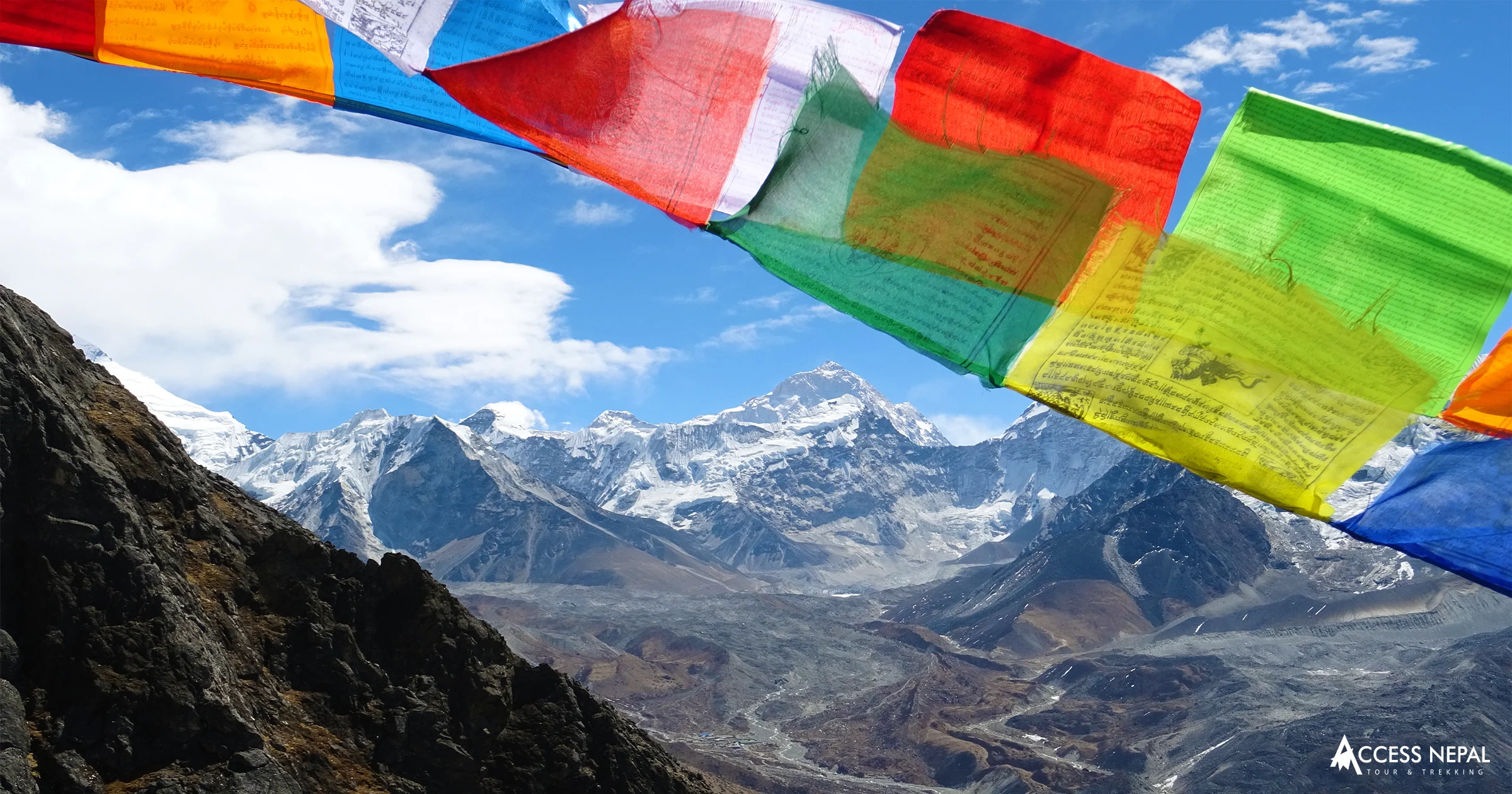
Buddhist community decorating the Khumbu region
These aren’t just for decoration. Many are of significance in local religious and cultural life and deserve respect from travellers.
Monasteries Near Lobuche
Among the most famous monasteries in the region of Everest is Tengboche Monastery. It is an essential Buddhist hub and is surrounded by magnificent mountain landscapes, featuring the peaks towards Ama Dablam, Everest and different Himalayan peaks.
There are also smaller monasteries and gompas in the Khumbu, providing an opportunity to learn about the local Buddhist traditions and Sherpa culture.
Sherpa Festivals
There are several major Buddhist and Sherpa festivals in the Khumbu region. One of the most popular festivals is Mani Rimdu that features religious ceremonies, masked dances and community gatherings.
Dumji is also a significant festival among the Sherpa people. The dates of festivals change every year, so visitors who wish to attend a festival should consult the schedule of their local area.
Local Lifestyle and Hospitality
This is reflected in the way of life of Khumbu which is tightly linked to the mountain environment. There are a lot of families in the region that are engaged in tourism, agriculture, trading, transport and animal husbandry-related work.
One can find teahouses and lodges along the trekking path offering lodging and food to trekkers. Overnight stays in these local lodges are easy and enjoyable, and will allow one to experience the well-known hospitableness of the Himalayan area.
Geology of Lobuche East Peak
The collision of the Indian Continental Plates with Eurasia over a long period of time resulted in the formation of the Himalayas. It is the geological process that led to the vast topography of mountains and valleys which form the region today.
The Lobuche area has varieties of rocks like limestone, sandstone, shale, granite, gneiss and schist. Geological activity, glaciers, erosion, snow and weather variations are still influencing the characteristics of this landscape.
The region is seismically active, so it is advisable to plan well and have local people’s support.
Lobuche East Peak In Sagarmatha National Park
Lobuche East Peak is within the Sagarmatha National Park which was created in 1976 and was added to the list of UNESCO World Heritage Sites in 1979.
The park safeguards some of the well known landscapes of the Himalayas, such as forests, alpine ecosystems, glaciers, high mountains and valleys. It is also a significant habitat area for wildlife including Himalayan tahrs, musk deer, Himalayan monals and other mountain wildlife.
This is a fragile environment and visitors should observe conservation rules during their visit. Don’t leave waste on the trail, disturb wildlife, damage plants or remove nature or culture objects.
Best Time to Visit Lobuche East Peak
The best time to climb Lobuche East Peak in Nepal is between May and the end of September.
Spring (March to May) and Autumn (September to November) are the ideal seasons for climbing trips on Lobuche east Peak.
The weather is consistent, windshields are clear in the mountains, and rhododendrons are in bloom at lower elevations during spring. The skies are typically clear in autumn and the weather for trekking conditions are generally better than the winter months when it’s cold and cloudy.
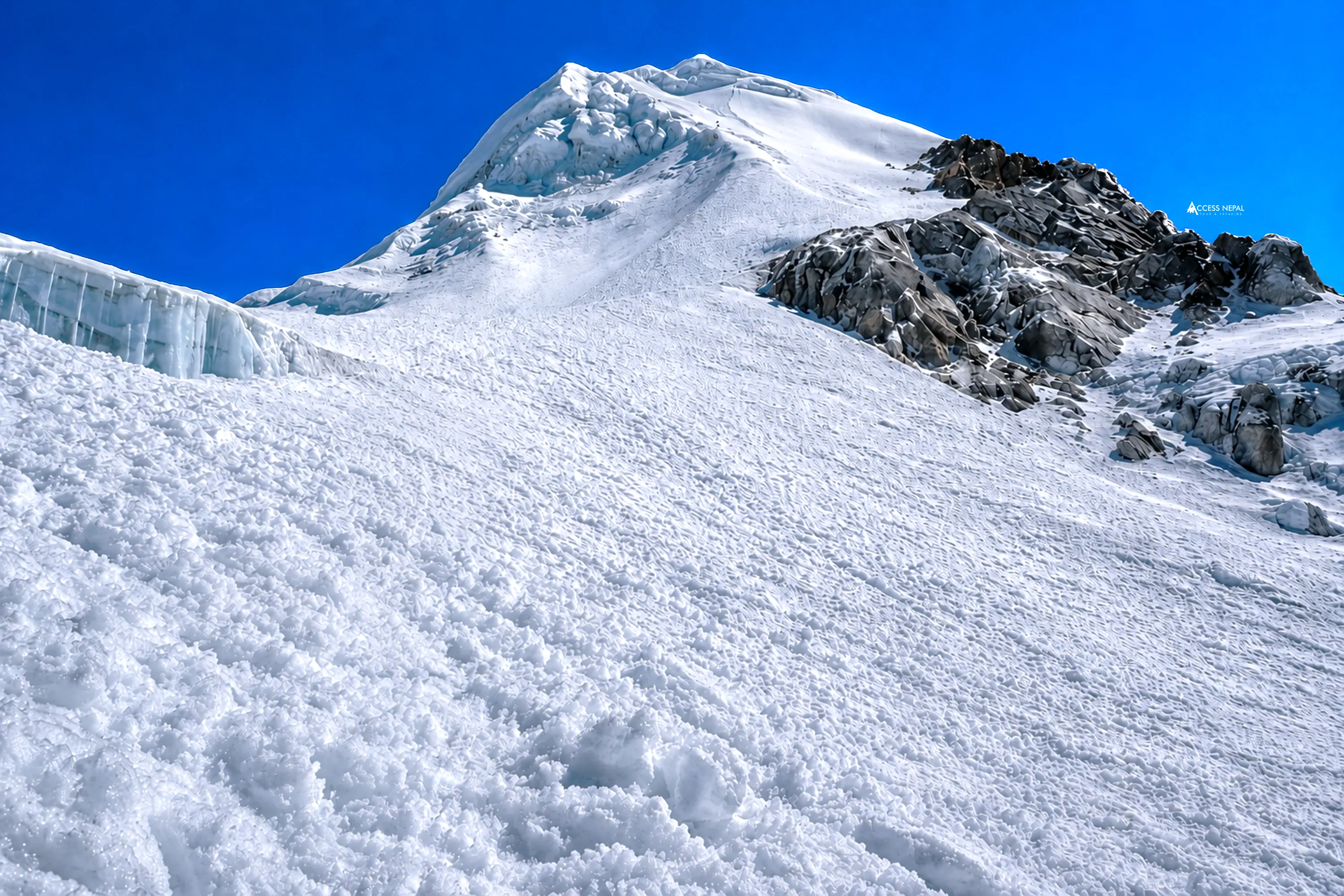
Climbing Lobuche East Peak during the peak season 2026
During the monsoon season (June through August), there may be cloud cover and rain. Likewise, during winter (December through February), extreme cold and heavy snow fall may occur at high elevation.
If your main goal is climbing the summit, it is better to plan around the climbing seasons rather than simply choosing a month because it is popular for general trekking.
Lobuche East Peak and Mountaineering
Lobuche East is much more than a typical trekking route. Climbers need to be skilled in climbing, coping with steep and snowy sections, change of terrain, cold conditions and high altitude. The ascent may involve rock scrambling, snow traveling, crampon work, ice axe work and rope ascending depending on conditions on the route. It can be steep in places, some basic climbing skills and fitness are essential.
This is one of the reasons why climbing Lobuche East is popular among the trekkers who want to get into mountaineering from trekking at high altitudes. It is also suitable as a preparation course for the future ones who wish to go for more difficult peaks of the Himalayan Ranges.
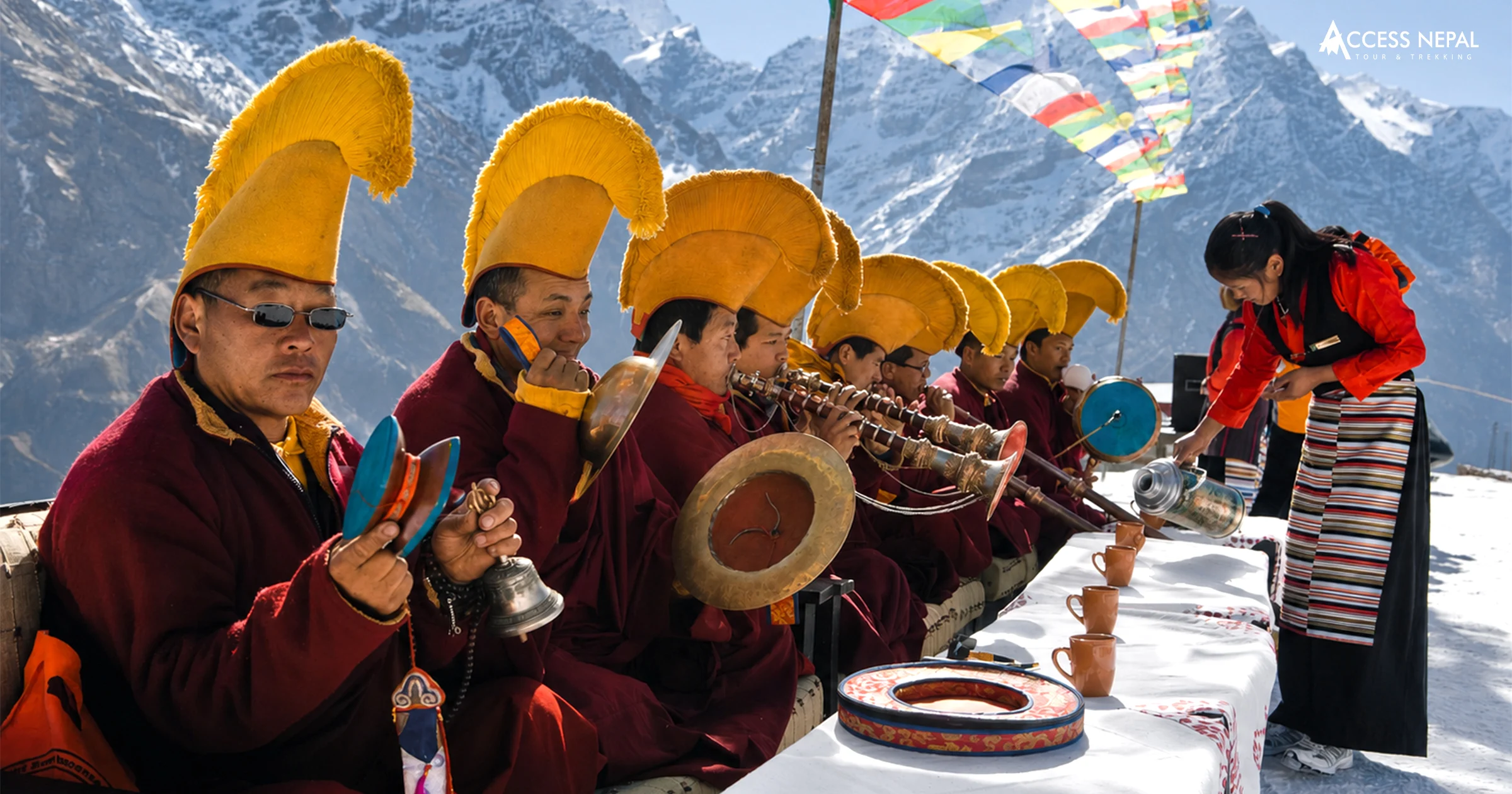
Himalayan people celebrating festivals in Nepal
But it cannot be said that a trekking peak isn’t demanding. The route to the summit may be difficult due to altitude, weather, snow conditions and a physically demanding day.
Nearby Attractions Around Lobuche East Peak
Finally, one of the best about climbing Lobuche East is that the course takes you through a number of stunning locations in the Everest area.
Everest Base Camp
Among the prominent highlights on one of the routes is the Everest Base Camp which is located around 5,364 meters. Reaching the base camp gives trekkers a chance to stand at one of the world’s most famous Himalayan destinations and see the surrounding Khumbu landscape.
Kala Patthar
Kala Patthar is one of the most popular points of view in Everest region at approximately 5550 meters. The early morning from the summit is especially famous in conjunction with the various light conditions over Everest and the rest of the mountains.
Lobuche Village
Lobuche village, which is located at an altitude of around 4940m is a significant point before Everest Base camp and the Lobuche East climbing section. The basic teahouse accommodation can be found here.
Khumbu Glacier
Khumbu Glacier is among the spectacular features of the Everest region. This part is memorable due to its frozen landscape and surrounding mountains.
Pumori and Nuptse
The route is lined by the mountains to form a dramatic backdrop in the Himalayas. From various other points near the Everest region, several other major peaks, such as Pumori (7161 m) and Nuptse (7861m), can be seen.
Travel Information for Lobuche East Peak
The typical adventure begins at Kathmandu airport, with a flight to Lukla. From Lukla, the path leads towards the Everest region trail, on to Namche Bazaar, Tengboche, Dengboche, Lobuche and the higher routes.
During the trekking part, accommodation is predominantly in teahouses and lodges. At higher elevations, camping may be required depending on the climbing itinerary and conditions.
Simple food is available on the trekking route. Facilities such as hot showers and Wi-Fi are more likely to be available at lower elevations, and may be limited or unavailable at higher camps.
Permits for Lobuche East Peak
The necessary permits and entry documents are needed for a Lobuche East climbing trip. These can include permits like the Sagarmatha National Park Entry Permit, Khumbu Pasang Lhamu Rural Municipality Permit and NMA Peak Climbing Permit.
The permit regulations and fees may change, so please check with the appropriate regulations prior to going.
Lobuche East Peak Climbing Cost
Based on the source information, the price for the package offered by Access Nepal Tours and Treks is US$2,490 per person from the original price of US$2,760 per person.
The package includes services listed in the company’s package inclusions, and group discounts may also be available.
Please note, the price for climbing may vary and each package will include slightly different things: Permit fees, transport, guides, equipment, accommodation, season and inclusions can all affect pricing, so please check the up-to-date price with inclusions before you book.
Who Is Lobuche East Peak Best For?
For those seeking to add more to their classic Everest Base Camp trek, Lobuche East is an option.
It can suit:
- Trekkers with good physical fitness
- People seeking to learn some basic mountain climbing skills
- Climbers looking for a first Himalayan trekking peak
- For the experienced trekker looking for new challenges
- Those wishing to enjoy Everest Base Camp and high altitude climbing.
- Individuals interested in Sherpa culture and landscape of the Himalayas
It is very important to realize that Lobuche East is a real high-altitude climb and not an outgrowth of the Everest Base Camp hike.
Frequently Asked Questions About Lobuche East Peak
Where is Lobuche East Peak located?
Lobuche East Peak is a peak in the Khumbu area of Solukhumbu District in Nepal within the Sagarmatha National Park. The peak is near the renowned trekking route to Everest Base Camp.
What is the height of Lobuche East Peak?
Lobuche East Peak is 6,119 meters (20,075 feet) high.
What is Lobuche East Peak famous for?
Lobuche east is renowned for the closeness to Everest base camp, breathtaking view of the great Himalayan mountain ranges, living among the sherpas, and the opportunity to combine high altitude trekking with basic mountaineering.
The route and summit allow climbers to view mountains like Everest, Lhotse, Nuptse, Ama Dablam and Pumori.
Why is it called Lobuche East Peak?
It is named after the nearby Lobuche Village. It is sometimes called the East Peak in order to separate it from Lobuche West Peak which is another more difficult challenge.
Is Lobuche East Peak part of Sagarmatha National park?
Yes. Lobuche East Peak is part of Sagarmatha National Park, which is a UNESCO World Heritage Site with its Himalayan Mountains, Glaciers, Wildlife and Sherpa culture.
What is the best time to climb Lobuche East Peak?
Spring (March – May) and autumn (September – November) are generally the best seasons. In these months, the weather is more favorable, it is likely that the skies will be clearer, and visibility in the mountains will be clearer.
April and October are the most popular months for trekking and climbing in the Everest region.
Which mountains can be seen from Lobuche East Peak?
Depending upon weather and visibility, you will enjoy a view of Mount Everest, Lhotse, Nuptse, Ama Dablam, Pumori, Cholatse, Thamserku and other Himalayan peaks.
Can I visit Lobuche without climbing the peak?
Yes. Lobuche Village is a normal stopping point along the Everest Base Camp trekking line and many trekkers stay there without attempting climbing Lobuche East Peak.
The high elevation area with a view of the mountain can be enjoyed while not trying to reach the peak.
What is the weather like at Lobuche East Peak?
The climate is cold and alpine. It is very cold and snowy in winter months, summers are impacted by the monsoon and spring and autumn are generally good months for trekking and climbing.
Altitude can make a difference for temperature and nights at high altitudes can be much cooler and freezing.
What wildlife can be found around Lobuche East?
The surrounding area around Everest is home to wildlife, such as the elusive snow leopard, Himalayan tahr, musk deer, Himalayan monal, pheasants, Himalayan griffon.
Sightings of those animals are not guaranteed because many of animals can be difficult to spot.
Which of the following is the closest village to Lobuche East Peak?
Lobuche Village is the nearest village and a key point on the route to Everest Base Camp and Lobuche East at approximately 4,940m (16,207ft).
Who is Lobuche East Peak best suited for?
Lobuche East is ideal for those trekkers who are physically fit and prefer to enjoy a Himalayan peak climbing. It is particularly appealing to those who have already experienced the effects of high altitude trekking and wish to step up to basic mountaineering.
What is the cost of traveling to Lobuche East Peak?
According to the information, the overall cost is usually around US$ 2300 – 3500 depending on the itinerary service, trekking agency, etc. Additional personal expenses (e.g. for travel insurance, personal shopping and tips may be additional.
For the Access Nepal Tours and Treks package described in this guide, the listed price is US$2,490 per person, subject to the current package terms.
Can Lobuche East Peak be combined with the Everest Base Camp trek?
Yes. Everest Base Camp and Kala Patthar is one of the most popular treks in the Everest region along with Lobuche East Peak. It enables you to firstly experience the classic trekking route and then also introduces a true Himalayan climbing challenge.
What makes Lobuche East Peak unique?
Numerous experiences are combined in one journey in Lobuche East. You’re treated to the famed Everest region trekking route, Sherpa lifestyle, Buddhist monasteries, glaciers, high altitude scenery and a genuine attempt to the highest of mountains.
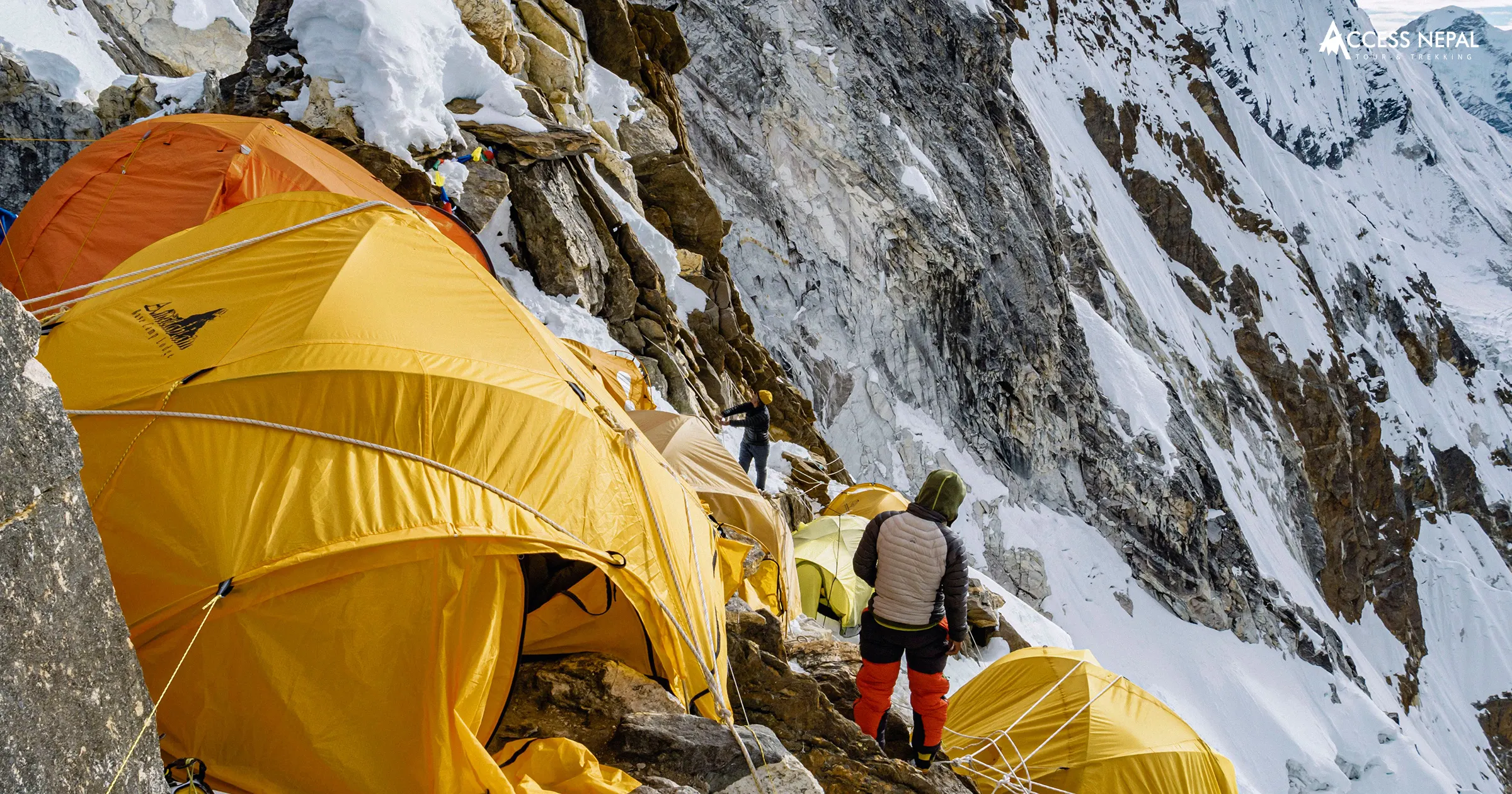
Camping at higher elevation during Lobuche East Peak Climbing
For those who want to experience a mountaineering moment without taking on the burden of a significantly bigger trip, it can be a thrilling taste of climbing the Himalayas.
Is Lobuche East Peak Worthy of the Effort?
Those who wish to push their experience in the Everest region one level further are recommended to choose Lobuche East Peak. It is 6119 meters and has many of the elements of a trip to Everest base camp including the thrill of summiting a Himalayan peak, Sherpa villages, Buddhist culture, glaciers and some of the most beautiful mountains in the world.
There’s a lot involved in the climb, though. The suitability of the equipment, weather, climbing support and experience as well as fitness and acclimatization all make a difference. A thoughtful route selection may be the difference, particularly with regards to both elevation and varying mountain weather.
This is where the correct trekking and climbing agency is counted on.
Access Nepal Tours and Treks offers a full climbing experience for Lobuche Peak East where we plan the itinerary, arrange acclimatization, provide experienced guides, climbing support, permits, accommodation and provide a structured experience.
It can also be optional for the team to consider taking the peak climb along with Everest Base Camp and Kala Patthar, bringing your experience to the highest level of the Everest region.
Lobuche East might be the adventure you’ve been seeking if you’re willing to venture off the beaten path, up to the mountains and onto a 6119m Himalayan peak.
Book your climbing trip from Lobuche East Peak with Access Nepal Tours and Treks and make your dream on the Everest region come true by exploring the Himalayas.
Lobuche East isn’t just about the summit. It is about the entire adventure in the Everest region, from the initial flight to Lukla and the Sherpa villages along the way, to the end when you are above 6000 metres. If you plan accordingly and leave it to Access Nepal Tours and Treks, you will have one of the most memorable adventure trips in Nepal.

Janai Purnima in Nepal | Raksha Bandan Meaning, Date, Traditions, and Gosainkunda Pilgrimage
Prev
Island Peak Climbing in Nepal: A Complete Guide to reach at 6,189 Meters
NextAwards and Achievements
Access Nepal Tour and Treks has been recognized with TripAdvisor’s prestigious Travelers’ Choice Award for multiple consecutive years, reflecting our unwavering commitment to quality and clients’ satisfaction.













Leave Your Comment