

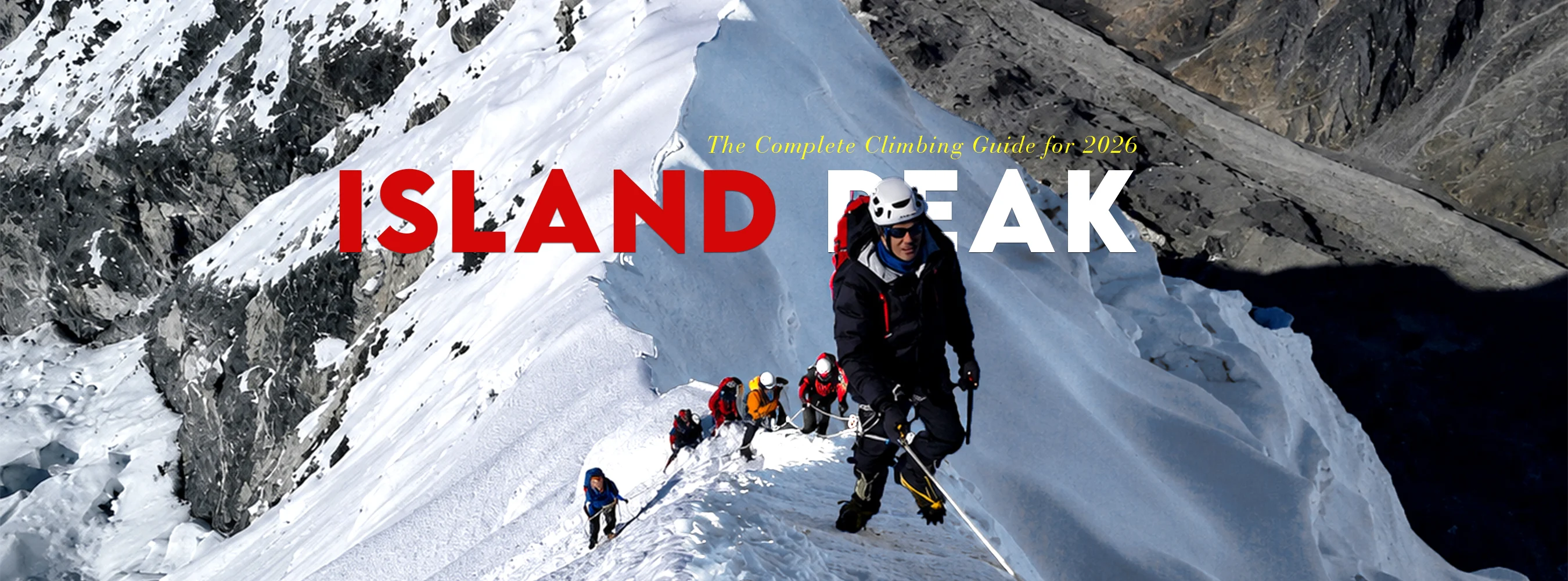
Island Peak Climbing in Nepal: A Complete Guide to reach at 6,189 Meters
Have you ever thought about the high mountains of Nepal and said to yourself, “I would love to climb one of those”?
If so, Island Peak may be just the right place for you.
Island Peak, or Imja Tse, at approx 6189m/20305ft is located in the Everest region of Nepal. One of the most popular trekking peaks in Nepal, it is a good combination of Himalayan trekking and mountaineering.
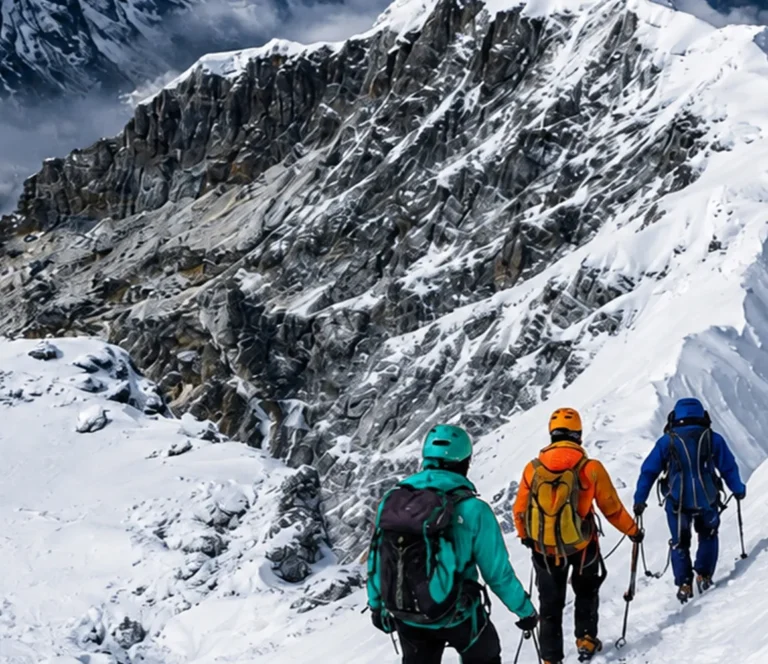
However, let’s make one thing clear. Island Peak is more than just a long hike with a fancy name. The route is at high altitude, with glaciers, crampons, snow, and long summit days. Nepal Tourism Board also notes that trekking peaks of Nepal are not for the faint-hearted and call for climbing abilities and proper climbing equipment.
But there is good news for the trekkers who want to trek on Island Peak. It is not necessary to be an expert mountaineer to be able to climb Island Peak.
For well-fitted and well-prepared trekkers, it can be a realistic goal if they have properly planned and prepared themselves, have appropriate equipment, and have an experienced climbing team.
So, what’s Island Peak really like? Is it hard or easy? When is the best time to climb it? What is the price of it?
Before you plan on climbing Island Peak in Nepal, let’s look at all the basics simply.
Island Peak: What You Need to Know
| Information | Details |
| Local name | Imja Tse |
| Height | 6,189 meters / 20,305 feet |
| Location | Khumbu, Everest Region, Nepal |
| Region | Sagarmatha National Park |
| Starting point | Lukla |
| Main approach | Lukla, Namche, Tengboche, Dingboche, Chhukung |
| Main climbing season | Spring and autumn |
| Typical trip length | Around 15 to 18 days |
| Difficulty | Moderate to challenging |
| Climbing experience | Helpful, but beginners can prepare for it |
| Main technical sections | Glacier travel, crampons, fixed ropes and steep snow/ice |
| Main attraction | Himalayan views and a genuine high altitude climbing experience |
What is Island Peak?
Island Peak is a 6,189m trekking peak in the Khumbu area of Nepal. It’s local name is Imja Tse.
Because of the way the mountain rises out of the surrounding valley, as an island in a sea of ice and mountains, it was given this name.
It is located near some of the most renowned locations in the Everest region, such as Chhukung, Dingboche, and Everest Base Camp. The popular trek also passes through traditional Sherpa villages and scenery dotted with massive peaks of the Himalayas.
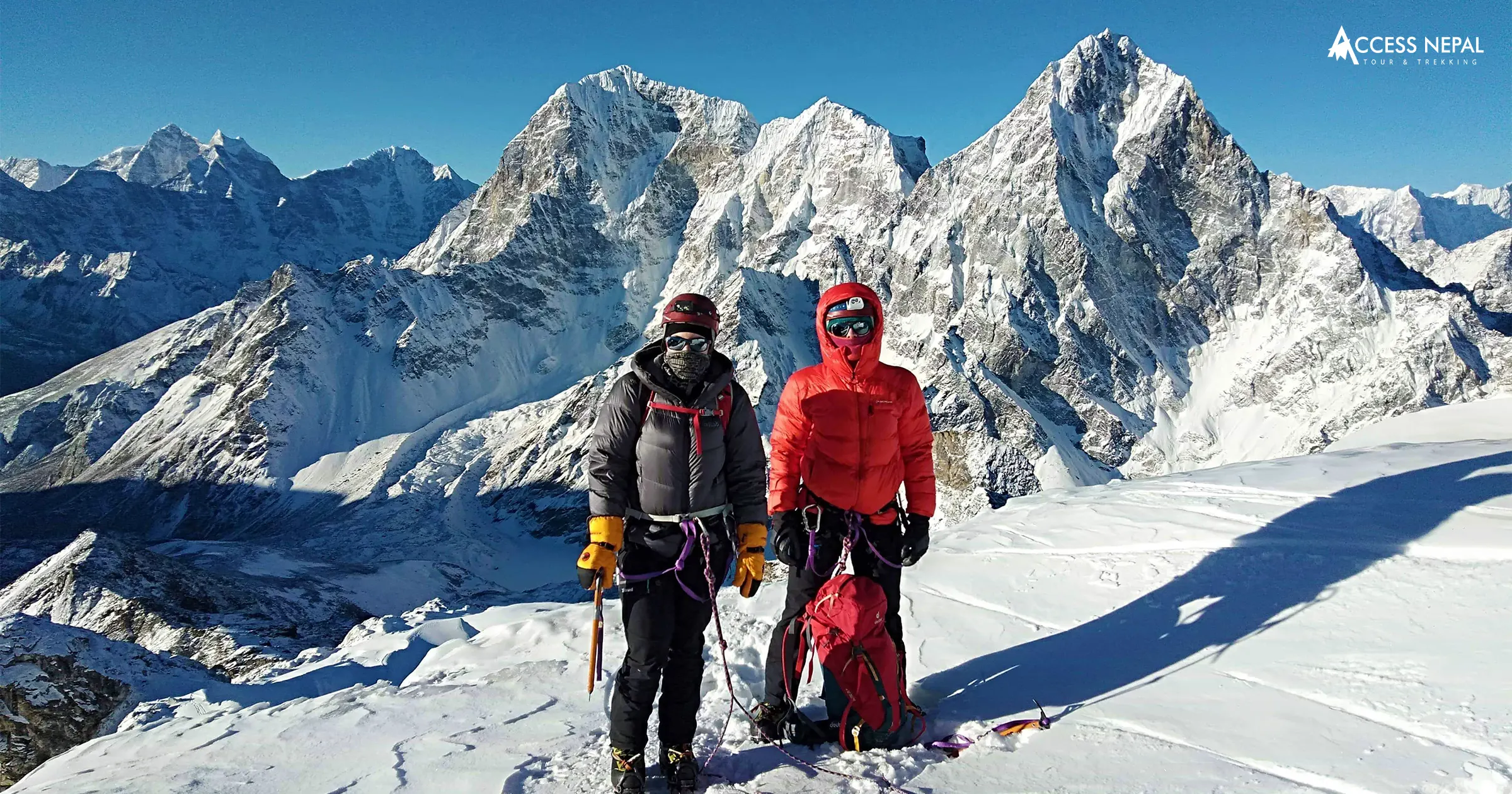
A beginner climbing Island Peak in 2026 with Access Nepal Tour and Treks
According to the Nepal Tourism Board, Imja Tse is one of the trekking peaks of Nepal, and it mentions that generally climbing skills and climbing equipment is required before starting a trek. This makes Island Peak so interesting. Although you are experiencing a trek through the Everest region, at the same time you are also taking a dip into mountaineering.
What Makes Island Peak so Popular?
With so many mountains in Nepal, why climb Island Peak?
The answer is very straightforward. Island Peak provides a glimpse of what mountaineering in the Himalayas is like without having to immediately take on an 8000m peak.
The journey combines:
- Everest region trekking
- Sherpa culture
- High mountain scenery
- Glacier travel
- Basic mountaineering skills
- Fixed rope climbing
- A challenging summit push
- The views of some of the world’s highest mountains
One passes through such places as Namche Bazaar, Tengboche, Dingboche and Chhukung, and enjoys beautiful views of peaks like Everest, Lhotse, Nuptse and Ama Dablam.
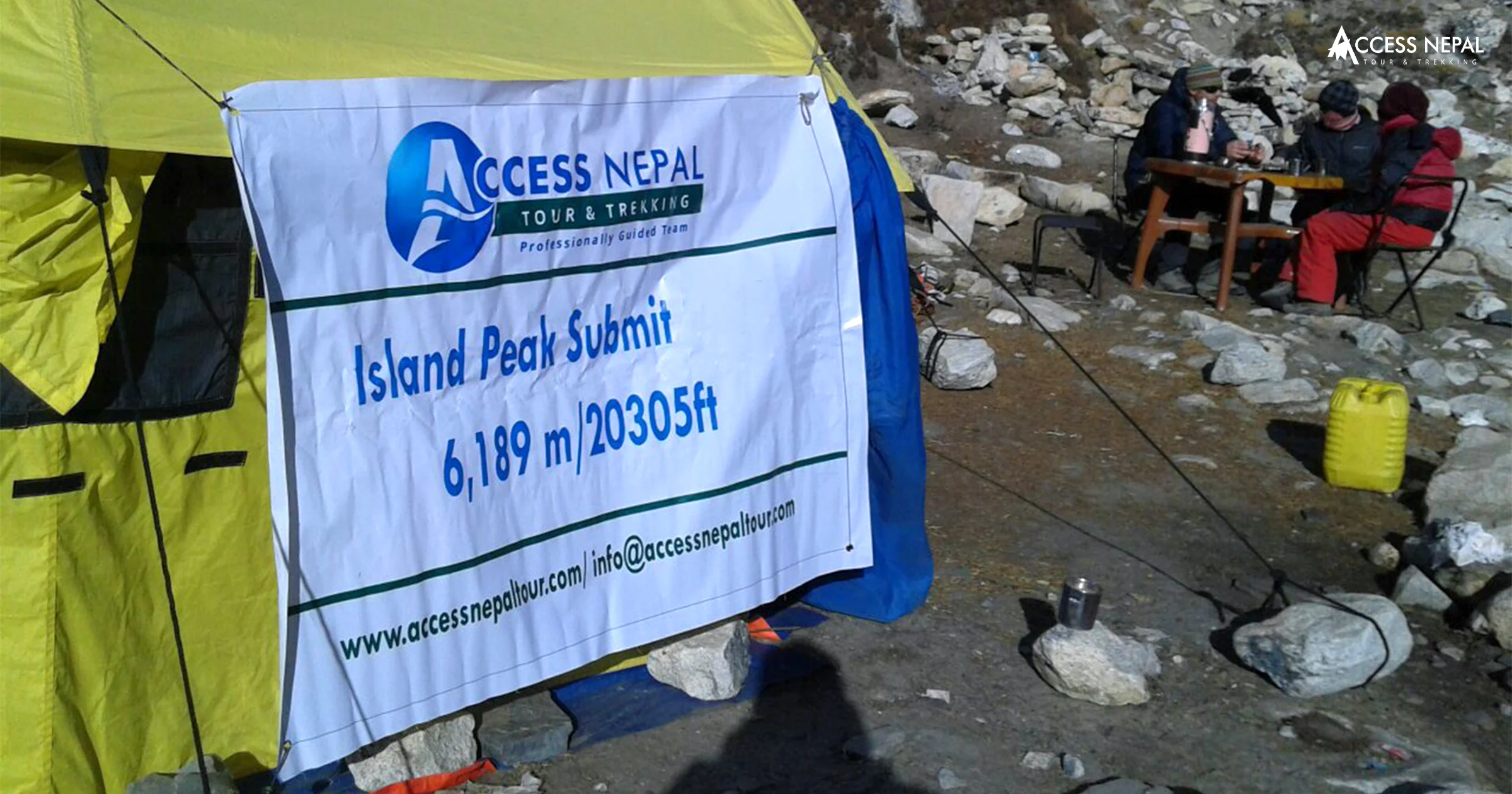
Camping on Everest Base Camp
Chhukung is a special one, as it is a key point for trekking towards Island Peak and other high-altitude goals in the region. The Nepal Tourism Board has pointed out the significance of the Chhukung route for trekkers and mountaineers going to Island Peak and surrounding mountains. Thus, you’re not just going up the mountain. It’s a trip through the Everest region.
Where Is Island Peak?
Island Peak is situated in the Khumbu region of Nepal, which is located inside the Everest region and the Sagarmatha National Park in Nepal.
The normal approach is via flight to Lukla. The hike from Lukla passes through the renowned Sherpa villages and continues on towards Namche Bazaar and even further into the Khumbu.
The standard path is through:
Lukla → Phakding → Namche Bazaar → Tengboche → Dingboche → Chhukung → Island Peak Base Camp
Several tours offer the opportunity to climb Everest Base Camp with Island Peak. The combination looks awesome if you’re going all the way to the Everest region and want to visit more than one of the big attractions of the Himalayas.
How Difficult Is Island Peak Climbing?
This is likely the first serious question you should ask. The hike to Island Peak is not an easy trip. It is a true high-altitude climbing experience.
High altitude
There is a lot less oxygen available at 6189 m compared to sea level. Even if you are physically fit, you can feel tired, breathless, or slower than normal at high altitude. This is why you should not even think of avoiding acclimatization.
Long trekking days
There are several days of trekking even before you reach the mountain. Many days will involve hours of walking, possibly 5-7 hours of walking, depending on the route, the weather, and the group.
Technical climbing
It’s when you get to the top of Island Peak that things get serious.
You may need to use:
- Crampons
- Harness
- Climbing rope
- Ice axe
- Carabiners
- Ascender or jumar
- Mountaineering boots
- Helmet
The equipment and climbing techniques will vary according to the mountain’s conditions and the route being taken.
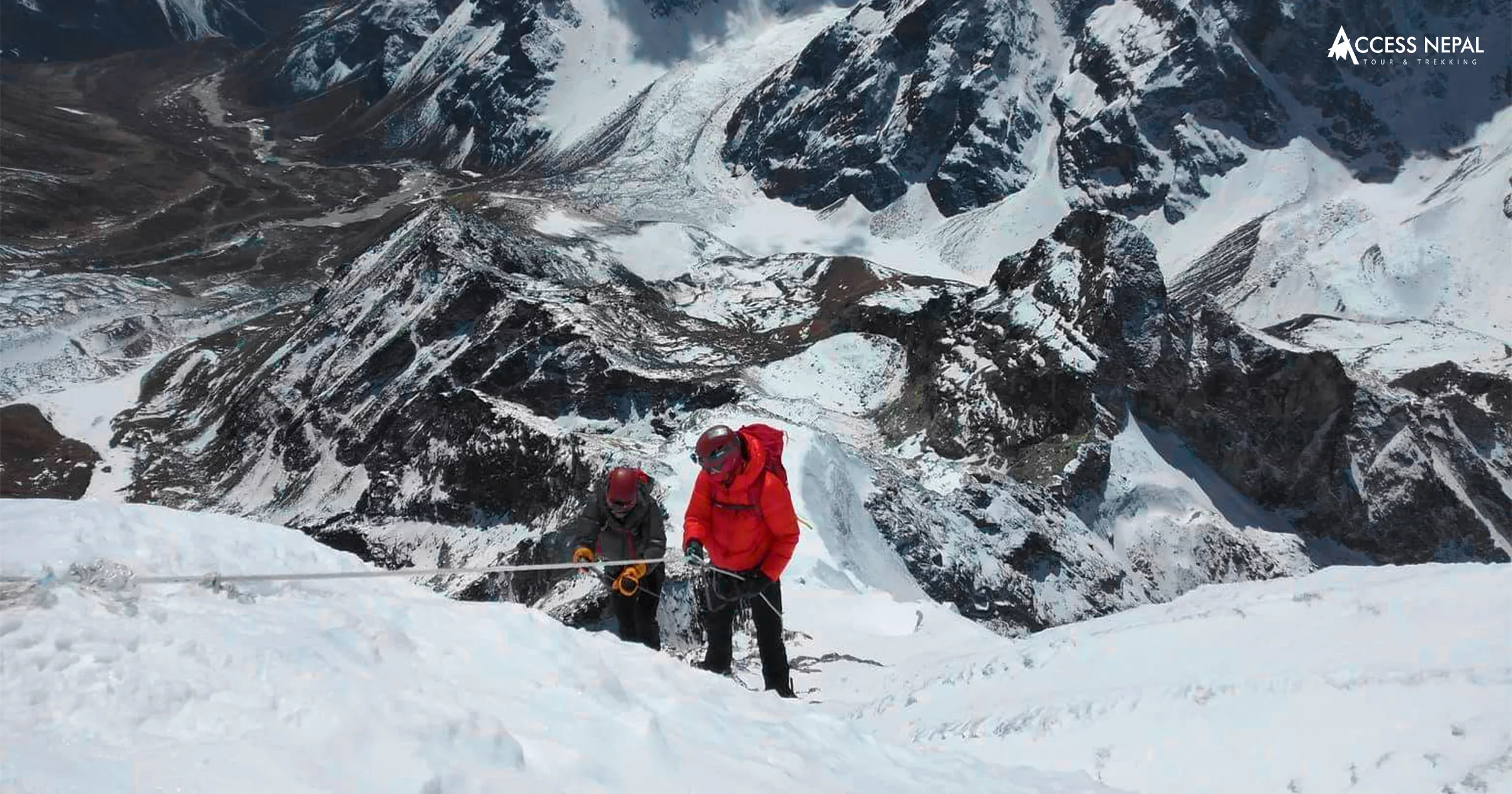
Technical Climbing skills needed for Island Peak Climbing
Summit day
Typically, the most challenging aspect of the trip is Summit day.
You begin very early, sometimes in the night, to arrive at the top at the best time of day for weather, and make your way down before it gets worse. Summit push can be physically and mentally challenging due to darkness, cold, altitude, steep terrain and limited oxygen.
Therefore, don’t take it too literally when someone says “Island Peak is just another easy trekking peak”. It is definitely possible to climb an island peak but you should not underestimate the journey.
Is it possible for Beginners to climb Island Peak?
Island Peak is easily accessible for beginners, but it does not mean that the beginner can start their trek without any preparation.
previous experience is not required for climbing 6,000 meter mountains. But you need to be ready for long days walks and need to be willing to learn the basics of mountaineering skills.
A good climbing team usually trains and gives instruction in relevant climbing techniques including:
- Walking with crampons
- How to handle an accident with an ice axe
- Fixed ropes movement technique
- How to use a carabiner and rappelling anchor
- How to properly connect to top ropes
- Basic glacier safety
- Safety on steep snow and ice
Along this, your physical condition is important, as well.
It is recommended to prepare for the trip by developing the endurance of the body using activities such as hiking, uphill walking, stair climbing, running or other cardiovascular activities. Let your trekking company know if you are a first time mountaineer. A responsible company can help you to understand whether Island Peak climbing is appropriate for your level of experience and fitness.
Is there any need for previous climbing experience for Island Peak?
Climbing experience is beneficial, but not a requirement. It’s more important that you’re physically ready, mentally able to be exposed and ready to learn. But, there is a key difference between “no previous climbing experience” and “no preparation.”
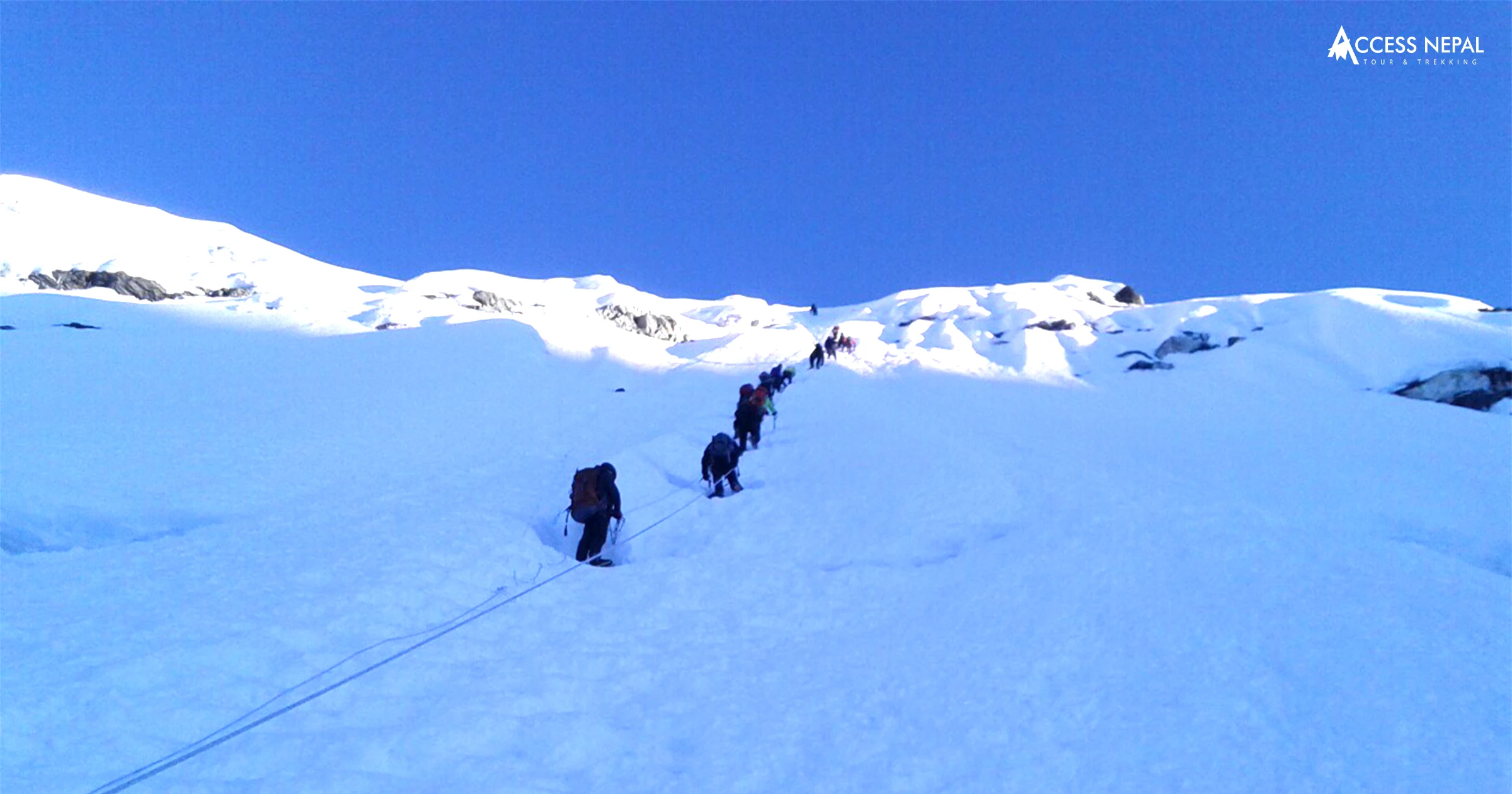
Climbing During Mera Peak Summit
These first can be controlled. The second one can be an issue. If you are new to climbing, take time to learn the basic rope and crampon skills prior to summit day. Your guide should also provide you with proper instruction before you start to enter the more technical sections.
Island Peak Climbing Route
The classic route to Island Peak begins in the lower Everest region and gradually moves upwards.
Kathmandu to Lukla
Your adventure normally starts in Kathmandu. Once prepared and with the necessary permits in hand, you set off towards Lukla and start the hike. Due to weather and operation conditions the flight schedule may be subject to change and it is advisable to maintain some flexibility in the flight schedule.
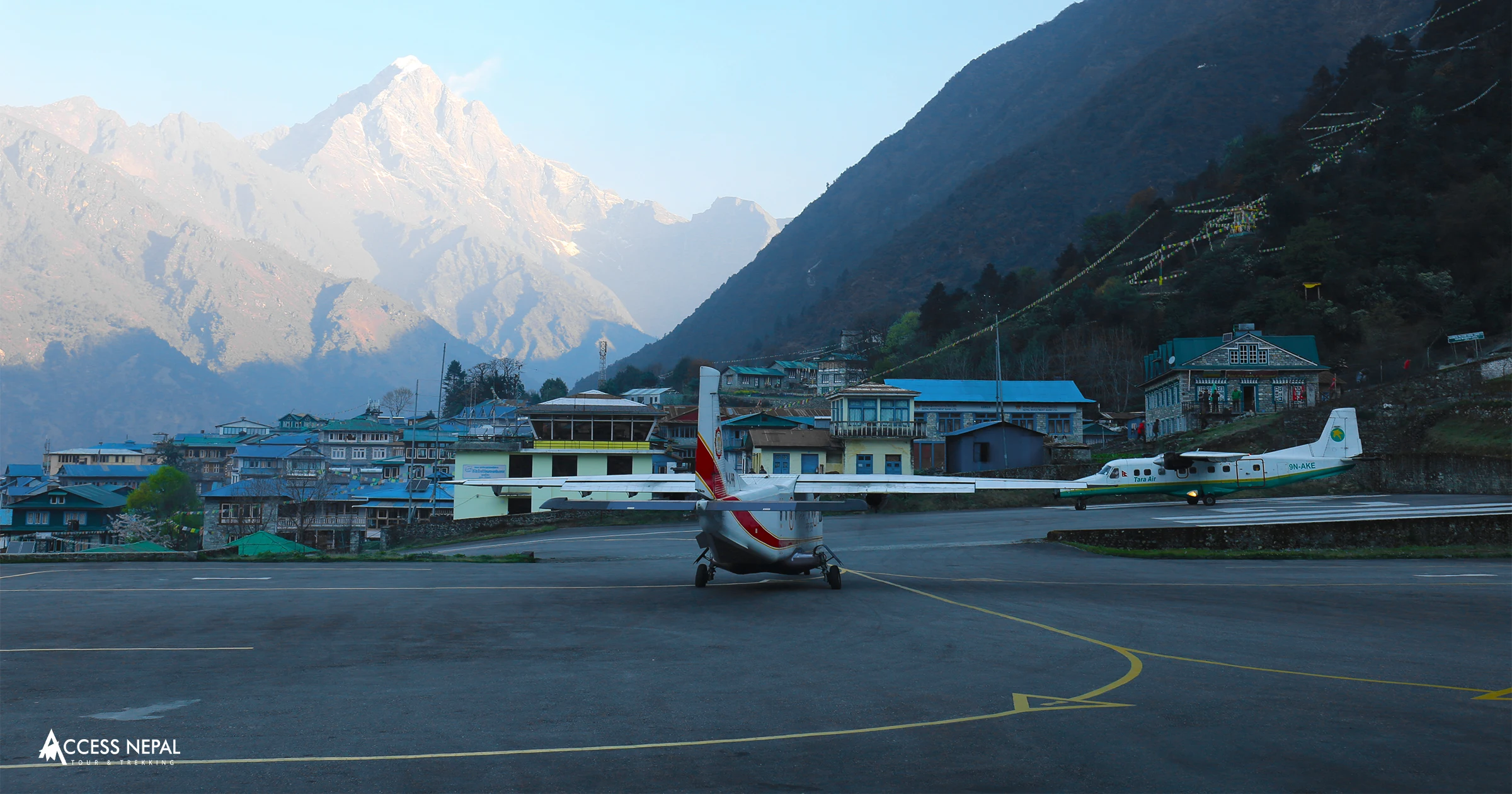
Tenzing-Hillary Airport in Lukla, Nepal, sits at 2,845 meters (9,334 feet) elevation as a gateway to Everest
Lukla to Phakding
The first day of trekking is not as long as the days that follow. Green hills, small villages and suspension bridges are walked through as you get your first taste of the Khumbu trail.
Phakding to Namche Bazaar
As you head towards Namche the trail gradually gets tougher. One traverses suspension bridges, the Dudh Koshi Valley and then makes the famous uphill trek towards Namche Bazaar.
Acclimatization in Namche
Namche is one of the most important acclimatizing points. Don’t consider an acclimatization day a lost day. You should allow your body time to acclimate to a higher altitude.
Trekkers can explore Namche and then there is a walk up to high altitudes and back down to low altitude to sleep. It is also a good opportunity to enjoy the local shops, cafés and mountain views.
Namche to Tengboche
The route then leads on to Tengboche, one of the most beautiful villages in the Everest area.
Tengboche is renowned for its monastery and the amazing mountain of course. According to Nepal Tourism Board, Tengboche Monastery is an important Buddhist centre of the Khumbu with views of Everest, Lhotse and Ama Dablam. It’s one of those spots where you’ll likely stop to take in the surroundings.
Tengboche to Dingboche
The higher you get, the more open and alpine the area gets. You eventually pass most of the woodland, and come into the high mountain environment. Dingboche is another important acclimatization point.
Dingboche to Chhukung
The path from Dingboche heads towards Chhukung. It’s here that Island peak starts to be far more real. Now you are in the midst of huge mountains, glaciers and high rocky terrains.
Chhukung to Island Peak Base Camp
From Chhukung, it’s time to walk to Island Peak Base Camp. It is an adventurous trek. This is where the trekking experience begins to turn into a climbing experience. Your team is checked on equipment, prepared for the summit and climbers review climbing techniques.
Island Peak Base Camp to Summit
This is a very early start on the summit attempt. You go through glacier and snow terrain and then come to the steeper part for which ropes and climbing gear is necessary. If weather and mountain conditions are favorable, then you proceed to the top.
After all those days of trekking, you are unlikely to forget the moment you reach Island Peak and see its height of 6,189m. You will likely be exhausted but that’s a part of the journey.
Island Peak With Everest Base Camp
Why choose between two experiences when you can combine them?
Many climbers choose an Island Peak trip with Everest Base Camp as it offers them a chance to enjoy both of these iconic experiences. The longer itinerary also allows the body to acclimate to altitude, though altitude risk isn’t eliminated with either itinerary.
A combination trip could consist of:
- Lukla
- Namche Bazaar
- Tengboche
- Dingboche
- Everest Base Camp
- Kala Patthar
- Chhukung
- Island Peak Base Camp
- Island Peak summit
Best Time to Climb Island Peak
The climbing seasons are mainly spring and autumn.
Spring: March to May
Island Peak climbing is one of the best times to do so in Spring.
The conditions are pretty good for high elevation climbing; this lower section is particularly lovely when flowers are in bloom. Himalayan climbing is also quite busy in March, April and May. Spring can be a great option if you prefer warmer weather and colorful scenery.
Autumn: September to November
Fall is another great time of the year. Post monsoon can mean clearer skies, and spectacular mountain views. October and November are particularly good months for trekking and climbing in Nepal. At higher elevations, Autumn can be as cold as Spring, although it may be worth it for the views of the mountains.
Winter: December to February
Experienced teams are able to play in the winter if the conditions are right, but the temperature is much colder. The shorter daylight hours and the freezing cold weather and winter conditions in the mountains make the ascent more challenging.
Monsoon: June to August
Generally, climbing of Island Peak is not a popular monsoon activity. The lower trails may be wet and slippery and flight to Lukla can be hampered by the weather and visibility.
In general, spring and fall are better seasons to travel.
Nepal Tourism Board also mentions that due to climate change the weather is becoming unpredictable, hence conditions in the mountains should be checked just before or at the time of departure.
Related Packages
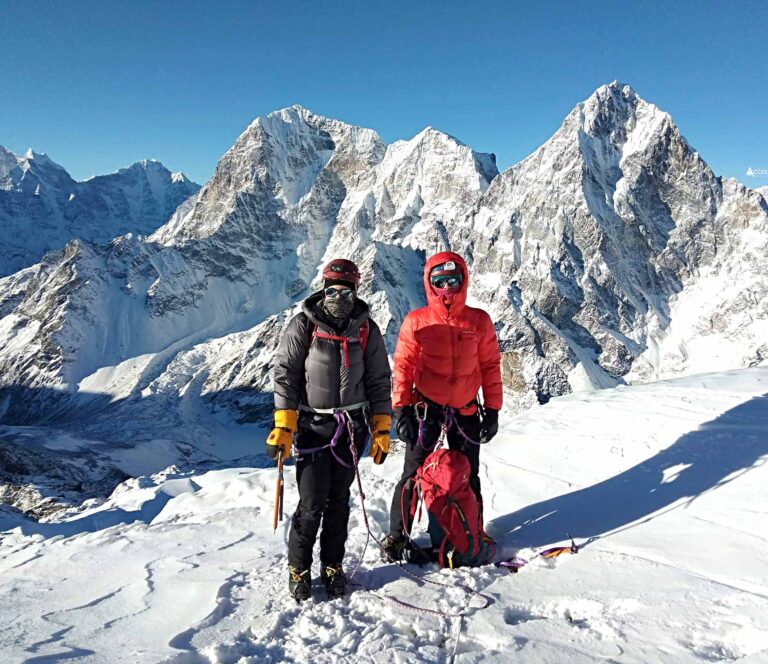
Island Peak Climbing - 12 Days
 6,189 meters/ 20,305 feet
 Moderate
 All
Inclusive Plan
All
Inclusive Plan
What are the Permits required for Island Peak?
It’s not possible to just come to Chhukung and say “Okay, I’m going to climb now” pointing towards Island Peak.
The necessary permits must be available with you. The primary permits and fees for climbing Island Peak are:
- Climbing permit is required for climbing Island Peak.
- The entrance fee to Sagarmatha National Park.
- Khumbu Pasang Lhamu Rural Municipality fee
- Include a TIMS card if applicable
- Climbing administration and environmental deposits as required.
According to the Nepal Tourism Board, trekking routes covering the Everest region must be trekking with a licensed trekking guide and a trekking agency-issued TIMS card for trekking.
What’s the charge for the Island Peak Climbing Permit?
Allowances are subject to change. The old fees of USD 250 in spring and USD 125 in autumn are still mentioned in some of the older articles on the Island Peak. Current 2026 sources report that the NMA fee structure has changed, with USD 350 for spring and USD 175 for autumn for Island Peak.
Government fees may be subject to change and your trekking agency must check what the current fee is when booking your permit.
How Much Does Island Peak Climbing Cost?
Not all visitors to the Island Peak pay the same amount for climbing. This depends on the price of the following:
- Number of days
- Group size
- Season
- Porter support
- Accommodation level
- Domestic flights
- Permits
- Climbing equipment
- Food and accommodation at higher elevations.
- Whether Everest Base Camp is included or not
- Emergency and rescue arrangements
The typical prices for a complete guided tour to Island Peak range from USD 2,500 to USD 3,500 or higher, depending on the type of tour and the services provided.
Don’t just go with the lowest price, pay close attention to the details of what is being offered.
You can ask several questions to the agency you choose.
Are permits included? Are domestic flights included? Are tools for climbing provided? Are there any climbing guides included who have experience? Are there opportunities for acclimatisation? In the event of poor weather conditions, what will be done about the attempt to reach the summit?
Sometimes a little bit more money can be worth it because of better support, safer logistics and a well planned itinerary.
How Should You Train for Island Peak?
It’s not necessary to be a pro-athlete. However, it’s important to practice regularly.
Try to focus on:
Cardio
Walking, jogging, cycling, swimming or stair climbing can improve your endurance.
Uphill training
There is a large amount of walking up and down involved on Island Peak so hill walking is particularly helpful.
Strength training
Do leg and core workout. Squats, lunges, step-ups and planks are exercises that can help.
Long hikes
Practice some long hikes with a backpack before the trip to the Island peak. This will give your body a feel for what several hours walking is like.
Practice with your equipment
Before summit day, if you are going to use crampons, ice axes, climbing boots etc. for the first time, it will be very difficult for you to get familiar with these equipment. You have to practice before you go to the summit.
Your guide will teach you, however, having some knowledge of your climbing equipment before you get there is useful.
Altitude Sickness on Island Peak
One of the primary issues on Island Peak is its altitude. Anyone regardless of their age, gender or fitness level can suffer from altitude sickness.
Some of the typical symptoms may include:
- Headache
- Nausea
- Dizziness
- Tiredness
- Loss of appetite
- Difficulty sleeping
The single most critical preventative measure is to acclimatize and make the ascent slowly.
Do not rush and let your guide know if you are at all feeling unwell at high altitudes. Never be pushed by your responsible guide to continue climbing because you have already paid your climbing fees. Keep in mind, the mountain will still be there for another shot. Your health is our priority.
Is Island Peak Safe or not?
There are no risk-free mountain climbs. Island Peak presents real mountain hazards, such as:
- High altitude
- Extreme cold
- Strong winds
- Dropping rocks/ice
- Crevasses
- Slippery terrain
- Sudden weather changes
- Fatigue
- Altitude sickness
That’s why it’s important to pick a qualified and experienced climbing team. It is important that your guide is familiar with the climbing route, weather, altitude, climbing gear and emergency procedures.
Island Peak vs Mera Peak: Which is the Better Choice?
This is a frequent inquiry of the trekkers.
They’re both great 6,000m climbs, but the experiences will be totally different. If you’re looking for more technical climbing ,glacier travel and fixed rope sections, then Island Peak is a great choice.
Mera Peak is taller which is about 6,476m but the standard route is not as technical as Island Peak. If you are looking to get experience and learn more about mountaineering, then Island Peak is for you. If your priority is to climb a higher peak with a different type of climb, then you should take Mera Peak.
If you are unsure, then talk with an experienced trekking agency before making the final decision.
Who Is Island Peak Climbing Best For?
Island Peak Climbing is suitable for all levels of experience, from the beginner to the expert.
Island Peak is perfect for those who:
- Love mountain adventures
- Are physically fit
- Is able to carry a heavy backpack for extended periods of time throughout the day
- If you wish to enjoy climbing in the Himalayas,
- Have a desire to learn basic mountaineering skills
- Have enough time for proper acclimatization
- Looking to experience something outside of a typical hike
It can also be a suitable choice for the first time peak climbers, who are well equipped. But it is not the ideal option for the individual who wants a laid-back vacation.
Island Peak is not the place for you if you think a vacation involves sleeping late, drinking coffee and doing short walks. If you’re one of those people who like to say “Let’s see what happens at the top,” you might like it.
Frequently Asked Questions On Island Peak
What is the height of Island Peak?
The height of Island Peak or Imja Tse, is 6,189 m (20,305 ft) above sea level.
Is Everest Base Camp easier or harder than Island Peak?
Yes, as far as technical climbing is concerned.
Everest Base Camp is a high altitude trek, while Island Peak requires actual mountaineering skills, glacier travel and fixed rope sections.
Is it possible for a beginner to climb Island Peak?
Yes, a physically fit beginner will be able to climb Island Peak by providing proper training and acclimatization, equipment, and professional guidance. Some past experience in climbing is useful, but not necessary.
How many days will it take for Island Peak?
Standard Island Peak climbing program would take approximately 15 to 18 days, depending on the climbing route and the acclimatization program, whether or not it is combined with Everest Base Camp.
Which month is the best month to climb Island Peak?
The popular months include April, May, October and November. Weather and mountain conditions are usually best in spring and autumn, but can vary.
Is there a permit for Island Peak?
Yes. All the national park, local and trekking papers plus climbing permit for Island Peak.
What is the price of climbing Island Peak?
The average guided price for a trip to Island Peak is approximately USD 2,500 to USD 3,500 or higher, depending on the route, number of participants, and packages and season.
Is Island Peak a hazard?
Island Peak is a true mountaineering adventure with elements of altitude, cold, weather fluctuations, glacier and steep sections of the route. The key points are to be well acclimatized, well equipped, and have expert guides and a good preparation.
Is there any possibility of Island Peak and Everest Base Camp together?
Yes. Many people opt to do Island Peak climbing along with Everest Base Camp to make it a longer, more complete adventure in the Everest region.
Related Packages
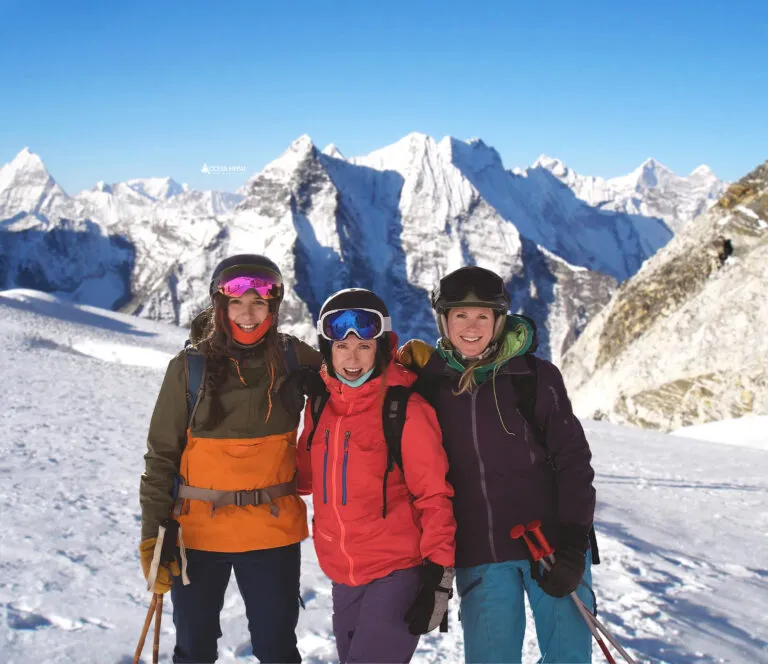
Island Peak Climbing with EBC - 17 Days
- 6,173m/20,253ft
-
Challenging
- All
Inclusive Plan
Is Island Peak worth it?
Yes, for the right traveler. Island Peak offers you the best of more than just a summit photo. You traverse the heart of the Everest region, immerse yourself in Sherpa culture, visit iconic mountain villages and discover the fundamentals of climbing in the Himalayas.
It’s difficult but it’s also what makes it special. There is no need to be an Everest climber. It’s not necessary to have many years of mountaineering experience. However, you will need to prepare, be patient, be fit, have the necessary equipment and employ a professional team which knows its stuff.
Climbing a Himalayan peak of 6,189 meter may have been long on your bucket list. Now you can begin climbing at Island Peak.
So once you are feeling prepared to take your dream trip to a reality, Access Nepal Tours and Treks is ready to guide you for a trip to the Island Peak with trained guides and proper acclimatization along with guaranteed support from Kathmandu to the summit and back.
Awards and Achievements
Access Nepal Tour and Treks has been recognized with TripAdvisor’s prestigious Travelers’ Choice Award for multiple consecutive years, reflecting our unwavering commitment to quality and clients’ satisfaction.










Leave Your Comment