


Is It Safe to Book an Everest Base Camp Trek After the August 2026 Floods?
- Places
- Edited By: Ayesha Sapkota .Updated on: 21 Sep 2026
Yes, it is safe to book the Everest Base Camp Trek in Autumn 2026. There is no impact of flood in Everest Region trekking routes like the Everest Base Camp Trek, the Everest Three Passes Trek, and so on.
Maybe you saw the news, felt a jolt of panic, and started typing before you even finished the headline: “Nepal flood Everest Base Camp safe?” You’ve had this trip on your list for years. Maybe it’s a milestone birthday, maybe it’s the thing you promised yourself after a rough year, maybe your flights are already half-booked.
And now there’s video of rivers tearing through villages in Nepal, and you’re wondering if you just wasted months of training and planning.
Take a breath. We’re Access Nepal Tour and Treks, a Trekking Agencies’ Associations of Nepal-registered trekking agency based in Kathmandu, and we want to answer this one clearly, without the scare tactics some headlines are running with and without brushing past what actually happened either.
By the time you finish reading, you’ll know exactly what got hit in August, why it has almost nothing to do with your Everest Base Camp trek, and what’s actually worth double-checking before you fly out.
What Actually Happened and Where It Happened in Short
On August 26, 2026, a chunk of glacier broke away high on the Tibetan side of the border and sent a massive flood of ice, rock, and water crashing down into Nepal’s Rasuwa district. Think of it like a dam bursting, except the dam was made of ice that had been sitting there for years. The water tore through Timure and Syabrubesi, then kept going downstream through Nuwakot, Dhading, and beyond, causing serious damage and, tragically, a large loss of life.
If you want to stay more updated on the Bhotekoshi flood 2026, you can read our complete blog about the causes of the flood, the death toll, the damage, and the latest updates.
What’s the Status of the Everest region Trek, Specifically?
Completely normal. Here’s what that actually looks like on the ground:
- Flights to Lukla are departing from Kathmandu as scheduled, weather permitting, like always (Lukla flights get weather-delayed even in a perfectly ordinary year, so that part hasn’t changed either).
- The trail itself, from Lukla to Phakding, up through Namche Bazaar, past Tengboche Monastery, all the way to Base Camp and Kala Patthar, hasn’t seen any disruption.
- Teahouses and lodges across the Khumbu are open and running their usual autumn season, which happens to be the best time of year to go.
- Sagarmatha National Park, which the whole trek runs through, is operating normally, permits and all.
The US Embassy’s current advisory backs this up. Their specific “do not travel” warning is limited to the Rasuwagadhi- Timure-Syabrubesi corridor near the Tibet border. The rest of Nepal, Khumbu included, sits at the same general caution level it’s been at for a while now nothing new, nothing tied to this flood.
Go with the illustration and make your Everest Base Camp Trek Happen
I have seen different queries on forums that people are looking for clear answers to these queries, like they already booked Everest or Annapurna trek packages and are in a dilemma about whether to do the trek or cancel the trek. So this is for them who are asking. “Is It Safe to book an Everest Base Camp Trek?” or “Is it safe to travel to Nepal right now?” or unsure whether to cancel or go ahead with the trek in Nepal.
Related Packages
Classic Everest Base Camp Trek - 15 Days
 5,550m/18,209ft
 Moderate
 All
Inclusive Plan
All
Inclusive Plan
Imagine someone named Marcus who is not a real client, just an example to make you clear about the exact circumstance. He had an Everest Base Camp trek booked for late October since February. His EBC training has taken over his weekends for six months. Stair climbs with a loaded pack, long weekend hikes, the whole thing. Then the flood hits the news, and his mother calls him in a panic, certain his trek is now walking distance from a disaster zone.

Nothing has changed in Everest Base Camp Trek after flood
The honest answer for Marcus is that his trek isn’t just “probably fine,” it’s genuinely, geographically untouched by any of this. His mistake would be cancelling flights over a headline about a region he’s not even trekking through. The smart move is exactly what we’d tell anyone in his shoes: check with your operator, confirm your specific route, and don’t let a scary headline about one river valley cancel a trip to a completely different one.
How Far Is the Everest Base Camp Trek Trail From the Flood-Affected Area?
Far. Really far. The flood-affected area and Everest Base Camp Trek Trail, i.e lukla is 150k apart from each other. Here’s the actual math, not just a vibe.
The flood tore through Syabrubesi, the gateway to Langtang, which sits about 122 km north of Kathmandu. The Everest Base Camp trail starts in Lukla, which sits about 138 km east of Kathmandu. Those aren’t two spots on the same road. They’re on opposite sides of the capital entirely. When you measure straight-line, point-to-point, Syabrubesi and Lukla end up roughly 150 km apart from each other, with an entire mountain kingdom’s capital city sitting in between them.
Related Packages

Everest Base Camp Trek - 14 Days
- 5,550m/18,209ft
-
Challenging
- All
Inclusive Plan
Nothing connects these two destinations. Different rivers, different roads, different mountain ranges, different flight paths out of Kathmandu. The flood came down the Bhote Koshi and Trishuli river system on the Langtang side. The Everest trail runs through the Dudh Koshi valley, fed by glaciers nowhere near Rasuwa. Water from one side has no way to reach the other. This is also shown in the map of Nepal, which can support further visualization more clearly.

Distance between flood-affected area and Everest Base Camp Trek trail on the map of Nepal
But what can change your Everest Base Camp Trek plans?
We would like to inform you regarding the Lukla flight details, which may affect your itinerary. During peak seasons (including March, April, May, September, October, and November), the flight to Lukla will be operated from Ramechhap/Manthali due to air traffic expansion in Kathmandu, which is about a 5 to 6-hour drive from Kathmandu. During non-peak seasons (including January, February, June, July, August and December), the flight is operated from Kathmandu.
Please be aware that the decision regarding the operation of flights solely depends on the airline and is influenced by the volume of travelers during the specific month.
Unpleasant weather conditions, congested traffic at the Airport, unmanaged runway, topographical difficulties, etc., are the significant reasons for Lukla flight delay/cancellation. Therefore, if you intend to trek in the land of the Everest region, arranging an additional one or two days in your trip is highly preferable. This will help in case of flight delay/cancellation and thus board the pre-planned international flight.
How can you help Nepal at the time of devastating floods?
Here’s something worth sitting with for a second. Tourism is a massive part of Nepal’s economy, and it doesn’t just mean hotel owners in Kathmandu.
It’s the Sherpa guide feeding his kids through porter and guiding fees, the Namche teahouse owner who restocks supplies every autumn based on how many trekkers show up, the Lukla flight crews, the gear shop in Thamel, the yak herder renting out his animals for the season.
Are you a senior citizen in your 60s, 70s, or even 80s and are travelling with a sense of adventure and a lifelong dream of trekking in the Himalayas of Nepal? Good news: the Everest Base Camp trek for seniors is a powerful and life-affirming experience for older trekkers.
When flood headlines scare off travelers from unaffected regions like Khumbu, it’s often those same tourism-dependent families, nowhere near Rasuwa, who end up hurting twice. One is from watching their country go through a disaster, and another is from a season of empty teahouses that had nothing to do with them.

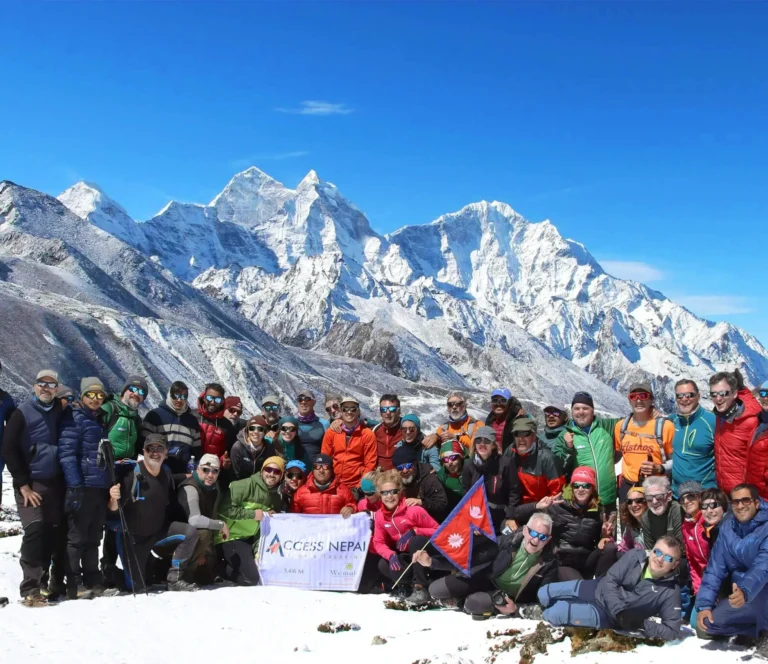
On the way to Everest Base Camp Trek
Nepal’s tourism minister has been saying exactly this: “that the trails are open and waiting, and that showing up is one of the most direct ways to back the country right now. We’d put it a little more simply: you were already going to have the trip of a lifetime. Turns out that trip also happens to put money straight into the hands of the people who need it most this year. That’s not a reason to force a trek you weren’t sure about. It’s just a nice bit of truth to carry with you if you were already leaning toward going.”
Conclusion
The August floods were a real disaster, and they deserve to be taken seriously. They happened in a river system nowhere near Everest, and they haven’t changed a single thing about the Khumbu trekking season. Flights are flying, trails are open, teahouses are serving the same dal bhat and garlic soup they always do, and Base Camp is exactly where it’s always been.
Related Packages
Everest Base Camp Luxury Trek - 14 Days
- 5,550m/18,209ft
-
Easy
- All
Inclusive Plan
If you’ve been holding off on booking because of what you saw in the news, that’s a completely reasonable instinct, and we’re glad you looked into it rather than just cancelling outright. Now that you know the two regions aren’t connected, go ahead and lace up those boots. Kathmandu’s still here, the mountain’s still here, and honestly, an autumn Everest Base Camp trek is about as good as this country gets.
Access Nepal Tour and Treks runs Everest Base Camp treks and tracks route conditions across Nepal daily. If you’ve still got questions about your specific dates, reach out, and we’ll give you a straight answer, not a sales pitch.


Awards and Achievements
Access Nepal Tour and Treks has been recognized with TripAdvisor’s prestigious Travelers’ Choice Award for multiple consecutive years, reflecting our unwavering commitment to quality and clients’ satisfaction.













Leave Your Comment