


Nepal Is Calling: Is It Safe to Visit Nepal After the Bhotekoshi Flood?
- Places
- Edited By: Ayesha Sapkota .Updated on: 9 Sep 2026
Yes, it is safe and secure to visit Nepal after the devastating flood in Rasuwa, Nepal. Most of the visitors who booked treks in Nepal are asking, “Is It Safe to visit Nepal after the Bhotekoshi Flood?” So we have to clear you on this topic to make you travel to Nepal happen.
Our thoughts and prayers are with everyone affected by the recent floods, especially the families and communities who are going through this difficult time. We stand with those affected and hope for their safety, strength, and a quick recovery.
You saw the headlines. Maybe a video showed up on your feed of brown water tearing through a mountain valley, and your first thought was something like: wait, is my Nepal trip still happening?
That’s a fair question, and you deserve a straight answer instead of a panicked one. So here it is: yes, Nepal is safe to visit, and yes, you should still come.
It would be misleading and not fair to say that all of Nepal is unsafe because of one disaster. Nepal has numerous trekking regions separated by major mountain ranges, valleys, and river systems.
This article walks you through exactly what happened, which small pocket of the country got hit, and why the other 95% of Nepal, which includes the trips most people actually book, is running exactly like it always does. By the end, you’ll know precisely what to check before you go, and honestly, why going matters more right now than ever.
Why does coming to Nepal still matter?
Nepal’s Culture, Tourism and Civil Aviation Minister put it plainly in a recent public appeal: this is a moment to stand with Nepal, not step back from it. Tourism isn’t a side industry there. All the treks of the Everest region, Annapurna region treks, Manaslu region treks, remote region treks like Upper Dolpo, Kanchanjunga, and all the climbing and expedition routes that are safe and calling you.
Only the affected area is the Langtang region, but using alternative trekking routes, you can complete Langtang treks also. It’s the paycheck for guides, porters, teahouse owners, drivers, and thousands of families who depend on visitors showing up. When trips get cancelled over a flood that never touched their village, the damage spreads further than the water did.
That’s not a guilt trip. It’s just the honest math of how tourism economies work in a country like Nepal. Every trekker on the Annapurna trail, every visitor wandering Kathmandu’s Durbar Square, every flight into Lukla is money going straight to people who need it.
Is It Safe to Visit Nepal After the Bhotekoshi Flood? Explanation with Example
Imagine a friend calls you and says, “There’s flooding in Colorado, so I guess your trip to Florida is off.” You’d think that’s a strange leap, right? Different states, different weather systems, thousands of miles apart. That’s roughly the geographic reality here.
A flood in Rasuwa, tucked in Nepal’s north, has zero physical overlap with the trails around Everest, the lakeside city of Pokhara, or the temples of Kathmandu.
Just to be clear, that comparison is meant to illustrate the distance and separation involved, not a claim that anyone actually said that about Colorado and Florida.

Showing flood-affected area in the map of Nepal
So what’s actually closed after the flood in Nepal?
A short, specific list:
- The Rasuwagadhi border crossing into Tibet, and anything routed through it, including Kailash Mansarovar pilgrimage trips from Kerung.
- The road corridor from Kathmandu through Trishuli and Betrawati up to Syabrubesi, which is the usual access point for the Langtang and Gosaikunda treks.
- A short stretch of the Prithvi Highway between Kathmandu and Pokhara, closed briefly due to debris.
That’s it. Everything else, and this is the part worth repeating, is open.
What actually happened in Nepal?
On the morning of August 26, 2026, a flash flood ripped down the Bhote Koshi River, up near the Nepal-Tibet border in Rasuwa district. It hit the border town of Rasuwagadhi hard, swept away the bridge connecting Nepal to China, and did serious damage to Timure just downstream. The water kept rolling south into the Trishuli River, reaching towns like Trishuli Bazaar along the way.
It was a real disaster for the people living there, and Nepal’s government has told tourists to stay out of that specific corridor while recovery work continues. No sugarcoating that part. You can explore more about the Bhotekoshi Flood in Nepal 2026, its damages and impact on the infrastructure of Nepal.
Related Packages
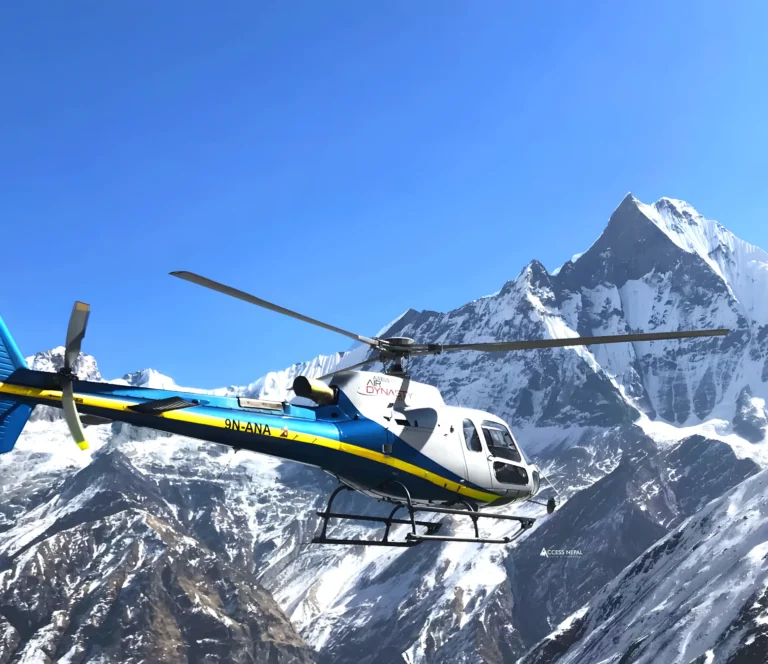
Annapurna Base Camp Luxury Trek - 11 Days
 4,130m/13,549ft
 Moderate
 All
Inclusive Plan
All
Inclusive Plan
But here’s the thing nobody’s headline mentions: Nepal is roughly the size of England and Wales combined, packed with mountain ranges, valleys, and cities that don’t share a river system, a road, or really anything with that one corridor. A flood in one valley doesn’t flood the whole country, any more than a storm hitting one U.S. state shuts down the other forty-nine.
What’s running exactly as normal in Nepal after the flood?
Kathmandu’s tourist areas, hotels, restaurants, and its international airport haven’t been touched. Pokhara, sitting well outside the flood zone, is business as usual too.
On the trekking side, the Everest region (Base Camp, Gokyo Valley, the Three Passes route), the whole Annapurna region (Circuit, Base Camp, Mardi Himal, Poon Hill, Upper Mustang), Manaslu’s main trail, Kanchenjunga, and Makalu are all running on their regular schedule. Flights to Lukla, Pokhara, and Jomsom are operating normally.
Even Langtang isn’t fully off the table, so the trekking agencies have mapped an alternate walking route that skips the damaged road entirely.
Where is it safe to travel in Nepal?
Nepal’s a huge country, and this flood hit one specific corner of it, so most of the map is still wide open for travel. The disaster centered on the Bhotekoshi River and the Langtang region up near the Tibet border.
Everything else runs on a totally different set of rivers and mountain systems, so Everest, Annapurna, Manaslu, Mustang, Dolpo, and Kanchenjunga are all operating like normal and flights are flying, permits are being issued, and climbers are actively heading up to Manaslu base camp this week.
Related Packages
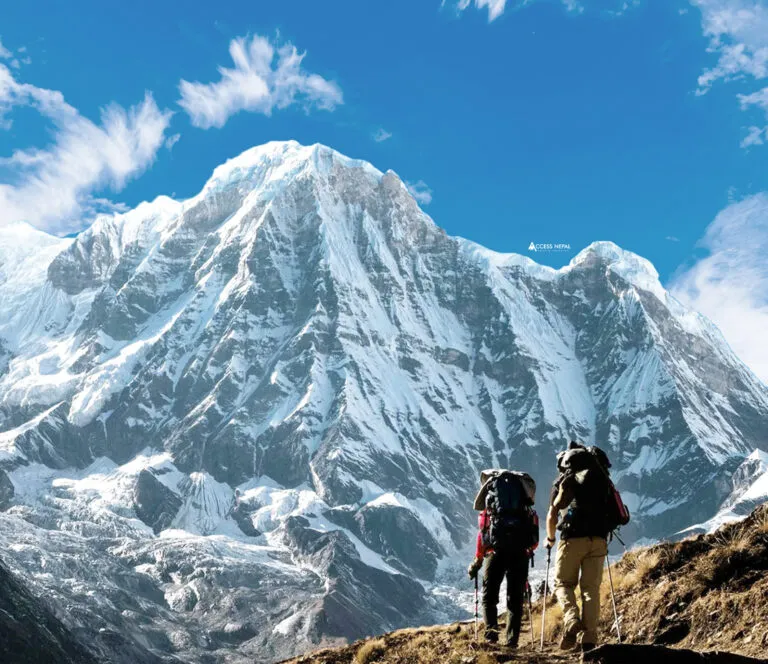
Annapurna Base Camp Trek - 11 Days
- 4,130m/13,550ft
-
Moderate
- All
Inclusive Plan
Kathmandu and Pokhara, where most trips start, haven’t been physically touched either. So the honest picture is: avoid the flood corridor and the areas still under watch downstream (Nuwakot, Dhading, Gorkha, Chitwan), and everywhere else is fair game.
What to do before planning a trip to Nepal?
Keep it simple. If your trip touches Rasuwa, the Kerung border, or the standard Langtang road route, check current conditions with your operator and look at the alternate access options.
If your trip is Everest, Annapurna, Manaslu, Kanchenjunga, Makalu, Kathmandu, Pokhara, Chitwan, or basically anywhere else on the map, there’s nothing flood-related standing in your way. Follow updates from Nepal’s Tourism Board rather than whatever’s circulating on social media, and you’ll have accurate, current information instead of secondhand panic.

Safe trekking routes in Nepal after devastating flood
Nepal isn’t asking you to ignore what happened. It’s asking you to see it clearly: one damaged corridor in a vast country that’s still very much open, still stunning, and still waiting for you to show up.
Is Nepal Still Worth Visiting After the Flood?
Yes, visiting Nepal is worth it after the flood, but travelers should visit responsibly.
Nepal’s mountains, trekking communities, and tourism infrastructure have experienced many natural challenges over the years. The recent disaster is a serious tragedy, particularly for affected communities, and recovery will take time. But not the entire country and all the tourism sectors. 95% of the country is safe and accessible.

Nepal’s mountains, trekking communities, and tourism infrastructure are waiting for you
At the same time, Nepal is much larger than the directly affected areas.
Different trekking regions have different geographic conditions, weather patterns, and access routes.
Travel responsibly means contacting the local trekking agency and staying updated with the following things:
- Check the route.
- Check the weather.
- Check the road.
- Check the trail.
- Listen to local professionals.

Is It Safe to Book an Everest Base Camp Trek After the August 2026 Floods?
Prev
How Much Does the Annapurna Base Camp Luxury Trek Cost in 2026?
NextAwards and Achievements
Access Nepal Tour and Treks has been recognized with TripAdvisor’s prestigious Travelers’ Choice Award for multiple consecutive years, reflecting our unwavering commitment to quality and clients’ satisfaction.











Leave Your Comment