

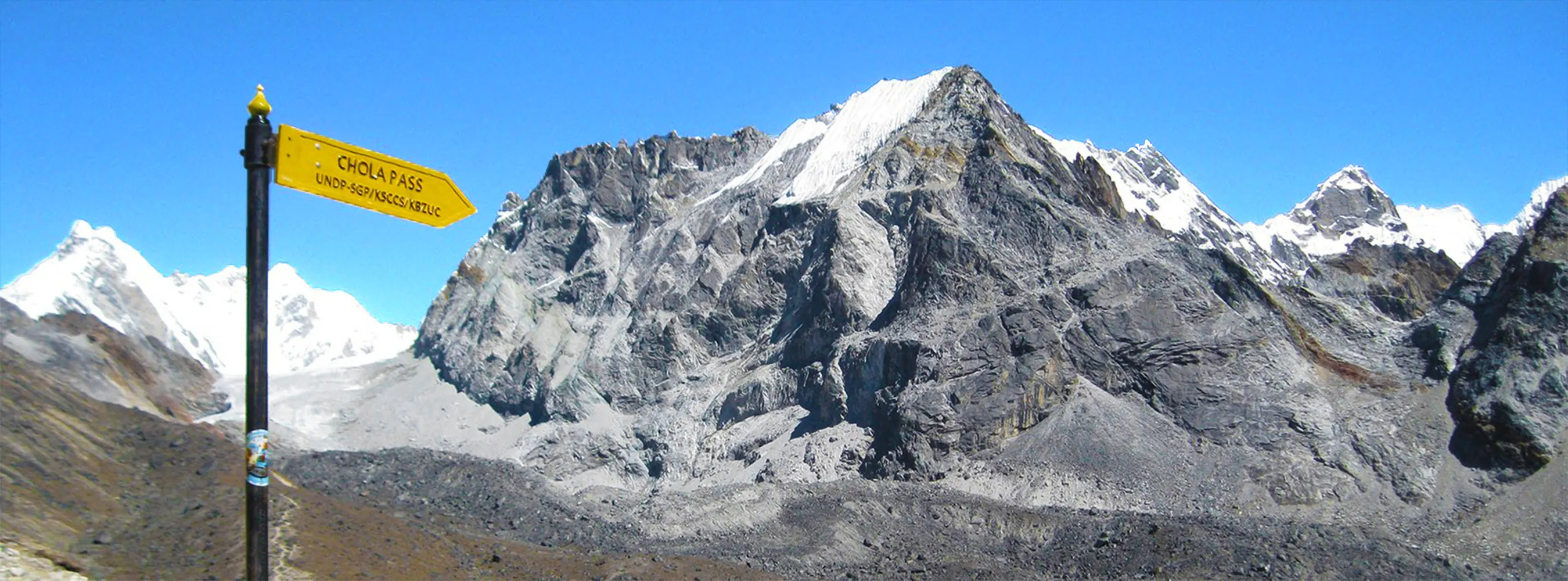
Cho La Pass
- Places
- By accessnepaltour
The Cho La Pass Trek is an adventure that shakes everyone’s heart. It’s a gem of the Everest region where trekkers can feel the thrill of being in wild environments and swim in a sea of mountains. The Cho La Pass trek is for big-hearted people, as there is a saying, “If it scares you, it might be a good thing to try.”
Part of the Everest Three Passes Trek itinerary, the Cho La expedition is a popular trekking destination. Trekkers looking for a wild trip in nature must put this adventure on their bucket list. This trek route follows the classic Everest Base Camp Trek route and connects with Gokyo Valley.
The Cho La Trek is a sensory explosion of nature and culture. Trekking through colourful rhododendron forests, crossing glacial rivers, to reach a high mountainous region which has nothing but a desert of snow-capped peaks.
The major highlight of this adventure is the 360-degree panoramic views from the Cho La Pass height. From the summit, Ama Dablam, Cholatse, Cho Oyu, Everest, Lhotse, Pumori, Makalu, and many more giants greet you.
And the good part is, without technical gear and skills, anyone can make it to the Cho La Pass altitude at 5,420 m (17,782 ft). Just prepare yourself physically and mentally. For the rest, Access Nepal Tours and Trekking will handle it.
To make your dream of being in the wild a reality, we have made a detailed guide on Cho La Pass. This blog covers everything you are looking for related to Cho La Pass. It’s weather, temperatures, difficulty, maps, altitude, nearby Renjo La and Kongma La, and even Everest Base Camp (EBC).
Related Packages

Everest Three Passes Trek - 18 Days
 5,550m/18,209ft
 Challenging
 All
Inclusive Plan
All
Inclusive Plan
Cho La Pass Altitude & Height
The elevation of Cho La Pass is 5,420 m (17,782 ft) above sea level. It is located in the Solukhumbu District of Nepal. This pass connects the classic EBC route to Gokyo Lakes. It is a second highest and most famous mountain pass of the Everest region.
This glacier-covered pass is the second-highest point of the trek. Standing at 5,420 m feels majestic as you’re literally standing higher than any village or valley in the area. Most of all, Cho La is even higher than Everest Base Camp, whose altitude is 5,364 m. This high pass towers over Dzongla to the east (4,830 m) and Thagnak to the west (4,700 m). It connects the EBC route with the Gokyo side.
No pain, no gain, as beauty comes with some challenges. At an altitude of 5,000 m+, the oxygen level is very low. It creates the risks of altitude sickness and difficult breathing. Every movement of yours should be calculated here.
Therefore, do not rush and walk gradually with frequent breaks along the way. The final section of the pass is quite challenging due to boulder-hopping and switchbacks. Bring trekking poles, crampons, and good trekking boots. Follow the guide’s instructions and walk closely with them.
Cho La Pass Weather
Cho La Pass is located in the Himalayan region, where the weather and temperature are mostly extreme. The weather here is extremely bitter, cold, and unstable, mostly throughout the year. The pass gets covered in snow for 9 months of the year. The temperature drops to below the freezing point.
Winter (December-February) is extremely hard in the Chola Pass due to heavy snowfalls and freezing temperatures. Crossing a high pass in winter is very dangerous. Therefore, crossing Cho La Pass is not allowed and is closed throughout the winter.
Summer (June-August) is a good time to cross a high pass. But Monsson coincides with summer in Nepal. Lower elevations especially experience heavy rainfalls and create challenges like slippery trails, landslides, floods, and leeches. Visibility is also very poor, and the surroundings get foggy easily. Trekking gets difficult, but once you reach a high elevation, it will be fine.
The best times to do the Cho La Pass Trek are spring (March-May) and autumn (September-November). These are the peak trekking seasons. The weather is perfect for trekking. It gets stable, warm, and clear views. crisp air and beautiful environment. It’s an ideal time to trek in the Everest region.
Cho La Pass Temperature
At an altitude of 5,420 m, the temperature generally ranges around freezing point or below, even during the day. The daytime temperature at High Pass is below -10 °C and drops below -20 °C at night.
Related Packages

Everest Base Camp Trek - 14 Days
- 5,550m/18,209ft
-
Challenging
- All
Inclusive Plan
- Spring Temperature: Temperature ranges from 0 to 5 °C or higher during the day. At night it drops to -15 °C. The mild temperature and sunny days make perfect conditions for trekking. The whole region blooms in colourful flowers.
- Summer Temperature: Daytime temperature ranges from 0 to 5°C. At night, it drops to around -14°C. In summer, temperatures are hot in lower regions and warm in higher regions. Cloudy weather and rainfall are also frequent. Passes get dangerous due to wet snow and hidden crevasses. Strongly avoid the June-July months for this trek.
- Autumn Temperature: During the day, the temperature goes up to 5 to 15°C, and at night it drops to -5 to -15°C. It’s peak trekking season due to ideal temperature and weather conditions. Days are warm and sunny. Right after the monsoon, the air gets crisp, the trails get dry, and offer crystal-clear views.
- Winter Temperature: Day temperature rises up to -10 to -5°C, and at night it drops to -20 to -30°C. The temperature mostly ranges below the freezing point. Extreme cold and heavy snowfall. Not suggested for trekking.
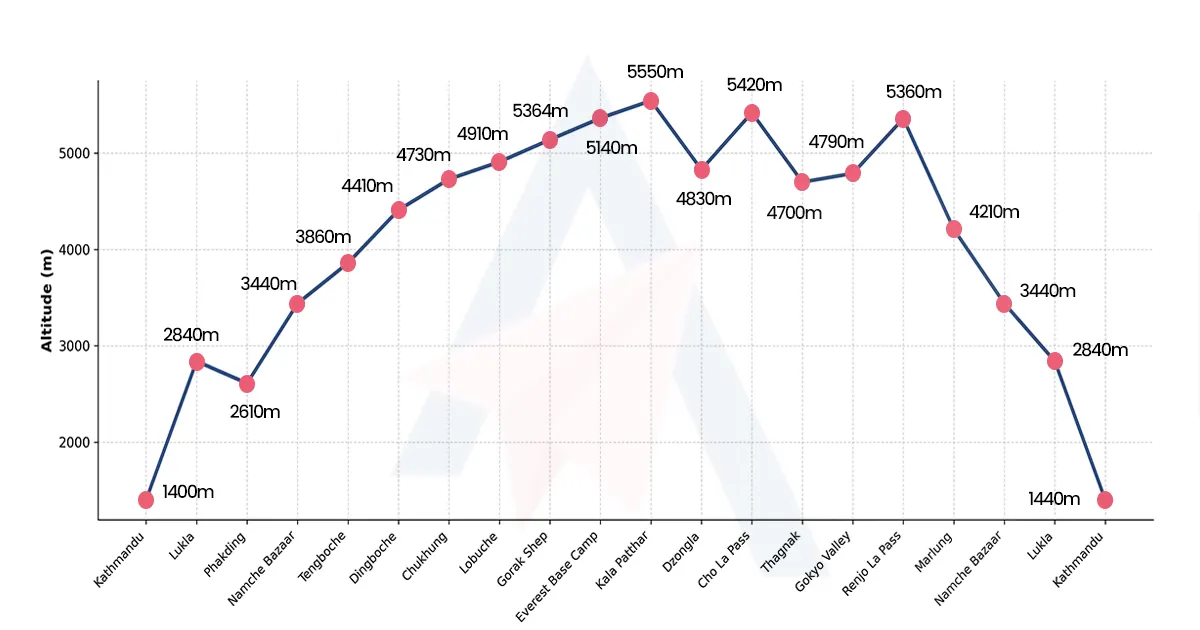
Cho la pass altitude Chart
Wear a warm layer of clothes even in autumn because morning and night air on Cho La is still bone-chilling. By midday temperatures rise up so you can shed a layer or two. Always be prepared for sudden snow flurries or winds at any hour.
What makes the Cho La Pass Trek Difficult?
No sugarcoating it because your safety and life matter. The Cho La Pass Trek is a challenging adventure. Due to high altitude, diverse terrain, extreme temperature, and unstable weather conditions, it makes it difficult. Factors that make the Cho La trek challenging and difficult are given below:
- High Altitude: The height of Cho La Pass is 5,420 m. At this level of altitude, the oxygen level is very low. It increases the risk of acute mountain sickness (AMS) and hypoxia. Even a small movement feels exhausting and requires a lot of energy. To prevent this, the itinerary must include acclimatisation days at Namche or Dingboche, drink plenty of water, do not skip meals, and walk slowly.
- Rough Trail: Though routes are well-trodden, they are not flat and pitched. Terrains are rough and rocky with steep hills. Near the final ascent, trails involve narrow switchbacks up loose scree and boulders. Terrain covered in snow and ice makes you scramble at times. Crampons/spikes are must-required gear for this trek.
- Crossing Glacier: The pass covers a small section of the glacier. Trekkers have to be extremely careful when crossing it, as the glaciers are often covered by a thin layer of hard snow and have hidden crevasses. As you descend from the summit, the trails get steep and can be icy-slick. Guides are essential for this trek.
- Long Hiking Day: Walking continuously for 8-10 hours on average in high mountains is physically and mentally exhausting. Hiking on a steep road up and down is not easy. Prepare yourself physically so you can hike without much difficulty.
- Unstable Weather: This is another major challenge of this adventure. At Cho La Pass, the weather is unpredictable. To avoid bad weather, guides often start before dawn after monitoring the conditions.
How difficult is Cho La Pass?
Cho La Pass is a challenging trek. It’s not recommended for first-time trekkers. It’s tough but doable for trekkers who are physically fit and experienced. This pass is mostly included in the Everest Three Passes trek. It is the second-highest point of the trek as well as the hardest section. Due to altitude and hiking on steep hills, the journey is strenuous.
However, it can be completed successfully with good planning and preparation. To minimise the difficulty and risks, follow the ‘climb high, sleep low’ rules, include acclimatisation days, trek with proper pacing, and walk slowly and steadily. By doing so, any normal trekkers can complete the Cho La Pass trek successfully.
Note: For those who are afraid of altitude, another alternative route is a lower Renjo La Pass or just adding extra acclimatisation days. If you put in some effort, this trek is manageable.
Throughout the journey, a guide will support you. With the help of fixed ropes and crampons, trekkers will make it to the summit. These are essential to support climbing steadily. Guides are professionals with many years of experience. So, if you are doing this trek and are scared, do not worry. Prepare your body 2 or 3 months in advance by doing physical training. If you are prepared mentally and physically, you can do the Cho La Pass trek successfully.
Is Cho La Pass Worth It?
Absolutely. Cho La Pass is worth every second and penny. The views and experience it offers are unforgettable. Standing at the top of the pass, over 5,000 m and surrounded by a 360° panorama, is just unbelievable. Below you will see glacial lakes and Gokyo Valley. The whole moment feels like you are at the top of the world. This adventure is very rewarding and highly recommended for adventure and nature lovers.
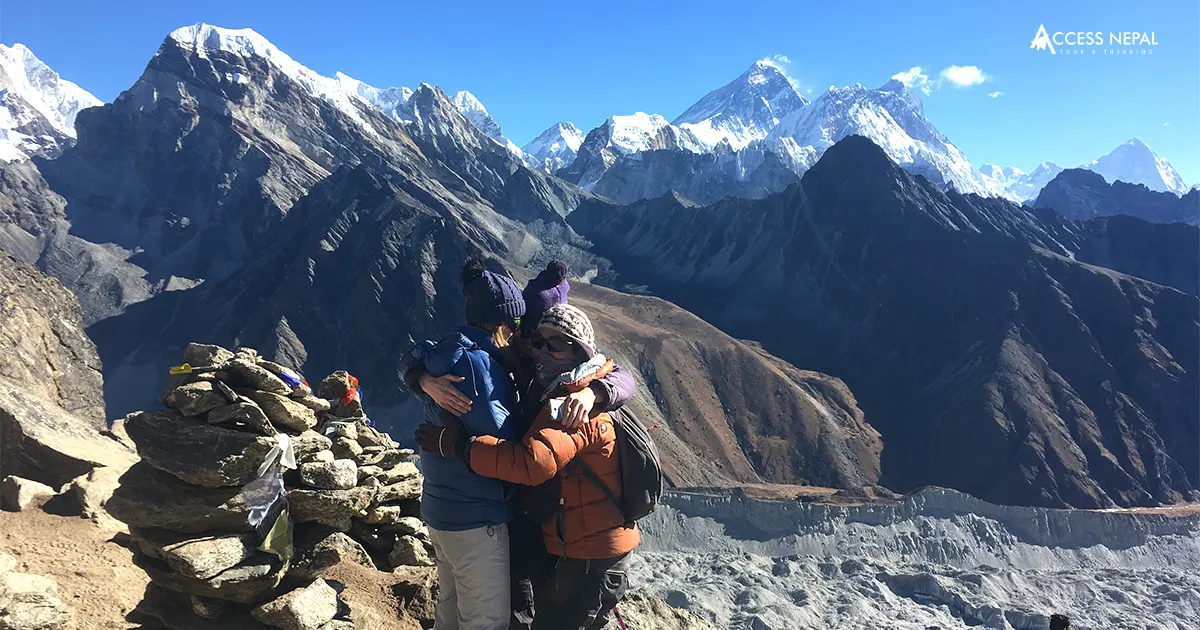
View from Cho La Pass
Hundreds of trekkers cross this pass every season due to the magical feeling and breathtaking views it offers. It offers a comprehensive Everest experience. Trekking through remote Sherpa villages, alpine landscapes, culture, people, and views of Everest, Lhotse, Makalu, and Cho Oyu is so healing. If you are craving nature, the Himalayas, and magical experiences, do not hesitate to try the Cho La Pass Trek. Despite the difficulty, this adventure is worth it.
Location Cho La Pass Map
The Cho La Pass is located along the trail of the Classic Everest Base Camp Trek route. This pass is generally part of the Everest Three High Passes Trek itinerary, which is crossed along with the other two high passes: Kong Ma La Pass and Renjo La Pass.
The standard Cho La Pass Trek route follows this itinerary: Kathmandu → Lukla → Phakding → Namche Bazaar → Tengboche → Dingboche → Chukhung → Lobuche → Gorak Shep → Everest Base Camp → Kala Patthar → Dzongla → Cho La Pass → Thagnak → Gokyo Valley → Renjo La Pass → Marlung → Namche → Lukla → Kathmandu.
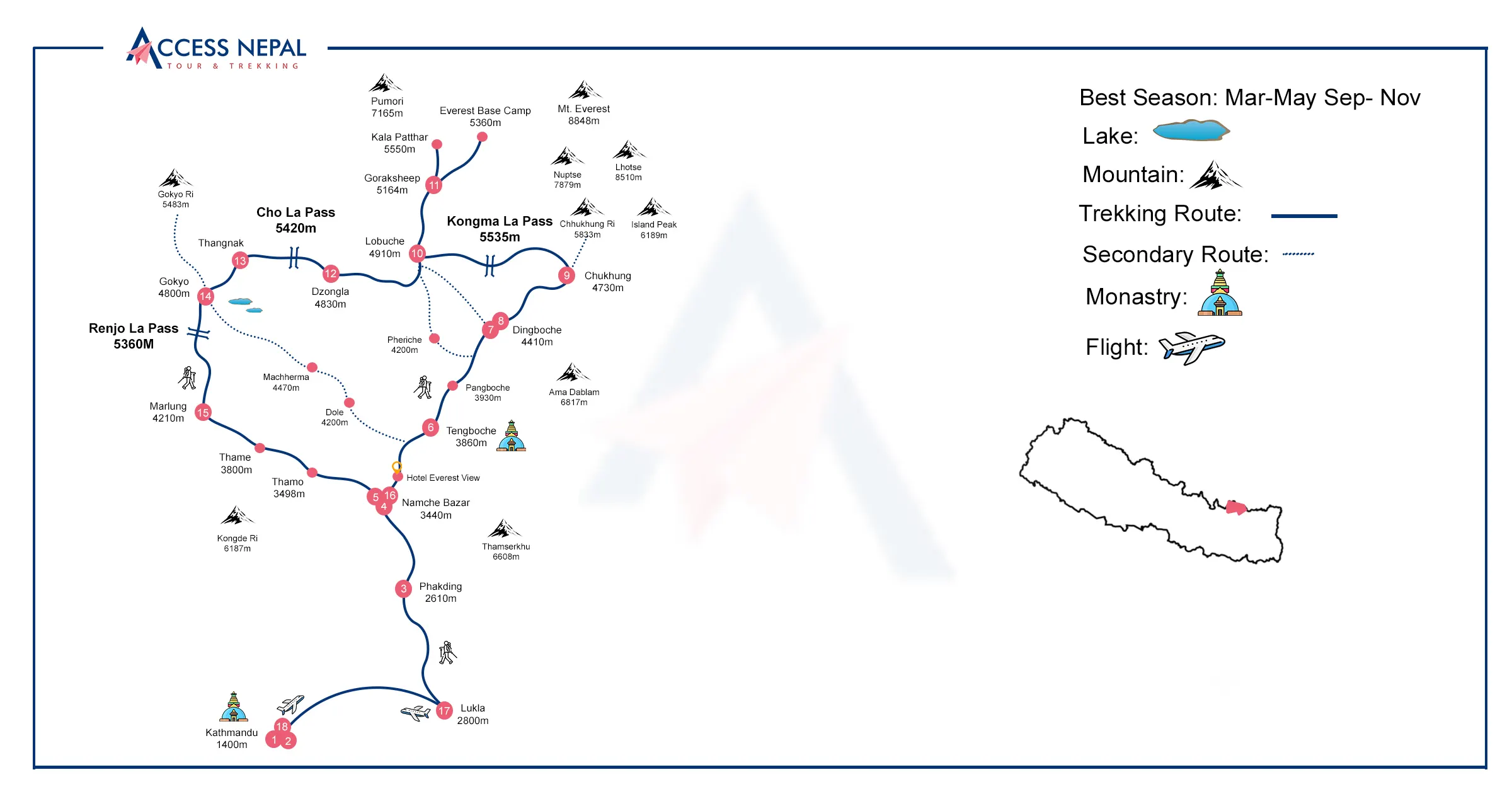
Chola Pass on the map of Nepal
Our Cho La Pass route map is an 18-day adventure. Travellers can customise it by adding additional trips or excluding days (though not recommended). The longer the itinerary, the safer it gets because it gives enough time to adjust to altitude.
The trek moves forward gradually with rest stops in between. Altitude gain is gradual, and we follow the “climb high, sleep low” strategy. The altitude gain won’t be more than 500 m per day on average. This helps to minimise the risk of getting altitude sickness. This Cho La Pass trek may sound serious on paper, but with the help of our expert guides, it is done safely.
Renjo La Pass
Renjo La Pass is located along the Cho La Pass route. It is located north of Cho La and comes after crossing the Cho La. Renjo La Pass altitude is 5,360 m (17,585 ft). It is a little bit lower than Cho La’s height. In comparison to Cho La, this pass is much easier due to the broad and unglaciated trail. Even a yak caravan passes through this.
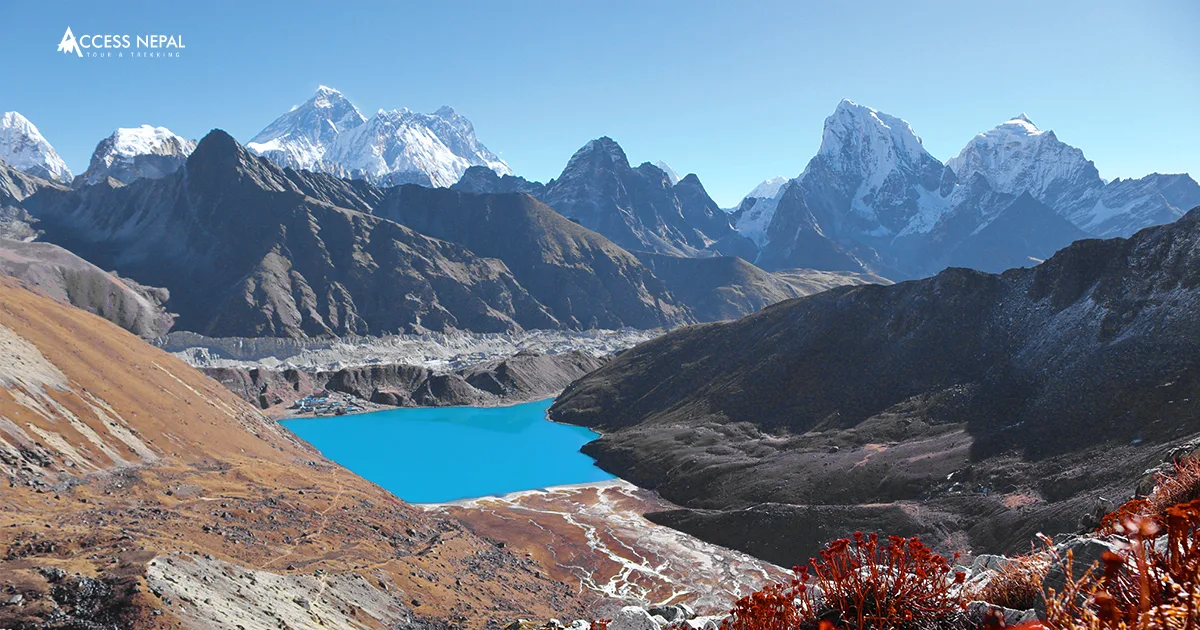
Renjo la pass altitude is 5,360 m (17,585 ft)
Still, at this altitude, easy doesn’t mean a simple stroll. The pass is tall and steep, so climbing will be strenuous. Once you reach the top of Renjo, you can see the panoramas of four of the 8000m Himalayan giants: Everest, Lhotse, Makalu, and Cho Oyu, along with others. Looking down, blue-turquoise Gokyo Lakes dot the valley. If you look towards the north, Ngozumpa Glacier greets you. The whole view feels unreal and majestic.
The Renjo La Pass is another highlight of the three high passes trek and a favourite of many. It is least technical and must be included in the itinerary. Compared to Cho La and Kongma La Pass, this high pass is much more feasible.
Kongma La Pass
Kongma La is the first pass trekkers have to cross along the Cho La Pass route. It is the highest among the three passes, with an altitude of 5,536 m (18,159 ft). The Kong Ma La Pass altitude is higher than that of Everest Base Camp and is another major challenge of the EBC trek. It sits southeast of the Khumbu Glacier to Lobuche East.
Among the three high passes, Kongma La is the most difficult due to steep, narrow, rocky, and long trails. Unlike its name’s meaning “Himalayan pheasant”, this pass is mentally and physically challenging. This pass is covered in snow and very windy most of the season. Though it doesn’t require technical skill, trekkers must have a good level of strength and endurance.
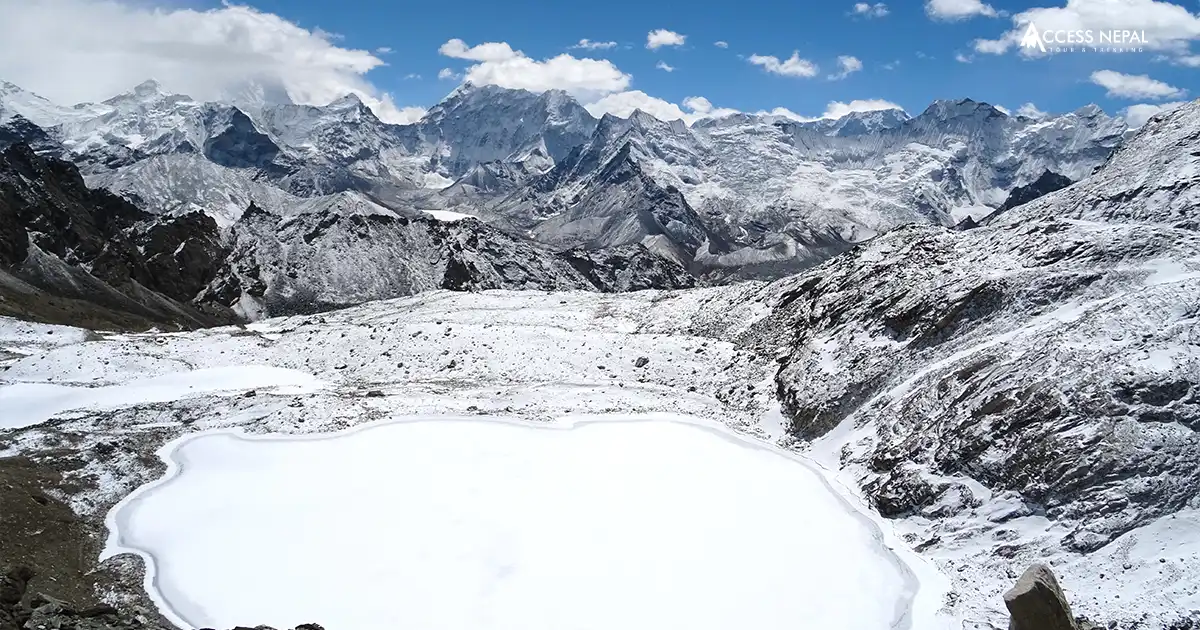
Kongma La Pass
All these are worth it once you reach the top of it. With good team support and preparation, you can cross this pass as well. From Kongma La, you can get one of the best viewpoints of Everest (8,849 m).
Everest Base Camp & EBC Altitude
Everest Base Camp is a base camp of the world’s highest peak in the world, Mt Everest (8,849 m). Doing a trek in the Everest region and excluding Everest Base Camp is not a good finale. The EBC altitude is 5,364 m (17,598 ft), where mountaineers from all over the world stay to climb Everest.
In our Cho La Pass map route, Everest Base Camp is also included. Trekkers will stop by EBC before crossing the pass. With enough acclimatisation days and guidance, the itinerary of Cho La Pass is best for adventures. It is not meant for faint souls; due to many challenges, it is a difficult trek. Along with Everest Base Camp, the itinerary also includes a hike to Kala Patthar (5,545 m), the best viewpoint of the Everest region to watch Everest.
Nothing is possible unless you try it. The Cho La Pass Trek is a difficult-level adventure, but it’s not impossible. Access Nepal Tours and Trekking has decades of experience and has guided hundreds of trekkers’ dreams. Our Cho La Pass trek package itinerary includes an expert and professional team. It is all-inclusive, so you only need to worry about taking good pictures.
With Access Nepal Tours and Trekking, a trek to Cho La Pass becomes more of an unforgettable journey rather than a struggle. Spending nights under the starry sky, surrounded by the Himalayas, creating new bonds with fellow travellers, and eating dal bhat is a once-in-a-lifetime experience. Once you see the views, you’ll be sure that it is all worth it. As the trek ends, you won’t feel empty because you’ll carry a treasure chest of memories.
Did this guide fire up your adventure bug? If yes, then plan your adventure of Cho La Pass with Access Nepal Tours and Trekking. Just choose your date; our team will handle all logistics, and they are all included. We don’t want you just to be dreaming about the mountains. Come trek through them, and let’s cross Cho La Pass together!
FAQs
Which is the hardest trek in Nepal?
The hardest trek in Nepal is the Everest Three High Passes. This trek takes you beyond 5,000 m, makes trekkers cross three high passes, and hikes to Everest Base Camp and Kala Patthar. These itineraries are physically and mentally demanding.
What is cho la pass?
Cho La Pass is a famous mountain pass located in the Everest region along the classic Everest Base Camp Trek trail.
What are the differences between Cho La Pass and Renjo La Pass?
The difference between Cho La Pass and Renjo La Pass is the difficulty level and height. Cho La pass is taller than Renjo La and as difficult as well.
Awards and Achievements
Access Nepal Tour and Treks has been recognized with TripAdvisor’s prestigious Travelers’ Choice Award for multiple consecutive years, reflecting our unwavering commitment to quality and clients’ satisfaction.













Leave Your Comment