

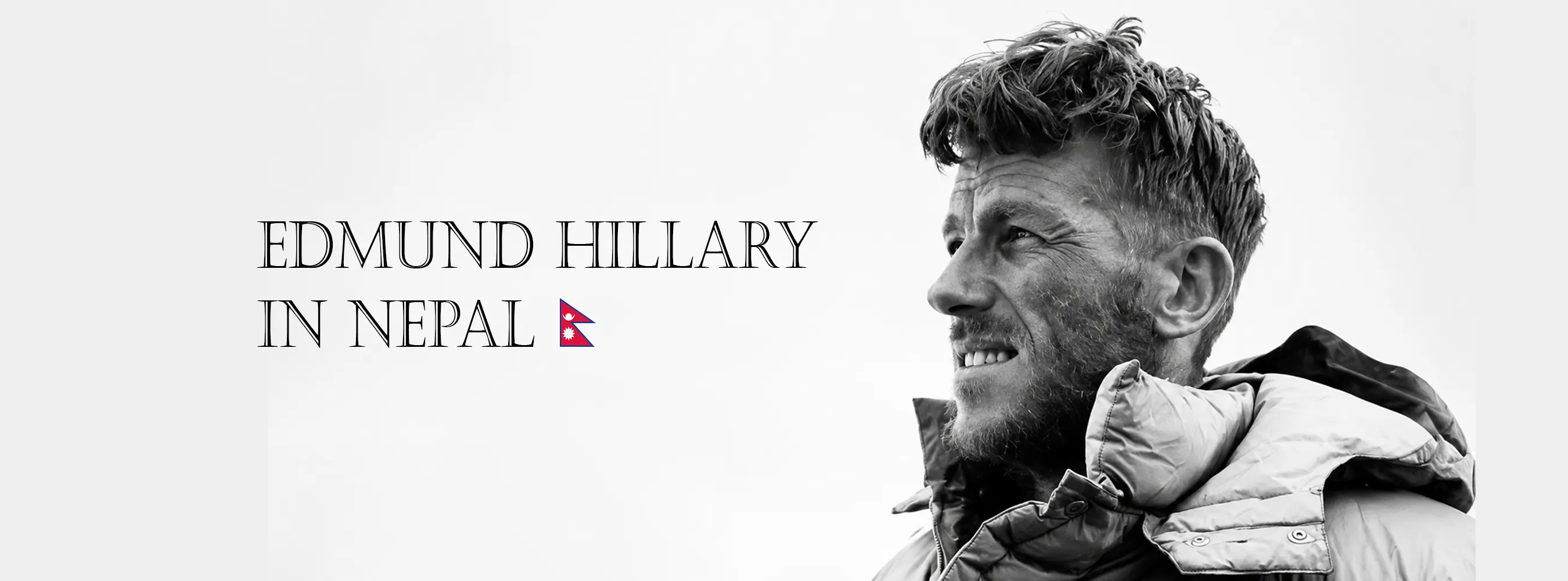
Edmund Hillary: The First Person Summit Mt Everest
- Places
- Edited By: Ayesha Sapkota .Updated on: 9 Sep 2026
When people hear the name Edmund Hillary, the first thing that often comes to mind is Mount Everest. Hillary and Sherpa mountaineer Tenzing Norgay became world-famous when they reached the top of Everest in 1953.
But Hillary’s story in Nepal wasn’t finished with the summit of the mountain.
Hillary went back to Nepal numerous times after the Everest expedition. He became very close to the Sherpa people of the Khumbu region, and for many years, he supported the people of the area. He worked on schools, healthcare, bridges, airstrips, environmental projects, and community development.
There are still remains of his legacy for today’s travelers to see as they explore the Everest region. A trip to Everest can provide much more than mountain views, from the villages of Khumjung and Khunde to the town of Namche Bazaar and the famed Hillary Bridge. It can also help you learn about the history, culture, and people that have been integral to Hillary’s life.
Edmund Hillary Overview
| Key Fact | Details |
| Full Name | Sir Edmund Percival Hillary |
| Nationality | New Zealand |
| Everest Summit | 29 May 1953 |
| Summit Partner | Tenzing Norgay |
| Main Region in Nepal | Khumbu, Solukhumbu |
| Major Organization | Himalayan Trust |
| Important Village | Khumjung |
| Famous Landmark | Hillary Bridge |
| Major Contribution | Education, healthcare, infrastructure, and community development |
| Popular Travel Connection | Everest Base Camp Trek |
| Visitor Centre | Sir Edmund Hillary Visitor Centre, Khumjung |
Who Was Edmund Hillary and Why Is He Important in Nepal?
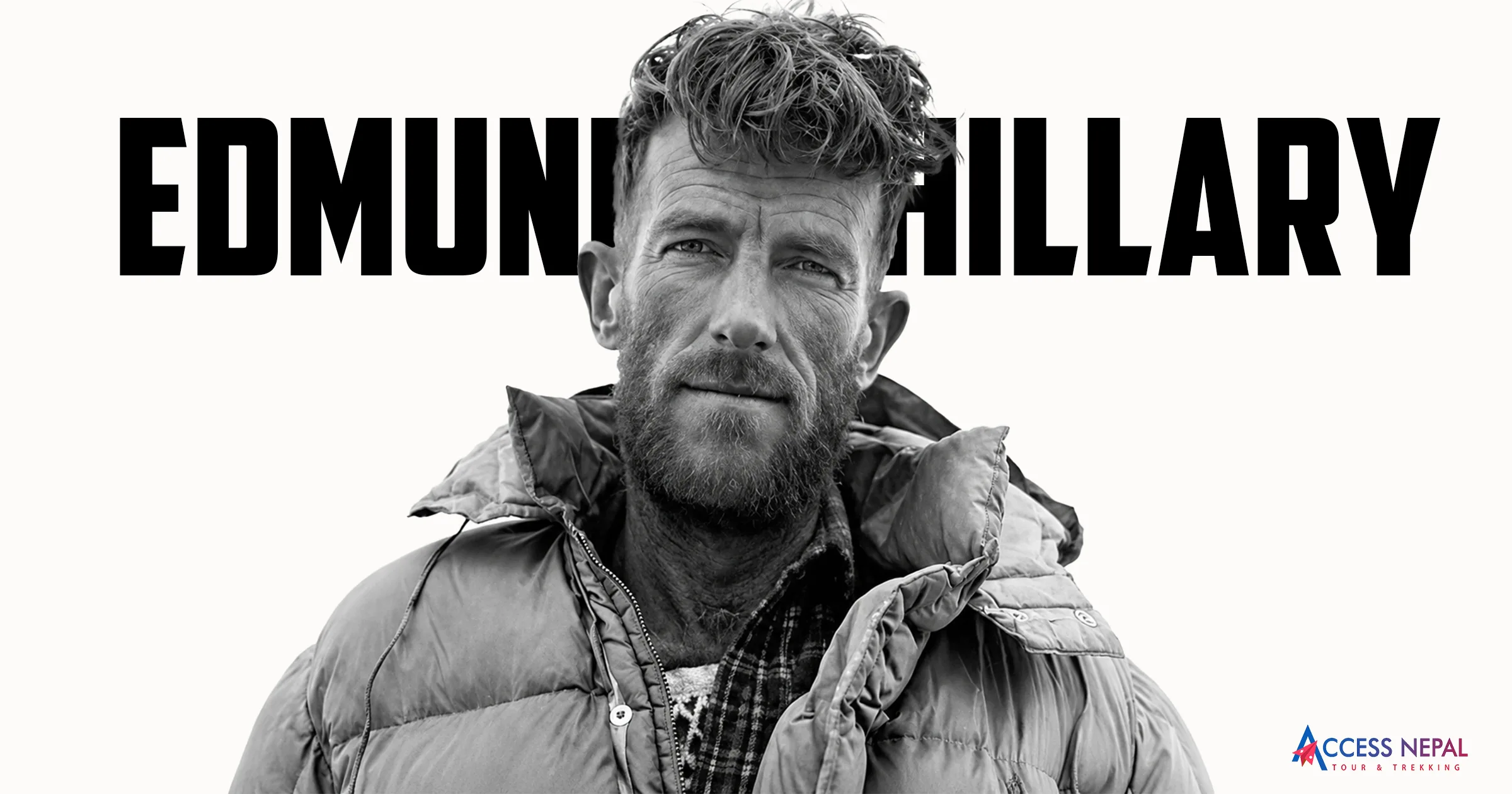
Edmund Hillary was a New Zealand mountaineer, explorer, and humanitarian
He gained fame by reaching the summit of Mount Everest on 29th May 1953 along with Tenzing Norgay.
That’s what makes Hillary famous for many. But his connection with Nepal was far greater than a successful ascent.
Hillary was very close to the Sherpa people of the Khumbu after Everest. He witnessed the difficulties of life in the isolated mountain villages and started promoting initiatives that helped to change people’s lives.
He worked on education, health, bridges, infrastructure, environmental projects, and community development projects.
That’s why Hillary is not just remembered as a climber of Everest, but as a person who worked for several years in the mountains to assist communities.
Today, as you trek through the Khumbu, you can still find places that are related to his work and his relationship with the area.
When Did Edmund Hillary Climb Mount Everest?
Edmund Hillary and Tenzing Norgay on 29 May 1953 became the first people to reach the summit of Mount Everest.
They belonged to the British expeditionary force under Colonel John Hunt. Their successful ascent was one of the mountaineering world’s greatest achievements.
But the route to Everest was not an easy one of just two people. The Sherpa climbers and other workers in high altitudes were given a very special role in the expedition. They assisted in transporting equipment, setting up camps, and providing support to the climbers in the challenging Himalayan environment.
Two names were strongly associated with the successful climb: Hillary and Tenzing. With their achievement, they became famous the world over and Mount Everest became even more celebrated in mountaineering history. Their story can still be seen today all over the Khumbu region.
Who Was Tenzing Norgay to Edmund Hillary?
Hillary’s climbing partner on the successful Everest expedition in 1953 was Tenzing Norgay.
Tenzing was an experienced mountaineer and Sherpa. His mountain knowledge and experience at high altitudes were a valuable asset on the Everest ascent. There is no doubt that the relationship between Hillary and Tenzing is one of the most famous mountaineering stories.
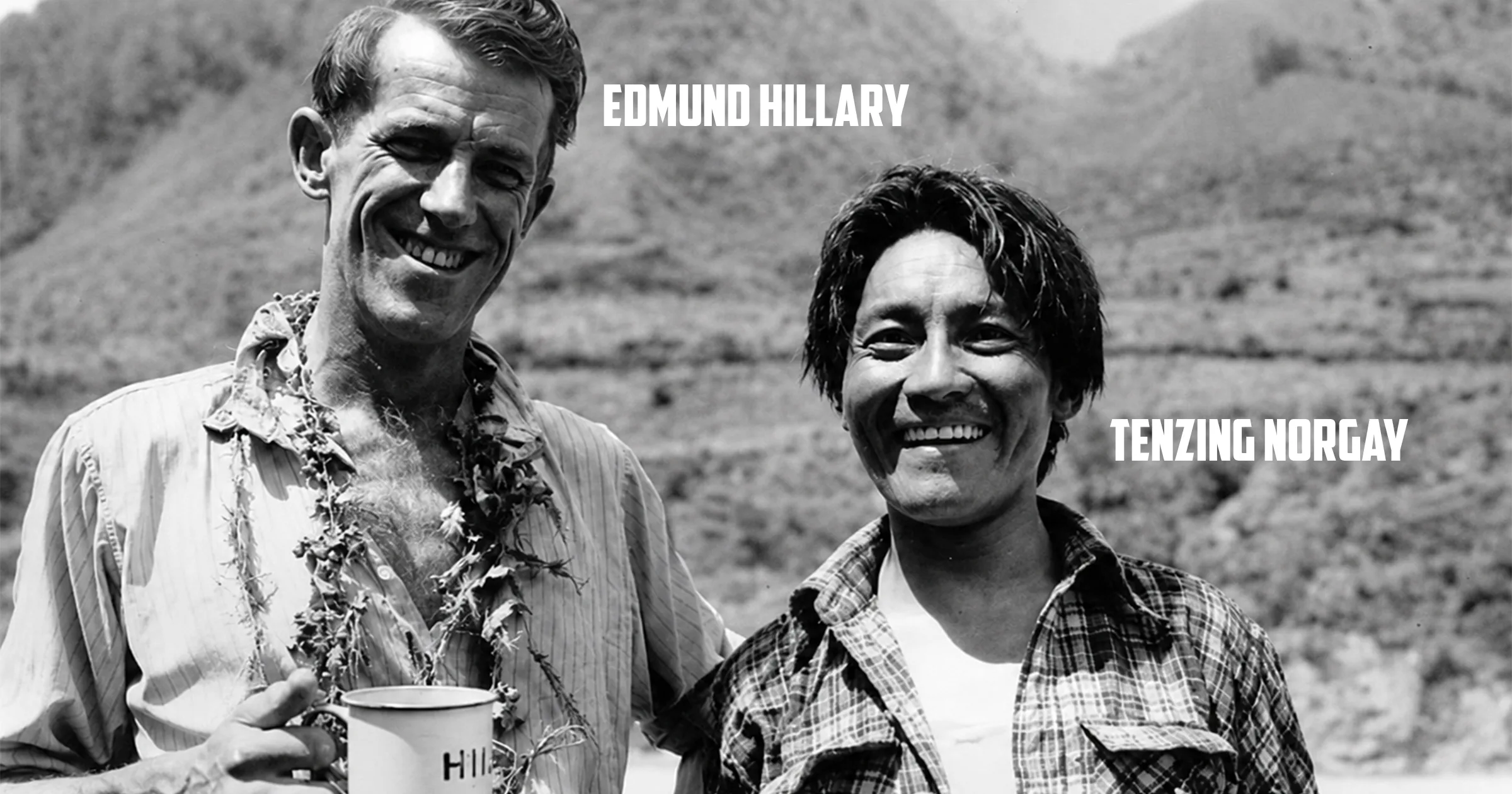
Tenzing Norgay and Edmund Hillary
Their story is also significant for travelers as it relates the history of Everest internationally with the Sherpa community locally. During the trek through the Khumbu, you’re going through the same broader area that was a significant part of both men’s lives.
What Did Edmund Hillary Do for Nepal After Climbing Everest?
Everest was just the start of Hillary’s involvement with Nepal. He continued to visit the Everest region and became more involved with the needs of the Sherpa communities after the climb. One of his main focus areas was education.
In 1961, a school was opened at Khumjung. The Himalayan Trust was founded in 1963, as the number of communities seeking assistance for schools, hospitals and other projects grew.
Hillary’s work later branched out to include a number of areas such as:
- Education
- Healthcare
- Bridges and infrastructure
- Airstrips
- Environmental projects
- Community development
- Assistance to Sherpa people
His work was down-to-earth and responsive to the needs of the people of remote mountain areas. It was one of the most significant periods of his life in Nepal: his long association with the people of Khumbu.
How Did Hillary Help Communities in the Everest Region?
The Everest area wasn’t the only region in which Hillary worked. He worked in various sectors that were significant to the communities.
Education
One of Hillary’s primary areas of focus was education. In the area, he worked at the school in Khumjung, which became an important part of his work.
Education was not always readily available for communities that reside in remote mountain areas. Schools were supported, providing local children with improved opportunities to learn without having to leave their communities.
Healthcare
Another significant aspect of Hillary’s work was in the field of healthcare.
The hospital was built in Khunde in 1966, with Hillary’s help, and became a significant health centre for the Everest region’s inhabitants.
Having access to health care was particularly crucial for communities that were scattered throughout the mountain villages.
Bridges and Infrastructure
The steep valleys, rivers and rugged high mountain terrain make travel in the Himalayas challenging.
Hillary supported infrastructure projects such as bridges and airstrips that helped improve access between communities. The projects were not only beneficial for the travelers, but for the local population as well who relied on them in their daily lives.
Community Development
Hillary’s work had a close relationship with the local community.
He didn’t think of the Everest region just as a place for adventure; he became involved in projects to meet people’s needs in the region.
This is one of the significant reasons for his legacy to be remembered in Khumbu.
Why Is Hillary Still Important to the Sherpa Community?
Over many years, Hillary formed many ties with the Sherpa community. On his initial trips to the Everest region, he got to know the people and the problems they were encountering that were scattered throughout the mountain villages. As time passed, his bond grew with the community.
Related Packages
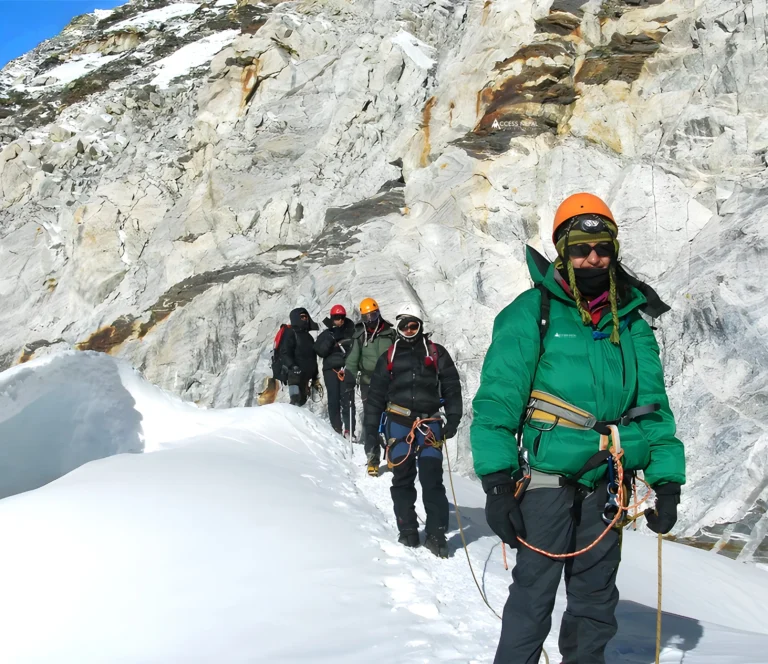
Everest Expedition - 55 Days
 8,848m/29,029ft
 Extremely Difficult
 All
Inclusive Plan
All
Inclusive Plan
He promoted projects in education, health care, infrastructure and community development. A majority of the projects were created to serve the needs of the community.
Because of this, Hillary’s story in Nepal is not only about climbing Everest. It’s also about the relationship he had with the people of Khumbu and the work he has done since his famous climb.
This is another aspect of Hillary’s life that may enhance an Everest journey for travelers.
How Did the Himalayan Trust Help the Everest Region?
Hillary’s work to help communities in the Everest area led to the development of the Himalayan Trust.
The organisation was a key component of his human rights work and was requested by several schools, hospitals and development projects.
The Himalayan Trust works in areas such as:
- Education
- Health
- Culture
- Environment
- Livelihoods
- Emergency response
It is built on the concept of sustainable development support for mountain communities.
Learning about the Himalayan Trust provides a different perspective of the Everest area to visitors. Khumbu is more than just a trekking destination. It’s a place where people have been dwelling, working, raising a family, and keeping their culture for generations.
Why Should Travelers Know About the Himalayan Trust?
Travelers should be aware of the Himalayan Trust because they promote responsible travel to the Himalayas and help conserve the environment.
Villages like Khumjung and Khunde are communities that are touched by Hillary’s humanitarian efforts. Along the trail, you can also be aware of the schools, hospitals, bridges, villages, monasteries and local communities. This makes the trip more than a physical journey. It turns into an opportunity to know the people and history of the Khumbu.
Where Can You See Edmund Hillary’s Legacy Today?
Hillary’s impact can be observed in the best places to see Hillary’s legacy is in the Khumbu region. The following locations related to his life and work are available for viewing in a trip to Everest, depending on the route and itinerary of the trip.
Khumjung
One of the most significant places related to Hillary’s humanitarian efforts is Khumjung. Khumjung School and the Sir Edmund Hillary Visitor Centre are located in the village.
At the visitor centre, visitors have an opportunity to learn more about Hillary, his work, the Himalayan Trust, Sherpa culture, and the history of the Khumbu.
For those who may want to learn more about Hillary’s life beyond Everest, Khumjung is one of the best places to visit.
Hillary Bridge
The famous Hillary Bridge is situated near Jorsale on the trekking route towards Namche Bazaar. When trekking deeper into the Khumbu, trekkers cross suspension bridges over the Dudh Koshi River. The bridge is more than just a part of the trekking trail. It is also a reminder of the importance of bridges and other infrastructure for mountain residents.
It’s one of the memorable moments of the Everest Base Camp trek, which is often traversed.
Khunde
Khunde is famous for Khunde Hospital founded in 1966 with the help of Hillary. This hospital had developed into an important health centre for the communities in the Everest region.
Khunde provides another chance for visitors to learn about Hillary’s contributions beyond mountaineering, to healthcare and community development.
Namche Bazaar
Namche Bazaar is one of the most significant settlements in the Khumbu region. It is a major Sherpa village and is a significant trekking point on the way to Everest Base Camp.
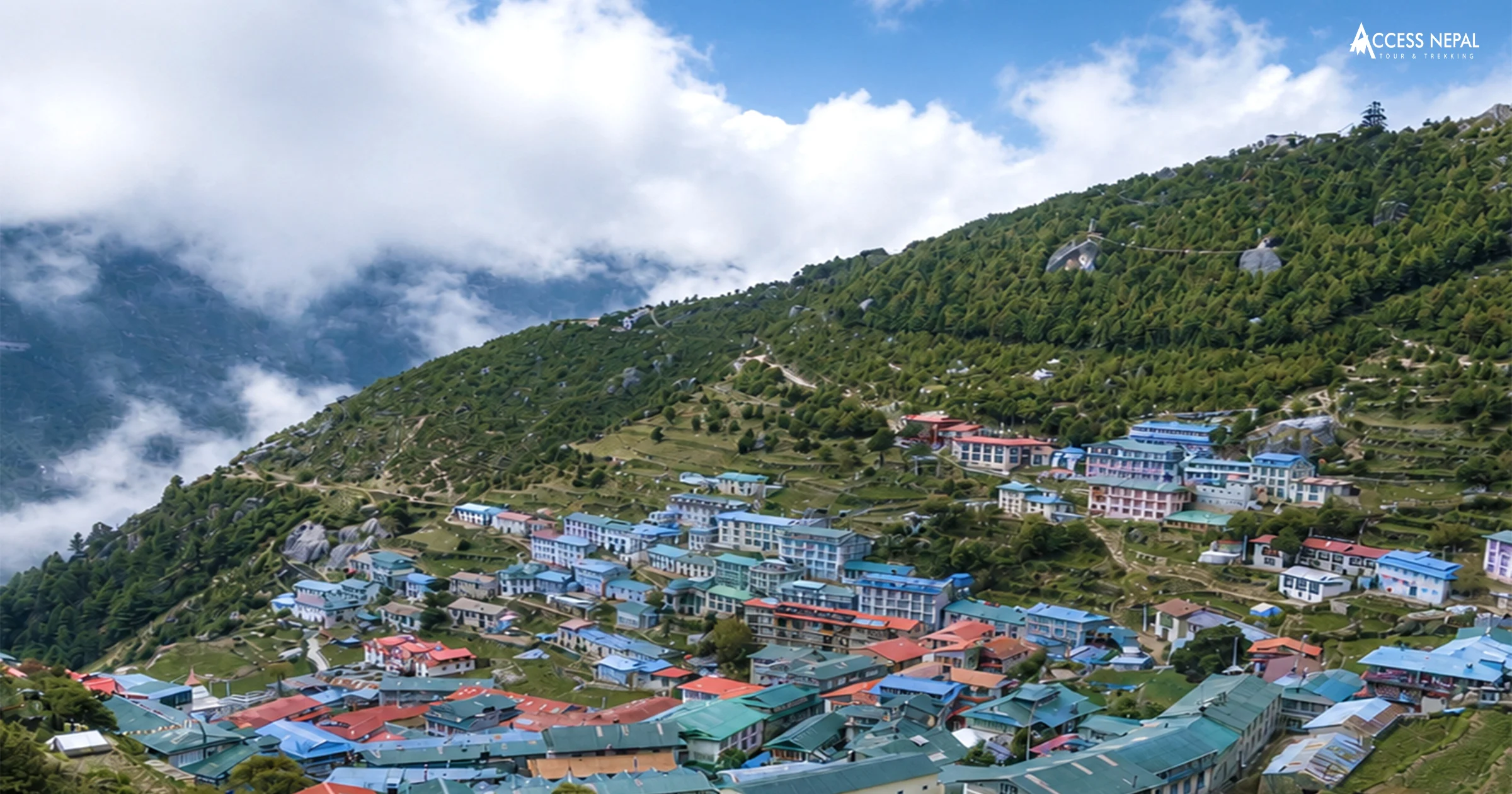
Namche Bazaar Gateway to Everest
Usually, most trekking itineraries allow for acclimatization in Namche. It is also a wonderful place to experience local culture, mountain views, shopping, cafes and the hustle and bustle of an important trade centre in the Himalayas.
Lukla
Lukla is a popular entry point to the Everest region. The airport is officially named after the two climbers who gained fame after reaching the summit of Mount Everest in 1953.
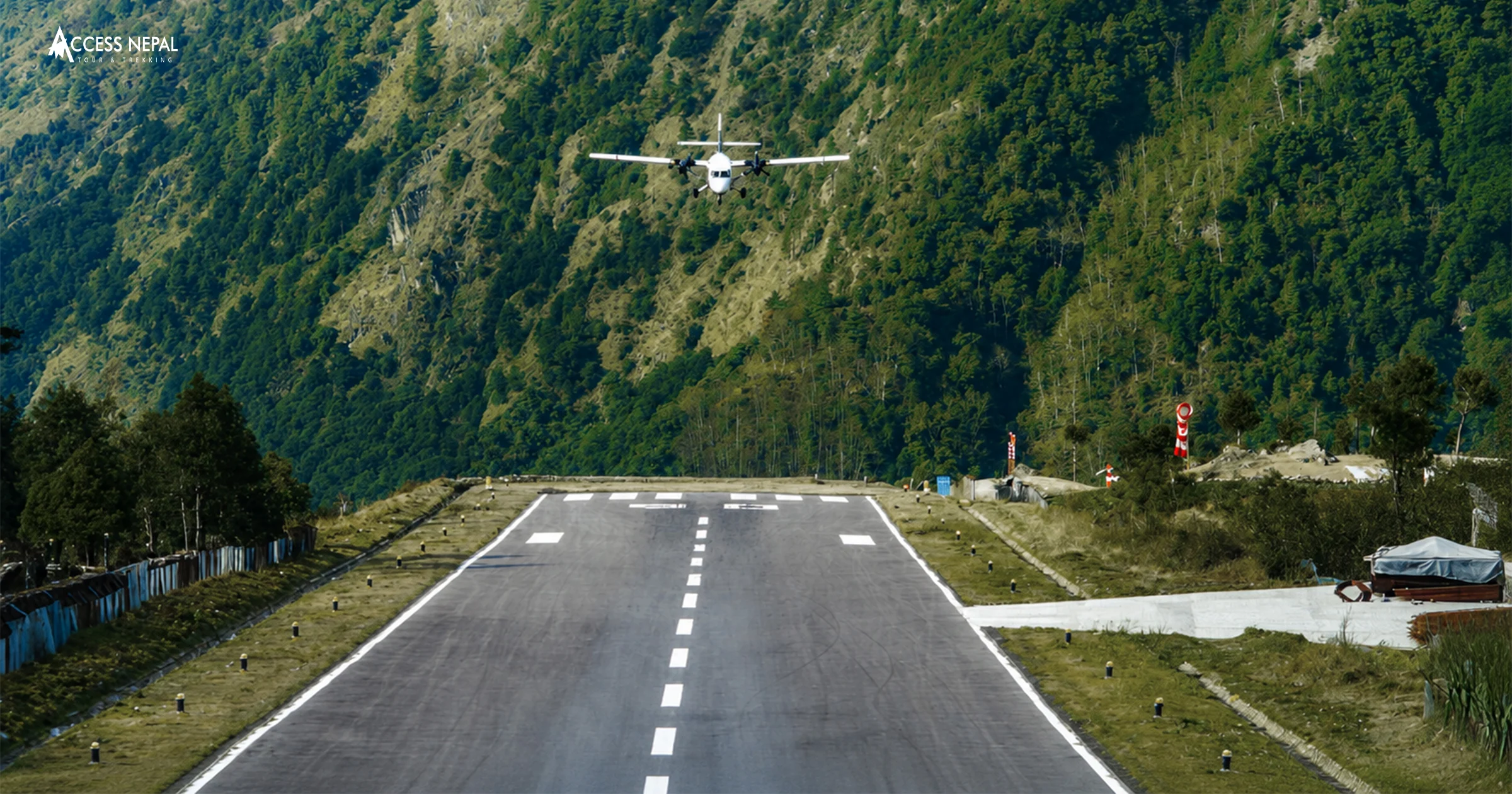
“Tenzing-Hillary Airport”
Lukla is the starting point of the adventure into the Khumbu for many trekkers.
What Can You See at the Sir Edmund Hillary Visitor Centre?
The Sir Edmund Hillary Visitor Centre is in Khumjung Secondary School, Khumjung, Solukhumbu. The centre grew out of Hillary’s early education project in the village, which was a two-room classroom. It was opened on 29 May 2023, which is the 70th anniversary of the first successful Everest summit.
Indoors, visitors can find out about various aspects of Hillary’s life and the Khumbu area.
The centre contains information on:
- Edmund Hillary’s life
- His humanitarian work
- Himalayan Trust projects
- Khumjung School
- Sherpa culture
- Khumbu biodiversity
- Local history
- Sagarmatha National Park
There is also a 3D map of Sagarmatha National Park, and details about projects supported by the Himalayan Trust. What the centre can provide for trekkers, and not a mountain landscape, is context. It helps you to realize that the Everest region is not just about climbing the famous mountain. It’s also human, community, culture and history.
Where Can You Find the Famous Hillary Bridge?
The Hillary Bridge is close to Jorsale, before the path starts to ascend towards Namche Bazaar. There are several suspension bridges which cross the Dudh Koshi River during the trek. One of the most famous of them is the Hillary Bridge.
As prayer flags wave in the wind and the river rushes below, crossing the bridge can be a memorable experience.
But bridges are not just for tourists to enjoy; they are for the people around them. They play a significant role as a connecting bridge between villages and valleys.
It is one of the reasons why the Hillary Bridge is so naturally included in the story of Hillary’s work in the Khumbu.
How Is Hillary’s Story Connected to the Everest Base Camp Trek?
The Everest Base Camp Trek passes through the Khumbu area where there are numerous sites associated with Hillary’s life and work.
Some of the activities that are part of a typical route are:
- Lukla
- Phakding
- Namche Bazaar
- Tengboche
- Dingboche
- Lobuche
- Gorak Shep
- Everest Base Camp
The modern trekking route does not necessarily follow the route of the 1953 expedition. These trails, bridges, villages and infrastructure have evolved over the years. But the larger Khumbu landscape that is significant to Hillary’s life continues to be accessed by trekkers.
What Can You Experience on an Everest Trek?
Trekking to Everest is much more than just a popular destination to arrive at. Everest Trek in Nepal offers many experiences you can enjoy.
En route, you will have the chance to enjoy the mountains, Sherpa culture, Buddhist culture, villages, monasteries and the history of mountaineering in the Himalayas.
At Lukla
This is where the trip to the Everest area starts. Lukla is a bustling mountainous entry point and a standard starting point of Everest Base Camp trekkers.
At Namche Bazaar
Namche is a key Sherpa settlement and a typical acclimatisation point. It offers the opportunity to explore the village, take in the mountain views, try some local shops, cafes and learn more about living in the Khumbu.
At the Hillary Bridge
It is one of the most famous suspension bridges on the Everest trail. It is a scenic section of the track, as well as an interesting landmark for hikers.
At Khumjung
The village is open to the public for visitors and there is the Sir Edmund Hillary Visitor Centre. One of the best places to find out about Hillary’s work in education and his relationship with the local community.
At Khunde
To find out more about the work Hillary did for healthcare, check out the section that links to Khunde Hospital.
At Everest Base Camp
You’ve finally arrived at one of the world’s most popular mountain destinations.
Many visitors make it to base camp as the ultimate goal of their visit to the Everest region. If you’re aware of the history of the mountain, this can make the experience even more significant.
How Difficult Is the Everest Base Camp Trek?
The Everest Base Camp Trek is difficult primarily due to the high elevation, extended days of walking, substandard tracks and weather conditions on the mountain.
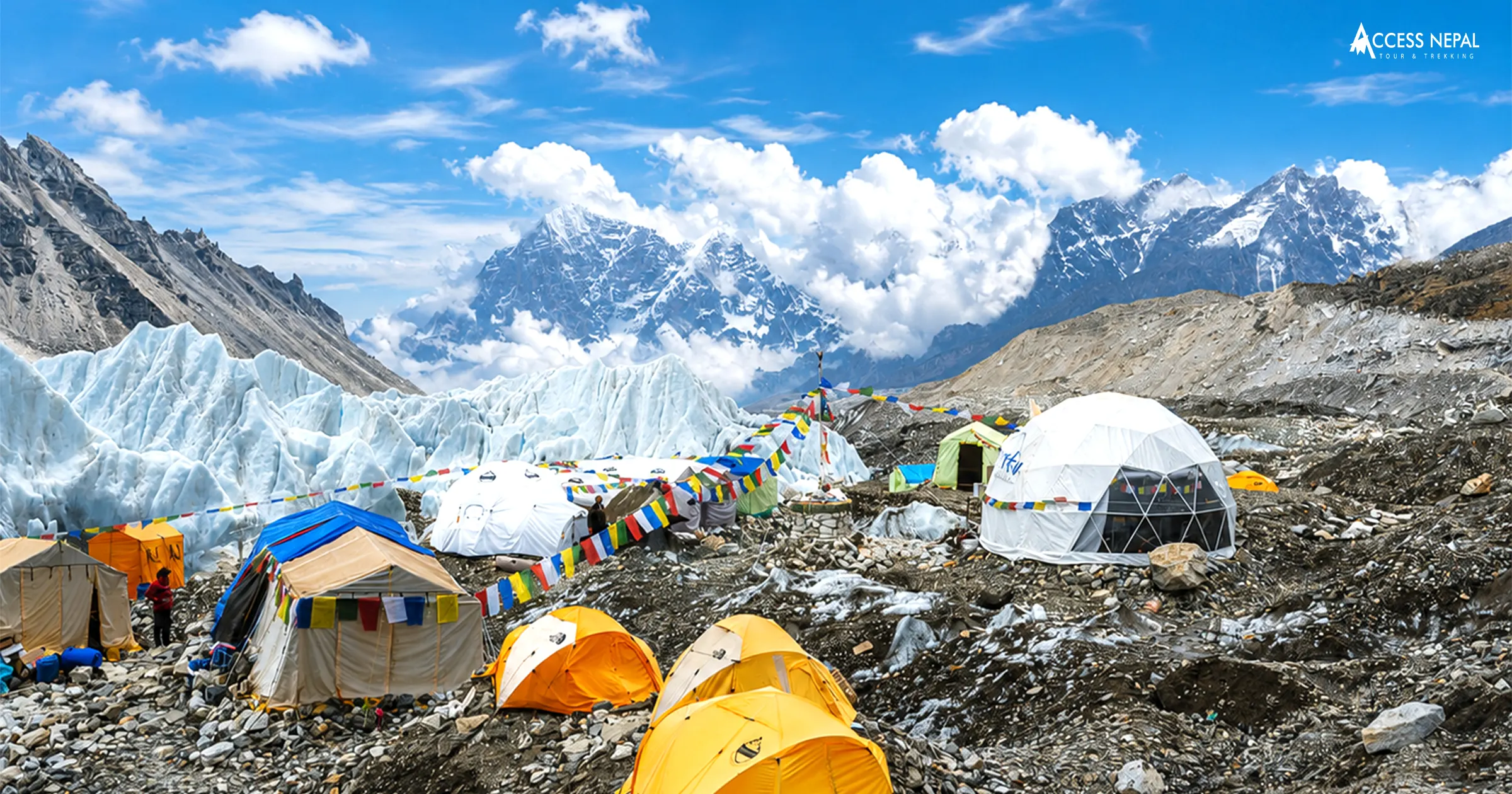
Visitors making a tent during the Everest Base Camp Trek
The hike is not typically of a technical nature, but make no mistake, that doesn’t make it easy.
Some of the primary issues are:
- High altitude
- Long walking days
- Uphill and downhill climbs
- Rocky trails
- Cold temperatures
- Altitude-related problems
- Changing weather
- Physical tiredness
One of the main difficulties is altitude. Because your body will have to acclimate to the higher altitudes, it is important to allow extra days for acclimatization in a good itinerary.
With a bit of advanced preparation, a good pace, appropriate clothing, and sufficient rest, the experience can be made more comfortable.
How Long Does the Everest Base Camp Trek Take?
The duration of a typical Everest Base Camp Trek is approximately 14-15 days, but this can vary based on the trekking package and route. An acclimatisation period is a vital component to the trip. The stops for acclimatization are frequently made at Namche Bazaar and Dingboche.
A traditional run might be along these lines:
| Stage | Approx. Elevation | Main Purpose |
| Kathmandu | 1,400 m | Arrival and preparation |
| Lukla | 2,860 m | Trek begins |
| Namche Bazaar | 3,440 m | Acclimatization |
| Tengboche | 3,860 m | Culture and monastery |
| Dingboche | 4,410 m | Acclimatization |
| Lobuche | 4,910 m | High altitude trekking |
| Gorak Shep | 5,140 m | Base Camp approach |
| Everest Base Camp | 5,364 m | Main trekking destination |
| Kala Patthar | 5,550 m | Everest viewpoint |
The specific elevations may be slightly different based on the source and route measurements.
When Is the Best Time to Explore the Everest Region?
Spring and Autumn are the most favored seasons to trek in the Everest region.
Spring: March to May
Spring is the best time for trekking in the Everest region.
You can expect:
- More favorable trekking conditions than winter.
- Rhododendron flowers
- Pleasant mountain scenery
- Clear days with good views of the mountains.
The trails are also active with trekkers and climbers during this season.
Autumn: September to December
Another popular trekking season is autumn.
It is a season that provides:
- Clearer skies post-monsoon
- Good mountain visibility
- Elevations below will have comfortable conditions
- Popular trekking trails
Winter and Monsoon
High elevations can be quite cold during the winter months and the monsoon season can be rainy and cloudy, causing travel delays.
The right season for you will vary based on your Everest Base Camp itinerary, weather preferences and tolerance for cold temperatures and changing mountain conditions.
Why Is Khumjung Worth Visiting on an Everest Trek?
If you’re interested in Edmund Hillary, Sherpa culture and Everest Region history, then you’ll want to visit Khumjung. The village has something to offer other than the typical mountain scenes.
The community is open to all visitors, with the opportunity to learn about community life and visit the Sir Edmund Hillary Visitor Centre. For those who wish to combine the culture and history with trekking, Khumjung is a worthwhile stopover on your trip to Everest.
Why Visit the Sir Edmund Hillary Visitor Centre?
Visiting the Sir Edmund Hillary Visitor Centre offers a unique chance to learn about the history and heritage of him, his team, and their endeavor. The visitor centre is a place to learn more about Hillary than just his ascent of Everest.
There is information available about his work in humanistic causes, education in Khumjung, Sherpa culture and the natural environment of the Khumbu, through the Himalayan Trust, the organization that he founded.
Many travelers are familiar with Hillary due to Everest. You learn more about what he did after the climb and why his connection with Nepal was so significant on a visit to the centre.
How Can You Follow Hillary’s Legacy as a Responsible Traveler?
A great way to honour Hillary’s memory is to travel responsibly. Be aware that the Khumbu is a living community, not just a trekking destination.
During your journey:
- Respect local customs.
- Don’t take pictures of people unless they say it’s okay.
- Obey the rules in the monasteries.
- Try to minimize the use of plastic and trash.
- Stay on designated trails.
- Please take care of prayer flags and Mani stones.
- Support local businesses.
- Respect Sherpa communities.
- Contribute to the conservation of the mountain environment.
Responsible travel is essential, as the beauty of the Everest region is not only in the mountains but in the people, culture and environment as well.
How Can You Prepare for an Everest Trek?
The Everest Base Camp Trek can be made a lot easier with proper preparation.
Build Your Walking Endurance
Begin with short walks and gradually extend the length of the walk. To prepare your body for the hours of walking, it’s best to start with longer walks.
Train on Hills and Stairs
To prevent your legs from getting tired during the Hilly part of the Himalayan trek, take the stairs or walk uphill.
Practice With a Backpack
If you are bringing your own pack, make sure to do a test walk with it prior to the hike. This will assist you in adjusting to the additional weight.
Understand Altitude
A hike at high altitude is not like a typical hiking experience. Give your body some time to adapt; don’t hurry.
Choose a Good Itinerary
It’s more important to have a well-thought-out itinerary than trying to complete the trek as fast as possible.
Acclimatization days allow the body to acclimatize to higher altitudes.
Prepare for Changing Weather
Weather on the mountains can change rapidly. Bring appropriate clothing and layers to keep you comfortable in various conditions.
Which Places Should You Visit to Follow Hillary’s Legacy?
For those who are interested in Edmund Hillary’s story, there are a few locations in the region of Everest that you can add to your journey.
| Stage | Approx. Elevation | Main Purpose |
| Kathmandu | 1,400 m | Arrival and preparation |
| Lukla | 2,860 m | Trek begins |
| Namche Bazaar | 3,440 m | Acclimatization |
| Tengboche | 3,860 m | Culture and monastery |
| Dingboche | 4,410 m | Acclimatization |
| Lobuche | 4,910 m | High altitude trekking |
| Gorak Shep | 5,140 m | Base Camp approach |
| Everest Base Camp | 5,364 m | Main trekking destination |
| Kala Patthar | 5,550 m | Everest viewpoint |
All of these locations reveal more than a mountain view of the Everest region.
What Can We Learn From Edmund Hillary’s Life?
There are a few very basic lessons to be learned from Edmund Hillary’s life.
Adventure Can Create Responsibility
Travel can expose you to areas and communities that you might not have the chance to experience in your daily life. Hillary’s time in the Himalayas led him to get involved with the local people.
Achievement Is Not the End
Climbing to the top of Everest was an incredible feat, but Hillary’s post-climb efforts also played a vital role in his life.
Local Communities Matter
Sherpa communities that have their own culture, traditions and history also reside in the Everest region. Learning about these communities and respecting them enhances the meaning of a trip.
Travel Can Have a Positive Impact
There are several ways to help the local people by travelling locally, respecting local culture, avoiding waste and protecting the environment.
Is an Everest Journey Inspired by Hillary Worth It?
Yes, if you’re looking for something more than just a mountain adventure.
The Everest Base Camp Trek is already famous for its spectacular views and challenging trails. However, this learning experience is enhanced by the discovery of Hillary’s association with Nepal.
It is possible to visit Khumjung, cross the Hillary Bridge, explore Namche Bazaar, learn more about the Khunde Hospital and visit the Sir Edmund Hillary Visitor Centre.
Whether you are a mountaineering enthusiast, interested in Sherpa culture, or a fan of those who made a difference in the Himalayan landscape, Hillary’s story can enhance your Everest experience.
If you are looking for a trek led by an Edmund Hillary expert:
- You are interested in the history of mountaineering.
- You have an interest in Sherpa culture.
- You’re interested in learning about Hillary’s work in humanitarian efforts.
- You like cultural activities.
- You would like to visit Khumjung.
- You’re interested in the history of the trail to Everest.
If you would like to explore different places, then a different itinerary may be better:
- Time is very limited.
- You just want to get to Everest Base Camp.
- You don’t like historical and cultural attractions.
- You would like a shorter mountain experience.
The Everest trip may frequently be tailored to fit your interests, time, fitness and travel preferences.
How Can a Local Trekking Company Help With Your Everest Journey?
There are lots of things that can be part of planning an Everest trek, particularly if you are coming to Nepal from another country.
A local trekking company can organize the following:
- Kathmandu accommodation
- Transportation to Lukla
- Trekking permits
- Teahouse accommodation
- Meals
- Guides
- Porters
- Acclimatization
- Emergency planning
- Return transportation
A local team will also be able to assist you in picking an itinerary that suits your time frame, fitness level, comfort level and trekking objectives.
Access Nepal Tours & Treks provides various types of Everest region tour packages such as standard, classic, luxury, short and alternative Everest Base Camp tour packages.
The ideal package will be the one that you want based on the kind of experience that you want. Some people prefer the traditional Everest Base Camp trek, while others may be looking for a shorter or easier trek.
Frequently Asked Questions About Edmund Hillary in Nepal
Who was Edmund Hillary?
Edmund Hillary was a New Zealand mountaineer, explorer and humanitarian. He gained fame when he summited Mount Everest in 1953 with Tenzing Norgay. He subsequently worked for many years in support of the communities of Nepal.
Which year did Edmund Hillary climb Everest?
On 29th May 1953, Edmund Hillary and Tenzing Norgay became the first people to reach the summit of Mount Everest.
Who climbed Everest with Edmund Hillary?
Hillary reached the summit with Tenzing Norgay, an experienced Sherpa mountaineer.
What did Edmund Hillary do for Nepal?
Hillary worked in education, healthcare, infrastructure, environmental and community development in the Everest region. He worked on projects for schools, hospitals, bridges, airstrips and other community projects.
What is Edmund Hillary famous for?
The most notable achievement of Hillary’s was his ascent of Mount Everest in 1953, along with Tenzing Norgay. He is also recalled for his ongoing efforts in the field of Humanity in Nepal.
What is the Himalayan Trust?
Hillary is associated with the Himalayan Trust, which serves as a part of her work in the Himalayas. It engages in education, health, culture, environment, livelihood and community support.
Where is the Sir Edmund Hillary Visitor Centre?
The Sir Edmund Hillary Visitor Centre is the Khumjung Secondary School in Khumjung, Solukhumbu, Nepal.
What is the Hillary Bridge?
The Hillary Bridge is a famous suspension bridge, near Jorsale, on the trek towards Namche Bazaar. The trekkers have to cross it when going deeper into the Everest region.
Can I visit places connected with Edmund Hillary during the Everest Base Camp Trek?
Yes. Depending on the route you take, you can stop at Hillary Bridge, Namche Bazaar, Khumjung, Khunde and Sir Edmund Hillary Visitor Centre.
Is Khumjung worth visiting?
Yes. If you’re interested in Edmund Hillary, Sherpa culture, education and history of the Everest area, then Khumjung is a good place to visit.
How high is Everest Base Camp?
The height of the Everest Base Camp in Nepal is approximately 5,364 meters above sea level.
How high is Kala Patthar?
Kala Patthar is approximately 5,550 meters above sea level and is a viewpoint on the Everest Base Camp routes.
How long does the Everest Base Camp Trek take?
The total duration of a typical Everest Base Camp Trek is about 14-15 days, which may vary depending on the route and itinerary.
Do I need mountaineering experience for the Everest Base Camp Trek?
Technical mountaineering experience is not required for the Everest Base Camp Trek. But good physical preparation, proper acclimatization and the ability to walk several hours a day at high altitude is required.
Why Edmund Hillary Still Matters in Nepal
Edmund Hillary’s story in Nepal is about much more than reaching the top of Mount Everest.
In 1953, he reached the top with Tenzing Norgay on 29 May, making him the first man to climb to the top. However, following this success, he kept on returning to Nepal and got to know the population of the Khumbu well.
His contributions in education, healthcare, infrastructure, and community development left an indelible mark on the region.
These days, a visitor can enjoy some of that history on their journey through the Everest region. Cross the Hillary Bridge, explore Namche Bazaar, visit Khumjung and Khunde, learn about the Himalayan Trust and visit the Sir Edmund Hillary Visitor Centre before heading for Everest Base Camp.
Thus, when you trek through the Khumbu, you’re not just trekking towards a well-known mountain. It’s also a place that’s influenced by Sherpa culture, Himalayan history, local communities and the legacy of Edmund Hillary.
This is what makes an Everest trip more than just a walk. It’s an opportunity to enjoy mountains, culture, history, community and adventure as a family.
Nirmal Purja From Nepal to the World's 14 Highest Mountains
Prev
Trek Into Nepal's Sole Hunting Reserve: The Dhorpatan Experience
NextAwards and Achievements
Access Nepal Tour and Treks has been recognized with TripAdvisor’s prestigious Travelers’ Choice Award for multiple consecutive years, reflecting our unwavering commitment to quality and clients’ satisfaction.







Leave Your Comment