


Marpha Village: Apple Capital of Nepal & Travel Guide
- Places
- Edited By: .Updated on: 23 Aug 2026
In Mustang, one of the most interesting locations to experience on the Annapurna Circuit is the beautiful village of Marpha, which is renowned for its traditional Thakali culture, stone paved streets, whitewashed houses and apple and grape orchards. The village is also known for its locally-made apple products, including a special apple brandy called Marpha apple brandy, which has gained significant recognition in the region.
Marpha is located along the Kali Gandaki Valley and is a must-visit point on the popular Annapurna Circuit. As you pass through this village, you are able to witness a more relaxed and natural way of life on the mountain including the traditional houses, local farms, small shops and orchards amidst the arid landscape of Mustang. A beautiful spot for a leisurely stroll, a look at the local scenery and an opportunity to learn more about the local lifestyle.
However, Marpha is just a small component of the larger trek, which is known as the Annapurna Circuit Trek. This journey will lead you through extraordinary scenery and communities, from green valleys and forests to dry, high altitude mountain regions of Mustang. On the way you will see typical villages, Buddhist temples, Hindu pilgrimage sites, natural hot springs and finally cross the difficult Thorong La Pass.
But should you include Marpha in your Annapurna tour?
For those who love local culture, traditional mountain villages, peaceful landscapes and true experience, Marpha is certainly on the list of stopovers. It provides you an opportunity to get away from the long trekking days, immerse yourself in the culture of the Thakali community and visit one of the most picturesque villages on the Annapurna Circuit.
What is Marpha known for?
Marpha is a village in the western part of the Annapurna Circuit where Thakali communities can be found, grape and apple orchards are grown, and Marpha apple brandy is produced. It is linked with a circuit around Muktinath, Kagbeni, and Tatopani. The entire Annapurna Circuit package outlined in this guide takes 16 days to complete, peaks at the Thorong La Pass at 5416m, and is officially 160- 230 km.
This hike is usually considered hard. The quoted price for the package is US$1,490 per person, but prices and offers usually change, so always make sure to check the most recent price before booking.
Who should focus on this Guide?
Are you looking to visit Marpha or planning on including it in your Annapurna Circuit Trek?
This guide is for travelers who wish for a deeper understanding of what Marpha is like, and how it fits into the larger trek. This is particularly beneficial for those with an interest in the apple and grape orchards, local products, the villages in the Himalayas, Muktinath, Kagbeni, Tatopani, and the practical aspects of trekking in the Annapurna region.
Key Takeaways
| Topic | Officially available information |
| Main Marpha experience | Thakali grape and apple orchards and Marpha apple brandy |
| Complete trek duration | 16 days from arrival in Kathmandu to departure |
| Maximum altitude | Thorong La Pass, 5,416 m / 17,769 ft |
| Trek grade | Challenging |
| Approximate distance | 160–230 km on the official package page |
| Listed package price | US$1,490 per person, reduced from US$1,660 when reviewed |
| Best listed seasons | Spring and Autumn |
| Accommodation | Hotels in Kathmandu and Pokhara plus 11 teahouse nights during the trek |
| Support | Licensed English-speaking guide, porter, permits, meals during the trek, first-aid kit, oximeter, and airport transfers |
Why should Marpha be on your Annapurna Circuit Plan?
Most people, when hearing of the Annapurna Circuit, imagine large mountains, many days of trekking and the famous Thorong La Pass. Yes, this is all part of the adventure. However, the Annapurna Circuit is not all about mountains. It’s also about the people you meet, about the villages you pass through, about the culture, about the traditional lifestyles, and the little things that you remember after the journey has ended.
In this, Marpha is uniquely special. The official package features Marpha and Kagbeni grapes and apples of the Thakali region and Marpha apple brandy.

Apple Brandy, Cider, Wine, and Distillery Visits
The broader path also winds through varying scenery, through traditional villages, Buddhist cultural sites, pilgrimage sites, natural hot springs, and high mountain regions.
The route starts around Besisahar and then progresses through various types of mountain scenery to Thorong La Pass at 5,416m. The trail then heads downward towards Muktinath and then heads through the western part of the Annapurna region.
This is one of the factors that makes Annapurna Circuit trekking so popular. It takes another turn on that. Take a moment to relax and enjoy the village environment, the orchards, the culture, and the traditional communities, rather than just the altitude and mountain views.
What Is Marpha?
A village on the western part of the Annapurna Circuit, It is famous for its apple and grape orchards, apple brandy, and Thakali communities. It is part of the main trail to Muktinath, Kagbeni, and Tatopani.

Marpha is a picturesque, historic mountain village in the Mustang District of northern Nepal
For many hikers, this is a place that is distinct from the high mountain portions of the walk. In this place, it is easier to focus more on local life, orchards, villages, culture, and local products.
The Annapurna Circuit is an exhausting trek in the mountains. The official package arrives at Thorong La Pass, which is at 5,416 m, and covers around 160-230 km. Unlike those seeking high altitude peaks, it has more to offer in terms of its cultural and agricultural aspects. It is for this reason that the village can be a memorable part of the trek.
Why Are Travelers So Interested in Marpha?
The answer is very simple: culture and local experience. Beautiful mountain scenery is already included with the Annapurna Circuit, but it brings something to the party.
Thakali communities, Tibetan-influenced Buddhist culture, grape and apple orchards, and apple brandy are the main points of the official itinerary.
The village is also part of a much larger cultural experience. The wider route will take you to Muktinath, the Kagbeni area, visit the ancient gompas, visit the Manang Cultural Museum, relax at the natural hot springs at Tatopani, and onward to Ghorepani and Poon Hill. So, if you’re not looking for a trek where you spend your time just walking and gazing at the mountains, the Annapurna Circuit offers plenty of opportunities to experience local life and culture.
There’s one important point to remember before booking your trek. While Marpha is mentioned in the official package, it is not in the published day-by-day itinerary. The normal trail follows from Muktinath to Tatopani on the road.
For a more in-depth experience, you can simply spend a bit more time in the village at your own pace or request an overnight stay in Marpha from your trekking agency in your Annapurna Circuit itinerary.
History and Culture of Marpha
The village of Marpha is a historical village in the Mustang region of Nepal and the traditional land of the Thakali community.
The village is situated in the Kali Gandaki Valley and has a long history of trading, agriculture, and a mountain lifestyle. It is a culture that embodies traditional Thakali customs, Buddhist practices, and older local beliefs.
Today, It is widely recognized for its traditional stone houses, tranquil streets, apple orchards, local produce, and friendly people, and is a memorable cultural destination for trekkers visiting the Annapurna and Mustang region.
What does the name “Marpha” mean?
It is generally believed that the name Marpha is derived from the local Thakali language. The word “Mar” is interpreted as hardworking, and “pha” as people. Therefore, the name means “hardworking people.” Many people view the name as a symbol of the community’s strength and determination.
The Thakali Community and the Town of Marpha
Cultural links are very strong between the Thakali and the culture of Marpha. The native people of Marpha are called Mawatan Thakali. Thakalis are related to four clans i.e Hirachan, Lalchan, Jwarchan and Pannachan.
In the past, Thakali people were engaged in trade, farming, animal husbandry, and hospitality. Marpha’s position on the Kali Gandaki route made it an important resting place for those who passed through Mustang.
Buddhist and Traditional Beliefs
Buddhist influences and pre-existing local beliefs also contribute to Marpha’s culture. The people here have depended on spiritual traditions in the past, and Buddhism has also become one of the major religions in their culture. Today, monasteries and lamas are still very much part and parcel of community traditions.
The religious identity of the village is manifested in prayer traditions, Tibetan influences in Buddhist practice, and monasteries. This adds to Marpha’s unique cultural identity compared to many other villages on the Annapurna trek.
Traditional Houses and Village Life
The first thing one notices in Marpha is its traditional stone architecture. The houses are built close together of stone, the lanes are narrow, the roof slopes are almost flat, and the wooden elements of the houses are indicative of the local mountain way of life. Buildings have been designed to meet the dry and windy climate of the Kali Gandaki Valley.

Traditional Houses and Village Life of Marpha
Marpha is also well known for its apple orchards and apple products. With the changes in the traditional trading economy, horticulture became more important and became an additional source of income for the village.
Why Marpha is Famous: The Apple Industry
Climate That Makes Apple Growing Possible
It is stated that Marpha is connected to apple and grape orchards but doesn’t provide a scientific explanation of the growing conditions for apples or a climate profile. The broader path is described as traversing different environments: subtropical valleys and forests, alpine fields and high deserts. This is a mixed geography, and that’s what makes the circuit so different from one part to the other.
Since all information comes from the agency, it’s best to say that Marpha is famous for its orchards on the official route. Additions of specific temperatures, rainfall, harvest altitude, etc. should be verified before adding them.
Apple Brandy, Cider, Wine, and Distillery Visits
Apple Brandy, Cider, Wine, and Distillery Visits are available on the farm.
Marpha is famous for its locally grown apples and traditional fruit products. The village is particularly famous for apple brandy, which is produced by processing and distilling locally grown apples. One can also discover apple cider, plum wine, apricot brandy, jam, and dried fruits.
The government horticulture centre in Marpha also states that these fruit-based products are produced. These local products are easy to sample for visitors to enjoy Marpha’s farming tradition. You can also get a chance to learn about how the local fruits are used to make drinks and other products. Not all producers will be regular tourist distilleries, however, and it is best to find out locally beforehand if you are planning a distillery visit. The apple-based drinks are an integral part of Marpha’s culture and one of the things many people will remember of their visit to Marpha.
A Glimpse of the Village
Architecture: Whitewashed Stone and Flat Roofs
The traditional mountain houses of Marpha are renowned for their beauty, characterized by whitewashed walls, stone walls and roofing, wooden details, and flat roofs. The high density of the houses and the narrow village streets show Marpha a traditional and quiet Himalayan ambiance. The architecture also incorporates elements of Tibetan culture and the adaptations local communities have made to the mountains’ dry climate.

Architecture: Whitewashed Stone and Flat Roofs
Jerry Alley
Jerry Alley is a lovely part of Marpha that can be enjoyed while walking through the village. The tight alleys and authentic environment provide a glimpse of village life. Enjoy the peace, take time here, and look at the little things in the old houses and streets around you.

Jerry Alley is a lovely part of Marpha
Samten Choling Gumba and Cliffside Monastery
Ancient gumba, prayer spaces, and traditional religious practices are abundant in Marpha and the surrounding Mustang region, reflecting its rich culture of Buddhist heritage. Other monasteries within and around the area lend a spiritual character to the area, including Samten Choling Gumba. These sites allow tourists to glimpse into the serene and spiritual world of the Himalayan people and to understand their religious beliefs and practices.

Samten Choling Gumba and Cliffside Monastery
Marpha is more than just a picturesque en route location on the Annapurna trek. The traditional
architecture, Thakali culture, Buddhist heritage, old paths in the village, and peaceful mountain setting provide trekkers with an opportunity to experience the cultural aspect of the Himalayas.
Things to do in Marpha
- See the Thakali grape and apple orchards: Marpha and Kagbeni have gorgeous orchards where you can see local fruits growing in the mountain landscape.
- Enjoy Marpha apple brandy responsibly: One of the famous local products in Marpha is its apple brandy, and it offers visitors a taste of something different.
- Get a taste of the Thakali culture: On the way, you’ll find out about the culture and traditions of the Thakali people and the traditional village life, as well as Buddhist practices that were influenced by the culture of the Tibetan Himalayas.
- Explore the Muktinath area: Muktinath is a revered Hindu and Buddhist pilgrimage site featuring 108 water spouts and the Jwala Mai shrine of an eternal flame.
- Kagbeni: Another interesting place on the western side of the Annapurna region is Kagbeni, with its traditional houses, narrow streets, orchards, and the quietness of the mountains.
- Relax at Tatopani’s natural hot springs. Take a soak in Tatopani’s natural hot springs. Tatopani is a place to rest after days of walking and to enjoy its natural hot springs.
- Head on to Ghorepani and Poon Hill: The trip can then be extended to Ghorepani and then a morning trek to Poon Hill (3210m), a popular spot for watching sunrise and mountain views.
- Learn about wider Himalayan culture: The trek also takes you to the ancient gompas, the traditional villages and the Manang Cultural Museum, which will make you more familiar with the people, history, religion and the traditions of the Annapurna region.
Marpha Route: Distance, Travel Time, and Transport
Marpha Route from Kathmandu
If you want to do the full Annapurna Circuit and visit Marpha, there are two ways of getting there from Kathmandu.
Full Annapurna Circuit:
Kathmandu – Besisahar – Chame – Manang – Thorong La Pass – Muktinath – Jomsom – Tukuche – to Marpha
The typical Annapurna Circuit starts from Kathmandu to Besisahar. The trail slowly starts to ascend into the mountains from Besisahar, passing through Chame and Manang. Trekkers pass through Thorong La Pass (5,416m), which is one of the highest summits on the trail, after spending some time to acclimatise in the high-altitude region. It then leads down to Muktinath and passes through Jomsom and Tukuche, through the Kali Gandaki Valley. Then it is a journey to the lovely Thakali village with its traditional houses, apple orchards, local food and calm ambiance.
Related Packages
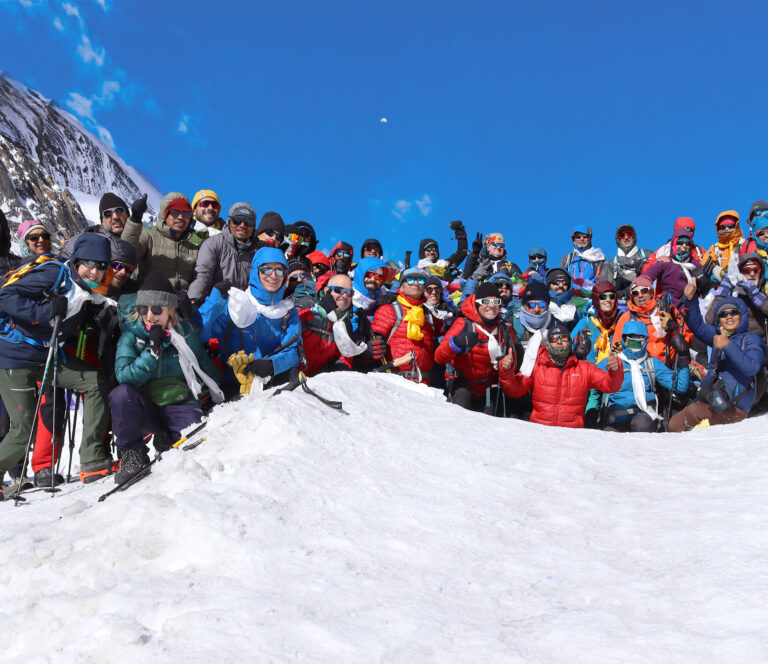
Annapurna Circuit Trek - 16 Days
 5,416m/17,769ft
 Challenging
 All
Inclusive Plan
All
Inclusive Plan
Shorter route to Marpha:
Kathmandu – Pokhara – Jomsom – Marpha
If you don’t wish to do the full Annapurna Circuit, there is also an alternative route through Pokhara. Take a flight or road trip from Kathmandu to Pokhara and then to Jomsom. There is a road from Jomsom to Marpha, or you can hike from Jomsom to Marpha. This is an alternative to taking the full circuit and enjoying the surrounding landscape of Mustang.
The full circuit is great for trekkers looking to experience the Annapurna experience, and the shorter circuit is suitable for those who are more interested in the town of Marpha, the Thakali culture, apple orchards, and the scenery of the Kali Gandaki Valley.
Best Time to Visit Marpha
Spring season (March to May)
Spring is considered to be one of the best times to visit. It is generally mild weather and there is often a clear sky; the hills turn green. It’s also a wonderful time to hike and take in the views of the village.
Summer and Monsoon season (June-August)
In many places of Nepal, the summer and monsoon season is hot and rainy. Being in the rain shadow area of the Annapurna and Dhaulagiri ranges, Marpha receives less rain than many areas further south. But monsoon weather can still impact road and flight conditions, so travelers should expect some flexibility in their travel plans.
Autumn season (September to November)
Annapurna and Marpha are excellent during the autumn season. Once the monsoon is over, it is typically clearer, and mountain views are stunning, and the weather is nice for walking. October and November are exciting trekking months.
Winter season (December to February)
The Annapurna Circuit may be impacted by snow and freezing temperatures in high areas, especially near Thorong La. But if you are interested in the peaceful winter atmosphere and in the view of the Mustang below Marpha, it is still worth a visit.
Marpha is best visited in the spring and autumn when the weather is nice with pleasant mountain views and comfortable trekking conditions.
Related Packages
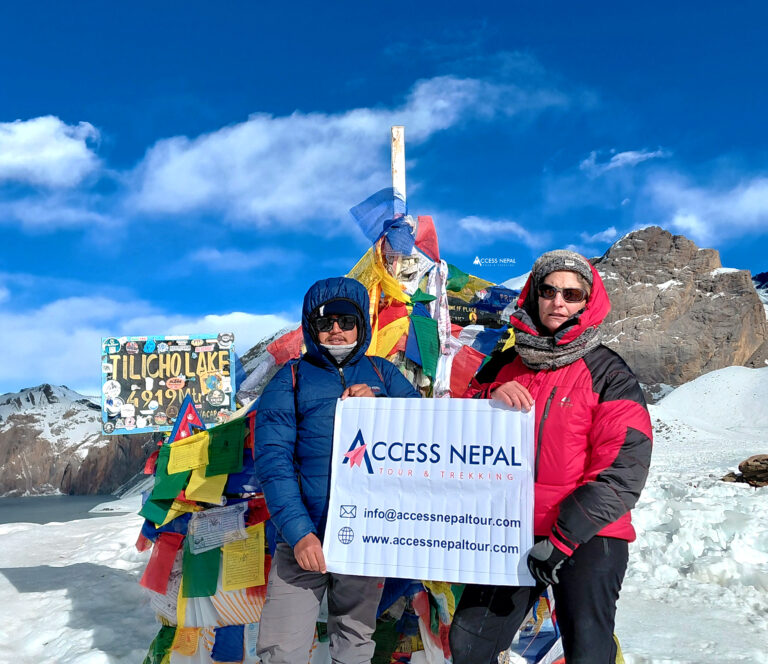
Annapurna Circuit Trek with Tilicho Lake - 18 Days
- 5,416m/17,769ft
-
Challenging
- All
Inclusive Plan
Safety Concerns and Practical Hints
What are some good places to stay in Marpha?
There are good options for local guesthouses, teahouses, and small hotels in Marpha, allowing trekkers to stay for a night or two in the village.
Most facilities offer basic, hygienic rooms with minimal amenities, and some have private bathrooms and nicer rooms. Many lodging options also offer the traditional Thakali cuisine and other local dishes.
When travelling in the spring or autumn months, which are popular periods for trekking, it is advisable to make reservations.
If you want to relax a bit after the hike, staying overnight here will allow you to stroll through the village, find the narrow streets, walk to the local shops, enjoy the apple orchards, and enjoy the quietness following the day’s trekkers.
What to Pack for Marpha
When packing for Marpha, the main thing to consider is whether you will be coming by road or as part of the Annapurna Circuit Trek. The full hike includes low valleys and high mountain passes, so be prepared for all kinds of weather and temperature changes.
Clothing
Pack light; easily permeable clothes for the day and warm clothes for the morning and evening. It is helpful to have a fleece or warm jacket and base layer, an outer layer that is waterproof or windproof, warm socks, gloves, and a hat. The nights can be very cold, especially in the winter.
Footwear
If you are going to do any walking, especially to Marpha and up the Annapurna route, wear comfortable trekking shoes with good grip. If you come across any wet or muddy areas, waterproof footwear may be useful.
Sun Protection
Even if the weather is cool, the sun can be hot on the mountain. Wear sunglasses, sun cream, a sun hat, and sun protection lip balm. They are particularly helpful for any treks in exposed areas of the Kali Gandaki Valley.
Some handy products to have on hand include:
- Reusable water bottle
- Water purification tablets or appropriate water filters.
- A small First Aid box
- Personal medicines
- Blister treatment
- Headlamp
- Power bank
- Toiletries
- Lightweight towel
- A backpack or duffel bag.
- Trekking poles
- Identify the location on a map or using navigation if maps are not available.
Travel Insurance
If you are on a longer trek around the Annapurna Circuit, be sure that your travel insurance is valid for trekking at the height you will be ascending to and covers emergency evacuation. Have electronic and written copies of your insurance and other important documents.
If you’re just heading to visit Marpha, you don’t have to overpack. If you are going on the Annapurna Circuit, however, pack for the trek, because you will be in the cold and high elevation around Thorong La Pass.
Frequently Asked Questions About Marpha
Is Marpha worth visiting?
If you are interested in local culture, traditional villages, apple orchards, and mountain scenery, then Marpha is worth a visit. The village is particularly famous for its Thakali culture, beautiful orchards, traditional architecture, and apple products. It is a different kind of experience from the Annapurna Circuit, which has high mountain scenery.
How many days will you spend in Marpha?
There is no need to spend several days to visit here. Most tourists spend one night in the village, which is sufficient time to explore the village and enjoy the local atmosphere, as well as visit the local attractions. If a more slow-paced experience is desired, a longer trip may be taken and more time spent in the surrounding area. The duration of your stay may also be dependent on your entire Annapurna Circuit tour.
Is it safe for solo travelers?
It is usually a very friendly and peaceful village to stay in for a solo traveler. But for those who’re on a trek in the Annapurna region, correct preparation is vital. Travelling with a licensed guide, checking the weather, bringing necessary supplies, and leaving someone informed about your plans can make the journey safer and more comfortable.
Is Marpha a part of the Annapurna Circuit Trek?
Marpha is situated on the Annapurna Circuit itinerary in the Kali Gandaki Valley, and several trips stop there. But many different itineraries give varying amounts of time. Some tourists go through the village; others spend the night there. If you really want to stay in, then you must make it a part of your itinerary.
What is the price for Annapurna Circuit Trek?
The cost of the 16-day Annapurna Circuit Trek is USD 1,490 per person. The final price can depend on the trek duration, accommodation, transportation, guide and porter services, permits, and other services included in the package. Prices and offers may change, so it is best to confirm the latest price and package inclusions before booking.
What’s the highest point of the Annapurna Circuit?
The highest point in the Annapurna Circuit is the Thorong La Pass, which is 5416 meters (17769 feet) above sea level. The pass is one of the most challenging aspects of the trek and is one of the highlights. Once Thorong La is crossed, trekkers move down towards Muktinath and go through Kali Gandaki Valley towards Jomsom, Tukuche, Marpha etc.
Conclusion
For those seeking to experience the Himalayan beauty while immersing themselves in the local culture, Marpha on the Annapurna Circuit is an important place to visit. The official package emphasizes its Thakali grape and apple orchards, its Marpha apple brandy, and the route’s tour to Marpha, Muktinath, Kagbeni, Tatopani, Ghorepani, Poon Hill, traditional villages, ancient gompas, and the challenging Thorong La crossing.
Please check with Access Nepal Tours and Treks for the current prices, dates for departure, transportation, and an extended stay in Marpha. Carefully plan, show respect for the elevation, and let the orchards, villages, mountains, and locals of the Annapurna region become the most memorable part of your trip.

Can We Visit Nepal and Bhutan Together? Your Ultimate Guide
Prev
Easiest Trek in Nepal | Best Short and Beginner Friendly Treks
NextAwards and Achievements
Access Nepal Tour and Treks has been recognized with TripAdvisor’s prestigious Travelers’ Choice Award for multiple consecutive years, reflecting our unwavering commitment to quality and clients’ satisfaction.












Leave Your Comment