


Himlung Expedition Avalanche: 10 Missing as Autumn Season Turns Deadly
- Places
- Edited By: Accessnepaltour .Updated on: 28 Sep 2026
Ten people, climbers and the Nepali staff supporting them, were unaccounted for on Sunday, 27 September 2026, after an avalanche hit the Himlung Himal (7,126 m) Expedition in the Nar Phu area of Manang district, The Kathmandu Post reported.
Himlung is often considered the “first 7,000 m”: a high but non-technical peak where climbers test themselves before an 8,000-metre attempt. That reputation brings large autumn teams to its slopes every year. This year, the season has opened with a search operation instead of summit photos.
What we know so far about the Himlung Expedition Avalanche
Two expedition companies had people on the mountain when the slide came down. Rishi Bhandari, general secretary of the Expedition Operators Association Nepal, confirmed the incident on Sunday and gave this breakdown:
| Expedition Operators | People unaccounted for |
| Himalayan Holidays Nepal | 8 |
| Imagine Nepal Pvt Ltd | 2 |
| Total | 10 |
Ram Krishna Lamichhane, director general of the Department of Tourism, said the department is monitoring the situation closely and gathering details on the incident and on efforts to find and rescue the missing.
The avalanche struck during a spell of persistent rain and snowfall across Nepal’s mountain districts, while relentless rain has also set off floods and landslides elsewhere in Nepal this week.
Still unknown: the exact camp or altitude where the avalanche hit, the nationalities of the missing climbers, how many were guides versus clients, and whether helicopters can reach the area given the weather.
About Himlung Himal
Himlung rises to 7,126 m on the Nepal–Tibet border, above the remote Nar Phu valley in Manang, north of the Annapurna Circuit. It is a restricted area: trekkers and climbers need special permits and must travel with a registered agency.

Image taken on the way to Peri Himal range in Manang district, near the Tibet border (northeast of Annapurna)
Why climbers choose it:
- A step toward 8,000 m. The standard route is mostly snow and glacier travel on fixed lines, with no sustained technical rock or ice. Many use it as preparation for Manaslu, Cho Oyu, or Everest.
- Autumn is its main season. Most commercial teams go in September and October, after the monsoon, so late September usually means several teams sharing the route.
- A remote approach. The trek runs through Koto, Meta and Phu villages to a base camp around 4,900 m, then up to high camps on glaciated slopes. That remoteness also makes rescue slow when weather grounds helicopters.
The route’s non-technical reputation can hide a real hazard: the broad snow slopes and glacier sections between camps are exactly where fresh, heavy snowfall can load and release.
A familiar autumn pattern
The Himlung avalanche follows the same script as one of the deadliest incidents of the 2025 autumn season: prolonged storm snow, then climbers on loaded slopes.
On 3 November 2025, an avalanche hit a 15-person team near Yalung Ri base camp in Dolakha. Al Jazeera, citing The Kathmandu Post, reported seven dead: five foreigners and two Nepalis, with four Nepali climbers missing. The valley had seen days of continuous snow beforehand, and survivors described waiting hours for help while weather kept helicopters away. Outside, the slide was linked to unstable snow left by the late-October cyclone, followed by a sudden warm, clear day.

Himlung Avalanche 2025: five foreigners and two Nepalis, with four Nepali climbers missing.
The common threads matter for Himlung now:
- Heavy recent precipitation is one of the clearest avalanche warning signs; new snow needs time to bond before slopes are safe.
- Weather that grounds helicopters also slows every step of a rescue, from confirming what happened to reaching the site.
- Autumn’s short window pushes teams to move as soon as storms ease, often before the snowpack has settled.
What this means for the Himlung season
The immediate priority is finding the ten missing. Beyond that, the incident puts several questions to climbers and operators planning Himlung this autumn:
- Waiting out the snow. After heavy storms, the safest summit plan is often a delayed one.
- Clients booking a “first 7,000 m” should expect and accept buffer days.
- Camp placement. Teams should check whether camps and fixed lines sit under slopes that can release after loading.
- Rescue planning. In a remote restricted area, operators need a plan for when helicopters cannot fly, including ground teams and satellite communication.
- Clear information for families. With climbers and staff from two companies involved, prompt, accurate updates matter as much as the search itself.
We will update this post as the Department of Tourism and the expedition companies release more information. Our thoughts are with the missing climbers, the Nepali guides and staff, and their families.
10 missing after avalanche hits Himlung Himal: The Kathmandu Post, 27 Sep 2026
Rescuers race to find missing climbers after deadly avalanche: Outside, Nov 2025

Green Boots of Mount Everest: The Story of Dorje Morup
Prev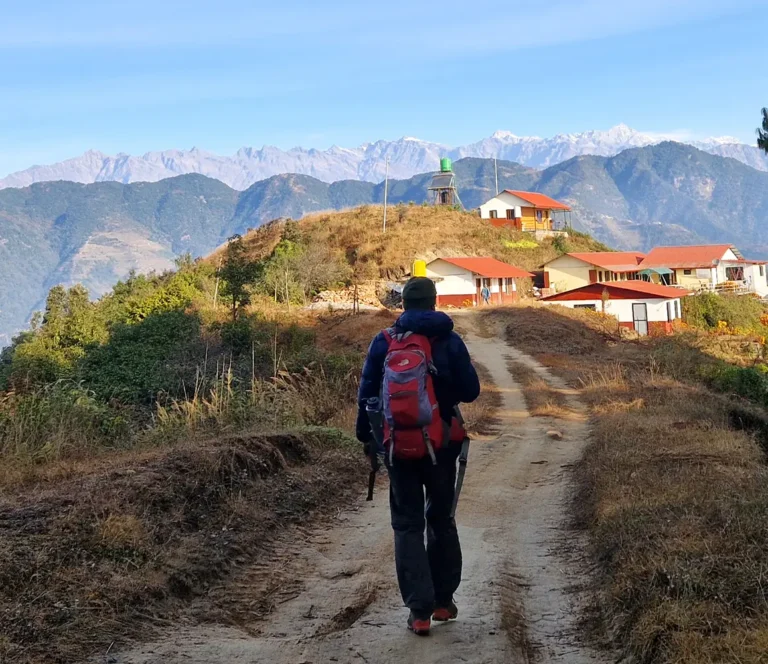
Solo Trekking in Nepal: Where is allowed & not allowed Guide
NextAwards and Achievements
Access Nepal Tour and Treks has been recognized with TripAdvisor’s prestigious Travelers’ Choice Award for multiple consecutive years, reflecting our unwavering commitment to quality and clients’ satisfaction.













Leave Your Comment