

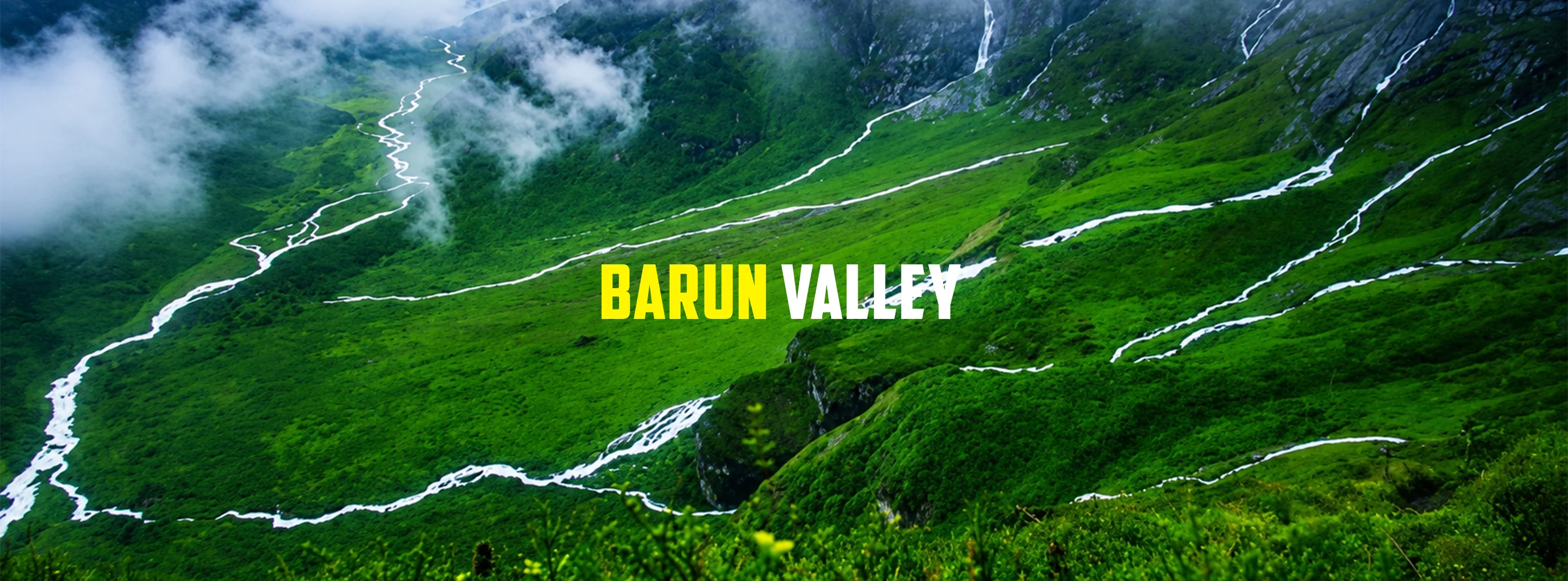
Barun Valley Trekking Routes, Location Complete Guide
- Places
- Edited By: .Updated on: 23 Aug 2026
The Barun Valley Trek is one of the most remote and exciting treks in the Eastern Himalayas, which is sometimes completed with the Makalu Base Camp Trek. This pristine wilderness area is part of the Makalu Barun National Park in the Sankhuwasabha district of Nepal. The hike takes you to the height of 4870 m / 15977 ft at Makalu Base Camp, where you can witness pristine nature, deep river gorges, and glaciers at high altitudes. This area is visited by trekkers for solitude, beautiful views of Mount Everest, Makalu, and Lhotse, and the crossing of difficult passes such as Shipton La and Keke La.
Key Takeaways of Barun Valley
| Feature | Details |
| Location | Eastern Nepal, Sankhuwasabha District |
| Region | Makalu Barun National Park |
| District | Sankhuwasabha |
| Elevation | 4,870m (15,977 ft) at Makalu Base Camp |
| Trek Route | Kathmandu – Tumlingtar – Num – Seduwa – Tashi Gaun – Khongma Danda – Dobato – Yangri Kharka – Makalu Base Camp |
| Best Season | Spring (March to May) & Autumn (September to November) |
| Difficulty | Challenging |
| Accommodation | Teahouses and basic lodges |
| Nearby Attractions | Mount Makalu (8,485m), Shipton La Pass, Keke La Pass, Barun Glacier |
Where Is Barun Valley Located?
Barun Valley lies in the eastmost part of Nepal, the Sankhuwasabha district. Barun Valley is located at the foot of Mount Makalu, which is the fifth highest peak in the world, standing at 8,485 m (27,838 ft). The area is located in the Makalu Barun National Park, which is a protected area with an untouched environment, diverse wildlife, and spectacular natural beauty. The valley runs from dense tropical forests to the higher-altitude, rocky area through a series of different environments.
Overview of the Barun Valley Trek
The Barun Valley Trek is an ideal trek for people looking for an adventure away from the beaten track in Nepal. This trek is not as well-trodden as the Everest Base Camp trek or the Annapurna Base Camp trek, but it is a quiet one that leads into the raw and unfiltered wilderness. Trekkers explore dense rhododendron, pine, and bamboo forests; alpine meadows; and rugged rocky areas.
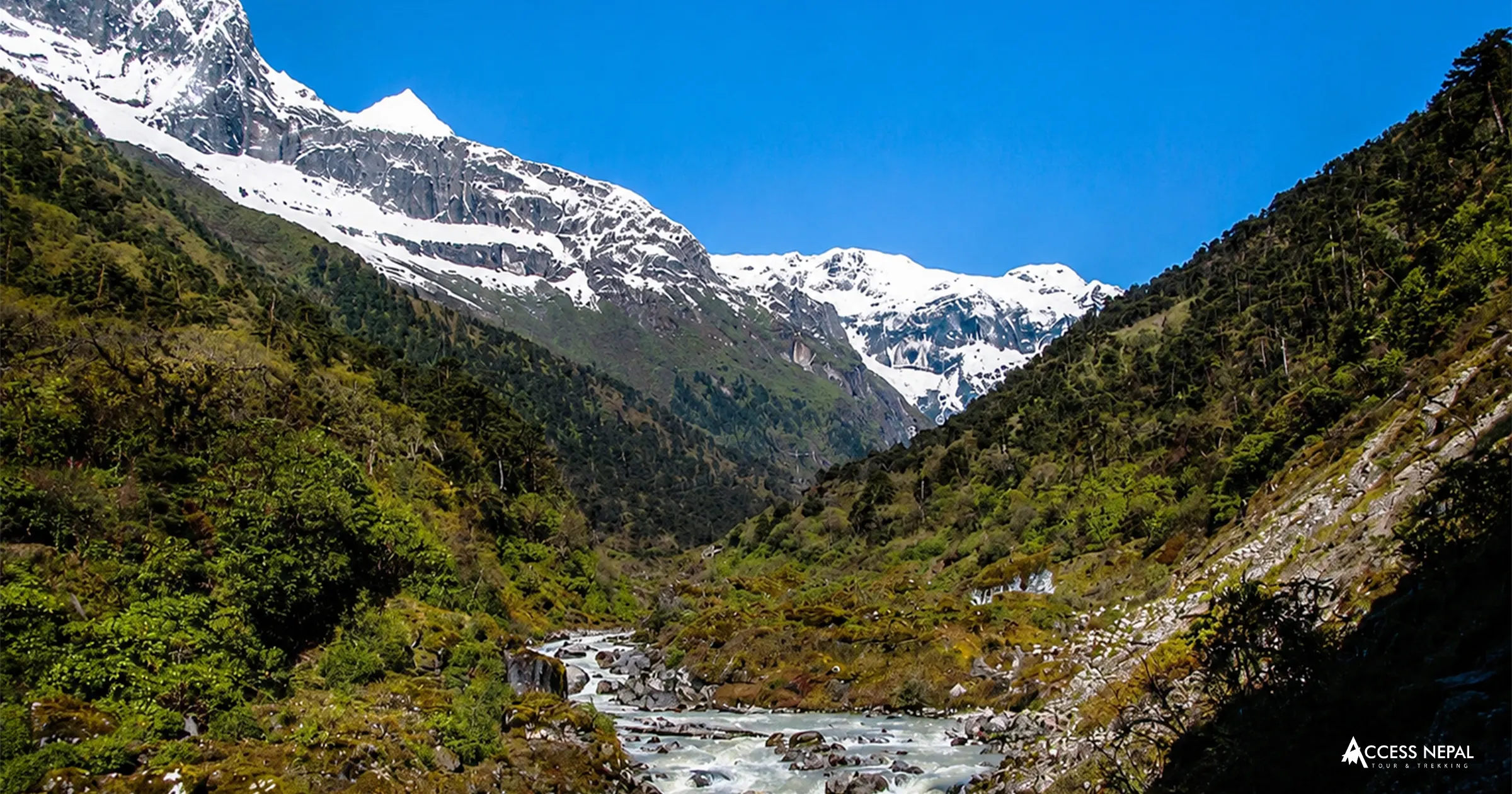
Barun Valley, Nepal, surrounded by mountains
The trip starts in Kathmandu and continues by plane to the tiny town of Tumlingtar in the deepest valley in the world. The route then heads towards the national park, where visitors can enjoy the beauty of nature. The journey is not only for the views but also to get up close and personal with the culture and lifestyle of the Himalayan villagers, going through the villages of Num, Seduwa, Tashigaon, Khongma Danda, etc., which are made up of the traditional Rai and Sherpa people.
Historical and Cultural Significance of Barun Valley
It is also a place where local folklore and the cultural heritage of the Rai and Sherpa peoples abound in the Barun region. The people of these remote communities have lived with the land for generations in harmony. The mud-brick villages and monasteries are also a fascinating look at life that is still largely unchanged by development. Trekkers often experience the unique culture and hospitality of the people, who are greeted with a smile and a cup of tea.
The cultural experience is authentic. You will witness locals toiling in the fields and carrying heavy loads, with daily life going on in a harsh environment. Prayer flags, mani stones, and small chortens along the way underscore the strong spiritual bond the local communities have with the mountains. This area has largely difficult terrain has largely isolated this area, allowing it to preserve its unique heritage by difficult terrain and has maintained its special heritage.
Why Is Barun Valley Important on the Makalu Base Camp Trek?
Barun Valley is the heart of the Makalu Base Camp Trek. It is the entrance to the Makalu sanctuary, a pure and unspoiled environment where nature not brought under man’s domination can flourish. The valley is an important acclimatization point and is some of the most spectacular on the entire trip. Trekking through the valley, moving closer to the towering giants of the Himalayas, is an essential and unforgettable part of the trek.
A major feature is the Barun river itself, which is supplied by the huge Barun glacier. The walk up the river offers a constantly changing background to the walk. This remote location has maintained the valley’s natural beauty and tranquility, free from the many tourists of other popular trekking areas in Nepal.
Major Attractions in Barun Valley
The Barun Valley contains an abundance of nature, rare and endangered animals, such as the red panda, musk deer, Himalayan black bear, and even the elusive snow leopard, can be spotted by trekkers. There are stunning waterfalls, hanging glaciers, and towering cliffs here. The panoramic view from Makalu Base Camp shows the world’s highest peaks of Mount Everest (8,849 m), Kanchenjunga (8,586 m), Lhotse (8,516 m), Makalu (8,485 m), and Baruntse (7,162 m) as you go higher.
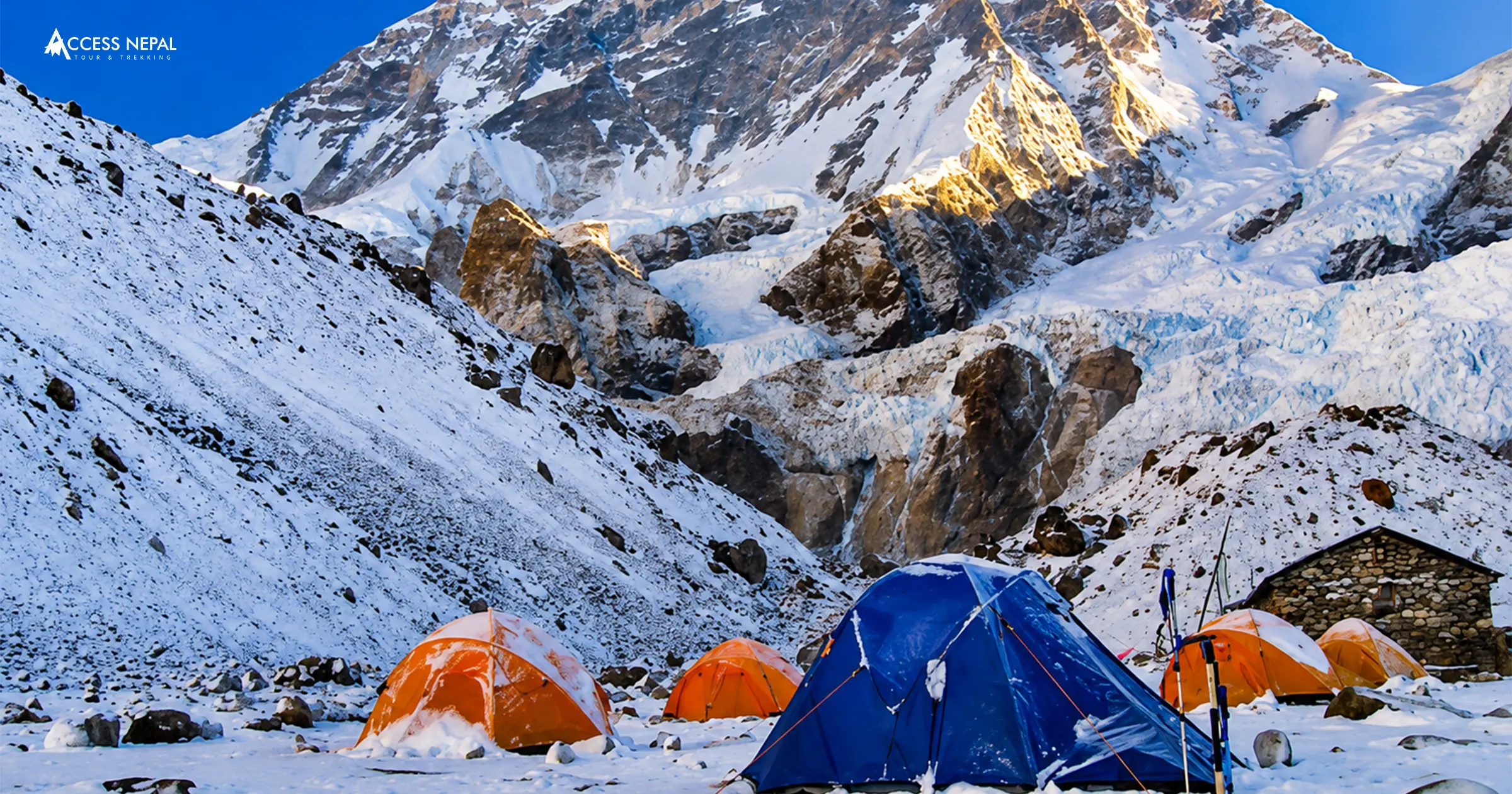
Nearby Attraction in Barun Valley
The unspoiled surroundings are home to a rich diversity of plants. Below are red pine forests carpeted with colorful rhododendron, which quickly flower in the spring. Further above, it changes to open alpine flora, highlighting the stark beauty of the high Himalayas. Every turn in the trail offers the chance of some discovery, and the presence of rare wildlife makes every turn an element of excitement.
Trekking Experience in Barun Valley
The Barun Valley trek is a difficult but extremely rewarding trek. The route includes some high-altitude passes, including Keke La (4127 m) and Shipton La (4216 m), as well as steep hills and deep river gorges. The Makalu Base Camp Trek is an arduous trek for which one needs to be physically fit. But the isolation and the absolute beauty of it all are worth every step.
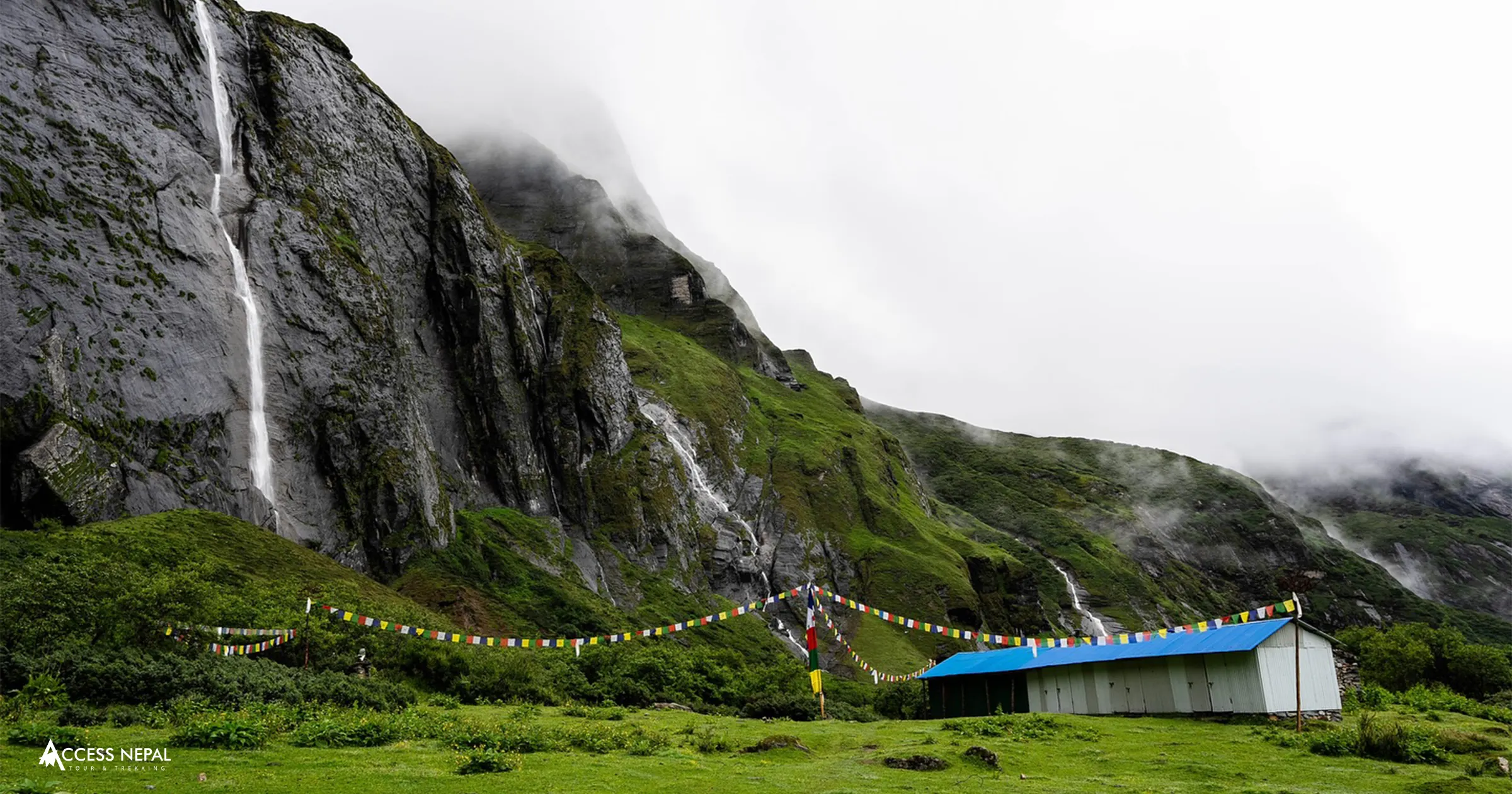
Trekking Experience in Barun Valley
The landscape is harsh and has to be respected. Trails are steep and rocky, sometimes muddy, particularly during the shoulder seasons. The high passes are not something to be taken lightly; a strong constitution and a head for heights are needed.
The absence of crowds gives a solitary feeling and solitude with nature, which can be difficult to find somewhere else, despite the physical exertion. It’s a journey for those who seek to push their boundaries and be rewarded with views that are unparalleled.
Accommodation and Tea Houses
The accommodation is mainly simple teahouses and lodges for the 18-day trek. Guests are usually accommodated in twin beds. The accommodations are basic but welcomed after long days of trekking. Accommodation in Kathmandu is in a standard hotel with a private bathroom. Access Nepal Tours and Treks can also arrange upgraded accommodation for a 5-star hotel in Kathmandu and more comfortable accommodation during the trek for an extra charge.
Makalu teahouses are much more basic than those on the popular trails to Everest or Annapurna. Communal dining facilities and basic rooms with thin mattresses can be expected. Sometimes there are hot showers and charging facilities for an extra fee, but electricity can be intermittent. It’s rustic and adds to the adventure.
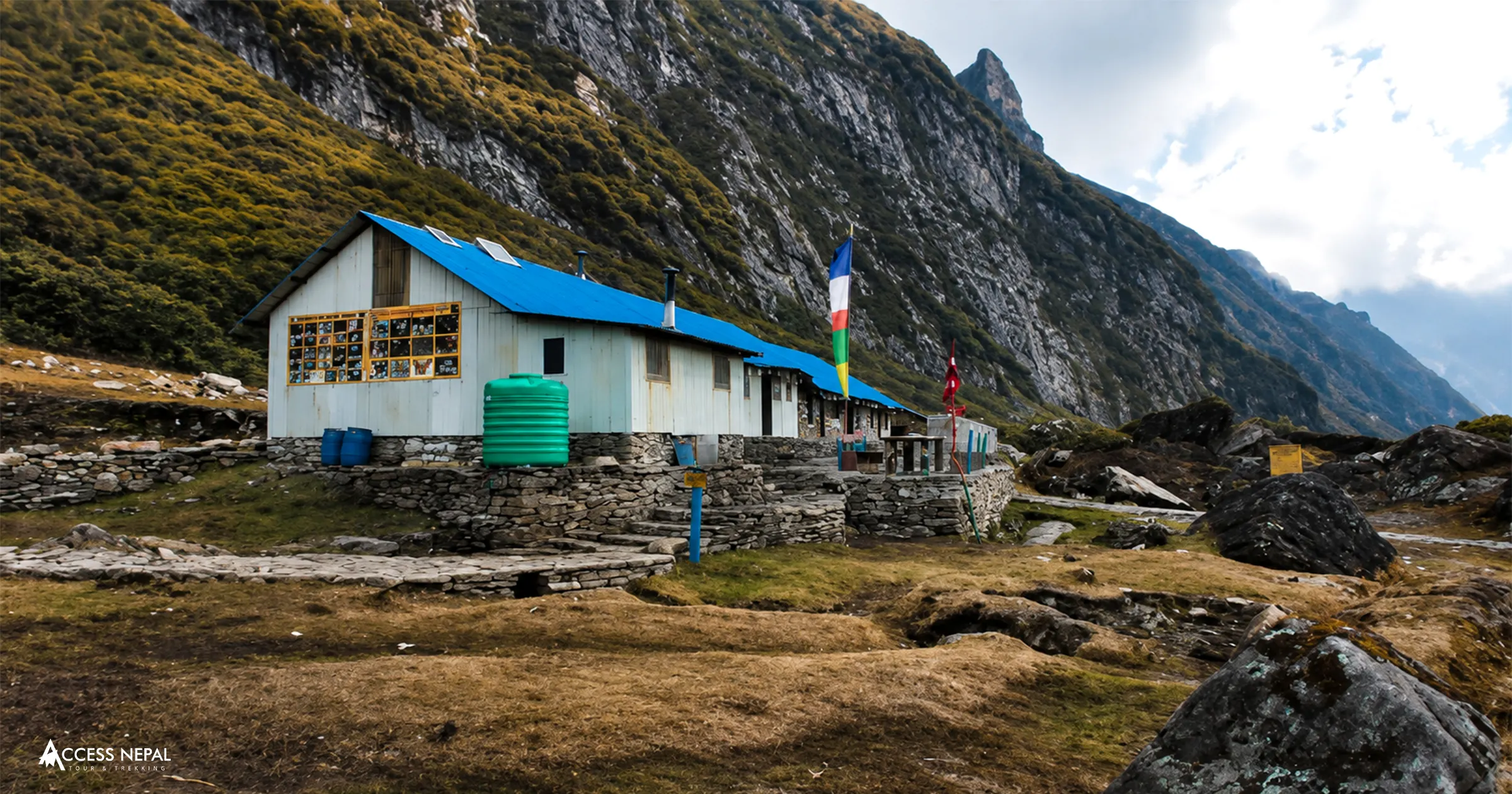
Tea house Accommodation in Barun Valley
Eating and drinking facilities
Energy is key on such a challenging walk, and nutritious meals are crucial. Teahouses serve healthy food from locally available ingredients. One of the most popular dishes is Dal Bhat, a classic Nepalese dish made with lentils, rice, vegetables, pickles, and meat.
Other choices are porridge, pasta, momos (dumplings), and fried rice. All-day meals (breakfast, lunch, and dinner), seasonal fruit, and tea/coffee are included in the package offered by the agency.
This trek is a true Dal Bhat power. It is a nutritious and high-energy food that will give your body the carbohydrates it needs for the following day’s activities.
The menu may be somewhat basic, but the freshness of the ingredients and the food itself are warm on a cold day on the trail and make every meal memorable. Teahouse kitchens strive to meet trekkers’ needs and may sometimes cook to order.
Internet and Connectivity
The internet is available less often in remote areas such as Barun Valley. It is possible to get internet in the teahouses, although this is usually slow and unreliable with an extra cost. This is the perfect moment to unplug from the digital world and fully experience the natural beauty that the Himalayas have to offer.
If it’s unavoidable, you may find dealing with connectivity for work or personal purposes to be a huge struggle. There are regular blackouts as you climb. Satellite internet may be available in some of the bigger teahouses, but it is slow and costly. The part where you turn off the electricity sometimes can be the best part of the hike, as you can enjoy it without distractions.
Electricity and Charging
Electricity is available in most teahouses, and a small fee will be charged for charging electronic devices. Power supply can be unreliable, particularly at higher altitudes. It’s advisable to bring a power bank to ensure your camera and mobile phone are fully charged to take breathtaking photos.
Electricity may be limited at the higher teahouses and only available for certain times of the evening. Solar or micro-hydro systems are used, so there are limited resources. A multi-plug adapter and lots of batteries are a good idea, as there aren’t many outlets, and they tend to be taken up by other trekkers.
Drinking Water Availability
Drinking water is essential on a trek to high altitudes. The trekking package given includes sufficient chlorine tablets for water treatment. Bottled water is available in the lower villages; however, it is more environmentally friendly and convenient to use purified local water.
Drinking plenty of fluids is important in preventing altitude sickness. You will need to take in a lot more than your usual amount of water due to the dry air and physical activity. The rivers and streams in Barun Valley are the constant source of fresh water, which, after purification, can be consumed. Don’t drink unchlorinated tap water, as it can cause stomach problems that could ruin the trek.
Health and Safety
Safety is of utmost importance in all of the Himalayan trips. It is essential to acclimatize yourself when making the trek to avoid altitude sickness. Visitors are urged to drink plenty of water, trek at a moderate speed, and take their guide’s advice. The kit contains a basic first aid kit, including an oximeter, and the highly experienced guides are trained in first aid and are able to deal with any medical emergency.
Due to the remoteness of the Barun Valley, there is no medical facility. In case of a serious emergency, helicopter evacuation might be necessary. That is why it is important to have good travel insurance with high-altitude rescue as a cover. The guides are trained to identify the symptoms of altitude sickness and to know when to turn around.
Altitude and Acclimatization
Your journey will start with an acclimatization day at Tashi Gaun (2100 m), where you can let your body acclimatize to the thin air. This walk slowly leads up to Makalu Base Camp at 4870m. It is important to know what your body can achieve and to let your guide know if you experience any symptoms of altitude sickness at any point.
Acclimatization isn’t simply a rest day, but a “climb high and sleep low.” The route is planned with this in mind and allows enough time for your body to make the additional red blood cells required for the high elevations. It is important to be patient, or consequences could be severe if pushed too fast.
Flora, Fauna, and Scenic Beauty
Makalu Barun National Park is an area of biodiversity hotspots. At lower levels, there are rich and colorful forests with rhododendrons and wildflowers, particularly in the spring. The scenery changes to alpine meadows and rocky terrain with snow as you ascend. The trek is also home to a variety of wildlife, making it a paradise for nature lovers.
The change between subtropical forest and alpine tundra is abrupt. At low elevations, oak, chestnut, and rhododendron trees will be visible, and at higher elevations, juniper and dwarf bamboo. The birds are amazing, and there are species galore soaring through the foliage. If you see a red panda or a Himalayan thar, it’s an exciting part of the day.
Sherpa Culture and Local Lifestyle
The hike is a true cultural experience. Through traditional villages you will be able to see the daily life of the local people. The Rai and Sherpa are tough and hospitable people. They have their own architectural style and religious beliefs and are very welcoming to visitors, which makes them a great source of culture.
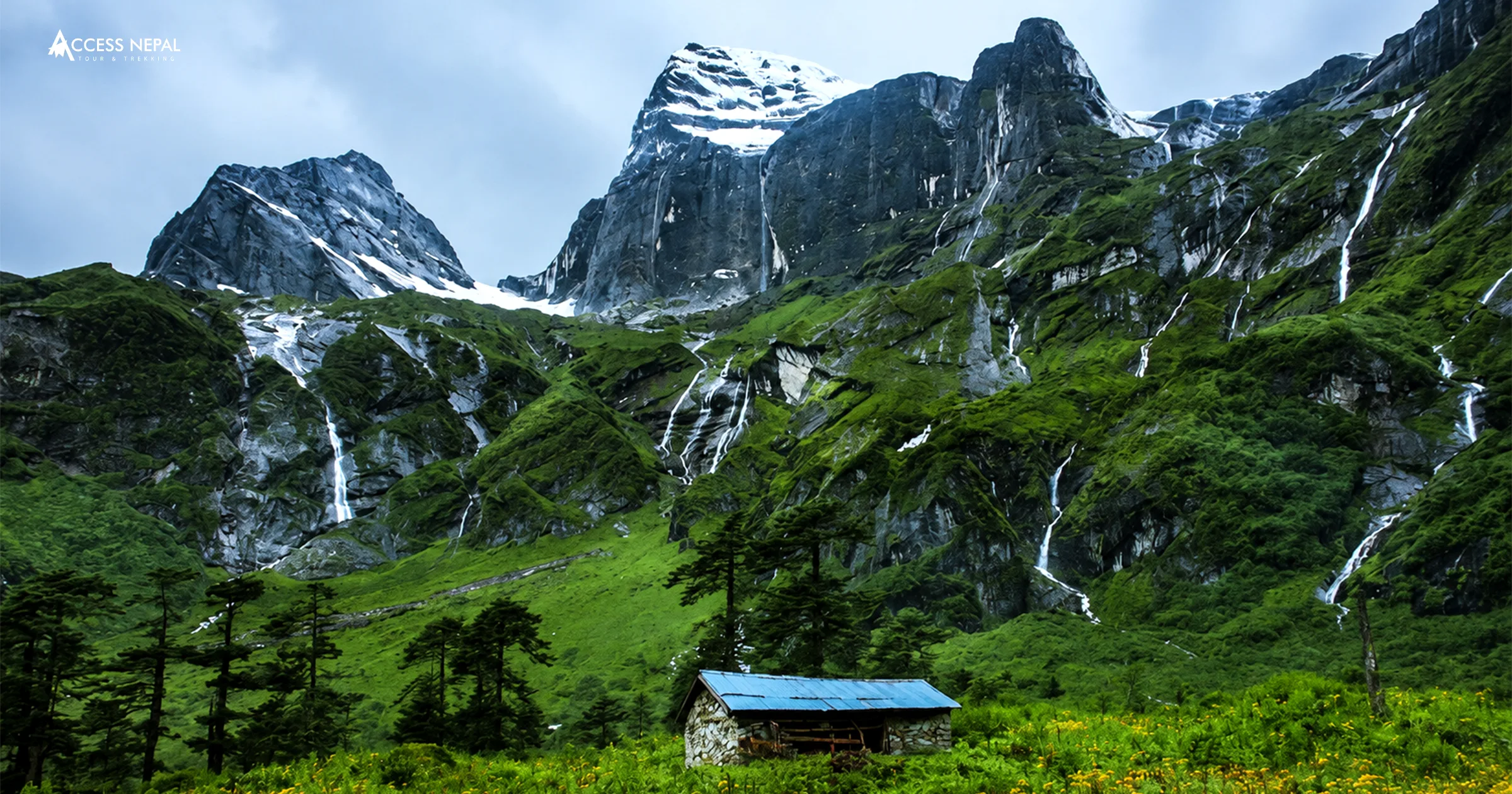
Flora and Fauna found in Barun Valley
Native to the eastern hills, the Rai people have a rich culture, and it shows in stone houses and the complexity of their weaving. The Sherpas, well known for their mountaineering abilities, are also common in the area. A trip to their villages will give an insight into the adaptation and survival of communities in one of the harshest environments on earth.
Best Time to Visit Barun Valley
Timing is an important aspect to picking the right time to trek for a safe and enjoyable experience.
Seasonal Comparison Table
| Season | Months | Weather | Trail Conditions | Crowd Level |
| Spring | March – May | Warm days, chilly nights (10°C to -5°C) | Dry, clear, blooming flora | Moderate |
| Autumn | September – November | Stable weather, clear skies | Dry, excellent visibility | High |
| Winter | December – February | Extreme cold (-20°C to -30°C) | Snowbound, dangerous | Very Low |
| Summer | June – August | Heavy rainfall, leeches | Slippery, muddy, landslide risks | Low |
Spring (March to May) and Autumn (September to November) are the best seasons to go on the Barun Valley Trek. Stable weather, clear skies, and the best views of the mountains can be expected during these times.
Weather and Temperature Monthly Temperature Table
| Month | Daytime Temperature | Nighttime Temperature |
| March | 10°C (50°F) | -5°C (23°F) |
| April | 10°C (50°F) | -5°C (23°F) |
| May | 10°C (50°F) | 0°C (32°F) |
| September | 5°C (41°F) | -5°C (23°F) |
| October | 10°C (50°F) | 0°C (32°F) |
| November | 10°C (50°F) | 0°C (32°F) |
Note: High altitudes are much colder.
Trekking Routes Passing Through Barun Valley
The main route is the 18-day Makalu Base Camp Trek. It will cross two difficult passes, Shipton La (4,216 m) and Keke La (4,170 m). Through the Barun River Valley, one of the most dramatic landscapes, the trail will lead to the base camp of the fifth highest mountain in the world.
It is a circuit through the Barun Valley, ascending and descending again by a slightly different route, to experience various views of the area. The high pass crossings are the culmination of the walk, with wide views before reaching the base camp.
Nearby Attractions
Except for a fantastic view from Makalu Base Camp, there are the pristine Barun Glacier and a beautiful Barun Pokhari nearby. It’s a natural masterpiece waiting to be explored throughout the region.
The valley is fed by the Barun Glacier, which is a huge glacier. Although it is an invisible element to most trekkers, the cold winds and the ice-cold river water show its presence. The peaks around, such as Chamlang and Kangchungtse, give a dramatic setting to the whole expedition.
Photography and Viewpoints
In Barun Valley, there are no limits when it comes to photography. The forests are lush green, and the mountains are covered with snow, creating a stunning contrast. Highlights are the high passes and the Makalu Base Camp, with stunning panoramic views of all the surrounding giants.
The best lighting time is early morning or late afternoon when the light creates long shadows and golden tones across the mountains. In the spring, the rhododendron forests offer splashes of red and pink amid white peaks. A wide-angle lens is great for showing the vastness of the scene, and a telephoto lens is ideal for long-range shots of peaks and animals.
Practical Trekking Tips
- Prepare in advance: Develop your cardio fitness and leg power.
- pack light: Take a duffel bag to store porters and a daypack for essentials.
- layer clothes: Wearing moisture-wicking underwear, insulating mid-layers, and a waterproof outer shell.
- Hydration: 3-4 liters of water per day.
- Listen to the guide: He/she will know the weather conditions and terrain better than you.
- Break in boots: Take hikes in your boots before the trip so as to avoid blisters.
- Carry cash: Teahouses are not all card-friendly, and there are no ATMs on the trail.
Common Mistakes Trekkers Make While Trekking Barun Valley
Lots of people hurry up the mountain and suffer from altitude sickness. Another popular error is not considering how challenging the area is and not bringing proper footwear and clothing. Another problem is that they don’t use purification tablets but instead resort to bottled water.
Another common mistake is to overpack. If you don’t have to carry anything in your daypack, don’t. Leave the planning and packing to your guide and porter and only bring what you need for the day. Also, failing to pay attention to the signs of altitude sickness can create serious situations. Don’t be afraid to communicate with your guide about your feelings at all times.
Expert advice from Barun Trek Leaders
Pacing is a key element of experienced guides. A senior guide says, “Take it one step at a time, and you will conquer the trail, for it is steep and demanding. They also emphasize the need for a positive attitude and to appreciate the cultural engagement with the locals.
A trek leader says that the Barun Valley is “not for the faint-hearted.” “It takes mental strength. It is very isolated and physically demanding, and if you can do it, it is a life-changing experience because your problems look so small compared to the mountains.
Recommended Trekking Agency for Visiting Barun Valley
For a hike such as the Barun Valley Trek, it is important to hire a good and experienced local trekking company. A professional agency not only keeps you safe, but it also helps with all the logistics as well as local knowledge.
Why Choosing a Local Trekking Company Matters
There is a strong relationship between local agencies and the community along the trail. They have knowledge of the challenges that the Eastern Himalayas present and can deal with permit requirements and emergencies efficiently. Experienced guides know their stuff and are trained in first aid and high-altitude rescue. They also work out acclimatization schedules to minimize the risk of altitude sickness.
Also by using a local company, your cash will remain in the community, helping the local economy. Local guides have the insider’s knowledge of the trails, weather patterns, and cultural nuances that foreign operators can’t match. They can predict issues ahead of time and adjust the route as necessary.
Why Trekkers Choose Access Nepal Tours And Treks
Access Nepal Tours and Treks is a highly reputable company that has won TripAdvisor’s prestigious Travelers’ Choice Award year after year (2021-2026). They have a strong sense of responsibility to deliver quality service and satisfy their clients.
Access Nepal Tours and Treks provides some of the essential advantages:
- Expert Guidance: They have highly experienced, government-licensed, English-speaking guides trained in first aid.
- Customizable Itineraries: They provide flexible options to suit your time and budget, such as shorter treks or luxury upgrades.
- Transparent Pricing: The 18-day trek package is offered at an affordable price, and there are no hidden booking or credit card charges.
- Comprehensive Inclusions: The package includes airport transfers, domestic flights, teahouse accommodations, full-board meals, permits, and even a welcome dinner in Kathmandu with cultural performances.
- Safety First: They will have all the important kit that is requested, such as down jackets and sleeping bags, and have a well-stocked first-aid kit.
For a seamless, safe, and unforgettable experience in the Barun Valley, Access Nepal Tours And Treks is the ideal partner. Their commitment to safety and knowledge of the local area will allow your trek to be an adventure but also a well-managed and secure trek.
What Trekkers Say About Visiting Barun Valley
Positive Experiences
- Scenery: “Landscapes in the Barun Valley are untouched and are just amazing. Just the sizes of Makalu and Everest are amazing.”
- Culture: “The hospitality of the Rai and Sherpa people was heartwarming, and it truly was a cultural exchange.
- Hospitality: “The teahouses were simple but cozy, and the Dal Bhat was exactly what we needed after a long day of trekking.
- Trekking Experience: “It was extremely difficult crossing the Shipton-La Pass, and yet the scenery made it all worthwhile.”
- Guides: “Our guide from Access Nepal Tours and Treks is fantastic; he knew everything about the plants and animals, and without his help we would have had to give up.
Challenges Mentioned
- Altitude: “It’s a very steep climb, and the air is very thin. Proper acclimatization is essential.
- Weather: “The weather can change quickly, particularly in the vicinity of high passes; be ready for cold and wind.
- Facilities: “Basic facilities, internet is slow, and hot showers are not always available.
- Trail Difficulty: “This is not “meet me on the meeting trail’, it”‘s demanding physical training.
- Food Variety: “Food is good for two weeks, but after that it becomes the same. We need to add some high-calorie snacks.
Overall Impression
There is a unanimous opinion that Barun Valley Trek is a challenging but extremely rewarding trek. It provides a precious opportunity to explore the Himalayas in their most unspoiled and purest condition, without the usual tourist crowds. It’s an adventure that will push you to your limits and yet end with some of the most amazing landscapes on this planet.
FAQ Section
Where is the Barun Valley located?
Barun Valley is part of Sankhuwasabha District in Eastern Nepal. It is nestled in the Makalu-Barun National Park, which is a starting point for the Makalu Base Camp, the fifth highest peak in the world.
What is the altitude of the Barun Valley?
The Barun Valley has a variety of elevation levels, rising slowly towards Makalu Base Camp at an altitude of 4,870 m (15,977 ft). The increasing altitude makes proper acclimatization important during the trek.
Example: At lower elevations below 2000m, a trekker can commence his trek and then take a gradual ascent to almost 5000m at Makalu Base Camp.
Is the Barun Valley suitable for acclimatization?
Yes, there are planned acclimatization days in the trekking itinerary to help trekkers acclimatize to the high altitudes. A proper acclimatization minimizes the risk of altitude sickness and enhances the safety of trekking.
Are there tea houses in the Barun Valley?
Yes ,There are teahouses/lodges along a lot of the trekking route. Facilities are not as extensive as they are on Everest or Annapurna, but they offer meals, accommodation, and a place to rest.
Example: after a hike on a hot day, trekkers can enjoy a warm meal and overnight accommodation in the local teahouses.
How long do trekkers stay in the Barun Valley?
In most of the cases, trekkers visit Barun Valley during the Makalu Base Camp Trek, which lasts for about 18 days, including the arrival and departure from Kathmandu. Actual travel time will depend on the travel plan and acclimatization program.
Example: An 18-day trek is a standard trek that provides enough time for the travelers to explore the valley and arrive safely at the Makalu Base Camp.
What is the best season to visit the Barun Valley?
The preferred time of year is spring (March – May) or autumn (September – November). These months are fairly consistent with good weather, visibility, and optimal mountain views.
Example: In the spring trekkers can experience the rhododendron forests in bloom, and in the fall it is possible to see the crystal-clear view of Makalu and Everest.
Is a guide necessary for the Barun Valley Trek?
Yes, it is highly recommended to hire an experienced guide because of the remote location, hard trails, and lack of infrastructure. A guide will assist you with the navigation, safety, and local knowledge along the way.
How far is the Barun Valley from Everest Base Camp?
Barun Valley is to the east of the Everest region and is on another trekking route. While the two locations are distinct, on clear days Mount Everest can be spotted from Makalu Base Camp.
For example: on Makalu Base Camp, trekkers can catch a glimpse of Everest, Lhotse, and other Himalayan giants from afar.
What is the cost of the Barun Valley Trek?
Costs are usually from USD 2190 per person for an 18-day guided trek. The costs depend on the trekking company, group size, transportation, and services provided.
Example: It can consist of domestic flights, permits and accommodation, meals, a guide, and porter services.
How difficult is the Barun Valley Trek?
The high elevation, long days of walking, and remote location make the trek difficult. Those interested in trekking should be physically fit and, if possible, have some experience of trekking.
On some days hikers can be out on trails and rocky paths for 6-8 hours and have to pass high mountain passes.
What permits are needed for the Barun Valley Trek?
Trekkers must have a Makalu Barun National Park entry permit and a TIMS (Trekkers’ Information Management System) card. The permits are a way of contributing to conservation and trekking management in the area.
Examples: Trekkers may be asked to produce their documents at checkpoints along the way.
Can I do the Barun Valley Trek solo?
Solo trekking is NOT recommended, as the area is in a remote location, less developed, and emergency services are limited. Having a guide and porter will certainly make trekking much safer and comfortable.
Example: If someone is suffering from altitude sickness or from injury, an escort can help with the preparations for help and evacuation, if needed.
Conclusion
For those who are not afraid of a challenge but are ready to venture out for a reward that is unparalleled, the Barun Valley Trek is an extraordinary journey. It’s a rare opportunity to immerse yourself in all things that make the Eastern Himalayas so great: towering peaks, ancient forests, and rich local culture.
This hike would be best for an experienced hiker and adventurer looking for solitude and raw nature. Crossing the high passes of Shipton La and Keke La and the panoramic views from Makalu Base Camp are key highlights. It should be considered that a high degree of fitness is needed as well as appropriate acclimatization.
Access Nepal Tours and Treks offers the expertise and support that will make this dream tour a reality when you need it most to make this tour perfectly organized and safe.
Awards and Achievements
Access Nepal Tour and Treks has been recognized with TripAdvisor’s prestigious Travelers’ Choice Award for multiple consecutive years, reflecting our unwavering commitment to quality and clients’ satisfaction.













Leave Your Comment