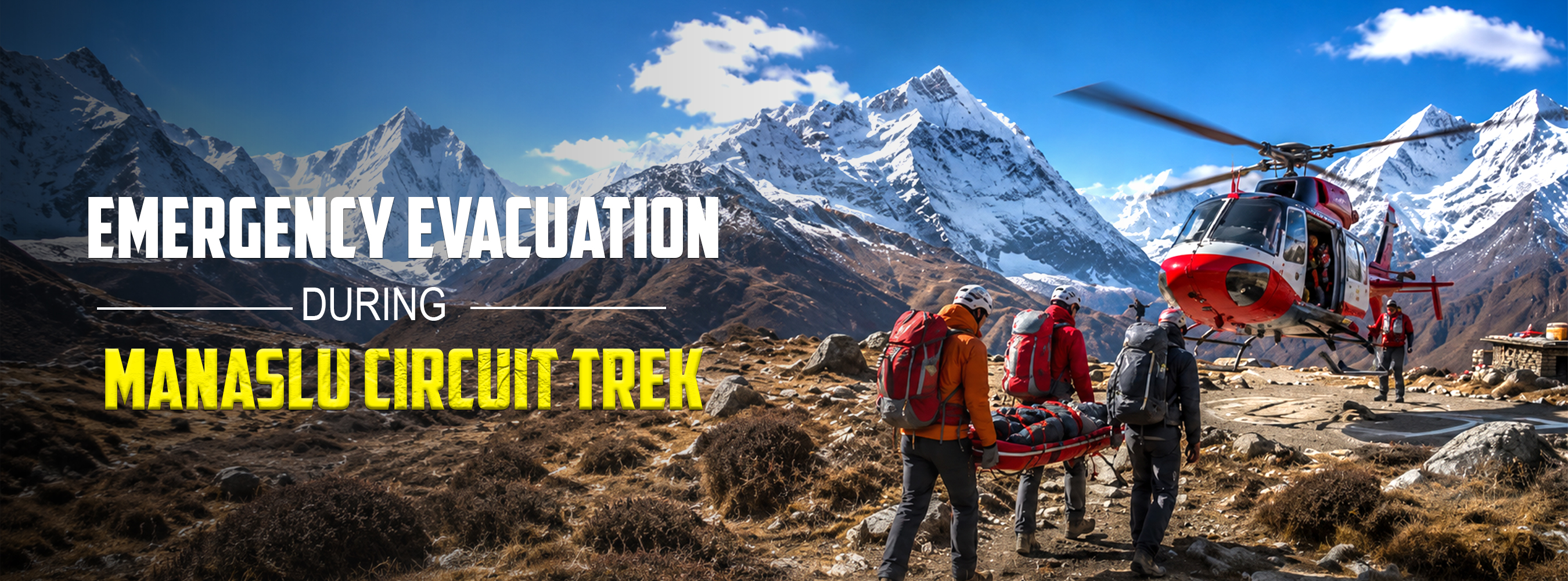
Manaslu Circuit Trek Emergency Evacuation Complete Guide (2026)
The Manaslu Circuit Trek is one of the most rewarding high-altitude adventures in Nepal, taking trekkers through remote villages, dense forests, and across the dramatic Larkya La Pass at 5,160 meters.
Because the Manaslu Circuit Trek reaches 5,106 m at Larkya La Pass and passes through highly remote terrain, Manaslu Circuit Trek emergency evacuation is needed for safety precaution. But remoteness and altitude also mean that emergencies altitude sickness, injuries, sudden weather changes, or illness are a real possibility. Knowing how emergency evacuation works on this trail, what it costs, and how to prepare can be the difference between a manageable situation and a life-threatening one.
This guide explains everything you need to know about emergency evacuation on the Manaslu Circuit Trek, written from years of on-ground experience by the guides and trek planners at Access Nepal Tour and Treks.
Does emergency evacuation need to occur during the Manaslu Circuit Trek?
Unlike the Everest or Annapurna regions, the Manaslu Circuit is a restricted area with fewer teahouses, limited mobile network coverage, and no road access for most of the route. The trail crosses the high-altitude Larkya La Pass, where weather can change in minutes, and the nearest help may be a day’s walk or a helicopter flight away. This makes pre-trip planning, proper acclimatization, and a clear evacuation plan essential parts of the trek, not optional extras.
Common causes of Manaslu Circuit Trek Emergency Evacuation
-
Altitude Sickness (AMS, HAPE, HACE)
The most frequent reason for evacuation on this route is acute mountain sickness, which can progress to high-altitude pulmonary edema (HAPE) or high-altitude cerebral edema (HACE) if ignored. Symptoms typically appear above 3,000 meters and worsen as trekkers approach Samdo, Dharamsala, and the Larkya La Pass.
-
Injuries from Falls or Slips
Sections near the pass and along narrow ridgelines can be icy or unstable, especially in shoulder seasons. Ankle sprains, fractures, and falls are common reasons guides call for evacuation support.
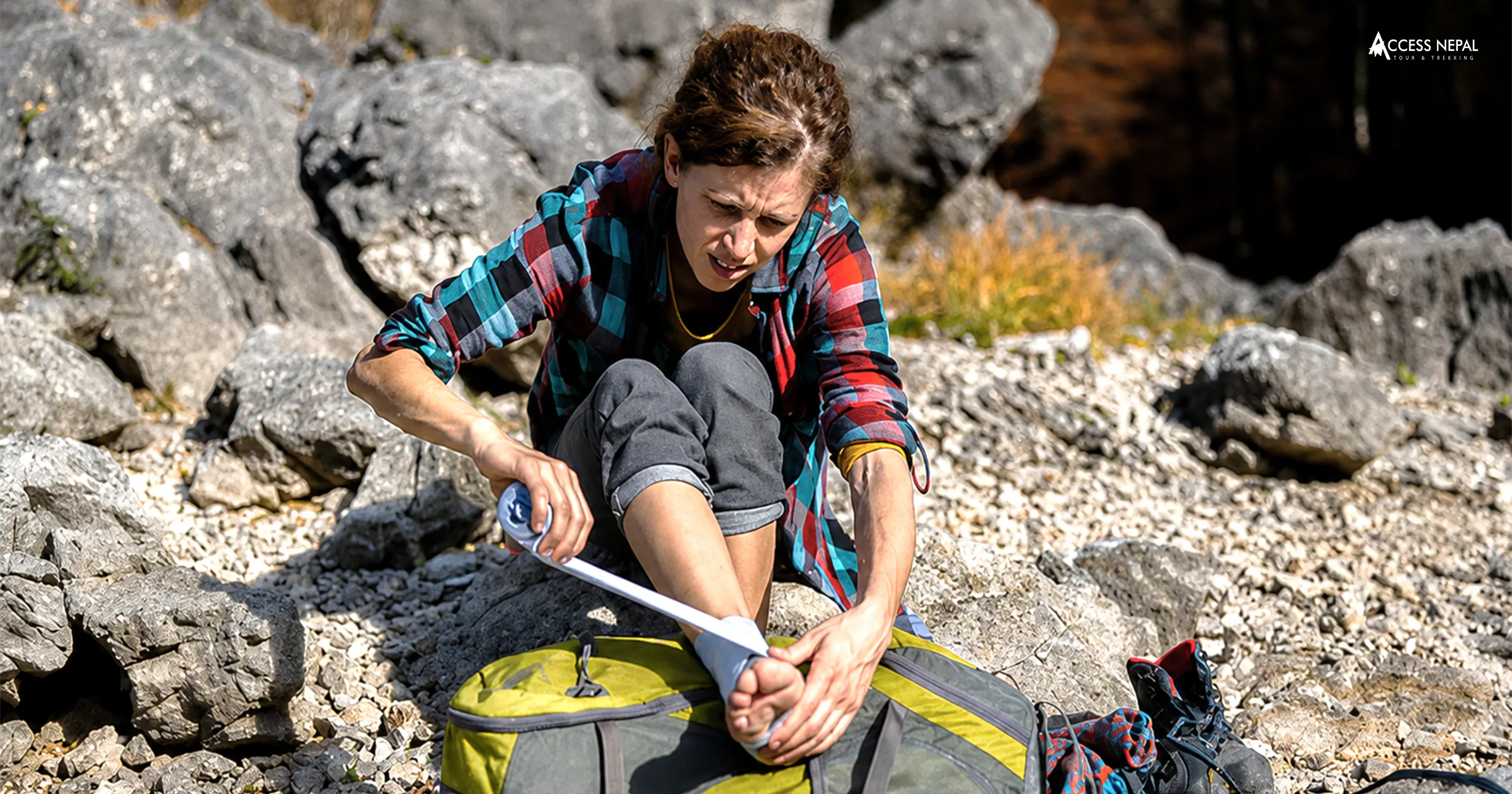
Injuries from a fall during the Manaslu Circuit trek
-
Extreme Weather and Snowstorms
Sudden snowfall near Larkya La can strand trekkers, cause hypothermia, or trigger whiteout conditions that make onward travel unsafe.
-
Pre-Existing Medical Conditions
Cardiac issues, severe gastrointestinal illness, or respiratory problems can be aggravated by altitude and physical exertion, sometimes requiring urgent descent or evacuation.
How does emergency evacuation work on the Manaslu Circuit Trek?
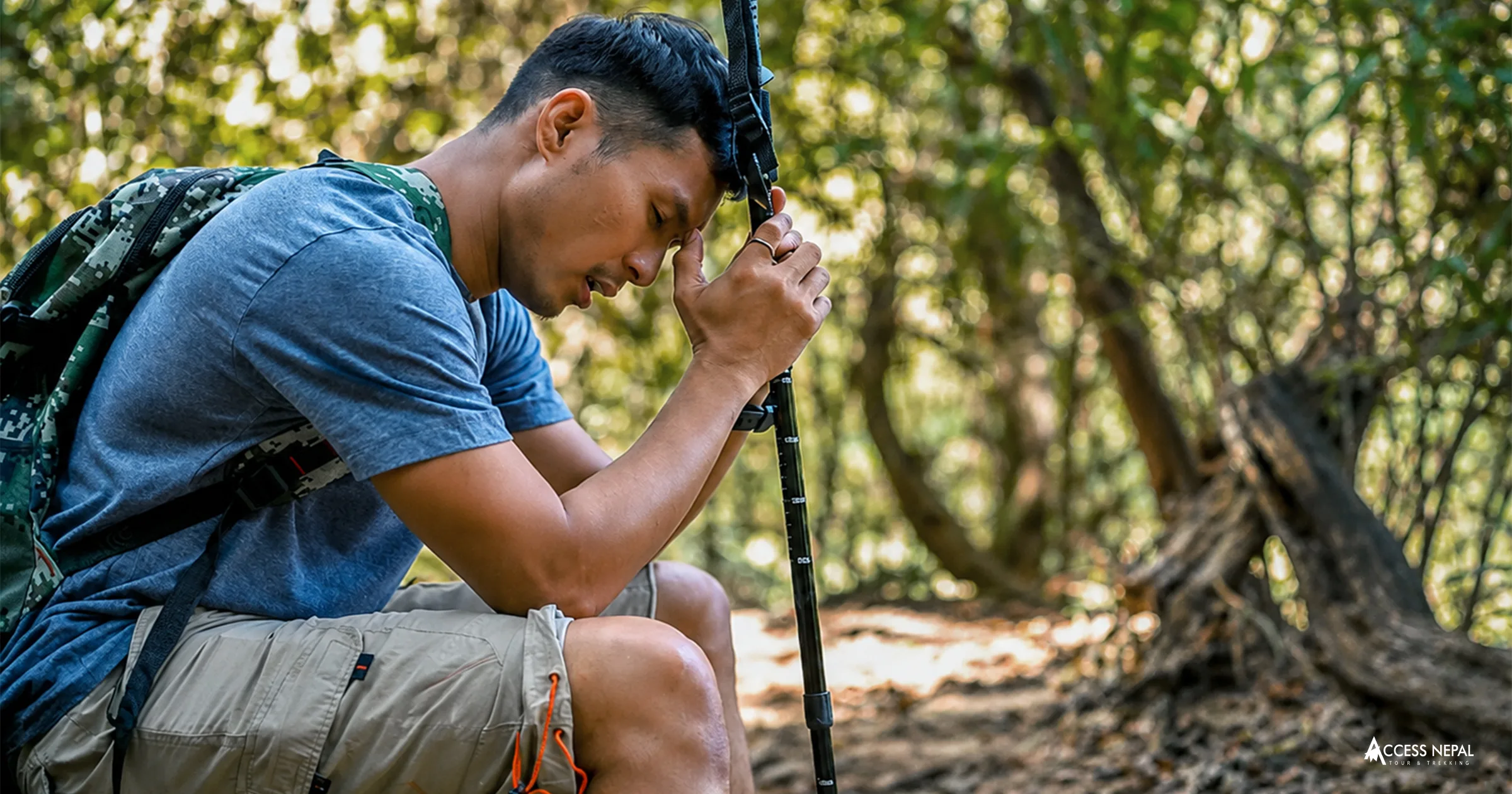
Altitude Sickness during Manaslu Circuit Trek
Step 1: On-the-Ground Assessment by Your Guide
Every Access Nepal Tour and Treks itinerary includes experienced, government-licensed guides trained in basic first aid and altitude sickness recognition. The first step in any emergency is an on-site assessment to determine whether the situation can be managed by descent on foot or requires immediate evacuation.
Step 2: Immediate Descent (When Possible)
For mild to moderate AMS, the standard protocol is immediate descent of at least 300–500 meters, along with rest, hydration, and monitoring. Many situations resolve once a trekker is moved to lower altitude.
Step 3: Helicopter Evacuation (When Required)
If symptoms are severe, worsening, or the trekker cannot walk, a helicopter evacuation is arranged. Helicopters can land at several points along the route, including near Samagaon, Samdo, and other clearings, weather permitting. Evacuation flights are coordinated with rescue companies in Kathmandu and dispatched as quickly as conditions allow.
Step 4: Hospital Transfer in Kathmandu
Evacuated trekkers are flown directly to Kathmandu and transferred to a hospital equipped to treat altitude-related illness or trauma, such as CIWEC Hospital or Norvic International Hospital.
Estimated Helicopter Evacuation Costs in the Manaslu Region
Helicopter evacuation costs in the Manaslu region vary depending on the pickup location, altitude, weather conditions, and the operator carrying out the rescue. Common operators flying in this region include Simrik Air, Fishtail Air, and Altitude Air, among others.
Rescue flights are generally charged on an hourly basis, with costs running around $2,500 per hour of flight time. The total price depends on how far the helicopter has to fly from its base (usually Kathmandu or Pokhara) to reach the pickup point along the Manaslu trail, and how long the return journey to a hospital takes.
A rescue from a remote, high-altitude point such as Samdo or Dharamsala will generally cost more than one from a lower section of the trail closer to the airbase, simply because of the added flight time.
Important things to know about evacuation payments:
Payment is required in advance. Helicopter operators in Nepal do not dispatch a rescue flight without confirmed payment or a guaranteed payment commitment, which is typically provided through your travel insurance company.
Insurance providers usually pay the operator directly once contacted and given proof of coverage, which is why having your policy details on hand — and giving them to your guide before departure is critical.
Trekkers without valid insurance may be asked to pay the full cost upfront out of pocket before a helicopter is dispatched, which can run into several thousand dollars depending on the rescue location.
Costs are separate from medical treatment. The hourly helicopter charge typically does not include hospital fees, doctor consultations, or medication once the trekker reaches Kathmandu. Because of how quickly these costs can add up,
Access Nepal Tour and Treks requires all trekkers joining our Manaslu Circuit trek itineraries to carry travel insurance with confirmed helicopter evacuation coverage up to at least 6,000 meters before departure.
Evacuation cost breakdown by pickup location
Manaslu region is a remote, restricted region with no road access; a helicopter is often the only realistic way to get an injured or seriously ill trekker out quickly. The exact bill depends mostly on one thing: how far the helicopter has to fly to reach you, and how high up you are when it does. As a rough guide, here’s what evacuation tends to cost depending on where along the route the pickup happens:
Lower elevation / starting villages (e.g Jagat or Samagaun): $3,000 – $4,000 USD. These points are closer to the airbase and sit at lower altitude, so flight time — and cost — is on the lower end.
Upper Manaslu / Dharamsala: $4,000 – $5,000 USD. As the trail climbs and the pickup point gets more remote, both flight distance and altitude push the price up.
Larkya La Pass (5,106m): $5,000 – $6,000 USD. This is the most expensive pickup zone on the circuit. The pass sits at extreme altitude in a narrow, weather-exposed flight path, which makes the rescue both longer and riskier to fly, and pricing reflects that.
These figures are estimates, not fixed rates; actual costs shift with the operator, fuel prices, and how far out of position the nearest available helicopter happens to be that day. They’re a useful benchmark for understanding why insurance coverage matters, but your insurer or rescue coordinator will confirm the exact figure at the time of evacuation.
Travel Insurance: The Most Important Preparation Step
Helicopter rescue in the Manaslu region is expensive, and it is not covered by standard travel insurance. Before booking your trek with Access Nepal Tour and Treks, we strongly recommend purchasing travel insurance that explicitly covers:
- High-altitude trekking up to at least 6,000 meters
- Emergency helicopter evacuation
- Medical treatment and hospitalization abroad
- Trip cancellation or interruption due to medical emergencies
Always carry a printed and digital copy of your insurance policy, along with the emergency contact number of your insurance provider. Our team will request these details before departure so we can act immediately if needed.
What Access Nepal Tour and Treks Does to Minimize Emergency Risk
Prevention is always better than evacuation, which is why our Manaslu region itineraries are built around safety from the planning stage:
- Gradual acclimatization days built into the itinerary, particularly around Samagaon and Samdo, to reduce AMS risk before the Larkya La crossing.
- Licensed, first-aid trained guides who carry pulse oximeters to monitor blood oxygen levels daily.
- Satellite phones and communication devices carried on the trail for areas without mobile network coverage.
- Established contacts with rescue helicopter operators in Kathmandu for rapid response.
- Pre-trip briefings covering symptom recognition, hydration, and emergency procedures before every departure.
- Flexible itineraries that allow for extra acclimatization or rest days if a trekker shows early symptoms.
Tips for Trekkers to Reduce Emergency Risk
- Walk at a slow, steady pace and avoid rushing, especially above 3,500 meters.
- Stay hydrated and avoid alcohol during the trek.
- Report any symptoms like headache, nausea, or dizziness to your guide immediately rather than pushing through them.
- Follow the “climb high, sleep low” principle on acclimatization days.
- Carry a personal first-aid kit and any prescribed medication, including Diamox if recommended by your doctor.
- Confirm your insurance covers helicopter evacuation before you leave home.
- Trust your guide’s decision if they recommend descent; altitude sickness can worsen quickly and unpredictably.
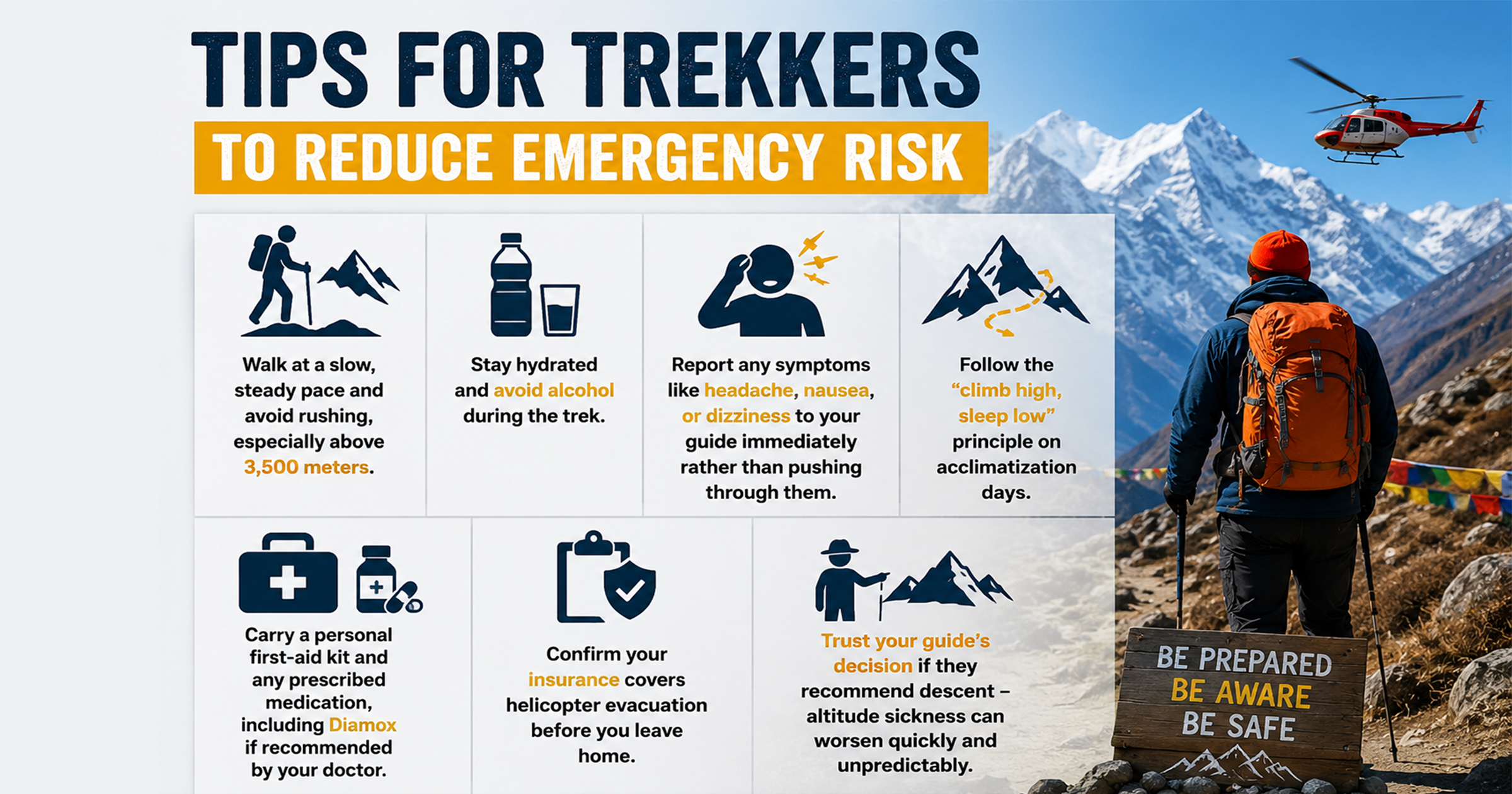
Tips for Trekkers to Reduce Emergency Risk
Frequently Asked Questions
Is helicopter rescue available everywhere on the Manaslu Circuit?
Helicopter landing is possible at most open areas along the route, but landing near Larkya La Pass and Dharamsala depends heavily on weather conditions, since this section sits above 4,400 meters in a narrow valley.
Does travel insurance need to specifically mention Manaslu?
It doesn’t need to name Manaslu specifically, but it must cover trekking at altitudes up to at least 6,000 meters and include helicopter evacuation, since Larkya La Pass sits at 5,160 meters.
How quickly can a helicopter reach a trekker on this route?
Response time depends on weather and the helicopter’s starting location, but in clear conditions, helicopters based in Kathmandu or Pokhara can typically reach the Manaslu region within one to two hours.
Can a trek be modified mid-route if someone shows early signs of altitude sickness?
Yes. Access Nepal Tour and Treks builds flexibility into itineraries so guides can add rest days or recommend descent without disrupting the overall group plan when early symptoms appear.
Who pays for a helicopter evacuation?
Costs are paid upfront and later reimbursed through the trekker’s travel insurance, which is why valid, altitude-appropriate insurance is mandatory for anyone joining a Manaslu Circuit trek with us.
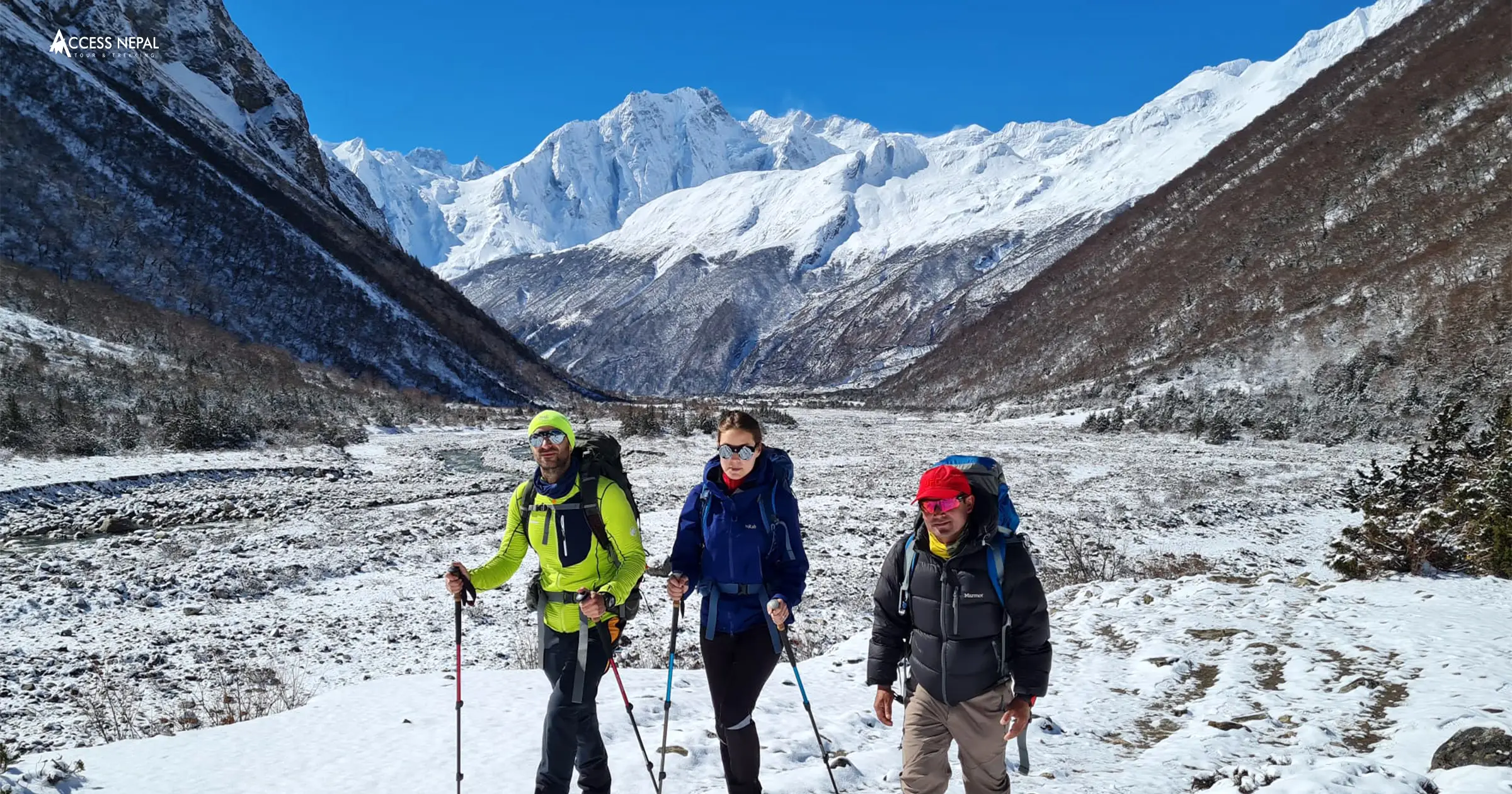
Ground Assessment by your Guide
Conclusion
The Manaslu Circuit Trek is a remarkable journey, but its remote, high-altitude terrain demands respect and preparation. With the right insurance, an experienced guide team, and a clear understanding of how evacuation procedures work, trekkers can focus on enjoying the trail with confidence rather than worry.
At Access Nepal Tour and Treks, safety is built into every stage of our Manaslu Circuit itineraries — from acclimatization planning to on-trail monitoring and emergency response. If you’re planning your trek, reach out to our team to learn more about our safety protocols, insurance requirements, and how we prepare for every scenario on the trail.
Awards and Achievements
Access Nepal Tour and Treks has been recognized with TripAdvisor’s prestigious Travelers’ Choice Award for multiple consecutive years, reflecting our unwavering commitment to quality and clients’ satisfaction.