

Tamang Heritage Trek Complete Guide 2026
- Places
- Edited By: Ayesha Sapkota .Updated on: 15 Jul 2026
Walk where culture is the destination, not just the backdrop.
This blog is a Tamang Heritage Trek guide that covers everything you need to know before the trek begins from Kathmandu. Most trekkers who come to Nepal look up at the peaks, at the passes, at the altitude markers that define their achievement. The Tamang Heritage Trail asks you to look around instead. At the ancient monasteries draped in prayer flags. At the carved mani walls lining stone paths walked for centuries. At the faces of Tamang people whose culture, language, and way of life remain among the most intact of any community in the entire Himalayan region. This is a trek where the journey itself is the point and where every village, every monastery courtyard, and every shared meal tells a story that no summit view ever could.
Highlights of the Tamang Heritage Trail Trek
- Walk through the heartland of the Tamang people — one of Nepal’s largest ethnic groups — through villages that have changed little in centuries and where traditional culture is lived rather than performed for tourists.
- Visit ancient Tibetan Buddhist monasteries including the remarkable Thimbu Monastery and Briddim Monastery, some of the oldest and most ornate in the Langtang region
- Witness the traditional art of Thangka painting, handmade paper production, and yak cheese making in villages that still practice these crafts as daily livelihood
- Stand at Nagthali Danda (3,165m) for a panoramic view of the entire Langtang range — Langtang Lirung (7,227m), Ganesh Himal, Dorje Lakpa, and on clear days the distant white crown of Shishapangma across the Tibetan border
- Cross traditional suspension bridges over the Trishuli and Bhote Koshi rivers, the lifelines of the valley communities
- Experience authentic homestay accommodation in Tamang villages — sleeping in family homes, sharing meals cooked on wood fires, and participating in evening cultural programs of dance and music that no teahouse can replicate
- Trek through rhododendron and oak forests to high ridgelines with sweeping Himalayan views, all at elevations that remain accessible to trekkers of moderate fitness without the altitude challenges of higher Himalayan routes
- Explore the culturally rich Langtang Valley corridor — one of Nepal’s most rewarding but frequently overlooked trekking regions — while contributing directly to community recovery following the devastating 2015 earthquake
Overview of Tamang Heritage Trek Trail
The Tamang Heritage Trek Trail is a culturally immersive trekking route located in the Rasuwa District of Bagmati Province, approximately 130 kilometres north of Kathmandu. The trail winds through the traditional villages of the Tamang community — the ethnic group from whom the route takes its name — in the lower reaches of the Langtang National Park buffer zone, tracing ancient trade and pilgrimage routes that once connected the Himalayan hill communities with Tibet to the north.
The Tamang people represent one of Nepal’s most distinct ethnic identities, with their own language (Tamang, a Tibeto-Burman tongue), their own form of Tibetan Buddhism deeply intertwined with shamanic Bon traditions, and an architectural and artistic heritage visible in every village along this trail. Their traditional round stone houses with flat roofs, their elaborately carved monastery facades, and their distinctive dress and jewellery make the Tamang Heritage Trail one of the richest cultural trekking experiences in the entire country.
The trail begins at Syabrubesi (1,503m), the gateway town of the Langtang Valley accessible by a scenic road journey from Kathmandu of approximately 7 to 8 hours. From Syabrubesi, the route climbs through a series of Tamang villages — Gatlang, Tatopani, Thuman, Briddim, Lama Hotel — before looping back via Nagthali Danda and descending to the trailhead. The circuit covers approximately 80 to 110 kilometres depending on the specific variant chosen, with maximum elevation at Nagthali Danda (3,165m) remaining well within comfortable reach for most trekkers.
Critically, the Tamang Heritage Trail is one of the most accessible cultural treks in Nepal for trekkers who cannot commit to high-altitude routes. Its modest maximum elevation, well-developed homestay infrastructure, and relative proximity to Kathmandu make it an ideal choice for first-time Nepal trekkers, senior travellers, families with older children, and anyone who wants depth of cultural experience rather than altitude achievement.
Benefits of Booking with Access Nepal Tour and Treks
When you choose Access Nepal Tour and Treks for your Tamang Heritage Trail experience, you are choosing more than logistics management you are choosing a team with deep roots in the communities you will visit, a genuine commitment to responsible tourism, and a decade of experience delivering authentic Himalayan experiences that go beyond the standard package.
Local expertise that cannot be replicated. Our guides are not simply trail navigators — they are cultural interpreters with personal connections to the Tamang communities along the route. Many of our guides grew up in these villages, speak Tamang fluently, and have relationships with monastery elders, homestay families, and local artisans that open doors — literally and figuratively — that no outsider arrangement can access.
Direct community benefit. Every booking with Access Nepal Tour and Treks directly supports the Tamang communities along the trail. We work exclusively with locally-owned homestays and teahouses, source food and supplies from village producers, and pay guide and porter wages that exceed the industry minimum. A portion of every package fee is channelled into community development and monastery restoration projects in the villages you visit.
Post-earthquake recovery support. The 2015 Gorkha earthquake devastated significant portions of the Langtang region, destroying homes, monasteries, and livelihoods across the Tamang Heritage Trail corridor. Access Nepal Tour and Treks has been actively involved in recovery tourism since 2016 and continues to prioritise bookings that support the communities most affected. When you trek with us, your presence and spending directly contribute to this ongoing recovery.
Completely flexible and tailor-made itineraries. No two groups share the same interests, fitness level, or available time. We build every Tamang Heritage Trail itinerary from scratch around your specific requirements — whether that means adding extra monastery visits, incorporating photography stops at traditional craft workshops, or extending the trek to connect with the Langtang Valley proper.
24-hour support throughout your trek. Our Kathmandu operations team is available around the clock during your trek. In the event of weather changes, health concerns, or any logistical issue, you have direct access to our team who can coordinate solutions — including emergency evacuation if required — without the delay of going through a third-party operator.
Transparent, all-inclusive pricing. Our packages include all costs — permits, accommodation, meals, guide and porter fees, internal transport, and Kathmandu hotel — with no hidden charges. What we quote is what you pay.
Sustainable tourism practice. We are committed to the Leave No Trace principles throughout all our operations. We actively discourage single-use plastics on the trail, educate both guests and local partners on responsible trekking practices, and participate in annual trail maintenance and waste collection initiatives in the Langtang region.
Tamang Heritage Trail Trek Distance, Duration, and Altitude
Tamang Heritage Trek Guide of Key Altitude Points of Different Locations
| Location | Altitude (m) | Altitude (ft) |
| Kathmandu | 1,400m | 4,593 ft |
| Syabrubesi | 1,503m | 4,931 ft |
| Gatlang | 2,238m | 7,343 ft |
| Tatopani | 2,607m | 8,553 ft |
| Thuman | 2,380m | 7,808 ft |
| Briddim | 2,229m | 7,313 ft |
| Nagthali Danda | 3,165m | 10,384 ft |
| Lama Hotel | 2,380m | 7,808 ft |
| Syabrubesi (end) | 1,503m | 4,931 ft |
What You Can Expect From the Tamang Heritage Trail Trek Package
Day 1: Kathmandu to Syabrubesi
Your journey begins with an early morning departure from Kathmandu by private vehicle along the Trishuli River highway — a scenic road journey through Nepal’s middle hills that is itself a rewarding introduction to the country’s landscape. The road climbs through terraced rice paddies, forested ridges, and river gorges before arriving at Syabrubesi, the bustling gateway village of the Langtang Valley. Evening in Syabrubesi offers your first encounter with the mixed Tamang and Tibetan community atmosphere of the valley — traditional flat-roofed houses alongside prayer wheel corridors, and the sound of monks chanting from the local gompa.
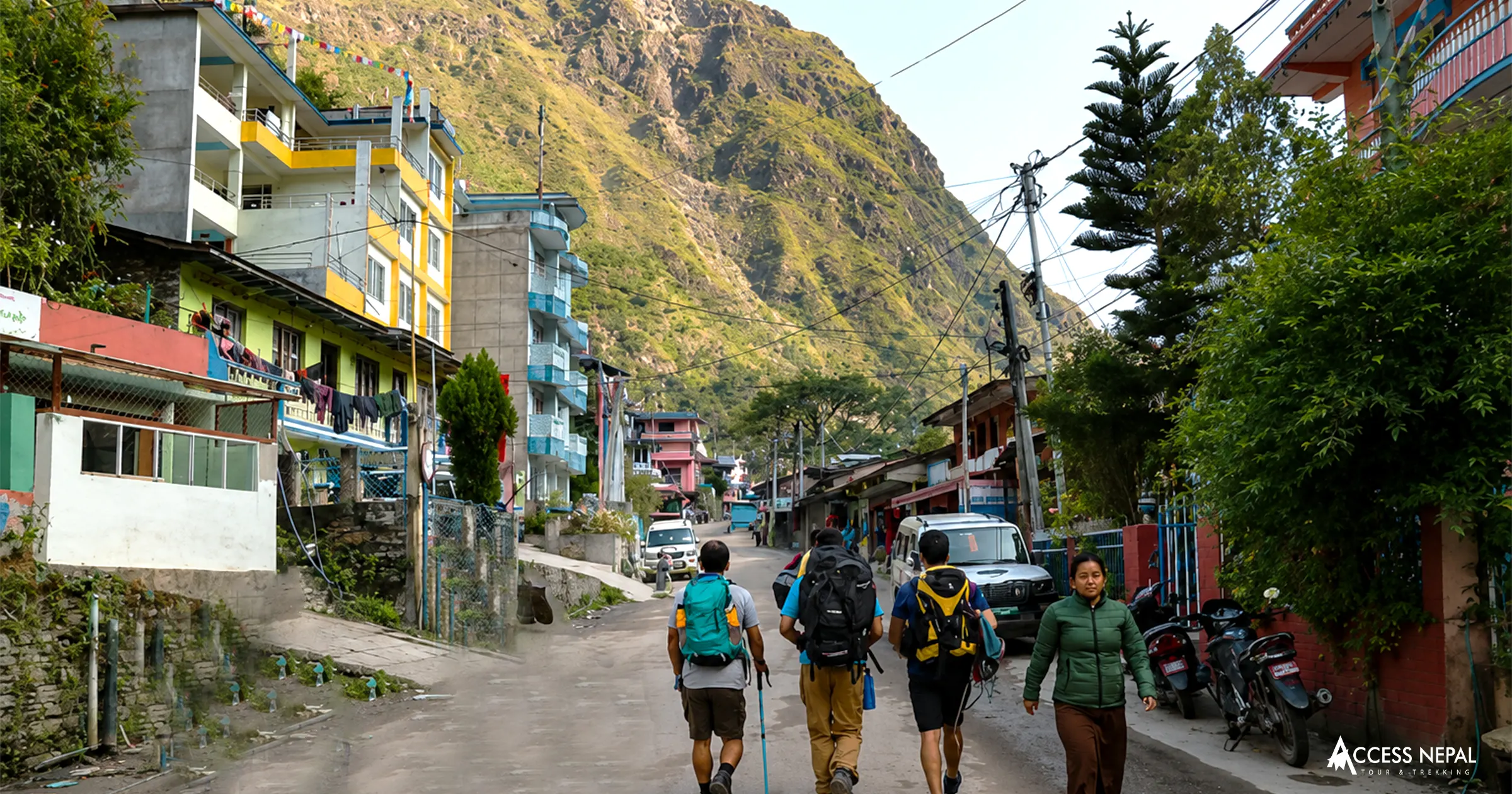
Syabrubesi is a vibrant, culturally rich mountain village in the Rasuwa District
Day 2: Syabrubesi to Gatlang
The first full trekking day climbs steadily from Syabrubesi through rhododendron and oak forests to Gatlang (2,238m), one of the most beautifully preserved traditional Tamang villages on the entire trail. Gatlang’s traditional architecture — stone houses with intricately carved wooden windows and flat mud-packed roofs loaded with drying grain — is among the finest examples of Tamang vernacular architecture in Nepal. The Parvati Kund sacred lake above the village is a highlight for those with energy for a short side trip, and the Gatlang gompa rewards a quiet afternoon visit. Homestay accommodation here is particularly recommended — evenings in Gatlang with a local family over the cooking fire are frequently described by trekkers as the highlight of the entire trek.
Day 3: Gatlang to Tatopani via Goljung
A moderate trekking day descends and re-climbs through forest to reach Goljung before continuing to Tatopani (2,607m). Despite sharing its name with the famous hot springs village on the Annapurna Circuit, Tatopani on the Tamang Heritage Trail is a much quieter, more intimate settlement where the hot springs themselves — fed by geothermal water from the mountain slopes above — offer a remarkable afternoon soak with Himalayan ridge views. The community here is predominantly Tamang and the monasteries in the surrounding area include some of the oldest wall paintings found along the trail.
Day 4: Tatopani to Thuman via Brigu Gompa
One of the culturally richest days on the trek visits Brigu Gompa, a monastery perched dramatically on a ridgeline above the valley with sweeping views and interior murals depicting Tibetan Buddhist cosmology in vivid, centuries-old detail. The descent to Thuman (2,380m) passes through juniper and rhododendron forest before arriving in a village known for its traditional handmade paper workshops — still producing lokta paper using methods unchanged for hundreds of years.
Day 5: Thuman to Briddim
A shorter trekking day that allows maximum time in Briddim (2,229m), widely regarded as the most culturally significant village on the entire Tamang Heritage Trail. Briddim’s monastery, Briddim Gompa, is one of the oldest and most elaborately decorated in the Langtang region, its interior covered in centuries of accumulated Thangka paintings, butter sculptures, and sacred objects. The village itself maintains a traditional Tibetan-influenced lifestyle with yak herding, butter tea culture, and a community warmth toward visitors that makes an extended afternoon here deeply rewarding.
Day 6: Briddim to Nagthali Danda to Lama Hotel
The most physically demanding day of the trek climbs from Briddim through dense rhododendron forest to the ridgeline viewpoint of Nagthali Danda (3,165m) — the highest point of the entire trek and its panoramic reward. On a clear morning, the views from Nagthali encompass the complete Langtang range, Ganesh Himal, Dorje Lakpa, and the distant Tibetan peaks beyond the border. The descent through forest to Lama Hotel (2,380m) is steep but well marked, and the teahouses at Lama Hotel provide comfortable accommodation after the day’s exertion.
Day 7: Lama Hotel to Syabrubesi and Drive to Kathmandu
The final trekking day descends the valley floor following the Langtang Khola river back to Syabrubesi. The afternoon drive to Kathmandu arrives in the evening, completing a circuit that has taken you through one of Nepal’s most culturally significant and least-crowded trekking corridors.
Is the Tamang Heritage Trail Trek Suitable for You?
The Tamang Heritage Trail is genuinely one of the most inclusive trekking routes in Nepal, designed by geography and trail design to be accessible to a wider range of trekkers than almost any other Himalayan route.
You are an ideal candidate for this trek if:
- This is your first trekking experience in Nepal, and you want a manageable introduction to Himalayan trails without extreme altitude.
- You are more interested in cultural depth than summit achievement and want a trek where the villages, monasteries, and people are the primary attraction
- You have limited time — 7 to 10 days from Kathmandu is sufficient for a complete experience
- You are a senior traveller or have physical limitations that make high-altitude routes unsuitable but still want a meaningful Himalayan experience
- You are travelling with older children (12+) and want a family-friendly trek without extreme elevation risk
- You have already trekked the classic routes and want something genuinely off the beaten path
- You are a photographer seeking authentic cultural subjects and dramatic mountain backdrops without the crowds of the Annapurna or Everest corridors
You should consider an alternative if:
- You are specifically seeking high-altitude achievement above 4,000 metres
- A summit or pass crossing is your primary trekking goal
- You have very limited walking experience and are not comfortable with 4 to 6 hour walking days on hilly terrain
Preparation for the Tamang Heritage Trail Trek
Physical Preparation
The Tamang Heritage Trail requires moderate fitness. You should be comfortable walking 4 to 7 hours per day on hilly, sometimes steep terrain for consecutive days. The trail involves significant cumulative elevation gain and loss even though the maximum altitude is modest. A preparation program of 6 to 8 weeks of regular cardio exercise — hiking, running, cycling, or stair climbing — is sufficient for most trekkers of average fitness.
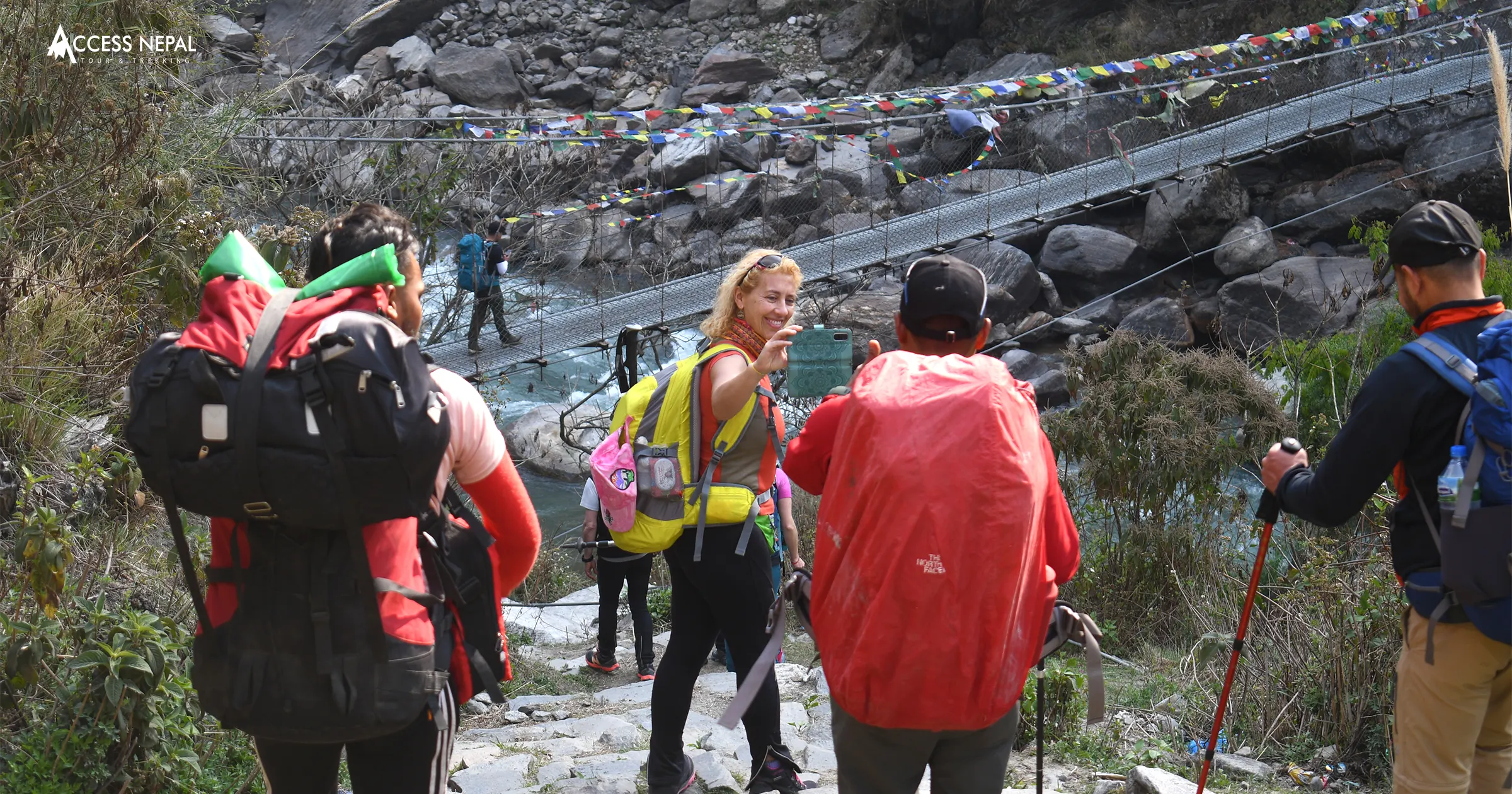
Physical Preparation for Tamang Heritage Trek is also important for cardio exercise
Cultural Preparation
This Tamang Heritage Trek guide covers Tamang culture before you go, significantly enriches the experience on the trail. The Tamang people are followers of Tibetan Buddhism interwoven with the ancient Bon shamanic tradition — the coexistence of Buddhist monks and Tamang shamans (called Bombo or Dhami) is a unique and fascinating aspect of the communities you will visit. Learning a few words of Nepali and understanding basic monastery etiquette (removing shoes, circumambulating clockwise, asking permission before photographing sacred objects) demonstrates respect that the communities genuinely appreciate.
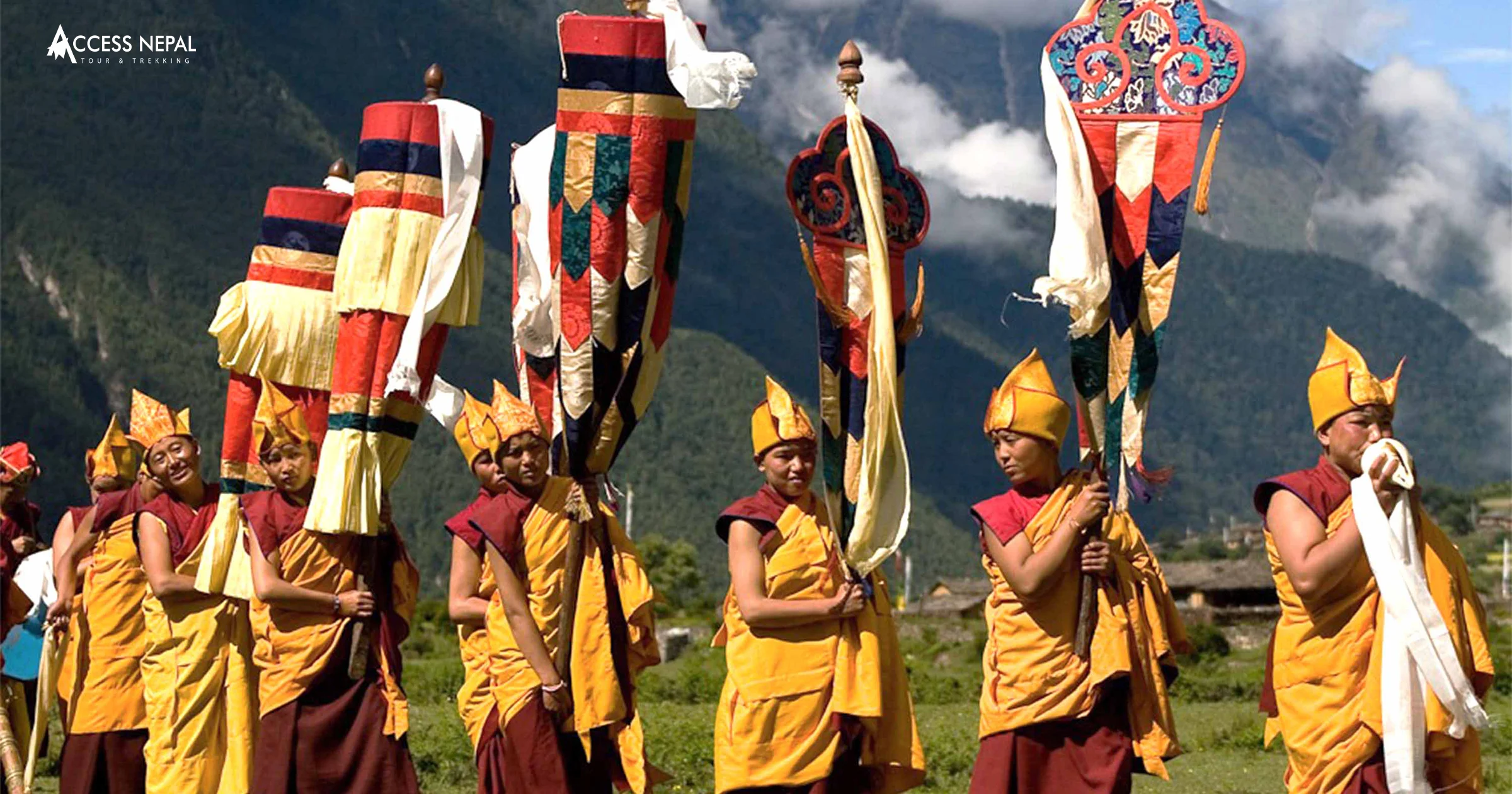
Cultural Preparation for Tamang Heritage Trek
Mental Preparation
This is not a peak-bagging trek. There is no single dramatic finish line moment. The rewards of the Tamang Heritage Trail are cumulative and quiet — built from dozens of small encounters, unexpected conversations, monastery courtyards in afternoon light, and the realisation somewhere around day four that you have genuinely crossed into a different world. Trekkers who approach it with openness and patience consistently report it as one of their most meaningful Nepal experiences.
You can explore more about the hidden forbidden kingdom of Nepal Mustang, Nepal, and can add this to your bucket list for your next visit to Nepal.
Tamang Heritage Trail Trek Itinerary
Standard 9-Day Itinerary (Kathmandu to Kathmandu)
Extended 11-Day Itinerary (with Langtang Valley Extension)
All days as above with the addition of: Day 7 (alternate): Lama Hotel → Langtang Village (3,430m) — 4 to 5 hours Day 8 (alternate): Langtang Village → Kyanjin Gompa (3,870m) — 3 to 4 hours (with optional Tsergo Ri hike) Day 9 (alternate): Kyanjin Gompa → Lama Hotel → Syabrubesi — 6 to 7 hours Day 10: Drive Syabrubesi → Kathmandu Day 11: Buffer/departure
Best Time to do Tamang Heritage Trek Season-Wise Guide
Spring (March to May) — Excellent
Spring is one of the two optimal seasons for the Tamang Heritage Trail and arguably the most visually spectacular. The rhododendron forests that line the trail from Syabrubesi to Nagthali burst into bloom from late February through April, with dense canopies of crimson, pink, and white flowers transforming the forest sections into a natural gallery. Weather is generally stable with clear mornings, comfortable trekking temperatures, and good mountain visibility. March and April are particularly recommended — the trails are active but not crowded, and the combination of blooming forest and clear Himalayan views represents the trail at its most photogenic.
Pre-Monsoon (June): Possible with Caveats
June sees the first monsoon rains arriving from the Bay of Bengal. The lower sections of the trail become lush and intensely green, but rainfall increases significantly from mid-June onward. Leeches become active below 2,000 metres. Mountain views become less reliable. June is manageable but requires solid waterproof gear and a flexible attitude toward wet trail days.
Monsoon (July to August): Not Recommended
The full monsoon brings heavy and persistent rainfall to the Langtang region. Trails become slippery and prone to landslides. The road from Kathmandu to Syabrubesi can be blocked by monsoon damage. Mountain views are largely obscured. Most experienced operators do not recommend this trek during the full monsoon months.
Autumn (September to November): Best Season of the year
Autumn, particularly October and November, represents the peak season for the Tamang Heritage Trail and is widely considered the optimal time to visit. The monsoon retreats through September, leaving the landscape washed clean and intensely green. From October, the skies achieve a remarkable post-monsoon clarity — the distant peaks of the Langtang range, Ganesh Himal, and the Tibetan peaks visible from Nagthali Danda appear in sharp, brilliant detail on virtually every morning. The trail is dry and firm, temperatures are comfortable at all elevations, and the villages are active with post-harvest festivals and cultural celebrations. October is the single best month for first-time visitors.
Winter (December to February): Quiet but Cold
Winter brings cold temperatures and occasional snow to the higher sections of the trail, particularly around Nagthali Danda. The lower village sections remain accessible, and the trail is extremely quiet — you may have entire village sections to yourself. Mountain views in winter can be extraordinary on clear days. The primary challenge is cold — particularly at night and in the early morning hours — which requires proper insulation layers. January is the coldest month, and the trail above 2,500 metres can be icy. Experienced trekkers who do not mind the cold are sometimes rewarded with the most atmospheric experience the trail offers.
Accommodation Facility on the Tamang Heritage Trail Trek
The Tamang Heritage Trail offers a distinctive and deeply rewarding accommodation experience unlike any standard Himalayan trekking route. Rather than the uniform teahouse model that defines most major Nepal trekking corridors, this trail is built around a community homestay network that places you inside Tamang family homes — and this difference transforms the entire nature of the experience.
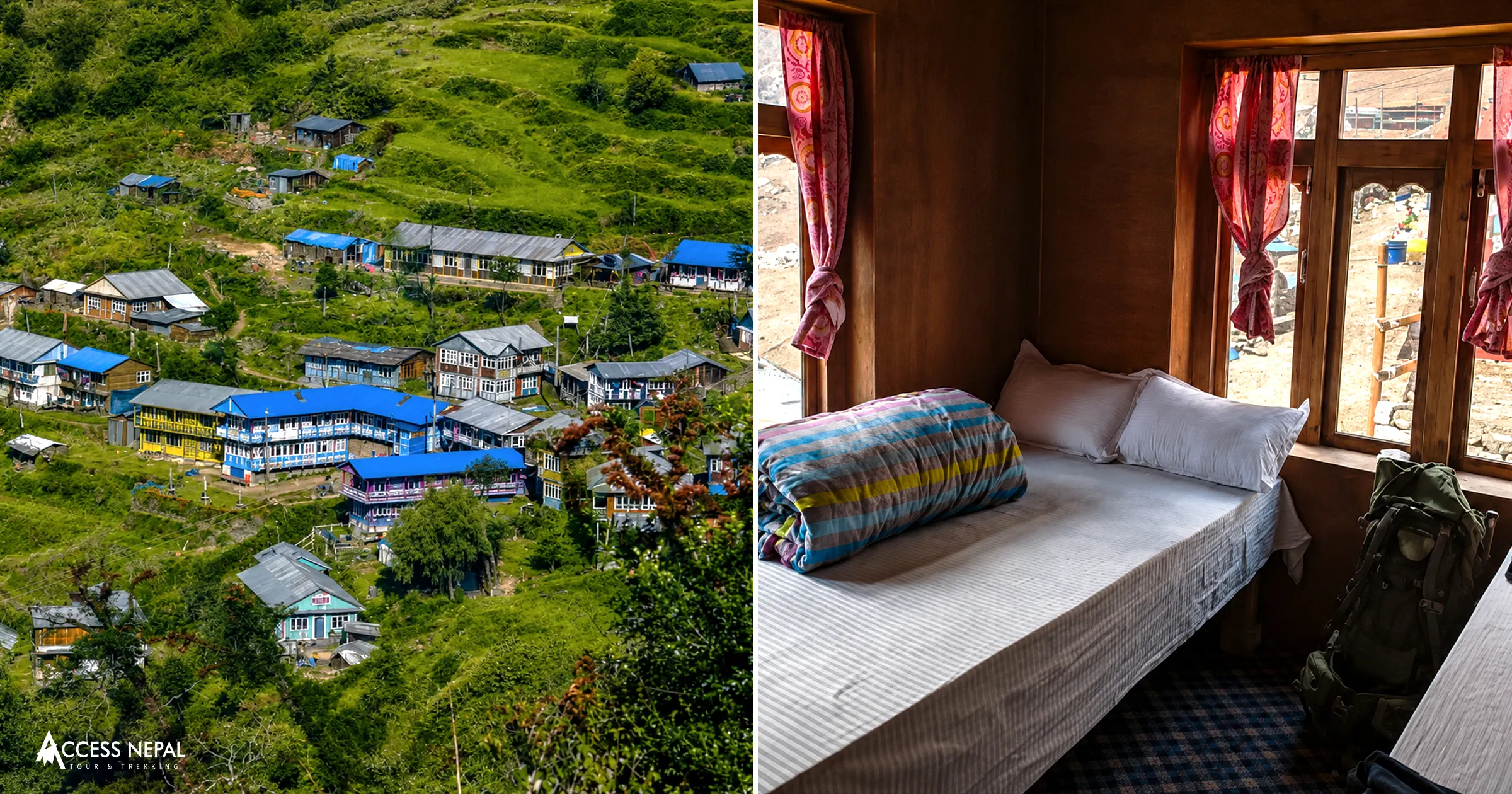
Accommodation during Tamang Heritage Trek
Homestay Accommodation
The homestay accommodation network along the Tamang Heritage Trail was developed specifically as a community-based tourism initiative following the 2015 earthquake, with support from international development organisations and the Nepal Tourism Board. Each homestay is a private family home that has been adapted to welcome trekking guests — typically offering a simple but clean private or shared room, communal meals cooked by the family, and access to the family’s daily life in a way that no purpose-built teahouse can replicate.
What this means in practice: you eat at the family table, share morning tea with the household, and may be invited to participate in daily activities from the morning prayer ritual to evening cultural performances of Tamang music and Damphu drumming. The meals served in homestays are authentic Tamang home cooking — dal bhat, fermented vegetable dishes, corn-based preparations, and seasonal local produce that reflects exactly what the family eats — rather than the standardised trekking menu of pasta and fried rice.
The standard of cleanliness, bedding, and facilities varies between homestays — this is not luxury tourism. Expect basic but clean bedrooms, communal toilet facilities (increasingly with attached bathrooms in recently developed homestays), and limited electricity and hot water availability, particularly in smaller villages. Carrying a headlamp, sleeping bag liner, and personal hygiene supplies is important.
Teahouse Accommodation
At Syabrubesi, Lama Hotel, and along the Langtang Valley extension, conventional teahouse accommodation is available and offers a more standardised experience with private rooms, attached or shared bathrooms, hot showers (often solar-heated or electric), WiFi in the dining hall, and an extensive trekking menu. These teahouses have been substantially rebuilt since the 2015 earthquake and the quality is generally good, with better facilities than similarly-priced teahouses in more remote Himalayan locations.
Tamang Heritage Trail Trek Travel Insurance
Travel insurance is not simply a recommended precaution for the Tamang Heritage Trail — it is an absolute necessity, and choosing the right policy for this specific trek requires attention to detail.
Your policy must cover the following without exception:
Medical treatment and evacuation. The Tamang Heritage Trail traverses remote terrain where the nearest hospital with adequate facilities is several hours away in Kathmandu. Emergency helicopter evacuation from points along the trail is the only viable option for serious medical situations. Helicopter evacuation costs in Nepal range from USD 2,000 to 5,000 or more without insurance. Ensure your policy covers this without altitude exclusions — some standard adventure travel policies exclude coverage above 3,000 metres, which would leave you uncovered for the Nagthali Danda section.
Trekking at altitude. Explicitly confirm that your policy covers trekking above 3,000 metres. Many standard travel insurance policies do not cover high-altitude trekking by default — you may need to purchase a specific adventure sports rider.
Trip cancellation and delay. The road between Kathmandu and Syabrubesi is vulnerable to monsoon landslides, rockfall, and weather-related closures. Coverage for trip interruption costs related to road closures or weather delays is valuable protection, particularly if trekking in the shoulder seasons.
Personal liability and lost equipment. Standard coverage recommendations apply — ensure your camera and electronic equipment are covered under personal belongings if carrying high-value photography equipment.
Recommended approach: Purchase your travel insurance before leaving your home country from a reputable provider that specifically lists high-altitude trekking in Nepal as a covered activity. Carry printed copies of your policy documents, including the emergency contact number and policy reference, on the trail.
Altitude Sickness and Remedies During the Tamang Heritage Trail Trek
The Tamang Heritage Trail’s maximum elevation of 3,165 metres at Nagthali Danda places it in the moderate altitude range where the risk of serious altitude sickness is low but not zero, particularly for trekkers ascending from Kathmandu without a prior acclimatization guide for high altitude treks.
Understanding Altitude at 3,165 Metres
At 3,165 metres, the atmospheric pressure is approximately 70% of sea level, and the available oxygen per breath is proportionally reduced. For most trekkers arriving from sea-level home environments, the body’s adjustment to this reduction takes 24 to 48 hours and is characterised by mild symptoms including slight breathlessness on exertion, disrupted sleep on the first night at altitude, and occasionally a mild headache. These symptoms are normal and manageable and do not indicate Acute Mountain Sickness.
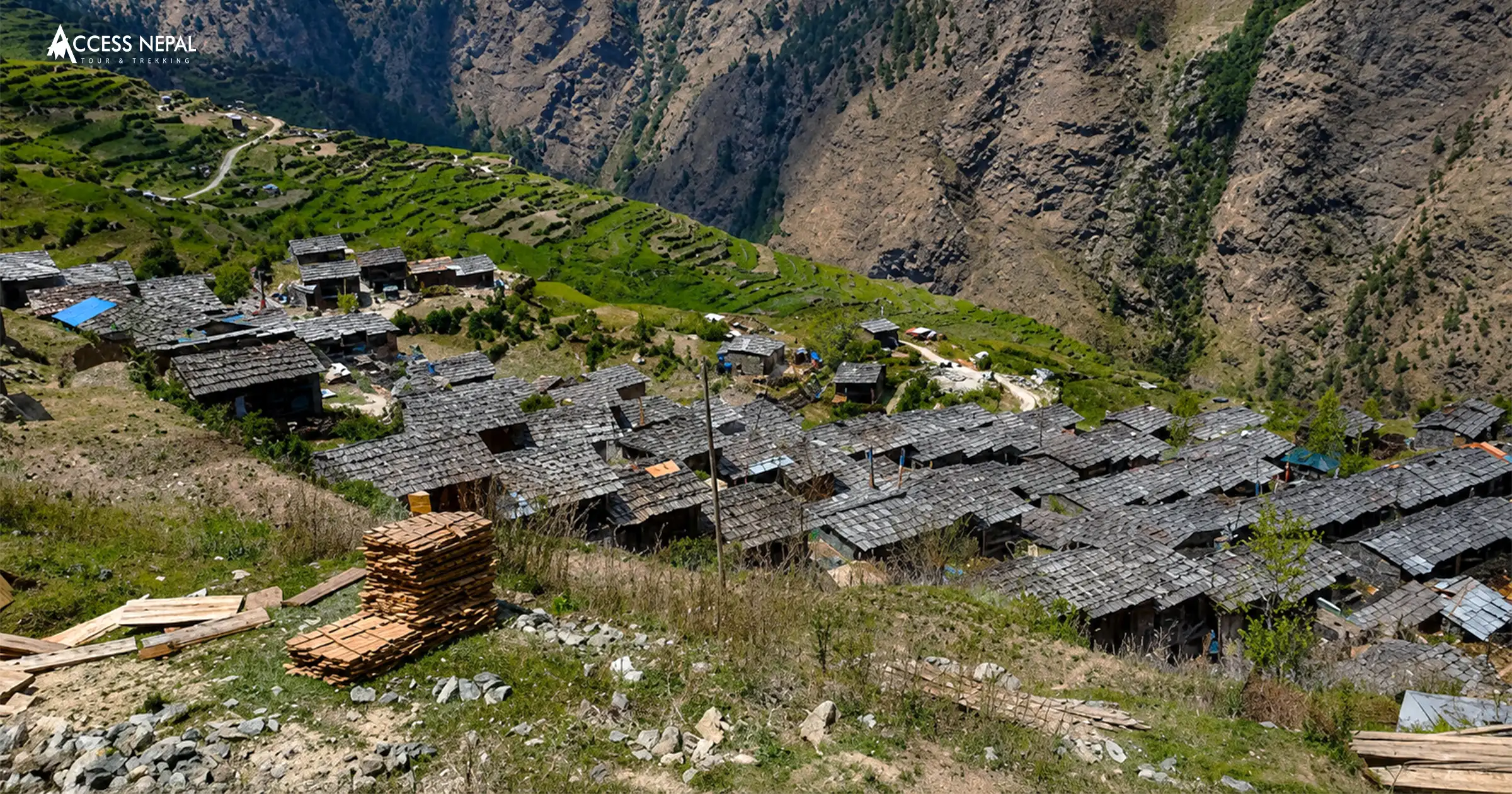
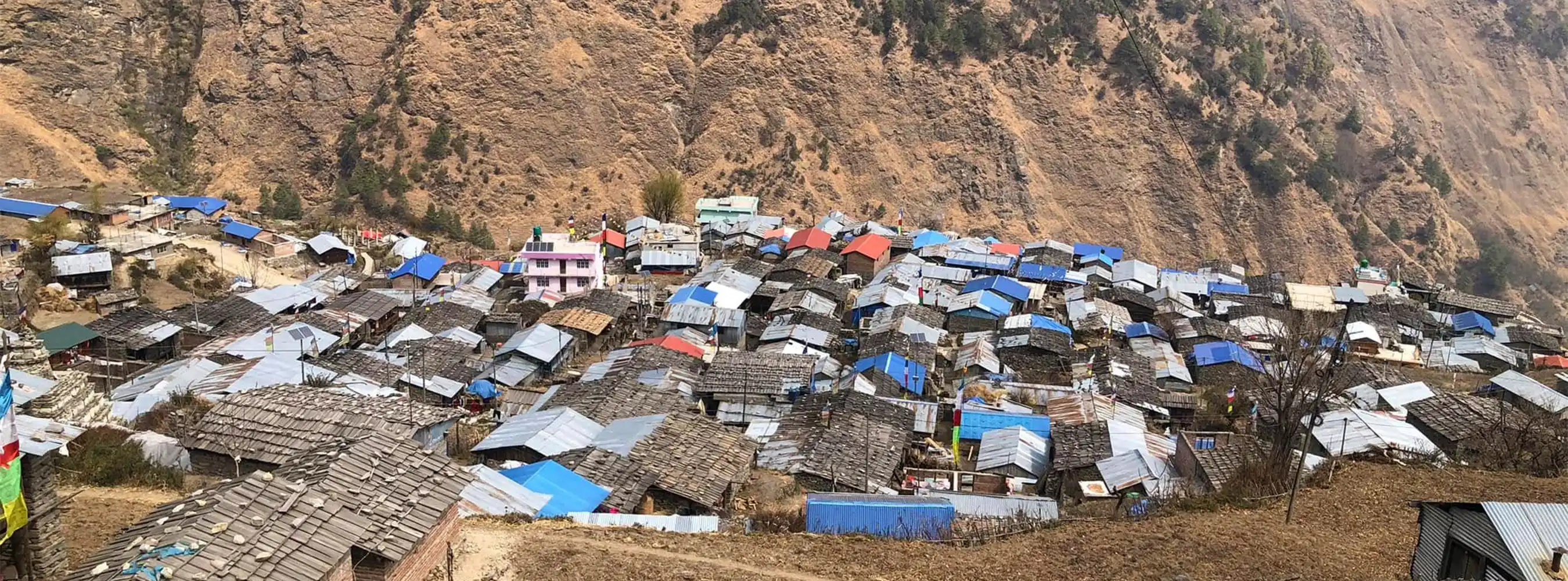
Tamang Village
Symptoms of AMS on the Tamang Heritage Trail
True AMS on this trail is uncommon but can occur, particularly in trekkers who gain altitude rapidly or are individually susceptible. Symptoms to watch for include:
- Persistent headache that does not respond to mild pain relief
- Nausea and loss of appetite
- Dizziness or lightheadedness beyond normal exertion response
- Unusual fatigue disproportionate to the day’s physical demand
- Disrupted sleep with a sensation of breathlessness at night
Prevention and Remedies of Altitude Sickness
Ascend gradually. The Tamang Heritage Trail’s day-by-day elevation profile is already designed with safe altitude gain in mind. Follow the itinerary as structured — do not attempt to compress stages to save time above 2,000 metres.
Hydrate consistently. Aim for 3 litres of water per day throughout the trek. Dehydration mimics and accelerates altitude sickness symptoms and is the most easily preventable aggravating factor.
Avoid alcohol and sleeping tablets. Both suppress respiratory drive and inhibit the body’s natural acclimatization process. Reserve celebration for Kathmandu.
Rest when the itinerary allows. The shorter day from Thuman to Briddim exists partially to allow your body time to consolidate altitude adaptation before the Nagthali Danda climb. Use that afternoon productively — resting is acclimatizing.
Descend if symptoms worsen. If AMS symptoms do not improve with rest at the same altitude or worsen over 24 hours, descend immediately. The treatment for altitude sickness is always descent. On the Tamang Heritage Trail, descent of 300 to 500 metres is sufficient to provide rapid relief in the vast majority of cases.
Consult your doctor about Diamox. Acetazolamide is effective for altitude sickness prevention but has side effects and contraindications. A pre-trip medical consultation is the appropriate place to discuss whether it is right for you.
Tamang Heritage Trail Trek Difficulty and Challenges
Difficulty Rating: Easy to Moderate
The Tamang Heritage Trail is one of the most accessible trekking routes in Nepal by virtue of its modest maximum altitude and its well-developed trail infrastructure. However, several specific challenges deserve honest acknowledgement:
The Nagthali Danda climb is steep. The ascent from Briddim to the Nagthali ridgeline involves a sustained climb through dense forest with significant gradient — particularly in the final 45 minutes to the viewpoint. For trekkers not accustomed to prolonged steep climbing, it can be demanding despite the modest maximum altitude.
Related Packages
Tamang Heritage Trek - 9 Days
 2,380m/7,808ft
 Moderate
 All
Inclusive Plan
All
Inclusive Plan
The road journey is genuinely long. The 7 to 8-hour drive from Kathmandu to Syabrubesi on a winding mountain road is one of the more overlooked challenges of this trek. Motion sickness medication is advisable for susceptible travellers, and a good night’s sleep before the drive makes a meaningful difference to the experience.
Monsoon-season trail conditions are genuinely challenging. If trekking in September, the combination of muddy trails, active leeches, and slippery stone sections requires appropriate footwear, gaiters, and patience. The challenge is manageable but should not be underestimated.
Homestay variability. The community homestay experience is authentic and rewarding but variable in terms of facilities. Trekkers accustomed to consistent hotel standards need to approach homestay accommodation with flexibility and an appreciation for its character rather than its conformity.
Cultural sensitivity as a challenge. The deep cultural richness of the Tamang Heritage Trail comes with an implicit responsibility to engage with appropriate respect. Understanding and following monastery etiquette, asking permission before photographing community members, and behaving considerately within family homestays require effort and mindfulness that is different from the culturally neutral experience of a standard mountain trek.
Tamang Heritage Trail Trek Packing List, Gears, and Equipment
Clothing
Base layers:
- 2 to 3 moisture-wicking long-sleeve tops
- 2 lightweight trekking trousers
- 4 to 5 pairs of merino wool trekking socks
- Thermal underwear for cool evenings and the Nagthali Danda section
Mid layers:
- 1 fleece jacket for evenings and the highest trail sections
- 1 lightweight down or synthetic insulated jacket for Nagthali Danda and cold mornings
Outer layers:
- Fully waterproof hardshell jacket — essential even in dry seasons given Nepal’s changeable weather
- Waterproof trousers for rainy days — particularly important in September
Head and hands:
- Warm beanie for early mornings and high-trail sections
- Sun hat for exposed sections
- Light gloves for cold mornings above 2,500 metres
- Buff neck gaiter
Footwear
- Waterproof trekking boots with ankle support — broken in thoroughly before the trek
- Camp sandals or lightweight shoes for teahouse evenings
- Gaiters for September trekking — essential leech protection below 2,000 metres
Equipment
- Trekking poles — highly recommended for descent sections
- Daypack 20 to 30 litres with rain cover
- Main duffel or pack 40 to 50 litres with rain cover
- Sleeping bag rated to 0°C — homestays provide blankets but a liner or light bag adds meaningful comfort
- Headlamp with spare batteries
- Small dry bags for waterproofing electronics inside your pack
Health and Safety
- Personal first-aid kit — blister treatment, Ibuprofen, Paracetamol, antiseptic cream, bandages, rehydration sachets
- Water purification tablets or filter bottle — critical for drinking from trail water sources
- Sunscreen SPF 50+ and UV-protective sunglasses
- Pulse oximeter — lightweight and valuable for monitoring altitude response
- Insect repellent containing DEET — for lower trail sections
- Small salt container or commercial leech repellent for September trekking
Documents and Essentials
- Passport and copies
- Langtang National Park Entry Permit and TIMS card (arranged in Kathmandu)
- Travel insurance documents with emergency contact numbers
- Sufficient Nepali rupees — no ATMs exist on the trail beyond Syabrubesi
- Power bank — electricity is limited and inconsistent in village homestays
- Offline maps downloaded before departure
Photography and Communication
- Camera with extra batteries — cold drains batteries rapidly and charging is limited
- Memory cards
- Ziplock bags for waterproofing all electronics
- SIM card with Nepal Telecom for best trail coverage
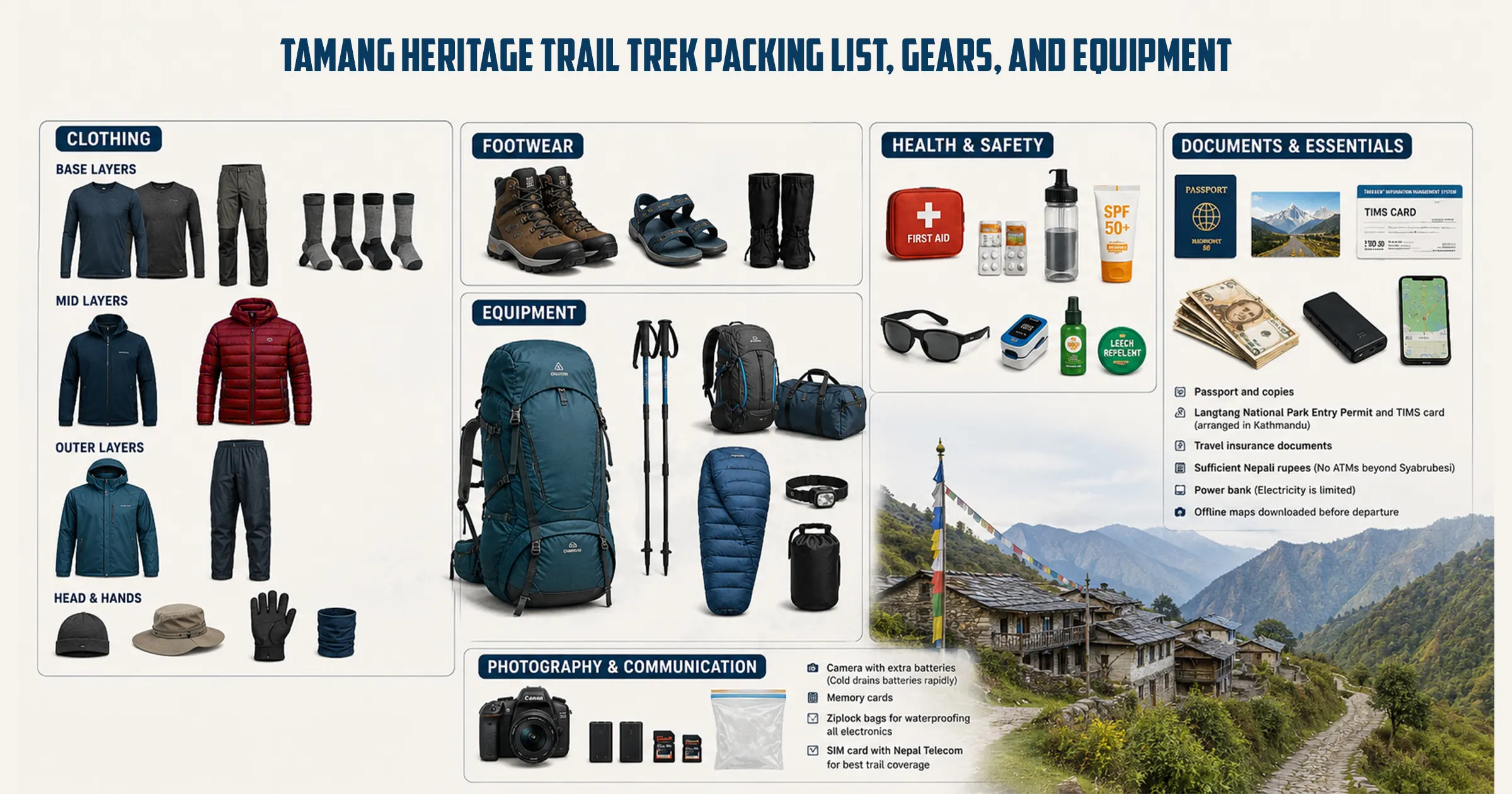
Tamang heritage trek packing list
Tamang Heritage Trail Trek Guide and Safety
Why a Guide is Essential on This Trek
Unlike some well-marked, heavily trafficked Nepal trekking routes, the Tamang Heritage Trail involves sections where the path is less defined, signage is inconsistent, and the cultural experience is almost entirely dependent on linguistic and cultural access that only a knowledgeable local guide can provide. A guide on this trek is not a navigational luxury — it is the difference between walking through a cultural landscape and actually entering it.
What Our Guides Provide
Our licensed Tamang Heritage Trail guides are selected for cultural knowledge and community connection as much as for trail navigation ability. A good guide on this route does far more than lead the way — they translate Tamang language in villages, arrange access to monastery interiors that are not open to unaccompanied foreign visitors, introduce you to artisans and elders who will share knowledge and stories that would otherwise remain inaccessible, and provide real-time safety assessment of trail conditions, weather, and your personal wellbeing throughout the trek.
All Access Nepal Tour and Treks guides are:
- Licensed by the Nepal Tourism Board
- Trained in wilderness first aid and altitude sickness management
- Carrying communication devices and emergency contact information throughout the trek
- Fluent in English and Nepali with conversational Tamang language ability
Porter Safety and Ethics
We follow the strict porter welfare guidelines established by the International Porter Protection Group (IPPG). Our porters carry appropriate clothing and footwear for the conditions, are never required to carry excessive loads, receive meals and accommodation covered by the operator, and are covered by accident insurance. We encourage all clients to respect and engage with their porters as the essential team members they are, not as invisible equipment carriers.
Trail Safety
The Tamang Heritage Trail is safe and well-managed by Nepali trekking standards. The primary safety considerations are:
Weather awareness. The guide monitors weather patterns and trail conditions daily. Flexibility to delay a stage or modify the route in response to weather is built into all our itineraries.
Landslide awareness. Certain sections of the route — particularly on the descent from Tatopani and along the river valley approaches — have elevated landslide risk during and after heavy rain. Guides assess these sections in real time and make routing decisions accordingly.
Related Packages
Buddhist Pilgrimage Tour - 6 Days
- 1,600 m/ 5,249 ft
-
Easy
- All
Inclusive Plan
Solo trekking. While not legally prohibited, solo trekking on the Tamang Heritage Trail without a guide is strongly discouraged. Trail markings are inconsistent in places, homestay arrangements require local language ability, and the cultural nuance of the experience is largely inaccessible without a guide’s interpretation.
Emergency contact and evacuation. Helicopter landing zones exist at Syabrubesi and at several points along the Langtang Valley. Our guides carry satellite communication capability and have established emergency protocols with our Kathmandu office for any situation requiring evacuation.
The Tamang Heritage Trail After the Earthquake
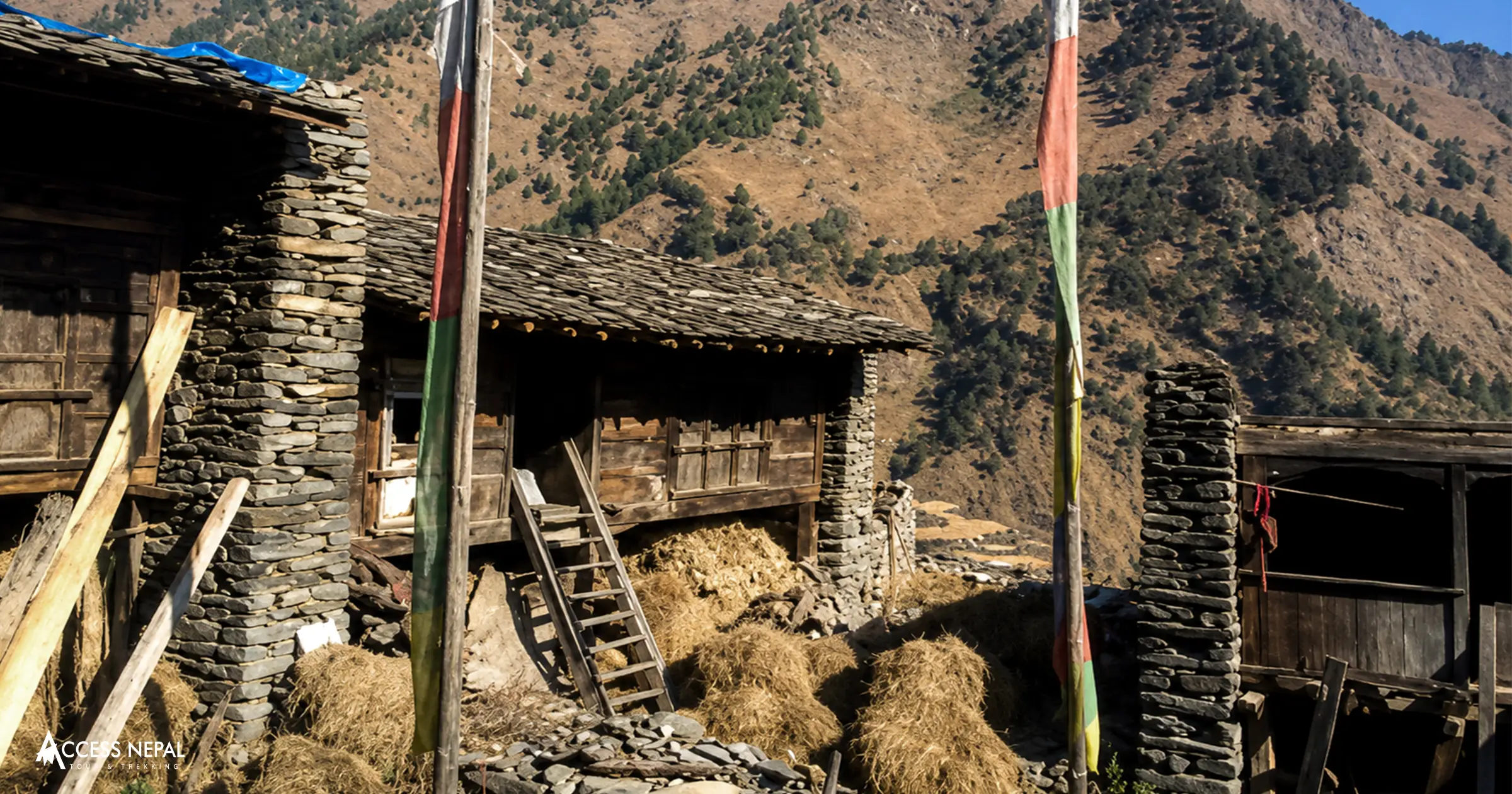
The 2015 Gorkha earthquake and its aftershocks caused catastrophic damage throughout the Langtang region. Entire villages were destroyed, ancient monasteries collapsed, and the livelihoods of Tamang communities across the trekking corridor were devastated overnight. Recovery has been slow, uneven, and ongoing — and the Tamang Heritage Trail itself has been a vehicle for that recovery in ways that go beyond economic contribution.
When you trek this route today, you are walking through a landscape of resilience. The rebuilt houses in Gatlang and Briddim were constructed with community labour and traditional methods. The reconstructed monastery at Briddim contains new murals painted by the same families that lost everything in 2015. The homestay network was built partly with international aid but sustained entirely by community determination. The trekkers who come, stay, eat, and spend in these villages are providing the economic oxygen that makes long-term cultural survival possible.
The Tamang Heritage Trail After the Earthquake
This is not a burden to carry on the trail — it is a reason to come with an open heart. The warmth with which Tamang families receive trekkers on this route is not simply Nepali hospitality, though it is certainly that. It is also the warmth of a community that knows its visitors matter, that understands the connection between your presence and its future, and that chooses to welcome you as a participant in that future rather than simply as a customer passing through.
The Tamang Heritage Trail is more than a trek. It is an act of solidarity with a community that deserves to be seen. Come and see them.
The Tamang Heritage Trail is available year-round with Access Nepal Tour and Treks. Custom itineraries, group departures, and family-friendly packages are available. Contact us to build your personalised Tamang experience.
Fascinating facts about Sagarmatha National Park, The Roof of the World
Prev
Annapurna Circuit Trek Elevation: Complete Altitude Guide
NextAwards and Achievements
Access Nepal Tour and Treks has been recognized with TripAdvisor’s prestigious Travelers’ Choice Award for multiple consecutive years, reflecting our unwavering commitment to quality and clients’ satisfaction.













Leave Your Comment