

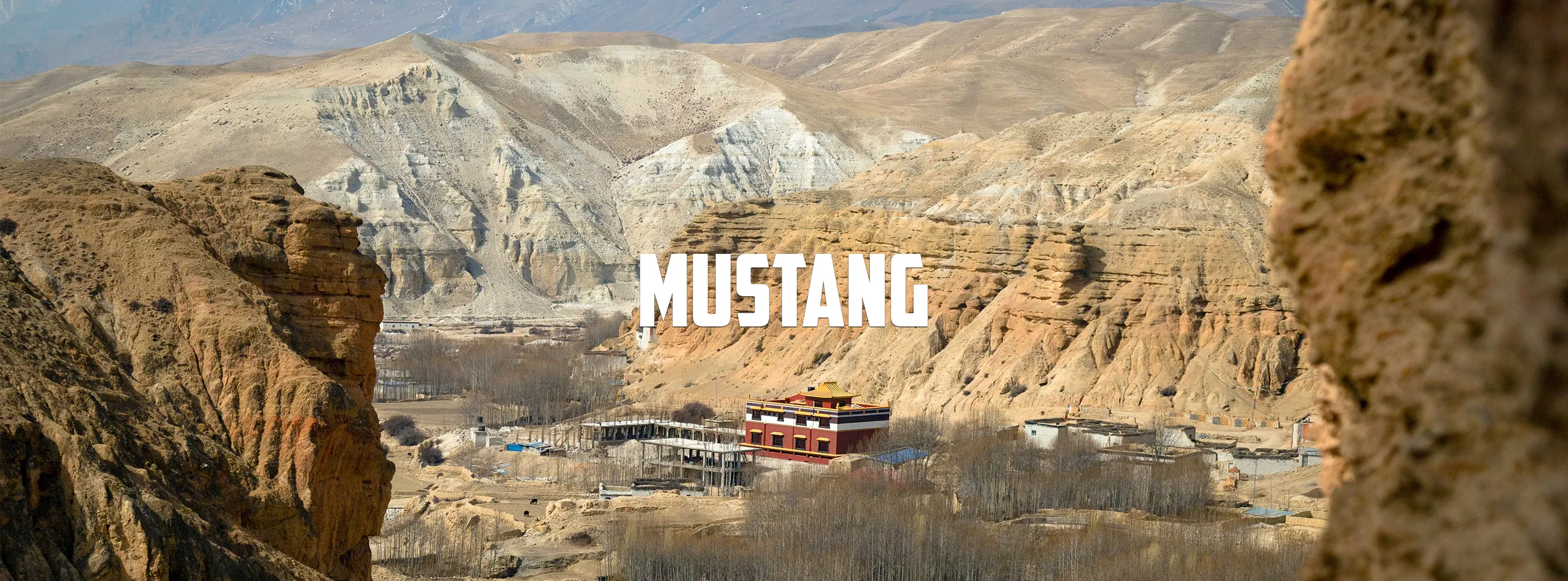
Mustang Nepal
- Places
- Edited By: Ayesha Sapkota .Updated on: 3 Jul 2026
Mustang Nepal: 25 Things You Need to Know Before You Visit Mustang
Somewhere behind the Annapurna and Dhaulagiri ranges, in the rain-shadow of the Himalayas, sits a place that looks nothing like the rest of Nepal. Red-and-gold cliffs riddled with 2,000-year-old caves. A walled medieval city ruled by kings until 2008. A desert where prayer flags outnumber trees. This is Mustang, and until 1992, almost no outsider had ever set foot in it.
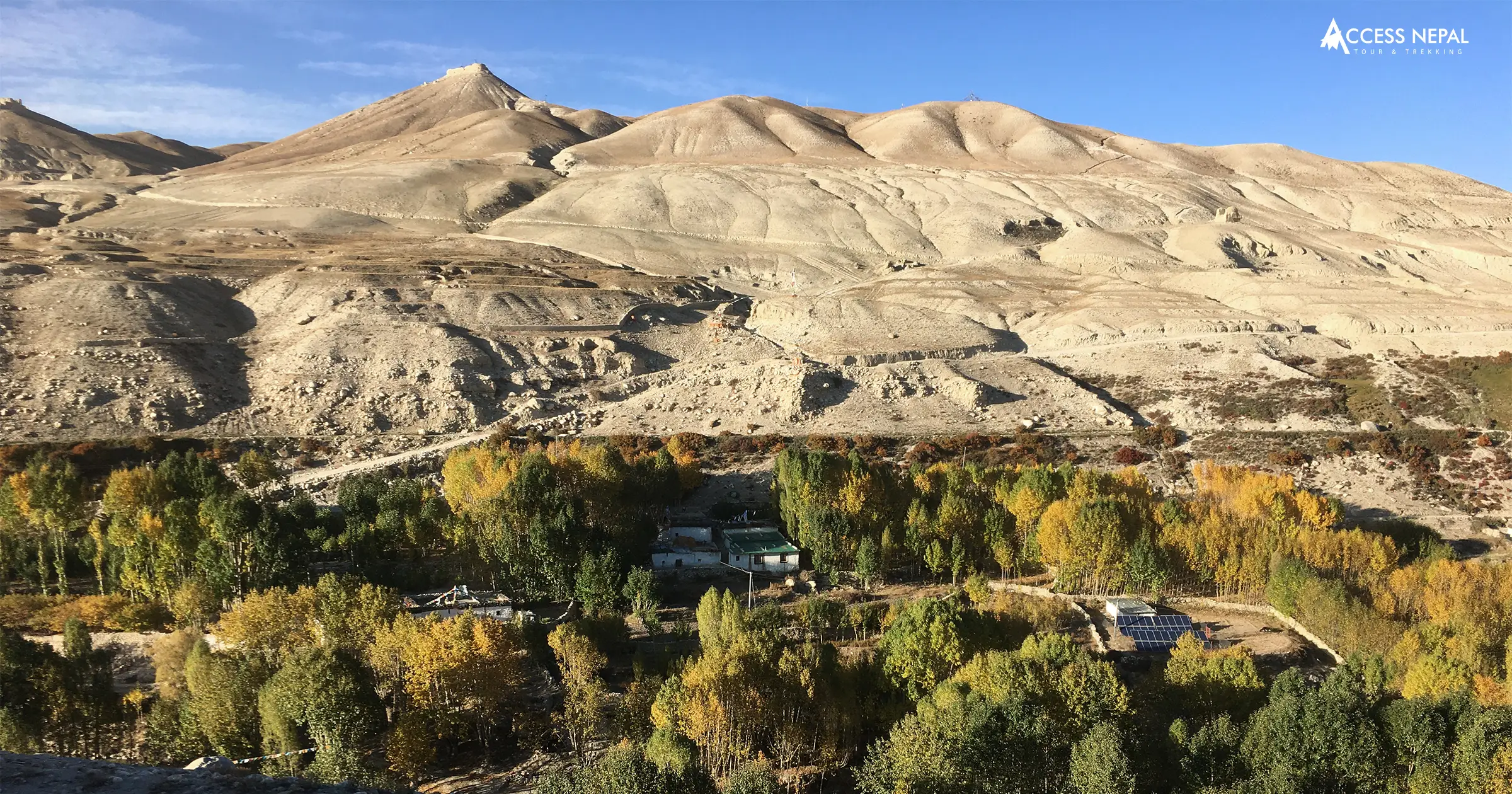
Today, Mustang is finally open but only just. It’s still one of the most tightly controlled travel destinations on Earth, with a daily permit fee, a mandatory guide, and a landscape so otherworldly that first-time visitors often say it looks more like Mars, or Tibet, than Nepal. If you’re weighing whether to add it to your bucket list, this blog covers everything about Mustang, like history, cost, permits, best time to go, and what to pack.
Table showing Quick Facts about Mustang Nepal
| Location | Northern Nepal, bordering the Tibet Autonomous Region of China |
| District | Mustang district, Gandaki Province |
| Districts split into | Upper Mustang (restricted) and Lower Mustang (Open) |
| Elevation range | About 2,700 m Jomsom to over 4,000 m (Lo Manthang and beyond) |
| Capital of former kingdom | Lo Manthang |
| Main permit | Restricted Area Permit (RAP) |
| Best season | Mar-Jun and Sep-Nov |
| Nearest airport hub | Jomsom (via Pokhara) |
History and Cultural Significance of Mustang
Mustang isn’t just remote — it’s historically its own country. The Kingdom of Lo was founded in 1380 by Ame Pal, a warrior who built the walled capital of Lo Manthang as a fortress against Tibetan and Nepali incursions alike. For over 600 years, Lo functioned as a semi-independent Buddhist kingdom, controlling the lucrative salt-trade route between Tibet and India through the Kali Gandaki gorge.
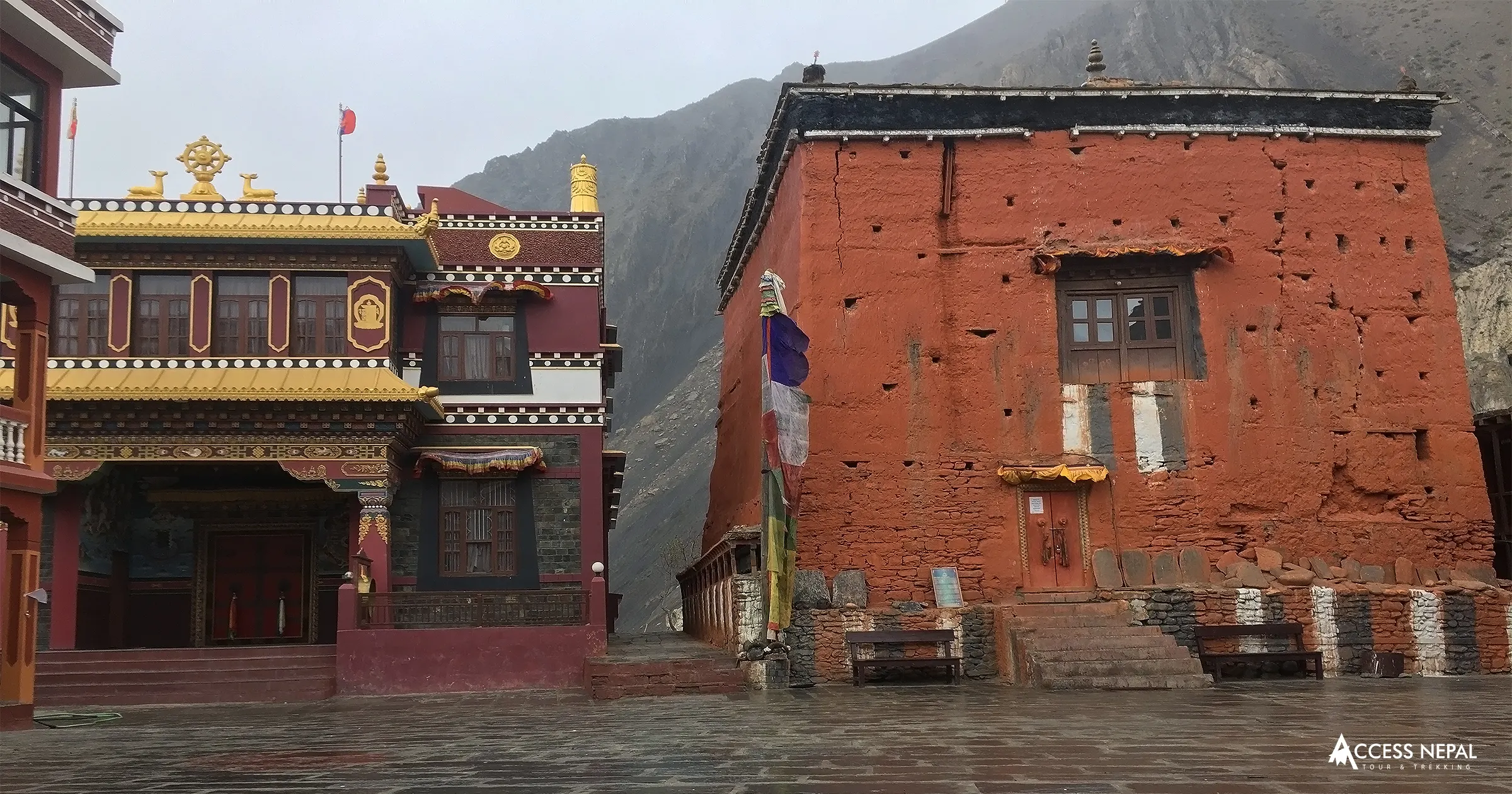
Traditional Tibetan Buddhist monastery interior or monk performing rituals in Lo Manthang
Because of its extreme isolation, Mustang preserved a version of Tibetan culture that has largely vanished from Tibet itself. Locals — known as Loba in the Upper region — speak a Tibetan dialect, practice Vajrayana Buddhism (with pockets of the older Bön faith), and follow a way of life almost unchanged for centuries.
- Nepal formally annexed Mustang into its territory in the 18th century, but the local monarchy retained ceremonial and cultural authority for generations after.
- The last King of Mustang, Jigme Palbar Bista, ruled as a cultural figurehead until the Nepali government officially abolished the monarchy in 2008. He passed away in 2016, closing a 25-generation royal lineage.
- Mustang remained completely closed to foreigners until 1992 — making it one of the last places on the planet to open its doors to outside visitors, and a big reason its culture feels so remarkably intact today.
- The region’s biggest cultural event is the Tiji Festival, a three-day masked-dance ceremony held every spring in Lo Manthang, re-enacting the mythical triumph of good over a demon that once threatened the kingdom.
Geography of Mustang
Mustang sits in the rain-shadow of the Annapurna and Dhaulagiri massifs — two of the world’s 8,000-metre giants standing shoulder to shoulder just south of the region. As monsoon clouds are wrung dry crossing these peaks, almost no rain reaches Mustang on the other side. The result is a genuine high-altitude desert, unlike anywhere else in Nepal.
- The Kali Gandaki Gorge, which runs straight through Mustang, is frequently cited as one of the deepest gorges on Earth when measured against the peaks flanking it (Dhaulagiri and Annapurna I).
- The terrain is a surreal mix of wind-eroded red and ochre cliffs, dry canyons, wind-carved rock pillars, and flashes of green around irrigated village oases and poplar groves.
- Elevations range from around 2,700 m at Jomsom up to 4,000+ m around Lo Manthang, with several nearby ridges and passes exceeding 4,500 m.
- Constant, ferocious afternoon winds funnel up the Kali Gandaki Valley daily — locals structure their entire travel and work schedules around calm mornings and windy afternoons.
Upper Mustang vs. Lower Mustang
This is one of the most important distinctions to understand before you plan your trip, because it changes your permits, budget, and itinerary entirely.
| Base of Difference | Lower Mustang | Upper Mustang |
| Restricted Area Permit Required | No | Yes (USD 50 per day) |
| Main hub | Jomsom, Kagbeni, Marpha | Lo Manthang |
| Landscape | Greener, apple orchards, river valley | Desert, cliffs, ancient cave systems |
| Culture | Thakali ethnic villages | Tibetan-influenced Loba culture |
| Access | Open to all visitors | Guide plus registered agency required |
| Trip length | 2-5 days | 7-12+ days |
| Signature sites | Muktinath Temple, Marpha | Lo Manthang walled city, Chhoser caves |
In short: Lower Mustang (Jomsom, Kagbeni, Marpha, Muktinath) is easily accessible, budget-friendly, and doesn’t require special permits — a great option if you’re short on time or money. Upper Mustang (Lo Manthang and beyond) is the “forbidden kingdom” experience become more expensive, more remote, and considerably more dramatic.
Major Attractions of Mustang
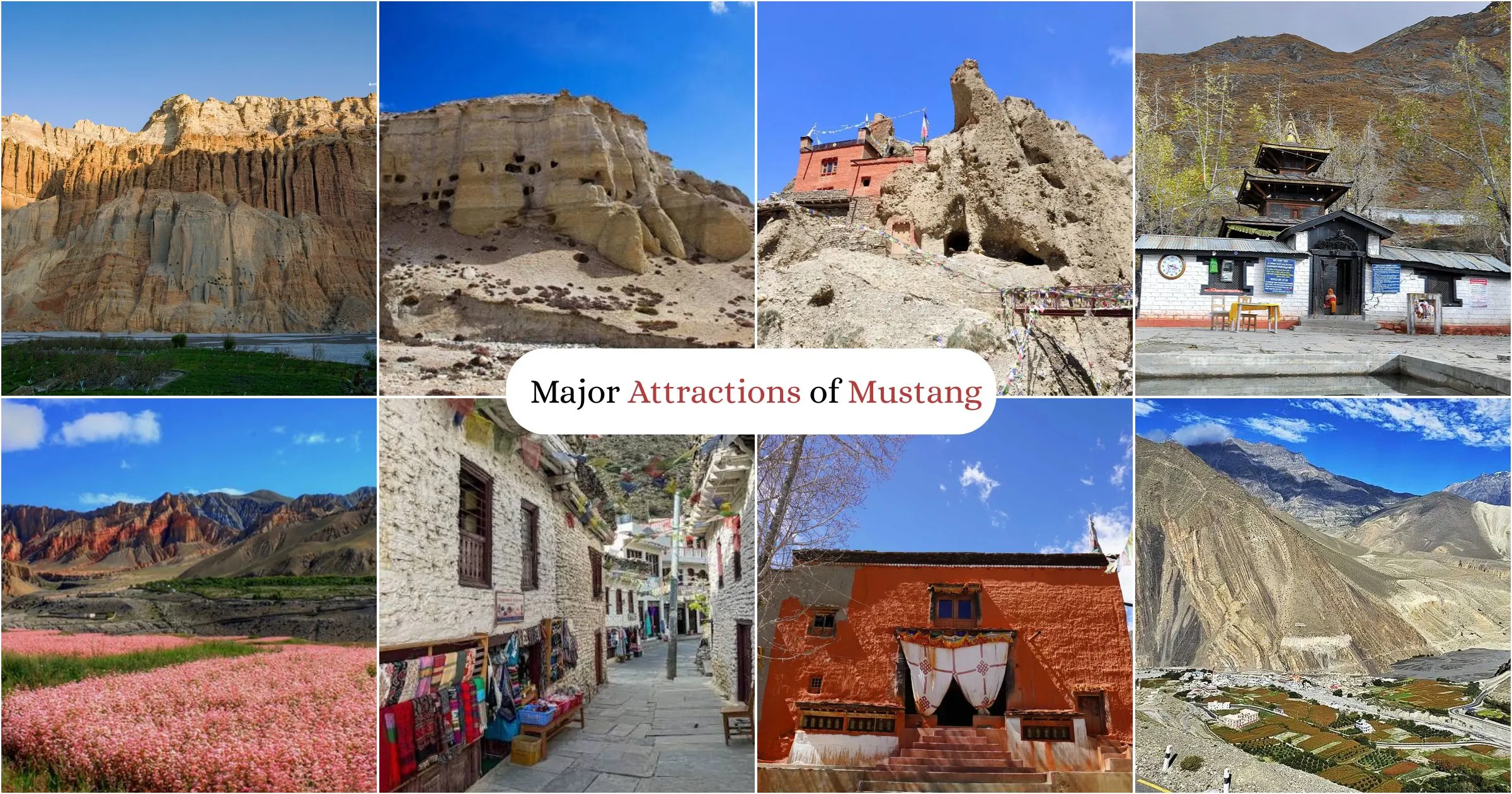
Major attractions of Mustang in one place
- Lo Manthang: The walled former royal capital, home to the old Raja’s palace, four major monasteries, and narrow alleyways barely changed since the 1400s.
- The Sky Caves of Mustang (Chhoser & Chhosar) — a mysterious network of an estimated 10,000+ hand-dug cliffside caves, some dating back nearly 3,000 years, once used as dwellings, meditation retreats, and burial chambers. Human remains and Buddhist manuscripts have been found inside.
- Muktinath Temple — a sacred pilgrimage site for both Hindus and Buddhists at roughly 3,800 m, believed to be a place of “liberation” (moksha), with 108 water spouts and an eternal flame.
- Kagbeni — a beautifully preserved medieval village at the gateway to Upper Mustang, with a maze-like old town and dramatic river-valley views.
- Marpha — famous for its whitewashed stone houses, apple orchards, and locally distilled apple brandy.
- Tsarang (Charang) — home to Mustang’s largest monastery and an imposing five-story former royal fort.
- Luri Gompa (Luri Cave Monastery) — a stunning, rarely visited cliffside cave monastery with centuries-old murals.
- Ghar Gompa — one of the oldest monasteries in the region, predating even Lo Manthang.
- Dhakmar — striking candy-striped red-and-white cliffs, one of the most photographed landscapes in Upper Mustang.
Things to Do in Mustang
- Explore Lo Manthang on foot, wandering the walled old city and visiting its four main gompa monasteries: Jampa, Thubchen, Chodey, and Choprang.
- Trek the classic Upper Mustang circuit, tracing ancient salt-trade trails between cliffside villages.
- Visit a cave monastery and, where permitted, peer into the archaeological mystery of the sky caves.
- Time your trip for the Tiji Festival (usually held in May) to watch masked monks perform ritual dances passed down for generations.
- Cycle or mountain bike Upper Mustang’s increasingly motorable roads have made it a rising star for long-distance mountain biking trips.
- Take a Jeep safari through the Kali Gandaki desert landscape if you’re short on time but still want to reach Lo Manthang.
- Sample Marpha’s apple brandy and browse the orchards the village is famous for.
- Soak in the culture at Muktinath, watching Hindu and Buddhist pilgrims share the same sacred ground.
- Photograph the golden hour Mustang’s cliffs turn a deep, glowing red-orange at sunrise and sunset, arguably the best light for photography anywhere in Nepal.
- Spot Himalayan wildlife on quieter side trails away from the main village routes.
Wildlife and Biodiversity in Mustang
Mustang’s high-altitude desert is harsher than the lush Himalayan valleys most people picture, but it supports a surprising range of hardy, specialized wildlife — much of it protected within the Annapurna Conservation Area, one of the largest protected areas in Nepal.
Related Packages
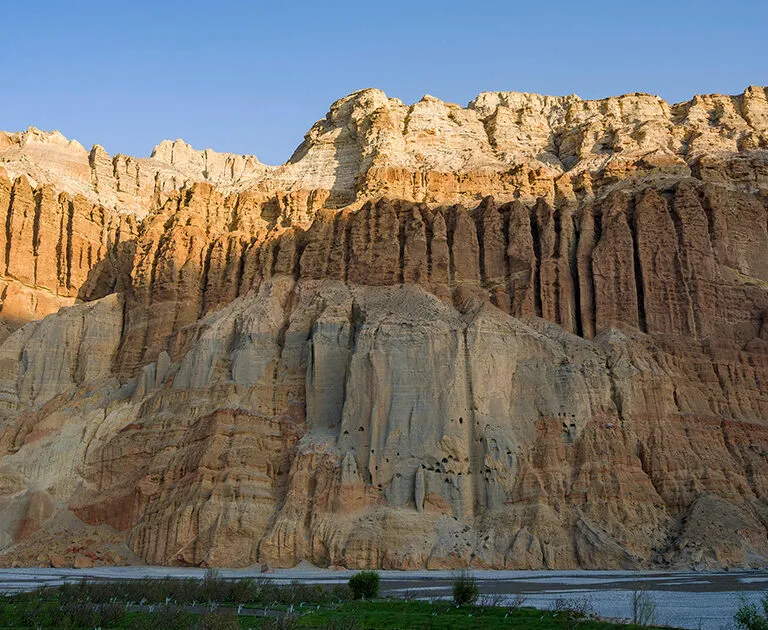
Upper Mustang Trek - 15 Days
 4,010m/13,156ft
 Moderate
 All
Inclusive Plan
All
Inclusive Plan
Before US$2650 Now US$2290 14% Off
- Snow leopard — the region’s most elusive resident; rarely seen, but Mustang’s terrain is considered good habitat.
- Blue sheep (bharal) — commonly spotted grazing on steep slopes, and the primary prey species for snow leopards in the area.
- Kiang (Tibetan wild ass) — found in the northern reaches near the Tibet border, one of the few places in Nepal to see this striking wild equine.
- Himalayan marmot — a common, vocal sight on open grasslands during the warmer months.
- Tibetan argali and Himalayan Thar — wild sheep and goat species adapted to the region’s steep, rocky terrain.
- Lammergeier (bearded vulture) and Himalayan griffon — enormous raptors frequently seen riding thermals above the cliffs.
- Hardy alpine flora, including juniper, caragana shrubs, and seasonal wildflowers that briefly transform the desert after the short summer rains.
Best Time to Visit Mustang
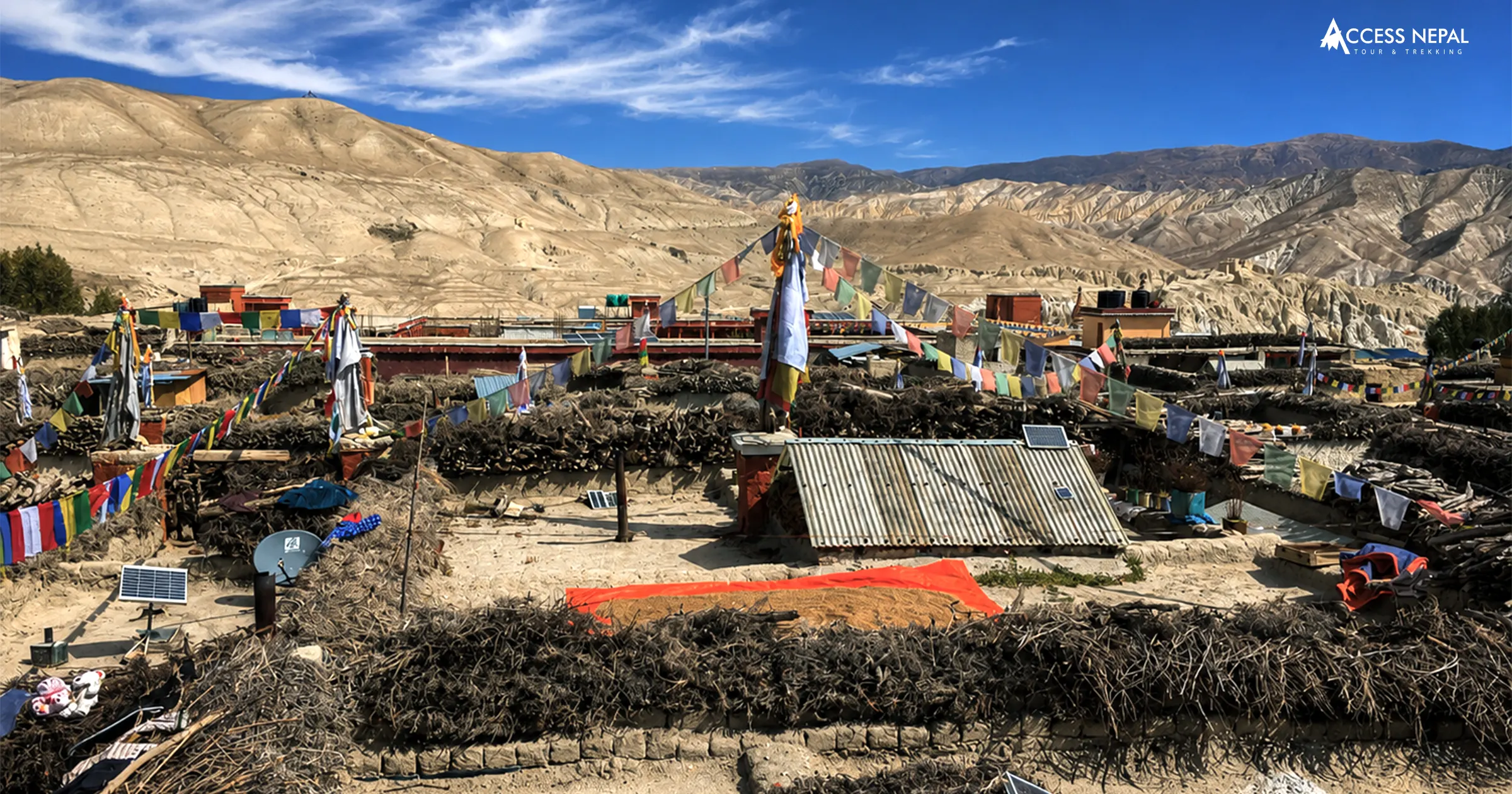
Best view of Mustang
Mustang’s rain-shadow location makes its “best season” calendar the opposite of most of Nepal — it’s one of the few regions that’s genuinely trekkable even during the summer monsoon.
Spring (March–June) — Warming temperatures, blooming apple orchards in Marpha, and the Tiji Festival in May. One of the two best windows to visit.
Summer / Monsoon (June–August) — While the rest of Nepal gets drenched, Mustang stays largely dry thanks to the rain-shadow effect, making this a genuinely good (and much quieter) time to visit. Expect strong afternoon winds.
Autumn (September–November) — Crisp air, exceptional mountain visibility, and comfortable daytime temperatures. The most popular season, alongside Spring.
Winter (December–February) — Bitterly cold, with regular snowfall at higher elevations and possible road/flight disruptions. Lo Manthang can see temperatures well below freezing at night. Only recommended for well-prepared, cold-weather travelers, and some guesthouses close entirely.
Our recommendation: aim for late March–May or September–November for the most comfortable weather and full village/guesthouse availability.
How to Reach Mustang: The Complete Guide
Getting to Mustang is part of the adventure. Here’s how the routes break down.
By Air (Fastest)
Fly Kathmandu → Pokhara (about 25 minutes), then Pokhara → Jomsom (about 20 minutes). Jomsom is the main airstrip and gateway to both Lower and Upper Mustang. Note: Jomsom flights operate only in the early morning, since strong winds pick up by mid-late morning, and delays due to weather are common — always build in buffer days.
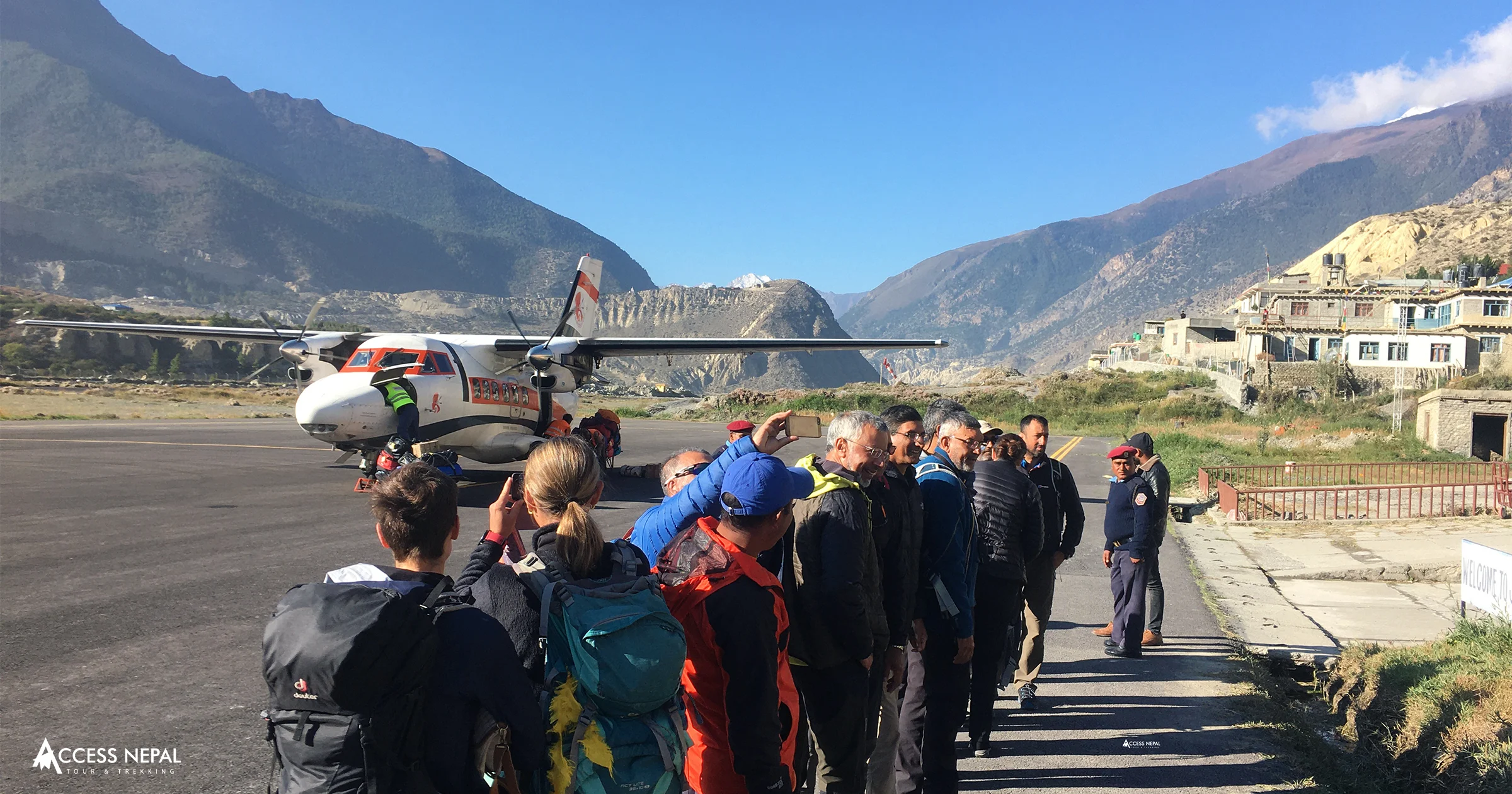
Mustang Nepal by Air
By Road
- Kathmandu → Pokhara: ~200–206 km, roughly 6–8 hours on a well-paved highway.
- Pokhara → Jomsom: ~157–170 km, roughly 7–9 hours; the stretch beyond Beni turns into a rough, partly unpaved mountain road requiring a 4WD jeep.
- Kathmandu → Jomsom direct: roughly 360–380 km total, typically split across two days.
- Jomsom → Muktinath: ~18–25 km, about 1–1.5 hours by jeep on a much-improved (partly blacktopped) road.
- A public night bus runs Kathmandu → Muktinath directly (roughly 12–15 hours, around USD 35) for budget travelers.
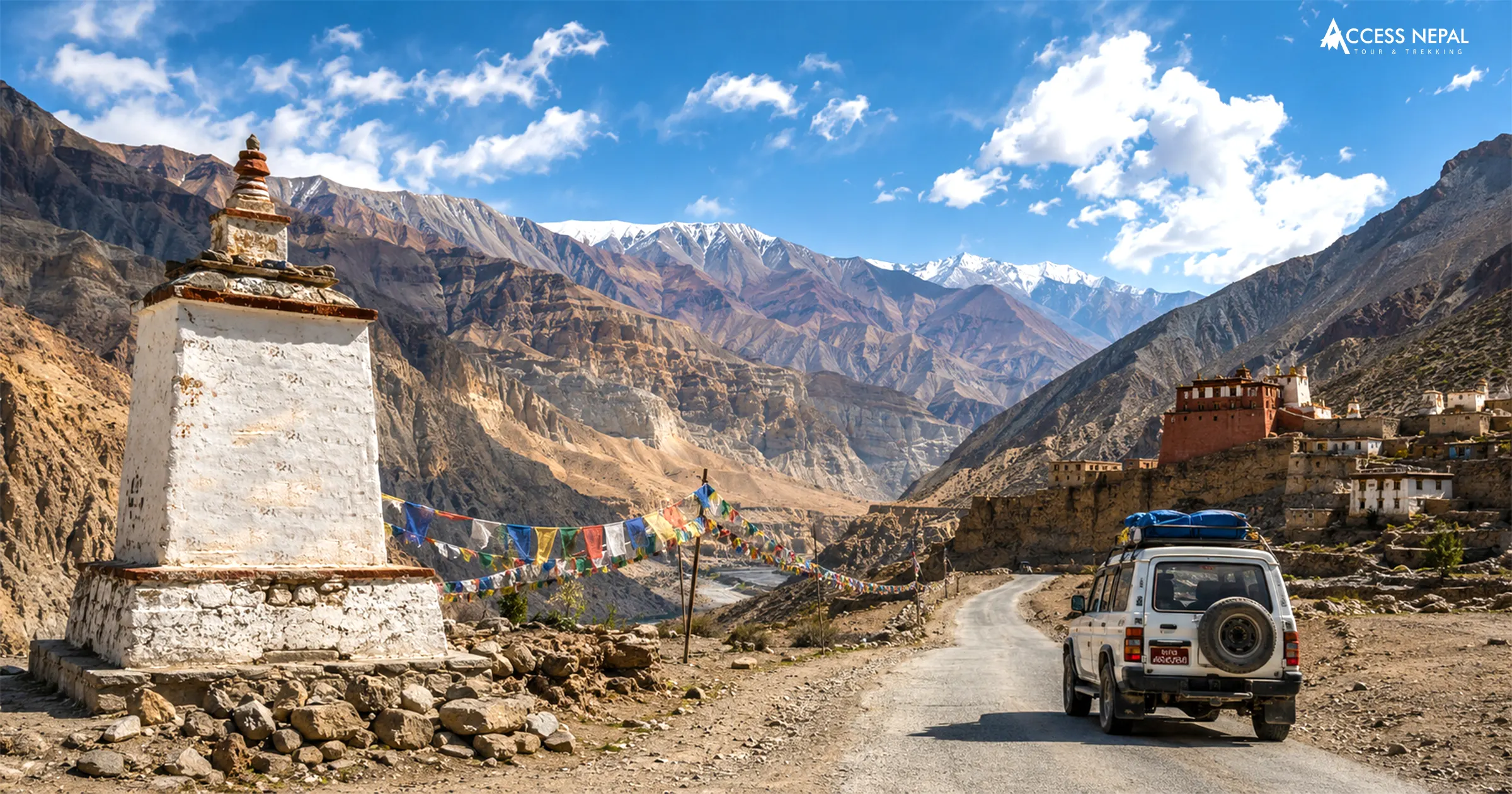
Mustang Nepal by Road
For Indian Travellers
Most Indian travelers cross at the Sunauli–Belahiya border, then continue roughly 3–4 hours by road to Pokhara before following the standard Pokhara–Jomsom route.
Getting Into Upper Mustang Itself
From Jomsom, Upper Mustang is reached by 4WD jeep or on foot via Kagbeni (the official RAP checkpoint). The classic trek from Jomsom to Lo Manthang covers roughly 64 km one-way over 4–5 days; a jeep tour can cover the same ground in 1–2 days.
Permits Required to Travel to Mustang
Permit rules differ sharply depending on whether you’re staying in Lower Mustang or heading into the restricted Upper Mustang region — and the rules changed significantly in 2026, so double-check with your operator before booking.
For Lower Mustang (Jomsom, Kagbeni, Marpha, Muktinath)
ACAP (Annapurna Conservation Area Permit) — approx. NPR 3,000 (~USD 30) for foreign nationals.
TIMS Card — approx. USD 20, required only if trekking overland; not required if you fly directly in and out of Jomsom.
For Upper Mustang (Lo Manthang and beyond)
Restricted Area Permit (RAP) — now USD 50 per person, per day, following a major 2026 reform that replaced the old flat USD 500-for-10-days fee with a pay-as-you-go daily rate. A 7-day itinerary now costs noticeably less than it did under the old system.
ACAP — still required, since Upper Mustang sits within the Annapurna Conservation Area (~USD 30).
A licensed guide, booked through a registered Nepali trekking agency, is mandatory — this rule has not changed. You cannot obtain the RAP independently as an individual traveler; only registered agencies can apply on your behalf.
Good news for solo travelers: as of March 2026, Nepal removed the old two-person minimum group requirement — solo travelers can now obtain a Restricted Area Permit as long as they’re accompanied by a licensed guide.
Where permits are issued: Department of Immigration or Nepal Tourism Board offices in Kathmandu or Pokhara only — never on the trail itself. Processing typically takes a few working days, so apply well ahead of your trip.
How Much Does It Cost to Travel to Mustang?
The total cost to travel to Mustang, Nepal, generally ranges from $800 to $1,200 per person for Lower Mustang, and $1,500 to $3,500+ per person for Upper Mustang, depending entirely on your itinerary, transportation, and nationality.
The vast price difference is driven by strict government regulations on Upper Mustang, which is designated as a restricted zone bordering Tibet.
The cost to trek Mustang varies hugely depending on whether you stick to Lower Mustang or go all the way to Lo Manthang, and whether you trek, jeep, or fly.
| Trip Style | Approx. Cost (per person) |
| Cost (per person)Lower Mustang short trip (Jomsom–Muktinath, 2–4 days) | USD 300–600 |
| Upper Mustang jeep tour (5–7 days) | USD 900–1,800 |
| Upper Mustang trek (10–14 days) | USD 1,800–3,000+ |
What typically drives the cost:
- Restricted Area Permit fees (now USD 50/day inside Upper Mustang — the single biggest line item on longer trips)
- ACAP and TIMS fees (~USD 30–50 combined)
- Domestic flights (Kathmandu–Pokhara–Jomsom, roughly USD 115–150 each way for Pokhara–Jomsom alone)
- Guide fees (typically USD 20–30 per day)
- Jeep/4WD transport if driving rather than trekking
- Accommodation and meals (teahouse/guesthouse-based, generally simple but not free)
- Optional porter support
Related Packages
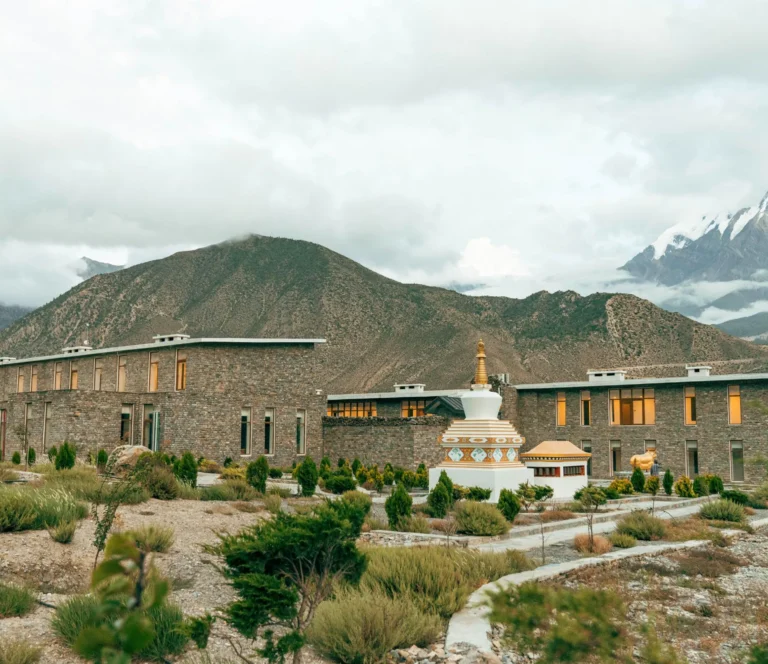
Shinta Mani Mustang Luxury Tour - 11 Days
- 2,800 m/ 9,186 ft
-
Easy
- All
Inclusive Plan
Before US$11000 Now US$9800 11% Off
A good rule of thumb:the shorter, guide-required, jeep-based Lower Mustang or short Upper Mustang trip is by far the most budget-friendly way to experience the region; the full classic trek to Lo Manthang and back is the premium, immersive option.
Hotels and Accommodation in Mustang
Accommodation quality drops the further north (and higher) you travel, which is part of the region’s remote charm.
- Jomsom and Kagbeni — the best-equipped towns in the region, with a mix of comfortable guesthouses and a few boutique-style lodges offering private bathrooms and hot showers.
- Marpha — charming stone guesthouses, some with excellent home-cooked Thakali food.
- Lo Manthang — accommodation here has genuinely improved in recent years, ranging from basic family-run guesthouses to a handful of increasingly comfortable lodges catering to trekkers and jeep tourists; most rooms are simple twin-share with shared bathrooms, though a few upscale options now exist.
- Villages between Kagbeni and Lo Manthang (Chele, Syangboche, Ghami, Tsarang) have basic teahouse-style lodging, often family homes with a few guest rooms, hearty meals, and limited electricity/hot water (sometimes at a small extra charge).
- Some smaller guesthouses in higher villages close between December and February, so confirm availability if travelling in winter.
How to Prepare for the Mustang Nepal Trek and the Packing List?
Mustang isn’t as technically difficult as a high mountain pass trek, but the altitude, wind, dust, and long driving/trekking days still call for real preparation.
Physical Preparation
Build a base of cardio fitness (hiking, walking, cycling) for 4 to 6 weeks before departure.
Practice walking with a loaded daypack, especially if you’re trekking rather than jeep-touring.
If you have any heart, lung, or blood pressure conditions, get medical clearance before traveling above 3,000 m.
Packing List for Mustang Nepal
Clothing
- Layered clothing system: base layers, fleece/insulating mid-layer, windproof/dust-proof outer shell
- Warm down jacket for cold mornings and evenings
- Wide-brimmed hat or cap plus a warm beanie (temperature swings are extreme)
- Buff, scarf, or dust mask — Mustang’s afternoon winds kick up serious dust
- Sturdy, broken-in trekking boots and comfortable camp shoes
- UV-protective sunglasses (high-altitude sun is intense even in a “desert”)
Gear
- Trekking poles, particularly useful on loose, dusty descents
- A good sleeping bag if trekking (rated to at least -10°C to -15°C for shoulder season)
- Headlamp, portable power bank, and universal plug adapter
- Reusable water bottle plus water purification tablets or a filter
- High-SPF sunscreen and lip balm (essential; the sun and wind combination is brutal)
- Basic first-aid kit and any personal medication
Documents
- Passport (with 6+ months validity) and photocopies
- Passport-sized photos for permit applications
- Printed/digital copies of your permits (RAP, ACAP, TIMS)
- Travel insurance details, ideally covering high-altitude travel and evacuation
Mental Preparation
- Expect long, dusty jeep rides or multi-day trekking with significant daily distances.
- Pack patience for flight delays — Jomsom’s wind-dependent airstrip is notoriously weather-sensitive.
- Come prepared for a genuinely different landscape and culture — Mustang can feel closer to the Tibetan plateau than to the rest of Nepal, and that’s exactly the point.
Is Visiting Mustang Worth It?
Simply the short answer is YES, especially if you’ve already done the “classic” Nepal circuit and want something genuinely different. Mustang isn’t for everyone. It’s expensive relative to other parts of Nepal (thanks to the permit structure), the landscape is stark rather than lush, and reaching Lo Manthang takes real time and effort. If your priority is towering snow peaks and forested trails, Everest or Annapurna will scratch that itch better.
But if you’re after a place that feels genuinely undiscovered a living medieval kingdom, cliffs riddled with millennia-old caves, a culture closer to old Tibet than modern Nepal, and landscapes that look like nowhere else on the continent.
Mustang delivers something few other trips can. Many travelers who’ve done both EBC and Mustang describe Mustang as the more culturally unforgettable of the two, even if it’s less dramatic in pure mountain scenery.
Frequently Asked Questions About Mustang, Nepal
What is Mustang Nepal famous for?
Mustang is famous for being the last of Nepal’s forbidden kingdoms — a walled medieval capital (Lo Manthang), centuries-old Tibetan Buddhist culture, dramatic red desert cliffs, and thousands of mysterious ancient sky caves carved into its cliff faces.
What is the cost of a Mustang in Nepal?
If you mean traveling to the Mustang region: budget roughly USD 300–600 for a short Lower Mustang trip, or USD 1,800–3,000+ for a full Upper Mustang trek, depending on duration, permits, and transport style (see Section 10 above for a full breakdown).
Why is Mustang, Nepal called Mustang?
“Mustang” is believed to be an anglicized version of “Lo Mantang” or “Mönthang,” meaning “Plain of Aspiration” in Tibetan — the name of the region’s historic capital, which eventually became the name used for the wider district.
How to reach Mustang from Pokhara?
Fly Pokhara → Jomsom (about 20 minutes), or drive via Beni — roughly 157–170 km, taking 7–9 hours on a partly rough mountain road. From Jomsom, continue by jeep or on foot into Upper Mustang.
Do we need a permit to visit Mustang, Nepal?
It depends where you’re going. Lower Mustang (Jomsom, Kagbeni, Muktinath) only requires the standard ACAP permit. Upper Mustang (Lo Manthang and beyond) requires the more expensive Restricted Area Permit (RAP) at USD 50/day, plus ACAP, plus a mandatory licensed guide.
How many km is it from KTM to Mustang?
Roughly 360–380 km by road to Jomsom, or around 420–460 km if measuring all the way to Lo Manthang in Upper Mustang, depending on the exact route taken.
Which is better, Manang or Mustang?
They’re different experiences. Manang (on the Annapurna Circuit) offers lusher mountain scenery and is easier to combine with a Thorong La pass crossing. Mustang offers a starker desert landscape and a far more distinct, preserved Tibetan Buddhist culture. Many trekkers choose Mustang specifically for its cultural uniqueness, and Manang for its classic Himalayan mountain views.`
How far is Muktinath from Mustang?
Muktinath sits right on the border of Lower and Upper Mustang, about 18–25 km (roughly 1–1.5 hours by jeep) from Jomsom, the region’s main hub.
What is the best time to visit Mustang Nepal?
March–June and September–November offer the most comfortable weather and clearest views. Uniquely, Mustang’s rain-shadow location also makes it a viable (and much quieter) monsoon-season destination, unlike most of Nepal.
How much money is required to visit Mustang?
Plan for at least USD 300–600 for a short Lower Mustang visit, and USD 1,800–3,000 or more for a complete Upper Mustang trek to Lo Manthang, factoring in permits, guide fees, transport, and accommodation.
Is snow falling in Mustang?
Yes, but mainly in winter (December–February), when higher villages like Lo Manthang can see snowfall and temperatures well below freezing at night. Spring, summer, and autumn are generally dry, thanks to the rain-shadow effect.
Is self-driving possible in Upper Mustang, Nepal?
Technically, the roads exist, and some travelers do self-drive or self-ride motorbikes into the region, but Upper Mustang remains a restricted area — you’ll still need the Restricted Area Permit, a licensed guide accompanying you, and a suitable 4WD vehicle for the rough sections beyond Beni and Kagbeni.
Can we buy land in Mustang Nepal?
No. Under Nepali law, foreign nationals are not permitted to own land or property anywhere in Nepal, including Mustang. Land ownership is restricted to Nepali citizens.
Are Indians allowed in Upper Mustang?
Yes — Indian nationals can visit Upper Mustang, but they are not exempt from the region’s permit rules. Like all other foreign nationals, Indian travelers need the Restricted Area Permit, ACAP, and a licensed guide arranged through a registered Nepali trekking agency to enter Upper Mustang.
Ready to Explore the Forbidden Kingdom?
Mustang Nepal rewards travelers who want something rarer than the standard Nepal itinerary — ancient caves, a walled desert kingdom, and a culture that has quietly outlasted the modern world around it. Whether you’re drawn to a quick jeep tour to Muktinath or the full trek to Lo Manthang, the key is planning around the permit rules, the wind-dependent flights, and the season that fits your trip best.
Have questions about planning your own Mustang Nepal itinerary, permits, or budget? Get in touch with our team. We’re happy to help you build the right trip for your time frame and travel style.
Our Rewards
Awards and Achievements
Access Nepal Tour and Treks has been recognized with TripAdvisor’s prestigious Travelers’ Choice Award for multiple consecutive years, reflecting our unwavering commitment to quality and clients’ satisfaction.




Leave Your Comment