

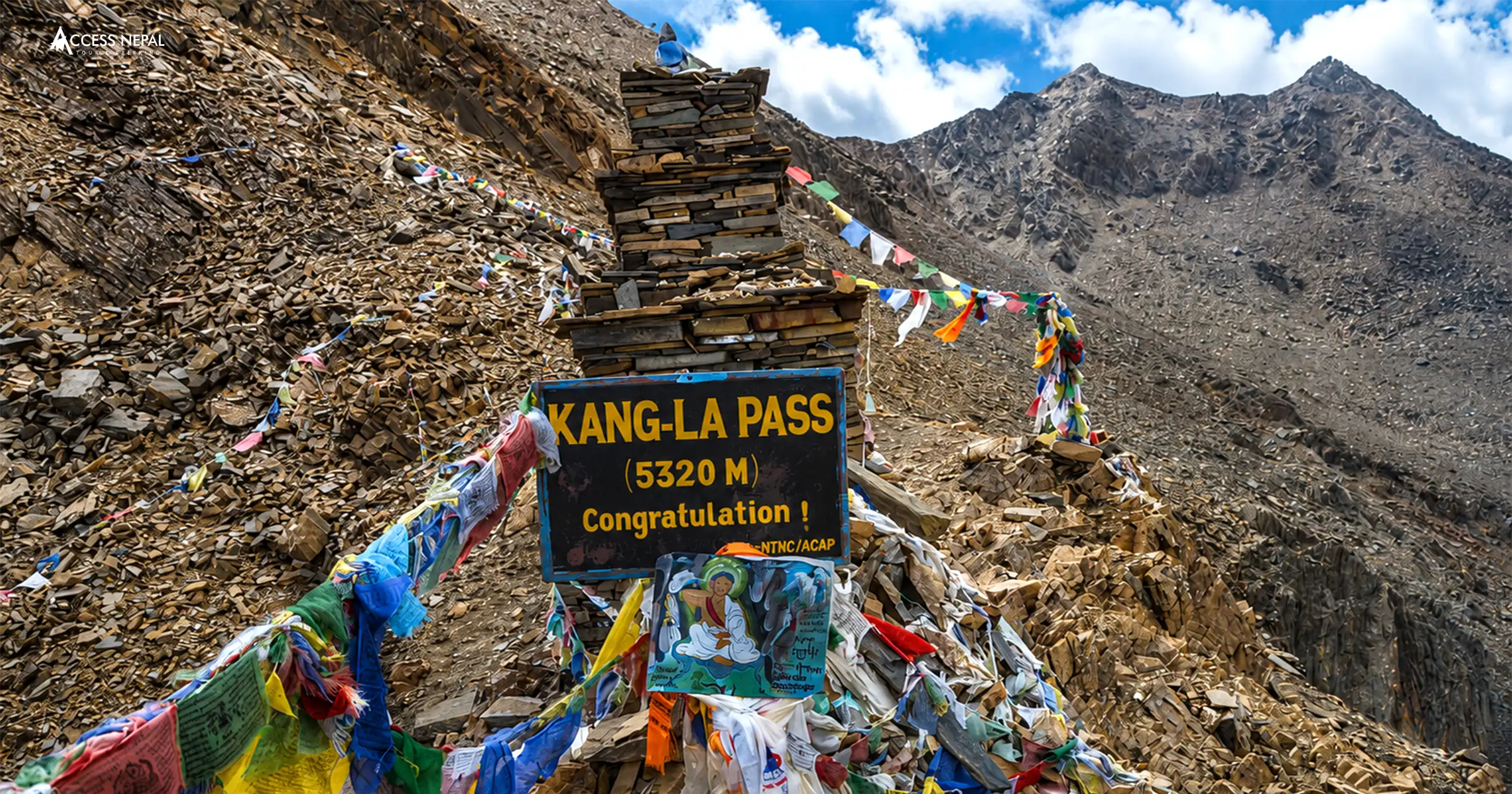
Kang La Pass Trek: 12-Day Itinerary, Difficulty & Permits Guide
- Places
- Edited By: Ayesha Sapkota .Updated on: 6 Aug 2026
Kang La Pass Trek is a wonderful experience, and it is definitely not something you want to miss out on.
The Kang La Pass Trek is a hidden gem offering unparalleled adventure, which takes you to the heart of the Himalayas. This trek is set in a remote and mystical valley known as the Nar Phu Valley. The trek is set in the remote and mystical valley of the Nar Phu, in the Gobi Desert of Tibet, where it offers a unique experience of the ancient Tibetan culture, together with the natural beauty and the high-altitude challenges.
If you’re looking for something more offbeat, the Kang La Pass is the ideal route to experience the untouched nature and traditional way of life in Nepal. Join us at Access Nepal Tours and Treks to explore this hidden gem, where each step reveals stunning views, peaceful monasteries, and a sense of peace and tranquility. This comprehensive guide will equip you with all the essential information to plan your unforgettable Kang La Pass Trek.
Kang La Pass: A Gateway to the Untouched Himalayas
Kang La Pass is a Portal to the Untouched Himalayas, Located in the high Annapurna region of Nepal. Kang La Pass is a high mountain pass that connects the secluded Nar Phu Valley Trek with the more popular Manang district, as part of the popular Annapurna Circuit. The pass is situated at an impressive height of 5,306 meters (17,409 feet), is a sheer ascent and descent, and is known for the most beautiful scenery in the Himalayas and an exciting hike. It is more than just a location; it is a window into a world that has been captured and frozen in time, where ancient rituals and unspoiled nature blends.
The Kang La Pass is a high pass situated in the north-central part of Nepal in the Manang district of the Gandaki Province, which is a natural route and a high pass between the remote Nar Phu Valley and the main Annapurna Circuit at the village of Ngawal. The Nar Phu Valley itself is located northeast of the Annapurna massif, which was only open to foreigners since 2003. This solitude has played a major part in maintaining its distinctive culture and pristine natural surroundings, making the Kang La Pass Trek a trip to a hidden Himalayan haven.
Kang La Pass Trek Overview
Kang La Pass Trek is normally combined with the Nar Phu Valley trek, Access Nepal Tours and Treks and is a 12 day trek. This hike is known for its ruggedness, leading hikes through various environments, from rainforest and narrow canyon to high alpine desert. The trip shows an intimate encounter with the remote Nar and Phu villages, which are living museums of ancient Tibetan Buddhist culture, mostly untouched by modernization. They will see the traditional stone houses, ancient monasteries, chortens, and mani walls, which will give in-depth insights into their living culture.
The most significant part of the trek is the crossing of the Kang La Pass, a grueling day when hikers will get breathtaking views of the Annapurna range and other majestic peaks in the Himalayas.
The overall Kang La Pass Trek is moderate to strenuous and is suitable for trekkers who have some experience in high altitude trekking and are physically fit. If you’re looking to venture off the beaten path in Nepal, immerse yourself in its culture, and experience the raw and untamed beauty of the Himalayas, it is an ideal choice.
Comparison of Kang La Pass with Thorong La Pass and Larkya La Pass
For some context, here are a couple of other high passes in Nepal, Thorong La Pass (Annapurna Circuit) and Larkya La Pass (Manaslu Circuit), and and Kang La Pass which connects the remote Nar Phu Valley to the main Annapurna Circuit trail.
| Feature | Kang La Pass | Thorong La Pass | Larkya La Pass |
| Elevation | 5,306m (17,409 ft) | 5,416m (17,769 ft) | 5,106m (16,752 ft) |
| Region | Nar Phu Valley / Annapurna | Annapurna Circuit | Manaslu Circuit |
| Difficulty | Moderate to Strenuous | Strenuous (long day) | Strenuous (remote, steep) |
| Crowds | Very Low | High | Moderate |
| Cultural Immersion | High (Tibetan Buddhist) | Moderate | High (Tibetan Buddhist) |
| Scenery | Remote, rugged, pristine | Diverse, classic Himalayan | Remote, wild, diverse |
| Best Season | Mar-May, Sep-Dec | Mar-May, Sep-Nov | Mar-May, Sep-Nov |
Best Time to Trek Kang La Pass
Timing is essential when trekking Kang La Pass for a safe and enjoyable trek. There are basically two trekking seasons in Nar Phu Valley Trek and each of them has its merits:
- Spring (from March to May): It is one of the most popular trekking seasons in Nepal. Often fine weather with moderate temperatures and clear skies, providing good views of the mountains. The lower parts are fringed with flowers such as rhododendrons and other wildflowers, introducing a splash of color to the area. High altitudes will still have cold temperatures, but they will be tolerable, and crossing the Kang La Pass will be possible.
- Autumn (Mid-September to Mid-December): Autumn is widely regarded as the best time for trekking Kang La Pass: Autumn marks the end of the monsoon season with crisp and clear weather. The air is fresh, the vision is best, and the temperature is not too hot and not too cold. The days are fairly settled for high altitude trekking, especially the difficult trek to the Kang La Pass. Another cultural aspect of the trek is the festive nature of the high holidays of the Nepali people, Dashain and Tihar.
Trekking can be done at other times of the year, but has its own challenges:
- Winter (Dec to Feb): Freezing, very snowy, and passes may be closed, making trekking very difficult and not recommended for the Kang La Pass.But for the more advanced winter hiker, it has a very austere and solemn beauty.
- June-August: Monsoon (heavy rainfall), making trails slippery, mountain views unclear, and risk of landslides. The lower valleys are lush, the high passes are in cloud and there is lots of insect activity. In general, this is not a good time for the Kang La Pass Trek.
The best time to plan a Kang La Pass Trek is during the spring or autumn when the weather is most ideal, and the overall experience is best.
How difficult is Kang La Pass Trek?
This is a very difficult pass that is extremely hot. Kang La Pass Trek is a moderate to strenuous trek for a trekker who is physically fit and has some experience in trekking at high altitudes. It is not a technical climb, but the sheer length of the days and high altitude combined with the steep approach and descent to and from the pass also make it a challenging climb.
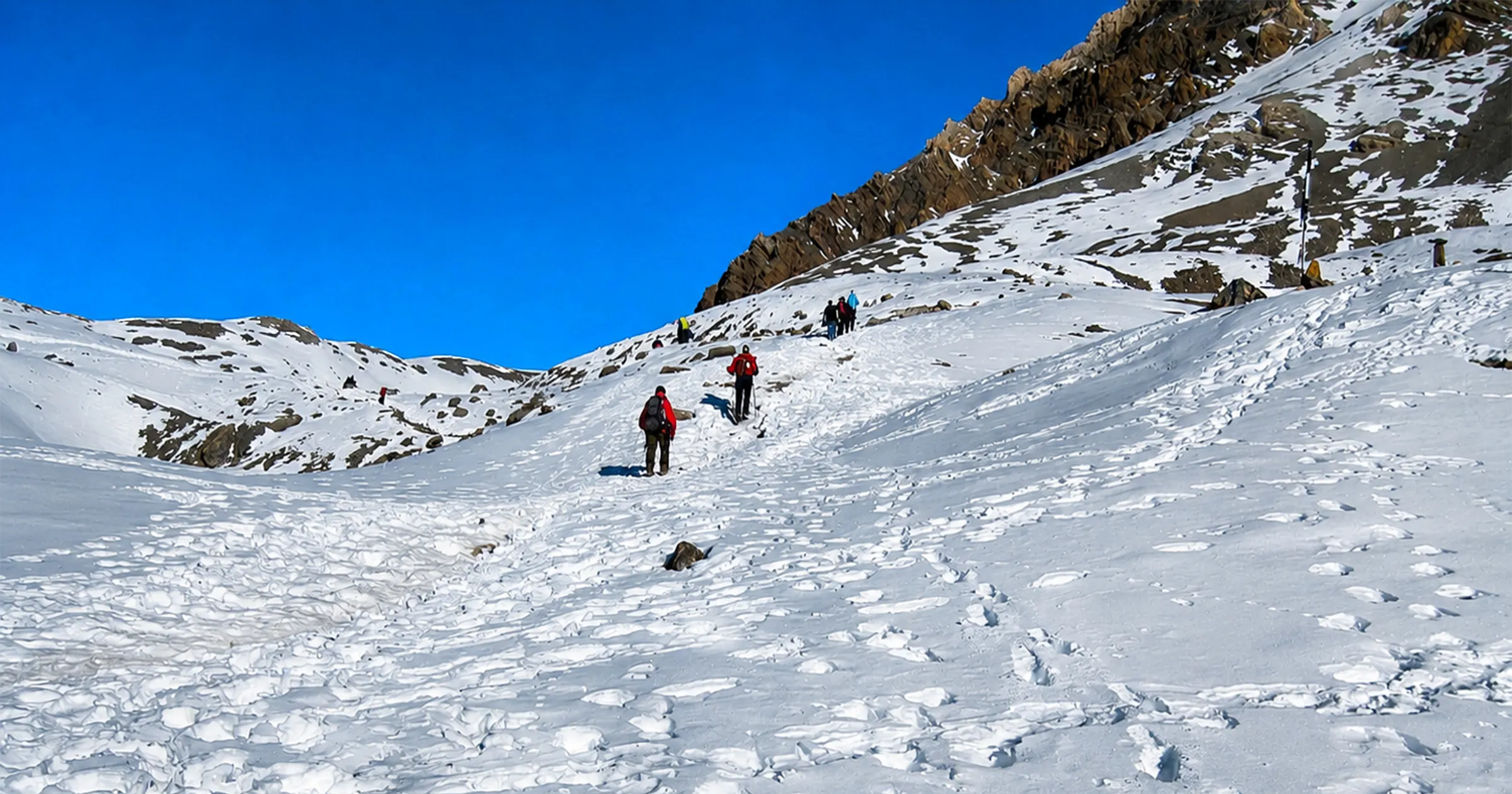
Kang La pass trek difficulty
Body strength and stamina
The trekkers should be physically fit. It is highly recommended that a person run, swim, cycle, or hike with a backpack for at least 2-3 months before the trek. Trails are uneven, with steep climbs, rocky ground, and possibly snowy areas, notably around the Kang La Pass, so strong legs, core strength, and general endurance are essential.
Altitude Considerations
This hike’s highest point is 5,306 m at Kang La Pass. At these heights, the risk of Acute Mountain Sickness (AMS) is a massive issue. Access Nepal Tours And Treks also organize acclimatization days like Day 06 at Phu in the program to allow trekking tourists to acclimatize to the thin air. But it is important to note that trekkers should remain cognizant of AMS symptoms and inform their guide at the earliest. Slow and steady acclimatization, good hydration, and nutrition are crucial to success.
Age and Experience
There is no age limit; however, people of all ages, provided they are physically fit and healthy, can do the Kang La Pass Trek. Having previous experience of multi-day treks, especially above 3,500m, is a great asset. It is beneficial for trekkers to learn about their body’s reaction to altitude and the requirements for prolonged physical activity in a far-flung location. For those with existing health issues, it’s always best to seek medical advice on high-altitude trips.
Acclimatization Tips
Good acclimatisation is essential for the Kang La Pass Trek to ensure safety and enjoyment. Failure to follow the guidelines of acclimatization can result in mild symptoms to serious ones such as Acute Mountain Sickness (AMS). These are some key tips to ensure proper acclimatization:
- Slowly up: The key principle of trekking at high altitudes is to move up slowly. With this in mind, this Access Nepal Tours And Treks itinerary for the Nar Phu Valley Trek has been planned to include gradual hikes and rest days.
- Stay Hydrated: Drink plenty of water, particularly throughout the day. Drink 3-4 liters of water per day. Herbal teas, soups, and fruit juices also help. Keep alcohol, too much caffeine, and sugary drinks away, as they might lead to dehydration.
- Climb High, Sleep Low: This is a principle whereby the individual goes to a higher altitude during the day for some hours and then goes back to a slightly lower altitude to sleep. This allows your body to get used to the higher altitudes without exerting itself too much. This is usually a part of the Nar Phu Valley Trek package.
- Rest and Sleep Well: Make sure you get adequate rest and sleep. At altitude your body has to work harder, so adequate recovery is important. On acclimatization days, avoid physically demanding activities.
- Have a Balanced Diet: Take a diet that is high in carbohydrates, as these are more easily digested and will give you longer term energy at altitude. Don’t eat a full meal that is rich in fat and calories.
- Don’t drink alcohol or smoke: Drinking alcohol, or smoking, will make your body less able to adjust and might make symptoms of AMS worse. It’s best to avoid them throughout the trek.
- Listen to Your Body: Take notice of any symptoms that occur, including headache, nausea, dizziness, fatigue, and loss of appetite. Let your guide know if you notice any of these. Early diagnosis and treatment is critical.
- Consider Diamox (Acetazolamide): Consult your doctor about taking Diamox, a medication that can help prevent and treat AMS. Before your trek, it is important to speak with a medical professional about possible side effects, as well as the proper dosage.
What is the recommended itinerary for the Kang la Pass trek?
The Kang La Pass Trek is one of the Nar Phu Valley Trek, a fascinating trek taken off the beaten track to the otherworldly and culturally rich Nar Phu Valley. Access Nepal Tours And Treks, a 12-day tour package is well-structured to allow for adequate acclimatisation and for an enjoyable tour. Below is a description of a typical trek route:
- Days 1-2: Arrival and Kathmandu Exploration. Arrive in Kathmandu, followed by a day of sightseeing UNESCO World Heritage Sites, aiding initial acclimatization.
- Day 3: Drive to Koto (2,620m). A long, scenic drive marks the start of the trek into the Nar Phu Valley.
- Days 4-5: Trek to Meta (3,560m) and Phu (4,150m). The trek officially begins, ascending through forests and canyons to the ancient Phu Village.
- Day 6: Acclimatization Day at Phu (4,150m). Explore Phu Village, Tashi Lhakhang Monastery, and nearby viewpoints to aid altitude adjustment.
- Days 7-8: Trek to Nar Phedi (3,490m) and Nar Village (4,200m). Descend to Nar Phedi, then ascend to Nar Village, another culturally rich settlement.
- Day 9: Kang La Pass Crossing to Ngawal (5,320m/17,454ft). The most challenging day involved a strenuous climb to the pass summit for panoramic views, followed by a long descent to Ngawal in the Annapurna Circuit.
- Day 10: Trek to Pisang and Drive to Besisahar (3,250m). Rejoin the Annapurna Circuit trail and drive to Besisahar.
- Day 11: Drive to Kathmandu (1,355m). A final long drive back to the capital.
- Day 12: Departure. Transfer to the airport for your onward journey.
This well-designed path offers a mix of excitement and safety and is designed to allow for a cultural experience.
Major Attractions Along the Trek
It’s a trip through natural beauty and cultural heritage that can be immersive, as is the Kang La Pass Trek. Key attractions include:
- Nar Phu Valley is a hidden gem of ancient Tibetan Buddhist culture and pristine landscapes, a unique opportunity to experience traditional Himalayan communities.
- Phu Village: An enchanting medieval village with stone houses, narrow streets, and ancient monasteries such as the Tashi Lhakhang Monastery.
- Nar Village: A lovely village, slightly bigger than Phu, brimming with cultural heritage, with beautiful mountain views and home to the Nar Phedi Monastery.
- Ancient Kani Gates and Chortens: There are many ornate entrance arches and Buddhist stupas throughout the valley, with prayer flags and intricate carvings adorning them.
- Unique Landscapes: Lush pine and fir forests to dry high alpine regions; narrow canyons and extensive pastures.
- Himalayan Vistas: In fact, before you reach Kang La Pass ,you can enjoy continuous views of the majestic mountains, the Annapurna range, the Lamjung Himal, and much more from the viewpoint of Himalayan Vistas.
- Local Culture and Lifestyle: True contact with friendly local communities of Nar and Phu, and their traditional lifestyle.
- Wildlife Sightings: Better opportunity to see unique species of the Himalayas like the snow leopard, blue sheep (Bharal), and various bird species.
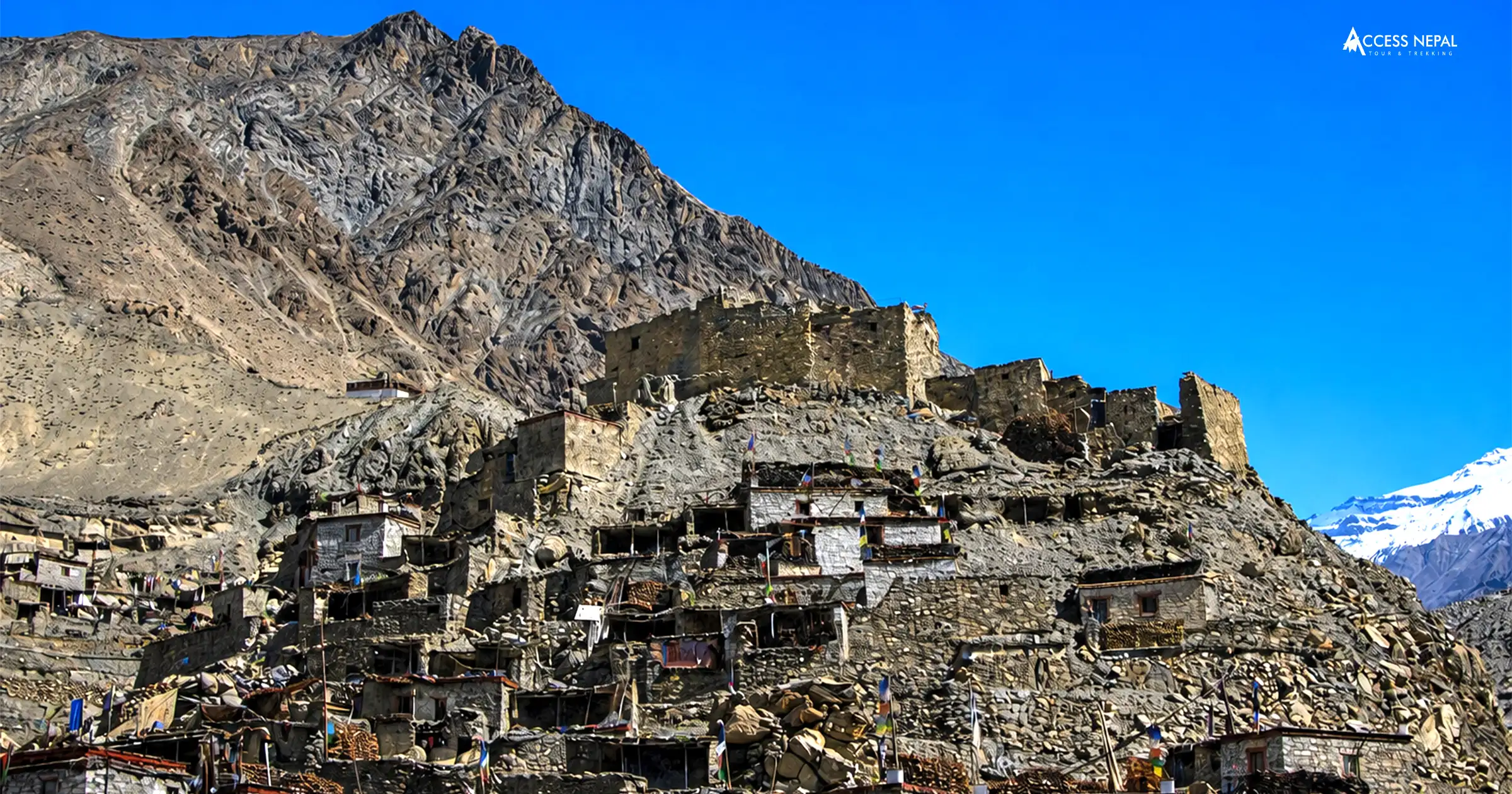
Major attractions of Kang La Pass
Overall, the Kang La Pass Trek is a memorable experience that offers a unique combination of natural beauty and cultural fascination.
Mountains that can be seen from Kang La Pass
One of the most important rewards of this trek is the panoramic views from the top of Kang La Pass. At 5306m, trekkers with sight of some of the highest and most majestic peaks of the Annapurna and Manaslu regions are treated to an awe inspiring 360-degree panoramic view. The following mountains can be seen from Kang La Pass:
- Annapurna II (7,937m/26,040ft)
- Annapurna III (7,555m/24,787ft)
- Gangapurna (7,455m/24,459ft)
- Tilicho Peak (7,134m/23,406ft)
- Himlung Himal (7,126m/23,379ft)
- Chulu East (6,584m/21,601ft) and Chulu West (6,419m/21,059ft)
- Manaslu (8163m/26781ft): The 8th highest mountain in the world. The far away but clear silhouette of this peak can be spotted on clear days.
- Dhaulagiri (8,167m/26,795ft): The 7th peak of the world too can be seen from the pass on a very clear day.
The hike up Kang La Pass is by no means easy and offers a great deal of visual enjoyment in the breathtaking views of the Himalayas.The strenuous hike up Kang La Pass is worthwhile on so many fronts, not least because of the visual enjoyment of the Himalayan scenery.
Permits Required for Kang La Pass Trek
Kang La Pass,a pass in Tibet, is only accessible to those who have received permission for the trek.
As part of the Nar Phu Valley Trek, the Kang La Pass trek needs certain permits, which is a restricted area and conservation zone. Access Nepal Tours And Treks arranges all the necessary permits. Permit required:
- Nar Phu Restricted Area Permit: The Nar Phu Restricted Area Permit is a crucial permit issued by the Department of Immigration for the trek of Nar Phu Valley.The Nar Phu area, which was opened to trekkers in 2003, still does not allow less than two trekkers to a group, with a licensed guide. There are different prices for different seasons:
- September–November: US$100 per person per week plus US$15 per person per day thereafter.
- December to August: US$75 per person per week, after which it is US$15 per person per day.
- Annapurna Conservation Area Permit (ACAP): This permit is issued to all trekkers entering into the Annapurna Conservation Area, including the Nar Phu Valley.Foreigners usually have to pay NPR 3000 ($25-30) in cost.
- TIMS Card (Trekkers’ Information Management System): This is generally needed and/or recommended for full tracking and safety. Access Nepal Tours And Treks will explain whether a TIMS card is required along with a limited area permit for the trek dates.
Important Notes on Permits:
- All permits should be taken from a trekking company such as Access Nepal Tours And Treks.You must submit a copy of your passport, along with passport-size photos, for the application.
- The trekking company will apply for you.
- Prepare and take copies with you all the way on the trek; they will be inspected at checkpoints.
To travel this protected and culturally sensitive area without incident, it is imperative that permits are obtained.
Accommodation and Food on the Trek
The room and food availability on the Kang La Pass Trek are quite comfortable and authentic to the region as it is quite remote. Access Nepal Tours And Treks takes the utmost care to make sure that trekkers get the best facilities that are available in the market.
Accommodation
Kathmandu: Breakfast-included comfortable hotel accommodations on arrival and departure.
The Trek (Teahouses/Mountain Lodges): Basic/Family Run – Basic rooms in shared lodges with shared bedding. Modest facilities—shared squat toilets and a limited number of hot showers (usually additional). Local hospitality and authenticity is the charm.
Nar Phedi: Accommodation may be in a guesthouse in a monastery, which will be a unique cultural experience.
Food
- Kathmandu: The hotel provides breakfast, plenty of options for different kinds of food for lunch and dinner.
- On the Trek: All meals (breakfast, lunch, and dinner) are provided. Teahouse food is wholesome, healthy and easy-to-prepare. Typically eaten is Dal Bhat, noodle soups (Thukpa), Momo, Chapati/Tibetan Bread, rice and pasta, eggs and other different tea/coffee. Seasonal fruit is also offered post dinner.
Here are some notes for food and water;
- Water: Always bring a reusable water bottle and purify your water with tablets, filters, or a SteriPen to reduce plastic waste. Boiled water is on offer for a small charge.
- Dietary Restrictions: Please provide Access Nepal Tours And Treks in advance.
- Snacks: Pack some energy bars, chocolate, and nuts for mid-hike snacks.
Kang La Pass Weather by Season
The weather conditions for each season is essential to the success of your Kang La Pass Trek and packing the proper gear is essential for us to trek in this reason. Weather in the Himalayas is unpredictable, but usually follows a pattern:
- Spring (March, April, May): Mild to warm (15-25°C) at lower altitudes and cooler (5-15°C) at higher altitudes, 0℃ or below at night around Kang La Pass.Clear and still air with good visibility. Blooming rhododendrons. Late spring occasional short rain/snow. For optimal visual clarity, colorful plants, and easy on-foot travel.
- Summer/Monsoon (June, July, August): Warm and humid in lower elevations (20-30 C), cooler but humid at higher elevations (10-20 C). Lots of rain, muddy trails, shady mountain views, more bugs. Threat of landslides and flight delays. Not suitable for high altitude treks.
- Fall (September, October, November): Nice and quiet. Warm days in lower elevation (15-25°C) and cool days in higher elevation (15℃ or above, -5℃ or below at night around Kang La Pass). Best time to trek.Favorable weather conditions with little precipitation, clear skies and good visibility. Fresh air, perfect for photo taking. Optimal trekking conditions, wonderful views, cultural festivals.
- Spring (March, April, May): Freezing to cold. Summer (June, July, August): Cold to freezing. Freezing temperatures even at lower levels (0-10°C) and temperatures even colder at higher levels (-10°C to -20°C or below) around Kang La Pass. Freezing nights with dry and clear days. Heavy snows are frequent; they could close passes. Frozen tracks, shorter daylight. Advanced level for experienced winter walkers and involves specialist equipment.
It is advisable for the trekkers to expect rapid changes in the weather from Access Nepal tours and treks. Layered clothing is a must. Check the most current weather conditions.
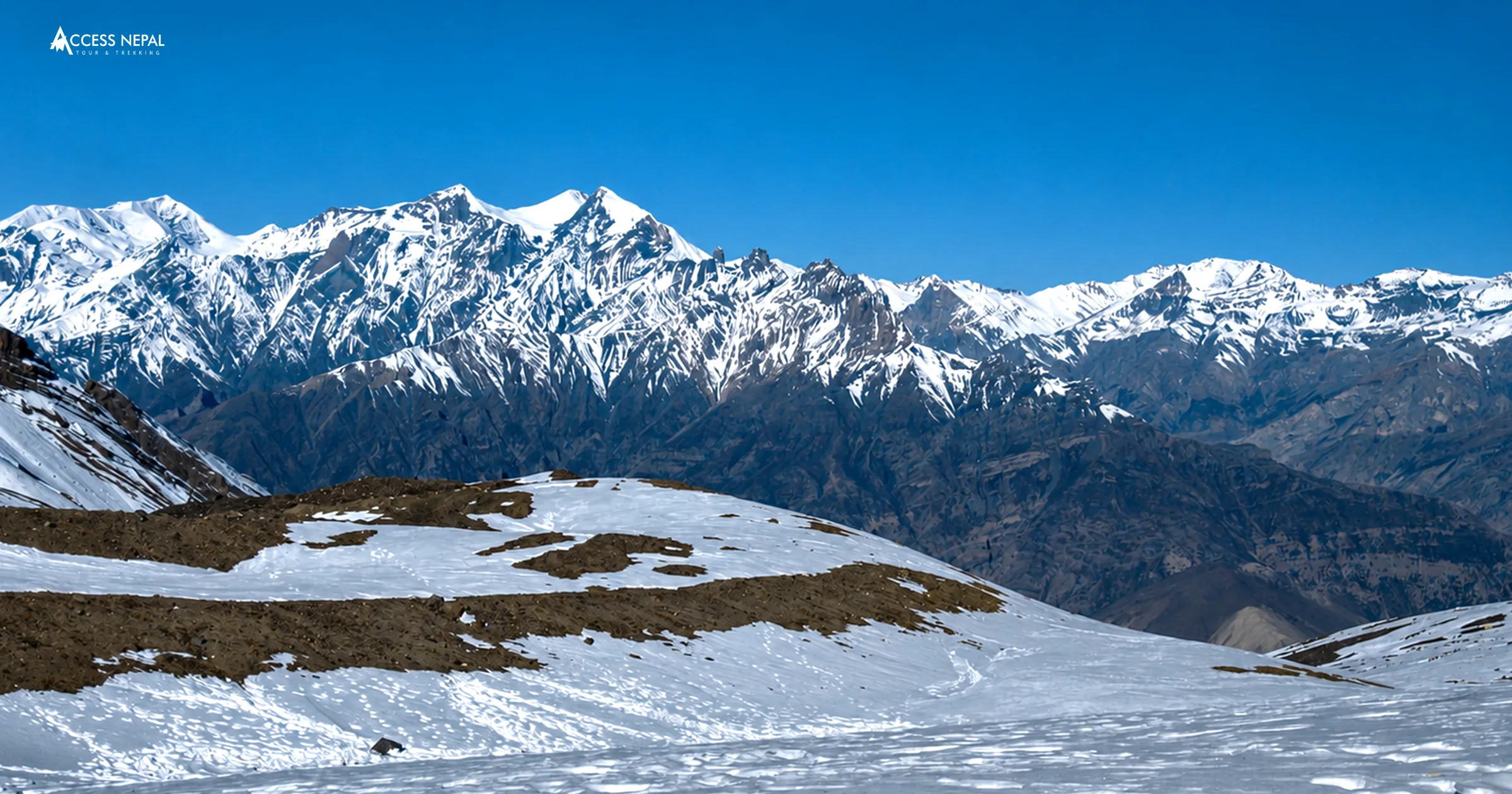
Mountains seen from Kang La Pass
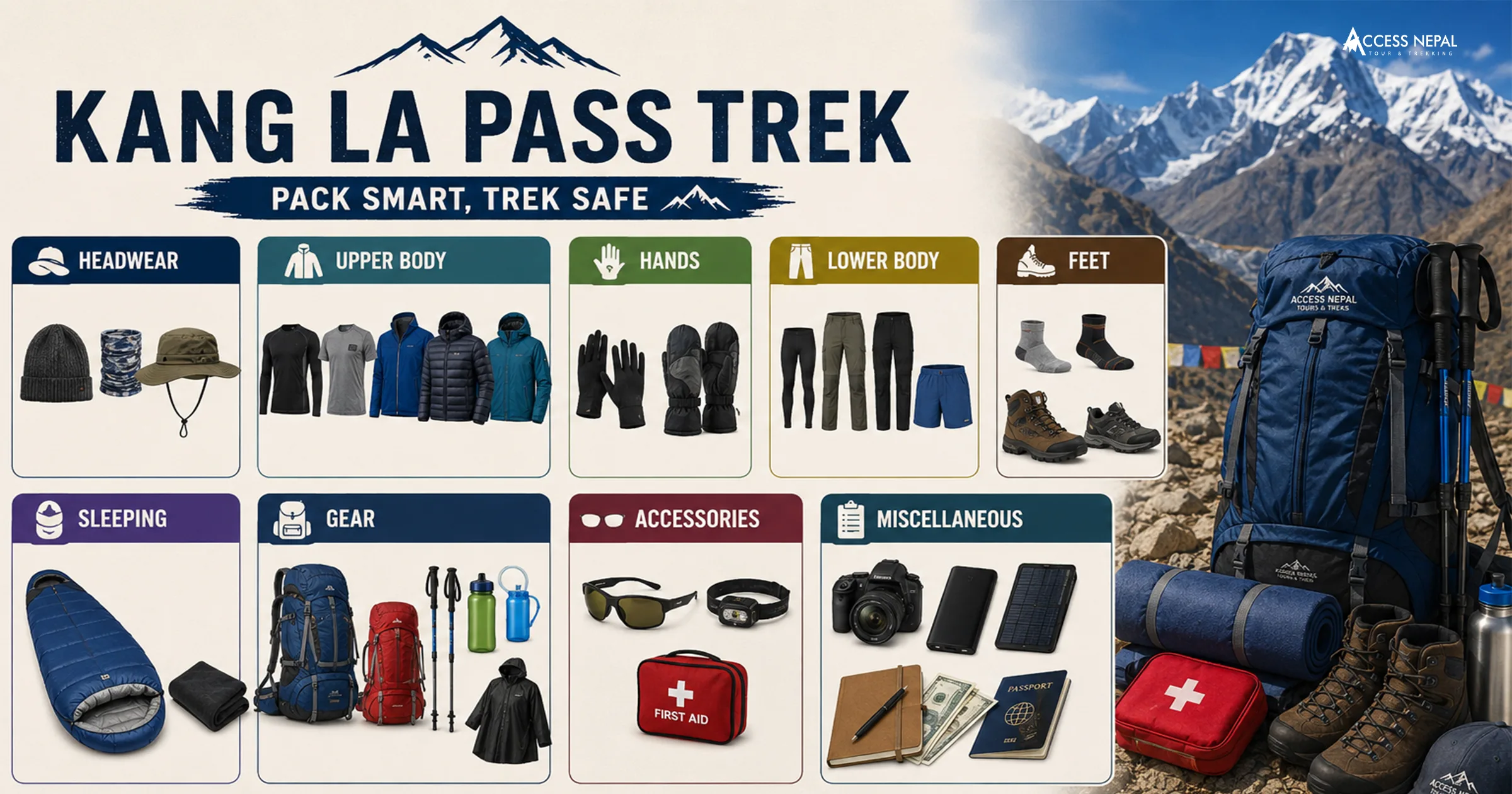
What can you pack for Kang La Pass Trek?
Having a detailed packing list is essential for a successful and comfortable Kang La Pass Trek. Pack smart; pack essentials, no unnecessary weight! A daypack is carried, and the main luggage is carried by porters (20-22 kg). Access Nepal Tours And Treks has detailed guidelines. Key items include:
- Headwear: Beanie cap, neck gaiter/scarf, wide-brimmed sun hat.
- Upper Body: 2 full-sleeved moisture-wicking base layers, 2 half-sleeved moisture-wicking base layers, 1-2 fleece/soft shell mid-layers, down jacket (-10°C or lower), lightweight moisture/windproof outer jacket.
- Equipment: 1 pair of lightweight gloves and 1 pair of heavyweight insulated/water-resistant gloves/mitten.
- Lower Body—1 thermal leggings/thick trekking trousers, 2-3 trekking pants (convertible recommended), 1 comfortable pants for sleeping, 1-2 casual pants, 3-5 pairs of breathable underwear.
- Feet: 2-3 pairs of lightweight inner socks and 2-3 pairs of heavy woolen socks, plus 1 pair of mid-weight trekking boots well broken in and 1 pair of training shoes/sandals.
- Sleeping: Sleeping bag (min. –10°C) (provided by Access Nepal Tours And Treks on request), optional, fleece liner.
- Gear: 50-70L trekking backpack, 20-25L daypack (optional), rain gear (poncho/jacket, backpack cover), trekking poles, water bottles/hydration bag (2x 1-1.5L), combination padlock.
- Accessories: High UV Protection sun specs, headlamp/flashlight with extra batteries, personal first-aid kit (including prescribed medicines, pain relief, antiseptic wipes, band-aids, blister treatment, medicine for altitude sickness), toiletries (toothbrush, toothpaste, biodegradable soap, small towel, moisturizing cream, lip sun cream), a camera with extra batteries, powerbank/solar charger, book or journal, local currency, important paperwork – passport, visa, insurance, tickets, photocopies.
Access Nepal Tours And Treks gives a detailed pre-trek briefing to discuss packing issues and concerns.
Packing List for Kang La Pass Trek
Why Choose Access Nepal Tours and Treks?
The key to a safe, fun, and unforgettable Kang La Pass Trek is selecting the right trekking agency. Access Nepal Tours And Treks is a leading company for a number of reasons:
- Expert Local Guides: Highly experienced, licensed, first-aid trained, and knowledgeable of the culture, history, and environment of Nar Phu Valley for safety and enriching cultural experiences.
- Safety First Approach: Carefully crafted routes, proper acclimatization, comprehensive safety measures, and an emergency-prepared guide. Proper pre-trek briefings were given.
- Responsible Tourism: Commitment to sustainable tourism, benefiting local economies and minimizing environmental impact. Support for trekkers to respect local customs.
- Flexibility Itinerary: The standard 12-day itinerary may be adapted to meet the pace, interest, and time schedule of the individual.
- Quality Equipment and Support: High-quality sleeping bags and down jackets provided as requested. Porters and other support staff are treated well.
- Seamless Logistics: All logistics are taken care of, from airport transfer to Kathmandu hotel, permits, and ground transportation to Kathmandu, so that the trekker can enjoy the adventure.
- Authentic Cultural Immersion: Treks that seek to provide meaningful interactions with local communities and to immerse oneself in the rich cultural heritage of Tibetan Buddhism.
- Competitive Pricing: Clear pricing and competitive pricing without compromising quality of service/safety standards; it is excellent value.
With Access Nepal Tours And Treks, you’re not just booking a trek; you’re partnering with a team dedicated to making your Kang La Pass adventure the journey of a lifetime. Our service to you is led by our commitment to excellence, safety, and true experiences, and your journey through the hidden Nar Phu Valley will be truly memorable.
Frequently Asked Questions on Kang La Pass:
What is the elevation of Kang La Pass?
The elevation of Kang La Pass is 5,306 m (17,408 ft).
Where is Kang La Pass located?
Kang La Pass connects Nar Village to Ngawal/Manang Valley, in the Annapurna region, Nepal.
How difficult is Kang La Pass?
Kang La Pass is Strenuous and steep climb, high altitude. It requires good acclimatization.
Which is the best time to Trek Kang La Pass?
The best time to trek Kang La Pass is March–May and September–November.
What are the permits needed for Kang La Pass?
The permits needed for Kang La Pass trek are Restricted Area Permit (Nar Phu), ACAP (Annapurna Conservation Area Permit), TIMS.
Which mountains can we see from Kang La Pass?
The mountains views seen from the pass are Annapurna II, Annapurna IV, Gangapurna, Tilicho Peak, Manang Valley
Conclusion
The Kang La Pass Trek is not just a hike up the mountains; it is a journey into unparalleled beauty, rich cultural heritage, and thrilling adventure. It’s a once-in-a-lifetime chance to immerse yourself in the untouched wilderness and traditional ways of life of the Nar Phu Valley. The journey is sure to be an unforgettable experience, with stunning scenery, peaceful monasteries, and welcoming locals who will make sure you have a great time.
Access Nepal Tours And Treks is the trusted company that can make this wonderful journey happen. With our experience, safety awareness, and a passion for offering genuine and responsible trekking experiences, our Kang La Pass trek is sure to be a hassle-free, enriching, and truly unforgettable experience. Be entertained by the majestic Himalayas and unravel the mysteries of the Kingdom of Nepal.
Who Is the Comfort Everest Base Camp Trek Suitable For? Guide
Prev
Tihar Festival 2026 Dates, Significance, Foods and Delicacies
NextAwards and Achievements
Access Nepal Tour and Treks has been recognized with TripAdvisor’s prestigious Travelers’ Choice Award for multiple consecutive years, reflecting our unwavering commitment to quality and clients’ satisfaction.













Leave Your Comment