

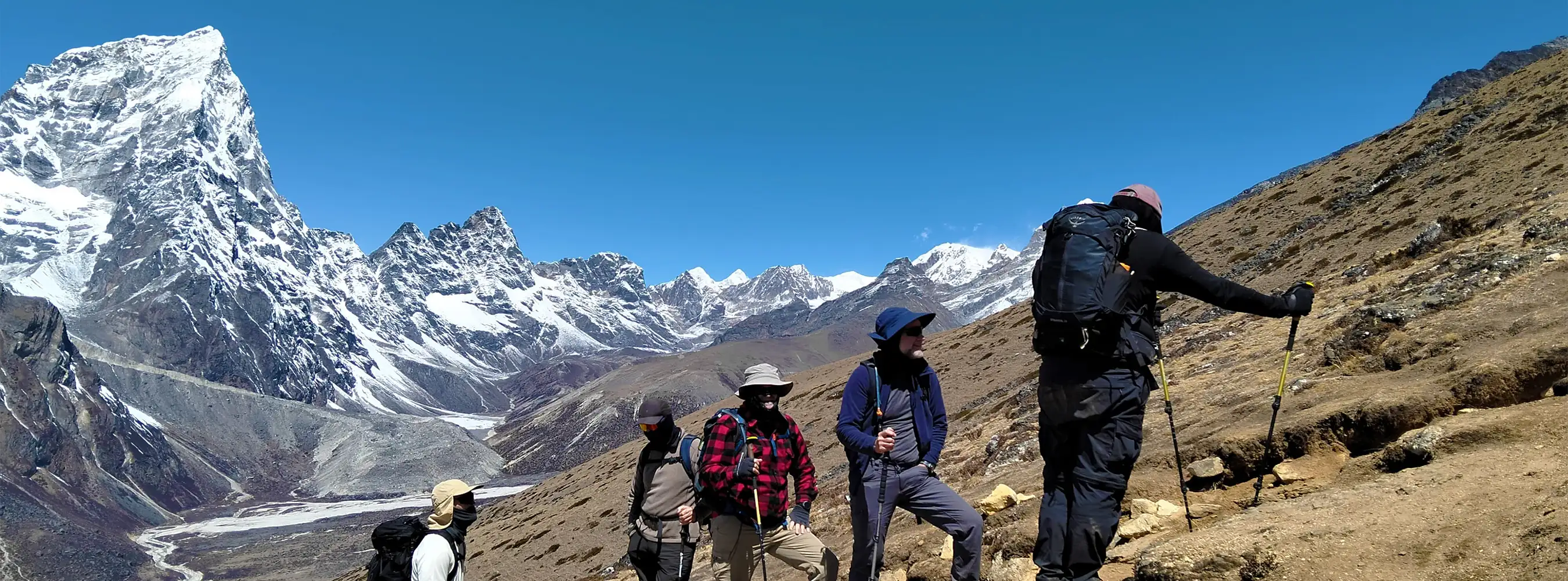
Everest Base Camp Trek Difficulty Altitude Sickness
- Places
- By accessnepaltour
This blog covers the Everest Base Camp Trek difficulty, altitude sickness, and its prevention measures, weather, and how challenging the trek is. If we are being very honest, the Everest Base Camp Trek is not that difficult a trek. It is considered by most trekkers as a moderately difficult trip. This is an Everest Base Camp Trek difficulty and altitude sickness guide that will answer all your questions regarding the trek.
So, anyone who is moderately fit physically should be able to finish the trek pretty smoothly. Even children and elderly individuals ( above 65 years of age) complete the trek every year. So, the trek is possible for almost everyone.
The one problem all trekkers face is the sheer altitude. And with such increasing altitude comes the possibility of facing altitude sickness. While altitude sickness may not seem like much to most of us sitting in our cosy rooms, browsing through trekking packages and blogs, it can turn dangerous if it gets severe.
Related Packages
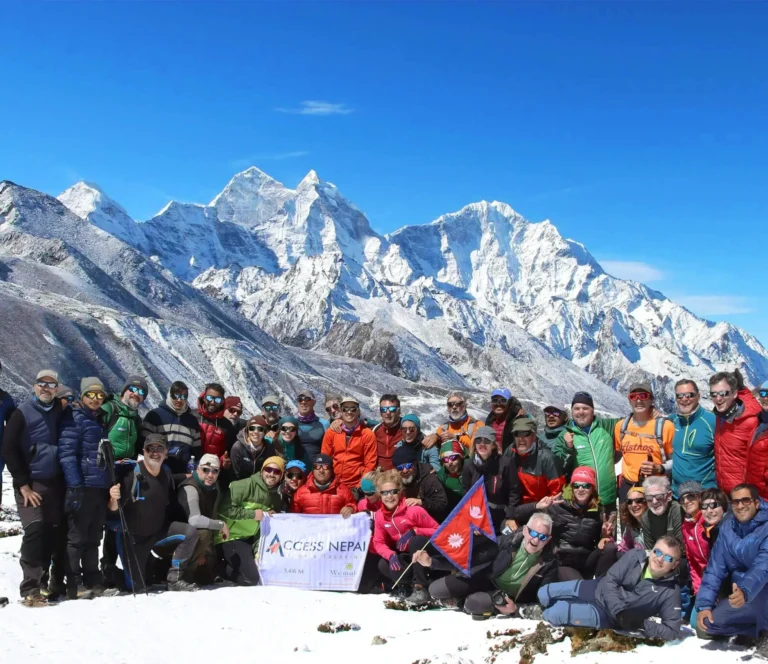
Classic Everest Base Camp Trek - 15 Days
 5,550m/18,209ft
 Moderate
 All
Inclusive Plan
All
Inclusive Plan
In this blog, we tell you the reality of how difficult the EBC trek is and all about altitude sickness, its prevention, cures, and how to deal with it in an emergency.
What kind of trek is Everest Base Camp?
Everest Base Camp is a high-altitude, non-technical trek. It takes you to the south base camp of Mount Everest at 5,364m.
While this is a complete experience on its own, you can choose to move further ahead to summit Mount Everest for a more intense experience.
The trek is moderately difficult; there is no rope work involved, and you don’t need technical mountaineering skills. It is a walking trek on already established trails, with accommodation available along the entire route.
Proper acclimatisation along the way, good physical preparation prior to the trek, and a good awareness of altitude sickness can help you finish the trek safely and successfully.
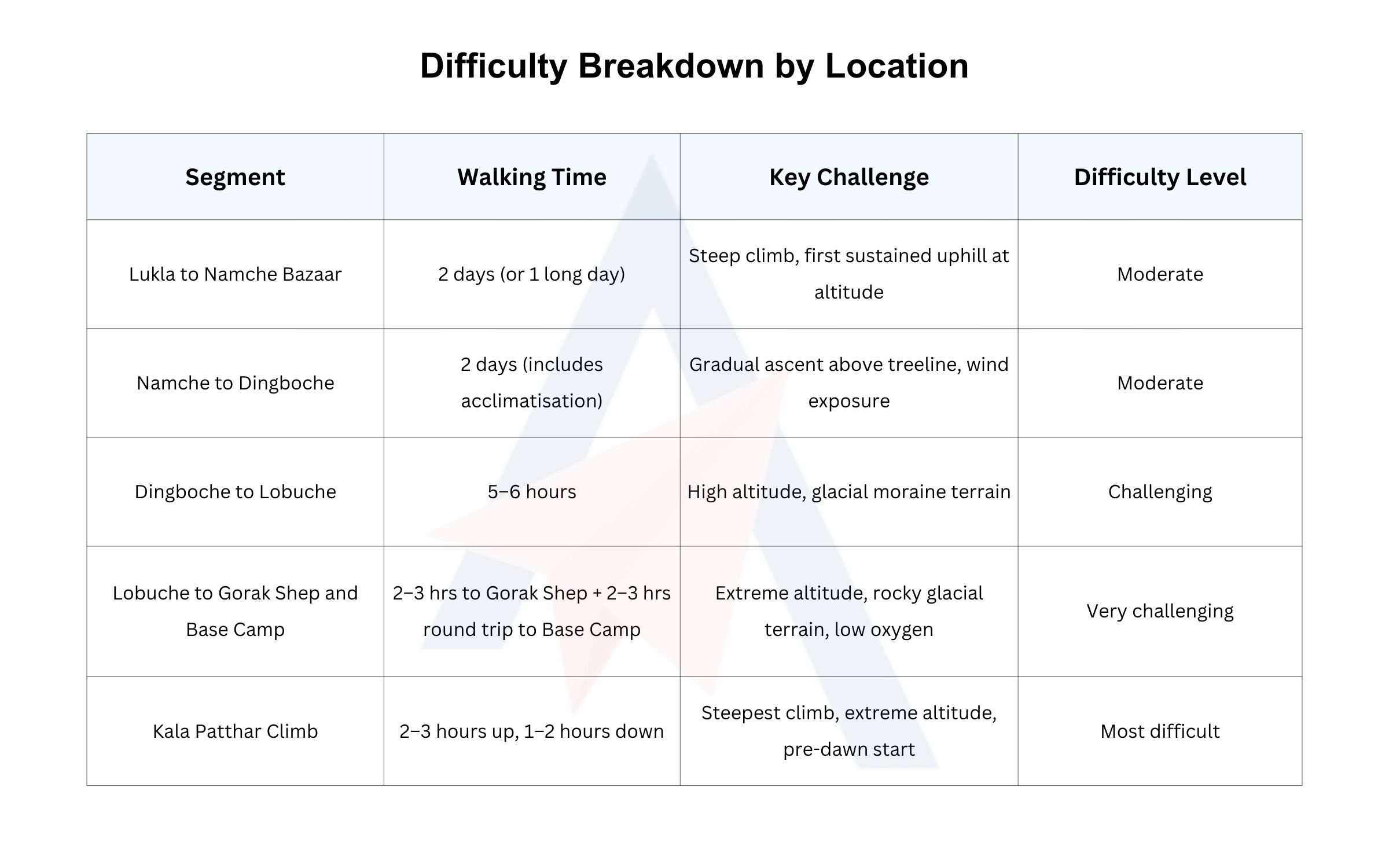
Everest Base Camp Trek Difficulty Breakdown Location-wise
The distance is long, but the altitude changes everything
The total walking distance of the Everest Base Camp trek is about 130 kilometres for the round trip, starting and ending at Lukla after the quick flight from Kathmandu.
On a flat terrain, this distance would not be so difficult for most moderately physically fit individuals. But at 5,000m above sea level, things aren’t so easy.
The difficulty of the EBC trek does not come from the length you have to walk alone. It comes more from how such altitude affects your body.
The trek starts at 2,860m in Lukla, and it reaches 5,364m by the time we get to Everest Base Camp. We aren’t used to such extreme altitudes in our everyday life, so it takes us some time to get used to them.
As you gain elevation, the air has less oxygen. Your breathing naturally becomes heavier, which slows you down, and even small uphill sections feel much harder than they normally do. A simple walk at altitudes above 4,000 metres requires you to rest at more stops, slow your pacing, and overall demands way more energy.
All this is manageable if you pace yourself well and only walk a few hours a day and acclimatise well at key stops like Dingboche and Namche Bazaar.
Access Nepal Tour’s Everest Base Camp itineraries also have these very acclimatisation stops, and we plan to only make you walk for a maximum of three to four hours a day. This way, your body gets used to the elevation and oxygen levels naturally.
The terrain of EBC
The trail to Everest Base Camp has rocky sections, dirt trails, and there are many times when you have to ascend and descend across steep trails. Between Lukla and Namche Bazaar, too, there are long stone staircases and exposed ridges.
After Namche, the trail gets more rugged, with the glacial moraine sections near Dingboche and Lobuche. You will have to walk over boulders, some more loose rock, and Khumbu Glacier moraine in the final section (from Lobuche to Gorak Shep and Base Camp).
There aren’t technical climbing sections here, but you need to watch your step because of the uneven footing. We recommend you bring along trekking poles for this. You can’t risk having a careless footing here, and the fatigue you feel might also increase the risk of you tripping or twisting an ankle.
At Access Nepal Tour, we send along experienced guides with you on these treks. They will help you deal with all of this well, and you get to complete your trek enjoyably, without any worries.
Be mindful of the weather
By now, you must know that the weather in the Khumbu region is unpredictable, and a mild day can turn windy and freezing in a heartbeat.
During the major trekking seasons (i.e., March to May and late September to November), mornings are pretty clear, but by afternoon, clouds cover the sky, it gets windy, and sometimes even the snow moves in quickly.
Above 4,000m, it gets to below freezing temperatures at night, and the chill from the wind makes things worse. The trail is slippery because of the rain; you don’t see beyond all that, and you could possibly get hypothermia too if you aren’t decked out in layers, with a down jacket up top.
Weather in Everest Base Camp by month
The Everest region has two trekking seasons: spring and winter. Each has slightly different conditions, so you can make the choice on when to go depending on your preference for crowds and visibility.
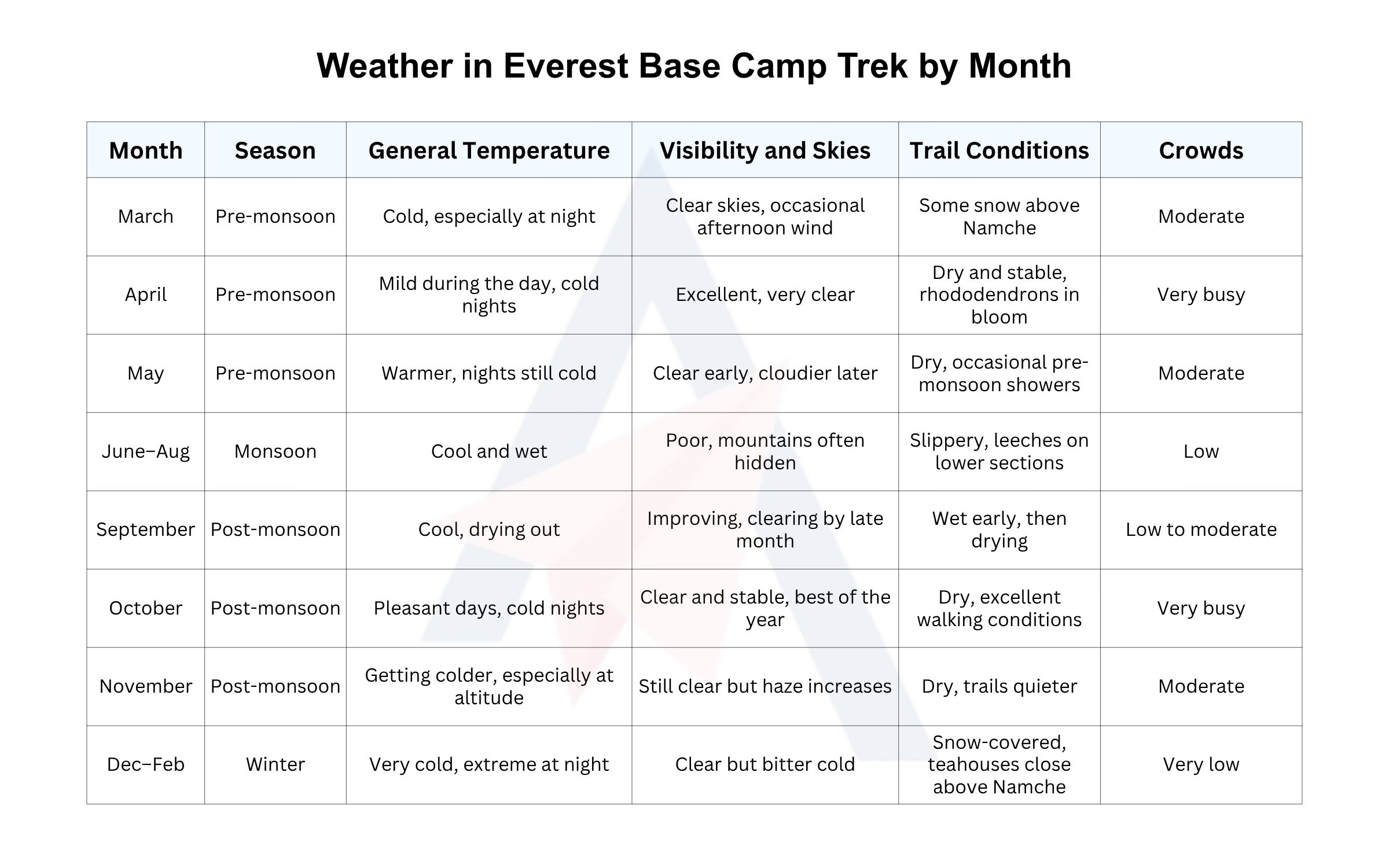
Everest Base Camp Trek Weather Month-wise
Altitude sickness and the challenge it brings
The common consensus among trekkers is that, among all the factors that make this trek difficult, altitude sickness is the toughest to bear if you get a bad bout of it.
Even physically fit trekkers get symptoms of altitude sickness, so getting it doesn’t depend only on your fitness level. Usually, the risk of Acute Mountain Sickness (AMS) increases a lot when you get above 3,000m, and it can affect anyone.
Some common symptoms of AMS that you see early on include headache, nausea, dizziness, and fatigue. You could also have some trouble sleeping. Just mild levels of AMS are pretty manageable if you get rest, drink enough water, and avoid climbing further up.
However, serious–and to some degree even moderate–AMS worsens the headache, you may vomit, be uncoordinated in your movements, and have a shortness of breath, even when at rest.
Severe AMS can develop into High Altitude Cerebral Edema (HACE) or High Altitude Pulmonary Edema (HAPE), and both of these are life-threatening. So, AMS can get serious pretty quickly.
Prevention is always better than a cure. So, the most reliable method for you to prevent getting AMS altogether is ascending very gradually. When you get about 3,000m above sea level, do not sleep more than 500m above the height you slept at the previous night.
Most EBC trek packages include built-in acclimatisation days–most commonly at Namche Bazaar and Dingboche. These are there to help you get used to the atmosphere before you proceed further.
The ultimate tried-and-true cure for AMS is descending immediately. A 500 to a thousand metres descent should help you subside the symptoms. We urge you to never ignore the symptoms or push through this and climb even higher.
Helicopter evacuations are also available in cases of emergency.
What Is Altitude Sickness?
Simply put, altitude sickness is your body’s response to reduced oxygen levels in the air at high elevations. As altitude increases, the air pressure decreases, and this means each one of your breaths contains less oxygen than it did when you were lower.
Your body needs time to adjust to this air/oxygen, and it does so by producing more red blood cells and increasing the breathing rate. When you ascend too quickly, your body cannot do all this and adapt fast enough, so you get symptoms of altitude sickness.
Altitude sickness usually affects individuals above 2,500m. Even the fittest athlete can experience some level of altitude sickness, while someone less fit may have no symptoms at all.
And as most trekkers do deal with it to some degree, we can infer that it isn’t fatal to most. Trekkers take the necessary precautions and follow tips from their guide, and they resume their scheduled itinerary in no time.
Types of altitude sickness and what you are more prone to during the EBC Trek
There are different kinds and severities of altitude sickness. Three common ones that are relevant for your Everest Base Camp Trek are AMS, HAPE, and HACE.
Acute Mountain Sickness (AMS) is the mildest and most common form of altitude sickness, and it affects most trekkers when they get above 3,500m, at some point. Its symptoms include headache, nausea, dizziness, fatigue, loss of appetite, and trouble sleeping.
AMS is not that dangerous on its own and can be easily dealt with, but it can develop into more severe forms if it is ignored.
High Altitude Pulmonary Edema (HAPE) is the second kind, where fluid is accumulated in your lungs. As you climb high and take in less oxygen while breathing, the blood vessels in your lungs over-constrict, and this spikes the pulmonary artery pressure, which eventually causes protein-rich fluids to leak into your air sacs.
Common symptoms of HAPE include shortness of breath (even when resting), extreme fatigue, a wet cough, and skin or lips turning bluish. HAPE is actually life-threatening, and you need to descend immediately and get medical treatment if you notice the symptoms.
Lastly, High Altitude Cerebral Edema (HACE) is also fluid accumulation, this time in your brain. Due to the low oxygen level, your brain swells up with the fluid and this creates a pressure in your skull which can be dangerous.
Symptoms commonly seen of HACE include a severe headache which does not seem to improve with meds, a loss of bodily coordination, hallucinations and an overall decreased sense of consciousness.
HACE can also be life-threatening and you need to descend to mitigate an emergency. Things like supplemental oxygen or a helicopter evacuation also often help.
What kind of altitude sickness are you more prone to during the EBC trek?
You are most prone to mild to moderate AMS during the Everest Base Camp trek. A majority of altitude-related issues on this trek are at the AMS level, so you don’t need to worry too much.
The standard itinerary that most trekking agencies offer, with multiple built-in acclimatisation days, is great at preventing altitude sickness. Even if you get mild AMS, rest assured, it will likely not progress to HAPE or HACE.
However, HAPE and HACE, while pretty rare, do happen on the EBC trek to a few individuals every season.
They are more likely to occur above 4,500m, especially on the Lobuche to Gorak Shep to Kala Patthar section of the trail to trekkers who ignore early symptoms of AMS, climb too quickly without letting their bodies get accustomed to the oxygen levels in the air or have a previous history of HAPE or HACE.
We have already covered the Acclimatisation Guide for High Altitude Treks in a previous blog.
Why mental toughness matters
Your physical fitness isn’t enough for a successful trek to EBC. Your mental strength matters just as much. Many individuals underestimate how difficult climbing at such high altitudes for over a week is to your psyche.
Even things like sleep and appetite can get disrupted due to the altitude. You might also get frustrated because of how unfamiliar everything around you is. Also, seeing others climb back down because of altitude sickness may make you doubt yourself, too.
Our biggest advice here would be to be patient. You may be walking slower than usual and taking frequent breaks, but learning to deal with discomfort is a part of trekking. Accept things as they are and keep climbing. You will build your resilience through this.
We have seen that trekkers who manage their expectations before the trek, climb at their own pace, and do not compromise with rest or overdo the climbing are the ones who succeed. So, research what trekking is really like before you begin your trek.
Having said that, we want to emphasise that you should never push through early symptoms of altitude sickness or severe fatigue for your own safety.
Teahouses, food, and daily comfort
There is accommodation available along the Everest Base Camp trail, that too comfortable ones with adequate services for your stay. But do not expect hotels or luxury throughout your journey.
Related Packages
Everest Base Camp Luxury Trek - 14 Days
- 5,550m/18,209ft
-
Easy
- All
Inclusive Plan
You are travelling to the remote Himalayas. So you should manage your expectations a bit based on the topography and how difficult it is to get things to the area.
Rooms can be shared twin-rooms or single rooms with bedding, but you are recommended to bring along a personal sleeping bag (rated to -10°C or lower)–you will need it during the nights you spend above Namche.
You get electricity and charging most of the time, the latter with a tiny fee. Wi-Fi is also available via Everest Link, though the speeds get much slower at higher altitudes.
Hot showers are generally available for an extra fee in most teahouses, but be warned that it may not be practical for you to shower every day at that altitude and cold weather.
Toilets can be generally squat-style or Western-style. Make sure to carry toilet paper and hand sanitiser because you never know when you might need them.
The food is pretty good–it is nutritious enough to keep you energised throughout the trek and surprisingly varied. You get dal bhat (rice with lentil soup and vegetables), noodles, potato dishes, soup, and bread at most tea houses.
Dal bhat should be your go-to because it is filling, you get second helpings (eat till you are full), and the carbohydrates help you with energy. While meat is available, we recommend you stick to vegetarian options above Namche Bazaar to avoid foodborne illness.
One thing to note is that your appetite may decrease above 4,000m. Force yourself to eat at least small amounts even when you are not hungry to sustain your energy. Also, make sure to drink 3 to 4 litres of fluid (water, tea, soup) daily. Hydration is key to staying physically fit.
The option to upgrade
The itineraries include bookings at standard tea houses and the standard services one gets while trekking to the Everest Base Camp. However, you always have the option to upgrade these services. With an extra fee, you can stay at more elevated accommodations along the way.
If you want us to upgrade your accommodation to a more luxurious one (these are available at some locations like: Lukla, Namche Bazaar, Kongde, Pangboche, Deboche and more), just let us know. This will make your journey a little more comfortable.
Difficulty breakdown by location
The difficulty of the trek increases gradually as the altitude rises. Lower sections test endurance with steep climbs. Higher sections test acclimatisation and physical tolerance to low oxygen. Each segment is described below with starting and ending altitudes, walking time, key challenges, and what to expect.
Lukla to Namche Bazaar
- Altitude: 2,860m to 3,440m
- Walk time: 2 days (or 1 long day for experienced trekkers)
- Main challenge: The first steep climb out of Lukla and the final ascent into Namche
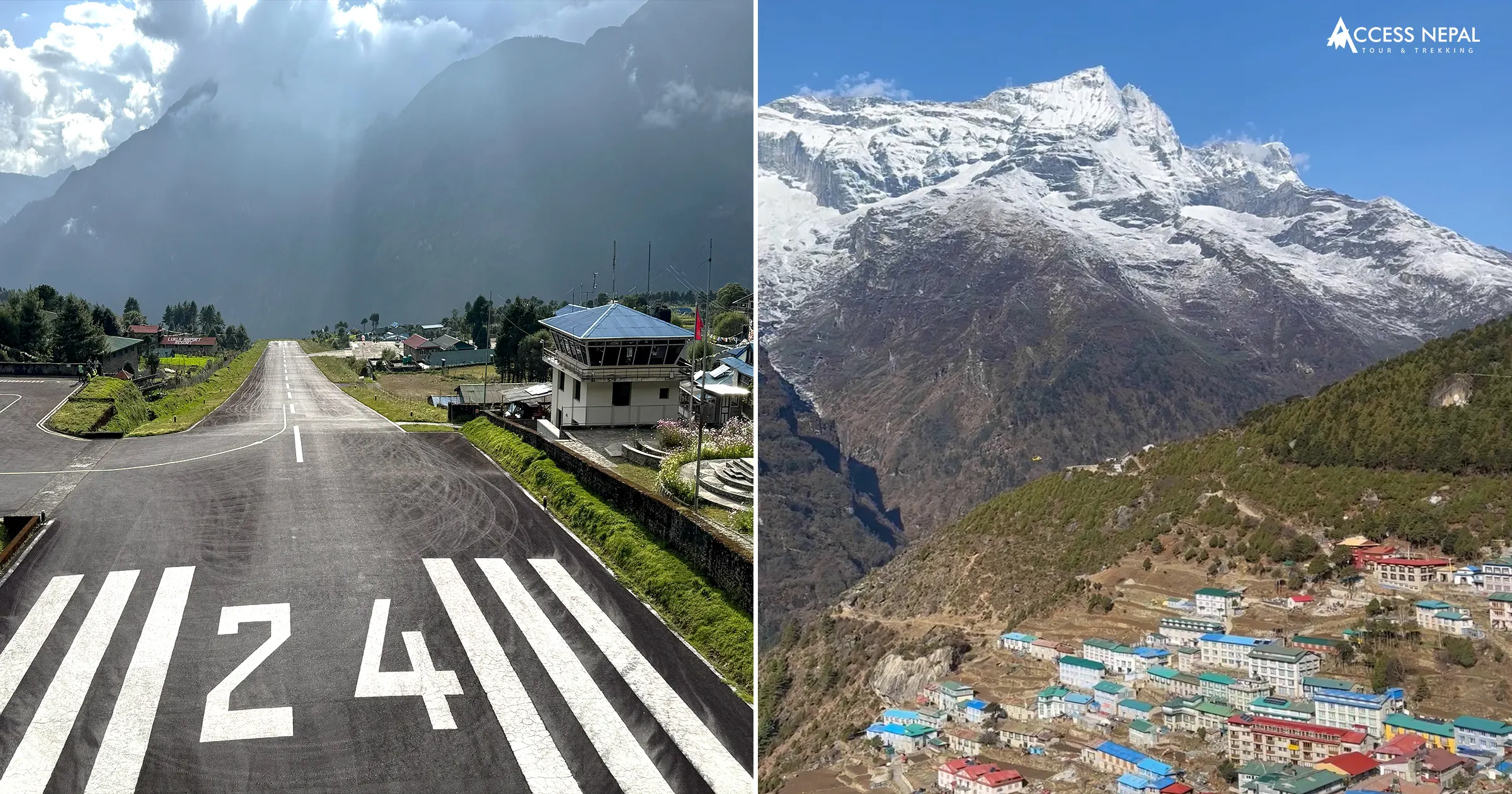
Lukla to Namche Bazaar
The trail starts with you going up and down short hills. The real climbing section starts as you cross the suspension bridge over the Dudh Koshi River at Phakding.
You climb steadily uphill through pine and rhododendron forest for a long time, and eventually that leads to Namche Bazaar. Finally, the last section here is a steep climb up a zigzag route of about 600m.
As is many trekkers’ first experience climbing uphill at this high an altitude for such a long period, your breathing can become pretty heavy.
The highlight here is that you are rewarded with the first view of Mount Everest while getting to Namche. Most trekkers choose to stop overnight at Phakding or Monjo and get to Namche on the second day.
Namche to Dingboche
- Altitude: 3,440m to 4,410m
- Walk time: 2 days (includes acclimatisation day in Namche)
- Main challenge: Long, gradual ascent above treeline, exposure to wind
From Namche, your trail bends along the hillside, and you move through flat and rolling sections before you descend to the river at Phunki Tenga. The climb from here to Tengboche Monastery is not that difficult. Many choose to rest at this peaceful lamasery.
The next part of the trail, from here to Dingboche, is again an easy uphill climb through the Imja Valley. But the altitude makes many trekkers feel their breath gets shorter, their pace slower, and even some mild AMS symptoms. All these are the effects of thin air.
This is why you need an acclimatisation day in Namche before you take on this segment.
Dingboche to Lobuche
- Altitude: 4,410m to 4,940m
- Walk time: Approximately 5-6 hours
- Main challenge: High altitude, glacial moraine terrain
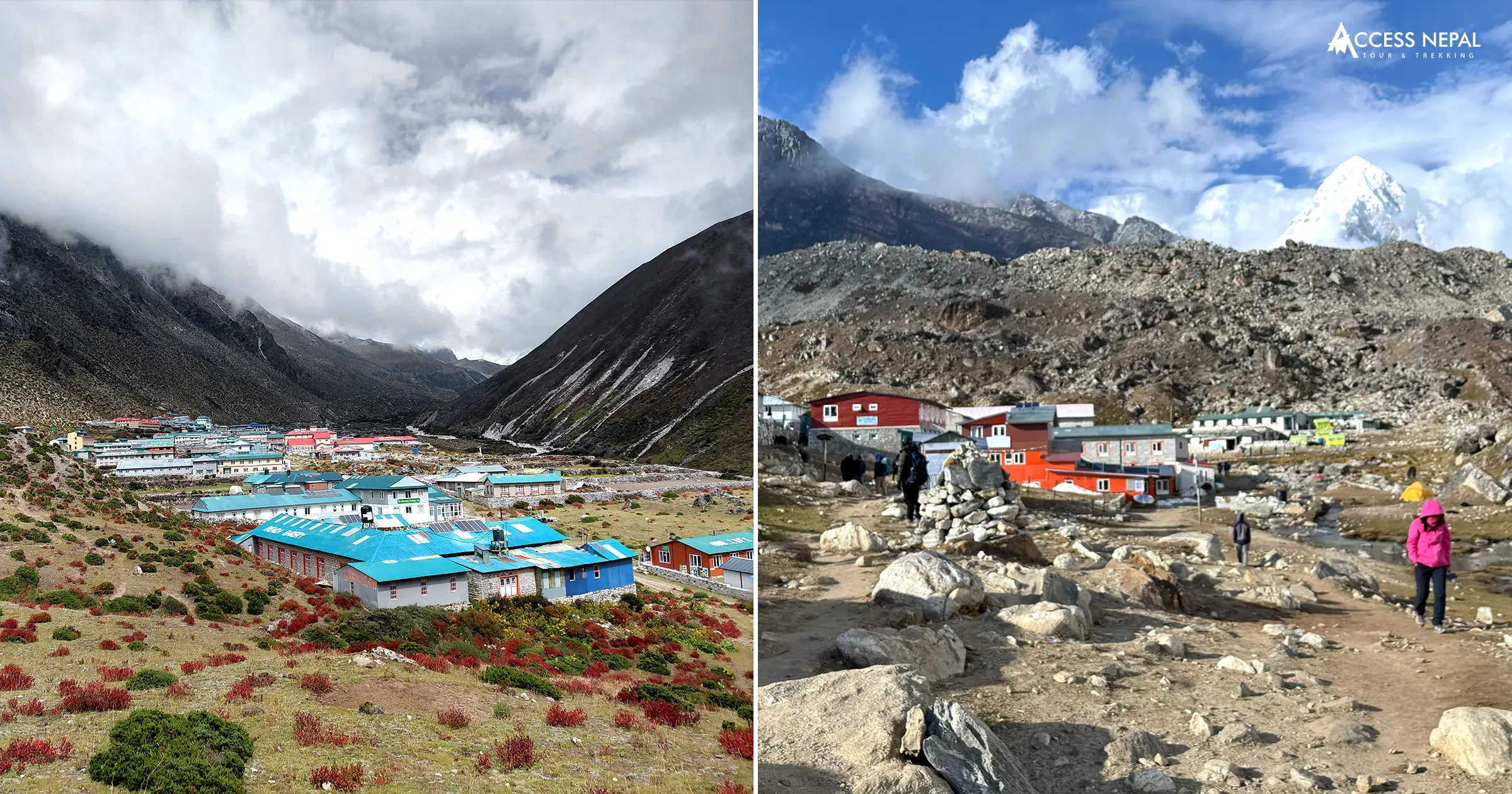
Dingboche to Lobuche
Now this is where the trek becomes a legitimate high-altitude walking. As you leave Dingboche and climb to Thukla Pass, you see the memorial site for climbers who passed away on Everest.
From Thukla, there is another steady uphill climb you have to do over the rocky moraine that leads to Lobuche. The terrain here is very uneven, with lots of loose stones and boulders.
It gets windy, and your breathing is noticeably laboured even when you are resting. Your sleep isn’t deep or very restorative from here onwards.
Trekkers who have acclimatised well to this point should be fine, but those who haven’t might start having a difficult time. So again, please acclimatise well from the beginning of your trek.
Lobuche to Gorak Shep and Everest Base Camp
- Altitude: 4,940m to 5,164m (Gorak Shep), then to 5,364m (Base Camp)
- Walk: 2-3 hours to Gorak Shep, then 2-3 hours round trip to Base Camp
- Main challenge: Extreme altitude, cold, rocky glacial terrain
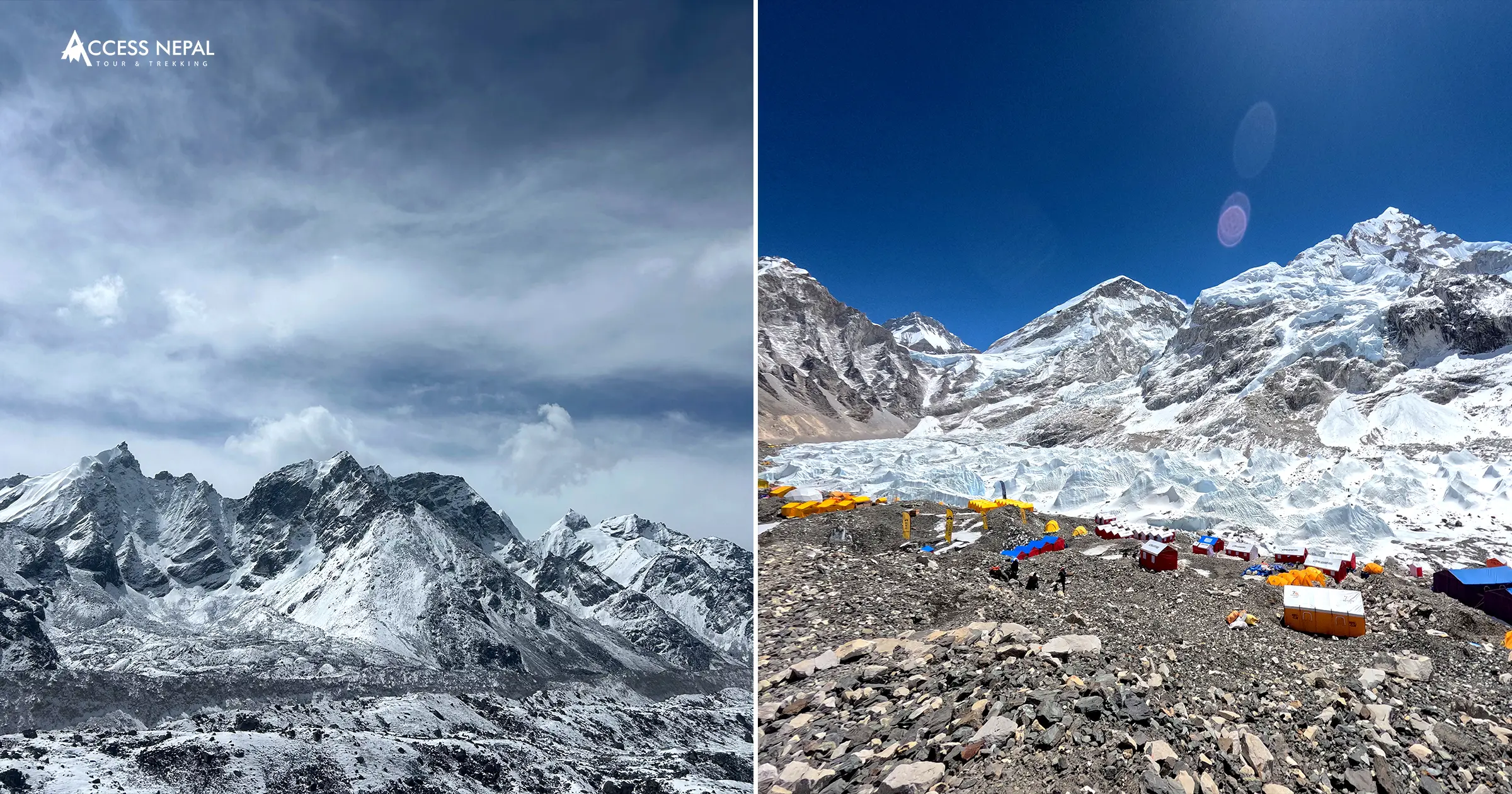
Gorak Shep and Everest Base Camp
Moving from Lobuche, you climb up the lateral moraine of the Khumbu Glacier, which is difficult again because of the loose rock and boulders. Gorak Shep, the last major stop before Base Camp, is a small town with some teahouses.
From here, you have to walk past the glacier bed to reach Base Camp, which is basically an area with tents spread all around during peak trekking season. Other times, it is an empty rocky field with many prayer flags fluttering about.
Altitude is the major challenge here. The oxygen level drops to about 50% of sea level. You may get headaches, feel fatigued, and nausea is common. The descent down to Gorak Shep is noticeably much easier.
Kala Patthar Climb
- Altitude: 5,164m to 5,545m
- Walk time: 2-3 hours up, 1-2 hours down
- Main challenge: Steepest climb of the trek, extreme altitude, pre-dawn start
You get the best close-up view of Mount Everest at Kala Pathhar, which is not a peak itself but just a rocky hill near Gorak Shep.
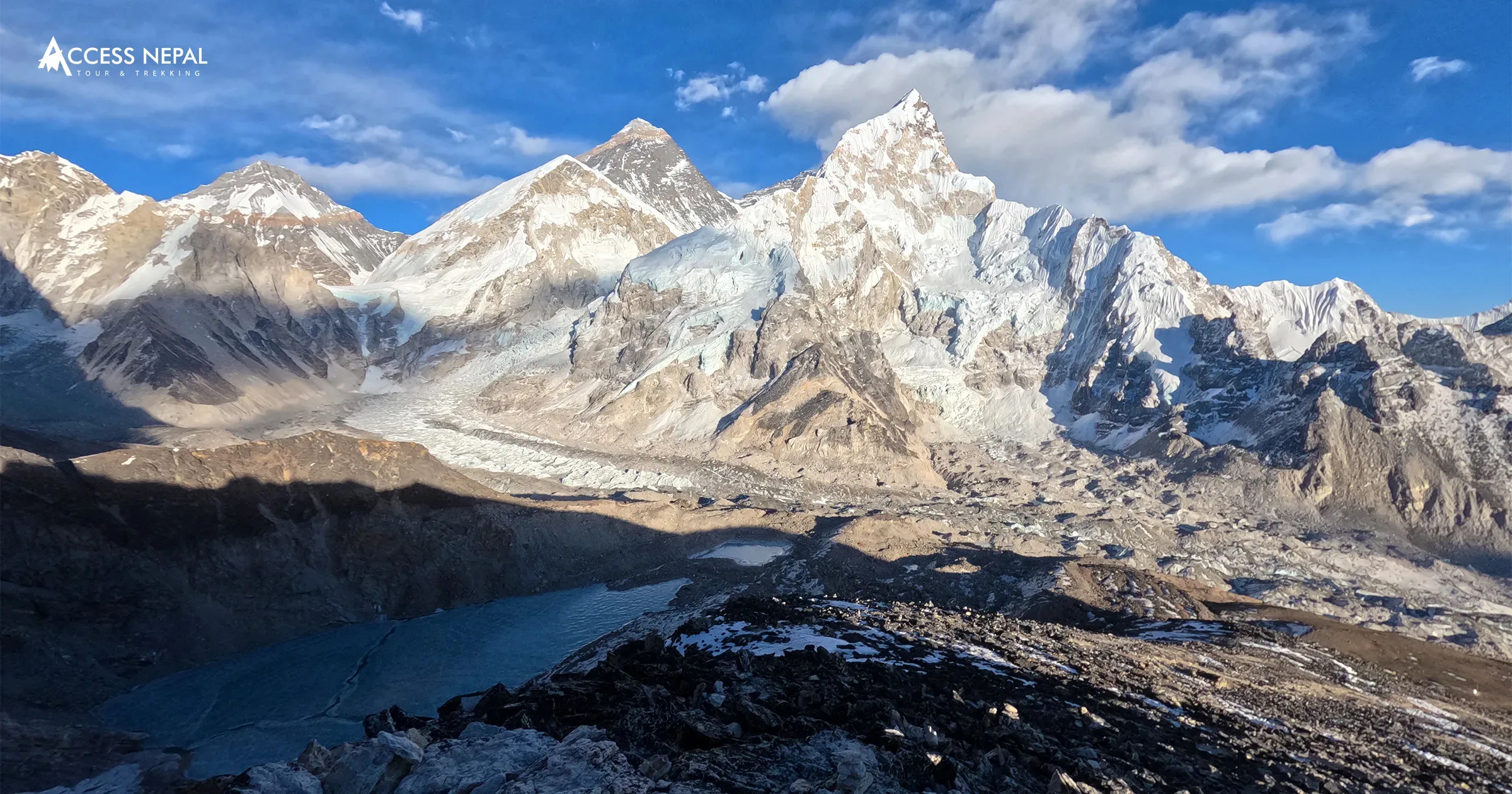
View from Kala Patthar
The climb up to Kala Patthar is steep (about 400m of altitude gain over the rocks). Most trekkers start their climb before 4 AM to reach the summit for sunrise. This is when the winds are low, and the view is the clearest.
Be warned that the cold here is pretty intense (often below -10°C to -15°C) and the steepness of the climb, as well as the altitude, makes it the most physically difficult segment of the entire trek to this point.
Each step here needs effort to push through, and the descent is pretty quick, but you need to be very careful over those loose rocks. Some trekkers get nauseous or dizzy.
Everest Base Camp difficulty by Person type
How difficult the trek feels depends largely on who you are as a trekker. Fitness level, prior experience, age, and expectations all shape the experience. Below is a breakdown by typical trekker profiles.
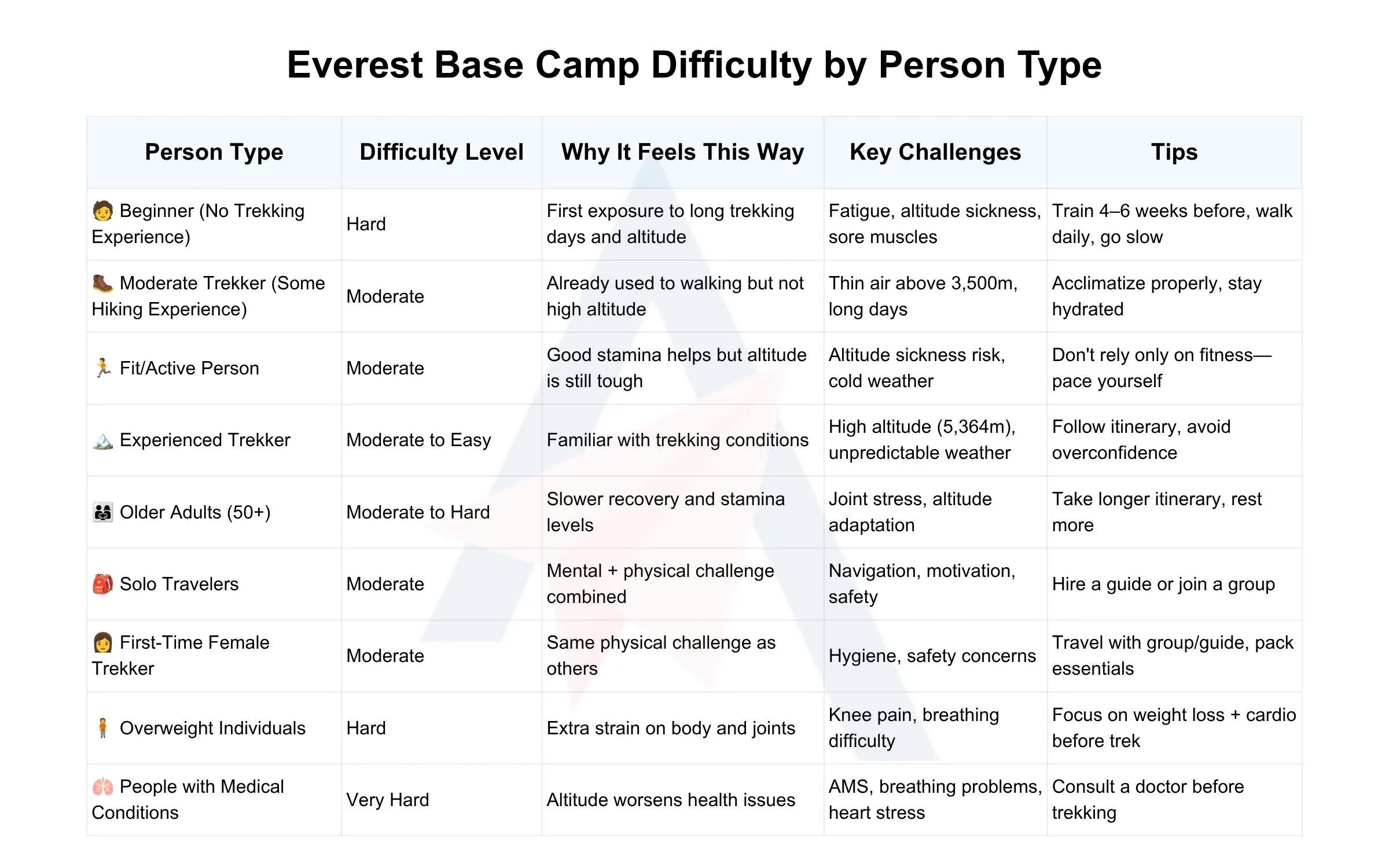
Everest Base Camp Difficulty by Person Type
Should beginners do the Everest Base Camp Trek?
With the right prep and if accompanied by experienced guides, yes, beginners can do the Everest Base Camp trek. But there are some important conditions you need to keep in mind.
Here, a beginner means someone with no long multi-day trekking experience previously to this and possibly someone who hasn’t yet been exposed to altitudes above 3,000m. This trek can be challenging for such a person, but it’s not out of reach. Every year, many beginners complete this trek.
The three essential conditions to safely complete the treks for beginners include:
-
Good physical preparation beforehand
You need two to three months of regular cardiovascular exercise (like hiking, stair climbing, running or cycling) for 45 to 90-minute sessions to prep well for an EBC trek. You should do these at least three to four times per week.
-
Follow a proper itinerary
The standard 12-to-14-day itinerary has the necessary acclimatisation days, usually in Namche Bazaar and Dingboche. We recommend that you make full use of these days and not skip or rush these to push further. That would only increase the risk of altitude sickness.
-
Communicate well with your guide
Your guides are experienced in dealing with situations like these and they will monitor for early signs of AMS if you share what you are going through. They can also help you adjust your pace when needed and handle all the logistics needed.
Access Nepal Tour has proper acclimatisation days and even on other days, our guides pace the trek to what is doable for you. We have planned it so that you only walk for a few hours every day and don’t get exhausted.
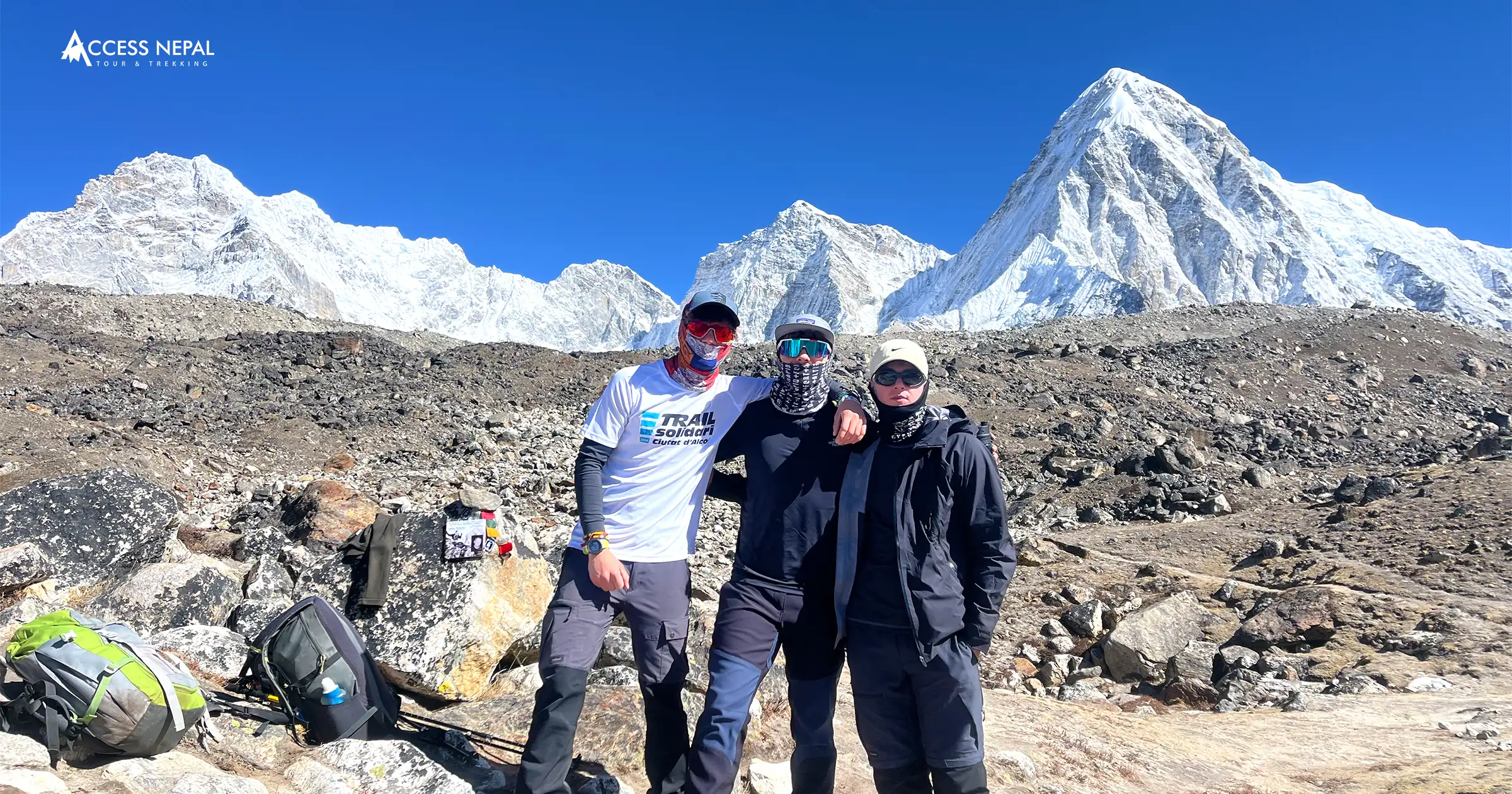
All in all, the Everest Base Camp trek is beginner-friendly if the beginner who is climbing is prepared and patient, and follows all the safety rules.
Why you should book your Everest Base Camp Trek with Access Nepal Tour
At Access Nepal Tour, all our packages have itineraries with good pacing. We have been working in the industry for over 15 years, so we know what most trekkers are capable of climbing in a day without over exerting themselves. All our itineraries are made with this very thing in mind.
Our guides who accompany you on these treks are also seasoned professionals. They can deal with anything that happens during the trek. So as long as you have good communication with your guide and follow what they tell you to do regarding your health and safety, you should be able to complete the trek without trouble.
Final verdict: Is the Everest Base Camp Trek hard?
Our honest answer here is that it depends on who you are and how you define what is hard.
Technically speaking, the Everest Base Camp trek is not that difficult as you don’t really need technical skills to this point. The trails are well-defined, and teahouses give you the basic shelter and food you need for the entire route.
Physically, though, it is moderately challenging. The distance you have to walk is long, but most moderate to fit individuals can manage it well. The steep climbs are the most difficult, but they are short enough that they are manageable if you walk at a slow pace.
The real difficulty you have to face here is the altitude. Altitude sickness affects all trekkers regardless of fitness, age, or previous experience. The only way to curb it is through slow ascent and proper acclimatisation throughout the trek. You also have to be willing to turn back if your symptoms worsen, and not push through ahead.
So, considering all this, is Everest Base Camp hard?
For a well-prepared trekker who follows the itinerary, listens to their body and their guide, and walks at a slower pace without any hurry, the Everest Base Camp trek is achievable. However, if you underestimate the altitude, skip the acclimatisation days and ignore early AMS symptoms, it will be difficult for you. Moreover, it can even get dangerous.
So, as long as you respect the altitude and prepare your body and your mind for it, you will likely finish the trek without any major hiccups.
Frequently Asked Questions: Everest Base Camp Trek Difficulty Altitude Sickness
Do I need previous trekking experience for EBC?
Previous trekking experience is not really required for EBC, but it will make the whole trip easier for you. If you are a beginner, you should prepare physically for two to three months before starting and get a standard 12-to-14-day itinerary with proper acclimatisation days.
Can beginners do the Everest Base Camp trek?
Yes, beginners can do the Everest Base Camp trek with good preparation, as long as you have realistic expectations and are willing to follow all the safety rules your guide tells you.
What is the most difficult part of the trek?
The Kala Patthar section is the most difficult part of the EBC Trek due to the steepness and high altitude of 5,545m. Another one is the section from Dingboche to Lobuche to Gorak Shep, which has glacial moraine terrain. But you can pass both without much problems with the help of your guide.
How fit do I need to be for EBC?
You do not need to be an athlete to complete the EBC Trek, you just need to be moderately fit and have some cardiovascular endurance. You can work on this prior to the trek with hiking, stair climbing, running or cycling for 45–90 minutes, three to four times a week.
What is altitude sickness and how common is it on EBC?
Altitude sickness is your body’s response to reduced oxygen levels at high altitudes. Most trekkers experience mild symptoms of this above 3,500m, which include headache, nausea and fatigue.
What are the early symptoms of AMS I should watch out for?
Headache, nausea, dizziness, fatigue, loss of appetite and trouble sleeping are some common early symptoms of AMS. If you get them, do not push yourself and ascend further. Instead, you should rest and if the symptoms worsen, you should descend immediately.
What mistakes trigger altitude sickness?
Mistakes like ascending too fast, skipping the acclimatisation days, over-exerting yourself, ignoring the early symptoms, not drinking enough fluids, drinking alcohol, and not eating enough can trigger altitude sickness. To avoid it or cure it early on, please consult with your guide.
Do physically fit trekkers get altitude sickness too?
Yes, even the most physically fit trekker could get altitude sickness if they climb too fast without proper acclimatisation. It affects people regardless of their fitness, age or experience. So, being physically fit here does not reduce your risk.
What is the terrain like on the trail?
The trail has rocky sections, loose stone, dirt paths, steep staircases and glacial moraine (boulders and loose rock) along the way to Everest Base Camp. There is no technical climbing as such, but you need to watch your step because of uneven footing.
How do I prepare physically for EBC?
You should focus on building your cardiovascular endurance to prepare for the EBC trek. Try things like hiking with a weighted backpack, climbing stairs, running or cycling for 45–90 minutes, three to four times a week. You should start your physical preparation at least two to three months before the trek.
What should I do if I get severe altitude sickness?
If you get severe altitude sickness, inform your guide and descend immediately. Going down 500 to 1,000 metres usually helps. If symptoms are pretty severe (loss of coordination, confusion, fluid in lungs), you can also get a helicopter evacuation as long as your travel insurance covers high-altitude evacuation.
Is Everest Base Camp a difficult trek?
For a well-prepared trekker who is following the itinerary, listening to their body as well as their guide and climbing at a slower pace, Everest Base Camp is a moderate difficulty trek.
How to Travel to Nepal from the UK: Complete Guide
Prev
Mount Everest vs Kilimanjaro: Which is harder?
NextAwards and Achievements
Access Nepal Tour and Treks has been recognized with TripAdvisor’s prestigious Travelers’ Choice Award for multiple consecutive years, reflecting our unwavering commitment to quality and clients’ satisfaction.













Leave Your Comment