


Everest Base Camp Trek Guide for Female Travelers
- Places
- By accessnepaltour
Everest Base Camp is one of the most walked trekking routes in the world. And these days, the number of women trekking solo, with friends, or in all-women groups is getting higher.
A solo female traveller is anyone who decides to embark on a travel journey to a domestic or international destination by herself. Usually, solo female travellers also buy trip packages from travel agencies as they don’t have to figure out the intricate logistics of a trip alone, but some may choose to travel independently, without even a guide or a travel agency, if they are experienced and want to take on a new challenfe but most.
The Everest Base Camp route has been seeing its fair share of footfall from solo female travellers. This is the ultimate guide for female travellers who want to trek to the Everest Base Camp, either solo or with a group, that answers all your questions about safety, planning, and potential risks.
Why do female travellers trek alone? The pros of a solo journey
Long trips, like a trek to Everest Base Camp, would be a good way to reflect on your life, goals and ambitions in general. You experience life outside of your daily bubble and experience the world in a way you can only do at these secluded villages in the Himalayas. Those are some pros of female travellers trekking alone.
It is also a good challenge that makes you trust yourself more. You might discover parts of yourself you didn’t know existed before. You will learn to rely on yourself more, and a challenge like an EBC trek also develops your grit and persistence.
And the best part is no one is there to interrupt your immersion into this experience. You can give your full attention to your surroundings, interact with the locals more authentically and experience the culture fully.
There is no one else to take care of, be responsible for and accommodate your schedule for. You don’t have to adapt the pace to someone else, too. You are free to decide on things by yourself–after a brief discussion with your guide on safety, of course.
Can a female traveller complete the Everest Base Camp Trek alone?
Yes, a solo female traveller can complete the Everest Base Camp alone. Even when you trek with a group, each person still has to face the physical challenges (be it the harsh conditions of the Everest region, the long hours of walking and climbing, and the mental effort to keep going) on their own. If you can handle that as a part of a group, you can certainly do it solo.
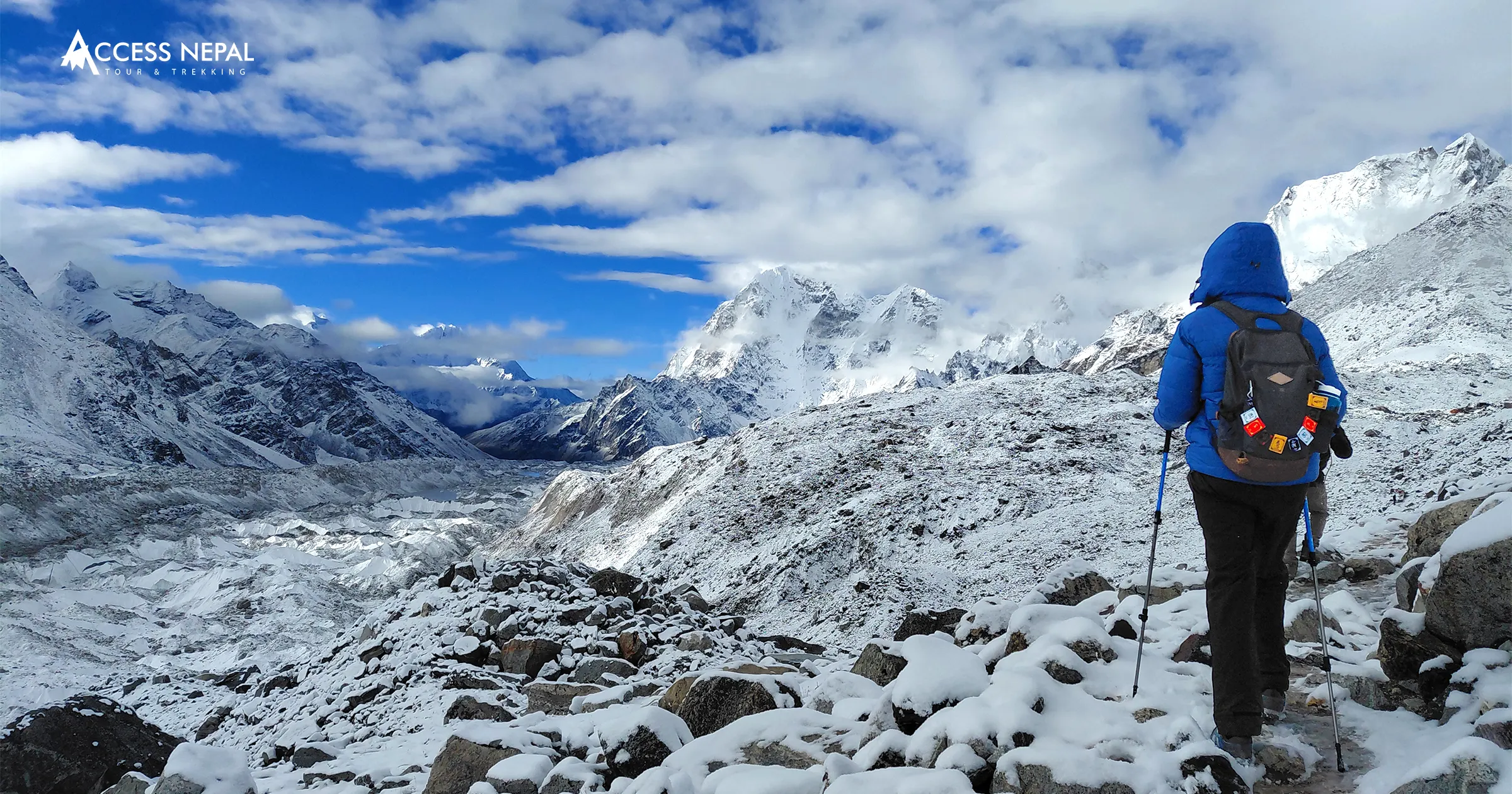
Solo female traveller on the way to Everest Base Camp
Travelling solo does not mean you can’t get the help of the guides, Sherpas, and porters. Many solo trekkers actually do this. Carrying your own bag and finishing the entire trek without the help of a guide is much less common.
Also, you will meet many fellow trekkers along the way. The trail isn’t truly empty unless you go during the off-season. Trekkers and locals pass by you all the time.
Solo trekking to the Everest Base Camp is not recommended for
The only individuals we do not recommend solo EBC trekking are:
- Individuals with severe cardiovascular or respiratory (asthma, chronic bronchitis, COPD) conditions
- First-time trekkers in Nepal
- Individuals without much experience trekking
- Those with uncontrolled high blood pressure or diabetes
- Pregnant women (past first trimester)
- Individuals with serious mobility issues, joint issues, and bone issues, as well as those with arthritis, knee, and back injuries
Additionally, individuals with severe anxiety and panic disorder, as well as those with a history of HAPE, HACE, and AMS, should be especially careful while on the trek.
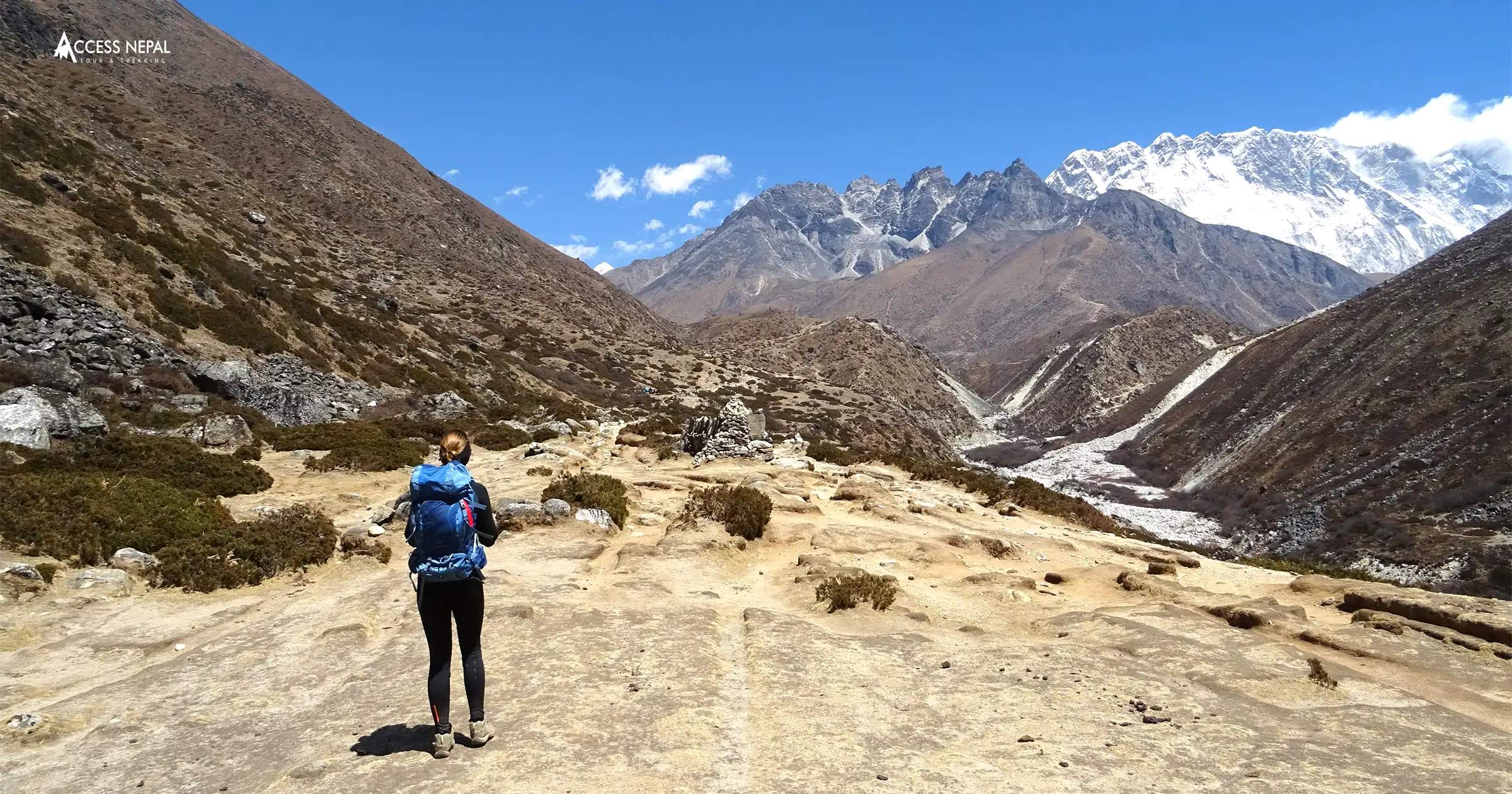
Everest Base Camp Trek Guide for Female Travelers
Is Everest Base Camp safe for a female solo trekker?
Nepal is known to be a safe country in general. As such, it is quite safe to trek to the Everest Base Camp alone, even for a female traveller. Also, the Everest Base Camp trek isn’t some remote niche trek with little footfall. It is one of the most popular mountain treks. So, you aren’t completely alone on the trail for long periods.
Serious or violent crimes against tourists are pretty rare in Nepal. Even during the Gen-Z revolution of 2025, protestors made way for tourists and were hospitable towards them, showing them the way to safety amid the chaos.

While solo travellers could be at risk of some small-scale scams, booking your trip with a trusted travel agency like Access Nepal Tour can help you avoid them. Our guides and porters will make sure all your transactions are with genuine vendors and service providers. So, Nepal is a perfect destination for solo travellers.
Limitations solo female trekkers may face
There are not many specific limitations female trekkers have to face while on the EBC trek, as long as you are healthy and well prepared. Minors or those under 18 will need parental consent to start the trek. There is no maximum age limit, as even female trekkers in their 50s and 60s have completed the trek.
Things you should know
Again, since trekking to the Everest Base Camp and Nepal in general is pretty safe, there aren’t many risks. We are just listing these things down to make sure your expectations on the trail match the reality of the trail. Some points you might need to note down may include:
- While we do have private rooms in tea houses (with attached bathrooms), many of these accommodations are on the simpler side when it comes to facilities and services available. If you want us to upgrade your accommodation to a more luxurious one (these are available in some locations on the route, including Lukla, Namche Bazaar, Kongde, Pangboche, Deboche, and more), let us know, and we will do so. Privacy is better in these specific lodges than elsewhere on the trail
- You are advised not to leave your cosy tea house after sunset. Again, EBC isn’t a dangerous trek, but it’s better to take the necessary precautions and ensure your safety early
- Keep the cash you have on you safe, tucked away from prying eyes, and do not parade it around.
- Altitude sickness can be critical, but it is manageable if you take it seriously. Acclimatise at key stops and inform your guide immediately if you are feeling very uneasy or nauseous

Planning for a solo Everest Base Camp trek as a woman
The planning for your EBC trek should begin with physical and mental preparations for the trek. Start building your endurance for the long walking hours months in advance with activities like running, swimming, and cycling.
You should also include training for your legs with squats, lunges, and step-ups. You need strong legs because they do all the walking and climbing for you throughout your trek. You should also work on your cardio and stair training, or going up and down a hill or mountain–if that is accessible for you.
Regular hikes also prepare your body for a trek.
As for the mental aspect, you need to be tolerant of discomfort. You will encounter simple (possibly not super clean) toilets, cold weather–especially in the mornings and nights, and no hot showers in the higher altitudes. So you should mentally prepare yourself for this.
Do not expect everything to be smooth and easy. The trip will definitely be challenging; challenges are a part of the journey. Just be prepared to handle difficult situations and don’t give up when things don’t go exactly as you had planned. There is always a way around it, and your guide will help you find it.
Packing List for Everest Base Camp Trek
One thing you should do before you start packing for your EBC trek is to know that the lighter you pack, the easier your journey will be. You should definitely pack all the essentials you need, but please avoid over-packing. You will be accompanied by a porter who will certainly carry your things for you, but why be bothered having to take care of more things than you need?
How many times have you returned from a trip (not just a trek but any trip), looked at your luggage and realised you barely wore half the clothes you packed? While this isn’t a problem for other fun trips, it will definitely be an extra hassle for you on your EBC trek.
You might also want to take back some souvenirs–Nepal is known for its traditional craftsmanship, which includes things like singing bowls, thanka paintings, clothing made of pashmina wool or dhaka fabric, as well as other items that reflect our rich culture.
A standard packing list looks like the following. We can always help you customise this according to your needs and suggest practical tips for you if you reach out to us.
Clothing
- Pack 2-3 sets of thermal tops and bottoms made of wool or synthetic fabric for your base layers. Avoid cotton as it loses heat quickly, dries slow and absorbs sweat and rain
- One fleece jacket and one down jacket work great for insulation and keep you warm till -10°C or -15°C
- Get a waterproof and windproof jacket and pants
- 2 pairs of quick-dry pants should be enough for the trek. Do not bring jeans
- A pair of thermal leggings to sleep in or for cold evenings
- Bring 2-3 sports bras made of quick-dry fabric
- Bring at least 4-5 pairs of quick-dry underwear. Again, remember no cotton
- Get 4-5 pairs of wool or synthetic trekking socks
- A light and warm, waterproof pair of gloves are also needed
- You will also need a beanie, a sun hat and a neck gaiter
Other Essentials
- Carry enough hygiene and sanitary products (sanitary pads, tampons and toilet paper) to last you the entire journey. They may not be readily available for sale
- Showers might not be an option as you climb higher, so bring body wipes. Use biodegradable ones and dispose of used wipes well
- Pee funnel, although optional, is useful for cold toilet stops
- Carry a small, refillable bottle of hand sanitiser
- Moisturiser, lip balm with high SPF, and sunscreen (SPF 30 or higher) are essential for your skin
- Carry a small travel-size dry shampoo
- Bring several hair ties
- Carry Ibuprofen or paracetamol for cramps or general aches, but do not use these for altitude sickness
Electronics
Remember to bring a power bank of at least 10,000-20,000 mAh, charging cables, a universal adapter and a headlamp with extra batteries with you. You can also bring a camera for the memories, but this will definitely add to your luggage weight.
Documents
Passport, permits (TIMS and Sagarmatha National Park), travel insurance certificate with helicopter evacuation coverage, emergency contacts, and 4-6 extra passport photos.

Other things to keep in mind
- After Lobuche and Gorak Shep, the accommodation and services they offer get very basic. Private rooms stop being a thing higher up in the Everest Region
- Keep your documents safe. You might be asked to show them at the checkpoints and during an emergency
- Insurance is compulsory to trek in the Everest region. Make sure that your insurance covers helicopter evacuation up to 6,000 meters, as well as high altitude trekking
- Your itinerary should have some days specifically for acclimatisation. The altitude gets very high pretty quickly, and there is no way to prepare for it ahead of time. Do not rush to the top. Your body can’t handle it
- You should get a SIM card when you get to Nepal for calls and internet/data access. The network generally works till Lobuche/Dingboche, but isn’t reliable after that
- It is advisable to drink either boiled or bottled water. Tea houses sell boiled water by the litre. If you are drinking tap or stream water, use purification tablets or a filter bottle
- Carry cash with you. While ATMs at Namche Bazar and Lukla are reliable most of the time, they run out of cash during peak season
- Caffeine and alcohol should be avoided past Lukla, as they dehydrate you and cause sleep problems
- Listen to your body. Do not push yourself if you are feeling extreme fatigue, nausea or headache. Consult your guide and rest when you need to
Best Everest Base Camp weather for a solo female trekker
Spring and autumn months are always the best weather for trekking. Temperature-wise, October is the best month for an EBC trek, while April and May have the clearest skies. We don’t recommend you trek the Everest Region solo during the Monsoon (July to August) and in winter (December to February) because it gets more difficult due to the cold.
Costs of trekking to Everest Base Camp as a solo female
There aren’t many additional costs that a solo female trekker has to pay while on the Everest Base Camp trip. If you have booked your trek with Access Nepal Tour, our standard package cost is pretty much the highest payment you make.
Since you pay that upfront (ten per cent pre-booking and the remaining within 24 hours of arriving in Kathmandu), you will only have to bear your personal expenses for the rest of the trip. (Please check our packages for specific details on this.)
If you are a budget-friendly traveller in Nepal and do not know how much it costs to stay in Kathmandu, read our blog about the ‘Where to stay in Kathmandu guide‘.
Of course, if you ever want to upgrade particular services or accommodation to a more luxurious one, let us know, and we will make all the arrangements for you. However, this will incur additional costs. Again, details of this will be fixed by our staff or your guide.
Besides these, if you decide to return on a helicopter flight, that will be another added cost for you. This can sometimes happen due to unforeseen circumstances or if you exert yourself a lot on the trek and get too tired to return on foot.
Hiring a female guide
If you, as a solo female trekker to Everest Base Camp, are more comfortable with a female guide than a male one, let us know, and we will arrange it for you. As a woman-led trekking agency with mostly female staff, we at Access Nepal Tour understand your situation. We will do our best to help you feel comfortable and at ease during the trek.
Related Packages

Everest Base Camp Trek - 14 Days
 5,550m/18,209ft
 Challenging
 All
Inclusive Plan
All
Inclusive Plan
Your safety is our priority. Just request a female guide while booking your package, and we will arrange everything for you.

Cultural know-hows for a solo female EBC trekker
The general cultural norms you should know about while coming to Nepal, especially on routes like the EBC, during which you travel to some rural villages, are:
- Be respectful of the local culture
- Greet people with a bright ‘Namaste’ and a smile when you meet them. Putting your hands together, fingers facing upwards, in front of your chest, is considered even more respectful
- Generally, shoes aren’t permitted inside a Nepalese house. You will be staying at lodges, tea houses and hotels during your trip, so the requirement maynot be the same, but you should still take note of this fact. Pick up cues from what others around you are doing
- Touching people or things with your feet and sometimes even your left hand is considered inauspicious or rude
- Nepalese individuals sometimes express ‘yes’ by moving their head sideways instead of the usual up-and-down nod that is common across the world. The Nepalese gesture visually looks somewhere in between the universal head movements for yes and no
- Public displays of affection aren’t really common in Nepal and may result in people staring at you
- Some temples and religious sites may not let foreigners enter, charge you for entrance or have you buy an entrance ticket. Others may not allow you to enter with leather items or ask you to take off your shoes before entering.
Why choose Access Nepal for the EBC trek?
Access Nepal Tour is a female-led trekking and tour agency that also has a female-majority officers. As such, we understand your need for safety and your trust in us while trekking to the Everest Base Camp, especially as a solo female traveller. Your safety and comfort are of the utmost importance to us, too.
We will do our best to make sure all your needs are met and you have the time of your life while on trek with us. Our guides have years of experience in the field and will help you with anything you need during the trek. We have been operating our services for over a decade, so we can assist you with any part of your trip, be it planning or more information.
You can also customise any aspect of your trip to best suit your needs with us. Just let us know how you want your trip and we will deliver it.
Check out our Everest Region packages and pick the one you like the best.
Final Say
The Everest Base Camp route isn’t a dangerous route. It is very safe for all travellers, including solo female trekkers. That said, you should take note of the cultural nuances, pack light but still take on all the essentials, and do the necessary preparations for a smooth and successful trek.
Please coordinate with your guide for any issues that may arise during the trip itself, as they know the route very well and can help you adapt to any situation. Unless you have a serious health issue, you should be able to complete it without any trouble as a solo female trekker.
Happy trekking!
Frequently Asked Questions (FAQs) On EBC Female Travellers
Is Everest Base Camp safe for solo female travellers?
Yes, EBC is pretty safe for solo female travellers with the necessary preparations. The trail is well-travelled and locals are professional, hospitable and polite. Most solo female trekkers still hire a guide to ensure their safety.
Can I trek during my period?
This depends on your physical condition during your periods. If your periods aren’t usually painful, you should be pretty fine on the EBC trek too.
Make sure to carry all supplies you need, plus some extras. Dispose of used products in a sealed bag you carry out and do not throw them just anywhere on the trek. Cramps can feel worse with dehydration, so make sure you drink more water on these days.
However, it is always better to plan around your menstrual cycle to make sure you don’t get your period while you are on the trek.
Are tea houses safe for women?
Generally, tea houses are pretty safe for women. Tea houses are family-run businesses, and you will meet many fellow travellers there. Despite this, we do recommend you keep your valuables with you.
Is a female guide available?
Yes, we can arrange a female guide for your trip. Make sure you mention this early on while booking the trip. As a woman-led trekking agency with mostly female staff, we at Access Nepal Tour think your safety and comfort is of the utmost importance, and we do our best to accommodate you.
Can beginners do EBC?
If your fitness levels are good and you can digest discomfort well, then yes, you can complete EBC even as a beginner. But generally, we recommend you do a few other treks to get used to the conditions before embarking on an EBC trek.
How cold does it get?
The EBC route takes you through the Himalayas, so it is pretty cold. Daytime averages 5°C to 15°C, but this depends on season and elevation. Nighttime averages around -5°C to -15°C. At some locations, like Gorak Shep and base camp, wind chill can make it feel even colder. Spring and autumn seasons are milder and better suited for trekking in Nepal.
Is Wi-Fi available?
Yes, Wi-Fi is available via Everest Link in most villages. The cost is usually NPR 500-800 per device for 24 hours. Speed is slow–it is fine for messages, but not for video calls. The signal is unreliable above Dingboche.
Related Packages
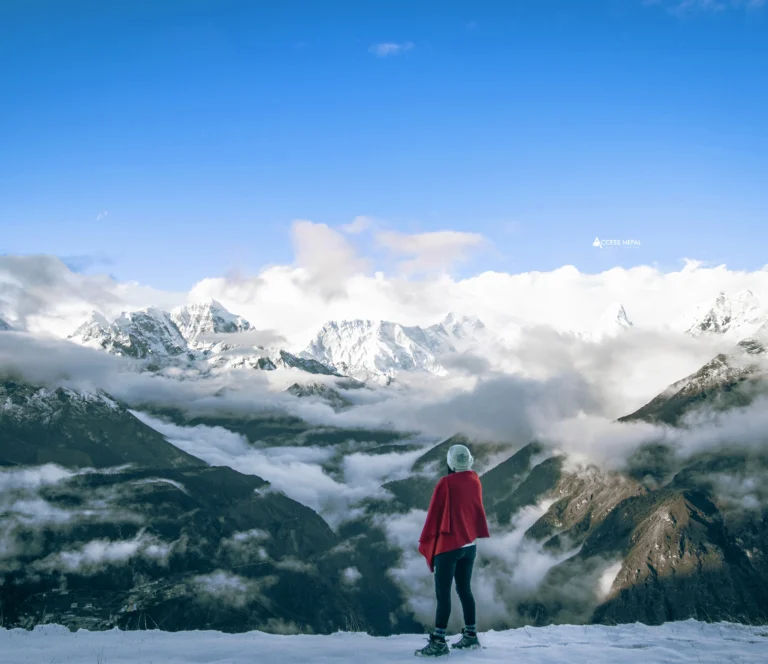
Everest Base Camp Luxury Trek - 14 Days
- 5,550m/18,209ft
-
Easy
- All
Inclusive Plan
Do I need travel insurance?
Yes, travel insurance is non-negotiable. Must include helicopter evacuation up to 6,000 meters. As standard policies do not cover this, make sure you read the fine print before buying insurance.
Can I shower every day?
You can access hot showers at most locations, but it might get a bit difficult in the topmost regions. Some tea houses can arrange a bucket of hot water for a fee, if running water isn’t available. Many women choose to shower directly when they return to Lukla instead. You should bring wet wipes just in case.
What if I get altitude sickness?
While we have acclimatisation days built into our itineraries, if you feel sick for a long period, descending might be your only solution. We don’t recommend waiting or pushing through, as the situation may get even worse.
Talk to your guide at the earliest, and they will help coordinate descent or even helicopter evacuation if needed. Travel insurance covers evacuation only if you have the right policy.

My Everest Base Camp Trek Experience and Challenges: Adventure, Challenges, and Memories
Prev
Mi historia de viaje: ¡Qué viaje tan increíble tuve en Nepal!
NextAwards and Achievements
Access Nepal Tour and Treks has been recognized with TripAdvisor’s prestigious Travelers’ Choice Award for multiple consecutive years, reflecting our unwavering commitment to quality and clients’ satisfaction.





Leave Your Comment