

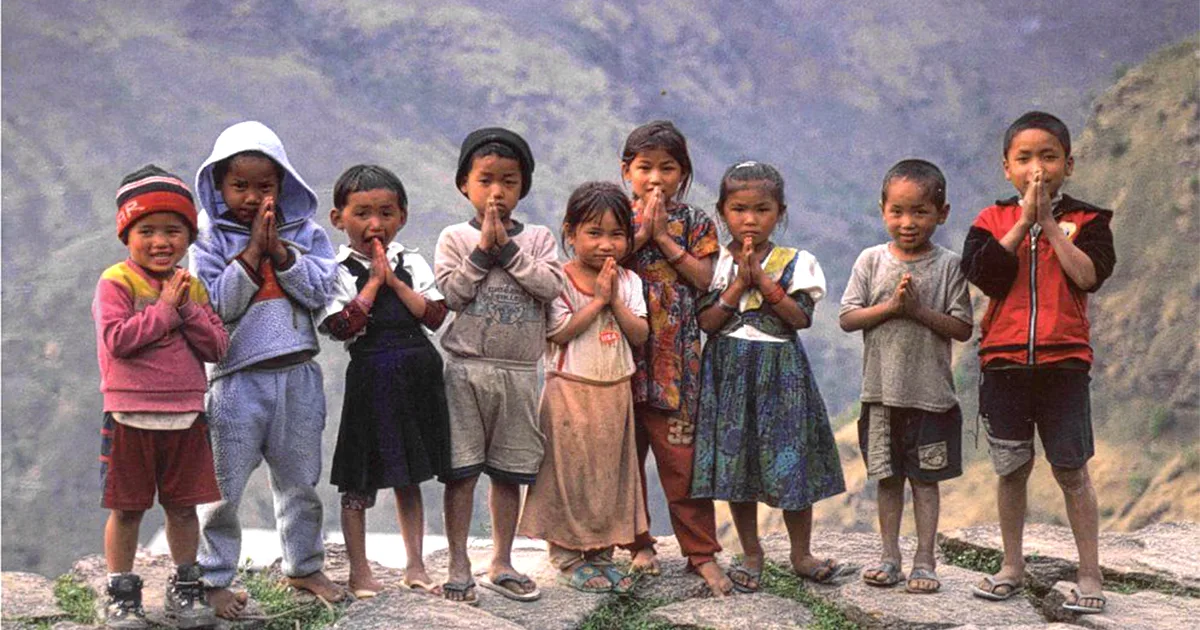
What does Namaste Mean? Spiritual & Cultural Explanation
- Places
- By accessnepaltour
If someone asks, “What does Namaste mean?”Namaste, aka Namaskar, is a cultural identity of Nepalese people. It has been used for greeting and respect throughout South Asia. But what is the actual meaning of ‘Namaste’?
The word ‘Namaste’ is derived from the Sanskrit words ‘namas’ and ‘te’. ‘Namas’ means ‘bow/respect’, and ‘te’ means ‘to you’. Together they become Namaste, “bowing to you”. So, Namaste means “I bow to you.” As a part of greeting, people greet you with ‘Namaste’ when you visit Nepal as a part of respect. ‘Namaste’ is said with two hands folded at the chest and a slight bow.
Besides being used for greeting, Namaskar is tied to culture and religion. It signifies respect towards the person culturally and sacred energy within ourselves spiritually. It’s a way of saying, “I bow to the divine in you.” ‘Namaste’ is used for both greetings and farewells. Though just one word, it carries a huge weight and meaning.
What does Namaste Mean? Full Meaning
The full meaning of ‘Namaste’ is respecting the person whom you are greeting. However, its definite meaning goes beyond the literal translation. As a whole, it means showing respect. As you hold two hands on your chest and bow slightly, it expresses that you value the person standing in front of you.
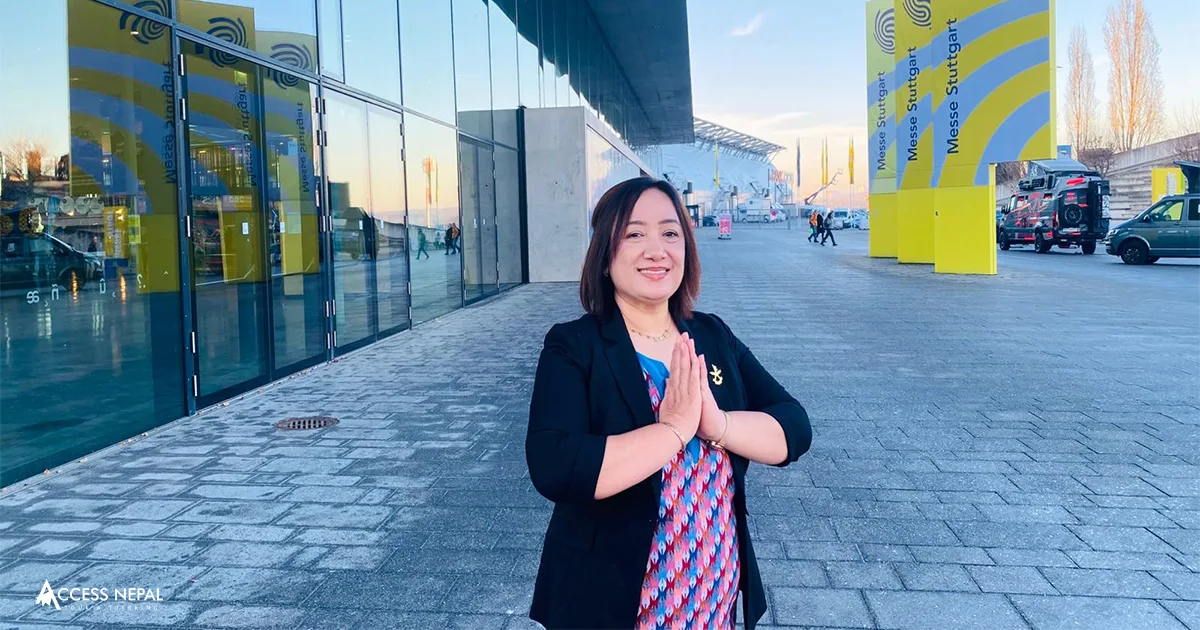
Namaste, from Access Nepal Tour and Treks
In its Sanskrit origin, “Namaste” means, “As I honour the Spirit within myself, so I honour the Spirit within you.” Just as its name implies, it means “I bow to you and the divine in you.” You can take its meaning in two ways: culturally and religiously.
Cultural Meaning: “Namas” (to bow) + “te” (to you) = “I bow to you.”
Religious Meaning: “As I bow to the divine within me, so I bow to the divine within you.”
As of today, the world has continuously evolved, but its meaning remains the same. Nowadays, it is used when saying hello and goodbye. It’s a polite way of greeting people and showing respect to them. It is said by juniors to elders, students to teachers, and to someone you are meeting for the first time. Not on paper, but it’s kind of mandatory to use when greeting. It shows you humility and respect toward elders.
Namaste in Sanskrit: Word Origin & Definition
The word ‘Namaste’ originates from Sanskrit, a sacred language of Hinduism. The word Namaste has appeared in many Vedic literature, like the Atharvaveda and Rigveda. In these scriptures, its meaning defines “respect.”
Also, in the Sanskrit language’s scripture and poetry, “namas”, which means “respect”, was also often used. The gesture of “Añjali Mudrā”, folded hands on the chest with a slight bow, is seen being done by the figures of very early Indus Valley artefacts (circa 2500 BCE). This shows it has been used from Vedic times.
The Nepali language mostly uses Sanskrit-derived vocabulary and follows Hindu scriptures as well as religion. This influence on the way of greeting. It has been used since ancient times by Nepalese ancestors. If you look into the Namaste etymology, it means “bowing” as a whole. For Namaskar (Namaskara), it is a more formal way of saying ‘Namaste’ but holds the same meaning. People these days use both words as per convenience.
Namaste Meaning in Nepal: Historical Significance & Cultural Context
The majority of Nepal’s population follows the Hindu and Buddhist religions, which are closely interconnected. In Nepal, the word “Namaste” means saying “hello” and “goodbye” as well. The usage of this word comes from ancient times. So, as a foreigner during your visit to Nepal, you will see people saying ‘Namaste’ when they meet you. It’s a cultural identity; wherever you go, from cities to mountains, everyone will greet you with ‘Namaste’. You can also try saying ‘Namaste’ by holding two hands together on your chest and bowing slightly during your meeting with Nepali hosts and friends. You can take it as a universal sign of welcome in Nepal.
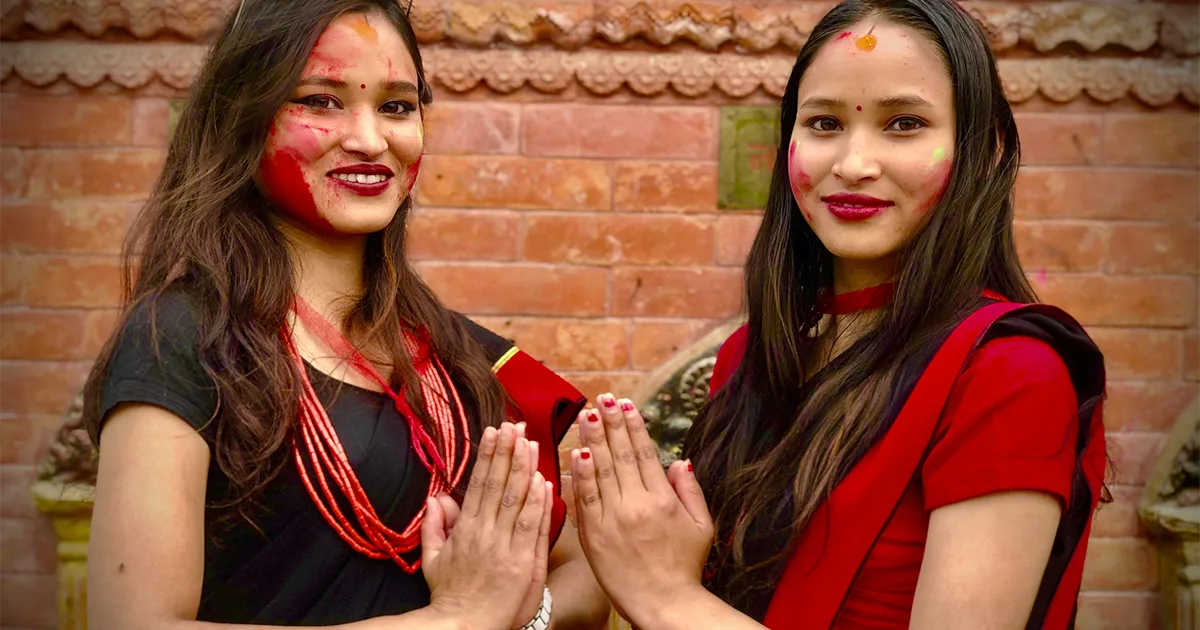
Namaste
The gesture of Namaste is called ‘Anjali Mudra’. During your visit to temples and palaces, you will notice deities’ and kings’ figures carved in this position. In most of these centuries-old temple sculptures, like at Changu Narayan or Pashupatinath, you will see deities and worshippers as well, folding hands. It holds significance and meaning in both Hindu and Buddhist cultures.
Culture, tradition, and religion in Nepal are influenced by ancient Vedic beliefs. Even historical and religious scriptures highlight the importance of saying ‘Namaste’. In Nepal, guests and elders are considered like gods, so it’s a kind of must to say ‘Namaste’, which means ‘the divine in me bows to the divine in you’.
Namaste from Nepal
Though society has evolved, its importance remains the same in Nepal. Due to its religious and cultural importance, ‘Namaste’ has become part of daily life. It’s basic etiquette when meeting friends, neighbours, elders, and strangers. You can try saying namaste during your trip in Nepal. Everyone will return it with the hand gesture. It has become part of Nepalese identity besides religious importance.
Why Do We Do Namaste? Spiritual & Cultural Purpose?
Namaste is a way of showing respect in Nepal. Besides its meaning related to greeting, it has cultural and religious purposes as well. When someone says ‘Namaste’, they’re acknowledging you and showing respect towards you. To make it as simple as possible, ‘Namaste’ means ‘greetings’ in the Nepali language.
We do ‘Namaste’ as a way of showing connection to the person in front of you. The practice of holding both hands on the chest (like in prayer) and bowing spiritually symbolises that you recognise their spiritual essence or life energy. This simple gesture shows the person’s humility and equality. It transcends individuality, religion, places, ethnicity, and caste in Nepal.
In Nepal, greeting with ‘Namaste’ is a must because it also shows what type of person you are. If you are going to a relative’s house or meeting someone, you have to greet them with Namaste. Not saying Namaste is considered rude. It is deeply rooted in the spiritual and cultural purpose of Nepali society.
In a cultural context, ‘Namaste’ is also connected with the custom of hospitality. In Nepal, people believe in Atithi Devo Bhava (“the guest is God”). So, saying this in a first encounter shows the extent of your being welcomed and honoured. It can be used in everyday interactions as well.
- Cultural Purpose: It expresses personal humility and hospitality. It’s basic etiquette to say when meeting a person. It’s a very formal and polite way of greeting elders, parents, teachers, and guests in Nepal.
- Spiritual Purpose: In spiritual language, “Namaste” signifies “I honour the divinity in me and you.” It creates a positive energy and mindset.
If you want to explore major festivals in Nepal like Dashain, Tihar, Holi, and customize our packages to celebrate local festivals and culture of Nepal, we will manage packages for you to make your journey a lifetime memory.
How to Pronounce Namaste Correctly?
The first time, it will be hard to pronounce ‘Namaste’ for non-natives. However, practice makes perfect. They won’t laugh at you even if you pronounce it wrong; instead, they will teach you. So you don’t have to worry about being judged.
In Nepali, the pronunciation of Namaste is “nuh-muh-stey” (IPA: [nə.mə.steː]). Do not put stress on Nuh and Stey and put it only on Muh. The accurate way to pronounce it is this: nuh-MAH-steh. To make it easier, break it into three syllables: na-ma-ste. The “na” sounds like “nuh”, the “ma” is quick (like the “a” in “comma”), and the “ste” is as in “stay”. The “a”s are short and soft, not like the “ah” in “father”.
This is how you pronounce ‘Namaste’ correctly. You do not have to worry about minor sounds, as they will understand them. The only thing you should focus on while saying ‘Namaste’ is saying it warmly with a smile. An accent really doesn’t matter; your intention is what matters.
Namaskar Meaning
‘Namaskar’ is the same as ‘Namaste’. It comes from the “Namaskaram”. Just like ‘Namaste’, ‘Namaskar’ holds the same meaning and is used for greetings. The only difference is that it’s more formal than Namaste.
“Namaskar” is also derived from Sanskrit: “namah” (bow) + “kara” (with respect, literally “doer of bow”). Likewise, “Namaskar” means “I bow with respect”. This greeting is widely used in both Nepal and India. It is mostly used in formal occasions, like rituals, deities, elders, and religious places.
Though there is not much difference in pronunciation and meaning, it is good to know about the difference. ‘Namaste’ is used in everyday language when greeting, while ‘Namaskar’ is used in formal spaces. Though these days, ‘Namaste’ is more widely used in Nepal. Namaskar is mostly used in India. Still, both hold the same meaning and gratitude. If you want to be formal, use ‘Namaskar’; otherwise, ‘Namaste’ is also fine, and it is still respectful.
The Gesture of Namaste is Called Añjali Mudrā
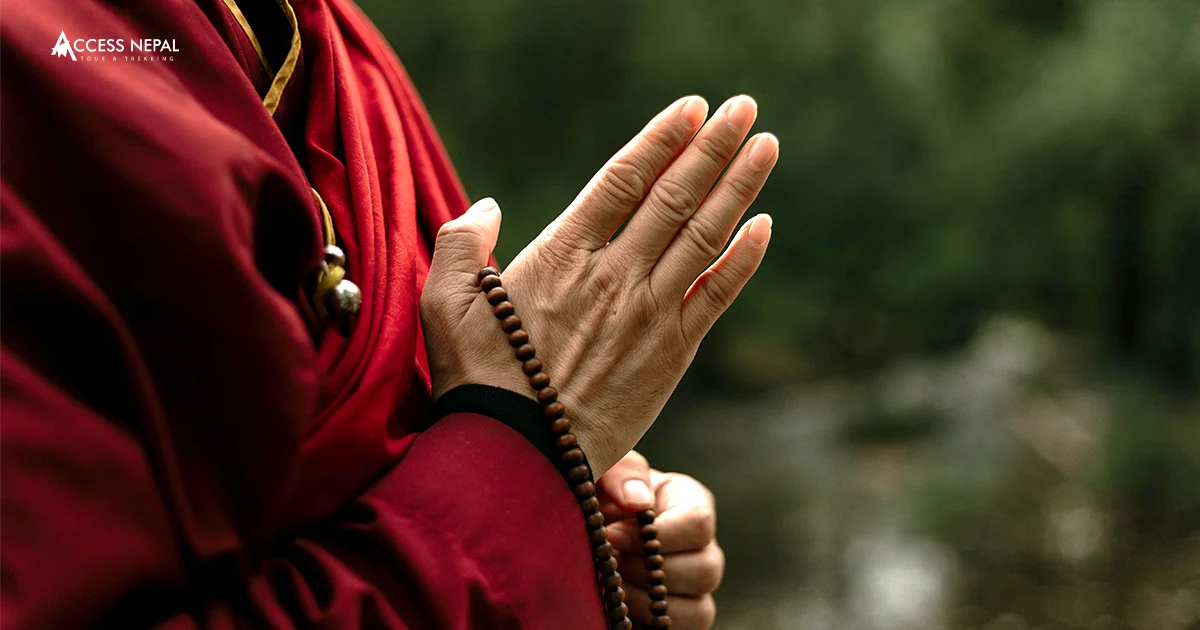
The position of both palms together with fingers pointed straight at the chest and a slight bow is called ‘añjali mudrā’. ‘Namaste‘ is said along with this gesture. This is how Namaste is said and done. Some, though, place their folded hands on their foreheads as well. Below we have the step-by-step process of doing Namaste so you can do it perfectly during your visit to Nepal:
- Step 1: First of all, bring both your hands up together. Press your palms flat with fingers straight and pointed upward. Bring it to the centre of your chest. Make sure thumbs are resting at the sternum. Hold it stable and straight.
- Step 2: Along with the prayer-hands position, bow your head or body slightly down. You can gently nod or bend forward slightly, depending on the formal setting and the person you are greeting. The bow shows your honour and respect for the person. This concludes how to do Namaste.
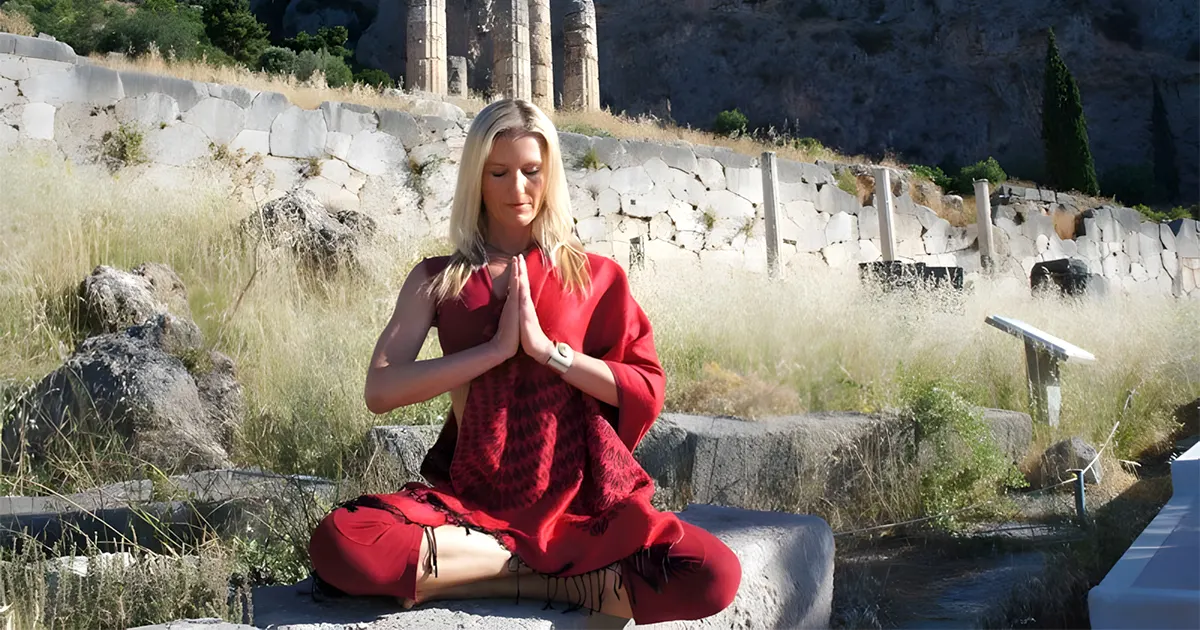
The gesture of Namaste is called Añjali Mudrā
Alternative Namaste Option: Besides on the chest, people also hold their hands on their foreheads, between the eyebrows, and slowly return them to the heart. It is the way of respecting the “third eye” chakra and signifies spiritual respect. It brings the distance between people and centres one’s attention. It is mostly done during the prayer to God. In Nepal, it’s a common tradition to do this gesture if you pass by the temples. Kinda unique, right? They do this without saying ‘Namaste’, but it still holds the meaning of respect. In many mindful practices, they use Añjali Mudrā. It is known that doing Añjali Mudrā can calm the mind and unite the body with the spirit.
When you are doing a Namaste, do not hold straight eye contact with the person standing in front of you. Just softly gaze at the hands and keep your eyes downcast. Do not forget the sweet smile of yours while doing namaste.
The Añjali Mudrā has been practiced since ancient times. In the Hindu religion, all gods, kings, and devotees use this sign. Even in Buddhism as well, they use Añjali Mudrā and bow to greet each other. It shows the importance and meaning of the Namaste.
How to Reply to Namaste?
No need to think much when someone greets you with Namaste. The courteous reply is to return with another ‘Namaste’ with folded hands and to bow. It’s basic etiquette and the perfect response of returning Namaste. In Nepal, you can use Namaste if you are meeting that person for the first time. It’s a common word used to greet friends or acquaintances. You say “Namaste”, and the other person will return it with another “Namaste”.
For a more formal greeting, you can say “namaskar”. This is usually used to greet elders and God. Though these days, both ‘namaste’ and ‘namaskar’ are commonly used and taken as formal. Just replying with another ‘Namaste’ with a smiley face and nod is taken as polite enough. The gesture of Namaste is also used for prayer besides greeting. It’s taken as the most respectful way of greeting and honouring.
Namaste Meaning Origin
‘Namaste’, as a greeting word, has been used since ancient Nepal. It is rooted back to the millennia and used in Hindu scriptures like the Rigveda, Atharvaveda, and Mahabharata. These scriptures have mentioned “Namaste” as worship or respect.
Namaste
Talking about the origin of Namaste, it goes back to the Vedic times. The position of folded hands, called ‘Anjali Mudra’, has been seen in the archaeological findings from the Indus Valley Civilisation (3000+ BCE). Figures of those times were posing with folded hands on the chest and bowing down or kneeling down. The origin of Namaste dates back over 4,000 years. Now, it has become a cultural and religious identity of Nepalese people.
Coming from thousands of years, Namaste still holds the same core meaning, which is “respect”. Today, it has been used in everyday and formal settings. Around the medieval period, Sanskrit commentaries say ‘namaste’ (or ‘namaskāra’) is used for greeting elders and deities.
Related Packages
Buddhist Pilgrimage Tour - 6 Days
 1,600 m/ 5,249 ft
 Easy
Easy All
Inclusive Plan
All
Inclusive Plan
Currently, Namaste has become part of the spiritual thing. Besides being used for greeting, it is also used in yoga classes. It holds significant importance and meaning.
When and How to Use Namaste?
If you are planning to visit Nepal, then it’s important to know about basic etiquette. For more enjoyment, learning one or two greeting words is good so that you can avoid awkward moments.
In Nepal, ‘Namaste’ is used to greet someone whom you are meeting for the first time, elders, and guests as well. It is a way of saying hello but with more meaning. It is mostly used in formal settings by juniors to elders. Though these days it has become an everyday word to be said when meeting. It’s like saying ‘hello’, so instead of ‘hello’, you can say ‘Namaste’.
Though do not use ‘Namaste’ to say good night, you can use ‘Namaste’ instead of ‘good morning’. It’s more like hello, so use it accordingly. Similarly, it is not said to small children (they will say it instead) or in informal home settings. You can say it to your guests and relatives, though. You can also say it to your parents as well, but that’s in formal settings like rituals and festivals.
One more tip: You can also use Namaste online, but not to the same extent as in a formal setting. If it’s your first time talking to them, you can greet them with ‘Namaste’, more like an introduction.
Namaste During Covid-19
Thinking about the time of COVID-19, there is nothing about happiness, but it is quite related to the topic we are talking about today. During the pandemic, the whole world shut down and went into social distancing to avoid transmission.
After years of struggle, the world was still struggling, but it started running. During that time, we were not able to handshake or hug each other. However, Namaste went viral. It was a perfect way to greet each other, along with great respect. Namaste required zero physical contact and was universally understood.
It got so popular that even French President Emmanuel Macron, former US President Joe Biden, and the British Royal Family used Namaste to greet. It was truly delightful to watch. It became a good substitute to greet each other with respect during those critical times.
Namaskaar
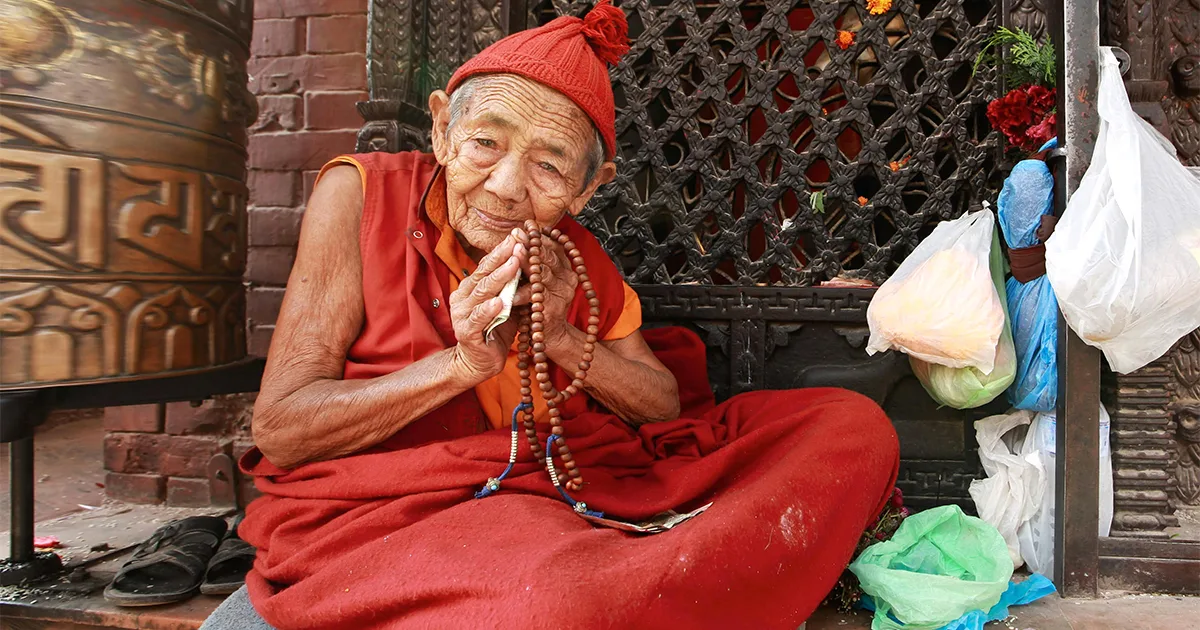
In conclusion, ‘Namaste’ is not just a simple greeting sign in Nepal. It’s a cultural and religious identity. Have been done since ancient times; it also carries great history and beliefs. ‘Namaste’, meaning as in simple, might be a greeting, but it’s the utmost way of giving respect while greeting. The position and pronunciation carry very important details and meaning. Likewise, Access Nepal Tours and Trekking also say Namaste, “We bow to you.”
Related Packages
Kathmandu Pokhara Chitwan Tour - 8 Days
- 1,400m/4,593ft
-
Easy
- All
Inclusive Plan
Access Nepal Tours & Treks offers well-organized and reliable travel experiences across Nepal’s most iconic destinations. Highly recommended for hassle-free adventures with professional guides and excellent service.
Best Places to Visit in June in Nepal
Prev
Dashain Festival | Importance, Dates, Tika Time & Guide
NextAwards and Achievements
Access Nepal Tour and Treks has been recognized with TripAdvisor’s prestigious Travelers’ Choice Award for multiple consecutive years, reflecting our unwavering commitment to quality and clients’ satisfaction.













Leave Your Comment