

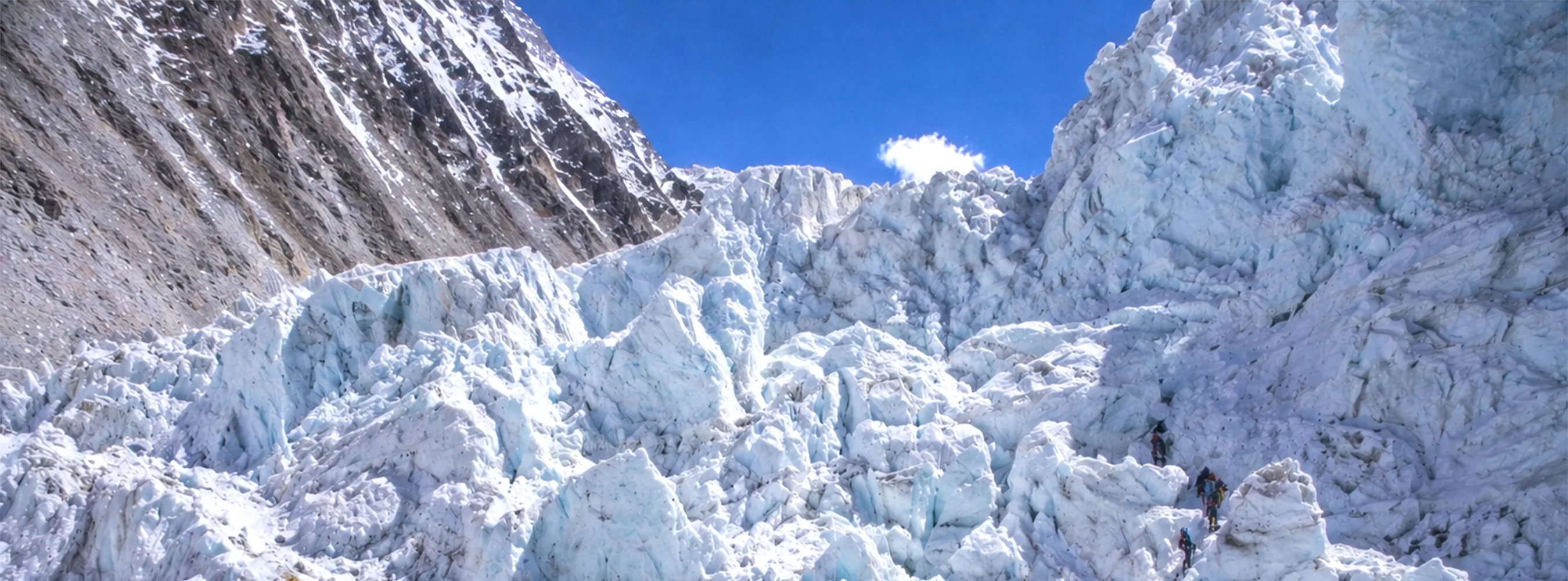
The Ice Blockage on Khumbu Icefall has been Cleared
- Places
- By accessnepaltour
On the South Col route, a huge 30-metre chunk of glacier has blocked the route for two weeks. As of Tuesday morning, April 28th, 2026, the serac has been successfully cleared by the help of Icefall doctors. Now, the Everest route through Khumbu Icefall has been successfully cleared and is ready to pass through.
Before, the serac caused hundreds of Everest climbers to get stuck. It appeared just below Camp 1 and has stopped everyone from moving forward. It has caused delays for climbing and risks of congestion.
With the arrival of spring 2026, peak Mount Everest climbing season has already started. However, due to the ice blockage, it all came to a halt when climbing teams found huge ice blocked along the Khumbu Icefall route. Already an unstable ice tower, this huge chunk has created more challenges for Everest climbers.
Officials in Nepal say, “The ice wall is 100 foot tall, and it’s part of the Khumbu Icefall glacier.” They have advised it’s too dangerous to approach. The Khumbu Icefall is always changing and unstable, which creates more risks. For this spring climb, the government of Nepal has issued more than 400 permits for international climbers. And for two whole weeks climbers were stuck, and their itinerary has been delayed.
The strategist has implied it’s too dangerous to get rid of it, and the only solution is waiting for it to collapse or melt. Due to this, Nepal’s Sagarmatha Pollution Control Committee has stopped all the route work until the situation improves. The ice blockage has created an emergency situation as all experts are trying to bring out a solution. Thankfully, as of today the problem has been solved.
Khumbu Icefall Ice Blockage has been Cleared
The updates say the ice block has reopened. The huge serac was located between Base Camp (5,364 m) and Camp I (6,064 m) in the lower Icefall. Government authorities were monitoring it by drone and trying to come up with a solution. Finally, they succeed. Those climbers and Sherpas are waiting in line with their team, praying that luck will cause it to collapse safely, and now it has become true.
Things are still serious, as the spring window has already arrived and climbers are already lining up to climb Everest. The situation has become a race against time. If the ice block doesn’t dissolve, it can create more delay and big traffic on the climbing route. Serac blockages are quite normal on the Everest route. It is believed it can be fixed by mid-April.
All climbers and guides preparing for the Everest climb are highly advised to take extra precautions. The delaying has already caused long queues, so climbers can stay overnight at intermediate camps. Climbers are not recommended to go near the serac, as they are dangerous. Experts are working their best by hauling equipment via drones to minimise the passes.
Khumbu Icefall is already hazardous. Climbing Everest is not an easy task; icefalls are unpredictable, and these types of challenges are unavoidable. Besides waiting and watching for the serac to fall naturally, there is no better option. As of now, the deadly serac is still causing a challenge of crossing it. The unpredictability of Khumbu Glacier has made the situation even more challenging.
What is a Khumbu Icefall?
The Khumbu Icefall is a constantly moving glacier. It is located along the South Col route of Mount Everest, just at the head of Khumbu Glacier and between the Everest Base Camp (5,364 m) and Camp I. Its massive size and unpredictability make it one of the major challenges during the Everest climb.
Khumbu Icefall is very dangerous due to giant ice walls (seracs) and crevasses. With a 5,486 m (17,999 ft) tall height and extending upward to 5,800 m, you can say the icefall is a frozen waterfall. Crossing this icefall is one of the most challenging parts of the journey, as it keeps changing. To reach the top of Everest, climbers and Sherpa guides have to go through this icefall mandatorily.
However, if you are only going for a trek to Everest Base Camp, you don’t have to cross the Khumbu Icefall. Climbers going for the Everest summit only have to cross this icefall. To pass through this icefall, it requires good planning, gear, fixed ropes, and support from guides. After crossing it, you will reach Camp I, and from here on, climbing continues towards Western Cwm, then to the summit.
Due to the difficulties and unpredictability, the Khumbu Icefall is popular. The Khumbu Icefall technically comes from the Khubu Glacier system, which is formed by flowing ice from Everest’s slopes.
And you know why Khumbu Icefall is so dangerous? It’s because the glacier moves constantly, about 0.9 to 1.2 metres per day. It carries massive ice chunks and crevasses downward, which makes it unpredictable. Guides have to analyse its condition and come up with new planning every day. Normally, ice takes 4.3 years to travel the 600 m from the glacier’s upper reaches down to base camp. This already implies how changeable it is. At first glance, the icefall looks very scary with lots of crevasses and collapsed ice walls. It is one of the trickiest challenges along the South Col route.
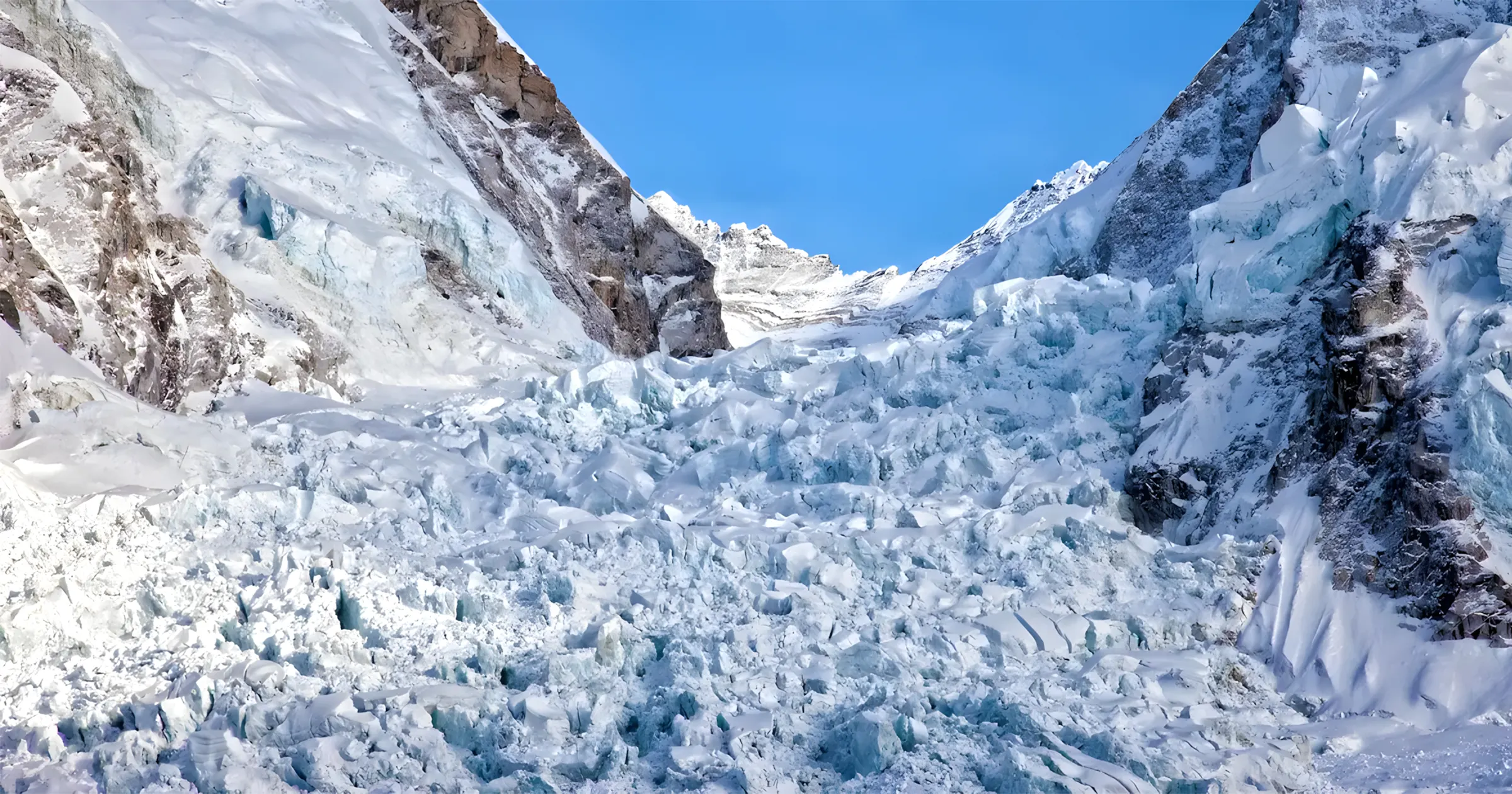
Khumbu Icefall
To cross this icefall, climbers have to walk across rock-hard snow bridges supported by fixed ropes laid by Sherpas. You have to be extra careful, as a simple misstep means danger. The altitude and extreme cold temperatures make things more challenging. Therefore, the Khumbu Icefall is generally crossed before dawn when the ice is more stable. With the help of guides and full crevasse-rescue gear, you can cross it safely.
Why is the Khumbu Icefall so dangerous?
Khumbu Icefall is dangerous because of the constantly moving ice, elevation, and location. Given below is the list of factors that make the Khumbu Icefall dangerous:
- Constantly Moving Ice: The Khumbu Icefall moves every day, so its structure changes differently each day. Those shifts cause bends, crack the ice, and form seracs that collapse without warning. You have to be extra careful, as there is no place to hide or run during the emergency situations.
- Seracs: These are huge icefalls with massive ice blocks. They are very tall and are supported by fragile snow piles. It has a high risk of suddenly collapsing, and if it collapses, it can lead to avalanches or block the whole route with tonnes of ice. One of the sad stories is the 2014 serac collapse, which killed 16 Sherpa guides who were preparing for fixed ropes.
- Crevasses: These are another major risk during Everest climbing. Crevasses are cracks in the ice or glacier. They are very tight, deep, and dangerous. Those cracks go more than 100 m in depth. Sometimes it’s hard to find them, as they can be covered by a pile of snow. Rope lines and ladders are therefore mandatory.
- Avalanches and Falling Debris: This is another risk during the Everest expedition. Warm temperatures and falling seracs can cause avalanches. Not serious, but sometimes, ice or rocks can fall onto the trail. It is best to climb during the best time only. If the weather is not favourable for an expedition, it creates risks like these.
- Frostbite: At Everest, temperatures are extremely cold, always below the freezing point. Nights and mornings are severely cold, which freezes the ice. If you have not layered properly and been exposed to ice or snow, it’s easy to get frostbite.
- Low Oxygen Level: Beyond 5,000 m altitude, oxygen is very thin. Low oxygen levels, it can cause altitude sickness and difficulty in breathing.
Khumbu Icefall Deaths
Due to the extreme danger, many Everest climbers have died. From 1953 to 2025, nearly 70 people have died among thousands of climbers. So, it is risky, but you can overcome it with good preparation, planning, and support. The major risks that cause several of these deaths are icefall avalanches. They are unpredictable and very dangerous. Therefore, climbing during the best window is highly recommended for safety.
What is the Khumbu Icefall Elevation?
The height of the Khumbu Icefall is 5,486 metres (17,999 ft). It is located just between the Everest Base Camp (5,364 m) and Camp I (6,064 m) along the South Col route. Due to its height, the oxygen level here is low and the temperature is freezing. The Khumbu Icefall is the first phase of climbing Everest. Before pushing above 5,000 m, climbers stay for several days below the icefall.
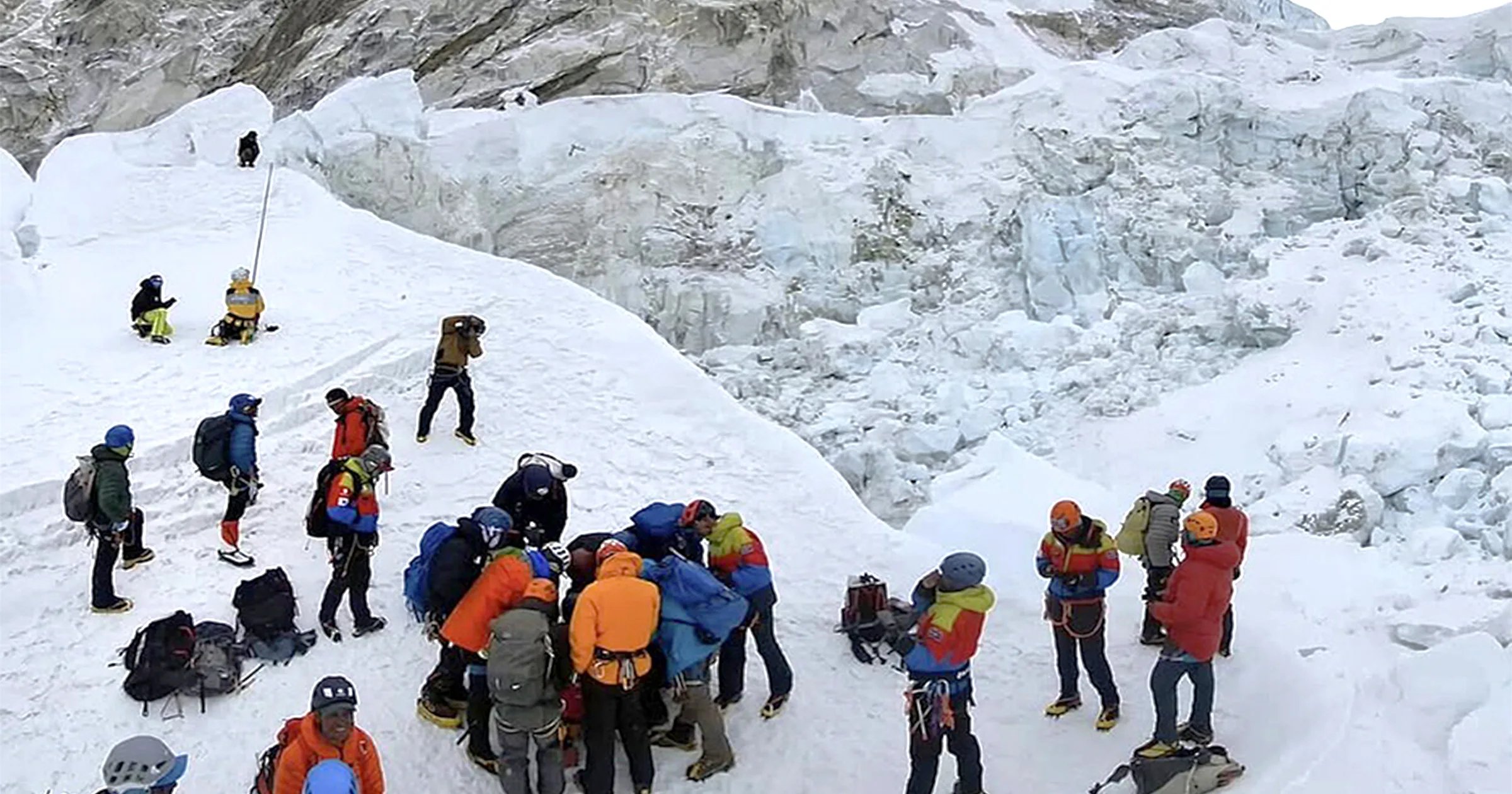
This Icefall sits at the base of the Western Cwm, between Everest and Nuptse. It is constantly moving, and one of the challenging parts of climbing Everest. These massive glaciers of ice can also be seen from satellite maps. There, it shows a giant glacier filled with rambles of ice blocks. Though this icefall is not much higher than base camp, it is still hard. Its gradient is very steep, as it drops over 600 m vertically in only 1.5 km horizontally.
Related Packages
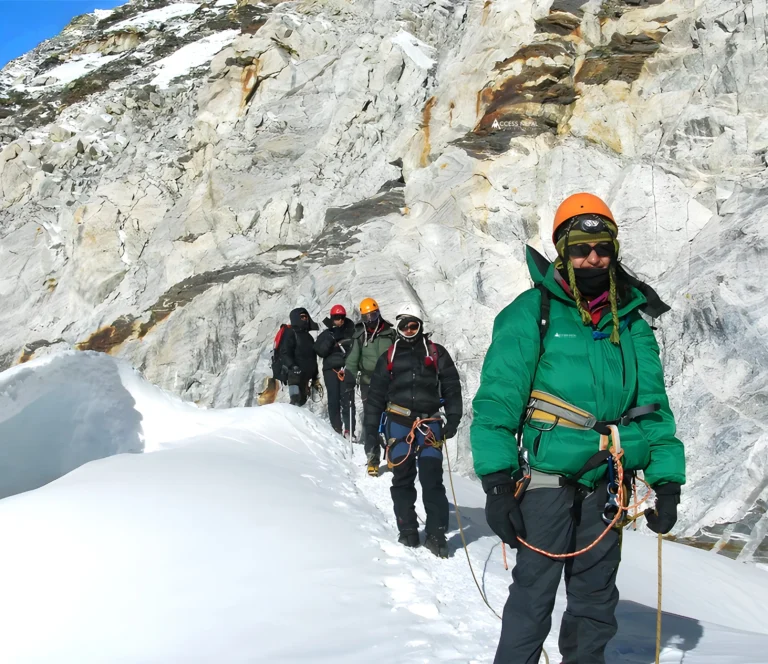
Everest Expedition - 55 Days
 8,848m/29,029ft
 Extremely Difficult
 All
Inclusive Plan
All
Inclusive Plan
The best time to do the Khumbu Icefall trek is in spring and autumn. Even during the best season, the weather here is very unstable and severely cold. Even during the day, temperature ranges are below freezing point, around 0-5 °C, and at night it drops to -15 to -25 °C. Climbers go through this icefall only after monitoring its condition beforehand. Due to these reasons as well, the current ice blockage also happened, and without removing it, nobody can pass through to climb Everest.
Thankfully, all the climbers patiently waiting to climb Everest can now successfully do it. With the reopening of the Khumbu Icefall route, all climbers are getting ready for the summit.

Mi historia de viaje: ¡Qué viaje tan increíble tuve en Nepal!
Prev
18 Best Destination for Peak Trekking Season in Nepal
NextAwards and Achievements
Access Nepal Tour and Treks has been recognized with TripAdvisor’s prestigious Travelers’ Choice Award for multiple consecutive years, reflecting our unwavering commitment to quality and clients’ satisfaction.













Leave Your Comment