

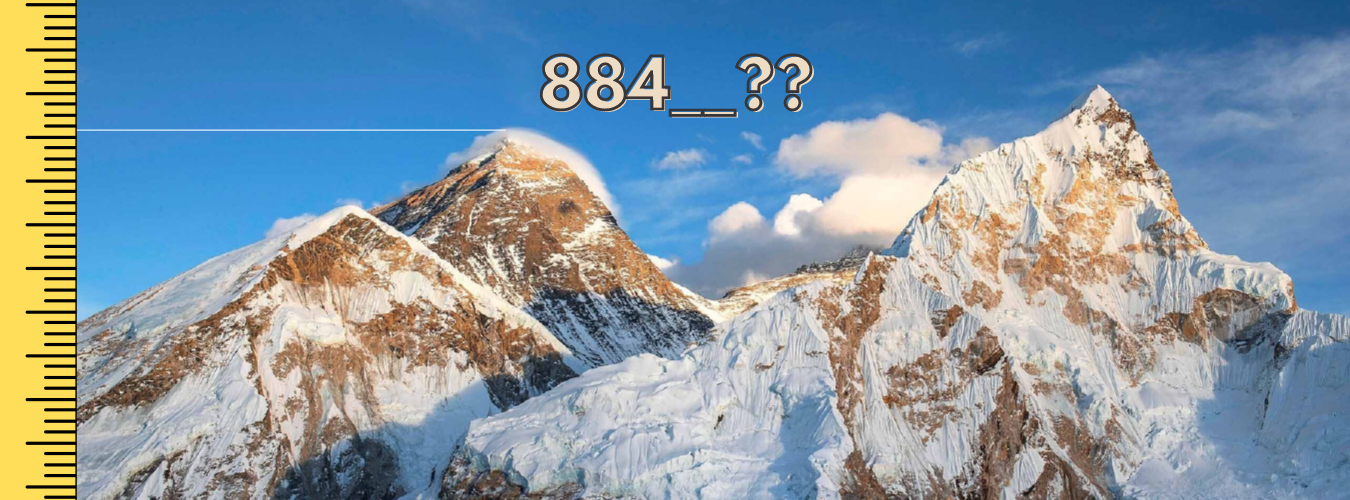
How tall is Mount Everest in miles?
- Information
- By Shrijan budhathoki
Mount Everest stands tall with a height of 8,848.86 meters above sea level, holding the title of world’s tallest mountain, sitting at the lap of the Mahalangur Himal range, located in Nepal. People feared the Everest due to its height and the challenging trails. But as time passed, many adventure seekers accepted it as a challenge and converted it into a sport. In this blog, we’ll be discussing ‘how tall is Mount Everest in miles’ and its measurement history, and all.
Now, conquering the height of Mount Everest has become the most demanding adventure in the whole world. The adventure seekers from different countries visit Nepal to experience the beauty that has divided the two countries, Nepal and Tibet, equally, with the natural mountain scenery for centuries.
Mount Everest has drawn people for thousands of years because it offers adventure and a true form of natural beauty, inspiring people to conquer their inner fear. We have always been measuring the height of Everest in meters or feet. Let’s take a deep dive into it.
How tall is Mount Everest in Miles?
The official height of Mount Everest is 8,848.86 meters above sea level, equivalent to 29,031.7 feet, a measurement jointly announced by Nepal and China in December 2020. The measurement includes both the rock summit and the permanent snow and ice cap at the top.
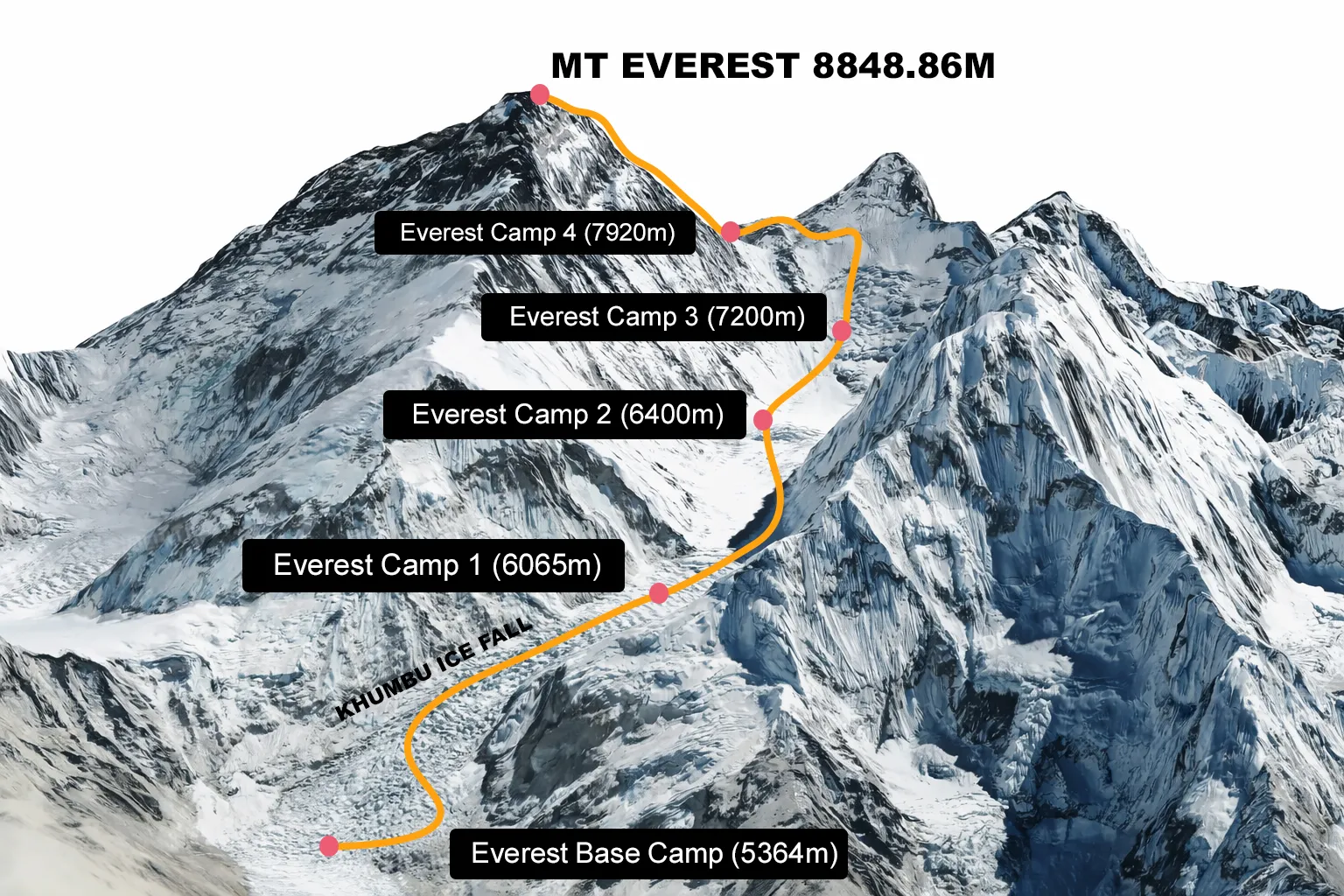
How tall is Mount Everest in Miles?
Mount Everest is 8,848.86 meters tall above sea level, and according to the measurement rule of math, 1 meter is equal to 1,609.344 meters. If we divide the actual height of Everest by that number, we will get the result in miles.
We can say that Mount Everest is situated at an elevation of 5,500 miles, or 5.5 miles, above sea level. When we take a look at Everest from a distance, it will look small, but Everest appears larger than life at first glance, which demonstrates the true scale of Earth.
History of Measurement
People were unaware of the true existence of Mount Everest. Only a few people living near Everest were aware of its existence long before anyone thought about measuring it or giving it the title of the world’s tallest mountain. The history of measuring the height of Everest is as interesting as the beauty of the mountain itself.
The local people used to call it Sagamatha, which means “forehead of the sky” in Nepal, and Chomolungma, which means “mother goddess of the world” in Tibet.
But during the 19th century, a journey began. The systematic attempts to measure the Himalayan peaks all around the world as a global project. They started the survey in 1956 AD. The Great Trigonometrical Survey of India, led by Radhanath Sikdar, labeled Mount Everest as the highest mountain to exist in the world at the time. Radhanath Sikdar was the head of this operation.
He calculated the height of Everest with the help of trigonometry and used stationary locations that were more than 100 miles away from the mountain itself in India.
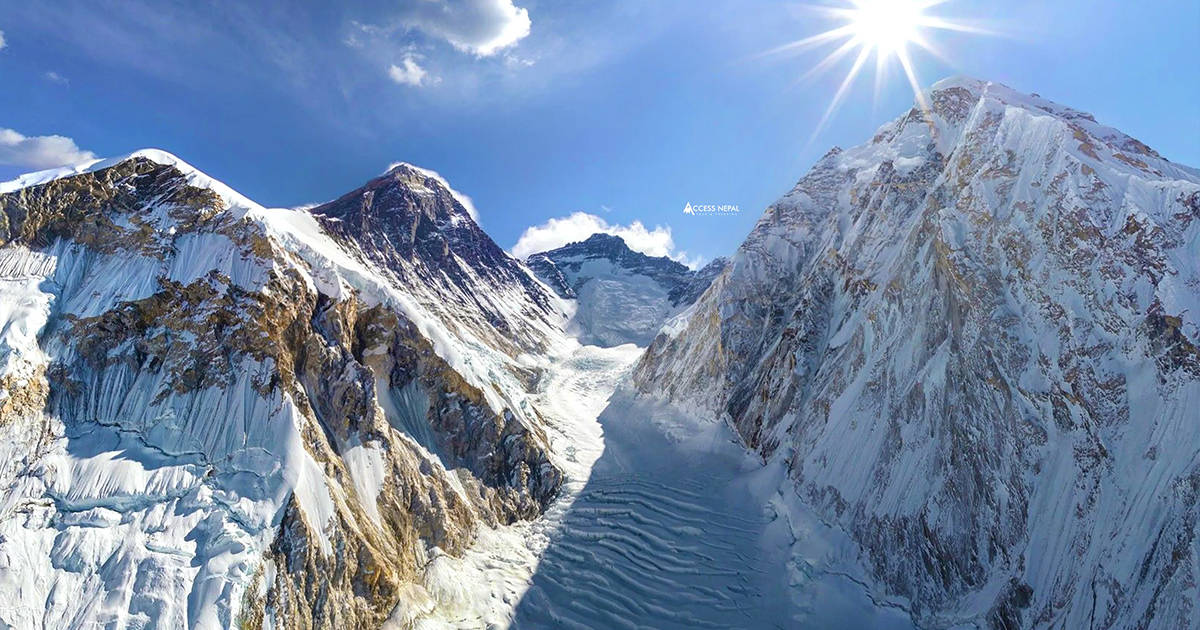
On the way to the Everest Summit
Many people decided to name the mountain after Sir George Everest to show their gratitude to the British surveyor general of India. But he opposed it and preferred that it should be named using a local name to show its true beauty in its name.
When the first survey was conducted in 1856 AD, Mount Everest was labeled as the highest altitude, standing 29,002 feet tall above sea level. After that, many surveys took place to improve the measurement technology for more accurate results. Another survey was done in 1955, which recorded 29,029 feet tall, and it remained popular for many years.
After many years of controversy and discussion, the American organization used advanced GPS technology and recorded it as being 29,035 feet tall. But many people still use the previous number of 29,029 till today.
Later, after a few years, there was a discussion between the two nations over a few inches regarding the exact height of Mount Everest because the measurement trick used by the geographer of China only measured the rock part, and Nepal measured both the rock and snow parts, which created the difference in numbers.
In 2020, after years of discussion, both countries agreed on the official height of Mount Everest, 8,848.86 meters. Mount Everest height in feet is 29,031.7 feet. The new height is slightly different from the previous one due to the vast development in measuring technology.
Why does the height of Mount Everest matter?
Mount Everest went through many measurement processes for a few inches of mistakes, even when the mountain is 5.5 miles high above sea level. People think a few inches here and there will not affect the reputation or the popularity of the mountain. But the precise measurement of Mount Everest serves several scientific purposes.
Monitoring the height of Mount Everest helps geologists look at the overall tectonic rise of the Himalayas. The survey and researchers found that the Indian tectonic plate is still shifting and colliding with Eurasia, and the most fun fact is that it’s been ongoing for 50 million years, according to the researchers’ data.
In 2015, 7.8 and 8.1 magnitude earthquakes occurred in Nepal, which damaged many historical sites, and an incident that triggered the tectonic shifts in Gorkha led to another discussion topic for geologists regarding the height of Mount Everest.
Five years later, in 2020, a joint survey was conducted, and international cooperation was established between the governments of both Nepal and China to determine the damage to the overall condition of Mount Everest.
Climbers need to know the data on the altitude they are climbing, which will help them determine the weather and trail conditions so they can prepare themselves accordingly. They can calculate the amount of oxygen they need for their journey or what kind of challenges they might have to encounter. As the altitude increases, every step is counted, and trails can exhaust the trekkers and lead them to the dead zone.
Why is Everest’s height measured from sea level?
Mount Everest was measured from sea level as the point of reference to determine its height. Scientists have been measuring all the mountains, taking sea level as the point of reference instead of measuring from their base. They used this trick to maintain the equality when comparing the heights of mountains from different continents.
Measuring the height of any mountain from its base to its summit can cause significant inconsistency in numbers due to the fact that many mountains do not have visible bases. If we compare it to Mount Everest, which is built on the Tibetan Plateau that is raised thousands of meters above sea level.
But Mount Mauna Kea was formed on the ocean floor, and if we measure it from the base, it has a greater height than Mount Everest when measuring it vertically.
So after many tries and research that created controversy among the countries, scientists utilize the sea level measurement to keep the fairness and to produce an accurate result that they can rely on. So the world’s tallest mountain, including the entire world’s mountains, is measured from sea level.
In Which Country is Mount Everest?
Mount Everest is situated between Northern Nepal and Southern Tibet. There are many other mountains like Lhotse, Nuptse, and Makalu that are surrounded by Everest. These mountains are also part of the larger Himalayan arc. It includes the Lesser Himalayas and the trans himalayas, providing a natural barrier between the climate and weather patterns of the indian subcontinent and the Tibetan Plateau.
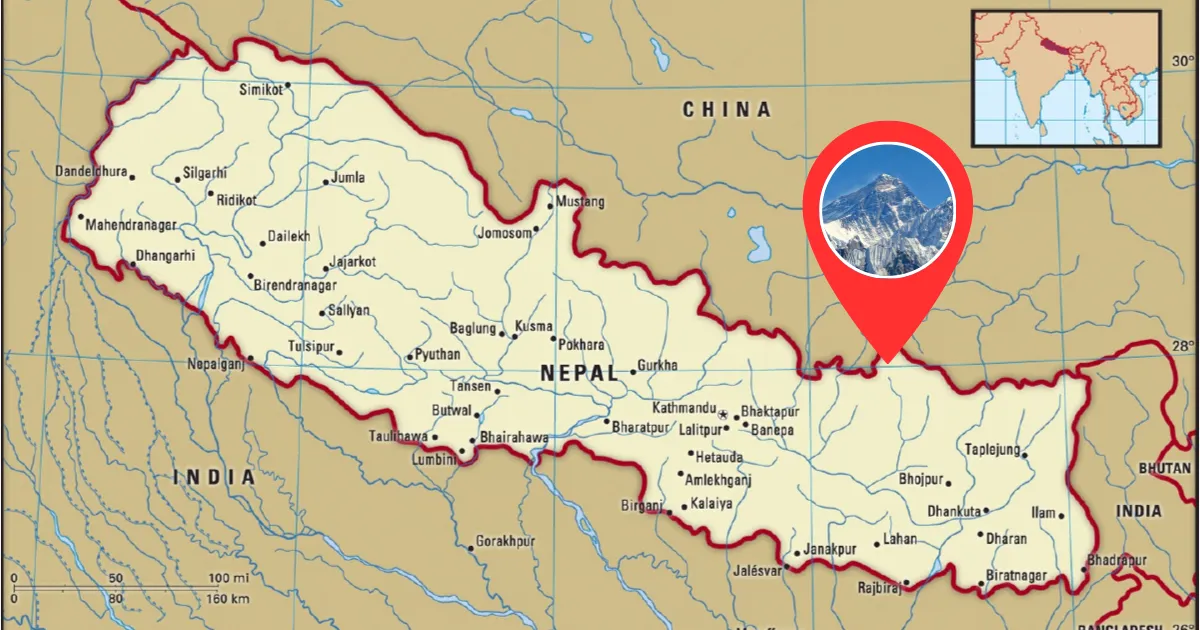
In Which Country is Mount Everest?
The Himalayan mountain range was created when the indian and Eurasian tectonic plates collided. This process is still occurring today, and this continues to add new elevation to both the range and a few inches each year to Mount Everest.
As we know, the previous height of Mount Everest was 8,848.86 meters, and the recent height of Everest in meters is 8,848.86 meters, which is 29,031 feet and 5.5 miles above sea level. Mount Everest’s height in cm is 884,900 cm.
The difference is too little, but it provides strong evidence that the peak is continuing to grow by a few inches every year.
Geology behind the Everest
Mount Everest might be the tallest mountain in the world, but to truly understand the height of Mount Everest requires an understanding of the violent geological forces that created it. According to the history and the researcher’s data, 50 million years ago, the Indian subcontinent started to collide with Asia.
It was not a sudden crash between two landmasses but a gradual phenomenon that continues to this day. The extreme pressure created by these colliding tectonic plates forced the Earth to buckle up and ended up creating the majestic mountains.
Everest is filled with rocks that are sedimentary or metamorphic in character. You can even find the marine fossils near its summit, strong evidence that the rocks are now forming the uppermost portion of the world’s tallest mountain from above sea level of an ancient ocean known as the Tethys Ocean.
The tectonic movement of these layers of limestone has compressed and pushed upward compared to their current elevation, more than five miles above sea level.
Due to the ongoing tectonic activity, Everest keeps experiencing growth in height every year. According to the geologist, it grows by an average of 4 mm per year due to the continued movement of plates. But they say the erosion from the elements like ice, water, and wind will balance out the production of new materials to help create more mountain ranges with more mysteries.
If you take a careful look at Everest from a distance, you will notice the yellow rocks covering the summit of Mt. Everest. The Ordovician limestone from which the summit is made contains fossils from an old Earth ocean old enough to compare with the human life span.
Comparing Everest to other mountains
Mount Everest is standing tall at 5.5 miles high, making it easy to visualize and compare to other famous peaks or tall buildings. Mount McKinley is the tallest mountain in North America, standing tall at 20,310 feet above sea level.
If we convert into miles, Mount McKinley is 3.85 miles high, a remarkable height, still 1.7 miles lower than Mount Everest. Another is Mount Kilimanjaro, Africa’s tallest mountain, standing tall at 19,341 feet, or 3.66 miles, still lower than Everest.
Everest is one of fourteen peaks that have been standing tall above 8,000 meters for centuries. People and climbers feared them because they are famous for their height, weather, and challenging trails that make conquering their summit hard and dangerous.
The low level of oxygen and the freezing temperature of trails while covering them in thick layers of snow. These difficulties push the climbers to their limit and make them regret their decision on every step.
The second-tallest mountain, K2, also known as Kevlar, is 28,251 feet above sea level, or technically 5.35 miles. It might be 780 feet shorter than Everest, but many climbers believe that climbing K2’s summit is more challenging and dangerous compared to Everest. They say the weather is more unstable and trails are more unpredictable compared to the Everest.
Challenge of Climbing 5.5 miles vertically
Climbing up almost 5.5 miles straight from base camp is a challenge of extreme human endurance. But climbing 5.5 miles vertically from a traditional base camp that is located 3 miles away horizontally is a different experience than walking or running 5.5 miles regularly.
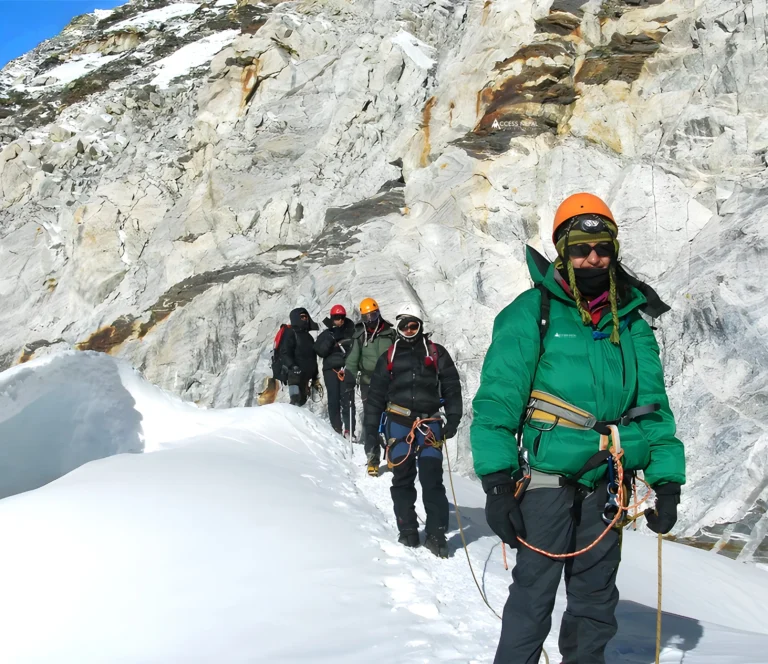
Many climbers normally start their journey from base camp at an elevation of 17,600 feet or 3.3 miles. They take the regular route where climbers navigate through the dangerous Khumbu icefall and cross the Western Cwm to reach Lhotse Face. They will ascend the Southeast Ridge before reaching the summit.
A real challenge for climbers that involves over 2 miles of vertical climb involves many technical challenges and the most risky terrain of the entire journey.
The best climbing seasons are spring and autumn because in these seasons, weather conditions are most favorable and suitable for Everest climbing. Nepal is filled with trekkers, hikers, and climbers during this season.
If you’re interested in climbing Everest or doing an Everest expedition, then we’ve an affordable package taking care of all your essential requirements from Sherpa guides to meals, accommodations, oxygen cylinders, and more.
Related Packages
Everest Expedition - 55 Days
 8,848m/29,029ft
 Extremely Difficult
 All
Inclusive Plan
All
Inclusive Plan
People avoid the winter and monsoon season due to the high risk of life-threatening dangers. But even in suitable seasons, the trails are still filled with dangers that can be critical for you. One simple mistake and it can cost you your life.
With the help of services like fixed ropes, supplemental oxygen, and grooming, establish camps. The modern expeditions are more flexible and have opened the door for many hikers who want to reach the summit of Everest. Back in those years, it was an adventure full of difficulty; only the elite or years of experienced hikers used to get the permit to conquer the summit of Everest.
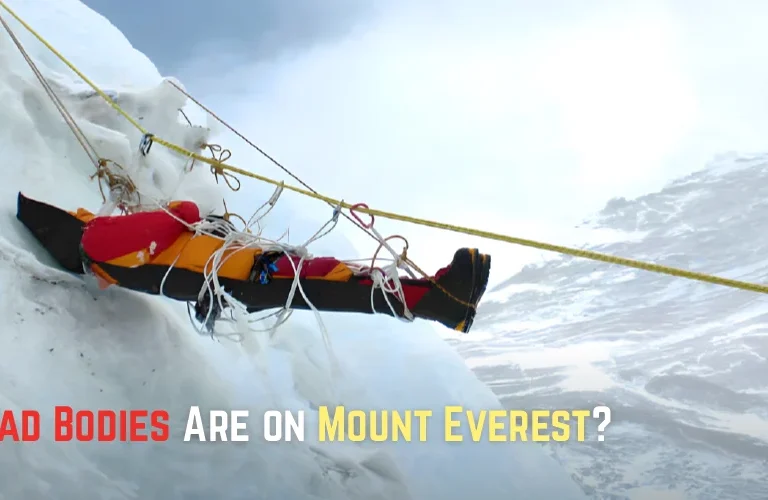
Even with the experience of years to overcome the obstacles, the trails were extremely dangerous and risky due to sudden changes in weather and trails filled with thick snow. The record says more than 300 climbers have lost their lives on Everest, and still, many bodies have unable to recovered and are buried deep inside the snow.
Climbing the summit of Everest requires years of training and physical experience in high-altitude climbing. Physical and mental preparation to develop your respiratory system to produce more red blood cells that can help you to consume less oxygen.
The climbers have to train their lungs to survive in less oxygen. A well-trained body can help you to survive the high altitude challenges like dizziness, fatigue, and altitude sickness. The well-trained mind can keep you mentally motivated during your journey.
Cultural and Spiritual Significance
Everest has been standing tall for thousands of years, and the people from generation to generation have lived in its shadows. For the people living there, Everest holds much more significant value than just being the highest peak on Earth. It is also a source of deep spirituality for some of those Sherpa men and women living underneath it.
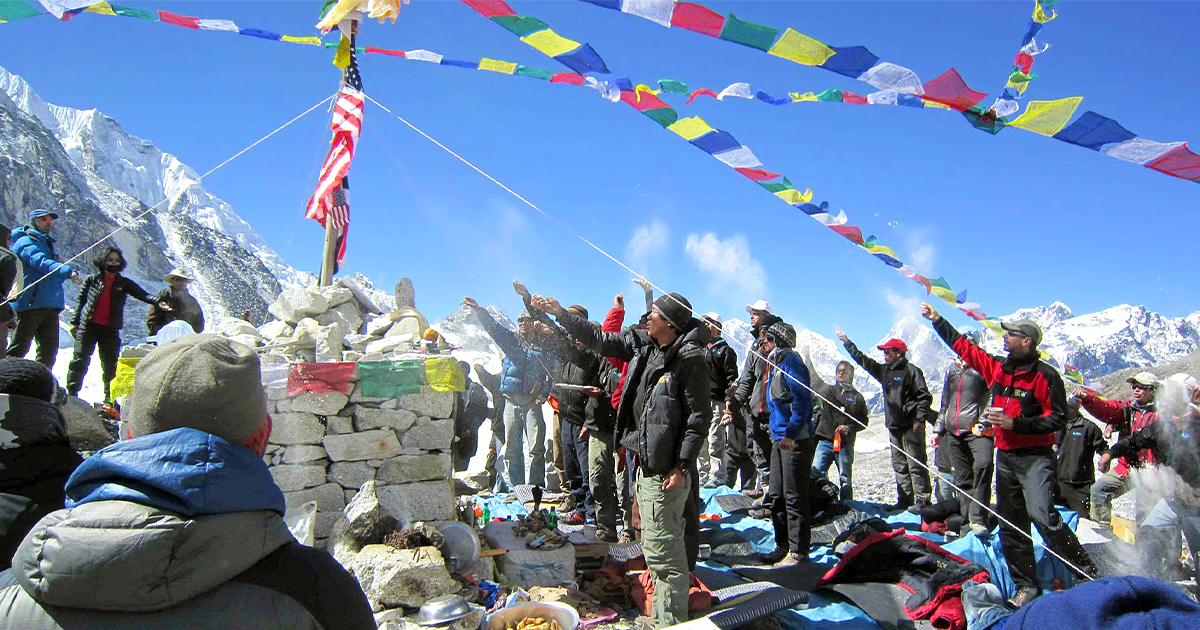
They treat Everest as a very holy mountain. It’s a reflected fact that all the Buddhist monastic temples located around the peak are made facing towards it. They say many sherpas, before starting the climbing expeditions they follow a religious ritual to receive protection from the danger on their way.
Cultural and Spiritual Significance
Many of today’s climbers are just ordinary people without any connection to religion. But they spend thousands of dollars on an outfit and guides to take them to the summit of Mount Everest. It is safe to hire a local guide cause he is familiar with the trails and weather conditions. It also creates the opportunity to earn a living for local people.
The commercialization of Mount Everest has opened the doors to support the local business and made the place more crowded than usual. People from all over the world visit and enjoy our traditions, culture, and festivals. In 2019, a photographer uploaded a picture of the climber waiting in line for the permit to climb to the top.
It raised a huge question about the people that to many people can destroy the excitement and value of natural wonders. Many years ago, only elite climbers were allowed to climb to the top, but now, due to the more facilities, everyone is trying to reach the summit.
Everest provides a remarkable economic opportunity for locals and the nation of Nepal. The sales of equipment and climbing permits only generate thousands of dollars in revenue for the Nepalese government. The money can be used to develop the tourism industry.
Thousands of local businesses and people are getting employment. But now, as time goes by, the crowd keeps getting larger, and resources are limited. The country is now facing the problem of balancing the flow of tourists and maintaining the true value of its cultural heritage.
So we can say that the height of Mount Everest is 5.5 miles above sea level from the latest measurement that took place in 2020 with the help of modern technologies and methods. The topic of the actual height of Everest also created many dramas, forcing scientists to measure it again and again.
Even with the help of advanced technology, you can expect it might change in a few years. The scientist said that Everest is gaining height at 4 mm per year, so in the future, you can see a few changes in its height.
We can’t predict the future, but climate change and technology advancements will continue to evolve Everest. We can measure height of Mount Everest in Feet, Miles, or Meters, but it will still be the world’s tallest mountain above sea level to exist in the world and a true natural wonder hiding many mysteries.
FAQ (Frequently Asked Questions) on How tall is Mount Everest in miles blog
Why does it cost $40,000 to climb Mount Everest?
You will need high-quality and expensive gear to fight the harsh weather of the area. The government permit will cost you around $15,000, and a few thousand for the logistic document of insurance, which includes emergency evacuation. The private local guides and potters will cost you a few thousand, according to your needs, your food, accommodation, and vehicles will cost you another thousand. You can separate a few thousand for other logistical things. So to climb Everest, it will cost you around $40,000.
What is the 2 pm rule on Mount Everest?
It is code language and a guideline for climbers to turn back before 2 pm because you will notice a significant change in the weather, causing darkness and making trails dangerous. If you don’t follow the rule, you might suffer exhaustion, accidents, and the most dangerous frostbite that can even risk your life.
Is Sleeping Beauty’s body still in Everest?
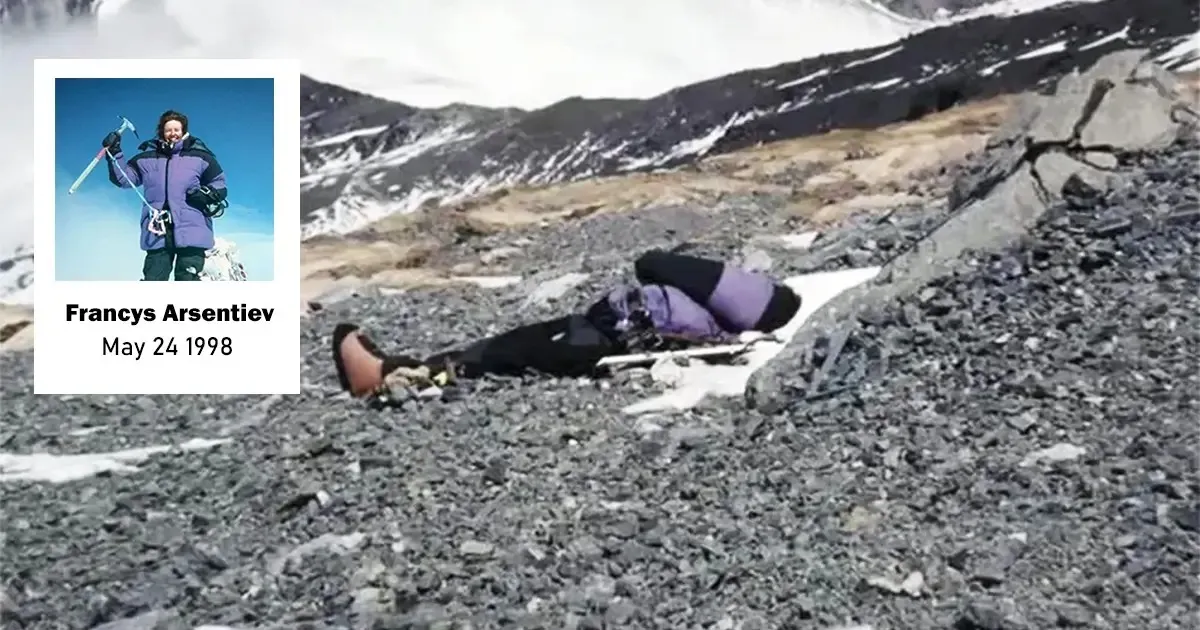
The sleeping beauty, Francys Arsentiev, holds that title, and her body was visible on the main climbing route for years. But in 2007, a team of climbers moved her body to a more discreet resting place so her soul could rest in peace and silence. But rumor says you can still find her remains on the mountain.
Is Sleeping Beauty’s body still in Everest?
What is technically the tallest mountain on Earth?
Technically, the tallest mountain on Earth is Mount Mauna Kea, located in Hawaii, but most of its base is deep under the water of the Pacific Ocean.
What is the oxygen level on Mount Everest?
We can find the same amount of 21% oxygen percentage as at sea level, but according to researchers, due to low atmospheric pressure, only one-third of the amount of oxygen is breathable.
Why is it called Everest?
They called it Everest even when local people knew it as Sagarmatha and Chomolungma to show respect to British surveyor, Sir George Everest, for his significant contributions to the great trigonometrical survey.
What continent is Mount Everest in?
Mount Everest is situated on the Asian continent. Located between the Himalaya mountain range on the border between Nepal and Tibet (China).
How old is Mount Everest?
Mount Everest is believed to be around 50 to 60 million years old. This humongous peak is believed to have been formed by the crashing of the Indian plate into the Eurasian Plate.
What is the Mount Everest Base Camp Height?
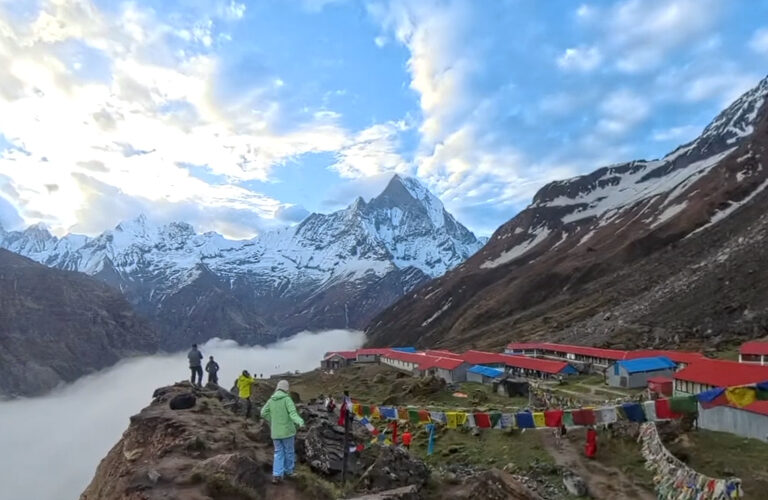
The height of Mount Everest Base Camp (EBC) is 5,364 meters (17,598 feet) above sea level in Nepal. Climbers and trekkers to Mount Everest arrive here, getting pleasant 360-degree views.
Awards and Achievements
Access Nepal Tour and Treks has been recognized with TripAdvisor’s prestigious Travelers’ Choice Award for multiple consecutive years, reflecting our unwavering commitment to quality and clients’ satisfaction.











Leave Your Comment