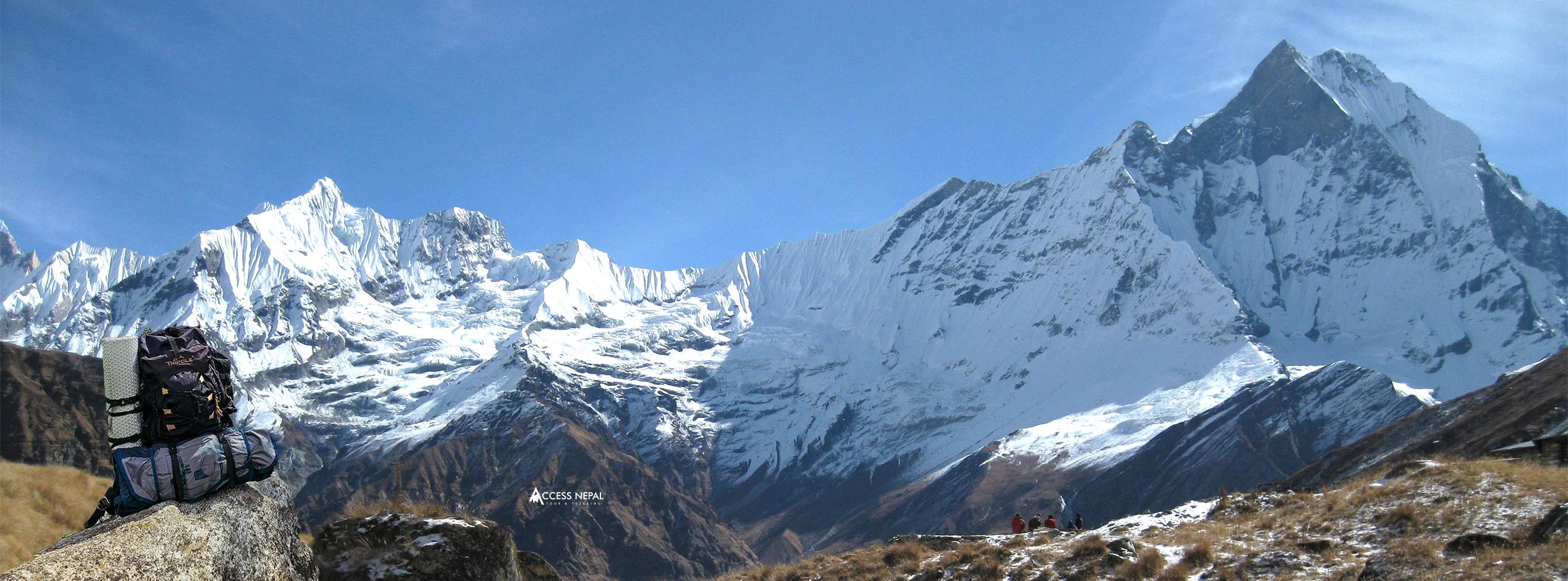
Annapurna Circuit Trek Packing List
The Annapurna Circuit Trek is one of the top 10 most popular trekking destinations in Nepal. Located in the Annapurna region, it is home to the 10th-tallest peak in the world. But you can just walk over to get there. It requires good preparation and planning. So, what is the actual Annapurna Circuit Trek packing list?
Annapurna Circuit is a journey to the wild nature. Passing through the forest trails surrounded by rugged Himalayas and the diverse landscape views from tropical valleys to snowy passes, it requires a great level of preparedness. At this moment, it matters what you have brought. For your safety and enjoyment, you must know the Annapurna Circuit Trek packing list before joining the trek.
Mountains and nature here are unpredictable. Weather and temperature vary depending on season, location, and altitude. Therefore, you have to bring the necessary items likewise.
And that doesn’t mean you have to pack a lot of things just for 16 days Annapurna Circuit Adventure. We will pack smart and lightly without forgetting all essentials. Otherwise, it’s not good to bring loads of clothing but forget, and once you reach there, you just realize that you have forgotten to bring a down jacket.
This blog will give you all the details and tips, so you will be prepared for all situations. Your Annapurna Circuit Trek packing list will be useful for all environments, from the rhododendron blooms of spring and the icy solitude of winter.
What can we pack for the spring season during the Annapurna Circuit Trek?
The spring season in Nepal starts from March to May. It is a peak trekking season in Nepal as the temperature and weather are in the best conditions. The daytime temperature above (3,000 m) in the Annapurna Circuit trek ranges from 10°C to 15°C. Nights are cold, and it easily drops to freezing point, -5∘C to 0∘C. The weather gets warm and sunny in spring. The Annapurna Circuit Trek packing list for the spring season is:
- 2 sets of merino or synthetic base layer sets
- Lightweight fleece jacket
- Down Jacket
- Windproof Jacket
- 2 Trekking pants
- 1 Hiking shorts
- 2 Long-sleeve t-shirts
- 1 Thermal sets
- A pair of winter socks and a thin layer of socks
- Crampons
- High-quality trekking shoe
- Sleeping bag
- Sunglasses
- High-SPF sunscreen (SPF 50+)
- Moisturizer & lip balm
- Wide-brim sun hat
- Personal toiletries
- Power bank
- Extra batteries
- Water bottle
Did you know, whole Annapurna Circuit Trek trails blooms in a colourful rhododendron flowers. Above Manang Valley, surrounding gets more rugged, raw, and snowy in a beautiful way. As the Annapurna Circuit Trek itinearry includes crossing Thorong La Pass (5,416 m) crampons and good trekking boots is mandatory.
Must have itmes for this adventure are thermal base layers, fleece jacket, down jacket, waterproof shell, and trekking pants.
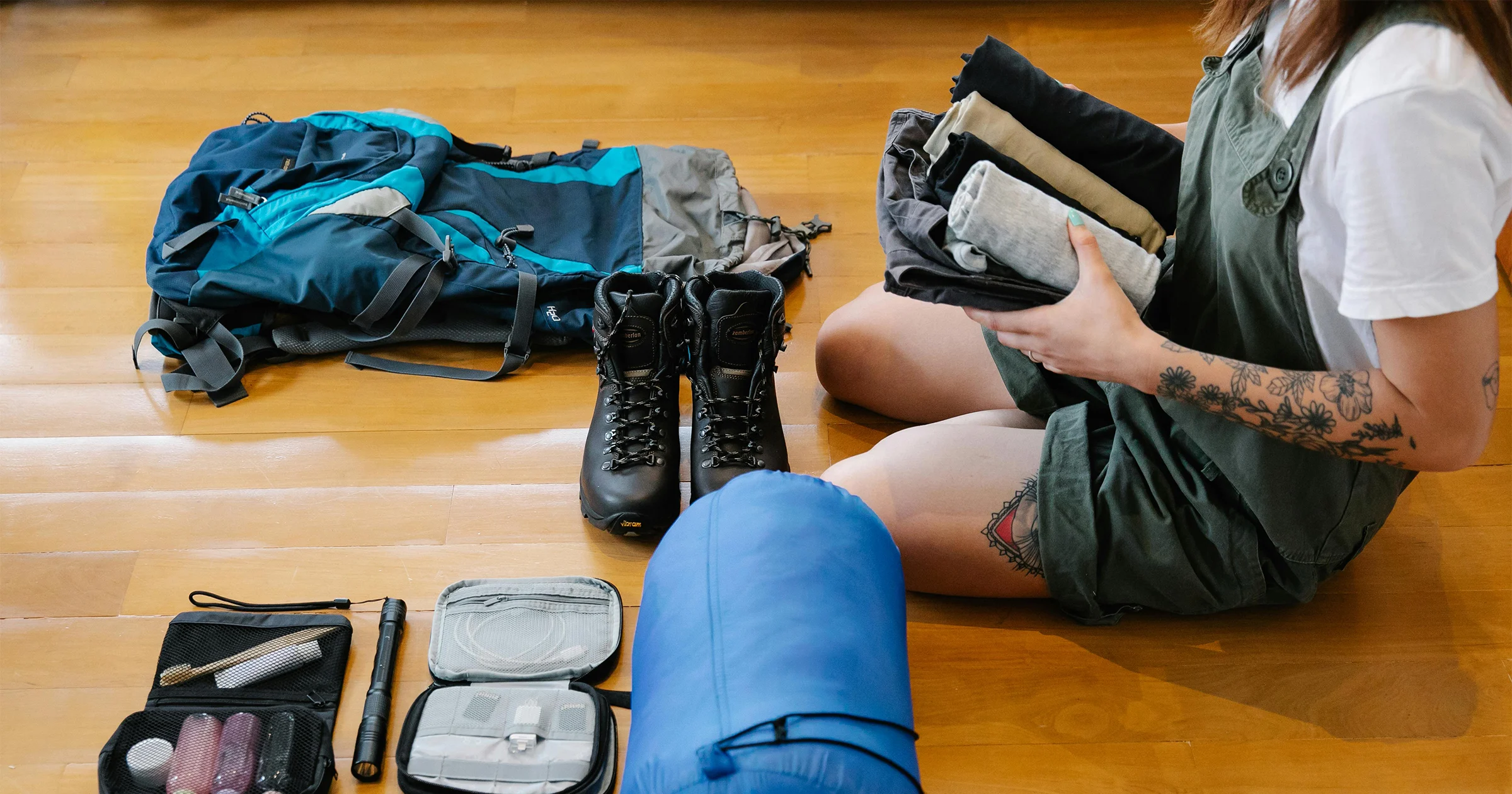
Annapurna Circuit Trek packing list Spring Season
Annapurna Circuit Trek Packing list for Autumn Season
The autumn season in Nepal falls from September to November. This is another peak trekking season in Nepal. For the Annapurna Circuit Trek, this is the best time to do it. Autumn in Annapurna brings blue skies, clear visibility, warm days, and stable weather. The temperature in Autumn during the days hovers around 10-20 °C. Nights are still cold, and the temperature easily drops to below freezing point (0 °C). A packing list for the Annapurna Circuit Trek during the autumn season is given below:
- Down jackets
- 3 Mid-layer fleeces
- Warm jacket
- Thermal set
- Windproof jacket
- Warm beanie
- Gloves
- Trekking boots
- Crampons
- Thick wool socks and thin socks
- Gaiters (neck & leg)
- Sunglasses
- Trekking poles
- Toiletries
- Sunblock (SPF 50+), lip balm, & moisturizer
- Backpack cover
- Power bank
Autumn is dry season, so trails are moistureless. However, at hig-passes, there are still leftover snow and ice. At higher-elvation mornings and nights are cold and chilly. Warm clothes are mandatory even in autumn.
Annapurna Circuit Trek Monsoon Packing List
Monsoon is not a popular season for trekking, still adventurous, and those who prefer less crowd choose this season. Monsoon in Nepal coincides with the summer season. Therefore, at lower elevations, rainfall is occasional, but above Manang, it’s quite rare, so trekking is difficult.
During the summer and monsoon season, the surroundings are generally wet and green. In the lower elevation region, trails are quite muddy and leech-infested, so prepare for that as well. Meanwhile, the Mustang region is very dry due to the rain shadow. The temperature ranges from 20°C to 30°C. At night, it drops to below freezing point -4°C. Gears and items to bring for this trek in the monsoon are:
- Raincoats
- Waterproof backpack cover
- 5 Trekking socks & 3 pairs of wool or thermal socks
- Leech socks
- 3 Full sleeve t-shirts
- Warm sweater
- 2 Trekking pants
- Thermal layers
- Light shirts and shorts
- Sandals
- Trekking boots
- Crampons
- Toiletries
- Insect repellent
- Sunglass
- Sunscreen (SPF 50+)
- Moisturizer
- Lip balm
- Power bank
Carry extra toilet paper and wet wipes. At higher elevation, facilities and services are basic so it is best to carry personal toletries.
What can you pack for the winter season to trek the Annapurna Circuit?
Winter in the Annapurna region is extremely cold. The higher you go, the harsher the cold gets. Winter in Nepal starts from December to February. It’s the least popular trekking season in Nepal. The daytime temperature at higher elevation ranges from -10°C to -1°C, and at night it drops below -15°C to -20°C.
Winter is extremely harsh and brings heavy rainfall. Due to the wind chill, trekking becomes even more difficult. Most of the high passes are also closed and not permitted to cross due to many risks. However, excluding the high pass, doing a Circuit Trek is still possible but challenging. Therefore, winter especially needs good preparation and essential items:
- Down jacket (rated to at least –20 °C)
- Fleece or down-lined trousers
- Winter jackets
- 2 Trekking pants
- Waterproof winter over-pants
- 3+ sets of thermal underwear
- Thick wool/synthetic mid-layers
- Winter gloves/mittens
- Woolen hat
- Neck gaiter or balaclava
- Face mask or scarf
- Sunglasses
- Sturdy, insulated, waterproof trekking boots
- Thermal socks
- Crampons or microspikes
- Leg gaiters
- Sleeping bag (-20 °C-rated)
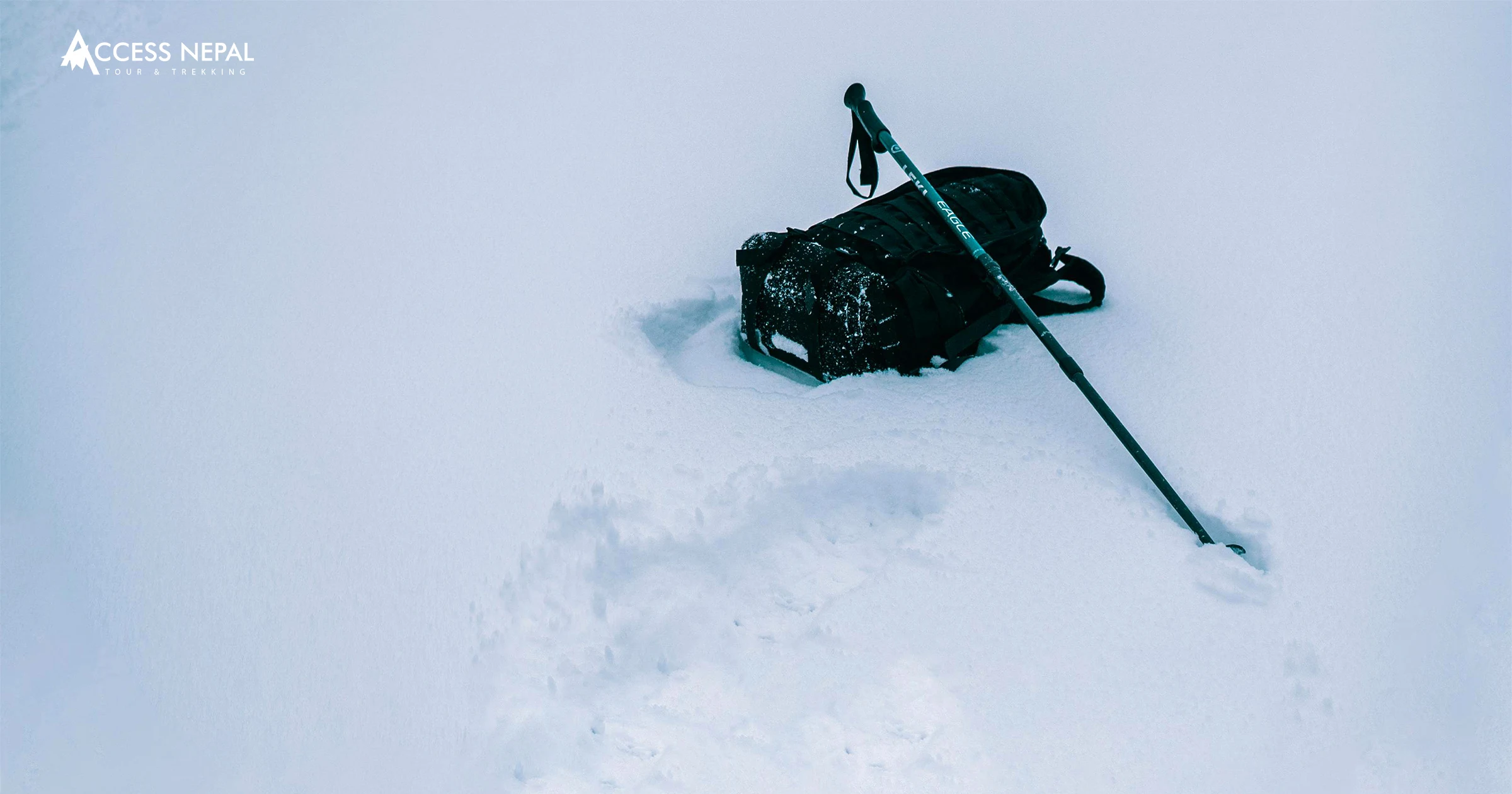
Winter Season packing list for Annapurna Circuit Trek
Winter is extremly cold and tough for trek to Annapurna Circuit. Though trails will be less crowded, it’s still not suggested. This season for trekking is suitable for expereinced trekkers only. Morning and nights are especially cold. Your clothing must be warm to protect you from cold breeze and freezing temperature. Heavy snowfall and icy trails are also expcetd during the trek.
Essential Clothing & Layering for All Seasons
- Breathable underwear (tops and bottoms)
- Two thermal sets
- 2 Fleece jackets
- Soft-shell jacket
- 1 Puffy jacket
- Waterproof/windproof jacket and pants
- 2 Trekking pants
- Sun hat
- Fleece hat
- Scarves or bandanas
- High-SPF sunscreen
- UV-blocking sunglasses
- Wool gloves and waterproof gloves
- 4-5 pairs hiking socks
- 2-3 pairs of thick wool socks
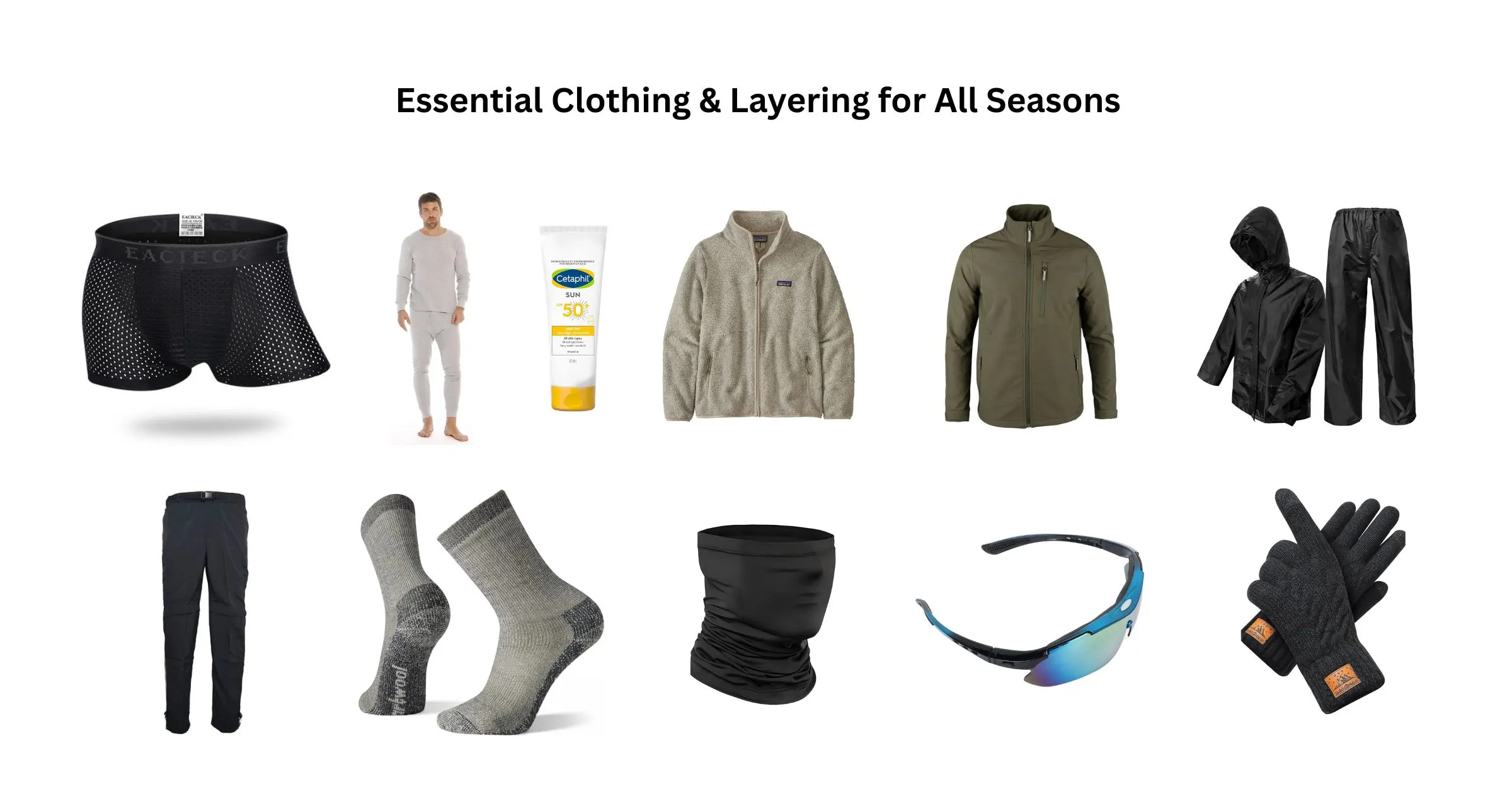
Different Season Clothing Essentials for the Annapurna Circuit Trek
When buying the gears, do not compromise on quality and versatility due to price. During the trek quantity matters the most as they will provide you best safety. At least one down jackets is a must for Annapurna Circuit Trek throughout the year. Even in warm season high elevation places are generally cold.
Footwear & Accessories for Annapurna Region Trek
As much as upper body gear is important, what you wear on your feet is another crucial part to care about when trekking. Annapurna Circuit Trek is a moderate-level adventure. In a 16-day expedition, you have to walk on rough trails daily. So comfortable and quality footwear is required.
- Strong, waterproof, trekking boot with good ankle support.
- Lightweight slip-ons or sandals
- Warm winter socks for each day
- Thin layer of socks
- Gaiters
- UV-blocking sunglasses
- Headlamp (plus spare batteries)
- Trekking poles
Useful Tip: Carry few dryer sheets or foot powder. You might get blister after walking for ultiple days. During this time keeping feet dry and less sweaty helps a lot to minimize blisters. Change into camp shoes and cool down your feet at rest stop.
Backpack, Sleeping Bag & Core Gear
All the essential gears and equipment required for the Annapurna Circuit Trek are given below:
- Backpack (50-65 L)
- Backpack rain cover
- Small trekking daypack (20-30 L)
- Sleeping bag (-10 °C to -15 °C)
- Sleeping bag liner
- Compression sacks
- Water bottles (2-3 liters)
- Electrolyte packets
- Water purification tablets or a Steripen/filter
- Power bank
- Small knife/multi-tool
- Ziplock bags
- Duct tape
- Earplugs
- Trekking towel
- Dry bag for
- Extra batteries
- Personal toiletries
Food, Hydration & Nutrition during the Annapurna Circuit Trek
Another key factor to consider during the trek to the Annapurna Circuit is what you eat and your physical condition. To stay in good condition, do not skip meals. The standard food menu of the teahouses serves dal bhat (lentils with rice/veggies). It’s nutritionally rich and healthy to provide you with enough for trekking all day. Other food options include noodles, soups, chapati, and other international dishes.
Food items are quite expensive at higher elevations due to a lack of transportation and remote location. During the hike all day, sometimes you will need snacks to power up. Carry high-energy lightweight snacks. They are also available to purchase along the trails, but they are very expensive. Snacks like nuts, chocolate, and energy bars will be very helpful.
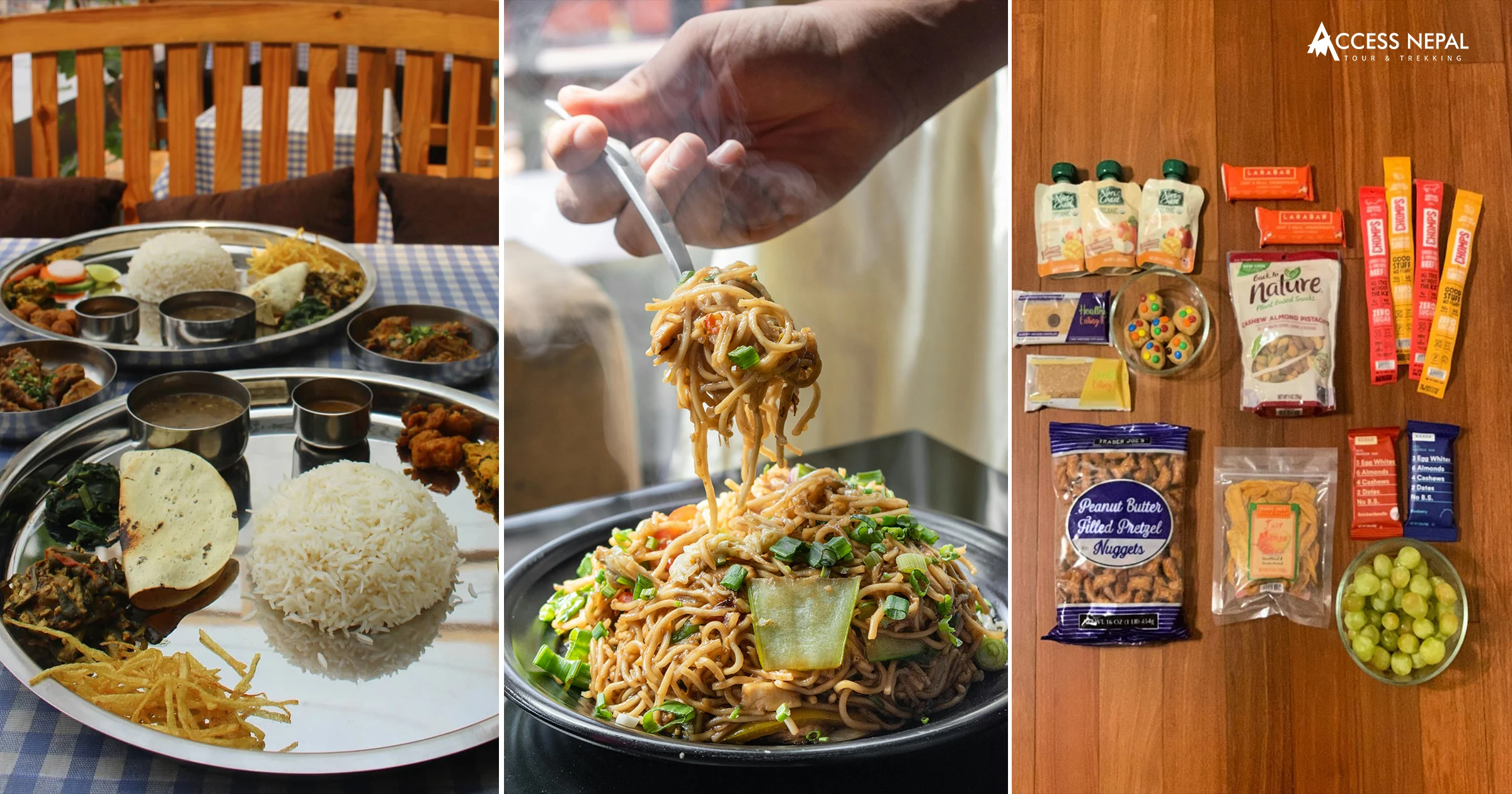
Food, Hydration & Nutrition during the Annapurna Circuit Trek
Staying hydrated is a must. Even if the weather is cold and you are not thirsty, you still have to drink plenty of water. Staying hydrated helps to prevent altitude sickness and other minor medical conditions. In a daily drink, 3 to 4 liters of water. Avoid drinking tap water or stream water. Only drink boiled or purified water for safety. Carry electrolyte sachets or ginger/masala tea packets to replace salts lost by high-altitude urination and sweating. And also carry refillable water bottles.
5 Common Mistakes when Packing for the Annapurna Circuit Trek
- Overpacking: This is the most common mistake trekkers make when packing. Follow these rules: “Pack smart and light.” Carrying heavy bags and trekking is very difficult. It consumes a lot of your energy and drains you. It’s not convenient. Carrying up to 9 kg is the ideal weight for your backpack. Bring only essentials and must-have items.
- Miscalculating Cold: Many make mistakes thinking cold will be bearable. No, the temperaturea nd weather condition at Himalays area comletely different. Especially at night and morning, are extreme cold. Even if you are trekking in spring or autumn, still carry warm clothes. At high elevation, things never go easy. Sleeping bags are a must at higher elevations as the teahouse’s rooms are exceptionally cold at night.
- Wearing Cotton: Do not wear cotton clothes as they are very bad at absorbing sweat or moisture. Your base layers must pull moisture from your skin. Pack good materials and clothes that are suitable for trekking. Always wear a layer of clothes.
- Not Wearing Sun Protection: Trekking in a cold area doesn’t mean you won’t need sun protection. Even if there is no sun, you will still need sun protection. At higher altitudes, UV rays are very strong, and you can easily get severe sunburn, snow blindness, and a headache. SPF 50+ Sunscream, UV-protected sunglasses, and a hat are must-have items.
- Basic First Aid Kit: During the trek, there will be chances of getting blisters and minor health issues. It is best to carry your own blister cream, headache and stomachache medications, pain relief tablets, and other basic medications.
Health, Safety & First Aid during Trekking
Altitude and weather hazards make first-aid and safety planning crucial:
- Altitude Sickness: The highest point of the Annapurna Circuit Trek is Thorong La Pass at 5,416m/17,769ft. Beyond 3,000 m, there is a risk of getting altitude sickness. Therefore, during this trek, you have to be very careful. Our Annapurna Circuit Trek itinerary follows the ” climb high, sleep low ” rule and includes acclimatization days to minimize the risks of getting altitude sickness. To prevent AMs, you must drink lots of water, walk slowly, avoid alcohol, rest properly, and eat nutritious food.
- Medications: If you have any health conditions, we suggest that you consult with your doctor beforehand. Bring your personal medication, and also consult if you can take Diamox (acetazolamide) in case of emergencies.
- First-Aid Kit: Though the package includes first-aid, still having your own first-aid kit gives you assurance. You can bring medicines like ibuprofen or paracetamol for headaches/muscles, Imodium for diarrhea, and oral rehydration salts for dehydration. A broad-spectrum antibiotic (like azithromycin) for severe illness. Also includes antiseptic wipes, bandages, gauze, painkillers, tweezers, SPF lip balm, sunscreen (50 SPF+), insect repellent, hand sanitizer, and toilet paper.
- Blister Care: Hiking every day can cause blisters even after wearing good boots. You can bring Compeed pads, athletic tape, or moleskin. During the trek, foot injuries can be the most common. Cary extra socks and air your feet to prevent blisters.
- Travel Insurance: It’s a must-have for trekking. Traveling in remote regions where medical facilities and transportation are scarce, insurance works as a good backup. If you have travel insurance, it will cover emergency helicopter service, medical problems, flight delays, and lost items.
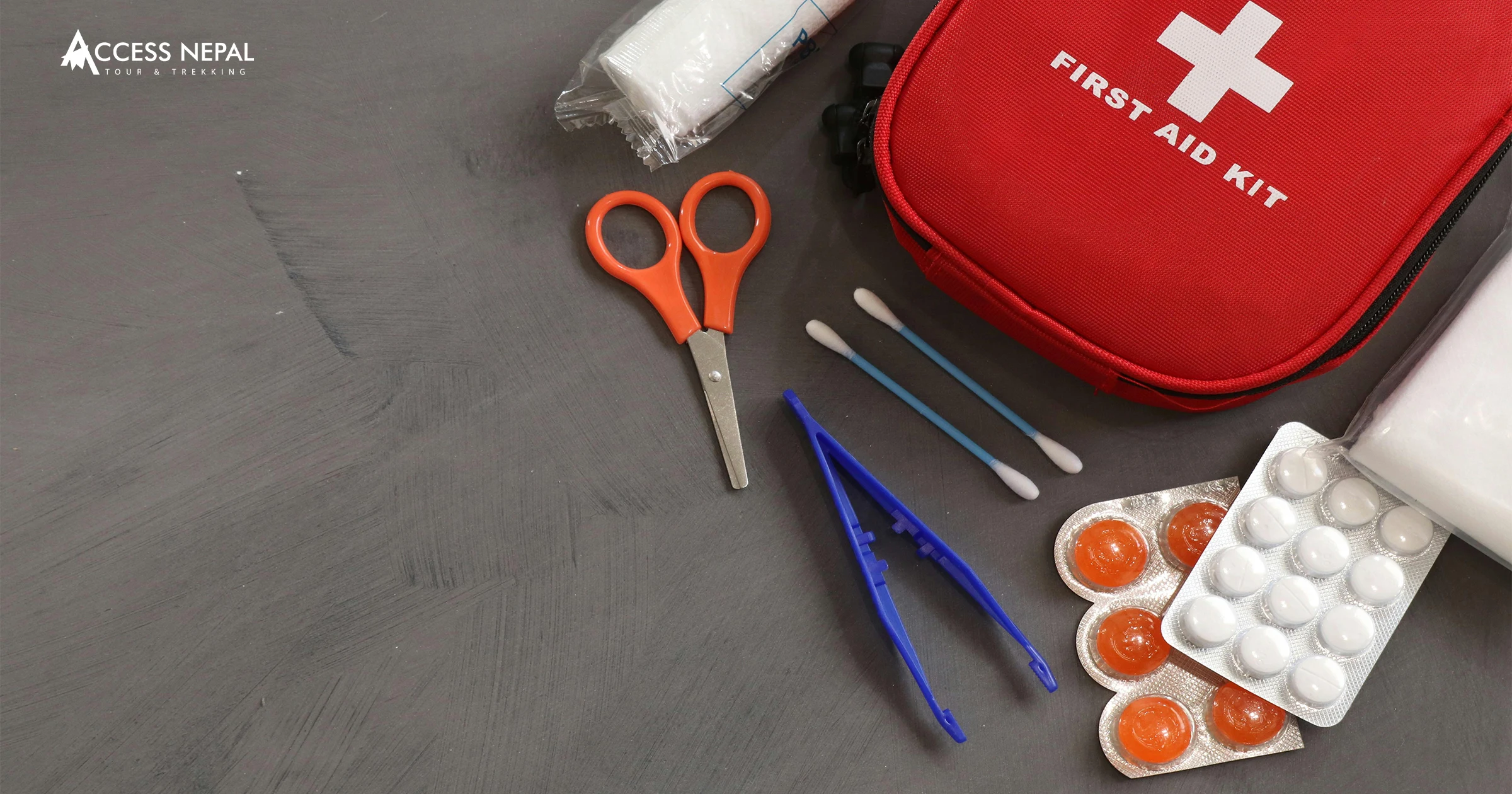
Health, Safety & First Aid During the Trek
A good and memorable trip is only possible if you have prepared well. Our Annapurna Circuit Trek packing list blog covers all the details you will need. It balances both preparedness and practicality. Every season ahs it own character and charm. It varies depending on the conditions, so trekkers must be prepared for any kind of condition to enjoy the journey fully.
The Annapurna Circuit Trek packing list gives you what to pack depending on the season. With this, the only thing you need to worry about is enjoying the trip. If you follow this guideline fully, then you will have one of the best traveling experiences of your life. By staying safe and comfortable, you can enjoy the majestic beauty of the Annapurna region without any worries. At the end, all we want to say is a must-have items are layers of clothing, sunscreen, trekking boots, crampons, and toiletries in your Annapurna Circuit Trek packing list.
Awards and Achievements
Access Nepal Tour and Treks has been recognized with TripAdvisor’s prestigious Travelers’ Choice Award for multiple consecutive years, reflecting our unwavering commitment to quality and clients’ satisfaction.