OFF
Discounts are solely based on your group size. We do not add anyone to your group.
- Best Price Guarantee
- Hassle-Free Booking
- Team of highly experienced Experts
- Your Happiness Guaranteed
Book Now. No Booking or Credit Card Fee
- Schedule Your Own Dates
- Group Discounts
- Guaranteed Departures
- Easy Cancellation
- 60% Repeated Customers
-

- Duration
- 14 Days
-

- Transportation
- Private Vehicle & Flight
-

- Trip Grade
- Moderate
-

- Max-Altitude
- 5,644m/18,517ft
-

- Accomodation
- Teahouse & Hotel
-

- Primary Activity
- Trekking
-

- Meals
- Trek: B|L|D, KTM: |B|
-

- Best Season
- Mar-May|Sept-Nov
-

- Distance
- 130 km/ 80 mi
Everest Base Camp Trek for Seniors is a 14-day adventure designed for older trekkers who are above 50/55. It is a fully guided tour with all-inclusive services. This Everest Base Camp Trek for seniors itinerary is a carefully made itinerary, keeping the safety and comfort of older trekkers in mind.
Our Everest Base Camp Trek for seniors route follows a slower and steadier pace. Similarly, the daily walking hours are 3 to 5 hours covering a 4 to 6 km distance. This walking distance is made to minimize fatigue and altitude sickness among senior trekkers. The Everset Base Camp Trek for seniors package covers all expenses of round-trip flights (Kathmandu-Lukla), trekking permits, private transport, experienced Sherpa guides and porters, accommodation, provides full board meals, first-aid along the route, and arranges helicopter evacuation (other emergencies as well).
The 14-day Everest Base Camp Trek for seniors can be done comfortably by those in their 60s-80s as well. With our quality service and support, we promise to give a once-in-a-lifetime experience to healthy seniors as well.
- Age-Friendly Package: The Everest Base Camp Trek for seniors has no age limit. Anyone healthy and physically fit can join this journey. Access Nepal Tours and Trekking has taken many seniors in their 60s to 70s to the Base Camp of Mt. Everest (8,848 m), the world’s highest peak. Our Everest Base Camp Trek for seniors itinerary includes shorter hiking days, frequent rest, two acclimatization days (at Namche and Dingboche), and a direct heli flight from Gorakshep to Kathmandu.
- Licensed Guides & Porters: All provided guides are government-licensed, highly-experienced, first-aid trained, local, and English-speaking. Likewise, porters are also trained and will support you throughout the Everest Base Camp Trek adventure.
- Gradual Altitude Gain: All stops are carefully chosen, so the altitude gain is gradual (about 300 to 500 m altitude gain per day).
- Climb High, Sleep Low: To prevent Altitude Sickness risk in seniors, we climb high during the day and sleep at a lower elevation at night. This helps your body to adapt to high altitude.
- Comfort & Safety: All accommodation and meals provided are safe, clean, comfortable, healthy, and elderly-friendly. We aim to make your Everest Base Camp trek trip as safe and comfortable as possible.
- Comfortable Return: The return journey includes a helicopter flight from Gorakshep (5,170 m) to Kathmandu, which is perfect for elderly travellers.
Everest Base Camp Trek for Seniors Highlights
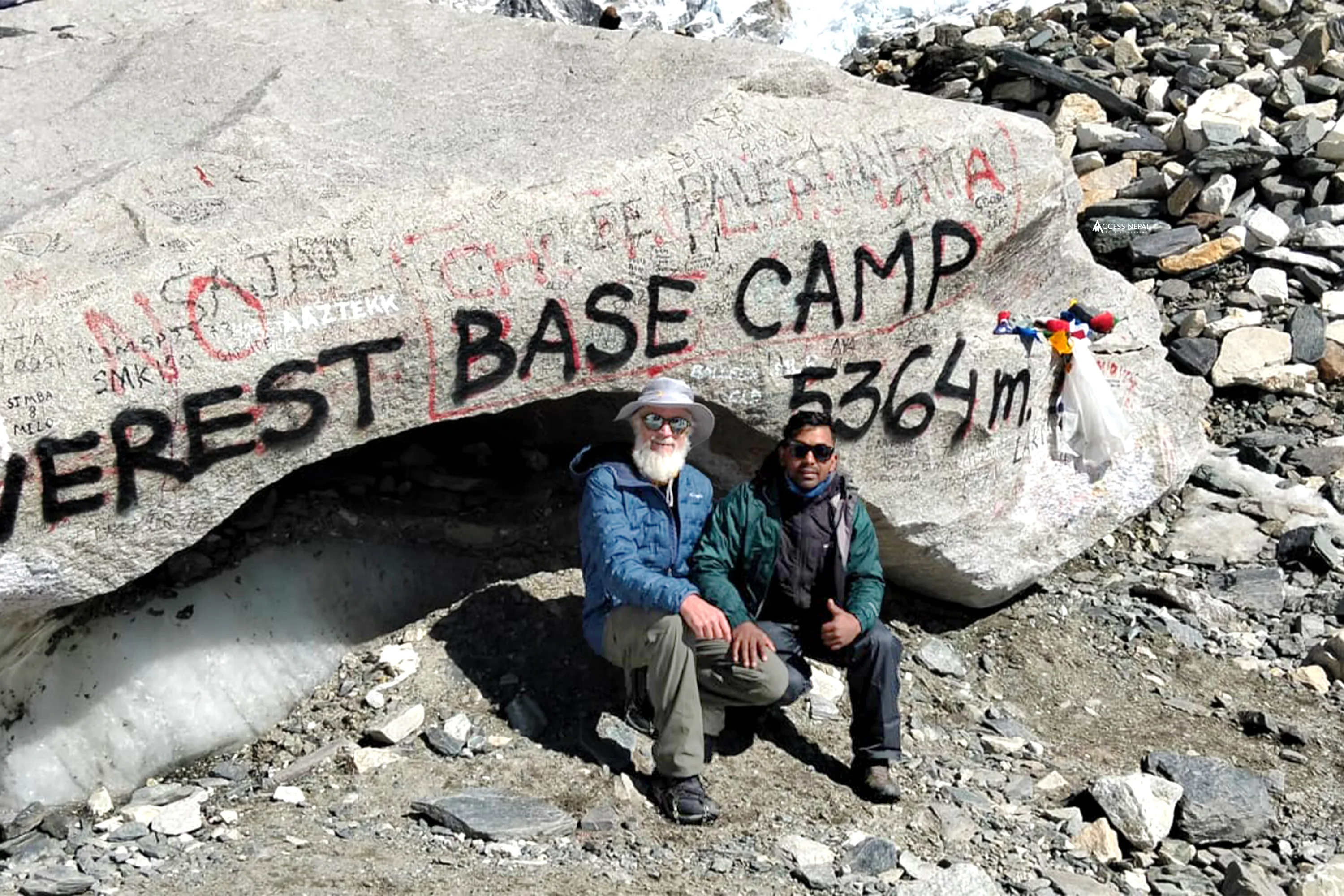
- Reach Everest Base Camp (5,364m) and watch over Khumbu Glacier.
- Hike to Kala Patthar (5,545m) for a 360-degree panaromic sunrise view of the Everest (8,849m), Lhotse, Nuptse, Pumori, Ama Dablam, and many more.
- Stop by famous Sherpa Villages like Namche Bazaar (3,440m), Dingboche (4,410m), and Tengboche Monastery (3,860m).
- Visit traditional Buddhist monasteries.
- Learn about Sherpa culture, lifestyle, tradition, and community.
- Trek through Sagarmatha National Park and spot wild animals and birds like the Himalayan Tahr, Musk Deer, Goral, Himalayan Serow, Langur Monkey, Danphe/ Himalayan Monal (Nepal’s national bird), Bar-headed Goose, Snowcock, Bearded Vulture, and many more.
- Sightseeing of the UNESCO World Heritage Sites in Nepal.
Everest Base Camp Trek for Seniors Route Overview
The Everest Base Camp Trek route for seniors starts and ends in Kathmandu. Days 1 and 2 of the itinerary is spent in Kathmandu. The following day, 3 of the Everest Base Camp Trek for seniors, we fly from Kathmandu to Lukla (2,840 m). After arriving at Lukla, we take a brief break and continue hiking for 3 to 4 hours. We hike downhill into the Dudh Koshi river valley and finally arrive at Phakding (2,651 m), a small Sherpa village.
The Everest Base Camp Trek for seniors journey continues through pine forests to Monjo (2,835 m) on day 4. This village is the entry point of Sagarmatha National Park. Likewise, day 5 of the itinerary brings us to Namche Bazaar (3,440 m), a popular Sherpa Town which has traditional markets, a bakery, shops, cafes, and hotels. Another day at Namche for acclimatization. We go for a short hike to the Everest View Hotel or explore the Khumjung village.
The trek continues from day 7 to Tengboche (3,860 m), home to Tengboche Monastery (the largest in the Khumbu region). We hike through rhododendron forests steadily with frequent breaks along the way. From Tengboche, enjoy the first clear views of Ama Dablam (6,856 m) and Everest’s south face
Following on Day 8, we hike down through the Imja Khola valley to Dingboche (4,410 m). We stay for another day to adjust our body with altitude. This peaceful Sherpa village offers beautiful panoramic views of the mountains. Day 10 of the Everest Base Camp Trek for seniors brings us to Thukla (4,620 m). At this height, we can feel the thinness of oxygen in the air.
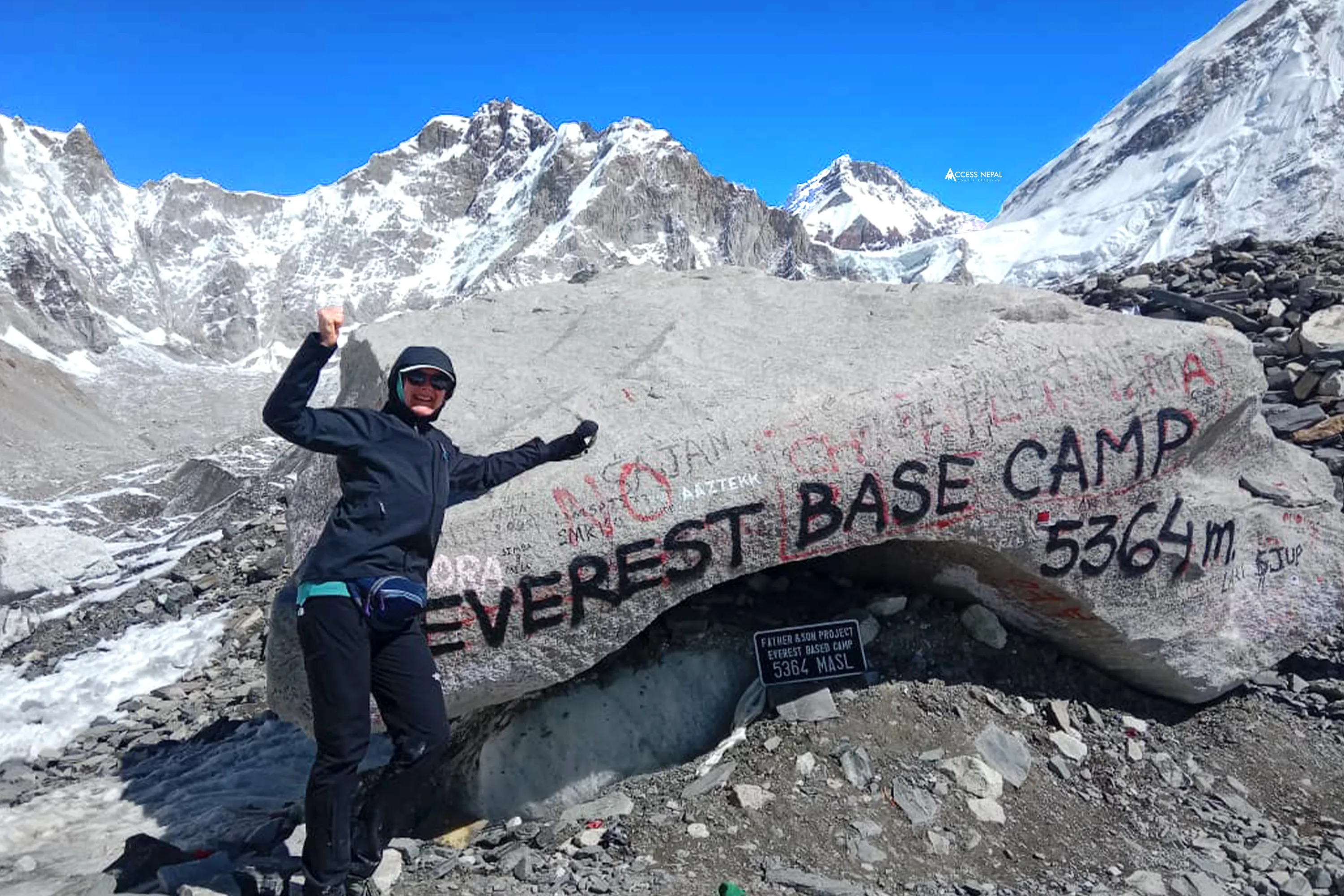
Days 11 and 12 are major days in the Everest Base Camp Trek for seniors itinerary. We hike to Lobuche (4,910 m), then to Gorakshep (5,164 m). Leaving behind our belongings at Gorakshep, we hike to the Everest Base Camp (5,364 m). Todays hike will be quite intense, but with the guide’s support, seniors can make it. To spend a night, we return to Gorakshep (5,164 m).
Moving forward, day 13 takes us to Kala Patthar (5,545 m) iconic viewpoint. We wake up before dawn breaks and hike to Kala Patthar, the highest point of this adventure. From the top of Kala Patthar, we can see the 360° panoramic views of Everest, Lhotse, Nuptse, Ama Dablam, Pumori, and many more.
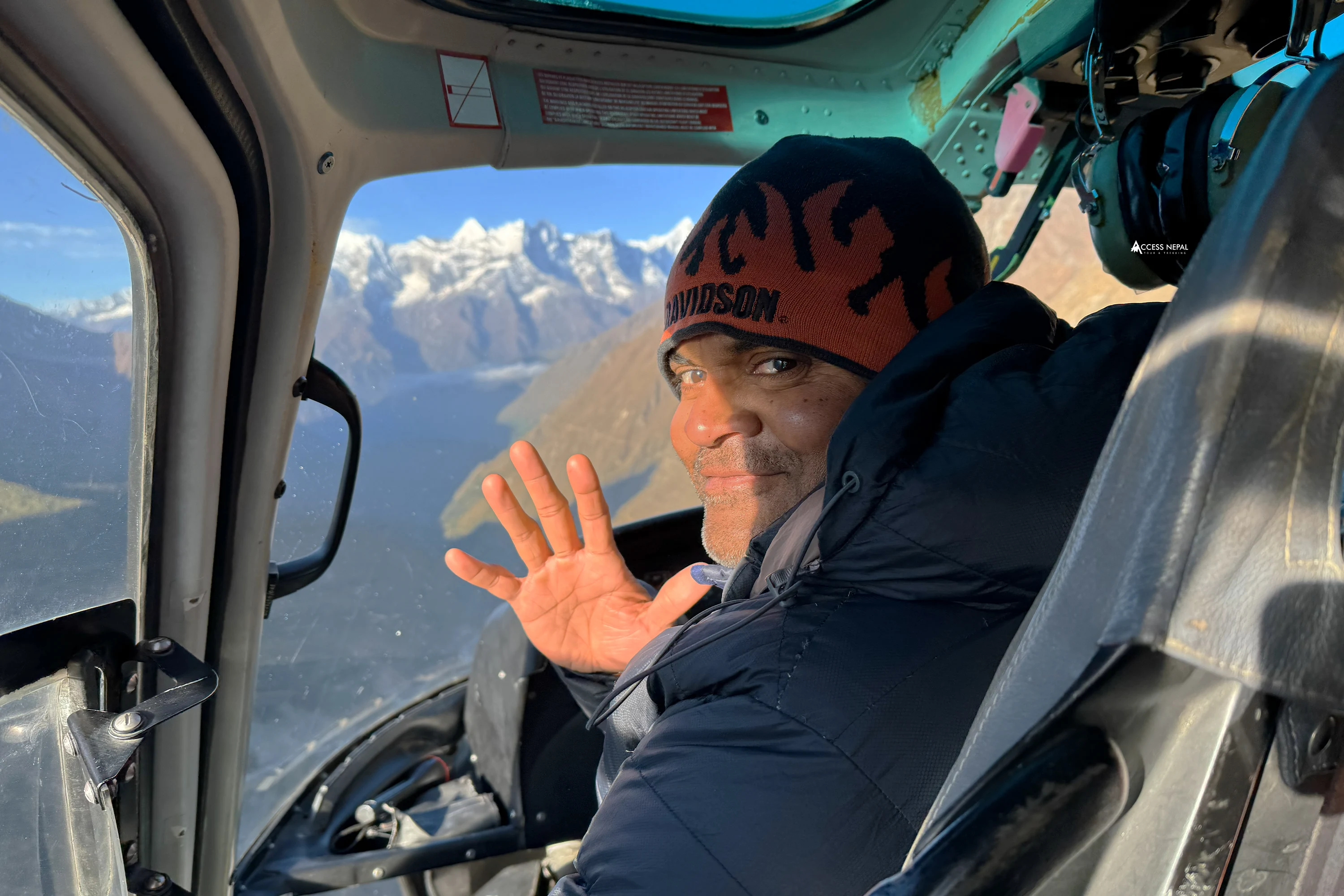
We return to Gorakshep for breakfast, pack our belongings, and board a charter helicopter back to Kathmandu. This itinerary is specifically made for senior trekkers by skipping the tiring 2-day walk. This Everest Base Camp Trek for seniors is suitable to do with kids as well.
Our Everest Base Camp Trek for seniors routes is planned after a thorough reserach. We have applied best of best startegy to provide safety and comfort to the elderly travellers. Routes goes steadily and altitude-smart pace.
If you are looking for a perfect Everest Base Camp Trek for seniors package, this is the one. Booking for the Everest Base Camp Trek for seniors 2026 and 2027 is now exclusively open. We promise to give you a safe, unforgettable adventure in the Himalaya.
Why This Route Is Safe for Elderly Travelers?
Our Everest Base Camp Trek for seniors itinerary is carefully designed by a professional to provide safety and comfort to elderly trekkers. For this trek, we provide highly experienced licensed guides with years of experience. Similarly, our package also includes a full first-aid kit with an oximeter. In case of emergency, we immediately arrange a helicopter evacuation and emergency medical services.
Furthermore, guides will monitor the senior traveler’s vitals and altitude symptoms throughout the trek. The Everest Base Camp Trek for seniors itinerary excludes the exhausting descent. Suitable and comfortable for seniors, it includes a direct helicopter flight back from Gorakshep to Kathmandu.
Day 01Arrival in Kathmandu
-

- 1,400 m/ 4,724 ft
Day 02Kathmandu Sightseeing & Trek Preperation
-
- 20 km/ 12.4 mi
-
- 1,440 m/ 4,724 ft
-
- 6 to 7 hrs of tour
-
- 1,440 m/ 4,724 ft
Day 03Fly to Lukla and Trek to Phakding
-
- 8 km/ 5 mi
-
- 2,840 m/ 9,317 ft
-
- 3 to 4 hrs of trek
-
- 2,651 m/ 8,697 ft
Day 04Trek from Phakding to Monjo
-
- 3-8 km/ 2-5 mi
-
- 2,835 m/ 9,301 ft
-
- 1.5 to 3 hrs of trek
-
- 2,835 m/ 9,301 ft
Day 05Trek from Monjo to Namche Bazaar
-
- 4-8 km/ 2.5-5 mi
-
- 3,440 m/ 11,286 ft
-
- 3 to 5 hrs of trek
-
- 3,440 m/ 11,286 ft
Day 06Acclimatization Day in Namche Bazaar
-
- 7 km/ 4 mi
-
- 3,880 m/ 12,729 ft
-
- 2 to 3 hrs of trek
-
- 3,440 m/ 11,286 ft
Day 07Trek from Namche Bazaar to Tengboche
-
- 10 km/ 6 mi
-
- 3,860 m/ 12,664 ft
-
- 5 to 6 hrs of trek
-
- 3,860 m/ 12,664 ft
Day 08Trek from Tengboche to Dingboche
-
- 10 km/ 6 mi
-
- 4,410 m/ 14,469 ft
-
- 5 to 6 hrs of trek
-
- 4,410 m/ 14,469 ft
Day 09Acclimatization Day in Dingboche
-
- 4 km/ 2.4 mi
-
- 4,410 m/ 14,469 ft
-
- 2 to 4 hrs of trek
-
- 4,410 m/ 14,469 ft
Day 10Trek from Dingboche to Thukla
-
- 5 km/ 3 mi
-
- 4,620 m/ 15,157 ft
-
- 2.5 hrs of trek
-
- 4,620 m/ 15,157 ft
Day 11Trek from Thukla to Lobuche
-
- 5 km/ 3 mi
-
- 4,910 m/ 16,108 ft
-
- 1.5 to 2 hrs of trek
-
- 4,910 m/ 16,108 ft
Day 12Trek to Gorakshep; Hike to Everest Base Camp
-
- 12 km/ 7.4 mi
-
- 5364m/17598ft
-
- 7 to 8 hrs of trek
-
- 5364m/17598ft
Day 13Kala Patthar Hike and Heli Flight to Kathmandu
-
- 152 km/ 90 mi
-
- 5,545 m/ 18,192
-
- 2 to 3 hrs of trek, 30 min fly
-

- 1,440 m/ 4,724 ft
Day 14Departure from Kathmandu
- Airport Transfer (pick-up and drop-off) via private tourist vehicle.
- 3 Nights twin-sharing accommodation with breakfast at Apsara Boutique Hotel in Kathmandu (customizable).
- Cultural Nepali Welcome dinner (Day 1) and performances in Kathmandu.
- Kathmandu sightseeing tour with a tour guide in a private tourist vehicle (all monument fees covered).
- One way Kathmandu to Lukla flight tickets with airport transfer and tax fees covered (Lukla flight operates from Ramechhap during peak season).
- Helicopter flight back to Kathmandu from Gorakshep.
- Twin-sharing accommodation throughout the trek.
- Hot showers and an attached toilet bathroom are available for 5 nights along the trek (a bucket of hot water is provided for additional cost).
- 1 Professional, licensed, first-aid trained, English-speaking local guide for 7 trekkers with insurance fees and expenses covered.
- 1 Porter for 2 trekkers with insurance fees and expenses covered.
- Farewell dinner (Day 13) in Kathmandu.
- Sufficient chlorine tablets.
- Complimentary Everest Base Camp Trek for Seniors route map. duffel bag, and a T-shirt.
- Sleeping bags and down jackets are provided free of charge (must be returned after the trek).
- Basic first-aid kit with an oximeter.
- Arrange a helicopter evacuation and emergency medical help (covered by your insurance).
- All necessary permits, government fees, and taxes.
- Nepal Tourist Visa.
- Travel insurance (mandatory).
- Meals in Kathmandu (welcome and farewell dinner included).
- Personal expenses, internet, extra luggage, snacks.
- Tips for guides and porters.
- Extra days or trips in Nepal.
Our groups are small with maximum 14 people. We create groups of independent travelers, friends and families which maintains close interpersonal connection, engage more and get into depth of the journey. Choose a date from the calendar to reserve your spot.

Access Nepal Tours and Trekking wholeheartedly welcomes you for the Everest Base Camp Trek for seniors at Kathmandu airport. Once you arrive at Tribhuvan International Airport, Kathmandu, one of our staff members will be there to welcome you in a traditional Nepali style by putting a Khada or marigold garland.
Likewise, you will be escorted to your hotel in a private tourist vehicle. After check-in, you can rest and get rid of your jet lag. Afterwards, we will meet for a pre-trek meeting to discuss the safety of senior travellers, itinerary and route details, safety guidelines, and what to do and what not to do during the trek.
In the evening, we gather for a cultural welcome dinner with traditional music and dance, hosted by Access Nepal Tours and Trekking. During the dinner, you can get a taste of Nepali cuisine and traditions. Following the sightseeing day is added to recover from travel and prepare you mentally for the adventure of Everest Base Camp Trek.
Why Choose the Everest Base Camp Trek for Seniors Package?
Our Everest Base Camp trek for seniors is especially designed for older travellers who have a bold spirit. The well-established and facilitated EBC adventure is a perfect introduction for active seniors. The adventure to the Himalayas is not for young trekkers only; regardless of age, any fit and active elder can join the Everest Base Camp Trek.
Since it’s made for older travelers, they can enjoy the trek more meaningfully. The Everest Base Camp Trek for seniors itinerary especially includes a comfortable pace and cultural immersion. The journey feels more profound, unlike standard trekking packages.
Moreover, to accommodate seniors, we provide custom itinerary options so that older trekkers can enjoy the trek in a comfortable way and with good support throughout the trip. All activities are senior-friendly with shorter walking days, acclimatization days, guides, and porter assistance.
Furthermore, we provide warm and cozy teahouses where seniors can rest comfortably after a day hike. What makes this package the best choice for senior travellers is:
- Added Comfort: Extra days, short walking distance, extra rest stops, professional guides, and options to choose deluxe or luxury teahouses. Similarly, the exhausting return journey is replaced with a direct helicopter flight from Groakshep to Kathmandu.
- Meaningful Experience: Unlike the classic route, this package moves at a slower pace so seniors can walk without issue. They can enjoy the journey without rushing. The average walking distance is just 4 to 6 hours. With good training and preparation, you’re set.
- Fit vs. Athlete: If you are in good shape and health, you can do this trek after consulting with a doctor. You don’t need years of experience or to be athletic to do the Everest Base Camp Trek for seniors.
Safety Factors We Follow During the Everest Base Camp Trek for Seniors:
When it comes to safety and comfort, you won’t need to compromise with us. We work diligently to provide safety and enjoyment throughout the Everest Base Camp Trek. The safety measures we follow in our Everest Base Camp Trek for seniors package are:
- Experienced Guides: Guides provided during the trek are experienced, licensed by the government of Nepal, and native to the Everest region, who know the trails and what to do during an emergency. Similarly, they are also trained in high-altitude first aid. They will monitor the trekker’s physical condition every day and spot altitude sickness symptoms immediately. Our group sizes are also not big, so we can give personalized attention and a supportive atmosphere during the journey.
- Gradual Acclimatization: Our 14-day Everest Base Camp Trek for seniors itinerary includes acclimatization days at Namche Bazaar and Dingboche. We follow the Climb High, Sleep Low rules to prevent altitude sickness. On an average day, we never exceed about 500m elevation gain in one sleep. It helps to reduce the risk of Acute Mountain Sickness (AMS).
- Health Precautions: Before booking the Everest Base Camp trek, seniors are advised to do a thorough medical check-up and consult with their doctor about altitude medication with your doctor. Along the trek, guides instruct to drink lots of water (5-6 liters per day) and eat well. Our package also includes first-aid kits with an oximeter. In case of an emergency, we arrange oxygen cylinders and helicopter evacuation. If trekkers feel AMS symptoms like headache, nausea, dizziness, or weakness, the guide will suggest that they rest or descend.
- Emergency Preparedness: Travel insurance is mandatory for the Everest Base Camp Trek for seniors. Your insurance must cover high-altitude trekking above 6,00 m, emergency helicopter rescue, and medical services. This helps to give you peace of mind and elevate your safety. During any emergency condition or unlikely event of serious illness or injury, our company will immediately arrange full medical support.
By following these safety protocols, precautions, professional support, gradual altitude gain, frequent breaks, short hiking days, and return heli flight, Access Nepal Tours and Trekking aims to provide a safe and most reassuring journey possible for senior adventurers.
Oldest Person to Reach Everest Base Camp
The oldest person to reach Everest Base Camp is 82 years old, Dr. David McClung of Kansas, in October 2025. This shows that age is not a challenging part of this trek. If you have determination and passion with good training and guidance, you reach the Base Camp of Everest.
In the past decades, many senior trekkers in their 60s, 70s, and 80s have already completed the Everest Base Camp Trek. The standard route of Everst Base Camp doesn’t require any technical skills. Therefore, it is achievable.
Likewise, another elderly person who has done this trek is 80 years old, Carolyn Robinson from Australia. She is the oldest-woman to achieve this feat.
In simple words, to climb to Everest Base Camp, one needs to be physically fit with big goals, proving that age is just a number.
This achievement shows that seniors can make it to the top safely and comfortably. For older travelers, Access Nepal Tours and Trekking will do their best to provide all the necessary safety, guidance, and comfort, so you can make your dream come true.
Accommodation on the Everest Base Camp Trek for Seniors
All needed accommodation services in the Everest Base Camp Trek for seniors package are inclusive. Accommodation is standard with a twin-sharing room and attached toilet bathrooms in Kathmandu. They are simple yet comfortable and clean, suitable for elderly people.
Likewise, during the trek, teahouses come in a twin-sharing room with shared bathrooms. Rooms are simple yet cozy and comfy for older visitors. After a long day of hiking, these family-run teahouses provide good rest. For your comfort, we select the best available lodges. The facilities and services get simpler at higher villages like Tengboche, Dingboche, Lobuche, and Gorakshep.
Most Teahouses have electricity, internet, and hot water for showers. However, you have to pay a small fee to use it. For convenience, carry a travel adapter, a power bank, and a flashlight.
Ideal for rest for seniors, we have choosen a well-featured accommodations which are safe and welcoming. Throughout the journey, you will get a good night’s rest as it includes a sturdy bed, warm blankets, and a hearty meal each night. With a comfortable sleeping arrangement, you’re well-fueled and rested for the next day’s trek.
Another alternative is upgrading the accommodation level for more premium and luxury with an additional cost.
Meals on Everest Base Camp Trek for Seniors
All meals during the trek are full-board (breakfast, lunch, dinner), plus tea/coffee and snacks. In total, we provide 14 breakfasts, 13 lunches, and 14 dinners (including the welcome and farewell dinners) on this itinerary. Nepali teahouses cook fresh, nutritious food each day. The staple is dal-bhat (rice, lentil soup, seasonal vegetables, and often a bit of meat or egg), and it typically comes with unlimited refills of rice and soup. This high-carb meal is ideal for sustaining energy.
Besides dal-bhat, menus often include eggs, porridge, noodles (ramen, macaroni), Tibetan bread (tsampa), and Western options like pancakes, omelets, pasta, or even pizza in some lodges. There are also soups, hot porridge, and “momo” (dumplings) to choose from. We encourage you to try local specialties for both taste and nutrition.
Hydration and nutrition are vital at altitude. Teahouses serve boiled drinking water (for a small fee) and unlimited hot tea or lemonade. We advise you to drink 5-6 liters of water daily (carrying two water bottles with a purifier, which we provide). To ensure extra calories, pack some snacks like nuts, chocolate, or energy bars. Our staff will accommodate dietary needs if you inform us in advance (e.g., vegetarian, allergies).
Overall, our menu is plentiful and varied, designed to keep you strong on the trail. With balanced meals and extra snacks, you’ll have the energy needed for daily mountain treks.
Things to Know Before Booking the Everest Base Camp Trek for Seniors
Before signing up, here are some key points to prepare for:
- Medical Check & Training: See your doctor for a fitness check. If cleared, do regular cardio (brisk walks, hiking, cycling) in the months prior. Aim to hike up to 4-6 hours comfortably.
- Physical Fitness: The trek involves walking 4-6 hours a day on uneven terrain. If you’re not regularly active, start gentle training now. (Daily short treks in hilly areas with a daypack are very helpful.) Seniors who exercise consistently find the trek much easier.
- No Age Cap (but health matters): Nepal imposes no official upper age limit. People as young as 7 and over 70 have done this trek. What matters is that you feel strong enough for multiple days of hiking. If you have any chronic condition (heart, lung, blood pressure, joint issues, etc.), discuss it with your doctor. In many cases, steady medication and pacing make it possible.
- Permits and Regulations: Trekking to EBC requires two permits, the Sagarmatha National Park Permit and the Khumbu Rural Municipality Permit. (Nepal no longer uses the old TIMS card for EBC.) Our company will arrange and purchase these for you; they are included in the package price. You will need to bring passport copies, passport-size photos, and Nepali cash (NPR) for permit processing. Also note that all foreign trekkers must hire a licensed guide in Nepal (which we provide); solo trekking is not allowed in the Khumbu region.
- Visa: Most nationalities can obtain a Nepal tourist visa on arrival at Kathmandu airport (valid for 15 or 30 days). Make sure your passport is valid for 6 months beyond entry.
- Travel Insurance: You must have travel insurance covering high-altitude trekking (above 5,000m), emergency evacuation (helicopter rescue), and medical treatment. This is non-negotiable for EBC treks.
- Gear & Clothing: Bring good-quality hiking boots (well broken-in), warm layers (fleece/jacket), a windproof rain jacket, thermal underwear, gloves, a hat, and a sleeping bag rated to at least -10°C (often provided by lodges or we can rent one). Sunglasses and high-SPF sunscreen are a must. Our detailed packing list (provided on booking) will guide you thoroughly.
- Weather Awareness: The Himalaya weather can change quickly. Spring (March to May) and Autumn (September to November) have the most stable conditions. Monsoon summer is very wet, and winter can bring heavy snow, so we discourage those seasons for seniors.
- Cultural Respect: The Khumbu region is home to Sherpa villages and Buddhist monasteries. Dress modestly in villages and monasteries, and ask before photographing people or religious sites.
By knowing these points and preparing accordingly, you can relax and enjoy the trek. We handle the logistics (guides, permits, accommodation) so you can focus on the experience.
Up To What Age Can You Trek to Everest Base Camp?
Simply put: as long as you are healthy and prepared, you can do it. There is no upper age limit in Nepal for trekking. The deciding factor is fitness, not the year on your birth certificate. As noted above, trekkers well into their 70s (and even 80s) have completed the EBC trek.
“There is no age limit for trekking to Everest, as long as you are healthy and fit… People as young as seven and as old as 70 have completed the trek.”
In practice, we have had clients in their late 60s and 70s do very well, with only a few extra rest breaks. If you can handle regular 4-66-hourhikes on uneven ground, and you take the usual safety precautions, your age alone should not stop you.
Of course, seniors should prepare a bit differently: focus on cardiovascular fitness and leg strength, consult your doctor, and use trekking poles to reduce knee stress. With these measures, many elderly trekkers manage the journey comfortably. Remember, our itinerary is designed to be senior-friendly. If needed, you can always rest for an extra hour or take a porter to carry heavier gear. In short, we encourage all active older adults: this trek is achievable “no matter your age,” as our introduction said.
Difficulty Level of Everest Base Camp Trek for Seniors
The Everest Base Camp trek difficulty is moderate but non-technical. It is considered a strenuous trek, primarily due to the altitude and duration, rather than technical climbing. Here’s what to expect:
- Altitude Gain: You start from Lukla (2,860m) and go up to Gorak Shep/EBC (5,364m). At base camp, the air has roughly 50% of sea-level oxygen, so you’ll definitely feel the thin air on high days.
- Duration & Distance: The classic route covers about 130 km round-trip over 12-14 trekking days. Typical days are 4-7 hours of walking, depending on terrain. Fatigue builds up cumulatively, so acclimatization days and adequate rest are built into the schedule.
- Terrain: Trails vary from gentle forest paths to rocky mountain trails. You’ll cross suspension bridges over rushing rivers and climb steep staircases carved in the stone (especially the ascent to Namche Bazaar). The highest day (from Lobuche to Gorak Shep to Everest Base Camp) involves trekking on loose glacial moraine, slow and rocky going.
- Weather & Conditions: Temperatures drop sharply at night (often below freezing at high camps). However, our senior itineraries avoid extremes by using those rest days and trekking in good seasons, making conditions as predictable as possible.
- Overall Effort: Many describe EBC as “the hardest easy trek. It demands endurance but no climbing gear or experience. With training and a steady pace, the trek is achievable for fit seniors. In fact, our package stresses physical fitness over perfection: you don’t need to be an athlete, just prepared.
In summary, expect moderate-to-strenuous effort. Key challenges are continuous uphill walking and coping with thinner air. But by hiking slowly, taking breaks, and sticking to the acclimatization plan, most walkers complete it safely. We ensure our group stops are well-timed so no one is rushed: for example, typical stops include 2 nights at Namche and an extra day at Dingboche, exactly to help everyone adapt.
Best Season for the Everest Base Camp Trek for Seniors
For seniors, the best seasons are Spring and Autumn. Specifically:
- Spring (March-May): Days are pleasantly warm with clear skies. The rhododendron forests burst into bloom, adding color to the scenery.
- Autumn (late September-November): Stable, dry weather and crisp air make for spectacular mountain views. Autumn foliage adds rich hues to the landscape.
These two windows offer milder temperatures and safer conditions, perfect for older trekkers. We avoid the monsoon (June-August) when heavy rains can cause landslides, and the harsh winter (December-February) when deep snow and cold make hiking much harder. Choosing peak season also means well-iced trails at night and plenty of sunshine.
Everest Base Camp Trek for Seniors Permits
Trekking in the Everest region requires two official permits:
- Sagarmatha National Park Entry Permit (NPR 3,000 per person) allows you into the Sagarmatha (Everest) National Park. This is a protected UNESCO heritage area, and fees support conservation efforts.
- Khumbu Pasang Lhamu Rural Municipality Permit (NPR 2,000 per person) covers the local government fees for the Khumbu region.
These permits can be obtained in Kathmandu or at trailhead checkpoints (Lukla, Monjo). We include the permit fees and the processing in your package cost, so you won’t have to arrange them yourself. (Note: as of mid-2023, Nepal no longer issues the old TIMS card for EBC; these two permits are now mandatory.)
Additionally, if you plan to fly out by helicopter from Gorak Shep or do certain side trips, there are extra permits, but we will inform you well in advance. Rest assured, all required permits are handled by us so you can trek worry-free.
What to Expect on the Everest Base Camp Trek for Seniors Route?
Your journey begins with a breathtaking flight to Lukla (2,860m), often called one of the world’s most exciting short flights. From Lukla, the trail follows the Dudh Koshi River valley, passing through pine forests and traditional Sherpa villages.
Early stops include Phakding (2,610m), a gentle day to get acclimatized, and then Namche Bazaar (3,440m), the bustling Sherpa capital. Namche is a highlight: you’ll find cafes, bakeries, and artisan shops, plus a superb viewpoint overlooking Everest. We spend an extra day here for rest and sightseeing (visiting the Sagarmatha National Park Museum or doing a short hike tothe Everest View Hotel).
After Namche, the trail climbs through rhododendron forests to Tengboche (3,860m), home to the famous Tengboche Monastery. This monastery offers stunning sunrise views of Everest and Ama Dablam. Then you hike to Dingboche (4,410m), where the mountains open up; you may even spot distant views of Lhotse, Nuptse, and Makalu on clear days. Another rest day here allows your body to adjust to the high altitude.
Continuing, you reach Lobuche (4,930m) and Gorak Shep (5,170m). The final stretch to Everest Base Camp (5,364m) is across the Khumbu Glacier’s rocky moraine. The paths here are rough, and the air is thin, so we take this step slowly. Reaching Base Camp is an emotional moment; you’re standing at the foot of the world’s highest mountain! From Base Camp, most trekkers also climb nearby Kala Patthar (5,550m) for a panoramic sunrise view of Everest’s peak.
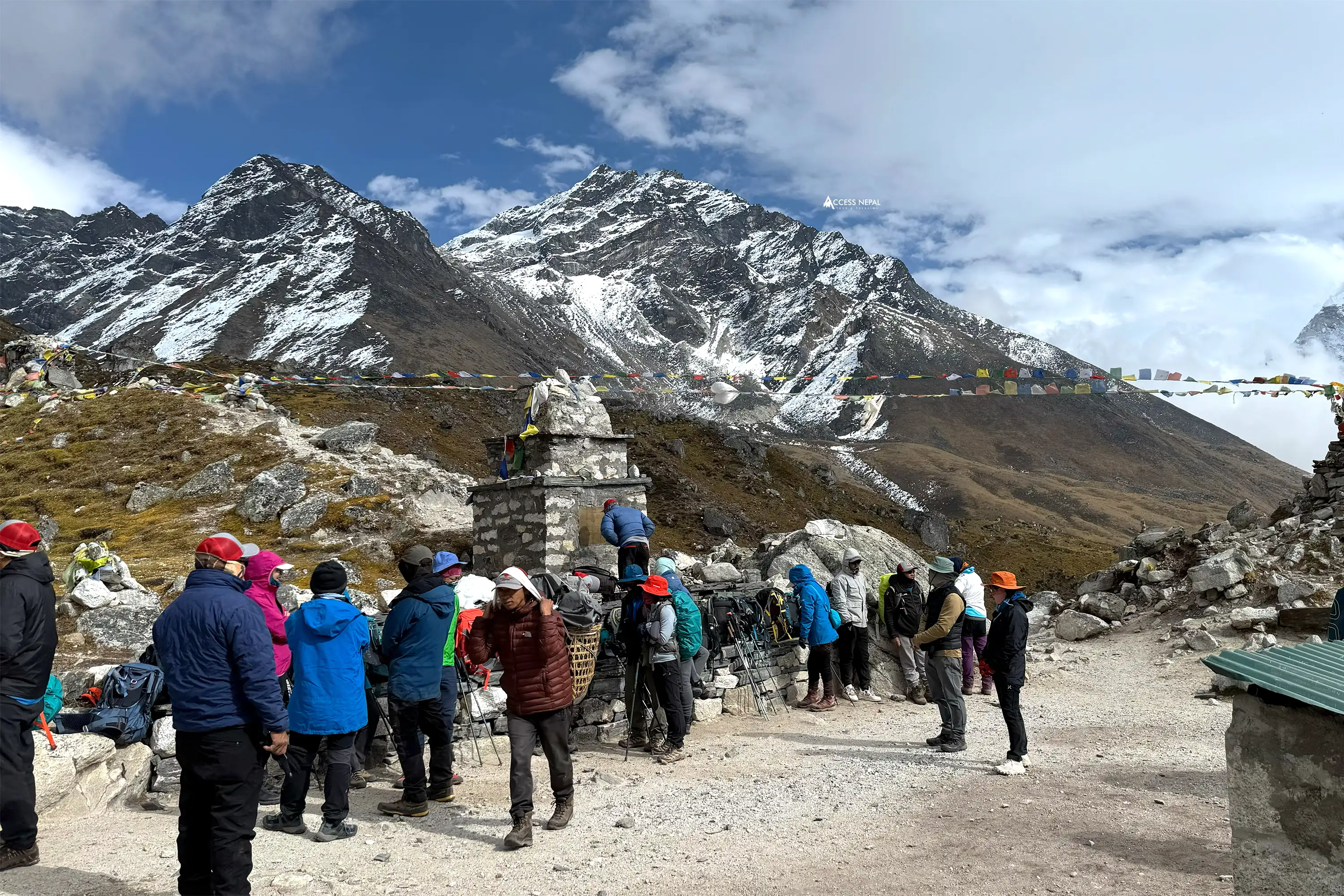
Along the way, each night you stay in a different village lodge. Days are physically active (4-7 hours hiking), but each stop provides a warm meal, a place to refill water, and the chance to mingle with other trekkers. You’ll cross suspension bridges, walk beneath prayer flags, and meet friendly Sherpa people everywhere. The combination of spectacular scenery, cultural immersion,n and personal achievement is what makes this trek unforgettable. Scenic Himalayan river valley on the trek toward Lukla (the gateway to Everest country).
Travel Insurance
Travel insurance is mandatory. We require all participants to have comprehensive travel insurance that covers trekking up to at least 6,000m. It must include emergency medical evacuation (e.g., helicopter rescue) and mountain rescue. This is not only our policy but a practical necessity: rescue operations in the high Himalaya are expensive, so insurance is your protection.
Please ensure your insurance explicitly mentions high-altitude trekking (many standard policies exclude above 3,000-4,000m, which won’t suffice). On our part, we also carry group evacuation insurance and coordinate any emergency response. Having proper coverage lets you and your family relax, knowing you’re protected. (Several news reports stress this requirement; it’s a common lesson from Himalaya treks.)
Altitude Sickness and Prevention
Altitude sickness (AMS) is the greatest risk at Everest elevations, but with proper care,e it can be managed. Here are our key prevention tips:
- Ascend Gradually: We never climb more than about 500 meters in elevation gain per day. Our extra rest days mean you sleep low some nights, which is the gold-standard method to prevent AMS.
- Stay Hydrated and Fueled: Drink at least 5-6 liters of water daily, even before you feel thirsty. Eating plenty of carbohydrates (rice, bread, pasta, dal-bhat) helps your body use oxygen more efficiently. We encourage snacking between meals (energy bars, dried fruit) to keep blood sugar up.
- Listen to Your Body: Watch for early AMS symptoms, headache, dizziness, nausea, or extreme fatigue. It’s not a sign of weakness; it’s your body telling you to slow down. Our guides will continuously check on you. If you develop symptoms, we halt and rest, or descend if necessary. Remember: “Fitness levels alone won’t protect you.
- Medication: Many trekkers (especially those with previous AMS experience) take acetazolamide (Diamox) as a preventative. We strongly advise consulting a doctor about this before the trip.
- Emergency Measures: In severe cases (e.g., HAPE or HACE, forms of high-altitude pulmonary or cerebral edema), descent is mandatory. Our guides carry oxygen and are trained to administer first aid. If needed, we can organize a helicopter evacuation to lower altitudes where symptoms will quickly improve.
By following these precautions (our itinerary and guidelines are specifically designed for acclimatization), the vast majority of trekkers reach Base Camp without serious issues. We make sure you have the resources (oxygen, medication, rest days) and knowledge to trek safely. Your well-being is our priority, and we’ll be with you every step of the way to adjust plans if anyone feels unwell.
We look forward to guiding you on this life-affirming journey and showing that the magic of Everest Base Camp can be experienced at any age, with the right preparation and support!
Is the Everest Base Camp Trek suitable for seniors?
Yes, the Everest Base Camp Trek for seniors is suitable. Anyone with good health, physically fit, good training, and preparation can do this trek. In the past, travelers who were in their 60s, 70s, and 80s have completed the Everest Base Camp Trek safely. With a good strategy and well-planned itinerary, seniors can dothe Everest Base Camp Trek.
Is there an age limit for senior trekkers on the EBC trek?
Do seniors need prior trekking experience for Everest Base Camp?
How physically demanding is the Everest Base Camp Trek for seniors?
What is the maximum altitude reached during the EBC trek?
How can seniors reduce the risk of altitude sickness?
Is a medical check-up required before the trek for seniors?
Are guides and porters recommended for senior trekkers?
Can the Everest Base Camp itinerary be customized for seniors?
What type of accommodation is available for seniors on the trek?
What is the best season for seniors to trek to Everest Base Camp?
What fitness preparation is recommended for senior trekkers?
Is travel insurance mandatory for senior trekkers?
Is helicopter evacuation available in case of an emergency?
Are luxury Everest Base Camp trek options available for seniors?
How long does the Everest Base Camp Trek take for seniors?
Is it safe for seniors to trek solo to Everest Base Camp?
Awards and Achievements
Access Nepal Tour and Treks has been recognized with TripAdvisor’s prestigious Travelers’ Choice Award for multiple consecutive years, reflecting our unwavering commitment to quality and clients’ satisfaction.