

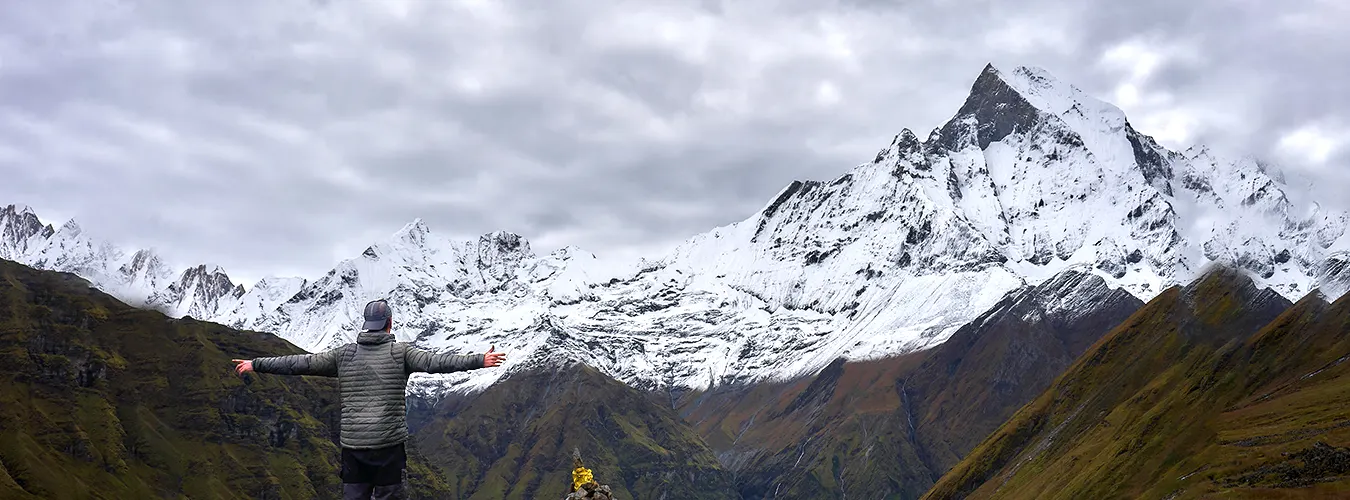
How long is the Annapurna Base Camp Trek?
- Places
- By Shrijan budhathoki
“How long is the Annapurna Base Camp Trek?” Trekkers must cover around 110 kilometers of distance in total, which will take around 7 to 14 days to complete one of the most breathtaking adventures of Nepal, the Annapurna Base Camp trek. The trails are filled with rivers, bridges, rhododendron forests, remote villages, and religious monasteries and temples. The journey offers the perfect opportunity to gain experience for high-altitude adventure. The trails are always filled with energetic travelers ready to start their adventure.
Mount Annapurna is Nepal’s tenth-tallest mountain, standing at 8,091 meters above sea level, and is one of the most popular trekking destinations for adventure seekers. The Annapurna Base Camp trek is one of the beginner-friendly trekking destinations that offers a Himalayan region experience and high altitude adventure for trekkers. The trails are easy if you choose the right itinerary and the right time to visit, with the help of a proper guide, beginners can complete the entire journey without any difficulties.
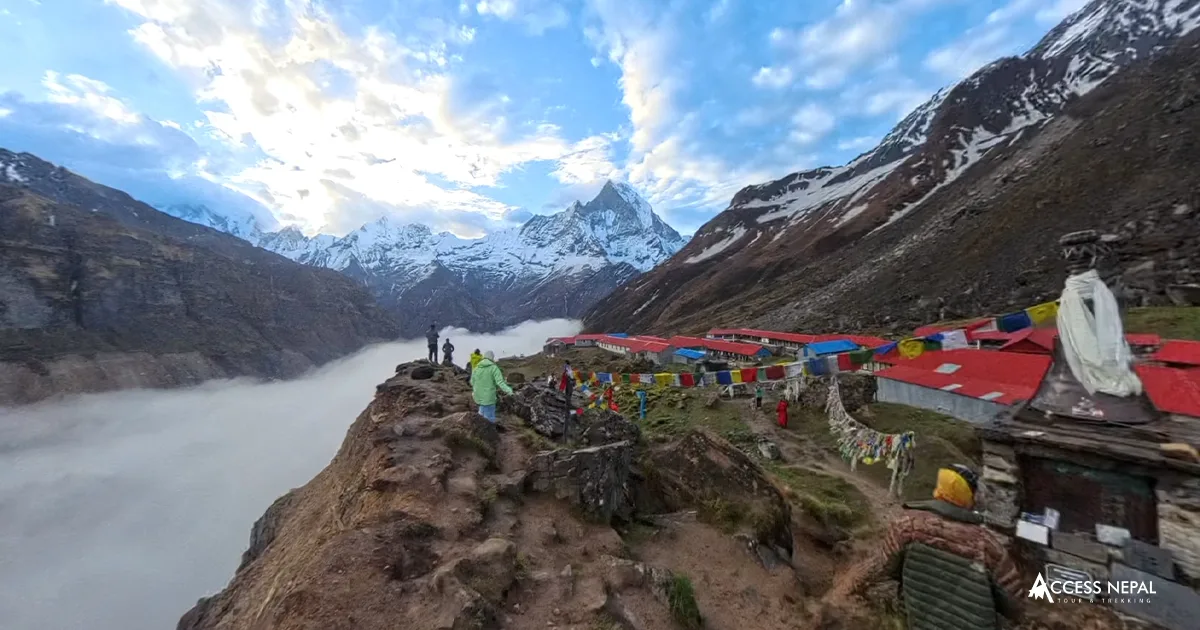
Annapurna Base Camp is located at a height of 4,130 meters above sea level. The trails are considered easy, and even beginners can complete the adventure with the help of an experienced guide. But remember, you have to prepare yourself mentally and physically because trekkers have to walk 5 to 7 hours every day on average. You can enjoy the majestic view of mountains like Machhapuchhre, Hiunchuli, and Dhaulagiri. You can even enjoy the natural hot spring located at Jhinu and Poon Hill.
This blog will provide you with detailed information about trail conditions, permits, and all the logistical things to help you plan your comfortable itinerary for your Annapurna Base Camp trek adventure. But remember, in the peak seasons like spring and autumn, the trails are crowded because these seasons offer the perfect weather and temperature, making it the most suitable time to start your journey. You can contact the Access Nepal team, and we will take care of all the logistical things so you can focus on enjoying and creating memories.
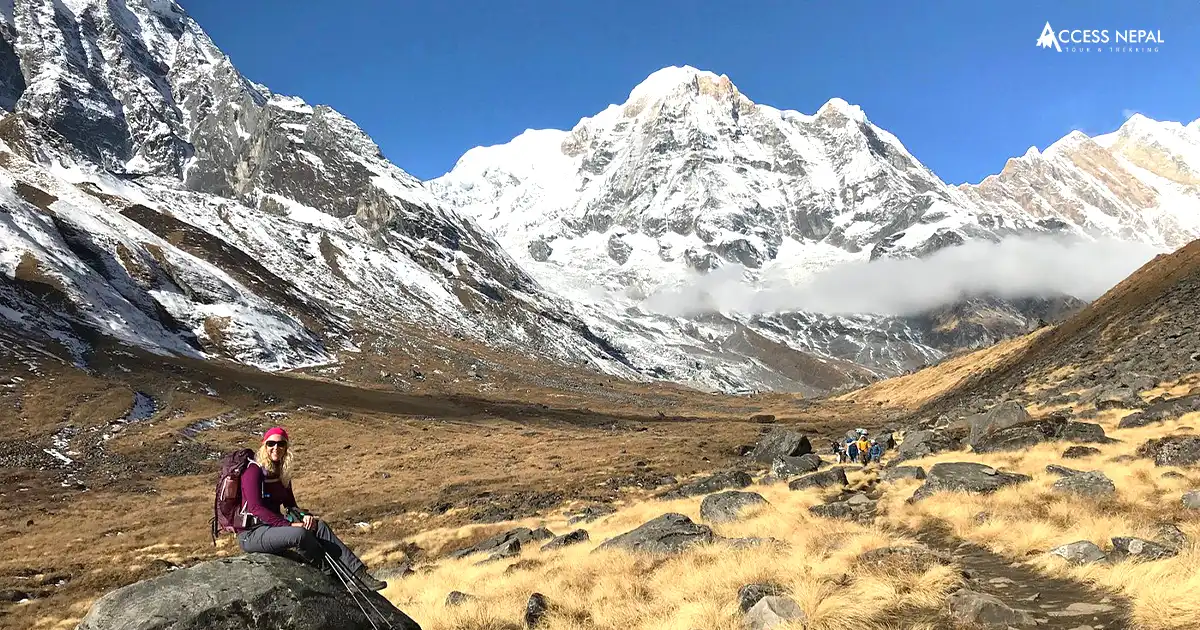
View During Annapurna Base Camp Trek
How long is the Annapurna Base Camp Trek?
The Annapurna Base Camp trek distance is around 110 kilometers through the Nayapul route to base camp and return on foot. The agencies might use different routes, so it is important to ask for the planned itinerary before booking your journey. You will have to cover the 1 to 18 kilometers of distance and walk for 5 to 8 hours daily for your entire journey.
The entire trek will be around 7 to 14 days, but normally, many agencies follow the 10- to 12-day itinerary for the Annapurna Base Camp trek. Many experienced trekkers and climbers complete the entire core expedition in seven days, but for beginners and intermediate trekkers, the days are increased so everyone can enjoy this adventurous journey.
The trails are easy compared to the other difficult Himalayan ranges of Nepal. The increase in altitude makes it difficult to breathe properly. Certain changes in weather and temperature take time for the human body to get used to, and trekkers can also experience altitude sickness. So for inexperienced trekkers, cover short distances and stretch the trek duration to 12 to 14 days.
Annapurna Base Camp Trek Altitude
Mount Annapurna is the world’s tenth-tallest mountain, with a height of 8,091 meters above sea level, and also one of the most popular adventure destinations for trekkers and climbers. The Annapurna Base Camp is located more than 4,000 meters above sea level, and you have to complete the entire journey by walking every day.
You must have at least a little experience before starting your journey because as the altitude increases, you will notice less oxygen in the air, which can cause you altitude sickness. The most common symptoms of altitude sickness are headache, dizziness, fatigue, and hallucination. As the altitude increases, you will notice a significant drop in temperature at nighttime.
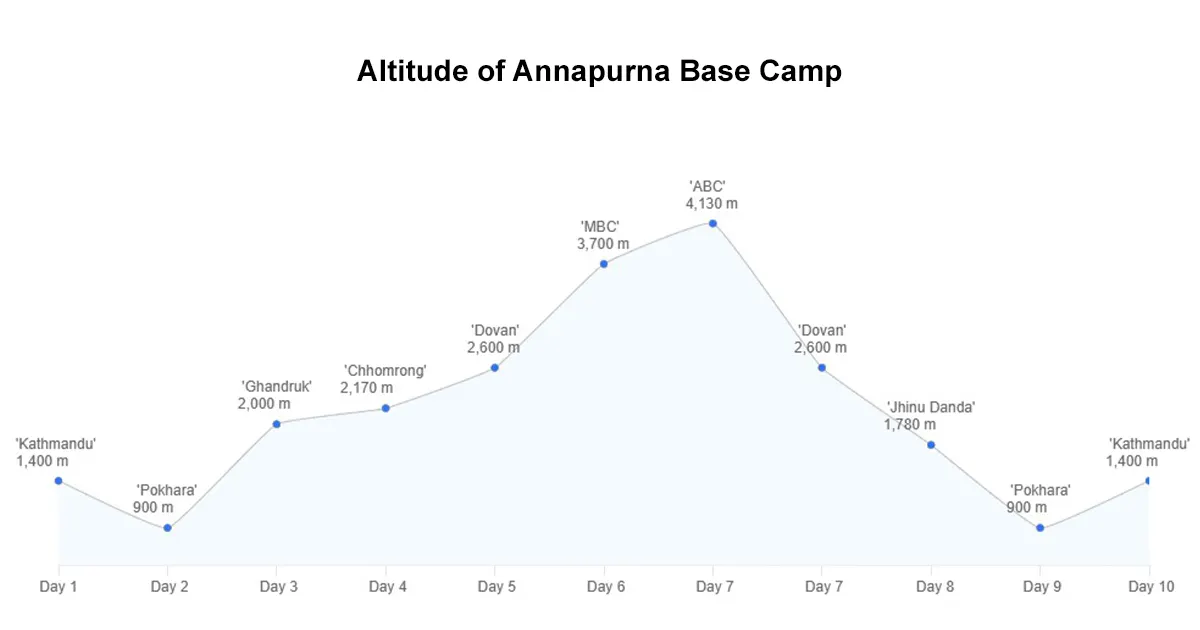
Annapurna Base Camp Trek Altitude Chart
You must eat a proper diet, which is easy to digest and can keep you energetic for your entire journey. The temperature at night can drop up to -5 degrees Celsius, so you must keep yourself warm so you do not suffer frostbite, which is common in cold places. So you must plan a proper itinerary and travel with a licensed guide to keep yourself healthy and safe.
Itinerary for classic route to Annapurna Base Camp
Day 1: Arrive in Kathmandu
You will arrive at the Kathmandu International Airport and spend your time exploring the capital city of Nepal. And visit places like Bhaktapur, Patan, and Thamel, which are popular for nightlife.
Day 2: Kathmandu to Pokhara
You will reach Pokhara on the second day through a 25-minute domestic flight, or you can travel by bus, which will take 6 to 7 hours, and spend your time enjoying the nightlife of Pokhara.
Day 3: Pokhara to Jhinu Danda
You can travel to Jhinu Danda by jeep, which will take 2 to 3 hours, or you can cover the distance walking on foot as a warm-up for trekking. You will reach the village located near Jhinu Danda and spend your night there.
Day 4: Jhinu Danda to Chhomrong
You will cross Modi Khola and climb for 3 to 4 hours and reach Chhomrong, from where you can enjoy the majestic view of Annapurna South and Machhapuchhre if the weather is clear.
Day 5: Chhomrong to Bamboo
You will walk for 5 to 6 hours, traveling through a beautiful forest of bamboo and rhododendron. You will reach Chhomrong Khola and spend the night there.
Day 6: Bamboo to Deurali
On day 6, you will walk for 4 to 5 hours on trails and reach Deurali, 3,230 meters above sea level. Remember, as you cross 2,500 to 3,000 meters in height, there is a high chance of suffering altitude sickness.
Day 7: Deurali to Annapurna Base Camp via Machapuchare Base Camp
On the final day of your journey to reach the Annapurna Base Camp, located 4,130 meters above sea level, cross through Machapuchare Base Camp and enjoy the breathtaking view of the mountains.
Day 8: Annapurna Base Camp to Bamboo
Now you will start to descend, taking a break at Deurali, or you can spend the night if it is included in your itinerary, or reach Bamboo and rest there.
Day 9: Bamboo to Jhinu Danda
You will descend, crossing the forest and the Chhomrong River to reach Jhinu Danda.
Day 10: Jhinu Danda to Pokhara
On the final day of your journey, you will travel by jeep from Jhinu Danda and reach Pokhara, where you will spend your night celebrating the completion of your journey.
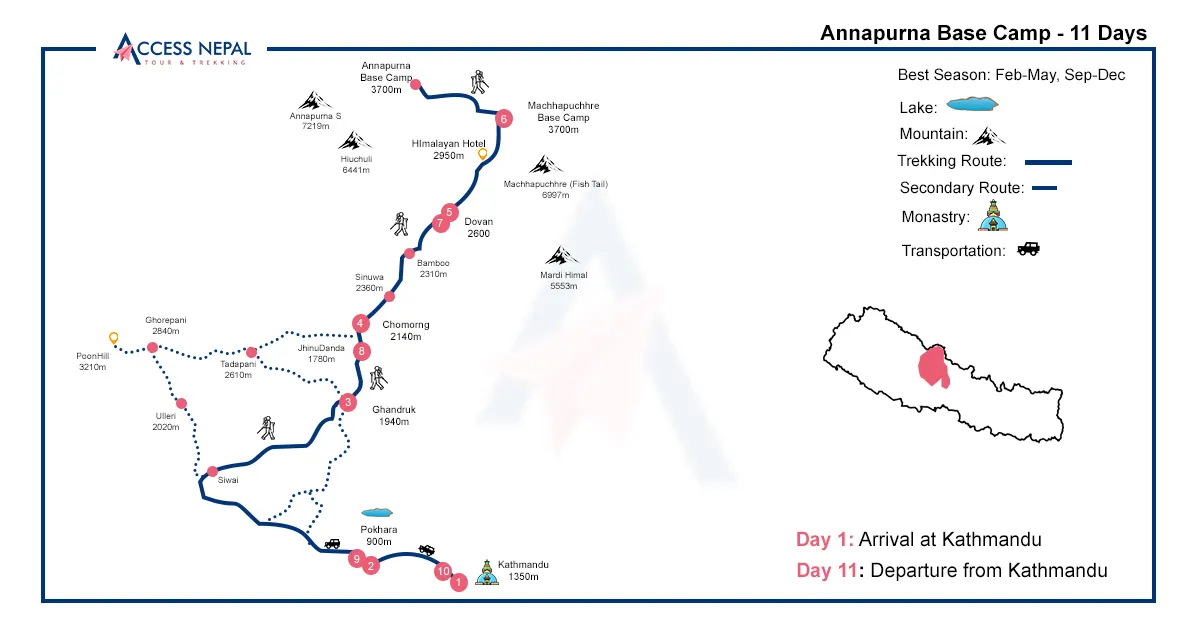
Annapurna Base Camp Route Map
The professional team and travel guide of Access Nepal have prepared this 10-day itinerary. This is the most friendly itinerary for beginner to intermediate trekkers, and even experienced trekkers can join this adventure. We will handle all the logistical things so you can focus on enjoying your trip with your group and learning the new culture of the Nepal Himalayan region. So contact our team and book your adventure right now to join this breathtaking adventure.
The direct and short Route For Annapurna Base Camp Trek
Many trekkers prefer the classical route for the Annapurna Base Camp trek because you have to cover a shorter distance every day, and you will start your journey with proper rest, creating the opportunity for inexperienced trekkers. But there is an alternative route to reach ABC, avoiding the Ghorepani and Poon Hill area to reach the base camp directly.
You will pass through Landruk and Chhomrong, the remote villages of the Annapurna region, which reduces the number of days and also covers 15 to 20 kilometers of distance compared to the Ghorepani route. You will still enjoy the eye-pleasing view of mountains, forests filled with rhododendrons, rivers, and religious places.
Here is the 7-day direct trek route itinerary to reach Annapurna Base Camp:
Day 1: Kande to Landruk
On the first day of your trek, you will start your journey from Nayapul or Kande and reach Tolka or Landruk. You will cover the distance with the help of a taxi or jeep, which will take 3 to 4 hours and cover a good amount of distance for trekkers.
Day 2: Landruk to Chhomrong
You will again trek for 5 to 6 hours from Landruk or Tolka and reach the village located in Chhomrong.
Day 3: Chhomrong to Dovan
On the third day of your journey, you will walk for 5 to 6 hours, crossing rivers and rhododendron forests, and reach the Himalayan Hotel located at Dovan, where you will spend your night.
Day 4: Dovan to Machhapuchhre Base Camp(MBC)
You will start your journey from Dovan, and after walking for 6 to 7 hours, you will reach Machhapuchhre Base Camp, a popular snow-peak mountain of Nepal also known as “Fish Tail.”
Day 5: MBC to ABC
Now you will start the final push of your journey from MBC and reach the ABC located at 4,130 meters above sea level. The trek will take 2 to 3 hours, and you will spend the time there enjoying the majestic view of the mountains and descend back to Dovan the same day.
Day 6: Bamboo to Jhinu Danda
Now you have reached your destination, Annapurna Base Camp, so you start to descend from Bamboo and reach Jhinu Danda, which takes 6 to 7 hours of trekking.
Day 7: Jhinu Danda to Nayapul to Pokhara
On the final day of your time in the Annapurna region, you will start your journey from Jhinu Danda to reach Nayapul and return to Pokhara on the same day, ending your Annapurna Base Camp trek journey.
What makes the Annapurna Base Camp Trek Difficult?
The Annapurna Base Camp trek is easy compared to other destinations, but every Himalayan region has its own way of making your journey difficult, so here are a few reasons that make the Annapurna Base Camp trek difficult:
I. Altitude sickness and energy consumption
The ABC is located more than 4,000 meters above sea level, and as you reach 2,500 meters, you will start to feel less air pressure and a low amount of oxygen, making breathing difficult. You will start to feel dizziness, fatigue, and even hallucinate sometimes. You will notice difficulty in walking because low oxygen energy consumption increases with every step. So you must take small steps and keep yourself hydrated for the entire period of your journey.
II. Weather and Temperature
The weather plays the most important role in your journey. The weather in the higher Himalayan region is unpredictable and can be dangerous if not taken seriously. The sky can be clear and blue, but it can be covered with dark clouds and even snowfall within a minute. The temperature will drop significantly up to -5 to -10 degrees Celsius as you reach higher altitudes. You have to keep your body hydrated and warm, or you might suffer from frostbite and damage your organs permanently.
III. Gears and Equipment Weights
The trekkers have to carry proper gear and equipment that helps them in their journey. Normally, every trekker has to carry 5 to 7 kilograms of weight on their back while traveling. The starting of the journey can be easy, as you are at a lower altitude, but as the altitude increases, it starts to consume more energy, and due to low oxygen levels, many trekkers suffer from altitude sickness. You can hire a porter if you have a budget, and they carry all of your gear and equipment for you so you can focus on your journey.
IV. The Stone Staircase
The Annapurna region is influenced by Gurung, Magar, and Sherpa communities. The perfect opportunity to learn and enjoy their tradition and culture. The many parts of the ABC trails have a stone-paved staircase from Tikhedhunga to Ghorepani, and different parts of the Chhomrong trails. The place looks photogenic as it is decorated with different colored flags and surrounded by forest, offering a majestic view of their culture and beliefs. But climbing the stone staircase while carrying 5 to 7 kilograms of weight on your back can be exhausting and difficult for trekkers.
Permits for Annapurna Base Camp Trek
The Annapurna region is known as the restricted part of Nepal. If you want to explore the trails of the ABC trek, you will need to purchase the two permits to start your journey. The Annapurna Conservation Area Permit (ACAP) and Trekkers Information Management System (TIMS). Without these permits, you are not allowed to enter the restricted area or start your journey.
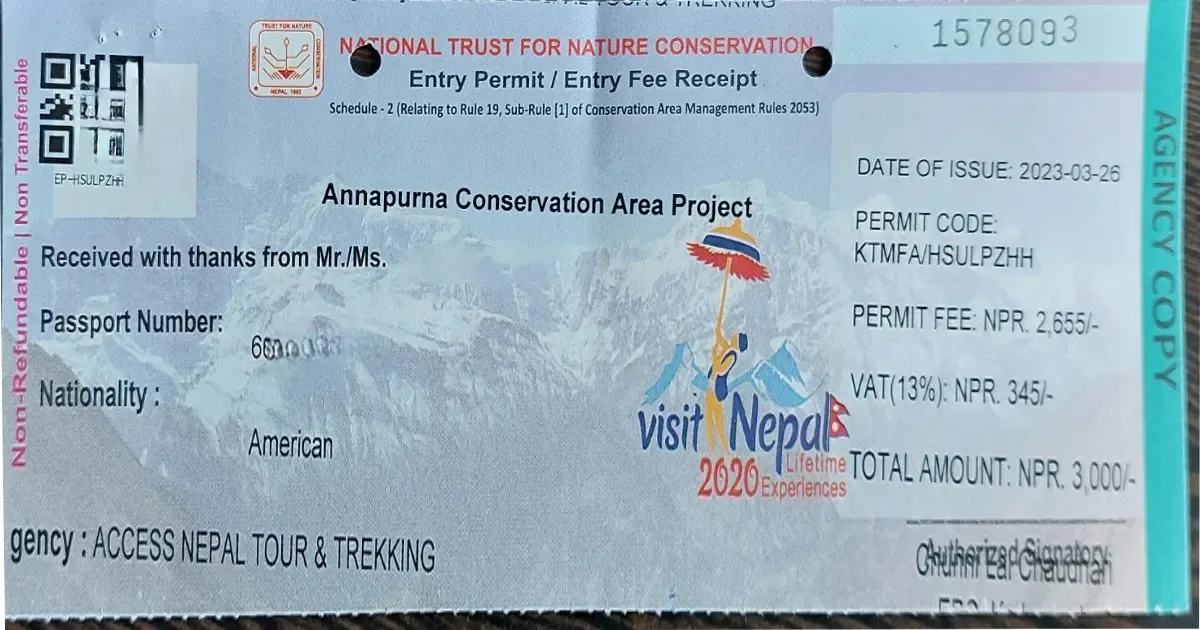
Annapurna Base Camp Trek Permit
You can obtain these permits from the Nepal Tourism Board Office located in Pokhara, and they cost $40 to $50 per person. Remember, the cost of the permits can be different according to the season, so verify the information before paying for it. After gathering all of your permits, you start your planned itinerary and enjoy the majestic view of the mountains.
Choosing the Best Time for the Annapurna Base Camp Trek
Planning your trek duration is very important to create unforgettable memories and to avoid any injuries. The Annapurna Base Camp trek is beginner-friendly, but you must plan your travel itinerary according to your physical capabilities to complete the entire trek. If you are trekking for the first time and want a relaxed experience, you can choose an 11 to 13-day itinerary.
If you have been trekking for a certain time and know the high altitude weather and trail challenges, you can choose a 9 to 10-day itinerary. You will have to cover a longer distance compared to beginners. If you are physically and mentally strong, the 6 to 7-hour walk can be completed without any challenges.
Now, the professional trekkers and climbers who have been trekking for a longer period of time are comfortable with higher altitude weather and temperature. They have exceeded the capabilities of the human body and are mentally strong enough to cover longer distances without any problem. Most of these types of trekkers are preparing for a summit expedition, so they can choose a 7 to 8 day duration of trek.
Best Time to Trek to Annapurna Base Camp Trek
Autumn starts in September and lasts till November, and spring starts in March and lasts till May. These are the best two seasons to start your trekking journey to experience the Himalayan culture, and many festivals are celebrated around this time, like Dashain and Tihar. The trails of the forest are filled with different shades of rhododendron and wildflowers. You can enjoy the red, white, and pink shades of rhododendron, the national flower of Nepal.
Winter is not as popular as spring and autumn, but the cold weather is the perfect opportunity to experience the different adventures of the Himalayan region. You will notice the drop in temperature from December, a sign of the winter season, and it lasts till February. The trails are filled with snow, making it more challenging, so you will notice the trails are less crowded around this time, and it is the perfect season for solo trekkers and people who do not like crowded places.
The Monsoon a rainy season, starts in June and lasts till September. It is known as the worst season to travel, as you will face heavy rainfall and trails are slippery, making it dangerous for trekkers. The forest is filled with leeches, and dark clouds make it difficult to navigate routes properly. The tea houses and lodges are closed, making it difficult to find resting spots. But many trekkers travel around September to enjoy the fresh environment created after rainy days.
FAQS
How long is the Annapurna Base Camp Trek?
There are three different itineraries according to your capibilities but many trekkers choose a 9 to 10-day travel plan to complete the ABC trek.
How long is the total distance of the ABC trek?
The trekkers have to cover 80 to 115 kilometers distance depending on the route
Is ABC Trek suitable for beginners?
Yes, it is one of the most popular trekking destinations for beginners who want to experience the beauty of the Himalayan region.
Can you complete the ABC trek in 7 days?
Yes, you can complete the ABC trek in 7 days if you are experienced and physically capable of covering more distance within a day.
How many hours do you have to walk every day?
You have to walk around for 5 to 6 hours every day according to your travel plan or itinerary.
Awards and Achievements
Access Nepal Tour and Treks has been recognized with TripAdvisor’s prestigious Travelers’ Choice Award for multiple consecutive years, reflecting our unwavering commitment to quality and clients’ satisfaction.











Leave Your Comment