

Renjo La Pass
- Places
- By Shrijan budhathoki
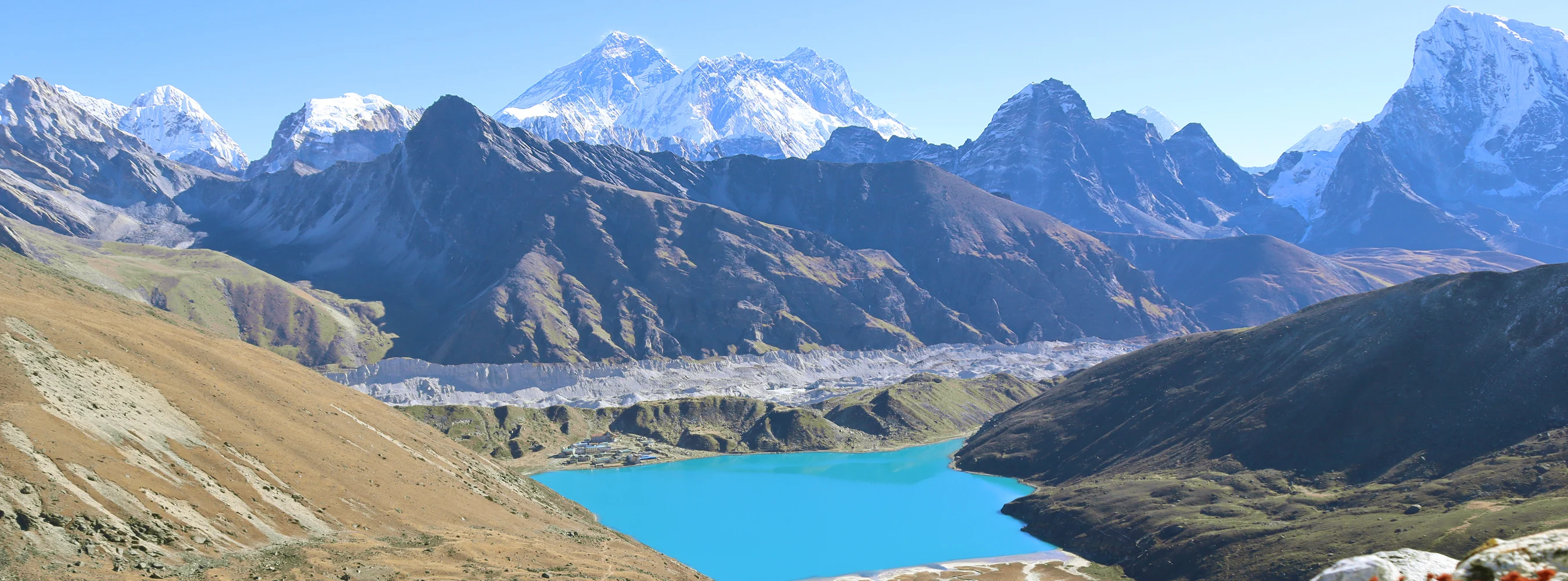
The Renjo La Pass is one of the high-altitude adventures located at 5,360 meters above sea level. The trails include the Khumbu region, the most unexplored area of Mount Everest. Compared to the Everest Base Camp trek and other trekking destinations, Renjo La Pass is less crowded. The trails are more difficult than other trekking destinations, but also the most rewarding journey for adventure seekers.
The Three La Pass Everest trek includes Renjo La Pass, Cho La Pass, and Kongma La Pass, a journey filled with adventure and challenges. Renjo La Pass is the easiest compared to Cho La Pass and Kongma La Pass trek because the trails do not demand any technical climbing skills. You will cross through the rhododendron forest, bridges, villages, monasteries, and rivers, making unforgettable memories with your companions, friends, and family.
Nepal offers the most popular trekking destination for adventure seekers. The home of 14 tallest mountains over 8,000 meters above sea level, including the world’s tallest mountain, Mount Everest, with a height of 8,849 meters above sea level. The ABC and EBC trek is one of the most popular trekking destinations in Nepal, attracting thousands of adventure seekers every year to experience high-altitude adventure.
This blog will help you understand all the information needed for your journey. We will even provide you with the planned Three La Pass trek itinerary made by our Access Nepal professional travel guide. You can even contact our team to book your La Pass trek journey, and we cover all logistics, so you can focus on creating beautiful memories.
Altitude of Renjo La Pass
The Renjo La Pass is one of the highest Three Pass treks in the Everest region, located at 5,360 meters above sea level. The trails are not as popular as the Everest Base Camp trek because they demand more physical preparation to complete the entire adventure. The trails are covered in snow and rocks, making it hard to navigate direction. The altitude, weather, and temperature will push your human body to its limits.
As the altitude increases, atmospheric pressure and oxygen level of your environment will start to decrease. You will notice difficulty in breathing at 2,000 meters above sea level. The body organs will not function properly, and many trekkers also suffer from the most common altitude sickness on their journey. You will notice symptoms like headache, fatigue, increased heart rate, and hallucinations because of less oxygen in the air.
You can start your pass journey from two sides, and most trekkers will travel from the west side, the classic route, to reach the Renjo La Pass. You will climb from Gokyo Village, located at 4,790 meters above sea level, through a moraine-strewn valley to the col. From the eastern side, you will travel through the Bhote Koshi valley, traveling the rocky trails through Marulung or Lumde.
Renjo La Pass Difficulty
The trails of Renjo La Pass are much more complicated compared to the Everest Base Camp. The trails do not involve any technical climbing equipment, but it is one of the unexplored areas of the Khumbu region, so an expert will be needed for your journey. The journey demands both physical and mental preparation because, as the altitude increases, the trails will become more difficult for the human body to continue the adventure.
Physical and mental Demands
The trekkers have to walk for 6 to 7 hours, covering more than 6 kilometers of rough trails every day to reach Renjo La Pass. Some part of your journey includes climbing and descending through rocky trails. You will have to carry more than 5 to 6 kilograms of weight on your back, filled with equipment and gear. As the altitude increases, you will have breathing problems, and it will consume more energy compared to lower altitudes.
Technical Difficulty
In winter, compared to autumn and spring, the trails become more difficult and consume more energy with every step you take. You don’t need professional climbing skills, but remember the Renjo La Pass is always covered in snow throughout the year. So always prepare your gear and equipment accordingly. In winter, you will notice unpredictable changes in weather and temperature, making it hard to navigate trails.
Renjo La Pass Map
The Renjo La Pass is one of the three high passes treks located on the northwestern side of the Khumbu region. The trails connect the Gokyo Lakes valley in the east and the remote Bhote Kosi River valley on the west side. Now we will talk about the classic Renjo La Pass circuit map, followed by many trekkers on their journey.
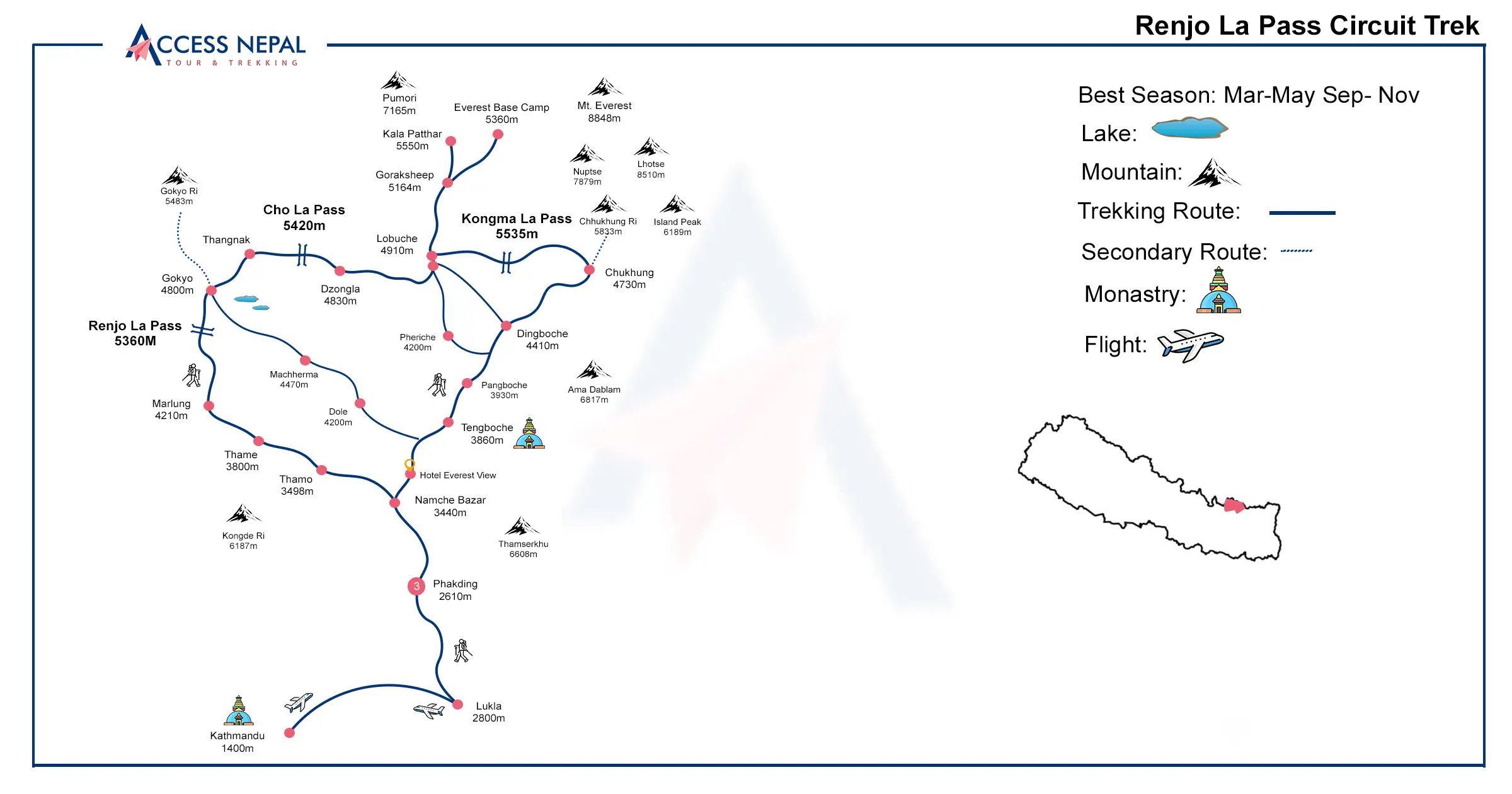
The trekkers follow the clockwise direction for all three La Pass treks that start from the Solukhumbu trail at Namche Bazaar. Then you will climb the Gokyo Valley to Marulung, crossing the Renjo La Pass from west to east. Then you will walk to Dzonglha, where you will cross Cho La Pass and then climb to Konma La Pass from Lobuche to Chukhung before descending to Imja Valley.
Trekkers with good physical and mental health can complete the Renjo La Pass journey in 3 to 5 hours from Gokyo to the pass summit. Many times you will use different routes depending on the current weather conditions, crowds, and snow. All the trekkers must carry their water and snacks with them because there are no tea houses above Gokyo until you descend to Marulung.
Cho La Pass
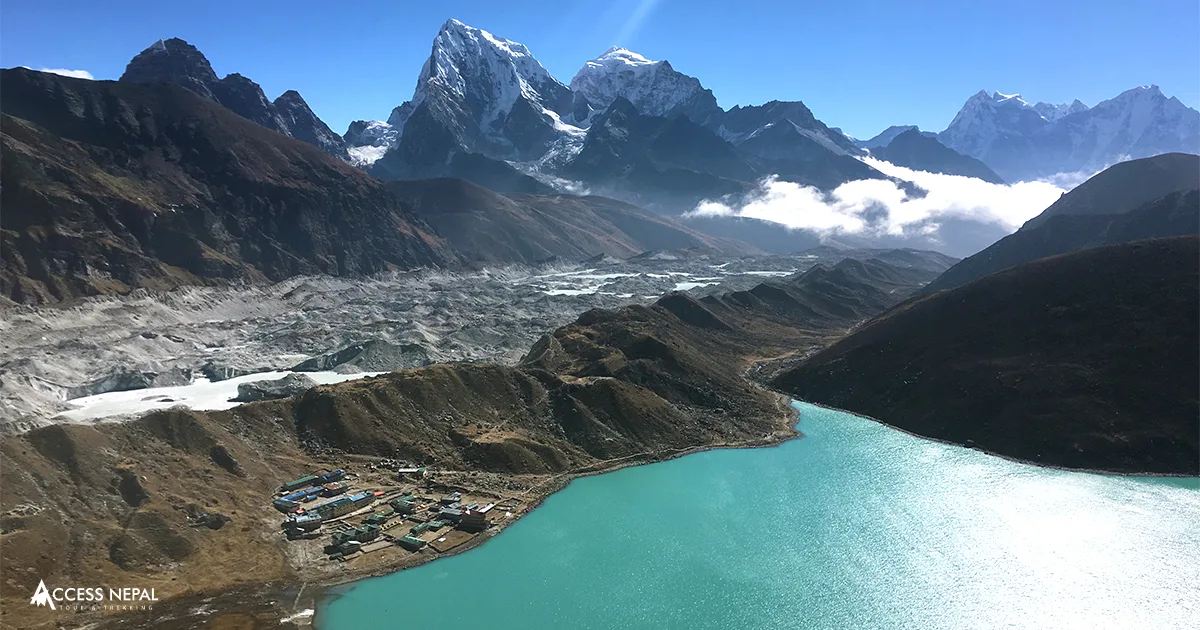
The Cho La Pass is 60 meters higher than the Renjo La Pass, located at 5,420 meters above sea level. The distance might not be that big, but the trails are more physically and technically demanding compared to other La Pass trekking. But with the help of proper travel guides, gear, and equipment, you can complete this adventure safely and easily.
You will start your journey from Dzonglha, located at 4,830 meters above sea level. You will notice fewer tea houses compared to the lower altitude. They are covered with rocks and located in the frozen part of the trails to provide a safe place for trekkers. The trekkers will walk the icy trails until they reach the very edge of the glacier, one of the most difficult pushes of their journey.
After their hours of hard climbing and walking, they will reach their destination located at 5,420 meters above sea level. You will enjoy the majestic view of mountains and snow peaks while being surrounded by the colorful flags covering the trails. After enjoying the breathtaking view, they will start to descend to Khumbu Valley on the eastern side and reach Lobuche, located at 4,940 meters above sea level.
Cho La Pass Circuit
If you follow the classic itinerary, you will start your Cho La Pass journey between 12 and 14 days after spending 3 to 4 days at Gokyo Valley. You will cross the Renjo La Pass, located at 5,360 meters above sea level, and many trekkers will complete the La Pass trek in order. The main reason for trekkers to complete them is order because the human body does not function properly in higher places due to a lack of oxygen. So the slow and classic route will help their body to get used to the environment and make their journey a little easier.
Cho la Pass
Many trekkers also follow the reverse route, as they will start from Cho La Pass and then Renjo La Pass. If you are doing this trek for the first time and have no experience, you must follow the classic route because this itinerary is more physically and technically demanding for your body. The weather at Cho La is unpredictable, and the trails are mostly closed due to heavy snowfall and snowstorms, so you must prepare yourself mentally and start your journey during the day.
Kongma La Pass
The Kongma La Pass is the highest part of your journey. The trails are difficult and more physically demanding compared to the other two La Pass treks. The Kongma La Pass is located at 5,535 meters above sea level, 200 meters higher than the Renjo La Pass. The trails challenge your body to its limit, and you will spend weeks training your body for the last push of your adventure. Every step consumes more energy, and many of the trekkers also suffer from fatigue and altitude sickness on their journey.
Kongma La Pass
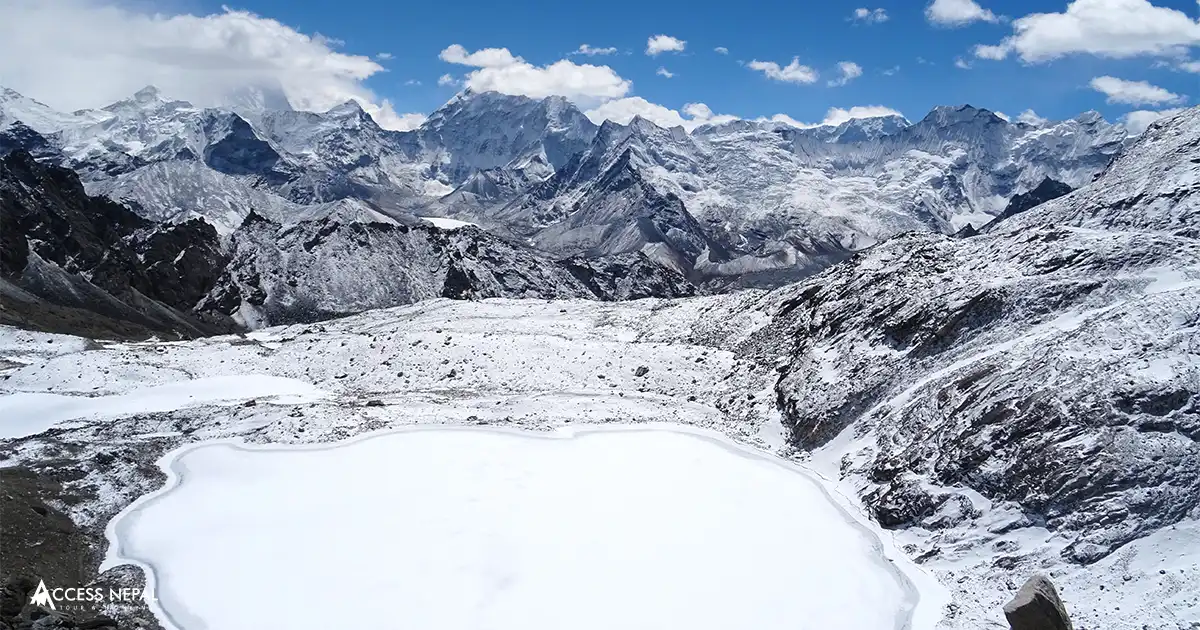
You will start your journey from Lobuche and follow the trails covered with rock and ice to reach Kongma La Pass. You will gain 600 meters in altitude from Lobuche to Kongma La and restlessly climb all the way to the col. You will have to walk 6 to 9 hours from the Khumbu Glacier to reach the final destination of your journey, located at 5,535 meters above sea level.
The trails might be difficult and more physically, mentally, and technically demanding, but it is one of the most rewarding adventures of your life. You will enjoy the majestic view of mountains covered in snow and the trails filled with colorful prayer flags and religious places. The opportunity to explore the peaceful trails of the Khumbu region, enjoying the breathtaking views of mountains like Khumbu Glacier, Everest West Ridge, the Lhotse Face, and Island Peak.
Renjo La Pass Circuit Trek Overview
The Everest Three Passes trek is one of the most peaceful journeys filled with adventure that offers the majestic view of mountains and grants the opportunity to enjoy the Himalayan culture and traditions. The opportunity to explore the isolated land of the Khumbu region and cover more than 160 kilometers of distance throughout your journey. The 18 to 22-day planned itinerary covers all the places and reaches the desired destination of your adventure.
Starting point of your journey
The trekkers will take a 35- to 40-minute flight from Kathmandu Airport and reach the most famous, Tenzing Hillary Airport, located in Lukla, which is also the starting point of their journey. You will enjoy the glimpse of the majestic peak from your window before even starting your journey. After landing, you will now start walking north, crossing Phakding, Namche Bazaar, and Gokyo Valley, then reaching the final destination of your adventure, Renjo La Pass.
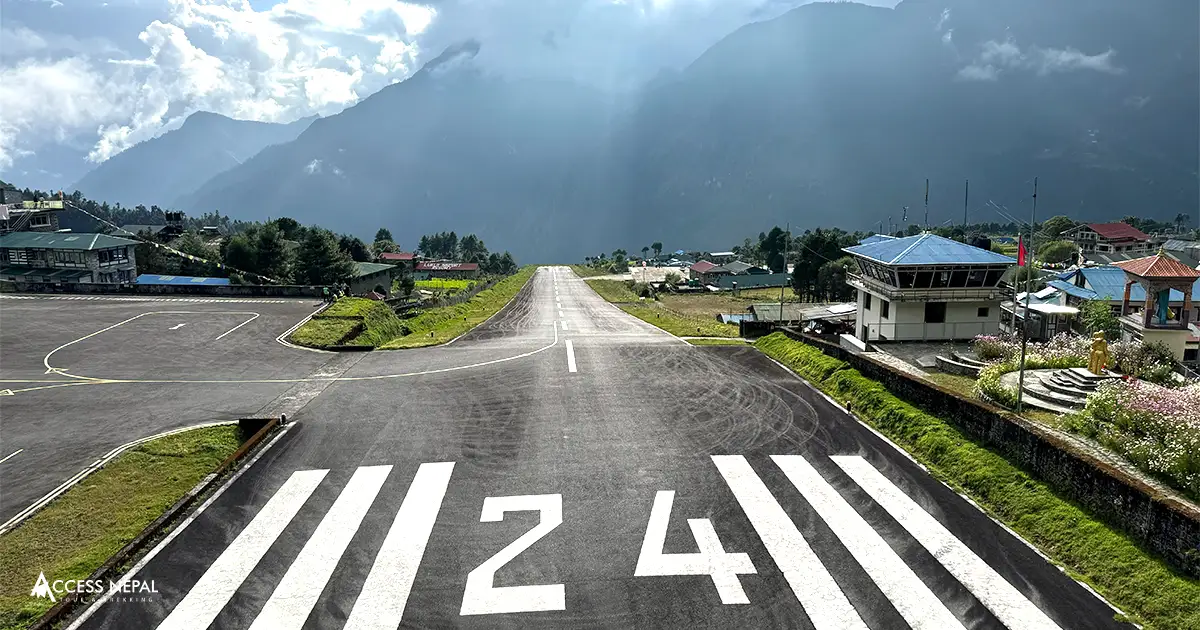
Lukla Airport
Required Permits for Everest Three-Pass Trek
The trekkers must purchase two permits for their Everest Three Passes trek adventure.
- Sagarmatha National Park Permit: The trekkers must purchase the Sagarmatha National Park Permit to explore the Everest region. You can obtain this permit from the Nepal Tourism Board office located in Kathmandu. The Nepali citizen has to pay NPR 100, and citizens of SAARC nations pay NPR 1,500 for the permit. Then all other country citizens have to pay NPR 3,000 for a permit.
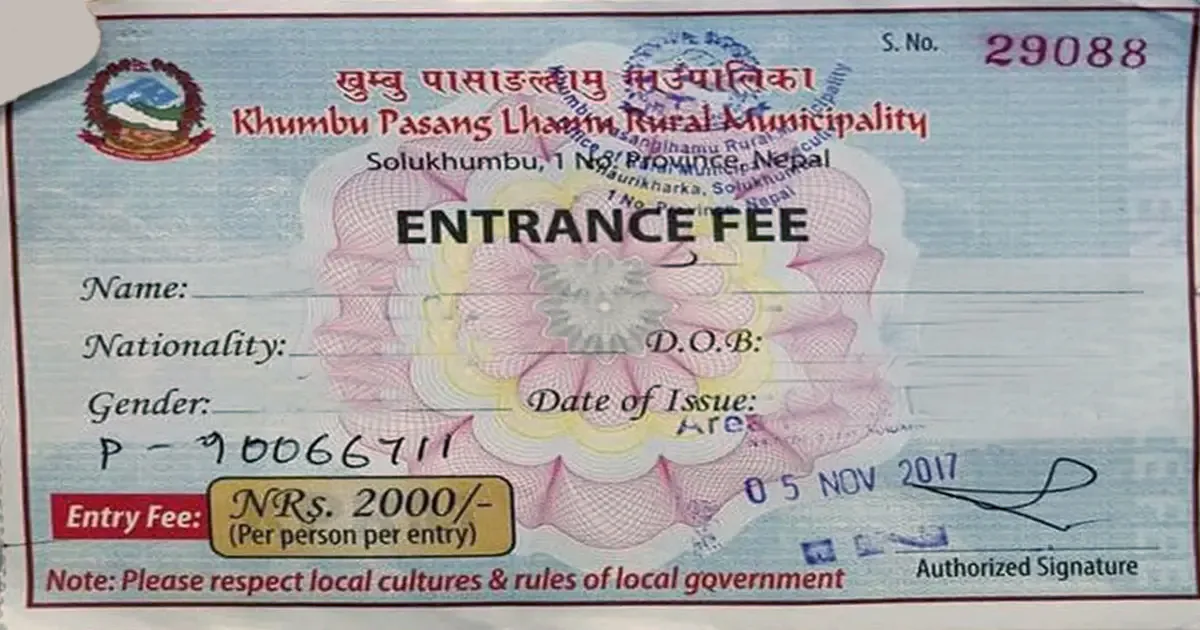
Sagarmatha National Park Permit
- Khumb Pasang Lhamu Rural Municipality permit: You can obtain this permit from the Nepal Tourism Board office located in Kathmandu or from Monjo and Lukla. This permit will help you get access to explore the isolated area of Mount Everest known as the Khumbu region. The permit will cost $15 to $30, and you will need a copy of your passport and a passport-sized photograph.
Guides and Porters for Everest High Passes Trek
Caring for the traveler’s safety, the government of Nepal made a rule that you are not allowed to travel without a licensed guide. The trekkers have to walk the trails covered with snow and stay for weeks at the height of 4,000 meters above sea level. Certain changes in weather, temperature, and altitude can cause Acute mountain sickness, also known as AMS or altitude sickness. The professional guide will help you navigate the trails and keep you safe from any dangerous situations.
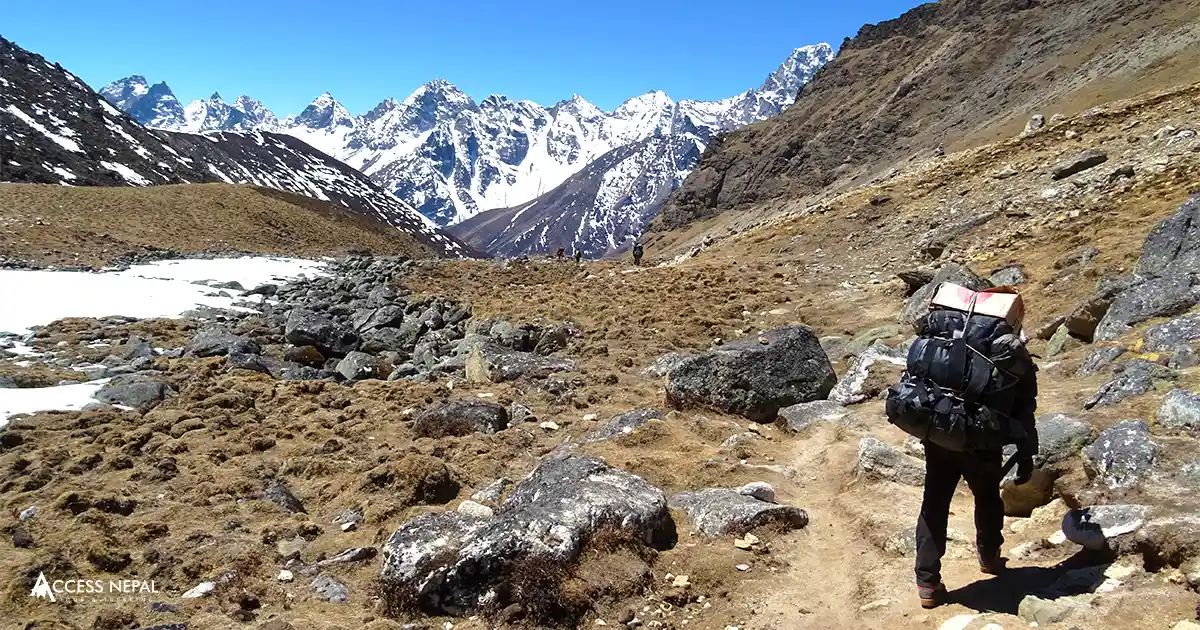
Porter
You can also hire a porter for your journey. They will carry up to 8 to 10 kilograms of your equipment and gear. They will charge you money for their service, and remember, many packages do not cover the cost of porters, so do not forget to ask your agency about the facilities they are providing you for your journey.
Renjo La Pass Temperature
The temperature at the Renjo La Pass depends on the altitude and time zone. The Renjo La Pass is located 5,000 meters above sea level, and as altitude increases, you will notice a significant temperature drop. The lower altitude location has warm air and high temperatures below 3,500 meters.
If you are a beginner, you must avoid traveling during the winter and monsoon seasons because the weather is unpredictable, and you will likely experience snowstorms and heavy rainfall around this time. The temperature can drop to -18 degrees Celsius at night as the altitude increases. The trails will be covered with thick snow, leeches, and slippery rocks, making your adventure difficult.
The temperature in December to February can drop to – 12 degrees Celsius. March to May is considered a good time to start your journey, as the temperature is warmer but can still drop to -6 degrees Celsius. June to August has warm temperatures, but the unpredictable rainfall makes it difficult to climb and navigate trails. In September and October, the temperature is warm even in higher places, and the weather is stable, making it a perfect time to start your journey.
Altitude Sickness During Renjo La Pass
Altitude Sickness, also known as Acute Mountain Sickness (AMS), is common at high altitudes as the oxygen level drops significantly due to low atmospheric pressure. You will notice difficulty in breathing, and every step burns more energy from the body as you reach 3,500 meters above sea level.
The Renjo La Pass is located at 5,360 meters above sea level, and the oxygen level will drop by more than half the percentage available at sea level. The human body needs oxygen to function properly, and it is not built to survive in higher places, where there is a lack of oxygen in the atmosphere.
The trekkers will notice an increase in their heart rate, Headache, nausea, fatigue, dizziness, and many other organ failures, which can be life-threatening and can cause permanent damage to organs. Even many professional climbers and trekkers can not avoid AMS on their journey, as the human body needs time to adapt to a new environment.
But you can avoid the AMS if you follow your guide’s instructions properly on your journey.
- You must keep yourself warm, hydrated, and avoid any alcohol products.
- You must consume food that is easy to digest and keep your body energetic.
- Get a proper rest every day at the end of your journey.
- As the altitude increases, you should not rush to cover more distance and take small steps to preserve your energy.
- You must contact your medical team if you notice any symptoms while traveling.
Best Time to Visit the Renjo La Pass
Renjo La Pass is located in the isolated land of the Khumbu region with unpredictable weather conditions. The trekkers must choose the right time before starting their adventure, as they have to climb over 5,000 meters above sea level to reach their destination.
Spring and Autumn: The spring and autumn are considered the best times to visit the Renjo La Pass. Spring starts in March, lasting till May, and autumn starts in September and lasts till November. The warm temperature and clear sky offer the majestic view of snow-capped peaks. The trails are easy to navigate and cover the trails with different shades of rhododendron and other wild flowers.
Winter and Monsoon: Winter starts from December and lasts till February. The trails are covered with a thick layer of snow, and the temperature can drop to – 20 degrees Celsius. The winter season offers different adventures, but also demands more physical preparation compared to Spring and Autumn, so only experts can complete this journey.
The monsoon starts in June and lasts till August, which is the worst season to start your adventure. The trails are slippery and covered with leeches. The heavy rainfall and dark sky blocked the view of the trails, making it difficult to navigate direction.
How to Prepare for the Renjo La Pass Trek?
The Renjo La Pass trek does not demand any technical climbing skills, but you have to walk for 5 to 7 hours daily, crossing different villages, monasteries, bridges, and forests to reach the destination located 5,300 meters above sea level. This is how you can prepare for the Renjo La Pass trek:
Physical Training
- Walk 6 to 8 hours daily to build your muscles and endurance.
- You can take part in physical activities like cardio, swimming, and cycling to build your stamina.
- Walk more than 20 kilometers with a weight on your back.
- You can take part in a short hike or trek, so your body can adapt easily to a new environment.
- Follow a proper diet and meals to keep your body healthy and fit.
Certain changes in weather, climate, and difficult trails can break you mentally. These exercises can prepare you physically, but you have to prepare yourself mentally to overcome any situation. You should always take slow steps and listen to your travel guide’s instructions properly. Never miss your training days and develop your body muscle and endurance slowly. Do a proper health checkup before starting your journey.
Equipment and gear for the Renjo La Pass trek
- An insulated jacket, pants, and trousers to keep you warm in low temperatures.
- Warm and waterproof gloves, sleeping bags, and boots to avoid frostbite.
- Sunscreen, moisturizer, sunglasses, a hat, and socks to keep your skin safe from harsh weather conditions.
- Head lamp and spare batteries that will help at night.
- An insulated water bottle to keep you warm and hydrated through your journey.
- High-calorie snacks that are easy to digest and give you energy for your adventure.
FAQs On Renjo La Pass
How high is Renjo La Pass?
Renjo La pass is located at 5,360 meters above sea level.
Which is the hardest La Pass trek?
Kongma La Pass is the hardest trek. It is more physically demanding than the other two La Pass treks.
How long is the all three pass trek?
To complete all three La pass trek, you will need an 18 to 22-day planned itinerary.
Do you need technical skills for the Renjo La Pass trek?
No, you do not need technical skills for the Renjo La Pass trek.
Is the Renjo La Pass trek safe?
Yes, with the help of a proper guide, equipment, and gear, the Renjo La Pass trek is safe.
Which is the best season for the Renjo La Pass?
Autumn and spring are the best seasons to travel the Renjo La pass.
Awards and Achievements
Access Nepal Tour and Treks has been recognized with TripAdvisor’s prestigious Travelers’ Choice Award for multiple consecutive years, reflecting our unwavering commitment to quality and clients’ satisfaction.











Leave Your Comment