

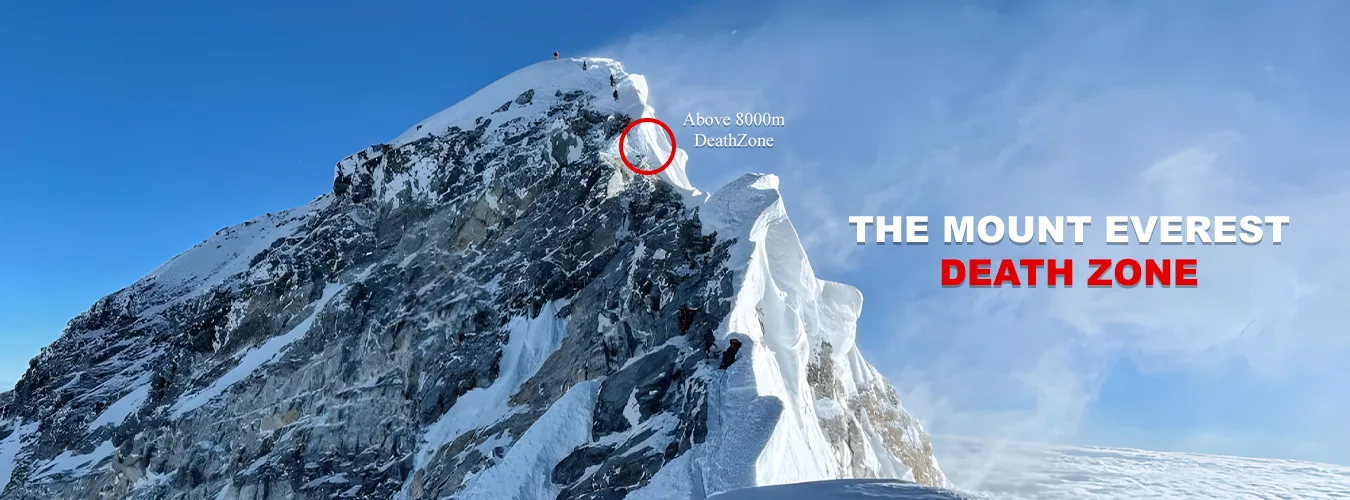
The Mount Everest Death Zone
- Information
- By Shrijan budhathoki
The Mount Everest Death Zone is an area on Mount Everest that is at very high elevation, located above 8,000 meters of the world’s tallest mountain above sea level. The oxygen level may be the same as sea level, but only 5% of oxygen is breathable due to atmospheric pressure.
The lack of oxygen at this height makes it impossible for the climbers. The most difficult part of your journey can give a hard time to even experienced climbers. You will have a hard time breathing when you reach the Mount Everest death zone. The physically very good shape climbers will also need assistance, or they will only survive for a short amount of time or die from lack of oxygen.
High mountains are full of death zones due to their altitude and harsh atmosphere. Before you start climbing any summit, it’s important to get the proper knowledge on the Mount Everest death zone. The cells of the human body will start to collapse due to low oxygen and the harsh atmosphere. The challenges can make even the elite climber fail their expedition.
The strong winds, freezing cold weather, and snowfall make high-altitude environments the most dangerous for climbers. Compare it to the low altitude, where you can rest and gather the energy for the day but will not have that option available during high altitude. They believe the more time you spend recovering, the weaker you become. The slight mistakes can lead you to fatal injuries or even risk killing you in the death zone.
Understanding the Mount Everest Death Zone Height
The death zone of Mount Everest is an area above an elevation of 8000 meters, which is the largest amount of vertical rise and the most difficult part to navigate for the climbers. Everest has a reputation for being the least vertical area and also one of the most dangerous places compared to the other mountains.
At the height of 8000 meters, the atmospheric pressure is around one-third of sea level. This is the reason behind the lower quantity of oxygen. Less oxygen means your body has to adjust and survive accordingly. The amount of oxygen is around 21% of the total volume of the atmosphere. But you will notice that low atmospheric pressure at 8000 meters causes the amount of oxygen delivered into our lungs to be less compared to lower elevations.
The death zone does not contain any signs or warning boards for climbers to know that they have entered the most difficult part of their journey. The climbers will start to notice after reaching 7800 meters. You will start to feel the temperature dropping quickly, and the harsh weather with low oxygen levels provides the signs that they are close to entering the death zone. As the climbers reach that height, their bodies will start to crave more oxygen and have difficulty breathing.
The science behind the Mount Everest death zone
Weather and the trails aren’t the only problems at high altitude. The human body needs oxygen for respiration and to trigger the process of converting nutrients into energy. The low atmospheric pressure decreases the breathable oxygen level. The climbers cannot get enough oxygen to maintain the proper function of the body.
The low supply of oxygen increases the heart rate, and breathing becomes rapid and labored. The flow of blood will be slower and can break you mentally and physically.
The lower levels of atmospheric pressure make it nearly impossible for humans to survive for long periods at higher altitudes. The atmospheric pressure is the primary threat in the Mount Everest death zone. You will notice the low level of oxygen, which is caused by the difference in atmospheric pressure between sea level and above sea level.
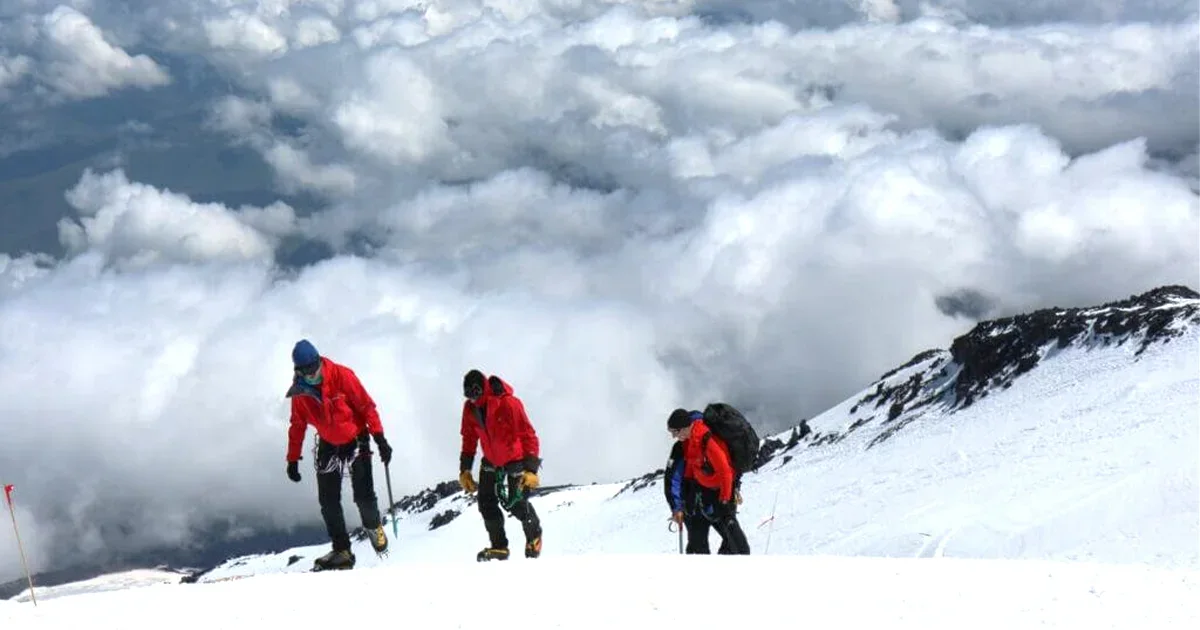
Extreme Temperature in Everest Death Zone
Due to the atmospheric pressure, the human body will suffer from hypoxia. A condition where the body tissues do not get enough oxygen. It is caused by poor blood flow and low oxygen levels in tissues. You will notice symptoms like hallucination, fatigue, and dizziness that can even lead to permanent organ damage.
I. Atmospheric Pressure
The atmospheric pressure at sea level is suitable for the human body to absorb oxygen into the bloodstream, and that helps all the organs to function properly. At sea level, the atmospheric air is filled with 21% of breathable oxygen.
But in Mount Everest’s death zone, the atmospheric pressure is roughly around 33% compared to sea level. And only 7% of oxygen is breathable. The significant drop in oxygen and atmospheric pressure is not sufficient for the climbers at high altitude. The low amount of oxygen makes the bloodstream poor, and the body gets exhausted faster.
II. Breathable Oxygen
In the death zone, the amount of breathable oxygen drops significantly because of lower atmospheric pressure compared to sea level. As you know, the air contains around 21% of oxygen at lower altitudes. But when you reach the death zone, only around 33% of 21% oxygen is breathable. The lack of oxygen can cause many organs to be damaged or fail to function. It will lead your brain to create hallucinations and lead you to unconsciousness, which is very dangerous at higher altitudes.
III. Human Body
The human body is built with tissues and many organs that help it to function properly. Every part of the body needs the help of tissues and organs to work properly. The body cannot perform at its fullest in higher altitudes, and it was never designed in a way to survive the harsh conditions of high elevations.
In the Mount Everest death zone of Everest, our bodies will not receive enough oxygen, which weakens our muscles and can even lead to permanent damage to organs or parts of the body. The lack of oxygen weakens our immune systedeathm and digestive system.
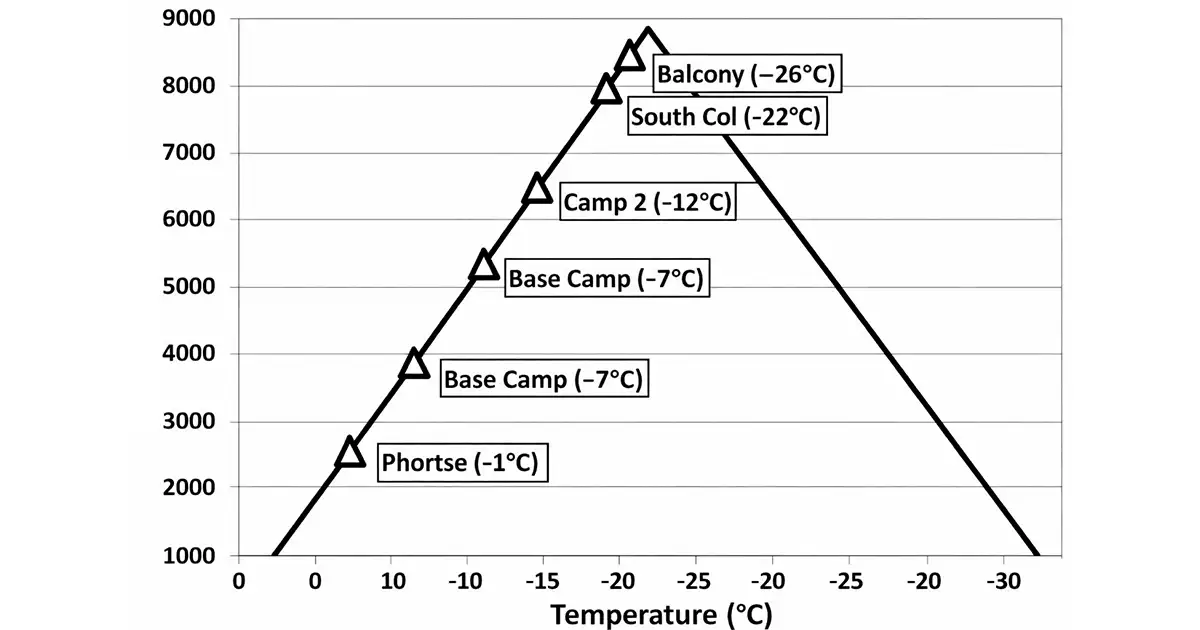
Mount Everest Death Zone Temperature Chart
Mount Everest’s Death Zone is known for its intense weather, trails covered in snow, and cold winds. Climbers are constantly in contact with cold weather and can develop frostbite rapidly, even when completely covered with warm clothes. It is also a challenge for climbers to travel quickly under these extreme conditions. The temperature is constantly dropping, causing physical exhaustion, and they are exposed to a higher risk of altitude and low oxygen levels. The unpredictable weather patterns make the ascent and descent very difficult.
Mount Everest is the highest peak that brings excitement and the ultimate challenge for climbers. A silent giant touching clouds, grabbing the attention of adventure seekers. People were afraid of its height and difficulty. But with the help of advanced equipment such as GPS, satellite phones, and the use of oxygen, there are now hundreds of climbers attempting to conquer the summit.
Frostbite is the constant threat in the death zone. The very nature of the extreme cold, decreased blood flow, and physical exhaustion creates ideal conditions for frostbite. The low oxygen level and altitude sickness can damage your internal organs. They say a large number of climbers pay a heavy price after their journey.
Physical Exhaustion
Climbers, when they reach the death zone, will start to notice physical exhaustion due to a lack of oxygen and harsh temperatures. Climbers will start getting physically exhausted through dehydration, starvation, and low oxygen. As climbing continues, the trekkers will lose the ability to concentrate, which may lead them to bad decision-making. The greatest number of deaths occur in the Mount Everest death zone because climbers make harsh decisions and are bad at reacting to danger quickly enough.
Altitude Sickness
Altitude sickness is the most common problem in your expedition. The primary reason is that climbers in the death zone are above 8000 meters, and the absence of oxygen makes it more dangerous. Climbers start to notice different symptoms like fatigue, dizziness, headaches, and difficulty in breathing, which are the most common signs of altitude sickness. If left untreated, it can cause the climber’s death. If a climber has gone through this stage, their body will not function properly in the Mount Everest death zone due to low oxygen levels.
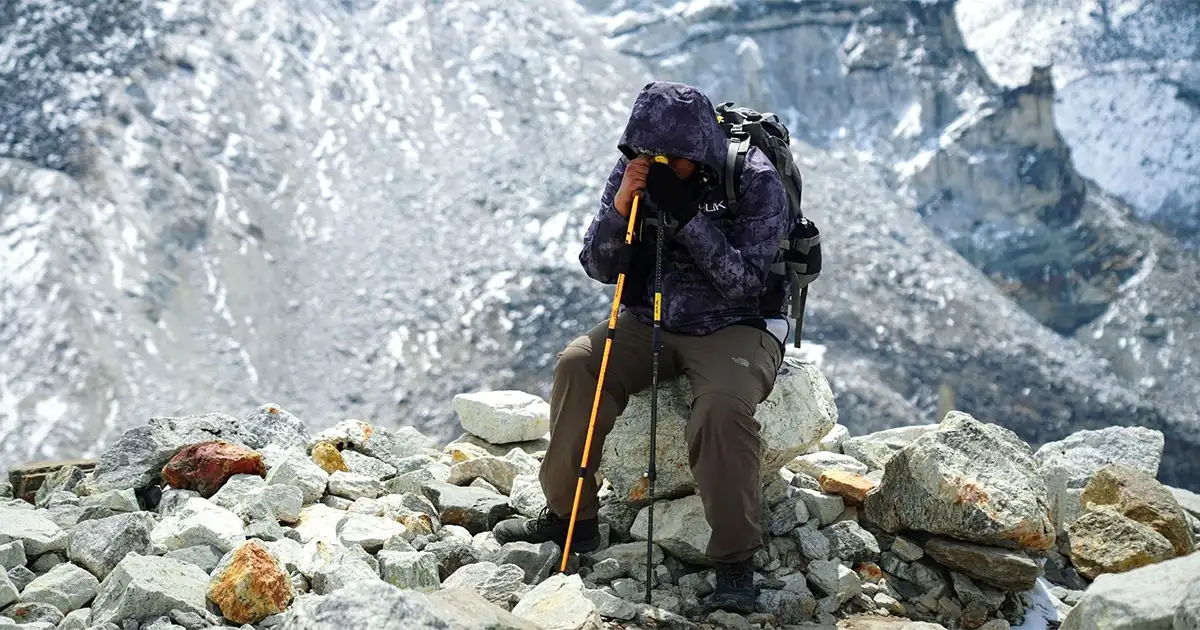
Altitude Sickness during high altitude treks.
Extreme Weather
The extreme weather conditions will show you the real threat of the death zone. Climbers are constantly exposed to extreme freezing temperatures, which triggers the frostbite rapidly. Due to harsh weather, altitude sickness is a common thing for climbers, and as they reach the death zone, the oxygen level in the air will decrease unexpectedly.
Limited Rescue Options
The limited rescue options make this area very risky. You will have the option of helicopters, as they can operate successfully at this altitude. But the lack of safe access points will make evacuating the climbers very difficult. Climbers in this situation will usually remain in the same position for a long amount of time before help arrives. A lot of climbers who die in the death zone remain in the place for days because lowering them safely is simply too dangerous.
Mount Everest Death Zone Bodies
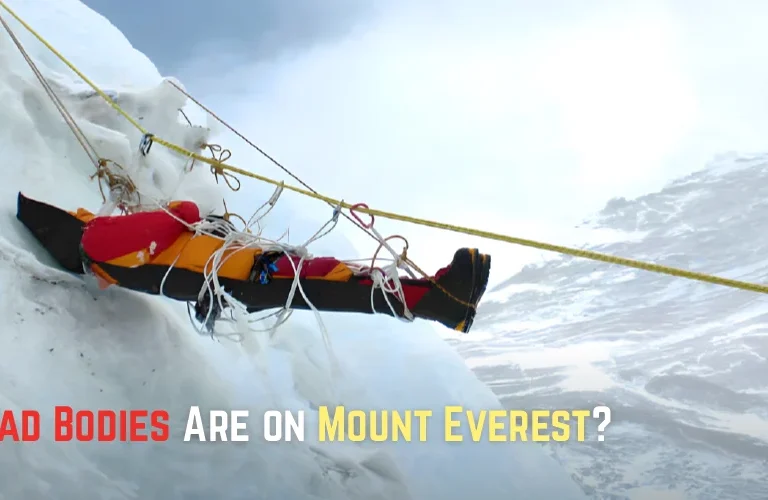
The death zone on Mount Everest is covered in bodies. They say more than 300 climbers have lost their lives while attempting to conquer the summit of Everest. The presence of dead bodies frozen in place at high elevation is the most disturbing part of climbing Everest.
The expedition started in the 1920s, and roughly 200 bodies are still there today, as recovering them is risky and nearly impossible. Most of the bodies are still buried deep inside the snow of the Mount Everest death zone.
The bodies of climbers who have lost their lives on the way to conquer the summit represent a serious warning for attempting climbers. Many people have lost their lives, and their bodies are still buried there. Some bodies are so famous that they have given a nickname like “Green Boots.”
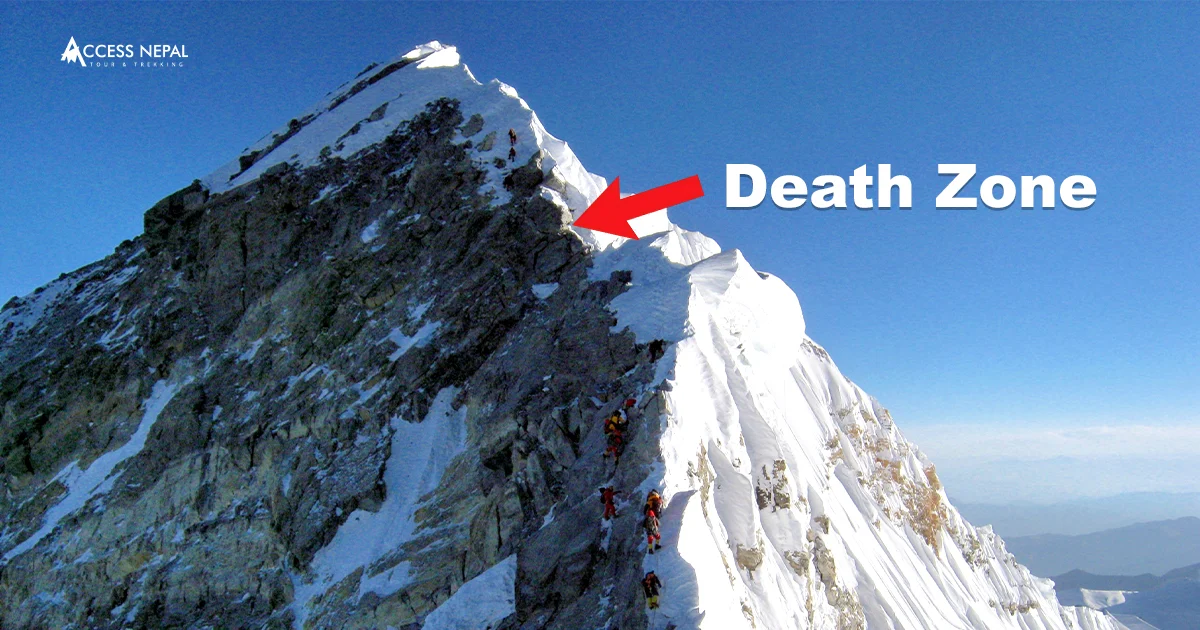
Mount Everest Death Zone
The Indian climber named Tsewang Paljor died in 1996, and his body was recovered after many years from a small cave on the northeast ridge. He was wearing bright green boots that were visible to all the climbers passing from that area, and a reminder of the danger of the mountain.
Every climber trying to reach the top of Everest must have heard the story of “Everest Sleeping Beauty,” a nickname given to an American climber named Francys Arsentiev. Francys Arsentiev and her spouse, Sergei Arsentiev, also died while attempting to save her life.
Her body was found in 1998 after falling from the summit due to altitude sickness and slowly freezing to death. Her body was frozen, and it looked like she had fallen asleep, so people started to call her “Sleeping Beauty.”
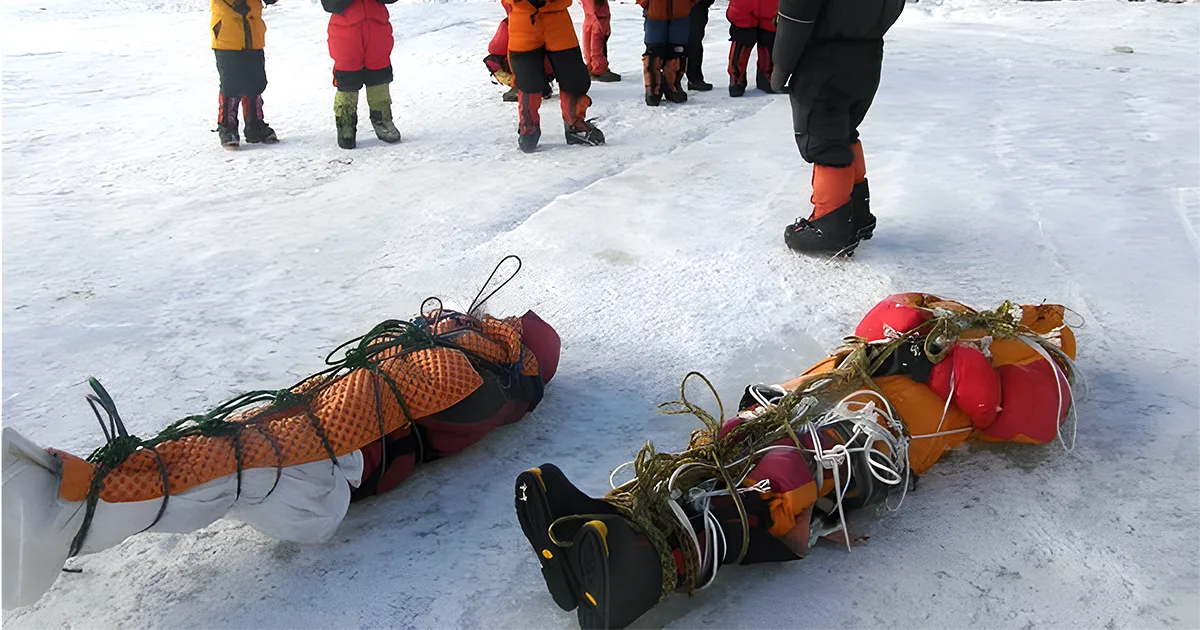
Mount Everest Death Bodies
The list of things that commonly happen in the Mount Everest death zone:
I. Hypoxia: When you reach or start the climb above 8000 meters, the oxygen level will start to decrease as the atmospheric pressure also decreases. You will encounter less than a third of the amount of oxygen available at sea level. This affects the functions of organs, and your body can perform at its full potential. Climbers will feel fatigue, dizziness, and even hallucinate, which are the symptoms of hypoxia. The most dangerous condition that climbers can face while in the Mount Everest death zone is.
II. Physical tolerance: Human bodies are not made to survive at high altitude. The human body needs a continuous supply of oxygen to pump the blood, and when muscles do not get enough supply of oxygen, you will start to feel the high consumption of energy with every step. Your body will start to get exhausted even while you are resting, and walking and climbing will become slow and painful.
III. Organ damage: When the human body does not get enough supply of oxygen, the organs cannot function properly. There are sensitive organs like the heart, brain, and kidney; they start to fail in their function, and if it continues for a long period of time, it can damage them permanently.
IV. Frostbite: When your body is exposed to cold temperatures, it can damage the nerves of your body. The coldness will start to freeze your body parts and stop the supply of blood, which can lead to permanent damage of body parts.
Mount Everest Death Zone Factors
There are many factors that combine to create the Mount Everest death zone. A place full of challenges and dangerous climbing. Most of the climbers lose their lives and are buried in the depths of snow. The weather and the atmosphere make the entire place full of obstacles. Below you will find the most common factors that make the area dangerous and can be named as a death zone.
I. Oxygen Deprivation:
Everest stands tall, more than 8,000 meters above sea level, and the amount of breathable oxygen is lower compared to sea level. The atmospheric pressure plays a significant role in oxygen levels. If you breathe at this level, you can only receive 33% of the oxygen that is found at sea level. The human body is not made to survive in higher altitudes, so your body will start to fall apart as you spend more time in the Mount Everest death zone.
II. Cellular Death:
There are organs like the heart, lungs, and kidneys that depend on oxygen to function properly. If there is a lack of oxygen, human cells will begin dying. The damaged tissues are unable to regenerate or heal faster. Lack of oxygen will affect the heart, and the flow of blood will be lower in the brain, which can make climbers experience hallucinations and confusion. If it stays the same for a long period of time, it can cause permanent damage to tissues.
III. High Altitude Cerebral Edema (HACE):
HACE is a condition that occurs at high altitude due to its characteristics. When you are exposed to high-altitude weather, a lack of oxygen builds up fluid inside the brain and causes intense pain. You will start to notice unavoidable headaches and an inability to balance properly, which can lead to accidents. If it is not treated in time, climbers can go into a coma or even die. It occurs due to the high physical demand and fatigue climbers experience at higher altitudes.
IV. High Altitude Pulmonary Edema (HAPE):
HAPE happens when there is an abnormal buildup of fluid blocking the lungs and preventing oxygen from getting into the bloodstream. The pain in the chest and difficulty in breathing are the main symptoms of HAPE. HAPE is similar to HACE. If not treated in time, climbers can lose their lives or permanently damage their organs.
V. Additional Oxygen:
As you start climbing above 8,000 meters, the low oxygen can be the most difficult part for climbers. Most of the climbers rely on bottled oxygen after entering the Mount Everest death zone. But this is not fully effective because there is a high probability that you can damage your oxygen bottle or it will not function properly. Climbers running out of oxygen or malfunctioning and getting damaged is normal. Each bottle is heavy, and climbers have to carry more weight, which will cost them more energy.
VI. The Point of No Return:
There is no official time, but if climbers are not able to reach the summit of Everest before 2:00 PM, they have to pause their journey and return safely to Camp 4 before nightfall. But some of the climbers have spent months of preparation and thousands of dollars, so they ignore the guide’s warning about turnaround time and keep pushing themselves, resulting in death.
Mount Everest Death Zone Map
The Mount Everest death zone starts at 7900 meters, where climbers will face harsh weather and a lack of oxygen. According to the experienced guides, there are two main routes that climbers can use to conquer the summit of Everest. The first route is from Nepal, the South Col Route, which was first used by Sir Edmund Hillary and Tenzing Norgay in 1953. This route begins from Camp 4, located on a windy plateau between Mt. Everest and Mt. Lhotse.
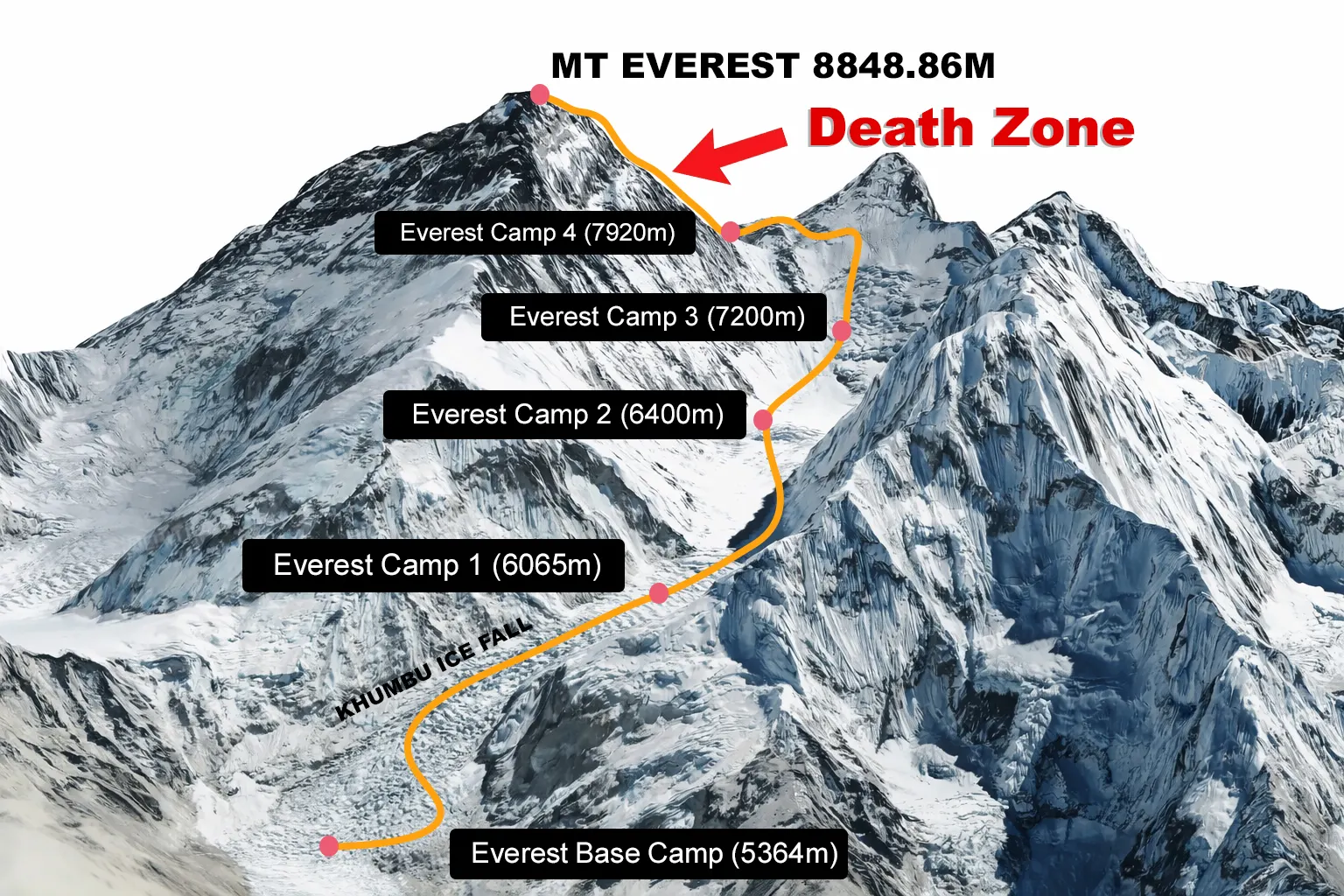
Mount Everest Death Zone Map
Climbers travel up the South Ridge of Mount Everest, and they will continue the climb following the trails filled with snow and rocks. The trail is inclined, which makes it difficult for climbers. They will keep traveling the incline trails until they reach the south summit at 8749 meters above sea level. The climbers will cross the altered Hillary Step, which went through changes due to the 2015 earthquake, and reach the top of the mountain at a height of 8,849 meters.
Another popular route followed by the climbers starts from the North Col, located in Tibet. This route was first used by the British for expeditions to Mount Everest in the 1920s. Camp 6 on the North Col is located at 8,230 meters above sea level. This route requires more experienced climbers, as the route is divided into first, second, and third steps.
On the first step, you will require technical rock climbing skills. The second step starts from 8,610 meters, where the climbers have to climb a vertical rock section equipped with a fixed ladder. This is the most difficult and the most dangerous part of the journey. Most of the climbers injured themselves, and it is a location where the most life-threatening accidents take place. After completing those two steps, you will ascend to the top of the summit and achieve victory.
So, from this blog, we can say that the Mount Everest death zone of Mount Everest challenges the endurance of the human body and pushes it to the limit. A place where even a simple mistake can cost you your life and a permanent injury. Every year, the death zone continues to take the lives of climbers. The adventure seekers are always attracted to the challenges and the breathtaking journeys. But the excitement can lead you to mistakes, so it is important to listen to the guide’s commands and move accordingly if you want to survive the harshness of the death zone.
FAQ Mount Everest Death Zone
1. How long can you stay in the death zone on Everest?
The death zone has a low oxygen level and freezing temperature. The human body cannot survive in high-altitude places because it needs a continuous supply of fresh oxygen to function properly. So, according to the experts, you can stay up to 45 hours in the death zone. If you stay more than 45 hours, it can lead to death or permanent damage to organs.
2. Why is Mount Everest called the death zone?
Mount Everest is called the death zone because many climbers have lost their lives while trying to climb over 8,000 meters. According to the data, more than 300 climbers have lost their lives, and most of the bodies have not been recovered. They say they are still buried deep inside the snow of the mountain. So Mount Everest is called the death zone.
3. What is the death zone on Everest?
The human body cannot survive at higher altitudes, and the death zone of Everest lies above 8,000 meters. At that height, the level of oxygen is low, and the weather is unpredictable. The cold temperature makes you suffer from frostbite, and many climbers have lost their lives. Over 300 climbers have lost their lives. So the place where you will face the most casualties and push to the limit is known as the death zone on Everest.
Awards and Achievements
Access Nepal Tour and Treks has been recognized with TripAdvisor’s prestigious Travelers’ Choice Award for multiple consecutive years, reflecting our unwavering commitment to quality and clients’ satisfaction.











Leave Your Comment