

Larkya La Pass
- Places
- By Sanchita Pokharel
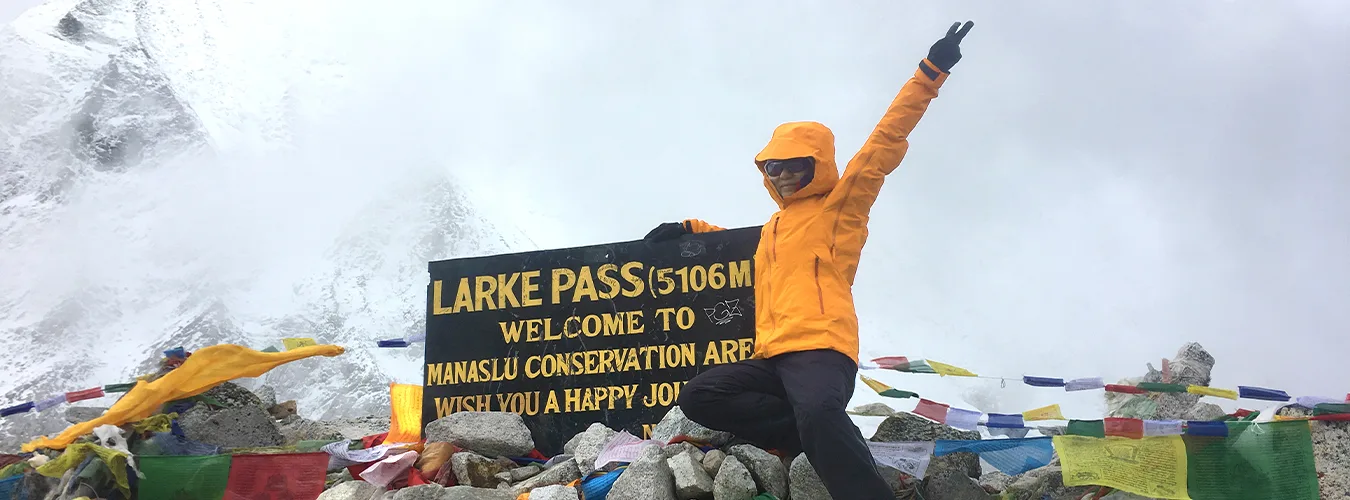
Larkya La Pass is a high-altitude mountain pass located in the Gorkha District of Nepal. Its height is 5,106 m / 16,752 ft, and it falls along the classic Manaslu Circuit Trek route. This pass is a popular destination among adventure travelers because it also takes travelers to Mt. Manaslu (8,163 m), the eighth-highest peak on Earth.
The Larkya La Trekking isn’t for soft hearts; filled with beautiful valleys and scenery, it takes you to the top of the high pass. The Larkya La Pass route passes along the two river valleys named Budhi Gandaki (Manaslu side) and Marsyangdi (Annapurna side). The main highlight is 360° panoramic views of Himlung Himal, Cheo Himal, Kang Guru, and Annapurna II.
The route of Larkey La brings trekkers closest to one of the most scenic views of the Himalayas. If you love trekking, thrills, nature, views, and mountains, you won’t be disappointed saying yes.
Larkya La Pass from Kathmandu Distance
Most of the standard itinerary of Larkya La starts from Kathmandu (1,440 m/4,724 ft). To reach this pass from Kathmandu, you have to take a jeep or bus to Machha Khola (869 m/2,851 ft), the trailhead of the Manaslu Circuit. Distance from Kathmandu to here is long road trip. But it is manageable and fairly relaxing. The total driving time is about 9 to 10 hours, covering 157 km of distance. Traveling along the winding road of the mountain through villages is quite good. Leaving cities behind, the route drops into river valleys. From Arughat, the drive gets quite bumpy and dusty due to the rough road.
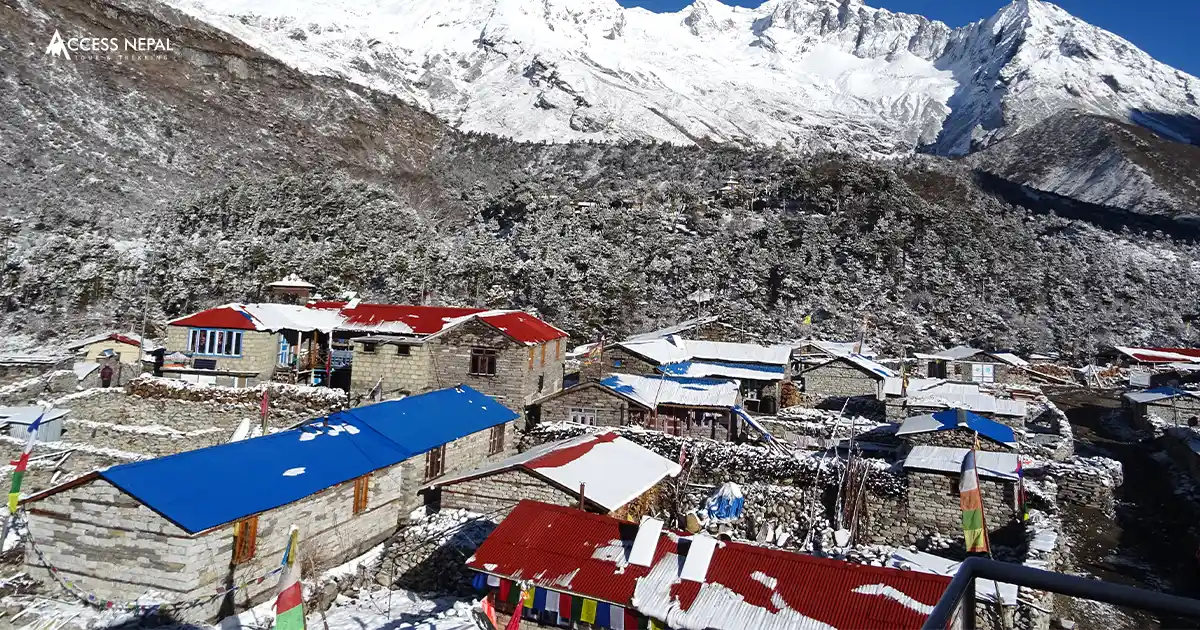
From Machha Khola, the Larkya La Pass trek officially begins. Following the Budhi Gandaki River northward through a deep gorge, trekkers arrive at Jagat (1,340 m/4,396 ft). Along the way, you will pass by mango orchards and bamboo groves.
After resting for a night at Jagat, the trek continues toward Dyang (1,860 m/6,102 ft), followed by villages like Namrung (2,630 m/8,628 ft) and Shyala (3,500 m/11,482 ft), where we will spend each night.
From Shyala, the route climbs towards Samagaun village (3,520 m/11,548 ft). We rest for two days here as an acclimatization process. This rest stop is key to preventing altitude sickness before jumping to a high altitude. As an acclimatization hike, you can walk up to nearby Birendra Lake or Manaslu Base Camp.
The journey to pass continues moving forward. So we start off early the following day to another mountain village called Samdo (3,875 m/12,713 ft). The Larkya La Pass route heads towards Larkya La Phedi (4,460 m/14,632 ft). At this point, we have almost reached our main destination.
Now comes the major day of the Larkya La Pass itinerary. We wake up before dawn (before 4 am) and climb upward to cross Larkya La Pass (5,160 m/16,929 ft). Climbing over the steep switchbacks across snow and ice, we arrive at the summit of Larkya La. The golden sunrise over the peaks and the 360-degree panorama welcome you. Breathing in the crisp mountain air and enjoying the views, we descend toward Bimthang (3,590 m/11,778 ft). Overnight stay in Bimthang village after a great feat.
Tomorrow morning, our return journey starts with a hike to Tilije Village (2,300 m/7,545 ft), followed by a drive to Besisahar (760 m/2,493 ft) and then Kathmandu. This is the standard route and itinerary of the Larkya La High Pass Trek in Nepal.
Larkya Pass Route
The Larkya La Trek covers about 157 km (97 miles). It’s a 14-day trek with safe altitude gain and an acclimatization process. The Larke Pass route shows you diverse landscapes and terrains. The trek officially starts from the Machha Khola to the Larkya Pass summit and comes down to Besisahar.
The trek to Larkya La Pass is a gem of the Annapurna region. The standard trekking route of Laryka La is given below:
- Starting Point: Kathmandu → Machha Khola (by jeep/bus; 9-10 hours, 157 km)
- Starting Point of the Trek: Machha Khola → Jagat → Dyang → Namrung → Shyala → Samagaon → Samdo
- High Camps: Samdo (3,860 m) → Larkya La Phedi → Larkya La Pass
- Return: Bhimthang → Tilije Village → Besisahar → Kathmandu
Larkya La Pass is a moderate to challenging trek. On average, trekkers have to walk around 6 km to 25 km. The highest point of this trek is the pass itself. Altitude gain is gradual, so it is a manageable adventure. Trekkers with good physical fitness and stamina can complete this expedition safely.
How is the Larkya La Pass Weather & Temperatures?
Larkya La Pass is located high in the Himalayas. Therefore, the weather temperatures here are harshly cold, especially in winter. Still, they vary depending on which season you are visiting.
Autumn (September-November) Weather and Temperature
Autumn is the ideal season for trekking to Larkya La. The weather in this season is warm days and clear views. The favorable temperature and weather make it a popular trekking season. Autumn comes right after the monsoon rains (July-August) in Nepal. It clears out all the dust particles and has less humidity.
Daytime temperature on High Pass is around 0-8°C, and at night it drops below the freezing point. Though the days are warmer, the winds in the Himalayas are chilly. Therefore, still bring warm layers of winter clothing.
Spring (March-May)
Spring is another good window to offer favorable weather and temperature. The temperature at Pass goes up to 8°C during the day. At night, it drops below the freezing point, 0°C.
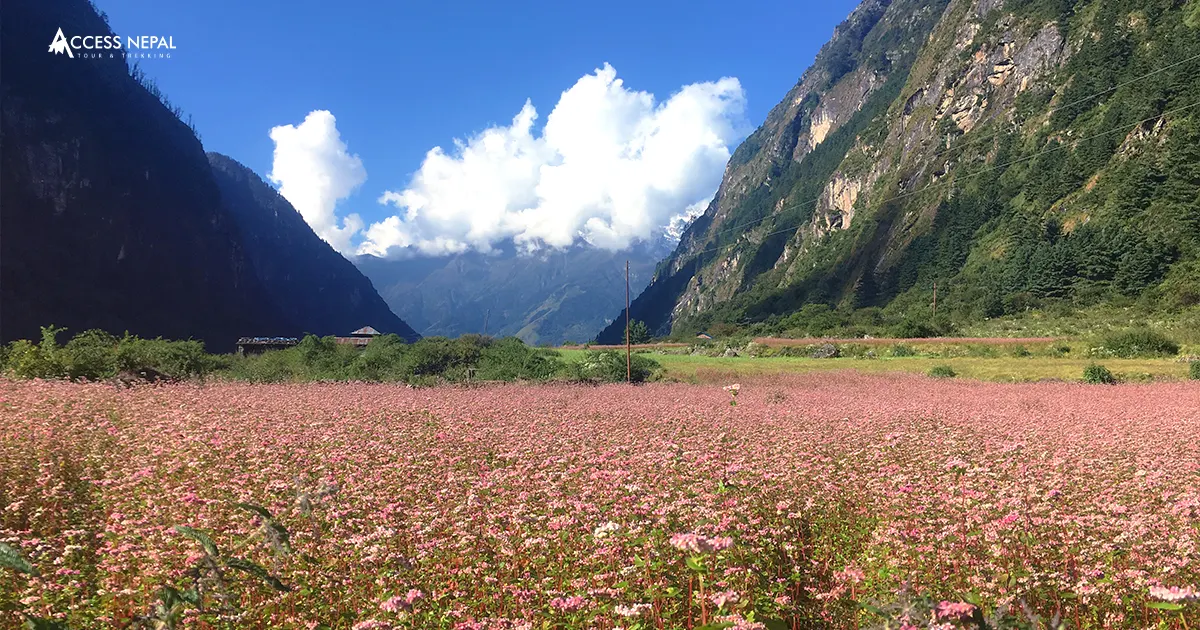
Similarly, the weather is also great in spring. The whole valley and forests bloom in colorful rhododendron flowers, and grassy meadows get dotted with wildflowers. Days are long in spring, perfect for a trek.
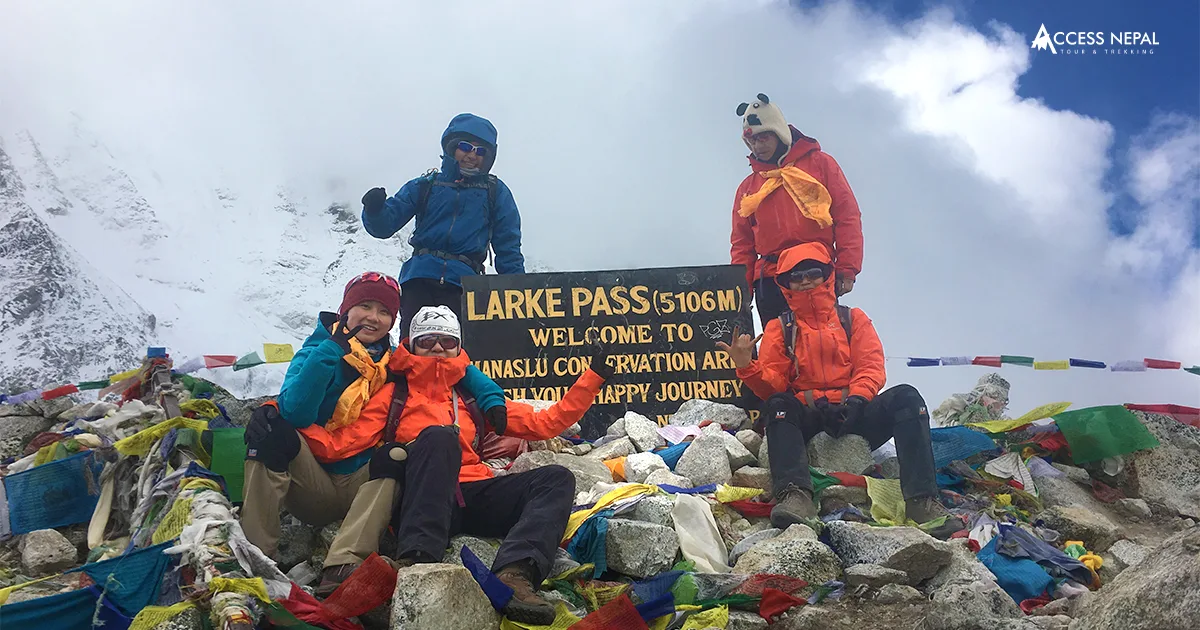
Even in spring at high elevation, you will still see snow. Therefore, carry crampons for safety, especially while crossing the high pass.
Winter (December-February)
Winter turns the whole Dolpo region into a beautiful frozen world. However, it comes with risks and challenges. It’s quite difficult to do the Larkya La Pass in winter. Temperatures at high passes in winter drop to -15°C. Due to heavy snowfalls and risks of avalanches, passes get closed in winter.
The heavy snow along the trail and the bitter cold weather make trekking difficult. It is best to avoid trekking during December and February. It is recommended for experienced trekkers and mountaineers only.
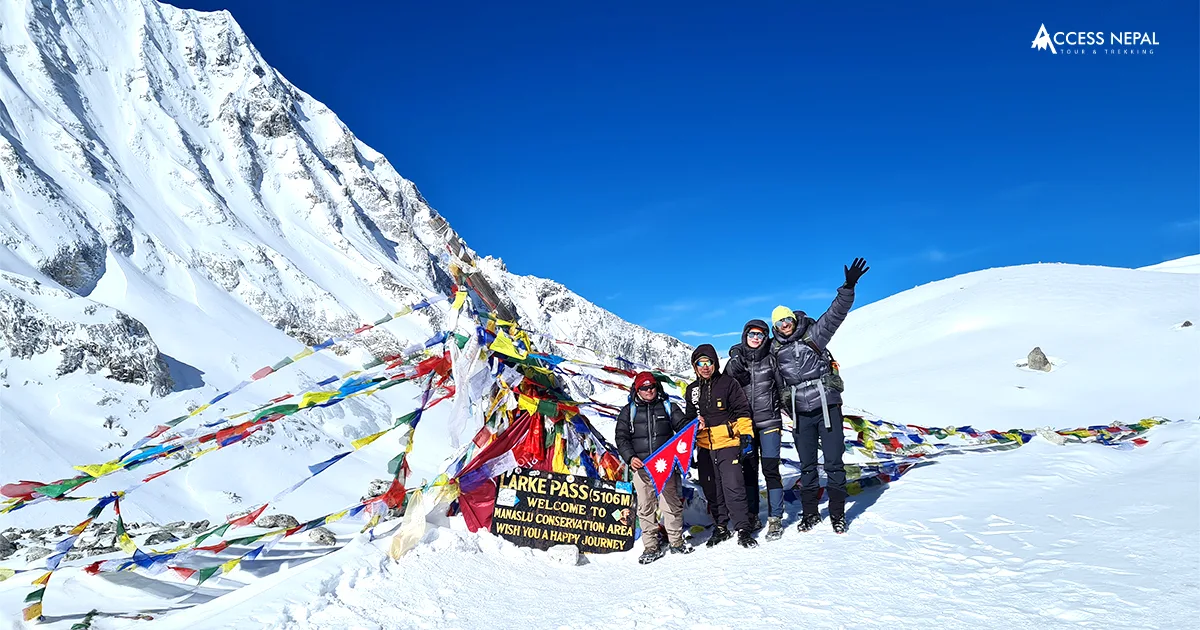
Summer/Monsoon (June-August)
Summer is really hot in the lower regions but warm at high altitudes. But summer coincides with the monsoon in Nepal. The lower region experiences heavy rainfall and slippery trails. Though the Dolpo region is located in the rainshadow, there won’t be rainfall.
To visit during the summer, we advise you to talk with the agency and prepare accordingly. Check the weather and temperature conditions before booking.
When is the Best Time to Trek Larkya La Pass?
The best time to visit Larkya La Pass is spring (March-May) and autumn (September-November). These seasons are the peak season for trekking in Nepal. It offers the best temperature and weather conditions for trekking.
- Autumn (September-November): It’s a peak season to visit Larkya La Pass. Autumn offers clear skies, great visibility, and mild temperatures. The trail gets dry with hints of greenery. Most of all, it also falls around the major festivals of Nepal, Dashain and Tihar. It’s a great opportunity to learn about new cultures and traditions.
- Spring (March-May): Spring is also the best season for trekking to the Lakya La Pass. The trail blooms in a colorful array of rhododendrons and wildflowers. The weather gets warm, and the temperature will be moderate. Though trails near High Pass can be muddy in April due to melting snow.
- Winter (December-February): It is a beautiful season with fewer crowds, but it is risky. Highpass trails get blocked with deep snow, and the temperature drops to below -20°C. The harsh cold makes the journey of trekking dangerous and difficult. Only well-trained, experienced trekkers can do this trek in winter.
- Monsoon (June-August): It is not recommended to cross the Larkya La Pass. Monsoon brings heavy rain, leeches, and landslides at lower elevations, though high altitudes won’t experience it. Visibility is also poor in the monsoon.
The best timing to cross Larkya Pass is early morning in spring and autumn. It is safe to reach the summit as the snow will be still firmer. Afternoon is difficult due to heavy winds. Wear layers of winter clothes even in summer treks. At 5,000 m altitude, temperature and weather are always cold.
Highlights of Larkya La Pass
Larkya La Pass is truly a paradise rich in nature and culture. Isolated far away from the populated places, it sits alone. Located in the Dolpo region, it is also called the hidden gem of Nepal. It is a must-visit place once in a lifetime for travel lovers. Some of the major highlights of this adventure are the following:
- Panoramic Himalayan Views: From the summit of Larkya La Pass, it offers sweeping views of snow-capped ridges. You can see Himlung Himal (7,126 m), Larke Peak (6,182 m), Kang Guru (6,981 m), and Annapurna II (7,937 m). Watching the sunrise from here is the most beautiful and memorable experience.
- Tibetan Buddhist Culture: The Manaslu region is heavily influenced by Tibetan culture. The time along the trail never feels boring. Mani walls, prayer flags, chortens, and monasteries dotted over the route are culturally enriching. The Larkya La Pass itinerary also includes stops at a few respected monasteries like the Pemacheling Gompa in Namrung and the ancient gompas at Lho.
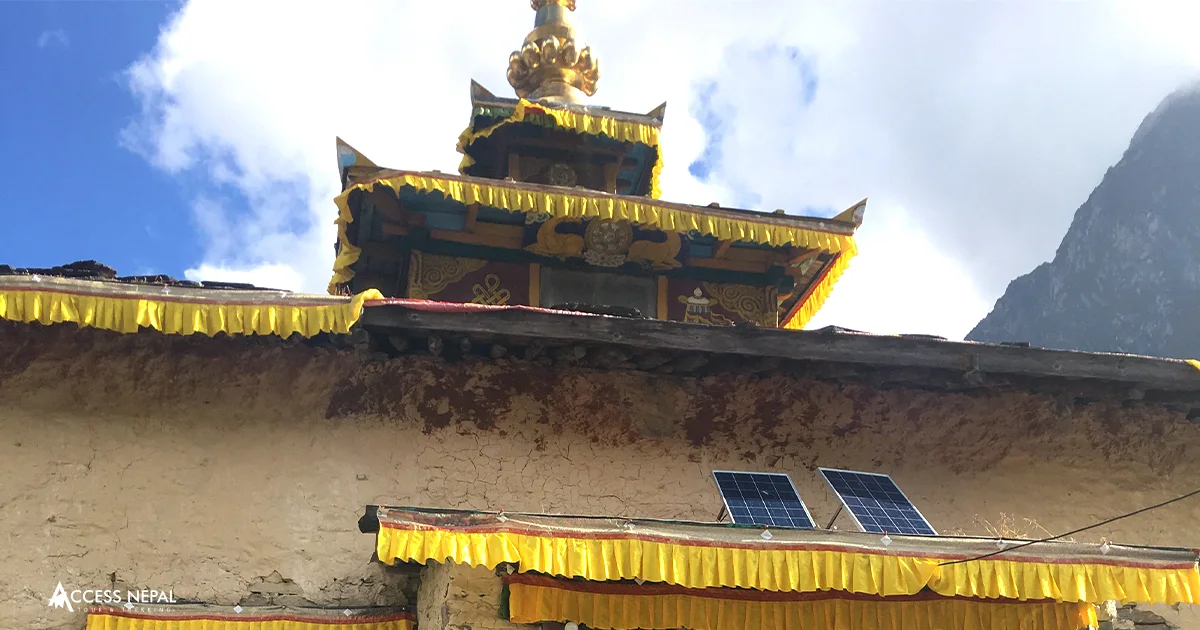
- Remote Villages: Adventure of Larkya La shows you the authentic Himalayan life. Spending a night at these traditional Tibetan villages like Lho, Samagaon, and Samdo gives you a new experience. Human settlements in this region are few. Every place shows you culture, religion, and tradition that people have been following for many centuries. It offers a great opportunity to learn about people living in Dolpo.
- Diverse Landscapes: The best part of the Larkya La adventure is the diversity in landscapes. From the starting point to the ending point, trekkers will be greeted with different views and surroundings. At lower elevations, landscapes are greener, and the route follows the pine and rhododendron forests, alongside roaring glacial rivers. As you climb higher, the surroundings change gradually, especially from Samdo village. The route opens to broad glacial valleys and Birendra Lake (fed by Manaslu Glacier) below. Continuing hiking leads us to the high desert, sparse grass, juniper, and boulders. The surroundings get wider and drier under clear blue skies. It feels like you have arrived in Tibet.
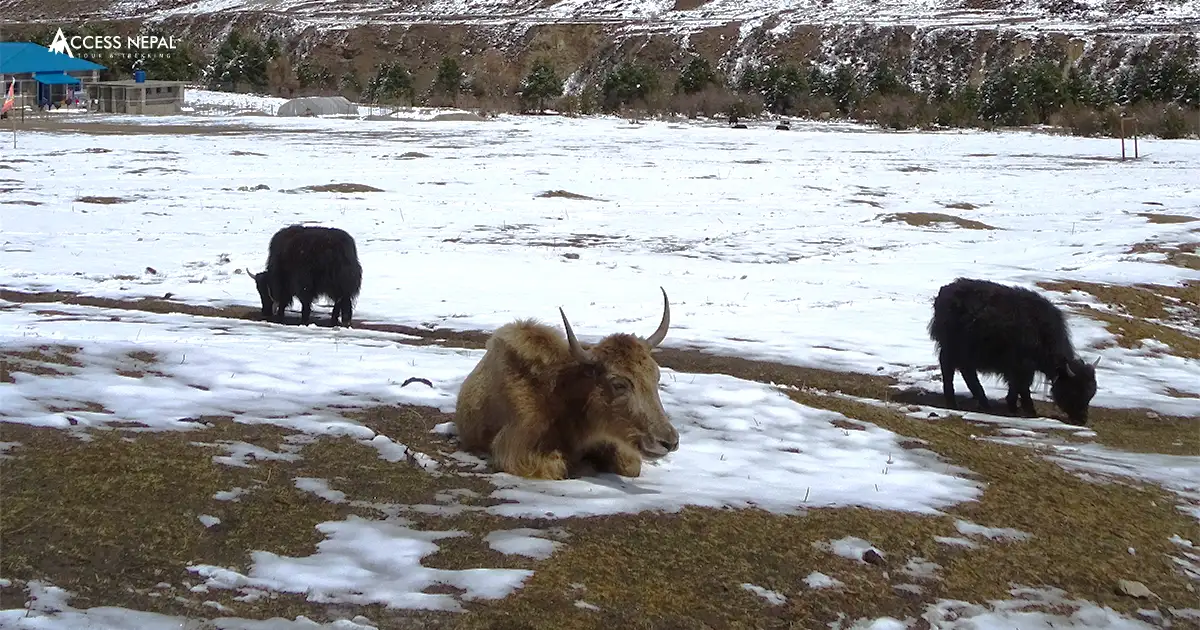
- Wildlife: The Manaslu Conservation Area is home to hundreds of wild animals and plants. It is home to many rare animals like snow leopards, red pandas, Himalayan musk deer, and Asian black bears. Along the way, trekkers can see Himalayan monal, blue sheep, blood pheasant, Tibetan snowcock, snow partridge, etc.
- Rich Flora: The whole region burst into pink and white blossoms of rhododendrons and wildflowers.
What is the Larkya La Pass Difficulty Level?
The difficulty level of Larkya La Pass is moderate to challenging. Since it’s a high-altitude pass, it is different from simple trekking in forests. This pass is the hardest section of this adventure. This adventure is not recommended for first-time trekkers. It requires some experience and great physical stamina.
During the Larkey Pass, trekkers have to walk for 7 to 8 hours per day. Not only physically, but you have to be mentally prepared as well. Hiking on rough terrains, which are narrow, rough, and steep, is not easy. The first few days of the Larke La itinerary make trekkers walk 17-18 km uphill.
Rugged trails add another challenge. The Larkey La Pass route takes trekkers into a remote region. Trails are not well-paved and make trekkers walk over the loose rock, boulder fields, narrow river paths, and a few landslide sections. Along the way, trekkers also have to cross suspension bridges and do steep descents. These activities make the journey physically demanding.
Similarly, Larkya Pass itself is located in a glaciated area in parts. Therefore, we just trek to physically train their bodies 2 or 3 months prior. Larkey Pass trek can be successfully done with good preperation and training.
- Larkey Pass Distance: The Manaslu Circuit with Larkey La trek distance is 177 km in total. The itinerary starts with a drive to Machha Khola from Kathmandu, covering a 160 km distance. From here on, it will be a hike of only about 15-20 km every day. Though long, the daily distance is manageable.
- Elevation Gain: Our Larkya La Pass itinerary follows safe altitude gain to prevent altitude sickness and physical exhaustion. Starting from 1,400 m, we reach 5,106 m. The highest point of this adventure is 5,106 m at the pass. Daily, our altitude increases by about +600-700 m. It also includes an acclimatization day, and we follow the “Climb High, Sleep Low” rule for safety.
- Duration: There is a Larke Pass itinerary of 7 days, but it is not recommended for safety reasons. The shorter the trek, the harder it gets. A 14-day itinerary is the standard route to follow.
Always follow the guide’s instructions, wear warm layers of clothes, walk slowly, do not leave the group, and listen to your body. Come with great mental and physical preparation.
What are the Larkya La Pass Permits?
The Larkey La Pass trek permits are Manaslu Restricted Area Permit, Manaslu Conservation Area Permit, and Annapurna Conservation Area Permit. This adventure takes trekkers to a restricted region of Nepal. Therefore, permits are mandatory to trek here. Permits required to do the Larkey Pass are given below:
- Manaslu Restricted Area Permit (RAP): The cost of this permit varies by season. If you visit in peak season, September to November, it costs $100 USD per person. If the 7 days are exceeded, you have to pay an additional $15 USD per person for each day. Likewise, from December to August, it costs $75 USD per person only, and you have to add $10 USD per person for each day.
- Manaslu Conservation Area Permit (MCAP): It costs around $20 to $30 USD per person.
- Annapurna Conservation Area Permit (ACAP): Its fee is $20 to $30 USD per person.
In conclusion, the adventure of Larkye Pass is enjoyable and thrilling. If you want to experience the test of authentic Himalayan beauty and culture of Nepal, book the Manaslu Circuit Trek package now and cross this classic high pass of the Dolpo region. For more thrill and remote travel, the Tsum Valley Trek is another great destination that follows the same route and is located in the same region. Access Nepal Tours and Trekking offers an all-inclusive package with exclusive group discounts. Once you are with us, we will handle everything.

Awards and Achievements
Access Nepal Tour and Treks has been recognized with TripAdvisor’s prestigious Travelers’ Choice Award for multiple consecutive years, reflecting our unwavering commitment to quality and clients’ satisfaction.











Leave Your Comment