

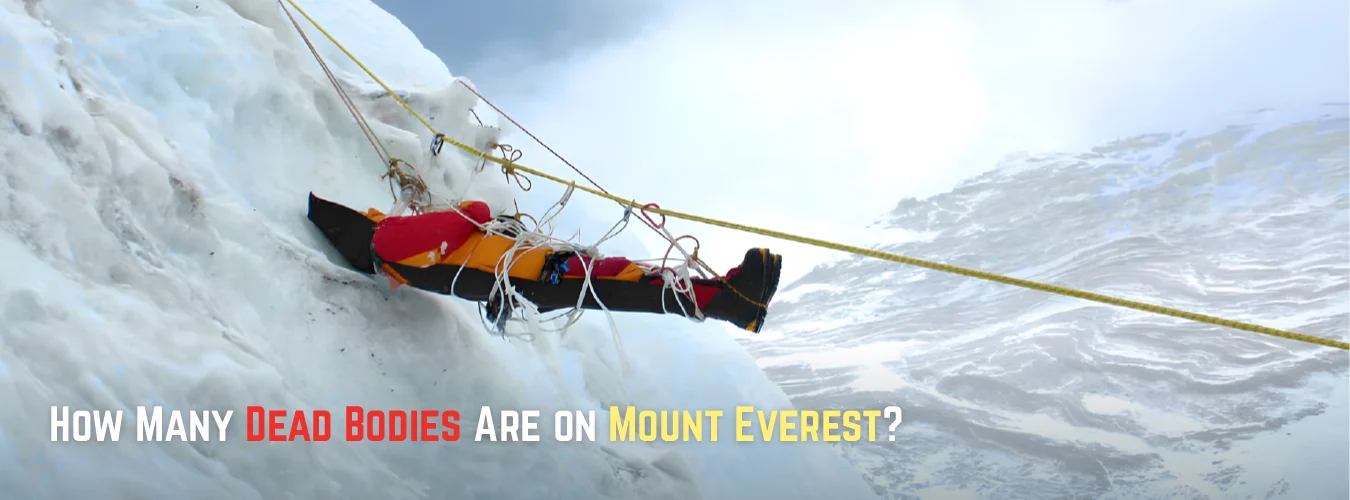
How Many Dead Bodies Are on Mount Everest?
- Information
- By Sandipan Khadka
Reaching the summit of Mount Everest and creating a name in the history books may be the goal of many people. Evidently, this is why a large bunch of people head to the Everest carrying those dreams on their shoulders. Some of their dreams turn into reality, while sadly, some don’t. With that, a curiosity may get to you, ‘how many people have died on Everest’ or, ‘how many dead bodies are on Mount Everest currently?’
We’ll answer that on this blog. There are plenty of reasons behind the occurrence of such tragic incidents; sometimes, the bad weather kicks in, injuries, and last but the major reason that leads to it is limited oxygen. Thus, we can say it’s quite a gamble. Everest lies at an extreme altitude, with freezing temperatures, huge blowing winds, and thin air, making it difficult to breathe. So, climbing it isn’t just a normal hike; it’s a fight between life and death.
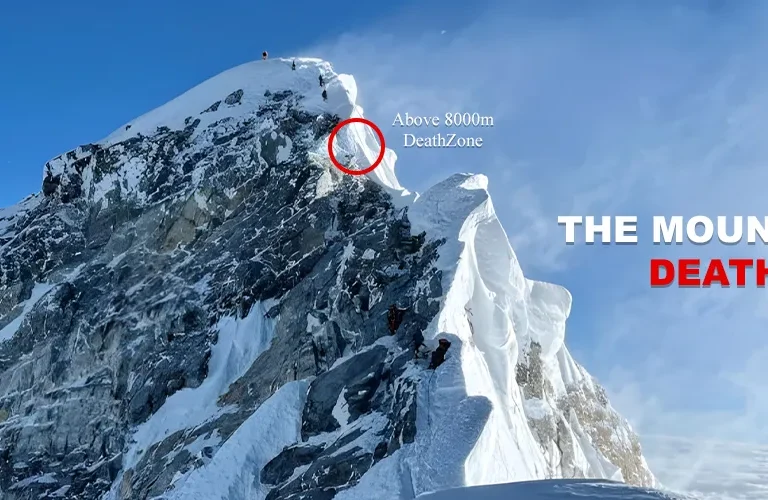
The ultimate proof can be seen in the history books, where many who attempted to hit the summit never made it back. Some of their bodies still lie on the mountain, especially in the “Mount Everest Death Zone” above 8,000 meters. This is the most dangerous area on Everest, where the air is too thin and freezing cold.
We live in a world where we have the natural tendency to highlight success rather than failure. Many who successfully achieved the summit received appreciation and applause from all over the world. Those who didn’t are still lying like sleeping on the Everest, and we are about to uncover their stories. Alright, without any further ado, let’s get started!
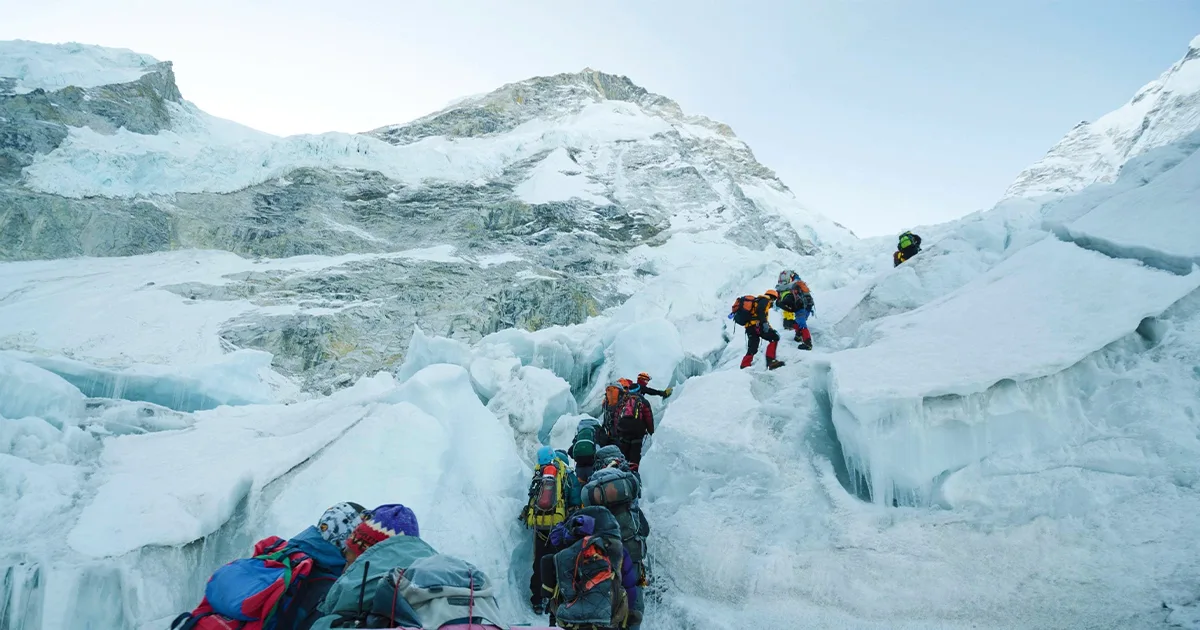
Path of Mount Everest
Is the Path to Mount Everest Difficult?
For those of you who don’t know, Mount Everest is located on the border between Nepal and China. One of the most popular routes for the summit of Everest is on the Nepal side. The majority of the climbers fly directly from Kathmandu, the capital city of Nepal, to the small town of Lukla, which is also known as the gateway to Everest.
The Lukla airport, which opens the door to the Everest, is the most dangerous and frightening airport in the world. The reason behind it is the short runway, low visibility, unpredictable weather conditions, and high altitude. And after reaching Lukla, the trekking or climbing begins.
How Many People Have Climbed Mount Everest So Far?
According to multiple sources, thousands of people have successfully reached the summit since the start of the expedition in 1953. In recent years, as per Alan Arnette’s Everest summit statistics up until December 2024, there were 12,884 total summits. And this includes climbing from all the routes.
As per his Everest by the numbers data, the 12,884 summits were made by approximately 7,269 different climbers. (Some may have climbed more than once). This data gives you a clear picture, suggesting to us that 7000+ climbers may have summited Everest at least once.
This year, around 850 successful climbs were made, which is a record trend on the world’s highest mountain, Everest.
How Many People Died on Mount Everest?
As per the Himalayan database, since the recording began in 1922, around 320-340 deaths have occurred when attempting to summit Mount Everest. On average, roughly 4 to 5 people die per year. The good news is that over the years, the death rate per climber has decreased significantly, all because of a better infrastructure (well-maintained routes and support).
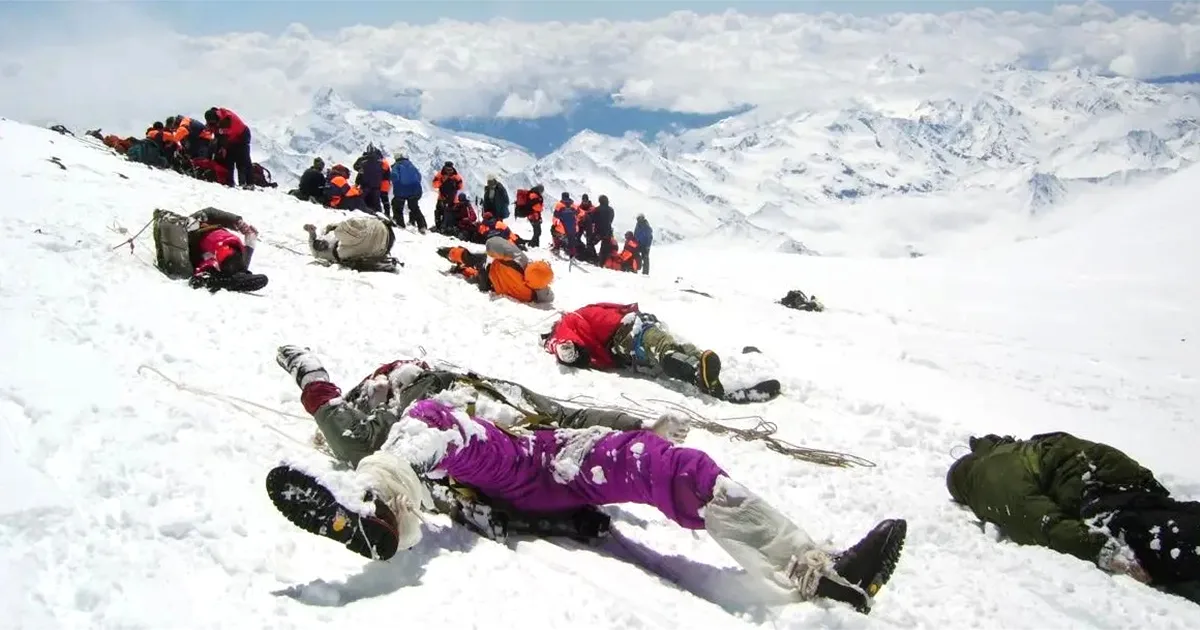
People died on Mount Everest
In the 1990’s the Everest was hard to climb due to poor infrastructure, limited knowledge of technical climbs, and low exposure to the Everest’s trails and conditions. Coming to the 2000s, climbing Everest has become much safer in comparison to other Himalayan peaks. Everest today has better infrastructure, a larger number of teahouses for staying, and easy helicopter support.
How Many People Died on Mount Everest in 2025?
During the 2025 Mount Everest climbing season, a total of five fatalities occurred. The 5 deaths were of:
- Nepali climber Lanima Sherpa (Died because of altitude sickness at Base Camp)
- Nepali climber Gimma Dorji Sherpa (Died because of a brain hemorrhage)
- Nepali climber Peniri Sherpa (Died because of a heart attack at Camp I)
- Filipino climber Philipp II Santiago (The main reason for death is exhaustion at Camp IV)
- Indian climber Subrata Ghosh (The main reason for death is altitude sickness and exhaustion near the Hillary Step)
The death numbers have reduced this year compared to previous years. Many claim that the low death toll is linked to better preparation and expedition planning and favourable weather conditions.
Some of the common reasons for death on Everest in the past are:
- Extreme avalanches
- Falls
- Exhaustion
- Acute mountain sickness (AMS)
How Many Dead Bodies are on Mount Everest?
The exact numbers may vary, but multiple sources claim that there are around 200-300 dead bodies of fallen climbers still lying on Everest. It is a very tough job to recover and move these bodies because of the demanding altitudes and logistical challenges.
Despite the challenges, the Nepalese Government tries to conduct ‘cleanup programs’, removing some amount of bodies that are the most recent. The majority of these bodies lie in the “death zone,” which is above 8,000 meters. To recover bodies, especially from this area, is very tough due to the minimal oxygen, unpredictable weather conditions, and technical difficulties.
Another reason behind so many dead bodies lying on the mountains is the requirement for huge resources and cost factors, adding more challenges for the rescue teams.
Fresh dead bodies on Mount Everest often get disappeared too because of the heavy glaciers and ice as the glaciers starts melting the body starts being visible.
Famous Dead Bodies on Mount Everest
There are around 300 dead bodies on Mount Everest, many of them remaining as frozen bodies. Among them, there are plenty of fallen climbers who have been highlighted as the most famous corpses on Everest. Let’s get to know them:
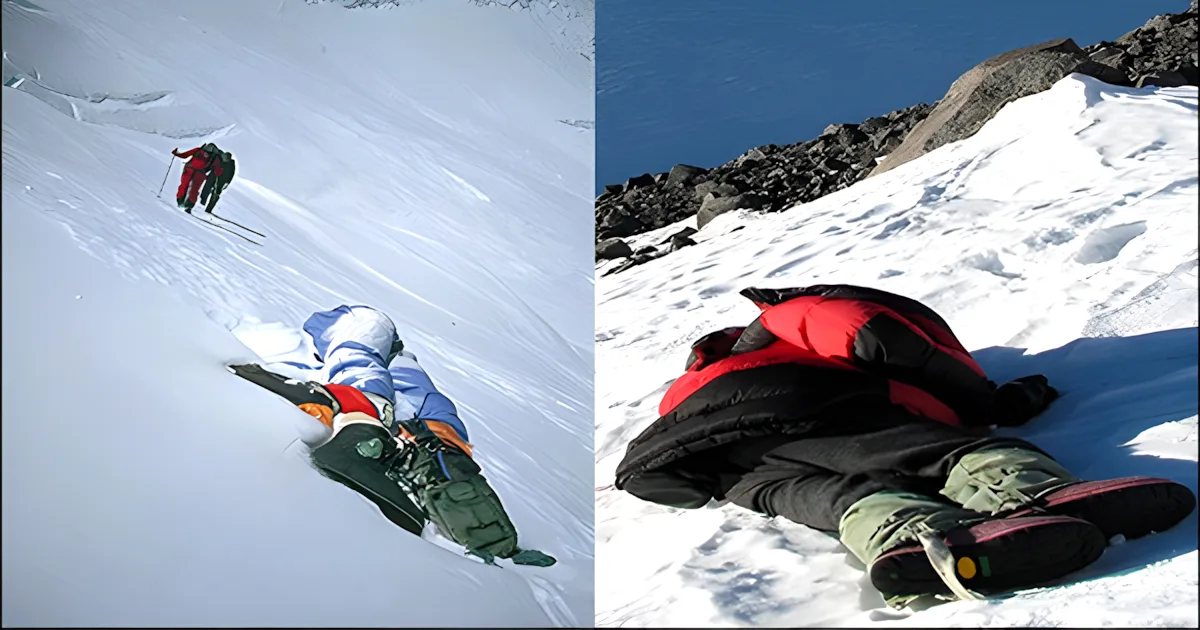
Famous Dead Bodies on Mount Everest
An unidentified climber, who is largely believed to be Tsewang Paljor, gained massive attention and became a landmark on the main Northeast ridge route of Mount Everest. The tag of ‘Green Boots’ comes from the neon green colour of Koflach mountaineering boots worn when he died.
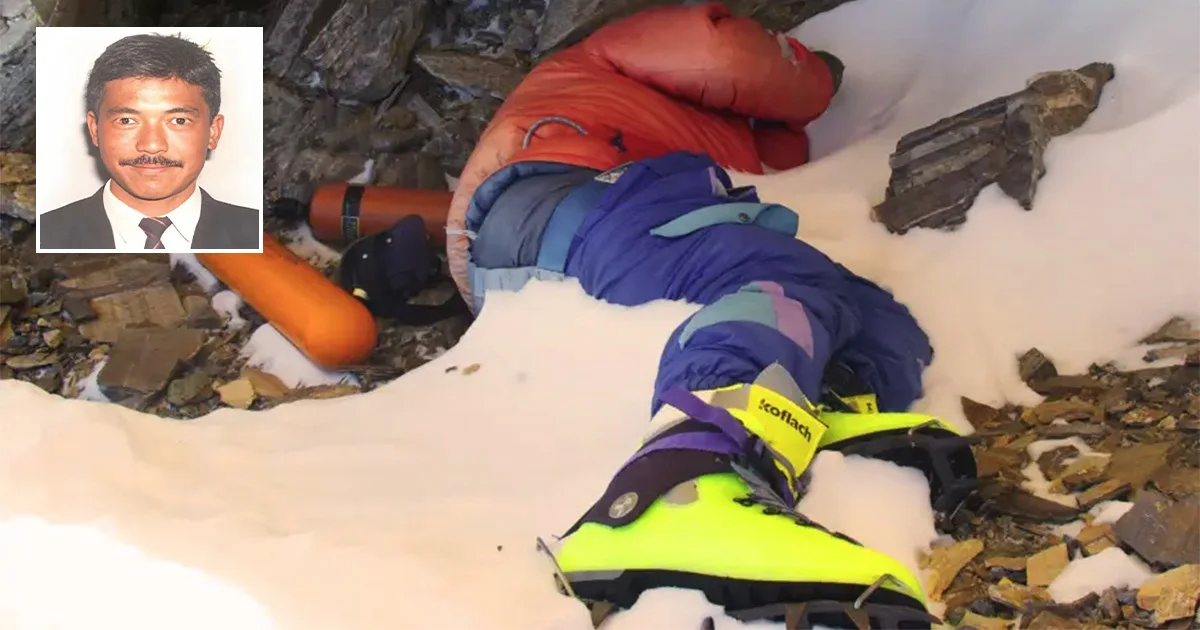
Green Boots
Paljor was a key member of a three-man Indian expedition that went on to climb Mount Everest on May 10, 1996. A sudden snowstorm killed him. His body was still visible until 2014; Green Boots’ body was shifted then afterwards. Green Boots’ body is located in a cave near the summit route (slightly covered with snow and ice).
Francys Arsentiev
Francys Arsentiev, also tagged as ‘Sleeping Beauty’, was another renowned figure. She became the first American woman to reach the summit of Mount Everest. And that too without using bottled oxygen, creating history on May 22, 1998. She died on Everest with her husband, Sergei Arsentiev.
The main reason for her death was the huge snowstorm. Francys was separated from her husband during the descent. Later died due to extreme exhaustion in the death zone. Her body was visible to climbers until 2007.
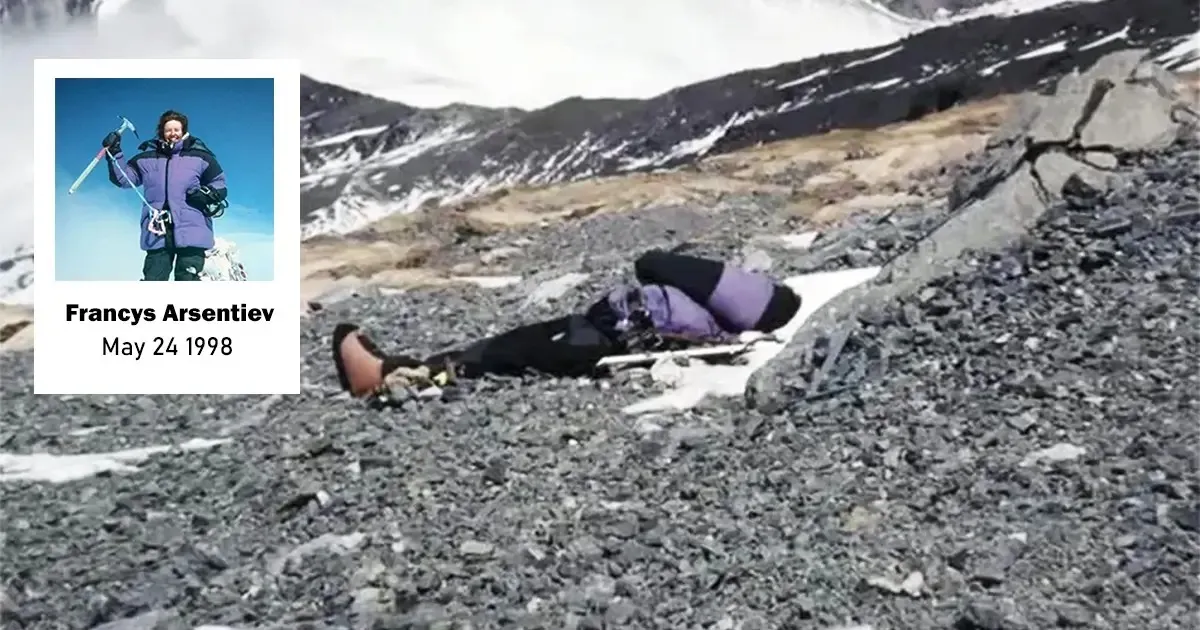
Francys Arsentiev
In 2007, an expedition team led by Ian Woodall and Cathy O’Dowd located her body and moved her body to another less-walked location. They even gave her a short farewell and covered her body so not be traced back easily.
Hannelore Schmatz
Hannelore Schmatz was a German climber. She is also the first woman to die on Everest in 1979, near the South Col. Her body was visible and lay upright for a number of years. However, it is not visible currently as her body was blown off the mountain.
George Mallory
George Mallory was an experienced British climber. He was also a leading member of early expeditions to Mount Everest and was part of the vital three expeditions on this gigantic peak. The reason for his fame was the gold medal he received at the first Olympic Winter Games for being part of the Everest expedition. The following expedition was led by Charles Granville Bruce in 1922.
His death was a total mystery and still is, as his body was found in 1999 at the ‘death zone’. It is still unknown whether he summited to the Everest before dying in 1924 or not. One of the mysterious deaths on Everest.
David Sharp
David Sharp was a talented British mountaineer who died near the summit of Mount Everest. Sharp had already summited Cho Oyu and was a very skilled rock climber. His first and second expeditions to Everest failed in 2003 and 2004. He tried again in 2006 on a solo climb aimed to hit the summit without the use of supplementary oxygen.
Because of a heavy snowstorm and exhaustion, Sharp died sitting with arms clasped around his legs just next to Green Boots. The cave where he died was located around 250 m (820 ft) above the high camps. It is also referred to as Camp 4. Unpredictable weather conditions, exhaustion, and lack of oxygen played a big role in his death in 2006.
His death also created a huge controversy at that time. Other climbers passed him while he was dying, sparking debate for that specific expedition team.
Rob Hall & Scott Fischer
They were the leaders of the tragic 1996 Mount Everest Expedition. Rob Hall was the New Zealand guide and leader of the Adventure Consultants. Similarly, Scott Fisher was an American mountaineer and the leader of the Mountain Madness expedition. Both leaders, along with their respective teams, pushed for the summit on May 10, 1996.

Scott Fischer
However, unfortunately, they were caught by a sudden, severe storm on the descent, causing their death. The following incident is also known as the 1996 Mount Everest disaster which several climbers died, marking one of the tragic incidents in the Everest’s history.
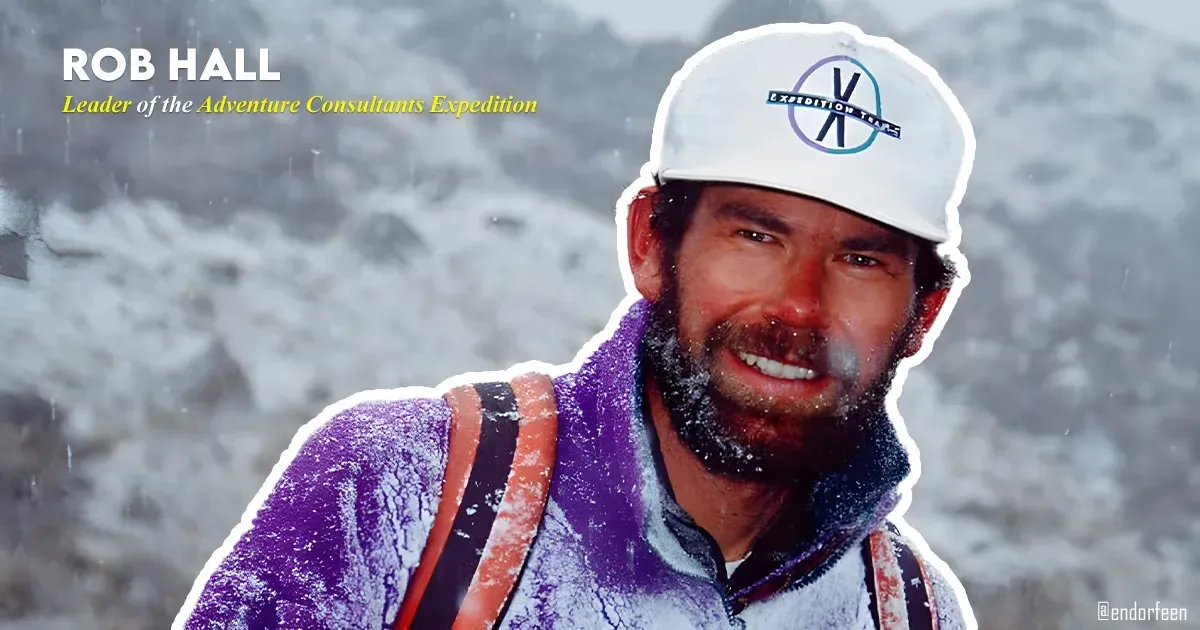
Rob Hall
Rob Hall died on the South Summit trying to rescue one of his clients, Doug Hansen. On the other hand, Scott Fischer died on the mountain after being caught in the storm. Both their bodies still lie on Mount Everest.
Yasuko Namba
Yasuko Namba was a Japanese climber and one of the victims of the 1996 Mount Everest disaster. She successfully summited Everest in 1996. With that achievement, she became the second Japanese woman to climb the highest peak on each of the seven continents. Sadly, she died during her descent in the 1996 Mount Everest disaster.

Yasuko Namba
Namba died from exhaustion and extreme cold weather. On the next expedition to Everest, Boukreev (Russian-Kazakh mountaineer) found Namba’s body on April 28, 1997. Late in 1997, Namba’s husband funded an operation that successfully managed to take her body down the mountain.
Shriya Shah-Klorfine
Shriya Shah-Klorfine was a Nepal-born Canadian woman climber who died during the descent in 2012. The 2012 season was recorded as the worst year after the 1996 disaster, causing 11 deaths altogether. She died on May 19, 2012, on the south side of Mount Everest.
As per multiple reports, she died 250 meters from Camp IV. Her body remained on the Everest for about ten days. After that, it was carried back down and then taken off the mountain with the help of a helicopter. A memorial service was conducted for her at a church in Toronto, Canada.
What are the Causes of Death during the Mount Everest Climb?
1. Unpredictable Weather Conditions
Walking/climbing at such high altitudes can be extremely tough because of the changing weather conditions. If you don’t respect nature and the power of the mountains, accidents can happen at any time. Sudden blizzards, huge winds, and extremely cold temperatures can make the pathway too challenging; the weather can change in a moment in such high altitudes, giving you no time to take action.
2. Lack of Oxygen
One of the most common causes of death in such high altitudes is the limited oxygen. Climbers don’t bring backup supplemental oxygen, and they mostly run out of oxygen when climbing 8000 meters. The condition of lack of oxygen is also called Hypoxia.
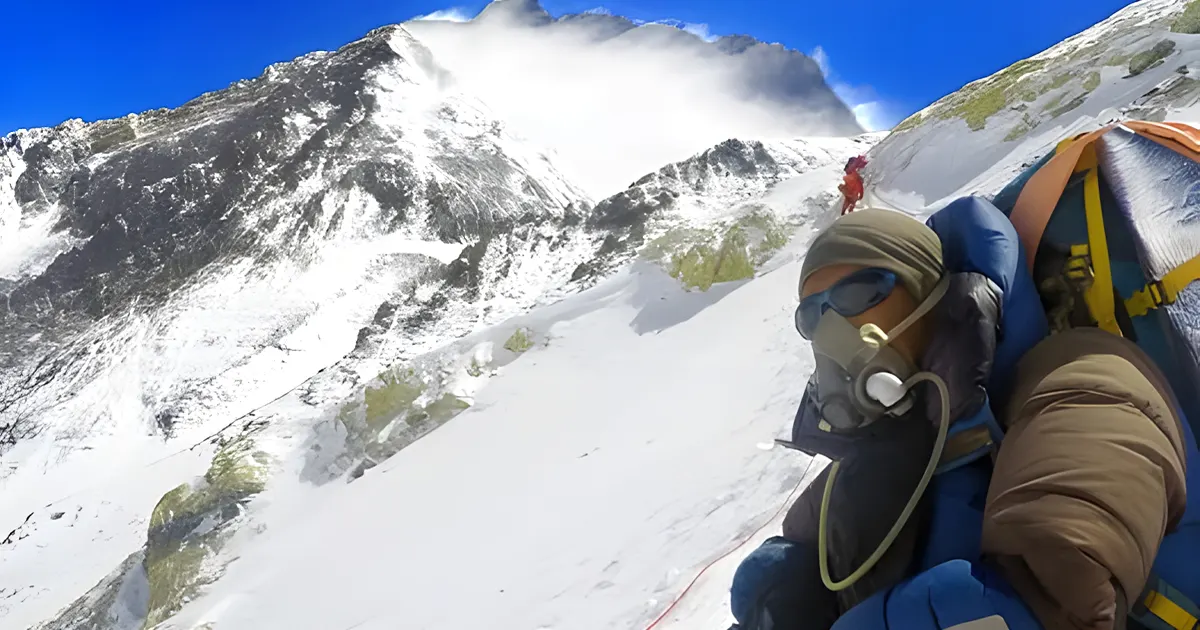
Lack of Oxygen
Various difficulties can be experienced at high altitude without oxygen, such as hallucinations, having a hard time breathing, blurred vision, etc.
3. Tiredness and Injuries
Exhaustion and injuries are also more likely to happen during such high-altitude climbs. Not acclimatizing fully and not giving the body enough rest causes exhaustion in the climbers easily. And these are also the mistakes that most often create disaster scenarios.
Pushing past the body’s limitations just to reach the summit is not a good approach, and this decision put a lot of risk on the lives.
5. Altitude-Related Illness
If the essential acclimatization procedures or protocols are not followed, there is a high chance of climbers suffering from High-Altitude Pulmonary Edema (HAPE). It is the type of condition where fluid keeps building up in the lungs, making it extremely difficult to breathe.
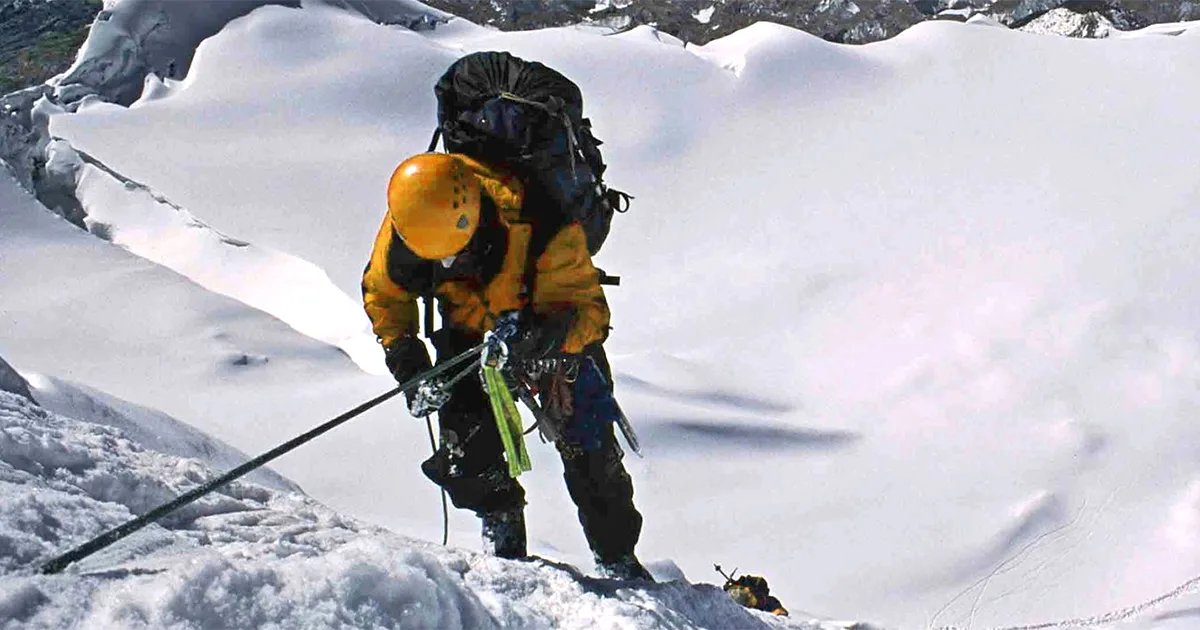
How many dead bodies are the in mount Everest?
Another worse condition is called High-Altitude Cerebral Edema. This is where climbers suffer from swelling of their brains, mainly because of a lack of oxygen. If the body feels any kind of unusual symptoms, then you should immediately descend to lower altitudes.
How Many Climbers Survive Everest (On a Percentage Basis)?
If the data from the last 30 years is taken out, the actual death rate when climbing Mount Everest is around 1%. If you look at the percentage of deaths to the successful summit attempts, then it is almost 4%. After seeing the stats, we can clearly say that the chances of dying when climbing the Everest are pretty low.
The approximate survival rate would be 98%. However, you need to understand that climbers who reach the summit increase the risk significantly. Death rate after summiting tends to reach 4 to 6%. Talking of the 2000s and the current scenario, the survival rate has reached 99%, especially when climbing in good seasons.
Having said that, don’t be overconfident at all. All it takes is proper preparation and climbing experience to make sure the journey becomes less frightening. And on top of that, you also need a professional, licensed guide with a good amount of experience, especially in the Everest region.
Everest is not as terrifying and full of horror as most people assume it to be if the essential priorities are handled properly. Otherwise, things can go really badly from zero to ten in a moment if the conditions are not respected. Numbers say it’s still the most threatening & deadliest mountain.
Tips that Boost the Survival Percentage:
- Good climbing experience
- Choosing a reputable expedition company
- The use of supplemental oxygen during the climb
- Picking a good weather window
- Perfect physical conditioning and preparation
- Proper acclimatization
Mount Everest Death Rate
The Mount Everest death rate is approximately 1 to 2%. The total recorded deaths are over 300, and the total ascent attempt is over 12000, which makes the Mount Everest death rate, respectively, with the overall calculation. The death rate when a climber reaches the summit is 4-6%.
Do people die more when climbing or descending Everest?
The history and the past tragic incidents reveal that the majority of the accidents happen on descents more than the ascents. The main reason behind that is the exhaustion of the climbers after a long climb.
Oxygen deprivation also happens during the descent. It slows down the body’s recovery system. Technical challenges are also involved during the descent. Time or deadline pressure also plays a crucial role in creating the chances of accidents.
Overall, summiting Mount Everest takes about six weeks. And this includes the whole acclimatization rotation. Given the time is long, accidents are more likely to occur. Similarly when descending from the summit to base camp takes about 2 days so far.
You can’t predict anything about Mount Everest, so caution needs to be taken at any step, whether in ascent or descent.
What is the Reason for the Everest Dead Bodies (the Main Killer)?
Plenty of things can go wrong, especially when climbing Mount Everest. One of the most common reasons is acute mountain sickness. Other leading causes of death on the mountain are avalanches, exhaustion, crevasses, and much more.
When a climber suffers from Acute mountain sickness then it needs to be treated seriously. Minor issues, when neglected, turn into cardiac arrests and strokes, even leading to death.
When climbers get injured or get fully exhausted, the chances of committing errors which can then turn into a major accident.
How Long Does it Take to Climb Mount Everest?
The answer to ‘how long does it take to climb Mount Everest’ depends on various factors such as acclimatization, route, logistics & much more. Normally, it takes about 60 to 90 days for a full expedition to the Everest. The total expedition takes that much time as it includes a trek to Everest Base Camp, acclimatization rotations, the summit push, and the descent journey too.
The factors that influence the time are weather windows and the individual’s fitness, too. It doesn’t take much time to reach the summit, but in order to maintain safety throughout the journey, proper acclimatization and rest are required, given the high-altitude conditions.
Keen to take on the Everest climb by yourself? If that’s so, we’ve a proper Everest expedition package taking care of all the aspects including expert Sherpa support, fixed ropes, oxygen support, and acclimatization for a successful summit attempt.
The Death Zone
In simple words, if you enter an altitude of over 8000 meters (26,247 feet) on Mount Everest, then you’ve entered the ‘Death zone’. The name sounds frightening itself, doesn’t it? This specific zone itself has a huge number of dead bodies on Mount Everest.
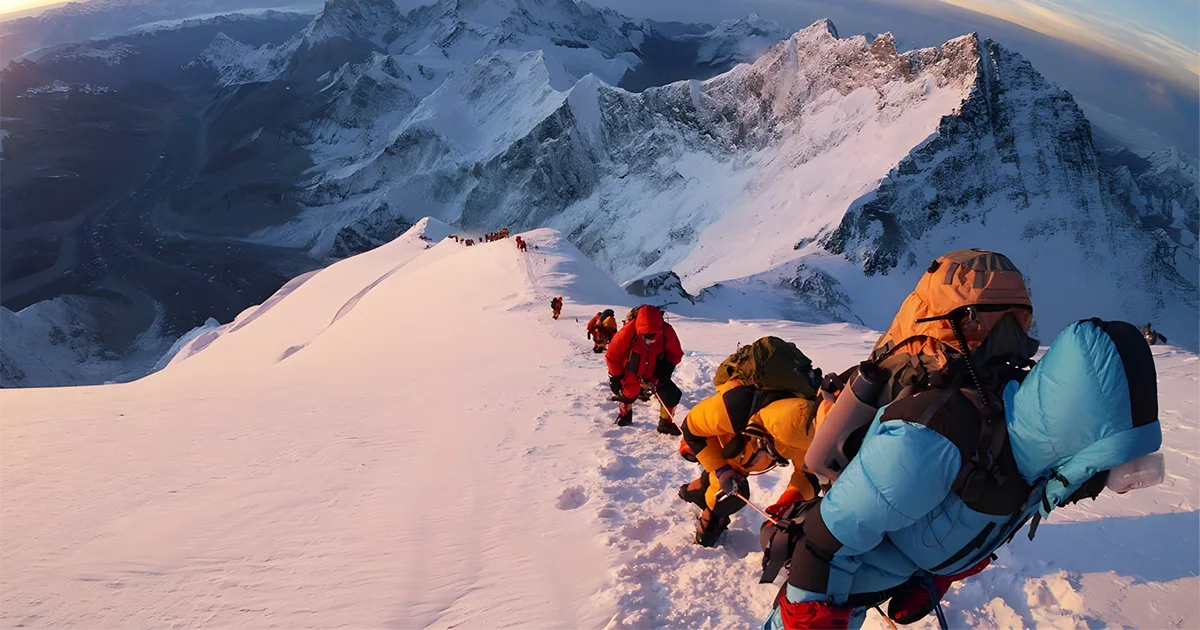
Everest Death Zone
And there are various reasons behind it:
- This area has low oxygen levels, making it extremely difficult for climbers.
- It lies above 8000 meters, thereby our human body cannot function properly (because of the high altitude).
- Increases the risks of cerebral edema and affects decision-making.
- Higher chance of frostbite and snow blindness.
Frequently Asked Questions Related to Mount Everest Dead Bodies
Why are there so many dead bodies in Mount Everest’s death zone?
The death zone possesses various kinds of risks for the climbers as it is freezing cold and contains very low oxygen. It is situated at an altitude above 8000 meters (26,247 feet). Altitude sickness, exhaustion, hypoxia, and many other altitude-related problems can be experienced there if staying for a longer duration.
This is the reason why there are so many dead bodies on Mount Everest (the death zone).
Who is the most famous body on Mount Everest?
One of the most famous dead bodies on Mount Everest is widely considered as the Green Boots. Green Boots is said to be the body of the Indian climber Tsewang Paljor. He died on Everest in 1996, becoming an iconic figure with green shiny boots lying near the Northeast Ridge route.
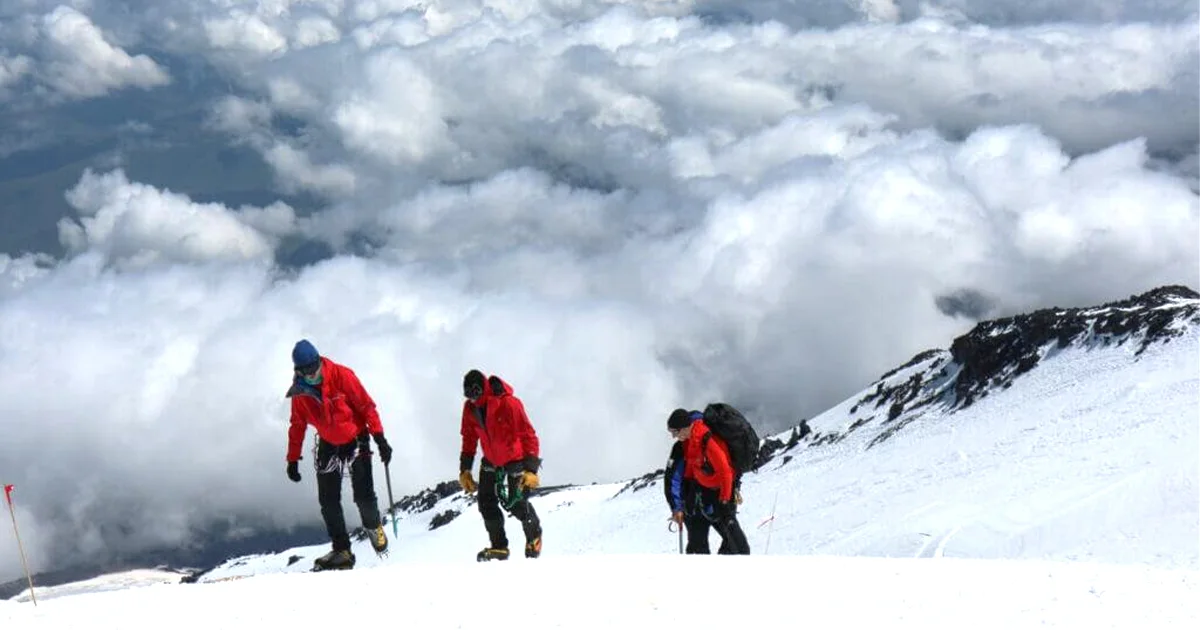
Unpredictable Weather Conditions
Which is the oldest dead body found on Mount Everest?
Multiple stats suggest that the oldest dead body found on Mount Everest is that of British mountaineer George Mallory. He went missing on June 8, 1924, and his body was found on May 1, 1999. The body of his was discovered by climber Conrad Anker on the north face.
How many Sherpas have died on Mount Everest?
As per the Himalayan database and other sources, around 130-132 Sherpas have died on Mount Everest as of 2025. Looking at the stats, we can say that one-third of all deaths on Everest are of Sherpas. A total of 16 Sherpas died in the 2014 avalanche, and 7 Sherpas died in the 2015 earthquake on Everest, which was the maximum number of deaths of Sherpas.
Why are there so many deaths of Sherpas on Everest?
Sherpas often get caught up in greater exposure to dangers compared to the climbers. They cross dangerous areas like the Khumbu icefall and do more rounds of it. And that too, carrying heavy loads and weights, which puts their lives at greater risk. This is why there are so many deaths of Sherpas on Everest.
Do dead bodies on Mount Everest have markers on them?
No dead bodies on Mount Everest don’t have any kind of marks on them. However, some dead bodies on Mount Everest become official landmarks like the Green Boots (because of more visibility and appearance).
Awards and Achievements
Access Nepal Tour and Treks has been recognized with TripAdvisor’s prestigious Travelers’ Choice Award for multiple consecutive years, reflecting our unwavering commitment to quality and clients’ satisfaction.











Leave Your Comment