


Everest Three Passes Trek Guide
- Places
- By Sanchita Pokharel
Everest Three Passes Trek Guide is much needed for travellers who are adding this adventure to their bucket list. The Everest Three Passes Trek is one of the most thrilling and adventurous treks. Located in the Everest region, Nepal, it’s an all-in-one package. It is packed with iconic landmarks.
The 18-day Everest Three Passes Trek map follows a lollipop loop trail. The total three-pass trek distance is 166 km. Starting from Kathmandu, it takes you across three high mountain passes, Kongma La, Cho La, and Renjo La Pass. And the thing is, it doesn’t end here. The Everest Three Passes trek route also takes trekkers to Everest Base Camp, Kala Patthar, and the Gokyo Lakes.
That’s why a guide for a three-pass trek is essential. With our detailed tips and guides, travellers can have the best moments of their lives. Trekking through the classic Everest Base Camp Trek route, crossing rivers and streams, and hiking through rhododendron forests, Sherpa villages, and jaw-dropping Himalayan landscapes adds icing to the details of this journey.
Reading this far, you must have guessed it right; it’s a challenging journey. Don’t worry, because it’s not impossible; with our best guide for the three passes trek, you will make it to the top of all of them. Every second of your adventure feels worth it and is rewarding. Being this close to nature and spending 18 days surrounded by panoramic views of Everest, Lhotse, Ama Dablam, Makalu, and many others feels like a blessing and luxury.
A detailed guide is really essential to enjoy the adventure fully in a safe manner. So, continue reading this guide for the three-pass trek, which will give you detailed information on itinerary details, route maps, costs, gear tips, and all the insider information.
Three Passes Trek Map and Route
The Three Passes Trek map is a lollipop loop trail that looks like a lollipop shape. Starting and ending in Kathmandu, the big loop goes through the Sagarmatha National Park.
The standard route starts with a flight to Lukla (2,850 m). From here on, official trekking begins, following the classic Everest Base Camp Trek route. The Everest Three Passes Trek route passes by the remote Sherpa villages Phakding, Namche Bazaar, Tengboche, Dingboche, Chhukung, Lobuche, Dzongla, Thangnak, Gokyo Valley, and Marlung.
Along the way, the route passes through Kongma La Pass (5,535 m), then Everest Base Camp (5,364 m), Khumbu Icefall, Kala Patthar (5,550 m), Cho La (5,420 m), Gokyo Valley, and finally Renjo La (5,360 m). All the stops along the route are popular landmarks. Hiking to Gokyo Ri (5,360 m) and watching over Gokyo Lakes (4,790 m) adds another fun experience.
The Everest Three Passes Trek is an 18-day journey covering a total distance of 166 km. On average, trekkers have to walk for 6 to 10 hours and 10+ km daily. The routes are well-marked but rough, steep, and diverse. On average, daily altitude gain is 500-1,200 m. Do not worry; these itineraries are practical and achievable because at higher altitudes, they cover less ground. At lower altitudes (below 3,500 m), you hike about 11-15 km, and above 5,000 m, you hike 8-9 km only.
The highest point of this trek is Kala Patthar at 5,644 m, and the second highest is Kongma La Pass at 5,535 m. Keep in mind, almost all of these landmarks are located above 5,000 m. Therefore, acclimatisation and good planning are crucial. It requires a good and detailed guide for the Everest Three Passes Trek.
Detailed route maps are available on our Everest Three Passes Trek package published on our Access Nepal Tours and Trekking website. To make it easy for you to map it in your head, here is the summary.
Kathmandu → Lukla → Phakding → Namche → Tengboche → Dingboche → Chhukung → Kongma La → Lobuche → Gorak Shep → EBC → Kala Patthar → Dzongla → Cho La → Gokyo → Renjo La → Marlung → Namche → Lukla → Kathmandu.
However, the route map varies depending on the travel agency, package, itinerary, trekkers’ pace, and guide. The above route summary is the standard route of Access Nepal Tours and Trekking. It is customisable and changeable if required by travellers.
Where Does the Three Passes Trek Start?
The Three Passes Trek starts from Kathmandu. Though the trek officially begins from Lukla and follows the classic route of Everest Base Camp. From Kathmandu or via Manthali Airport (during peak season to avoid delay and traffic). It begins with an early morning 30-minute flight to Tenzing-Hillary Airstrip (one of the most thrilling airports in the world) at Lukla (2,850 m).
After arriving at Lukla, we hit the trail towards Phakding (2,610 m). Hiking along the Dudh Koshi River, the trails drop down gradually. We hike for 3-4 hours covering 8 km of distance. Once we reach Phakding, we will rest for a night here. From here on, the whole journey moves on foot. There is limited access to other transportation due to the remote location.
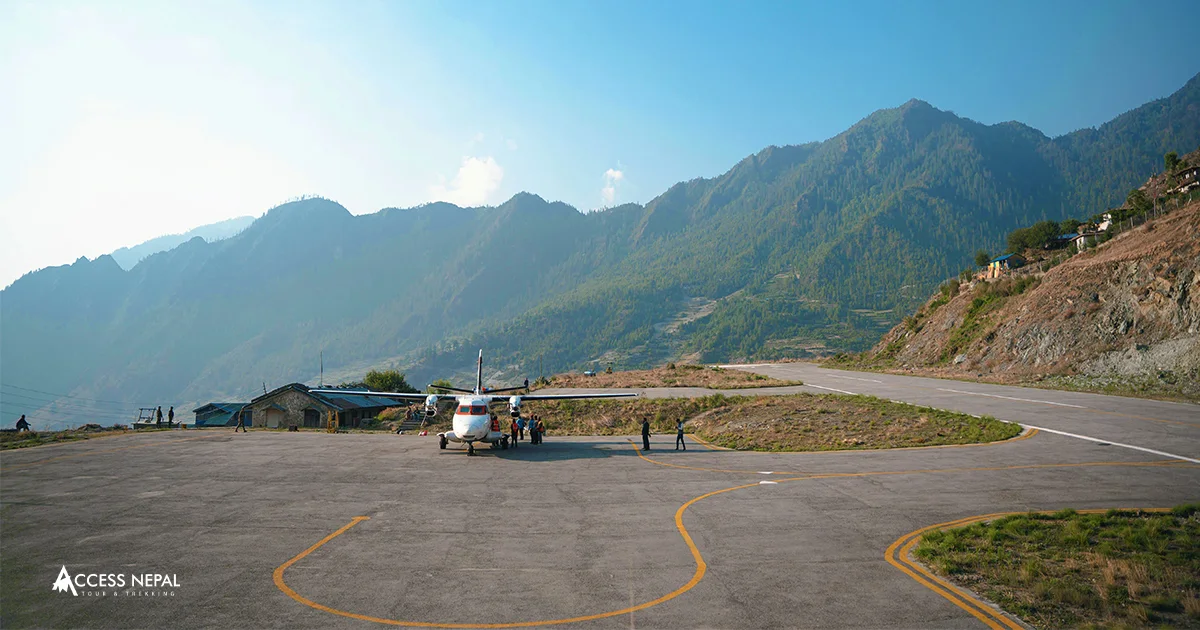
Lukla Airport
If you want to avoid air travel. An overland trip is also possible. Instead of taking a flight to Lukla, it will be replaced with a drive to Thame Danda and then a trek towards Lukla. Or if you want more comfort and luxury, you can also do a helicopter ride. From Phakding, the route is fixed to this route: Namche → Tengboche → Dingboche → Chhukung → Kongma La → Lobuche → Gorak Shep → EBC → Kala Patthar → Dzongla → Cho La → Gokyo → Renjo La → Marlung → Namche → Lukla → Kathmandu.
Three Passes Trek Distance, Duration, and Elevation
- Total Everest Three Passes Trek Distance: 166 km (starts and ends in Kathmandu).
- Everest Three Passes Trek Itinerary: Lasts for 18 days, including acclimatisation days (customisable).
- Daily Hiking: On average, trekkers have to walk for 6 to 8 hours (about 10-15 km). At a three-pass trek, you have to walk for 7 to 9 hours (about 10 km).
- Highest Altitude: The highest point of this trek is Kala Patthar at 5,644 m. The maximum altitude of this trek is 5,000 m (Everest Base Camp at 5,364 m, Kongma La at 5,535 m, Cho La Pass at 5,360 m, Renjo La Pass at 5,420 m, and Gokyo Ri at 5,357 m).
- Average Walking Pace: On a daily average, the itinerary requires walking over 11-12 km per day. It gets shorter as you climb higher up to 8-9 km per day.
At Access Nepal Tours and Trekking, we follow the “climb high, sleep low” strategy for safety. Our itinerary also includes acclimatisation days and frequent stops. Altitude gain is gradual and safe. Though continuous walking at high elevation may feel physically and mentally exhausting, the views here are worth it. Our guides for the Everest Three Passes Trek are highly experienced and professional. They will guide and support you throughout the journey. This trek can be done successfully by anyone who is prepared physically and logistically.
3 Passes Trek Nepal Itinerary
Our Everest Three Passes Trek itinerary lasts for 18 days. It is carefully designed by a professional team to keep the trekkers safe.
Day 1: Kathmandu Arrival.
Day 2: Flight to Lukla (2,850 m) and then trek to Phakding (2,610 m) (8 km).
Day 3: Trek from Phakding to Namche Bazaar (3,440 m) (11 km).
Day 4: Acclimatisation in Namche Bazaar.
Day 5: Trek from Namche to Tengboche (3,860 m) (10 km).
Day 6: Trek from Tengboche to Dingboche (4,340 m) (10 km).
Day 7: Acclimatisation Day in Dingboche.
Day 8: Trek from Dingboche to Chhukung (4,730 m) (5 km)
Day 9: Cross Kongma La (5,535 m) to Lobuche (4,940 m) (10 km).
Day 10: Trek to Everest Base Camp and back to Gorakshep (5,180 m) (12 km).
Day 11: Hike to Kala Patthar (5,550 m) and trek to Dzongla (4,830 m) (14 km).
Day 12: Cross Cho La (5,420 m) to Thagnak (4,700 m) (8 km).
Day 13: Trek from Thagnak to Gokyo Valley (4,790 m) (4 km).
Day 14: Cross Renjo La (5,360 m) to Marlung (4,249 m) (12 km).
Day 15: Trek from Marlung to Namche Bazaar (3,445 m) (11 km).
Day 16: Trek from Namche Bazaar to Lukla (2,810 m) (18 km).
Day 17: Fly back to Kathmandu (1,440 m).
Day 18: Departure from Kathmandu.
The provided itinerary is a standard one. If you want some changes or to add more to the available itinerary, customisation options are available. Though key landmarks and acclimatisation days are general. Our itinerary includes rest days to prevent altitude sickness and for your safety. Trekkers with good physical fitness and preparation can complete this trek safely.
Teahouse at the Everest Three Passes trek
All the accommodation required during the Everest Three High Passes Trek is included in the package.
At lower elevations (like Kathmandu), rooms are standard twin-sharing with attached toilet bathrooms. As you climb higher, accommodation gets simpler with a twin-sharing bedroom and a shared toilet and bathroom.
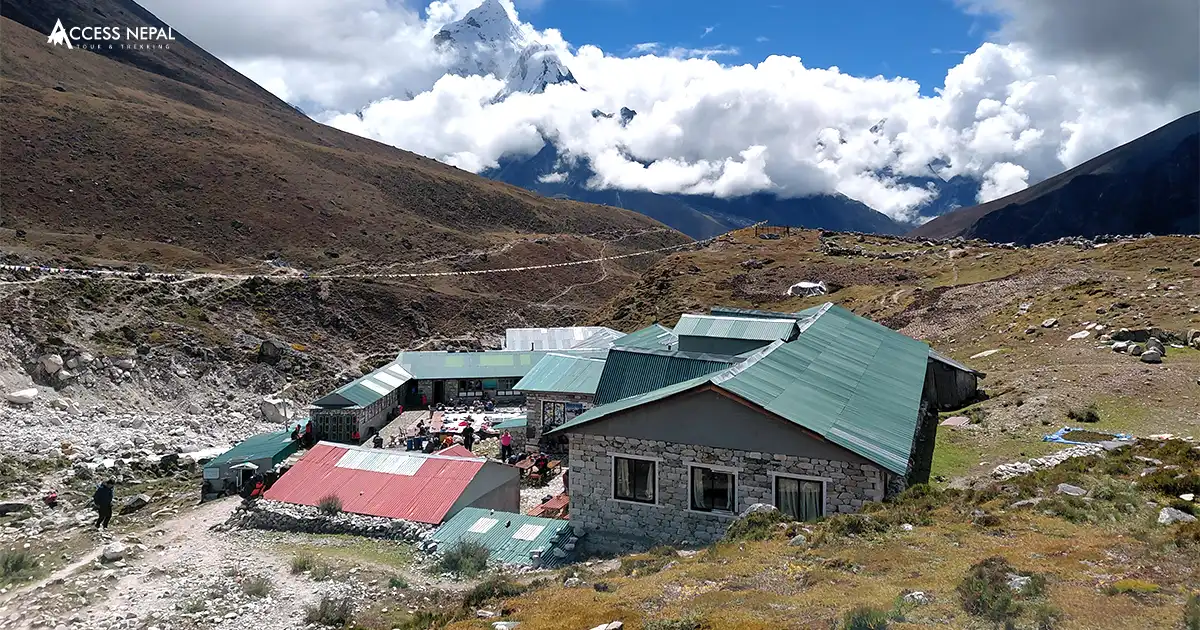
Teahouse, we stay during the Everest Three Passes trek
Teahouses are simple yet comfortable. They are run by a local family. After a long day of trekking, you can rest comfortably for a night comfortably and energise for the next adventure.
How Hard is the Three Passes Trek? Difficulty & Preparation
The Everest Three Passes Trek difficulty level is challenging. It is regarded as one of the hardest treks in Nepal despite being non-technical. Factors that make the three high passes trek difficult are altitude and cold weather. Hiking every day for 6-9 hours over steep hills is physically exhausting. The most difficult sections/terrains are crossing high passes. The terrains are iced and snow-covered; trekkers must have crampons to cross them.
Therefore, trekkers are suggested to train their bodies 2 or 3 months prior. For training, do exercises like hiking, cardio, stair-climbing, swimming, jogging, etc. If you have prior trekking experience, that’ll be the best. The itinerary also includes a steep hike to Kala Patthar (5,550 m), which is steep and physically exhausting.
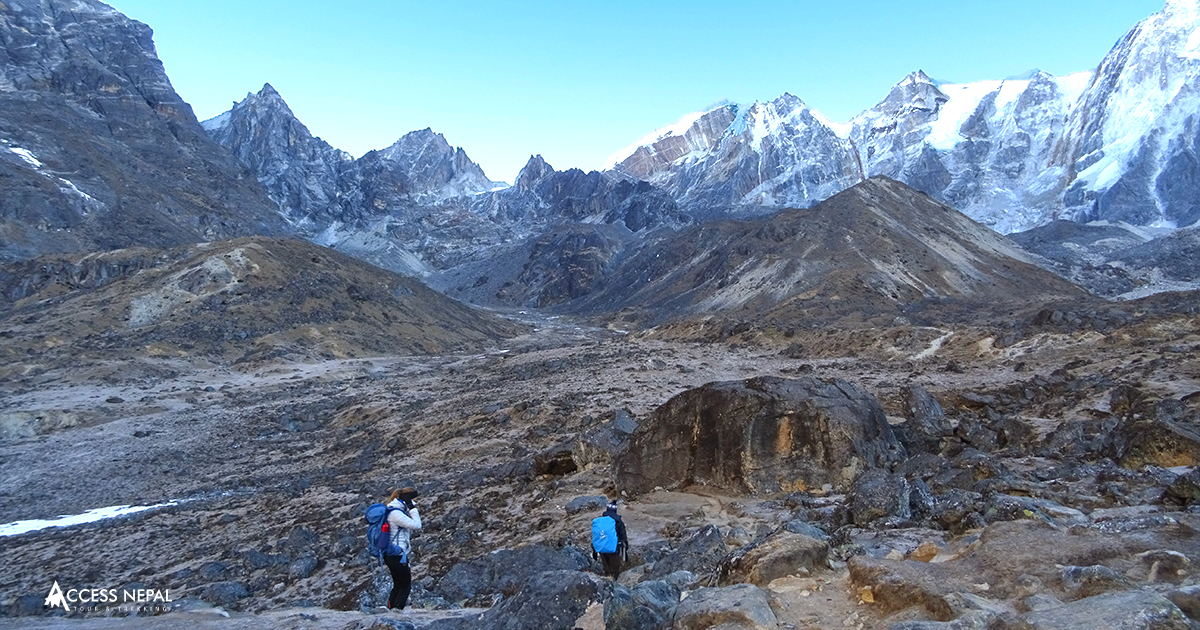
Everest Three Passes Trek Difficulty
Doing the Everest Three Passes Trek is easier if you have comfortably completed a 4,000-5,000 m peak or similar trek. You will also need a strong mindset. The Everest Three High Passes trek is a high-altitude adventure. At this height, the weather is extreme. Therefore, pack warm layers of clothes like warm down jackets, gloves, sleeping bags (temperatures fall well below freezing), sun protection (UV is intense), and crampons/microspikes. To prevent altitude sickness, we acclimatise and trek strategically.
Are you feeling doubtful or scared? Do not worry because with proper preparation and strategic planning, this trek can be done successfully. For adventurous souls, it’s a must-try adventure. Our expert team will guide you hand-in-hand throughout the journey. Throughout the history of our trekking, less than 5% of trekkers found it difficult and had to return. Otherwise, it can be done safely and successfully.
Similarly, in case of emergencies, our team will help you with arranging helicopter evacuation and medical care. Walk at a steady pace, follow the guide’s instructions, take frequent breaks along the journey, do not rush, and eat nutritious meals.
Everest Three Passes is a difficult adventure, but it’s not technical. It doesn’t require rope or technical gear to cross the mountain pass. The only things that make things difficult are high elevation, extreme cold, and wind. Trekkers must be mentally and physically prepared for these kinds of rustic situations before booking the trip.
Do You Need a Guide for the Everest Three Passes Trek?
No, you won’t need a guide for the three-pass trek. However, having a professional guide is highly recommended. The Everest Three High Passes Trek is already a challenging adventure due to high altitude and crossing high mountain passes.
Though as of 2026, you can do the Everest Three High Passes trek without a guide. Trekking Everest: Three Passes Trekking solo is recommended only for experienced and professional trekkers. The route passes through a remote region where services and help are limited. Due to high elevation, the risk of getting altitude sickness is also high. Having a professional guide gives you a sense of ease and helps with protection in case of emergencies.
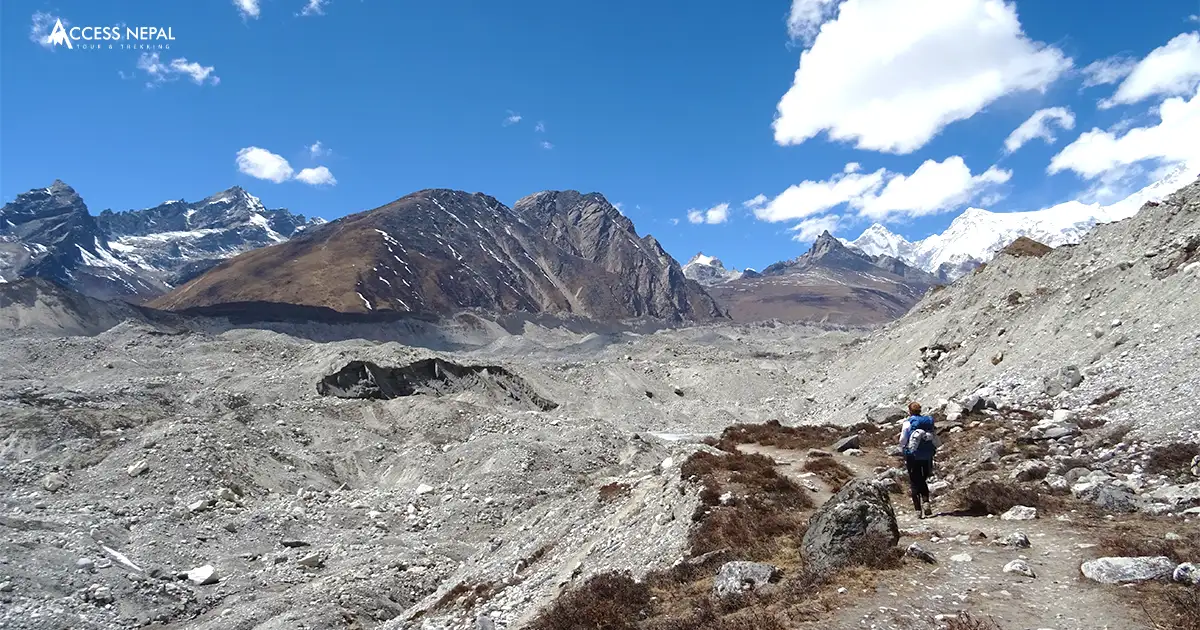
During the Everest Three Passes Trek
Most of the guides are also very knowledgeable, and they can help you navigate the route as well as provide local information. If you really want to do the Everest Three Passes Trek with Access Nepal Tours and Trekking, you do not have to worry about the guide. Our package includes English-speaking, government-licensed, first-aid-trained, and highly experienced local Sherpa guides.
Guides are very helpful, especially for trekking like the Everest High Passes. They have crossed the passes many times and can judge your condition throughout. They’ll help with permits, communication with local teahouses, and any problem that arises.
However, if you still want wilderness solitude, you can try it, but you have to be very prepared. Otherwise, you can just join a small group or private trek with a guide for you only. Trust us because you won’t regret a single bit for choosing us.
How Much Does the Everest Three Passes Trek Cost?
The cost of the Everest Three Passes Trek is $1,890 USD per person. Our high pass package is all-inclusive. It includes all the costs for accommodation, meals, permits, guides, porters, and transportation.
The itinerary is a standard 18 days as shown in the above outline. The package cost may vary if you customise the standard itinerary by adding personal and luxury services.
Wi-Fi and ATMs during the Everest Three Passes Trek
Talking about the internet, they are available but limited. As you climb higher, Wi-Fi services are scarce. Some teahouses do offer internet service, but you have to pay a small amount to use it per hour.
Most of all, Wi-Fi is not reliable at high elevations. There is no internet at high passes, either. Though at lower elevations, internets are mostly free and easily available to use.
Best Time to Do the Three Passes Trek
The best times to do the Everest Three Passes Trek are spring (March-May) and autumn (September-November). These months are the peak trekking season in Nepal.
The spring season is highly recommended for doing the Everest Three Passes Trek due to warm temperatures and stable weather conditions. The whole trail blooms with colourful rhododendron flowers. It offers clear visibility of the surrounding mountains, and the skies are blue. If you visit around March, you can still see some lingering snow on passes. The temperature during the day ranges between 10 and 15°C. Still, nights are cold and windy.
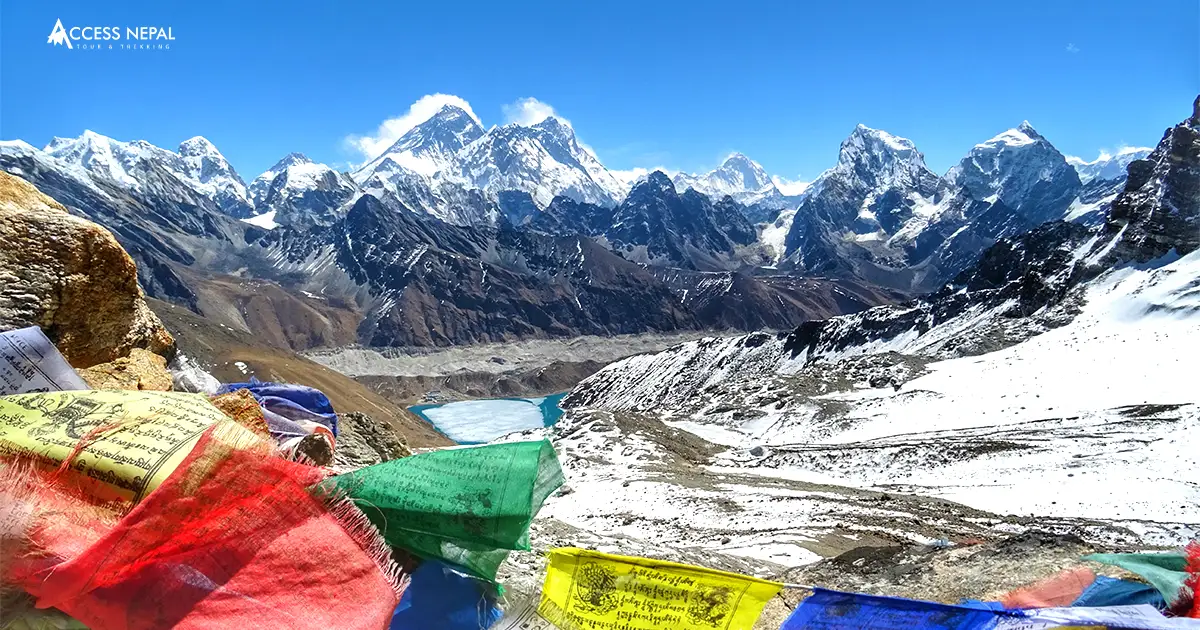
View of Everest During the Everest Three Passes Trek
Autumn is another peak season for trekking to Everest’s Three High Passes. It starts right after the monsoon season. Thus, the polluted air gets cleared out and is crisp. Visibility is excellent with deep-blue skies. Temperatures are in a comfortable range of 0 to 5°C above, especially around October and November. The trails are also dry and less humid, perfect for trekking.
Summer/monsoon (June-August) is not recommended. Lower elevations experience heavy rainfall. Trails get muddy and slippery and create the risk of landslides and floods at lower elevations. Though temperatures are warm but humid, ranging between 10 and 25°C.
Winter (December-February) is a beautiful season, but not for trekking. It gets extremely cold and experiences heavy snowfall. High passes are mostly closed due to extreme and unstable weather conditions. In winter temperature can drop below –20°C on the passes.
Book now and enjoy the real adventure to Everest region. Access Nepal Tours and Trekking has brought an exclusive package where costs are all-inclusive. The only thing you need to worry about is taking a beautiful picture. All the logistics from A to Z are handled by our team. The adventure with our expert team guarantees your safety and enjoyment without compromising.
Awards and Achievements
Access Nepal Tour and Treks has been recognized with TripAdvisor’s prestigious Travelers’ Choice Award for multiple consecutive years, reflecting our unwavering commitment to quality and clients’ satisfaction.










Leave Your Comment