

Druk Path Trek Difficulty
- Places
- By Shrijan budhathoki
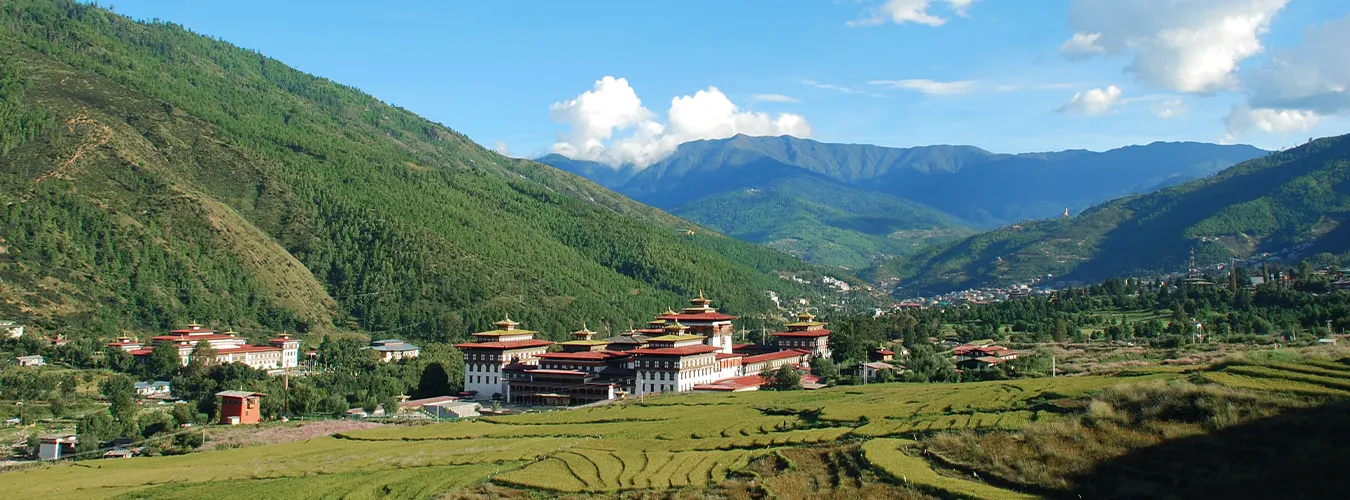
The Druk Path Trek difficulty is moderate and is located in the center of Bhutan’s Eastern Himalayas. It is known as Bhutan’s finest and most popular trekking route with a medium level of difficulty. So it is popular for beginner and professional trekkers, both those looking for a relaxed place surrounded by nature. It offers an incredible adventure and a new cultural experience with the majestic view of mountains throughout your journey.
Bhutan is known for its beginner-friendly trekking adventures. The Druk Path Trek is the most popular trekking spot in Bhutan. The entire journey is filled with culture, forest, and adventure that provides the experience of altitude trekking for beginners. The trek begins in Paro and finishes in Thimphu while traveling through high mountains and passing through numerous alpine lakes and pristine forests that provide the majestic views of the Himalayas.
As per the Druk Path trek difficulty, it is perfect for those wanting to enjoy fast trails with adventure and gain the high-altitude Himalayan experience. So this trek is very popular among beginners and intermediate trekkers who are in constant search of adventure and trying to prepare their bodies for longer journeys, and gain experience with the short routes.
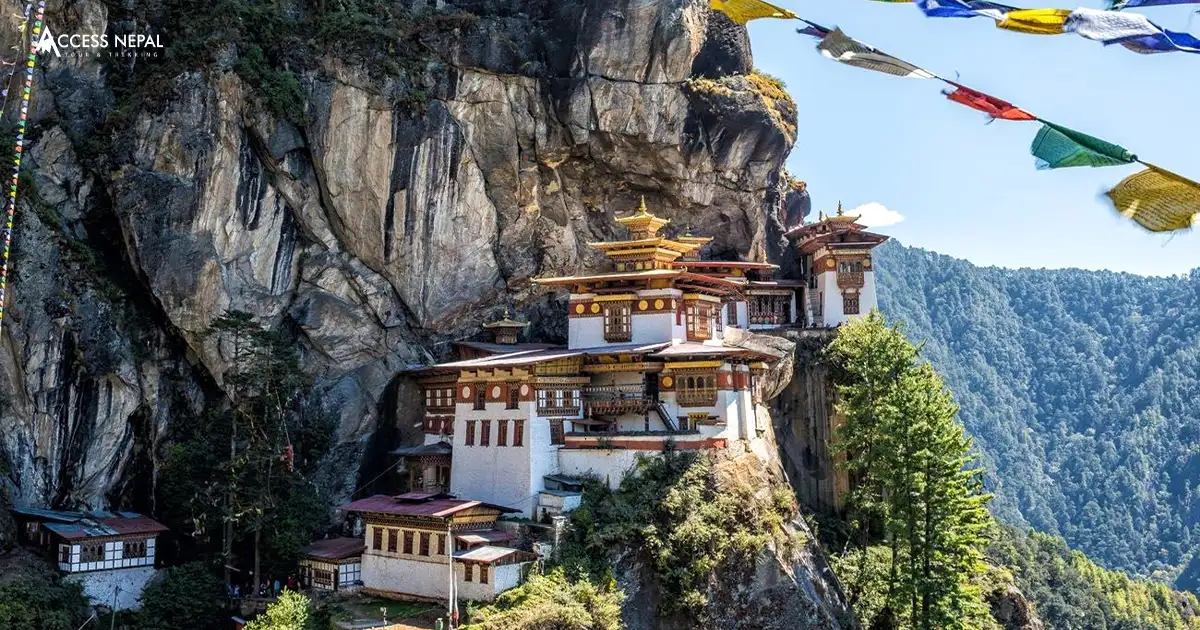
Tiger’s Nest Monastery Bhutan
In this blog we will explore the trails and the difficulty of the Druk Path Trek so you have a clear view of what you can expect and what kind of challenges you might have to face on your journey. This blog will even help you to prepare your things that are important for your Druk Path Trek.
Druk Path Trek Overview
The Druk Path Trek may be known for its short trails and routes, but the most beautiful factor is that it connects the two largest cities of Bhutan, Paro and Thimphu. The Druk Path Trek distance is 54 kilometers , which takes 5 to 6 days on average for trekkers to finish their expedition.
The trails are covered with forests of pristine trees, red rhododendron trees, and clear alpine lakes. You will see many high mountains and a majestic view of them filled with flags.
Mostly all the Himalayan treks often take weeks to complete, and most of them are not suitable for beginners. But the Druk Path Trek brings an opportunity for beginners with short route options for all the adventure seekers. The beginners are not that friendly with the altitude trekking.
So through your journey you will focus on high climbing rather than covering long distances. Trekkers will walk 3 to 5 hours daily while enjoying the views and taking slow steps. If you have a short schedule and enjoy the Himalayan adventure, this is the most ideal option for you.
Druk Path Trek Difficulty
According to most of the trekkers, the Druk Path Trek difficulty is no more compared to most of the other expeditions. But as we are talking about a high-altitude trekking scenario, we cannot be sure. The level of difficulty may be different in each section of the trails, as some parts can be easy to navigate and other parts may be physically and mentally exhausting.
The trails and the routes of the Druk Path Trek are marked as moderate, so the adventure can be done by the people that are in good physical and mental health condition. The trekkers must be comfortable walking a few hours for 5 to 7 days each day. The trails are covered with routes that rise and fall, reaching 4,235 meters at the end of your journey. Even if the reaching height is 4,235 meters, you will not need climbing ability. This is the reason the trails are marked as beginner-friendly.
When you keep rising up and gaining altitude, the atmospheric pressure drops significantly. So the trekkers can expect the sudden change of weather, low level of oxygen, and the drop of temperature below freezing point. If you are traveling during winter, you can even expect the snow covering the trails, which increases the difficulty and can be a major obstacle to your journey.
Related Packages
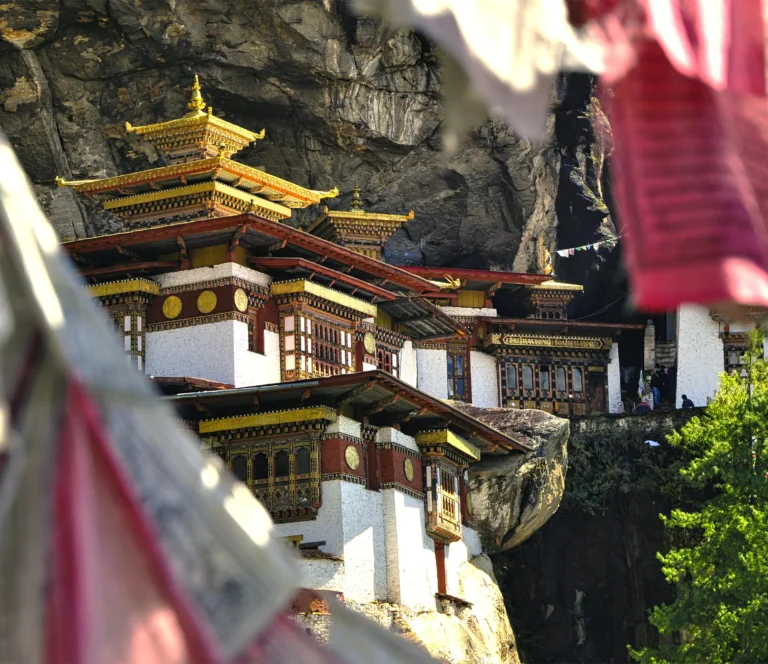
Druk Path Trek - 11 Days
 4,110 meters/13,484 feet
 Moderate
 All
Inclusive Plan
All
Inclusive Plan
Eventually you will reach Simkotra Tsho at 4,110 meters, which is known as the highest point of your journey. But some people claim that the Phume La Pass reaches 4,210 meters. If we compare both of them, there is not that significant difference in distance. If we put this into perspective, this is not even half of the total height of Mount Everest. But it is common when you cross 2,500 meters of height. The oxygen level is significantly lower than what we used to breathe at sea level.
Druk Path Trek Day to Day Itinerary
Day 1: Paro to Jele Dzong/Tshokam
Day 1 is often treated as the most challenging day for a good reason because trekkers have to complete the route and gain the elevation of 1,000 meters at the end of the day. The journey will start 2,487 meters from the National Museum in Paro. The trekkers will complete the route while passing through the farmland and reach the forest of pine trees.
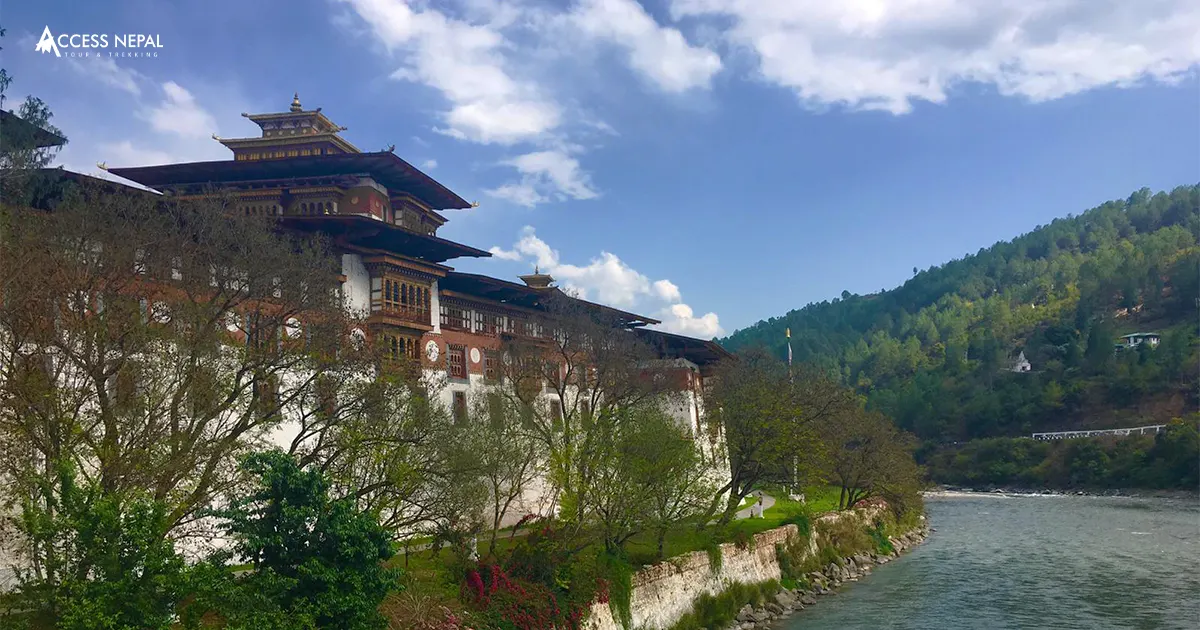
Dzong, a distinctive fortress-monastery of Bhutan
The first day of trekking is short, but the amount of altitude you will gain in such a short period of time means walking at a slow and steady rate. Many people trekking for the first time, or the beginners, get surprised by the difficulty of the first day. The sudden change in altitude and the intense physical activity are involved in this type of trek.
Day 2: Jele Dzong to Jangchulakha
On your second day you will walk on flat terrain covering about 10 kilometers. It takes 3 to 4 hours of physical walking. The journey will start from sharp inclines and gradually flatten off as you travel through dense forests of rhododendron. The track you will follow is filled with places that provide stunning views if the weather is good.
After you travel the 3 to 4 hours, you will reach the elevation around 3,770 meters and reach your destination of Jangchulakha. The altitude is much smaller compared to day 1, but the sudden change of altitude impacts the large number of trekkers.
Day 3: Jangchulakha to Jimilangtsho
On day 3 you will travel 11 kilometers, roughly 4 hours of walking, to the lake. You will follow the route that goes through a high incline while enjoying fantastic, unbelievable views of the mountains.
After the entire walk of 4 hours, you will reach your breathtaking destination, Jimilangtsho Lake. It is located around 3,870 meters. This lake is popular among the trekking society for its amazing and impressive peak above it named Drake at the altitude of 6989 meters.
Day 4: Jimilangtsho to Simkotra Tsho
On day four you will walk a similar distance of 11 kilometers, and 4 to 5 hours of walking will be spread throughout your day. You will go through the trails covered with dwarf rhododendron forest and skirts of Jhanetsho Lake. Along the way you will encounter yak herder’s’ camps, a place to observe the higher-altitude way of living,
The Simkotra Tsho camp is located at the highest point of your journey. At the end of the day you will reach 4,110 meters above sea level. The atmosphere at this altitude is lower than sea level, so it is normal for trekkers to get altitude sickness.
Day 5: Simkotra Tsho to Phajoding to Thimphu
The last day of your journey Day 5 is often the most important and difficult part of the entire journey. Because on day 5 you will have to ascend and descend at the same time through multiple mountains. You will reach the Phume La mountain at 4,210 meters of altitude and the highest point of the trek.
On the last day you will walk for 6 to 7 hours, covering the 15 kilometers to reach your final destination. After that you will start your descent down through the forested area of Phajoding Monastery and reach Thimphu. The most physically exhausting journey for your legs and body of trekkers. According to trekkers, downhills are much tougher than climbing upward.
Budget of the Druk Path Trek
Bhutan is on the bucket list of every trekker. But the country has its own rules and regulations for the tourist or the travelers. Bhutan has a daily Sustainable Development Fee (SDF) of $100 per day and INR 1200 per day for Indian citizens. The cost of hotels, food, and the permits will be according to your package. The guides’ and potter’s costs will also be included in your contract.
So the average Druk Path Trek cost will be around $2500 to $4500, according to the days you are going to stay or the luxury travel you want. If you travel in larger groups, you can lower your package cost by sharing your accommodations and transport. It is the most popular among the beginners searching for adventure and to experience the short high-altitude treks.
What makes Druk Path Trek difficult?
Druk Path Trek Altitude
Altitude is also known as the invisible obstacle and most common thing in high-altitude trekking. As the distance from the sea level increases, the atmospheric pressure will get lower, and the sudden drop of temperature makes the air cold and harsh. At a height of 4,000 meters, you will get 40% less oxygen compared to the oxygen available in the air at sea level. Trekkers will face breathing problems due to the absence of oxygen.
As the level of oxygen decreases with the increase of altitude. It is common for trekkers to have problems with breathing and experience altitude sickness. You will start to notice the symptoms, including nausea, vomiting, headache, and shortness of breath. The human body is not built to survive at higher altitudes; some physically fit athletes also perform poorly, and some physically fit people perform better than them.
The altitude challenge is the most common, so to avoid the altitude problem, you need to keep your body hydrated, and understanding of how your body works matters. The Druk Path Trek routes and trails are made for slow walking and offer an opportunity to experience altitude trekking for beginners. This trek helps their body to train and adjust to a similar environment.
Here is the altitude chart of the Druk Path Trek of Bhutan
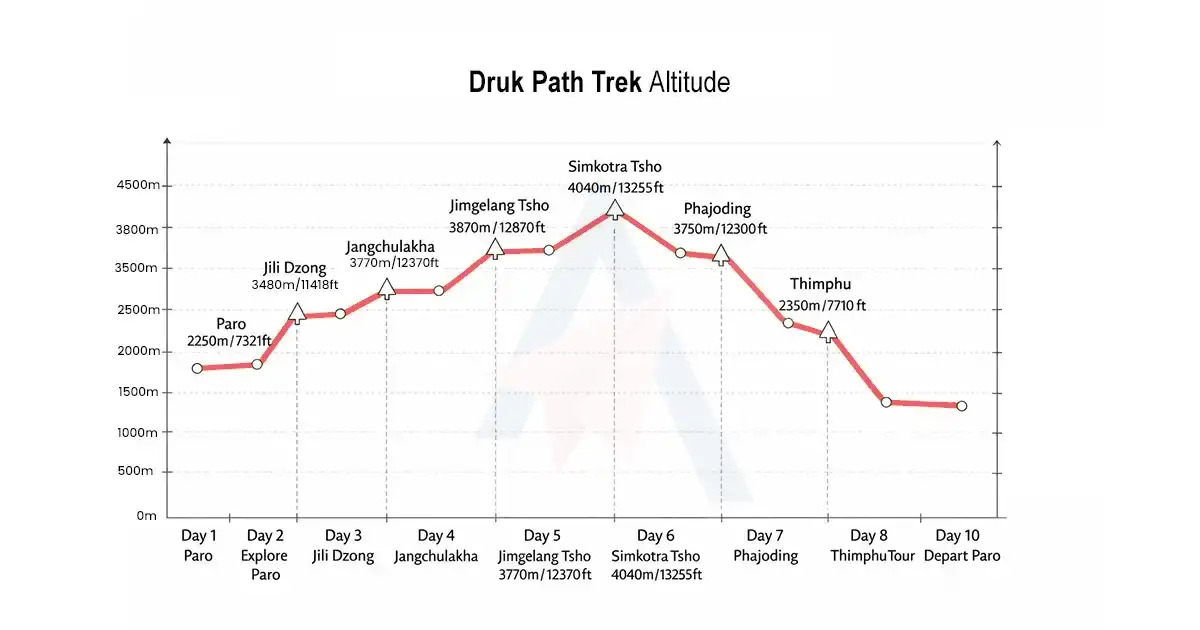
Altitude Chart of Druk Path Trek of Bhutan
Topographical Diversity of Druk Path Trek
The trails and the route of your journey are covered with rocks, loose gravel, and the occasional muddy section, adding to the difficulty in navigation of the routes. During rainy season the conditions of trails become slippery and more challenging.
The Druk Path may offer the clear views of the Himalayas and be beginner-friendly, but the terrain is capable of turning into a very dangerous state when trails are no longer in a dry state. The trekkers visiting during early winter will get the chance of seeing trails covered in snow. It might look beautiful but adds to the difficulty in your journey.
The uncertain walking trails are the major highlight of this trek and the most amazing part of your journey. Mostly during windy weather and in the rainy season, you will have limited visibility. The downhill trekking is considered the most difficult part of your journey. The last day can put more physical pressure on your knees and legs.
Weather Condition of Druk Path
The weather condition of the Himalayan region is uncertain and unpredictable. As the altitude keeps on increasing the temperature will drop accordingly. The day might feel warmer but during night the temperature will drop and sometime reach below freezing point.
The Spring and Autumn are known for the most busiest season for trekkers. In this season the trails are filled with the green forest with flower blooming period and trekkers can travel with less weight, as the daytime sun keeps you warm. But you cannot predict the weather of the Himalayan region because it can fall apart anytime. During summer days temperatures feel war,mer but as the night falls, temperature can drop significantly.
The rainy and winter seasons are the most difficult times for high-altitude trekking. The trails are covered with mud and snow. The slippery trails make the navigation difficult. During this season trekkers have to put more physical strain on their bodies compared to spring and autumn. The cold air, rain, and snow will cover the trails and the views of the mountains. So only intermediate and elite trekkers walk on these trails in the rainy and winter seasons.
Physical and Mental Fitness for Druk Path Trek Bhutan
The altitude trekking always is more demanding in physical and mental fitness. The Druk Path Trek might be beginner-friendly and not that physically demanding, but it still requires the stamina and endurance to complete the expedition. The human body is not built in a way to survive places with low oxygen levels.
Trekkers have to go through physical activity such as running, biking, or short hiking to build a strong cardiovascular system that is very important to complete the Druk Path Trek. It requires you to be in physically fit condition because you have to walk five to six hours daily, so you must train your body physically and mentally accordingly.
Building cardiovascular endurance is not something that happens quickly. All the trekkers recommend starting training at a minimum of 6 months prior to their journey. Types of activities that help build the athletic ability necessary for maintaining exercise over time include running, cycling, swimming, stair climbing, etc. Your main objective should be to improve your ability to maintain your physical and mental strength.
Which is the Best time to visit the Druk Trek Path?
The Druk Path Trek in Bhutan is the best during the spring months of March and May or the autumn season from September to November. Spring offers a beautiful sight of colorful rhododendron trees along the hillside and clear skies allowing for majestic views of the Himalayan Mountains. The weather during these months is nice, with daytime temperatures typically between 10 and 20 degrees Celsius, but nights will be cold.
Especially during autumn, October and early November are considered the most popular times for trekking. During this time, trekkers will enjoy clear weather, warm daytime temperatures, and beautiful mountain views. These months have the clearest skies and provide the best opportunity for photographing and enjoying the beauty of the Himalayas.
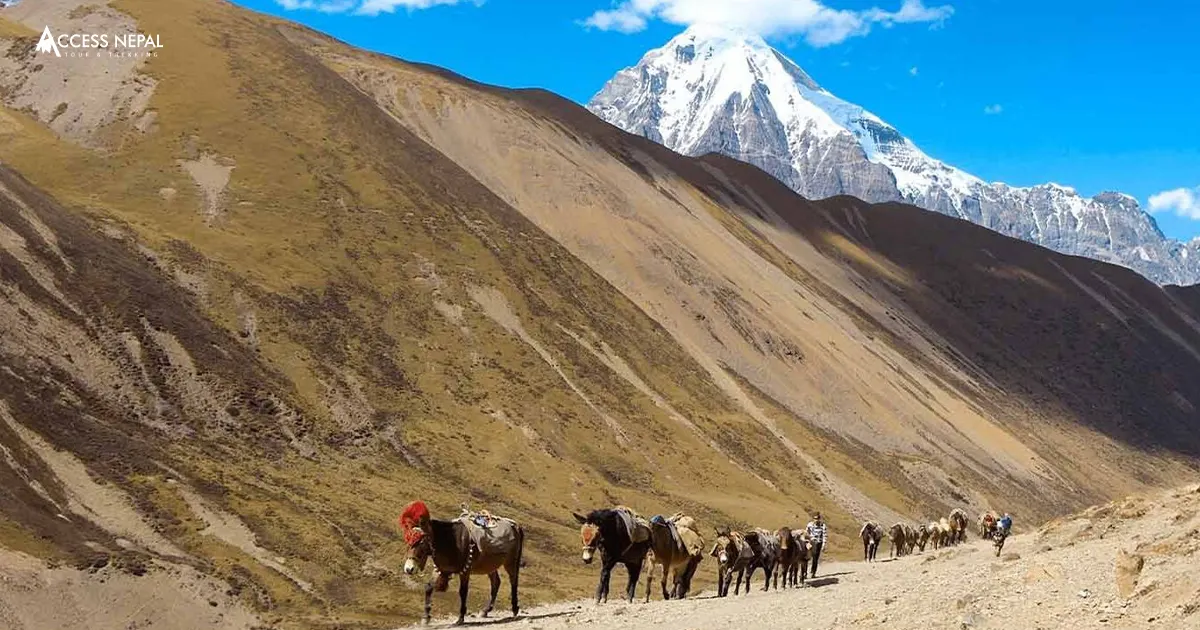
Making trekking arrangements in Nepal can be done throughout all seasons of the year. However, some seasons may be more ideal than others for trekking in this region. Generally, you should avoid trekking in Nepal during the monsoon season because the trails become muddy and hard to travel.
Likewise, despite the warm summer months, the winter months of December and February can also pose major challenges for climbing due to colder-than-average temperatures that can drop to -10°C or lower at night. Snow may block access to higher passes, and there are fewer daylight hours to hike within during these months. If you can plan your trekking to take place at a time when conditions are ideal to maximize visibility and have comfortable trekking conditions, it may be well worth your time to take a side trip to Bhutan via the Druk Path.
Can a beginner do the Druk Path Trek?
Yes, a beginner can do the Druk Path Trek in Bhutan because it is a moderately challenging trek. Before beginning an adventure like the Druk Path Trek, potential trekkers should have the proper mental and physical fitness and preparation required for this trek and the many aspects of it in details.
Although Druk Path is considered one of the least difficult treks in Bhutan and supports beginner trekkers very well, it is recommended that novice trekkers prepare for this trek by first making sure they are mentally prepared, as well as setting up a solid physical conditioning program that prepares them for carrying their own supporting equipment.
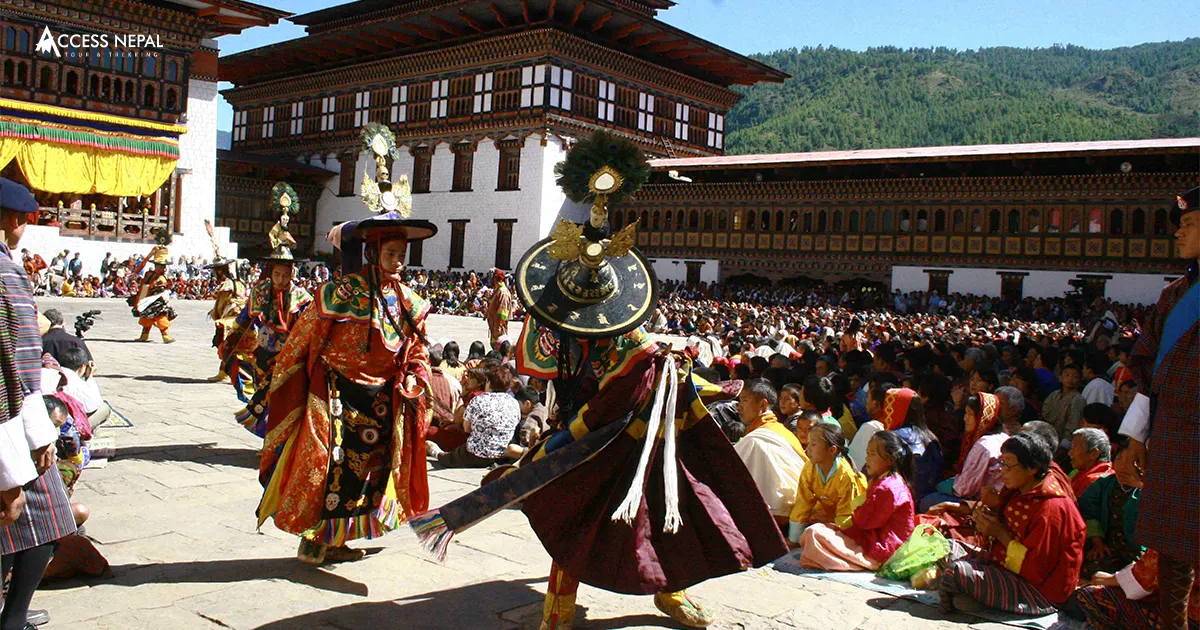
Modern Bhutanese culture derives from ancient culture
Setting up a physical conditioning program two to three months before embarking on the Druk Path Trek has proven very beneficial in helping to develop cardiovascular fitness for sustained uphill walks. As well as pre-trek preparation with gear on a daily basis during the training process. A careful trekker’s choice of trekking season will have a direct effect on the conditions experienced while on trek, including weather extremes at night and colder temperatures experienced during the days at high elevations.
What are the essential trekking gears required for the Druk Path Trek?
The Durk Path Trek is easier compared to other mountains but it is still important to pack your required gear and the important essentials. At high altitude the temperature drops below freezing point, so you will need several layers of clothing. The cold weather can damage your skin, so it is important to pack the moisturizer for your face, body, and lips. The cold air will make your eyes dry, so it is important to not forget the goggles gor your eyes.
The insulated waterproof and windproof jackets with trekking pants are important to keep you warm and safe from the sudden change of weather. It is really important to bring the water bottle, which can hold a minimum of 2 liters of water. You can even carry the cleaning tablets for water purification. You can hold onto a first-aid kit and the important medicine that the doctor has prescribed you.
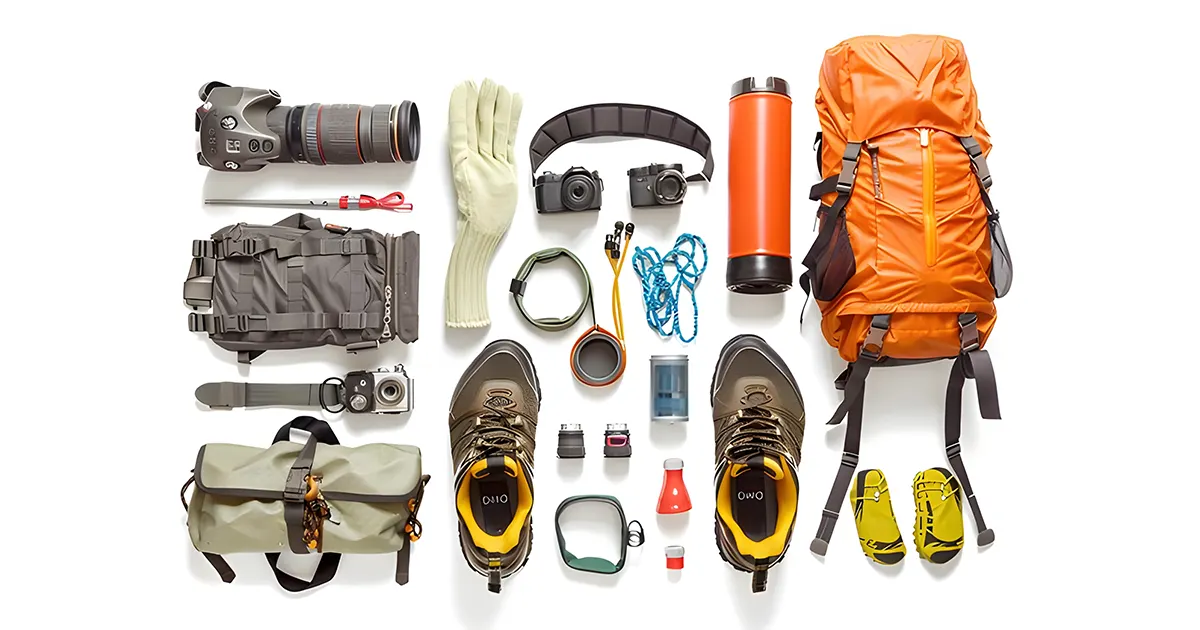
Essential Trekking Gears Required for the Druk Path Trek
The footwear and the warm hand gloves are the most important because if your body is constantly vulnerable in cold weather, it can cause frostbite and can permanently damage your organs. Footwear should consist of durable soles, including a pair of waterproof boots that support your ankles, as well as camp shoes or sandals for evening use. Mandatory equipment should include a comfortable and insulated sleeping bag rated for less than -10°C. A good quality headlamp with spare batteries, a warm hat, a sun hat, and other important essentials that are important for you.
What is the accommodation like on Bhutan Druk Path Trek
Because of the nature of the Druk Path trek being a camping trek, you will have to rely on your own tent rather than sleeping in teahouses or lodges. All the camping gear will be supplied by the trekking company, including tents that typically allow for 2 people to share unless you wish to pay extra for a single tent. The tents will generally be in good condition as well as being weatherproof to withstand low night temperatures at altitude. There will be a larger dining tent at every campsite, which is a place for dinner and socializing with the group and gives everyone a chance to get warm and relax during the evening.
You won’t need to worry about putting up or taking down tents each day. This will be done as part of the camping crew’s job. Although the toilet situation isn’t perfect, you will be provided with a basic portable toilet tent at every campsite. This is more comfortable than going into the wilderness but is still a basic toilet facility. Since there are no showers during the trek, you can use wet wipes or wash with a small amount of cold water when available. wet wipes or wash with a small amount of cold water when available.
Campsites will be surrounded by amazing scenery. Most campsites are either near lakes or located at points with 360-degree views of the mountains. Camps will typically be set up on level areas where a tent will fit into an assigned site. Although camping may seem intimidating when compared to staying in a hotel. Most trekkers feel that the experience is part of the adventure and enjoy the beautiful sunsets and sunrises you will end up seeing from your campsite, as well as the bonds formed with fellow trekkers during group meals.
However, if you are planning to explore Nepal, the best time to visit Nepal is during spring (March to May) and autumn (September to November). During this time, the weather is pleasant, the sky is clear, and it is a suitable time for sightseeing, trekking, hiking, as well as a cultural tour.
FAQ’S on Druk Trek Path Difficulty
How hard is the Druk Path Trek?
The Druk Path Trek is less challenging trek or simply known as moderate difficult trek. So, it is suitable for people with decent physical fitness and hiking experience.
The Druk Path Trek was always popular among the in experienced and beginners because the trails are easy and the covered distance is lower compared to other expeditions.
How high is the highest point?
The Druk Path Trek might be easier, but you will still reach around 4,210 meters at the end of your journey.
Is altitude sickness common?
At the end of your journey you will reach 4,210 meters, and the oxygen level will start to drop from around 2,500 meters. So altitude sickness is common, but it is easily avoidable if you keep yourself constantly hydrated.
Do I need prior trekking experience?
It is not mandatory because the routes are not that experience-demanding. So the Druk Path Trek is popular among the beginners. But having an experience is never bad for the high-altitude trekking.
Awards and Achievements
Access Nepal Tour and Treks has been recognized with TripAdvisor’s prestigious Travelers’ Choice Award for multiple consecutive years, reflecting our unwavering commitment to quality and clients’ satisfaction.











Leave Your Comment