

Annapurna Base Camp Trek Guide
- Places
- By Sanchita Pokharel
Annapurna Base Camp Trek guide is a must before visiting this classic trekking destination in the world. Also known as ABC, it is located in the Kaski district of the Himalayan region of Nepal.
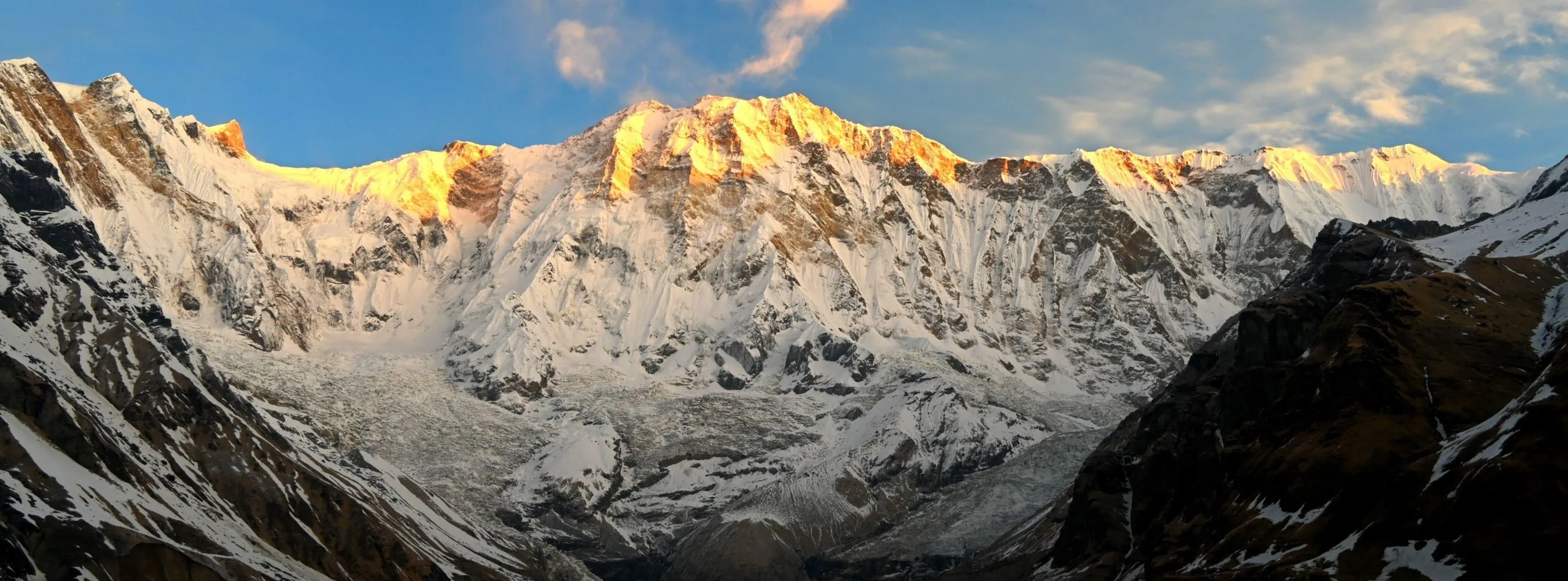
Annapurna Base Camp is located at 4,130 meters (13,550 ft). From this height, it offers 360° panoramic views of the Annapurna ranges. The Annapurna massif includes Annapurna I (8,091 m), Annapurna II (7,937 m), Annapurna III (7,555 m), Annapurna IV (7,525 m), Annapurna South (7,219 m), Machhapuchhre (6,993 m), and Gangapurna (7,455 m).
Journey to Annapurna Base Camp is not simple. It requires a good level of mental and physical preparation. Therefore, going through a complete Annapurna Base Camp Trek guide is important. Trekking day and night along glacial rivers, through rhododendron forests, traditional Gurung villages, and high-alpine valleys is not easy.
To avoid challenges and survive in this kind of remote wild environmnet a complete Annapurna Base Camp Trek guide is helpful. The adventure of Annapurna is world-renowned. It’s a well-marked trail, and breathtaking Himalayan views make it popular among trekking enthusiasts.
The adventure of Annapurna Base Camp is worth every step and second. The nature, views, and people are unmatchable. This blog is a complete Annapurna Base Camp Trek guide, which every trekker should read before joining a trek. Reading a guide before travelling helps you understand the journey on a surface level, and you can enjoy the trek to the fullest.
Annapurna Base Camp Trek Guide: Elevation & Height
The Annapurna Base Camp Trek route starts from a lower regiona nd slowly climbs to a higher elevation. Due to this Annapurna Base Camp Trek elevation is diverse. On the other hand, Annapurna Base Camp height is 4,130 m/ 13,550 ft.
The adventure starts from Pokhara, which is at 820 m high, and slowly takes you to 1,070 m at Nayapul. The trek officially begins from here. As the elevation gradually increases as we climb, finally leading to Base Camp at 4,130 m.
Highlight waypoints along the Annapurna Base Camp Trek route include Tikhedhunga (1,577 m), Ulleri (2,050 m), Ghorepani (2,860 m), Poon Hill (3,210 m), Tadapani (2,630 m), Chhomrong (2,170 m), Bamboo (2,310 m), Deurali (3,230 m), and Machhapuchhre Base Camp (3,700 m).
Annapurna Base Camp Trek Route Guide
- Day 1-3: Nayapul → Ulleri → Ghorepani (overnight), climb to Poon Hill (3,210 m) at dawn, then descend toward Tadapani.
- Day 4-6: Tadapani → Chhomrong → Bamboo → Deurali.
- Day 7-9: Deurali → Machhapuchhre Base Camp → Annapurna Base Camp (4,130 m).
- Return: Reverse route down to Jhinu Danda (hot springs) and Pokhara.
The altitude gain is gradual (most days < 900m ascent) to avoid altitude sickness. The highest point of this trek is 4,130 m at Annapurna Base Camp. The longest climb is from Deurali (3,230 m) up to Machhapuchhre Base Camp (3,700 m) and then to ABC. The trek covers roughly 70-80 km round-trip.
Trekking at this much elevation, altitude sickness is the major challenge. At high elevation, oxygen level decreases, making diffculty in breathing difficult. Above 2,500-3,000 m air gets thin. Acclimatization and gradual ascent play a key role when trekking.
In case you feel any of the altitude sickness symptoms like headache, nausea, difficulty in breathing, immediately inform your guide or descend. Read the Annapurna Base Camp Trek guide beforehand to prevent these kinds of emergencies.
Annapurna Base Camp Trek Guide on Permits
Permits are another essential part to know about before travelling. Everyone who is doing the Annapurna Base Camp Trek must have permits. It must be obtained before trekking.
To trek inside the Annapurna region, you must have an Annapurna Conservation Area Permit (ACAP). This permit costs NPR 3,000 ($23) for foreign nationals and NPR 1,000 ($8) for SAARC citizens. Kids under 10 won’t need permits.
ACAP covers multiple Annapurna treks on the same visit. Permits can be easily obtained from the Nepal Tourism Board office in Kathmandu and Pokhara. You must carry the original during the trek, as you have to show it at checkpoints.
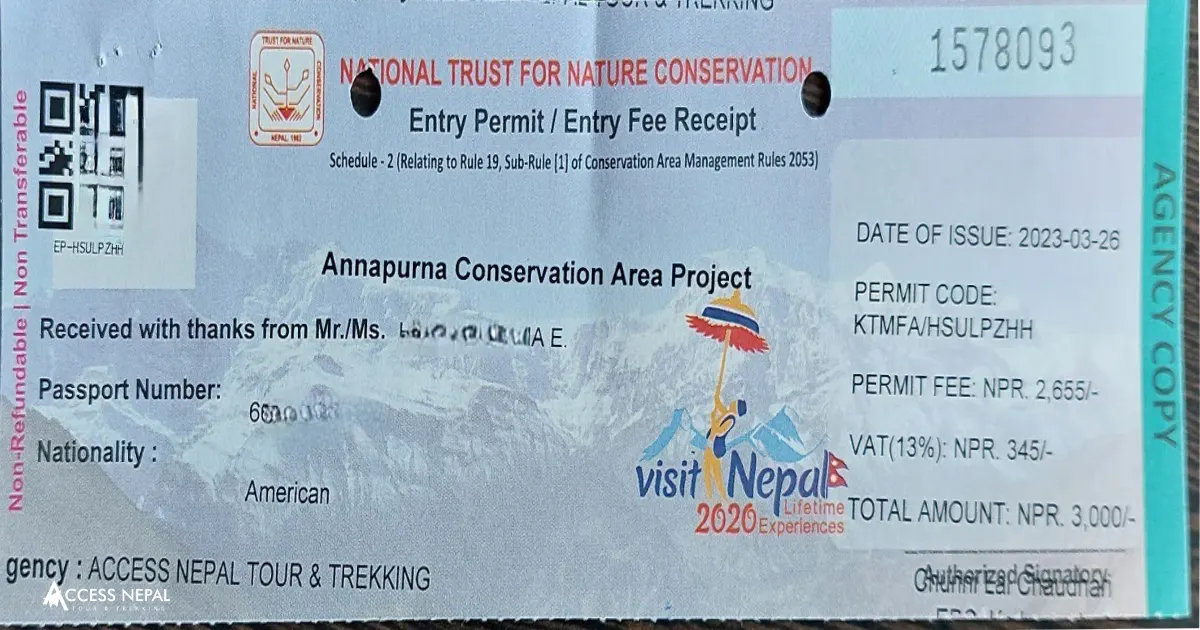
Annapurna Base Camp Trek Permit Sample
In the past, the TIMS (Trekkers’ Information Management System) card was mandatory. As of now, ACAP is only enough for the trek to Annapurna Base Camp. If you are traveling alone, then you must get a permit by yourself. Otherwise, if you are joining a trek with a travel agency like Access Nepal Tours and Trekking, permits are included in the package. We will also handle the required process to obtain it.
Annapurna Base Camp Trek Cost
Another reason why the Annapurna Base Camp Trek guide is important is cost. Before traveling, estimating the cost of the adventure is crucial. However, the Annapurna Base Camp Trek cost can vary depending on personal traveling style.
Still, spending and allocating a budget smartly is necessary to avoid overspending. Do not worry, this section ofthe Annapurna Base Camp Trek guide on cost will help you accordingly.
If you want to do a backpack trek or a low-budget trek completely independently with no guide, cheap stay, and local transportation, you can complete the Annapurna Base Camp Trek for below $800 USD. If you choose to trek with a travel agency, it can be done for $1,090 USD per person. Low-budget travel is suitable for experienced trekkers. If it’s your first time, it is best to do it with tarvel agency or by hiring a guide.
Below, we have put a list with details on the Annapurna Base Camp Trek guide cost:
- Permits: Annapurna Conservation Area Permit (ACAP) cost is $25-30, a TIMS (Trekkers’ Information Management System) card costs around $20 (TIMS is optional).
- Transportation: Bus or shared jeep to Pokhara ($15-20), then local bus ($3) or private jeep ($50) to the trailhead. A Kathmandu to Pokhara flight ticket costs $80-$120.
- Guide/Porter: Guides charge about $25-$35/day; porters $15-$25/day. Porters and guides are really important for this journey and your safety. Also, allocate money for going tips. It is usually above 10%, and it’s optional.
- Accommodation: Accommodation along the Annapurna Base Camp Trek route is mostly simple local teahouses run by families. These basic teahouses cost around $3-$6 per night for a twin room. The prices increases deonding one the location and season you are travelling. Peak season and high elevation means higher price. Similarly, it can also be changeable depending on the service you choose.
- Food & Drinks: Expect $5-$8 for lunch/dinner dal-bhat or noodles; $3-$6 for breakfast or soup. Tea/coffee is $1-$3. Alcohol and packaged snacks cost more as you go higher. Overall, budget $15-$20/day for three meals.
- Extras: Hot showers ($2-4), charging devices ($1-$3 each), Wi-Fi ($2/hr), snacks, bottled water or purification tablets ($10-$30 total).
- Insurance & Gear: Travel insurance is a must for trekking in higher regions. Gear like sleeping bags or down jackets can be rented in Pokhara ($2/day each). If you travel with a travel agency like Access Nepal Tours and Trekking, sleeping bags and down jackets are given for free.
In summary, plan at least $600-$900 per person for a typical 9-12 day trek. This cost excludes flights/visa/shopping.
Information on Annapurna Base Camp Trek Route & Itinerary
You can just go on a trip without knowing the Annapurna Base Camp Trek guide on the route. This adventure is a classic circuit trek. It starts and ends in Pokhara ciculing through Poon Hill and Chhomrong.
The standard Annapurna Base Camp Trek route starts from Pokhara, a jeep drive to Nayapul, trek to Ghandruk, and then hike up through the Modi Khola river valley.
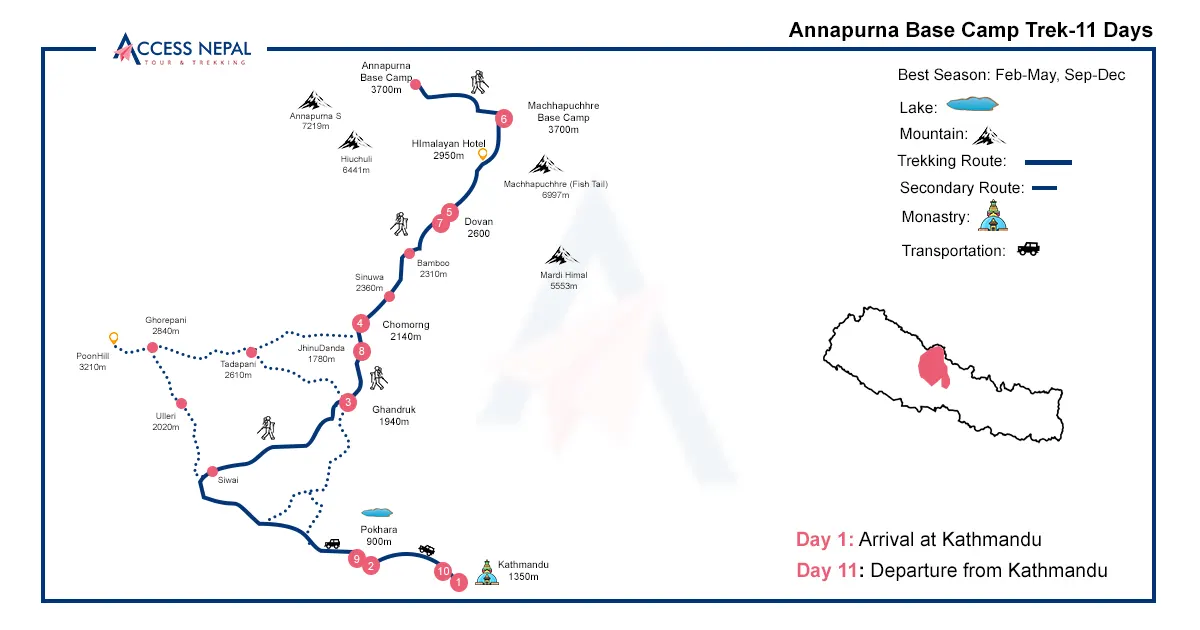
Given below is a detailed itinerary of a standard 12-day itinerary of the Annapurna Base Camp Trek. The Annapurna Base Camp Trek itinerary can be customizable depnding on the traveler’s choice:
- Kathmandu/Pokhara to Nayapul: Drive or fly into Pokhara. From Pokhara, 3-4 hrs by jeep/bus to Nayapul, trek to Ghandruk, then hike to Tikhedhunga (1,570 m), followed by Ulleri (2,050 m).
- Ulleri to Ghorepani (2,850 m): Trekking through rhododendron forests to Ghorepani. Overnight stay in Ghorpani watching panoramic sunset views over the Himalaya.
- Hike to Poon Hill (3,210 m) at Dawn: Wake up before sunrise (4-5 am), then hike to the top of Poon Hill. From this viewpoint, travelers can watch sunrise over Dhaulagiri, Annapurna, Machhapuchhre, and others. It’s a must-see and one of the most popular viewpoints. After sunrise, return to Ghorepani for breakfast, then trek 2 hrs down to Tadapani (2,630 m), or directly to Chhomrong (2,170 m).
- Ghorepani/Chhomrong to Bamboo/Deurali: Trek continues through forests past villages. You’ll pass Tadapani, then down to Sinuwa, up to Bamboo (2,310 m) or Deurali (3,230 m). However, the overnight stop can be changeable depending on the trekkers’ walking pace.
- Deurali to Machhapuchhre Base Camp (MBC): Wake up early, eat breakfast, and continue climbing from Deurali (3,230 m) to MBC (3,700 m). Landscape gradually changes, Himalayan views get closer and clearer. At MBC, we take a rest and enjoy the view of Annapurna South and Hiunchuli.
- MBC to Annapurna Base Camp (4,130 m): Here come sthe main highlight. From MBC, Annapurna Base Camp is not very far. The altitude is from 3,700 to 4,130 m, in the last final push. Enjoying the views of alpine meadows and wild nature, trekkers hike through and finally reach Annapurna Base Camp. Base Camp is the main Sanctuary and offers breathtaking views. Trekkers will be rewarded with the view of Annapurna Massif whoch includes Annapurna I, II, III, IV, and many more. Do not forget to click some photos on the signboard to record your great achievement.
- Descent: After reaching Base Camp, trekkers either stay for a night at ABC or at MBC. After spending a night, the return journey starts. Retracing the same way, trekkers come down to Bamboo/Sinuwa and back to Jhinu Danda (hot springs, 1,780 m). From Jhinu, hike out to Nayapul and drive to Pokhara.
The standard Annapurna Base Camp Trek itinerary lasts for 7 to 12 days. The itinerary is changeable depending on your travel style, stop, route, and travel agency. The altitude gain is gradual, unlike the challenging Everest Base Camp Trek.
Therefore, the Annapurna Base Camp Trek doesn’t require acclimatization or a rest day. However, it is still safe to include, especially if oit;s first time trekking in the Himalayan region. Distances each day are typically 5-10 km, with 4-7 hours hiking.
Annapurna Base Camp Yoga Trek
If you want some healing and to connect with nature more intimately, you’ve got some way out. Annapurna Base Camp Yoga Trek fits perfectly. This type of package includes daily yoga and meditation sessions amidst the Himalayas.
You can customize your own package or just choose the already-made Annapurna Base Camp Yoga Trek package. The total duration of the Yoga Trek is similar to the trekking package.
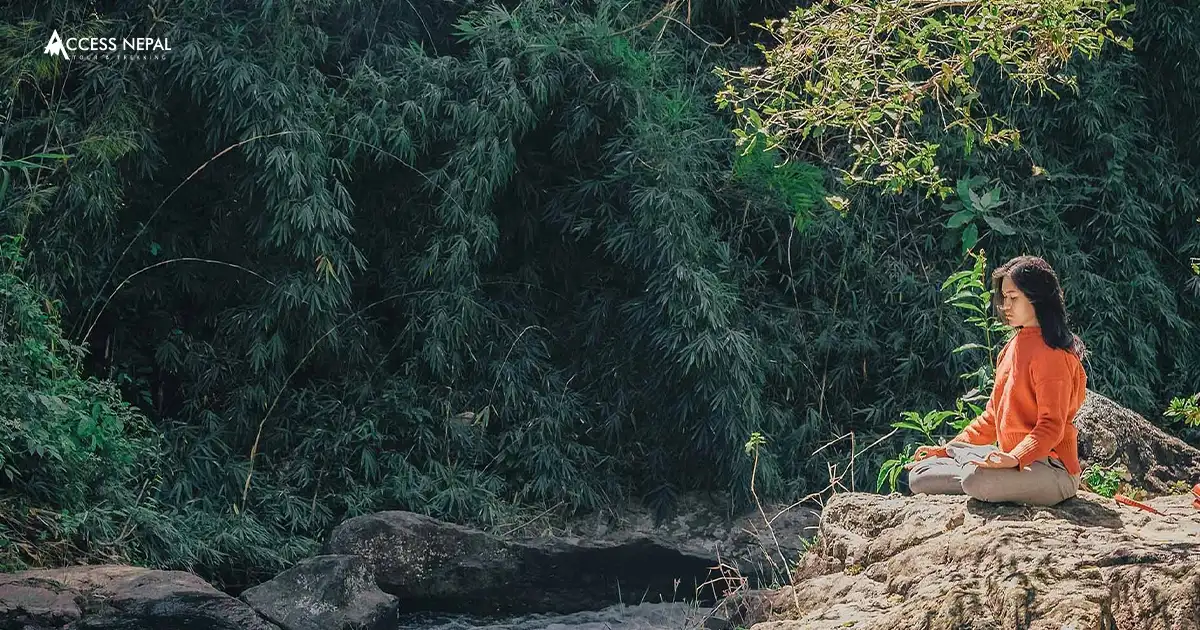
Annapurna Base Camp Yoga Trek
The typical day of a yoga trek itinerary includes morning and evening yoga along the trail. Yoga Trek blends both wellness and trekking. Doing a meditation surrounded by nature and breathing crisp and fresh air is so healing. This type of package is perfect for those who want some healing and a break from their monotonous lives.
The Annapurna Base Camp Yoga Trek is perfectly suited for mindful people. You can connect with nature and enjoy the adventure of trekking. Trekkers usually meditate watching the dawn light spill over the Annapurna peaks. Do not worry, yoga sessions are guided, so it is suggested for beginners to experience a new kind of adventure.
Best Time for Annapurna Base Camp Trek
For safety and the best experince you must go through the Annapurna Base Camp Trek guide at the best time. Traveling during the peak season is best.
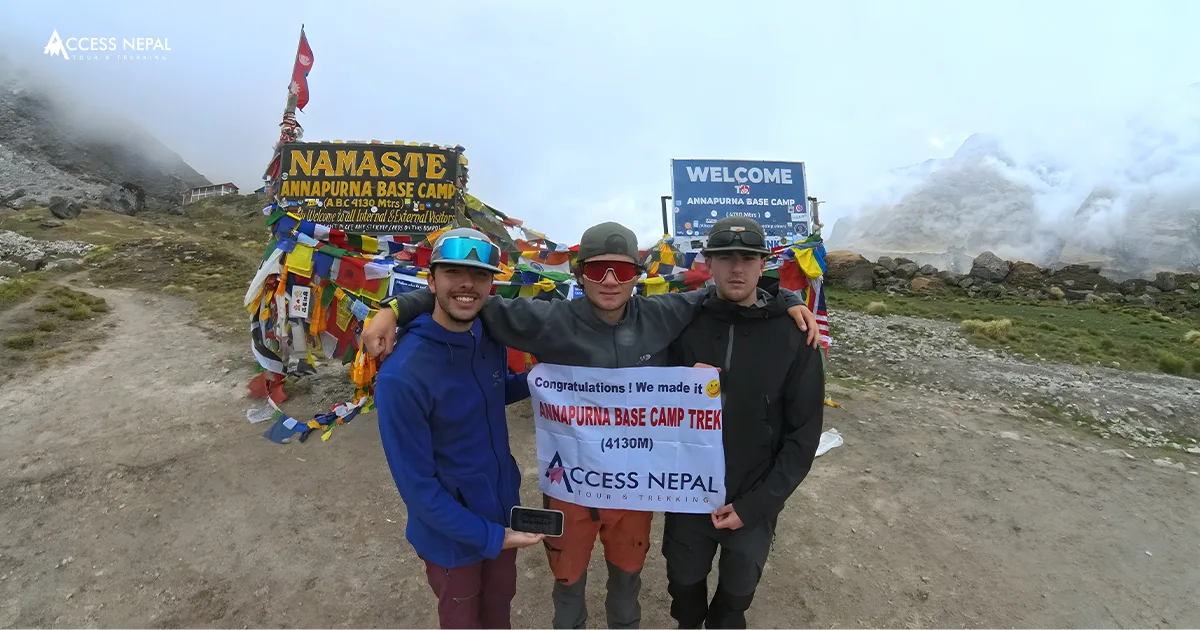
Annapurna Base Camp Trek
- Spring (March-May): This season is the peak season to go for an Annapurna Base Camp Trek. During spring, temperatures get warm, perfect for trekking. March to May also offer great visibility and clear blue skies (especially April). Main highlight for trekking during spring are colourful rhododendrons and wildflowers. Spring offers the best experience.
- Summer/Monsoon (June-August): Trekking during summer is not highly recommended. Monsoon usually coincides with summer in Nepal. Therefore, summer brings heavy rainfall, leeches, and slipperiness. It also has a risk of landslides, and flooded rivers are possible. Most of all, it also has poor visibility due to misty and gloomy weather. Annapurna Base Camp itself may be foggy.
- Autumn (September-November): Most popular time to do the Annapurna Base Camp Trek. It is peak trekking season in Nepal. Autumn mean bluse skies, warm temperatures, stable weather, cool nights, and great mountain views. The most popular month is October. So, if you hate crowds, you can trek during November where crowd usually thin.
- Winter (December-February): Trekking during the winter season is best avoided. At high altitude places, the weather are extremly cold and harsh. Nights and mornings are especially cold and can drop to below freezing point. Higher elevations mostly experience heavy rain. Trekking in the lower sections (below 2,500 m) is possible, but at high elevation it is kind of dangerous and difficult, especially for first-time trekkers. However, if you want to trek in peace (hate crowds) and love winter adventure, doing the Annapurna Base Camp Trek in winter is also possible. However, expect some lodges and services might be closed late December-January.
Seasonal Tip: Pack and wear warm layer of clothes even in spring because it is cold at higher elevation even in spring and autumn. Nights and mornings at ABC can be around -10°C. Try to visit during a peak season and always check weather forecast to avoid weather challenge.
ABC Trek Difficulty Level
The Annapurna Base Camp trek difficulty is moderate level adventure. This trek is suitable for beginner trekkers as well. Despite being moderately difficult, it is not technical. The Annapurna Base Camp Trek doesn’t require ropes or climbing.
Annapurna Base Camp Trek can be easily completed safely with good physical fitness and preparation. This journey might test endurance, but it is doable with good mental preparedness.
The typical days during the Annapurna Base Camp include long hiking days and climbing uphill. If you are a beginner, trying to do the Annapurna Base Camp Trek, it is completely possible. It is highly recommended to start training your body 2 to 3 months prior.
Some of the major challenges of the Annapurna Base Camp Trek are:
- Altitude Gain: The major challenge is altitude. This adventure requires you to climb over 3,300 m from start to finish. From an altitude beyond 2,500 m, there is a risk of altitude sickness. Every step you take is very important. Climb slowly, drink lots of water, and avoid alcohol.
- Terrain: The route is rough and rocky at higher elevations. It gets slippery and muddy, along with leeches, in the monsoon season. Also, prepare for stone staircases (especially Ulleri). Do some leg strength training and bring high-quality trekking boots. Trekking poles are highly recommended for both ups and downs.
- Endurance: The trail spans 115 km over several days. Conditioning through hill training, long walks, or stair workouts pre-trip pays off. Therefore, add some cardiovascular exercise to your workout to prepare your body for the trek.
Annapurna Base Camp Trek is moderete but completely achieveable by beginner trekers as well. With the right mindset, strategic planning, and Annapurna Base Camp Trek guide, it can be succesfully completed.
Altitude Sickness
Annapurna Base Camp Trek is located at 4,130 m. At this height, it has high risk of getting altitude sickness. Therefore, trekkers must be careful not to get Acute Mountain Sickness (AMS). Common symptoms of AMS include headache, nausea, dizziness, loss of appetite, fatigue, or sleep disturbances.
Every step or thing you do during the trek determines your health condition. Always listen to your body. If you feel any discomfort in your body, immediately inform your guide.
To prevent altitude sickness, climb slowly, drink plenty of water, eat nutritious high-carb meals, and include acclimatization days.
One of the major solution of altitude sickness is descent. If you feel any of the altitude sickness symptoms, immediately come down by 200 m. Inform your guide or nearby friends, and they will help you bring it down.
In conclusion, early preparation means more fun, safety, and adventurous experiences. Therefore, going through the Annapurna Base Camp Trek guide is highly recommended.
Awards and Achievements
Access Nepal Tour and Treks has been recognized with TripAdvisor’s prestigious Travelers’ Choice Award for multiple consecutive years, reflecting our unwavering commitment to quality and clients’ satisfaction.











Leave Your Comment