

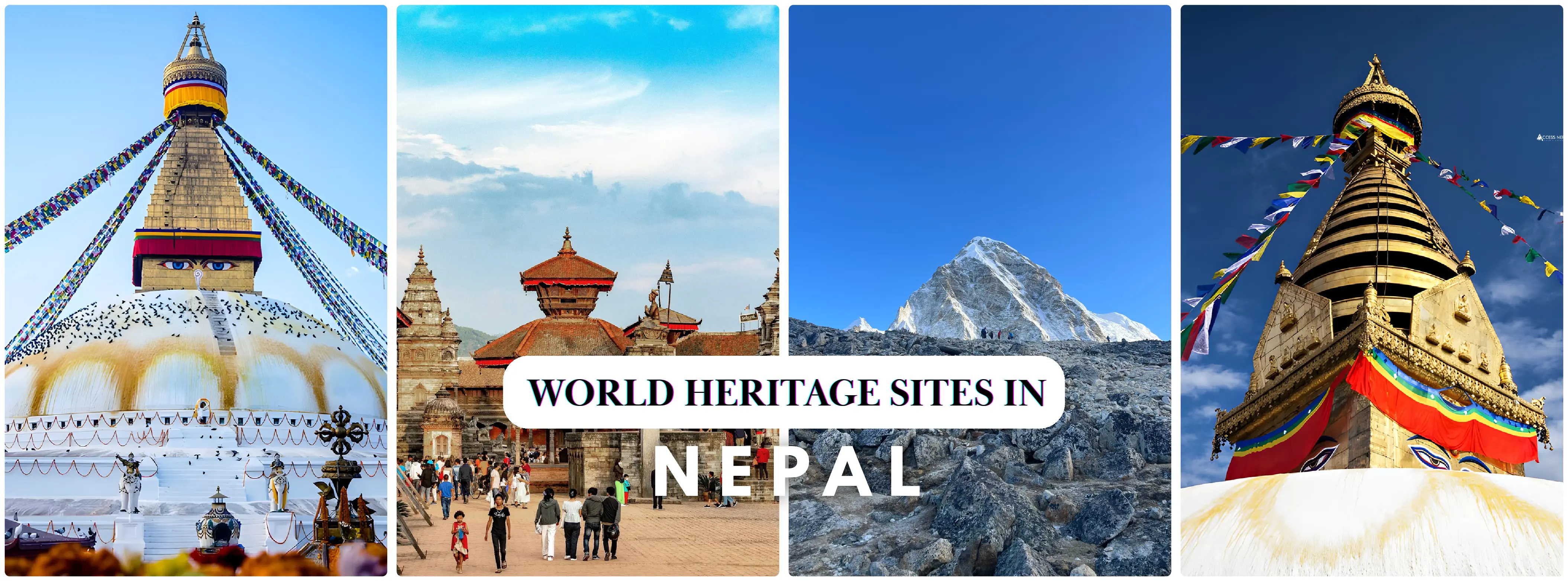
World Heritage sites in Nepal
- Information
- By Shrijan budhathoki
World Heritage sites in Nepal cover multiple cultures, religions, and traditions that lie between the borders of China and India. Nepal might be poor in economy, but we are rich in natural resources and adventures that create excitement for worldwide tourists.
Nepal is divided into three regions. The mountain region occupies 15% of the total area, another hilly region occupies 68% of the land, and finally, the Terai region occupies 17% of the total area of Nepal. Nepal is divided into 7 provinces and 77 districts. A country filled with mystery and adventures that can make any traveler feel like walking the stairs of heaven.
According to UNESCO, Nepal is home to ten World Heritage Sites. Most of them are located inside Kathmandu Valley. You can find 7 of them inside the valley, and 3 of them are outside the valley. Now these heritage sites have become the major attractions for tourists. Each year, thousands of travelers visit Nepal to experience the history, culture, and traditions while enjoying the hospitality of the Nepalese people.
A country rich in culture and many traditional temples that hold the history of unique craftsmanship, which is popular all around the world. Kathmandu Valley and other heritage sites attract tourists from the world. In Nepal, there are 10 UNESCO World Heritage sites. Eight of them are cultural, and two of them are marked as natural heritage sites by UNESCO.
In Kathmandu Valley, you can find cultural heritage sites like Boudhanath, Pashupatinath, Swayambhunath, Patan Durbar Square, Kathmandu Durbar Square, Bhaktapur Durbar Square, and Changunarayan Temple. The other three are outside the valley. Sagarmatha National Park, Chitwan National Park, and Lumbini.
Sagarmatha National Park is also one of the World Heritage sites in Nepal, where the world’s tallest mountain, Mt. Everest, is located, and Chitwan National Park, where thousands of tourists visit every year for jungle safaris. These two sites are also known as UNESCO Nepal natural sites.
List of 10 UNESCO World Heritage sites in Nepal
Kathmandu Durbar Square
Kathmandu Durbar Square used to be the royal palace of King Prithvi Narayan Shah. Prithvi Narayan Shah once ruled over Nepal and played an important role in the unification of the nation. Nepal was ruled by Malla Kings, and it was named Basantapur Durbar. Kathmandu Durbar Square has quite a large area, so you can spend hours exploring and learning about the history and the art style of the buildings while enjoying the traditions and many other aspects.
Once the statue of Hanuman was brought to Kathmandu Durbar Square. It was referred to as Hanuman Dhoka later. A giant historical structure was created from a single piece of wood in the 12th century, named Kastamandap.
Its name has two meanings: Kasta stands for wood, and Mandap means building or structure. This is how the capital city of Nepal, Kathmandu, got its name. That structure used to serve as a resting place for travelers, but now it is reconstructed and converted into a Hindu temple dedicated to Gorakhnath.
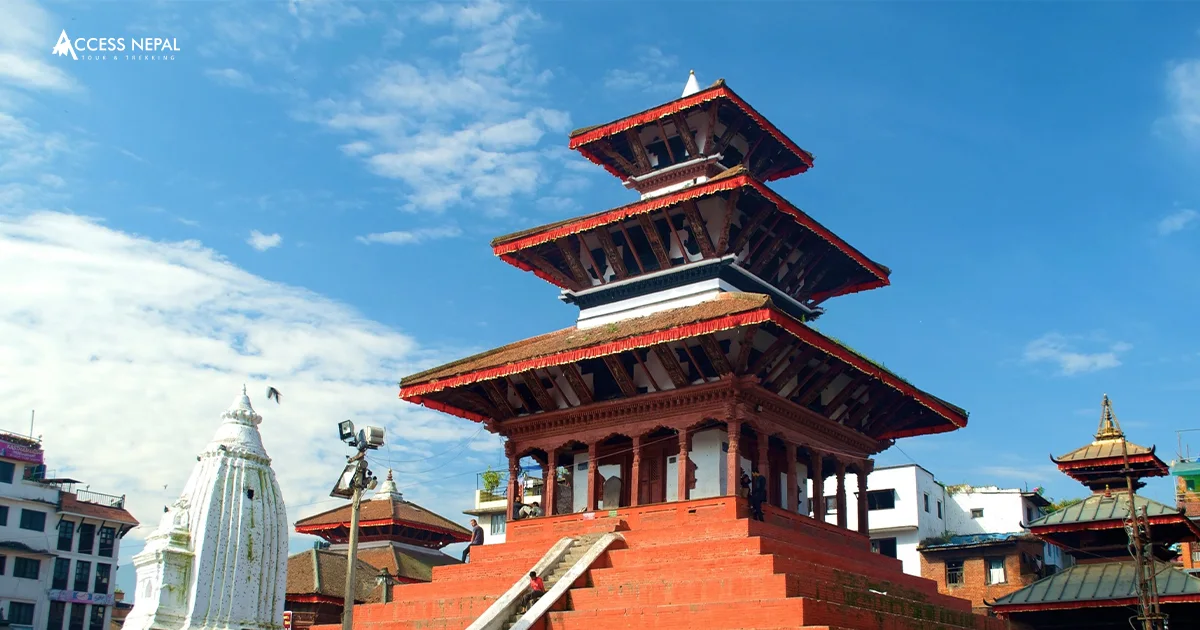
Kathmandu Durbar Square
Nepal was popular for its pagoda-style temple, which was later followed by China, Japan, and other Asian countries. Kathmandu Day Tour contains many pagoda-style temples, which were built hundreds of years ago. Once you enter the structure, you have to climb to the top to see the view of the area. You can also find a large stone statue of Garuda, which is also known as the vehicle of the god Vishnu, one of the major attractions for visitors.
The large structure painted white represents the residence of the king from where he used to rule over the nation. But in the current time, it is converted into a museum attached to Gaddi Baithaik, a place constructed by Chandra Samser Rana, one of the prime ministers during the Rana rule, in 1908 AD. It was a place where citizens could interact with a living goddess known as Kumari. Inside the building, you can find several stunning courtyards that exist for different types of royal functions.
The Hindu goddess Taeju, known for sacrificing animals, is also a royal family’s deity. The place is always closed, but in November, during a major temple festival, its doors are opened, and it allows the sacrifice of buffaloes and goats, which attracts hundreds of people during the event.
A living goddess, Kumari, a female who is still a virgin, also known as Talajana, who is worshiped by many people. The king Jaya Prakesh Malla established this living goddess as part of a ritual to bring luck and wealth during the 18th century. After the female completes her menstrual period, she will be replaced by another female to fulfill the role of living goddess.
Swayambhunath
Swayambhunath is one of Nepal’s oldest temples related to Buddhism, which is also world heritage sites in Nepal. It sits at the top of a hill overlooking the beauty of Kathmandu City. The temple has been a Buddhist pilgrimage site for centuries.
Swayambhunath land was once submerged in freshwater, but is dry now, so people used to refer to it as the Sacred Flame because they believed that it had a natural gas flame burning beneath ground level. The temple has been a major shelter for monkeys, so it holds the nickname of monkey temple. It is also a home for 100 species and countless species of birds. Swayambhunath gives the majestic view of Kathmandu Valley and Mount Everest on a clear day.
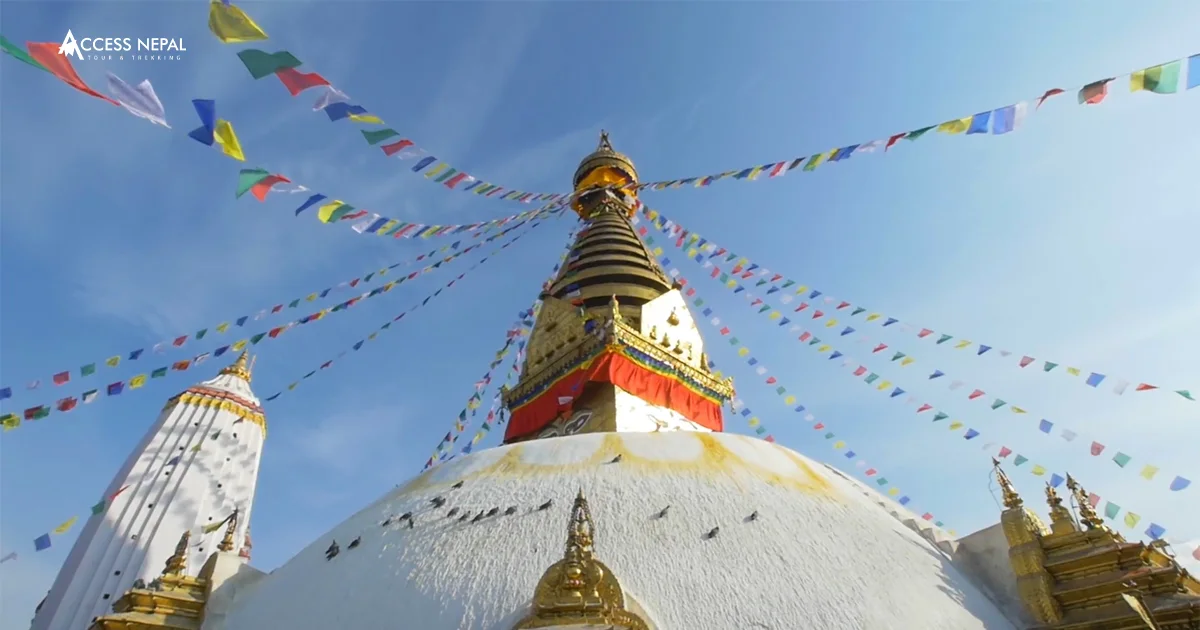
Swayambhunath
The temple supports the large population of monkeys, as the forest provides them shelter. They have been interacting with people, so they are not that aggressive unless you provoke them. People even feed the monkeys, and some fund the charity to provide food for the animals that reside there.
Pashupatinath
The most important religious site for Hindus that draws thousands of people from around the world each year. It is one of the popular World Heritage Sites in Nepal. The temple worships Lord Shiva but also hosts Buddhist ceremonies once a year. The temple is filled with crowds during the months of July and August and during numerous festivals related to Hinduism.
Pashupatinath temple is built around a large area and is also known as one of the largest cremation sites. Every day, 20-30 dead bodies are cremated at this spot. There are also various types of open cremation for different ethnic groups located near the river.
The Bagmati River is one of the holy rivers worshiped by Hindu people. People will pour the cremation ashes, believing that Lord Shiva will grant heaven to the lost souls and give them blessings. They burn the dead bodies, covering them with wood and following all the rituals before igniting them in the fire.

Pashupatinath Temple
You can find many temples that follow the Hindu culture. The entire place is crowded every day with people who visit the temple to worship Lord Shiva with a hope inside their hearts and share the problem with God. They ask for help to show them the right path to walk on and provide them with energy to fight their problems.
The place is always crowded with religious people, locals, and tourists, which helps the local businesses and provides employment to many people in the country. The statues of godlike figures like Lord Shiva and Vishnu attract many tourists with their curiosity and protect the history of Hindu culture.
Boudhanath
Boudhanath stupa is also one of the world heritage sites in Nepal, and was built during the fourth and fifth centuries and is also considered the largest stupa in Nepal and the second largest in the world. The entire stupa was built following the mandala style of architecture. Inside the temple, there are also many statues of Buddha on display. According to Tibetan Buddhism, each statue represents one of four different types of Buddha.
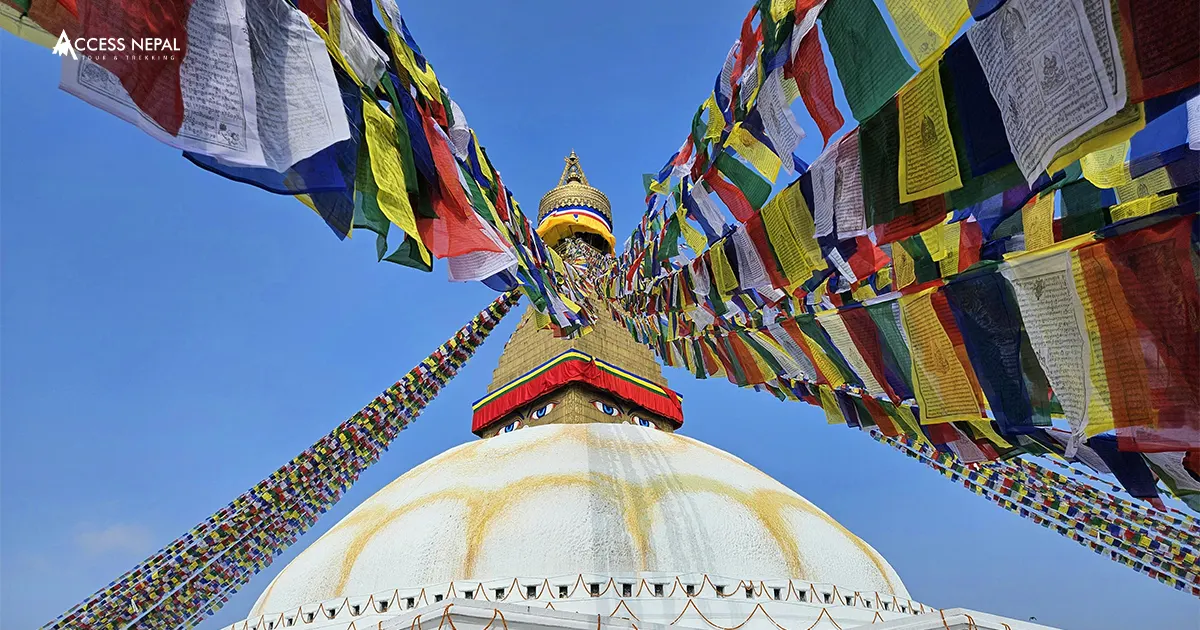
Boudhanath Stupa
The main stupa is surrounded by five hundred eighty-six prayer wheels located on the wall. Baudha is one of the most popular tourist areas, which is always crowded every day with tourists and locals. You can find many shops that cover the history of Buddhist religions and sell the souvenirs related to the religion and schools where Buddhism is taught through painting.
Patan Durbar Square
Patan is a part of the Kathmandu Valley and was originally called Lalitpur, a city filled with unique and fine arts. Patan is a flat land ruled by Malla kings before the unification of Nepal. Durbar Square is one of the major attractions of Patan, which is reopened as an art museum due to various temples and other buildings with unique and impressively carved stone-built temples and yards.
The Golden Temple, Khumbheshwar Temple, Sundari Chok, and Krishna Temple are the major attractions for tourists and religious locals, holding the religious history of Hindus.

Patan Durbar Square
Patan Durbar Square represents the true Newari culture and its architecture since the fourteenth century. This place is covered with red bricks and surrounded by old Newari residential houses. You can find around 55 major temples in the area, and make sure not to miss the temples of Lord Krishna and other deities. Also, visit the museum to learn about the history of the place, or ask your guide to explain it for you.
Bhaktapur Durbar Square
Bhaktapur is considered to be the oldest city within the Kathmandu Valley and was also known as the capital city of the Kathmandu Valley until the 14th century. It is also one of the popular World Heritage Sites of Nepal. The entire place is filled with ancient religious buildings and beautifully crafted wooden doors and windows, so they also named it the city of the devotees. The presence of four different squares holding their own importance attracts many tourists with curiosity.
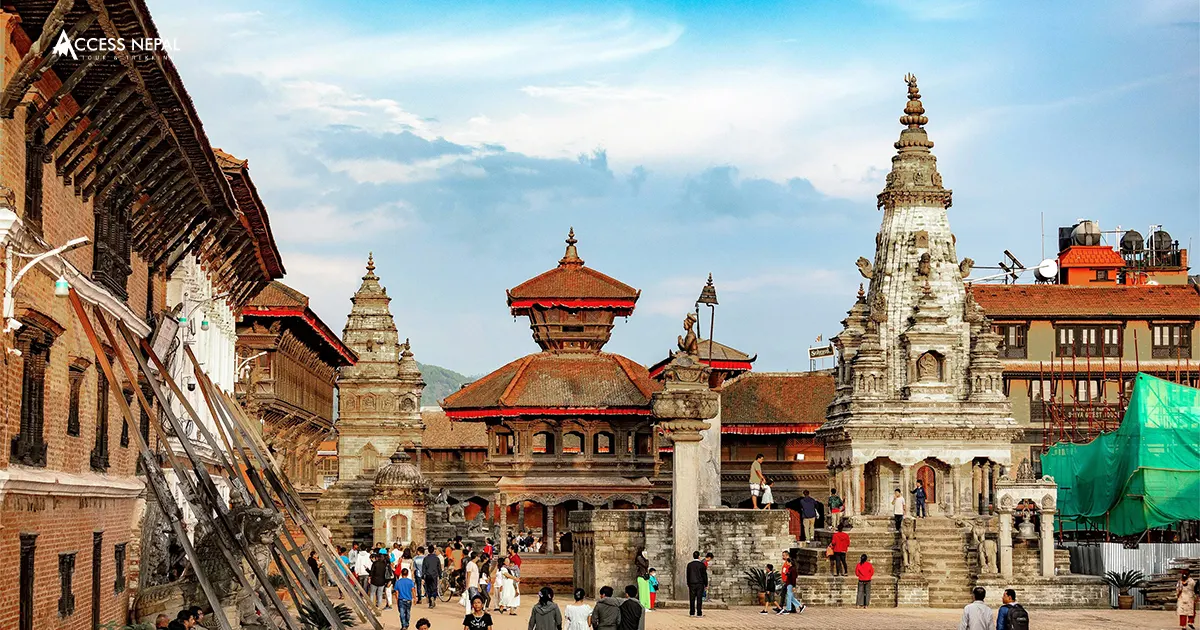
Bhaktapur Durbar Square
Dattatraya Square is the site of a unique temple to the trinity gods. Taumadhi Square houses Nyatapola Temple, one of Nepal’s highest temples. Pottery Square is a place where you can see the art of potters and try making them yourself, and finally, Durbar Square is where you will find the pagoda-style temples like the popular Golden Gate and Fifty-Five Window Palace.
The entire place is filled with many attractions that will keep you curious throughout your entire visit, and you can complete both Bhaktapur and Patan Durbar Square in a day.
Changunarayan Temple
The Chanunarayan Temple, one of the World Heritage Sites in Nepal, has much historical value for the Hindu community. The temple was built during the fifth century with no scripts. King Manadeva of the fifth century installed a pillar mentioning a script that tells the story of how he and his father gained control over the country.
It also represents the evidence of Nepali writing. The Changunarayan temple is located about two kilometers to the north of Bhaktapur city. After finishing the Nagarkot Changunarayan hiking trail, you will reach the Changunarayan temple.
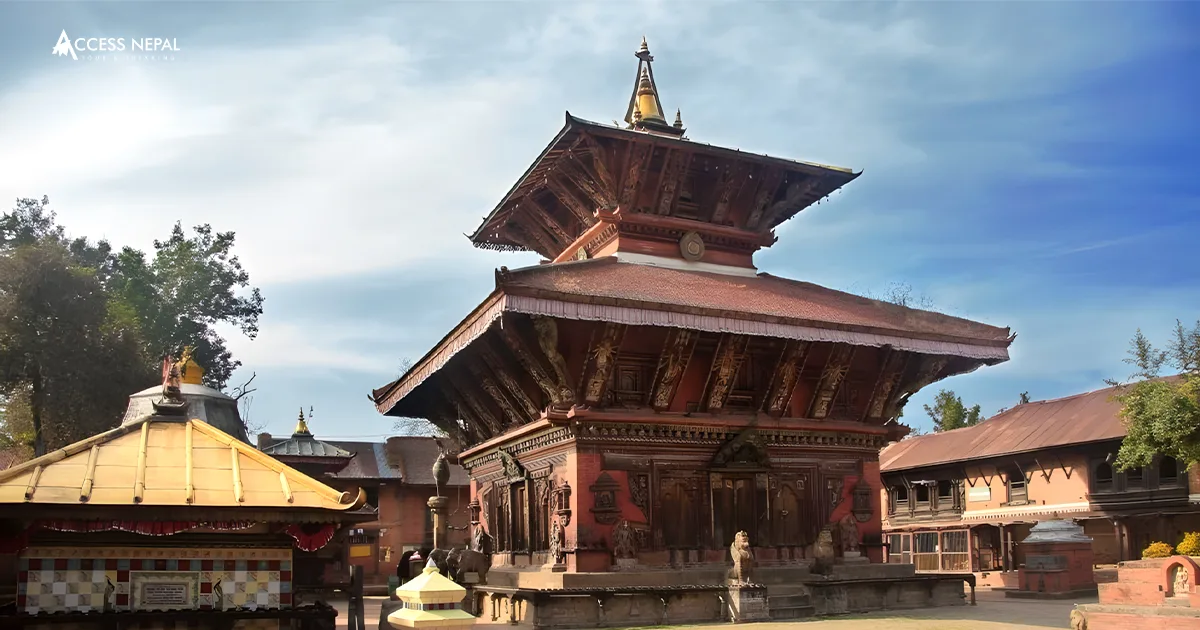
Changunarayan Temple
The temple is surrounded by champak trees, and it is located near a small village named Changu. It has the history that the king from Kashmir arranged the marriage of his daughter to the prince of bhaktapur and they named the temple to honor her. It is also said that this is the oldest temple in nepals history and the prime example of Nepalese pagoda architecture.
Sagarmatha National Park
Sagarmatha National Park is also one of the World Heritage sites in Nepal and is located on the northeast side of Nepal. It is also the home and origin of the world’s tallest mountain, Mt. Everest, which is a major attraction for travelers and adventure seekers. Every year, thousands of people visit Nepal with the ambition of conquering the world’s tallest mountain.
Sagarmatha National Park is also the starting point of your trekking journey. Some tourists just visit the park for sightseeing and taking photographs.
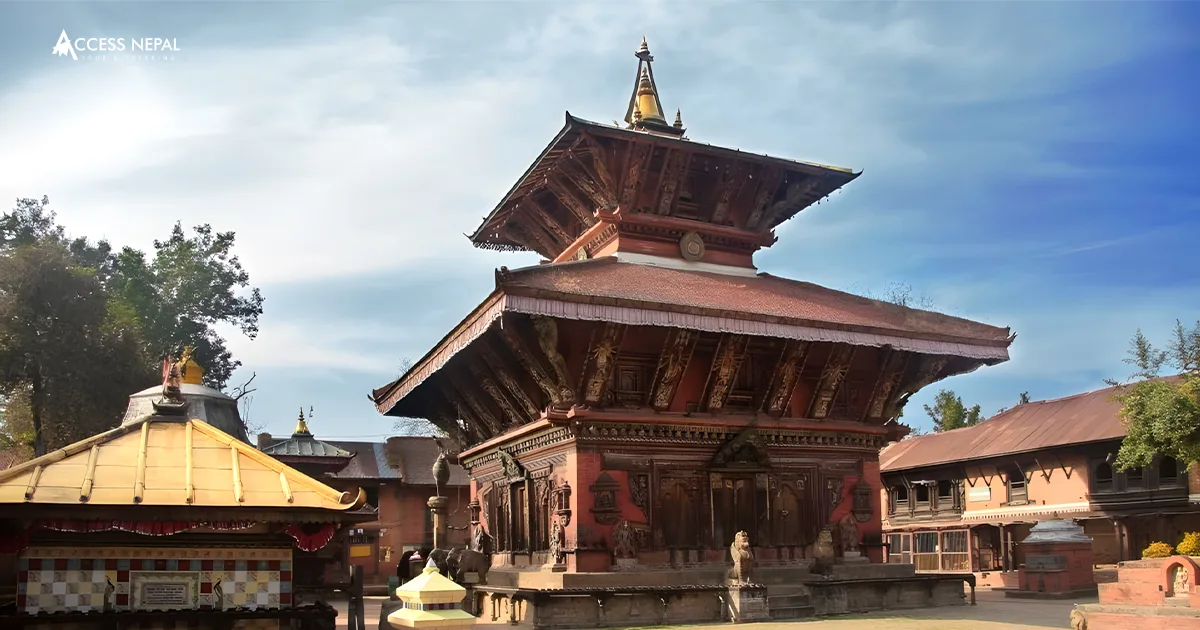
Sagarmatha National Park
Sagarmatha National Park was created in 1979, covering a large amount of land and providing a home for many special and endangered species. The musk deer, one of the rarest species of deer, is also found there and protected by nepal government.
Everest Base Camp Trek (EBC) is one of the major attractions that makes this land crowded and fun during the trekking season. A normal 12-day journey full of adventure in every step with the goal of stepping their foot at the peak of the world’s tallest mountain above 8000 meters from sea level.
Chitwan National Park
The Chitwan National Park was originally created in 1973 and is also known as Nepal’s first national park. It is also a world heritage sites in Nepal and is popular for jungle safari tours because 90% of its area is covered with jungle and is home to endangered animals. You can spot animals like tigers, elephants, spotted leopards, sloth bears, rhinos, and more than 50 different species of birds.
It is popular among both locals and tourists who are in love with nature. This park gives people the opportunity to see the wild animals and their way of surviving. In the past, it was the most popular hunting spot, but due to unwanted killing, the Nepalese government banned hunting and reestablished it as a conservation area for endangered animals.
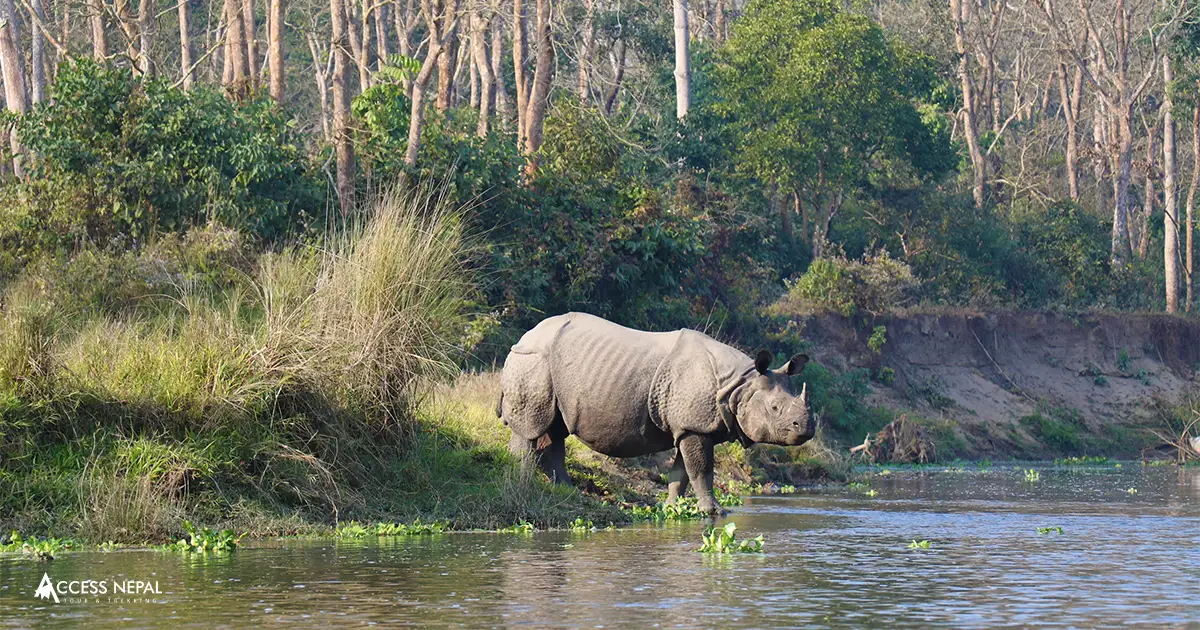
Chitwan National Park
The park has a separate location for birds known as the Important Bird Area (BIA). Every year, thousands of people visit this area to watch the different species of birds. They say in 2006 they recorded over 500 species of birds in that area. so it is the most important place to visit for people who love nature.
Lumbini
Lumbini is known as the birthplace of Gautam Buddha, located in the Rupandehi district. Among the different World Heritage Sites in Nepal, Lumbini is one of the most important places in Nepal that tells the history and the origin of the Buddhist religion. This place preserves all of the memories of buddha including the place where he used to take a bath.
Every year, thousands of tourists are attracted to this place full of temples and hidden history that tells about the wisdom Buddha had achieved. They visit the Maya Devi Temple, which was created as a monument to Buddha’s mother, and many other places like Lumbini Garden, Ashokan Pillar, White Stupa, and many other places filled with wisdom and history.
Many researchers and archaeologists visit Lumbini to collect data on the buildings and souvenirs to testify to the truth of the history and gain new knowledge in the Buddhist religion. You can even find many schools near the area that teach you about the religion through pictures and monuments. Due to its religious importance, this place is one of the most conserved places by the Nepalese government.
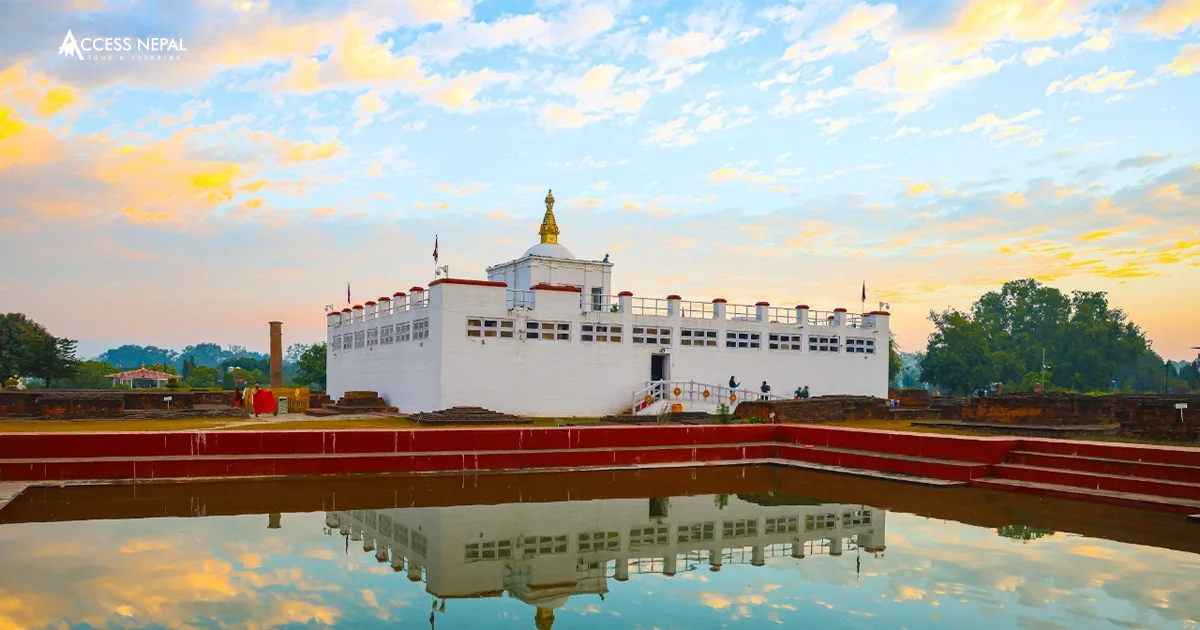
Lumbini
We can say that Nepal is small, but the history and the religious importance it carries are very significant. The creative art style, wooden buildings, origin of the pagoda style, birth palace of Gautam buddha and many other cultural sites of importance in traditions and culture.
Eight of the world’s tallest mountain including the world’s tallest mountain, Mt. Everest, out of ten are located in Nepal. So Nepal creates a golden opportunity for the people to explore the natural beauty and learn about the history of traditions, and culture while gaining wisdom on its history.
Permits required for World Heritage sites in Nepal
As you know, you might need to go through logistical things like entry ticket, accommodations, Transport and food. Some places even requires permit to enter, which can’t be achieved by solo travelers. But if you join us for this exciting journey, we will take care of all the permits and your needs to make sure you can focus on traveling and enjoying the sightseeing of the beautiful heritages without any problem. We will even plan the journey route to make sure you don’t miss any important places.
How many World Heritage sites in Nepal?
There are 10 UNESCO World Heritage sites in Nepal. They are Kathmandu durbar square, Swayambhunath, Pashupatinath, Boudhanath, Patan Durbar Square, Bhaktapur Durbar Square, Changunarayan temple, Sagarmath national park, Chitwan national park, and Lumbini.
Why choose Access Nepal Travel and Treks to visit World Heritage sites in Nepal?
If you are planning to explore the beauty of nepal join our family. Access Nepal and treks have been guiding the travelers for years, where our personal guides will make your journey breathtaking, with more than 10,000 happy trekkers. We will customize the itineraries based on your available date and days to stay in Nepal to provide you life time memories and make the journey unforgettable. So you can enquire with us for the required information regarding your travel route or ask detailed planned chart for you enitre journey.
- The company is fully licensed and registered.
- We will provide a licensed and experienced guide for a comfortable journey.
- Friendly and polite behavior with the travelers.
- We will take care of your documents and your travel needs.
- Providing the best cost-friendly environment with the best comfort.
Finally, thank you for joining our family to explore more about World Heritage Sites in Nepal. We wish you the best of luck and safe travels for the adventure waiting ahead for you. Have a safe journey.

Awards and Achievements
Access Nepal Tour and Treks has been recognized with TripAdvisor’s prestigious Travelers’ Choice Award for multiple consecutive years, reflecting our unwavering commitment to quality and clients’ satisfaction.











Leave Your Comment