

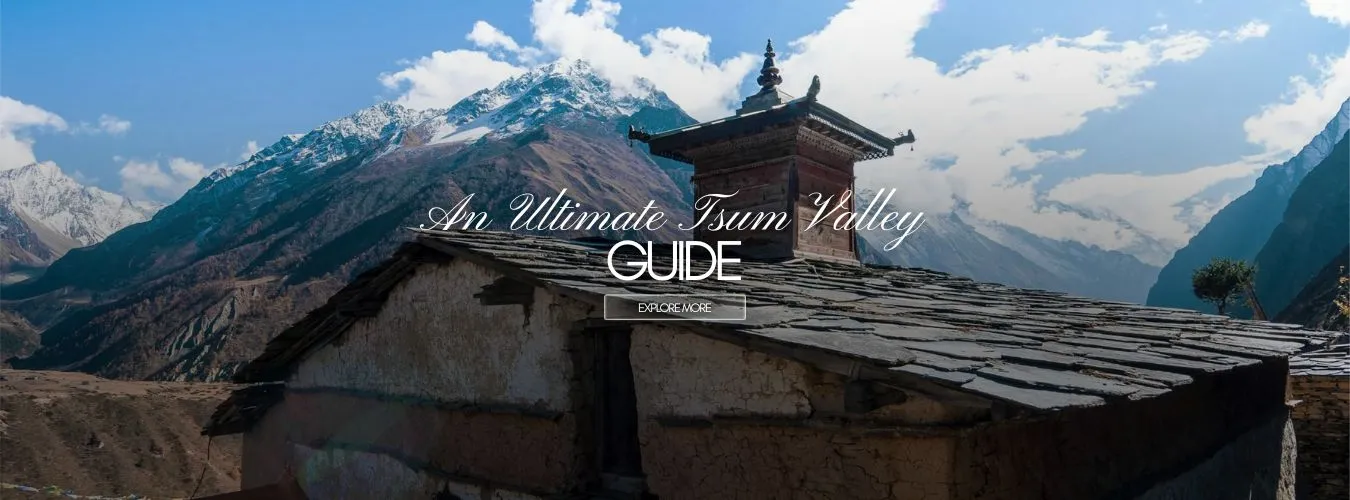
An Ultimate Tsum Valley Guide
- Places
- By Sandipan Khadka
Our complete Tsum Valley guide gives you detailed information about the Tsum Valley. In this blog, we will deep dive into cost-related information, a detailed itinerary, difficulty level, and various other aspects.
Tsum Valley is one of the secluded regions. It provides visitors with a glimpse into a completely least explored area. The valley is located in the Himalayan region of western Nepal in the Gorkha district. It provides you with the supreme beauty of the Himalayas along with Tibetan culture.
The valley is home to several Buddhist monasteries and has remained untouched. It showcases the rich history of Tibetan culture.
Tsum Valley Guide (Brief Overview)
What Makes Tsum Valley Special?
Nicknamed the ‘Hidden Valley of Happiness, ‘ Tsum Valley lies in a restricted area. Because of the remote and restricted area, the valley remains less crowded and far from modern influence. It provides an ideal opportunity to discover the untouched landscapes.
From here, you can get a glimpse of various gorgeous peaks, including Mount Manaslu, Simrang, Hiunchuli, Ganesh Himal, etc. Only after 2008, the Tsum Valley open for outside trekkers, allowing them to explore the area to the fullest. The Tsum Valley is home to several ancient monasteries and villages filled with Tibetan influence.
The valley is also well known for its culture, tradition, and unique lifestyle. Here you’ll see plenty of Mani walls, prayer flags, and ancient gompas, including Mu Gompa, Rachen Gompa, etc.
Tsum Valley Trek Difficulty
The Tsum Valley trek difficulty is graded as moderately challenging. A fair amount of physical fitness and good health conditions are essential. Besides that, mental resilience is also needed.
In order to be ready for the trek, you need to have a fitness routine including cardio and stamina-building exercises. Additionally, to make the preparation even better, you can do a daily hike for several hours.
Note: To get the feel of a real trekking scenario, carry some weight on a backpack and go hiking.
Tsum Valley Trek Itinerary 5 days
The Tsum Valley trek 5 days is a very short period, and the possibilities of experiencing the full Tsum Valley with popular destinations are bare minimum. Not a good itinerary for an authentic experience, and it is equally challenging at the same time. The following itinerary also leaves no room for acclimatization and full exploration.
Day 1: Drive from Kathmandu (1400m/4593ft) to Maccha Khola (870m/2854ft)
Day 2: Trek from Machha Khola (870m/2854ft) to Jagat (1340m/4396ft)
Day 3: Trek from Jagat (1340m/4396ft) to Chumling (2386m/7828ft)
Day 4: Trek from Chumling (2386m/7828ft) to Chhokang Paro (3031m/9944ft)
Day 5: Make a Return Journey to Kathmandu
Tsum Valley Trek Itinerary 7 days
7-day Tsum Valley trek is comparatively better than the 5-day trek, providing more room for exploration and acclimatization. Even still, it is quite fast-paced and demanding; the normal itinerary is of 11-16 days. Having said that, let’s get to know the day-to-day itinerary:
Day 1: Drive from Kathmandu (1400m/4593ft) to Machha Khola (870m/2854ft)
Day 2: Trek from Machha Khola (870m/2854ft) to Jagat (1340m/4396ft)
Day 3: Trek from Jagat (1340m/4396ft) to Lokpa (2240m/7349ft)
Day 4: Trek from Lokpa (2240m/7349ft) to Chumling (2386m/7828ft)
Day 5: Trek from Chumling (2386m/7828ft) to Chhokang Paro (3031m/9944ft)
Day 6: Trek from Chhokang Paro (3031m/9944ft) to Nile (3361m/11027ft) and return back to Chhokang Paro
Day 7: Drive back to Kathmandu
Tsum Valley Trek Distance
The total distance of the Tsum Valley trek overall is around 430 km (230 miles) from Kathmandu. Similarly, after removing the private jeep distance from Kathmandu to Maccha Khola and Maccha Khola to Kathmandu, the exact trekking distance is around 130 km.
The starting point and the ending point are both Kathmandu. Now talking of the daily distance you’ve to walk around 10 to 20 km (6 to 12 miles) on a daily basis.
If you’re looking for a combined Manaslu trek with a side trip to Tsum Valley, we have a Manaslu Tsum Valley trek package.
Related Packages
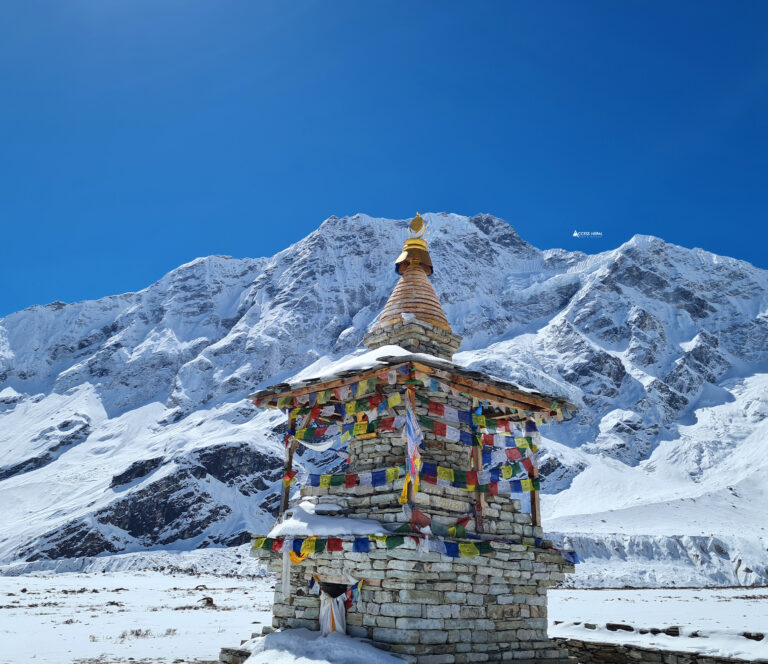
Manaslu Tsum Valley Trek - 18 Days
 5,106m/16,752ft
 Challenging
 All
Inclusive Plan
All
Inclusive Plan
Are permits mandatory for the Tsum Valley Trek?
The required permits for trekking Tsum Valley are the Tsum Valley Restricted Area and the Manaslu Conservation Area Permit. These permits are mandatory for anyone looking to trek in the Manaslu region.
All of these Tsum Valley permits can be easily obtained from the Nepal Tourism Board located in Kathmandu.
Best Season for Tsum Valley Trek in Nepal
Before heading for the Tsum Valley, you must know the ideal time to go trekking in the specific region. One of the best times or the ideal trekking season is the autumn and the spring season. During these times, the weather remains mild, and clear skies give you pleasant views of the mountains.
Rhododendron also blooms during the Spring, and lush greenery is everywhere. The weather conditions are ideal, not too hot nor too cold, most importantly remains clear so that you get the best possible views.
When talking of the rainy or the winter seasons, these are not the ideal times to go for the trek. The weather remains freezing cold, the trails are slippery, and snowfall occurs, disrupting the paths. There is also a high possibility of landslides.
Recommended Packing List
Since the Tsum Valley falls in a remote region, you need to spend your nights in the teahouse. Keeping that in mind, you need to pack important stuff for the trek, which we will discuss in this section.
First and foremost, carry both sleeping and duffel bags. Talking of clothing, you must carry thermal layers, waterproof and windproof jackets, trekking pants, and shirts. In footwear and handwear, pack waterproof hiking boots, thick hiking socks, etc.
You also have the option to rent your trekking gear instead of buying it from the local shops in Thamel, Kathmandu.
Note: Keep in mind that you shouldn’t pack your bag more than 15 kg.
Why Visit the Tsum Valley?
There are various reasons that you should make a visit to Tsum Valley:
1) Off-beaten Trail
The Tsum Valley is located in the Manaslu region and covers almost half of the trail of the Manaslu Circuit trek. Being in the remote region, it offers surreal views, and the route is less damaged and far from modernization. Despite being less traveled and included in remote destinations, the valley has a tremendous natural beauty to offer and a chance to discover completely new landscapes.
It takes you into the lap of the Himalayas along with the breathtaking panorama of Ganesh Himal and Boudha Himal.
2) Tibetan Influence
Since the Tsum Valley is located near the Tibetan border, the Tibetan influence is quite big here. Tibetan culture is widely linked to Tibetan Buddhism. They practice the Buddhist principles sincerely, and the religious practices they do are a part of their daily life.
People living in this region are called Tsumbas, following a unique culture massively influenced because of the geographical isolation.
3) Ancient Caves
The Tsum Valley has played a significant role in filling in the pieces of Tibetan Buddhism and is highly known for the unique traditions it follows. This tradition is bound by the people who believe in the ancient values and perform practices on a daily basis.
The culture being evolved and the introduction of Buddhism started from the neighbouring countries, including Nepal, India, and China. It played a crucial role in bringing these practices here, too. There is also a very popular story behind it. As per the Buddhist mythology, there was a Buddhist saint, Guru Milarepa. He meditated in this valley with the purpose of understanding more about Buddhism and sharing the knowledge he had.
The place where he meditated is now turned into a sacred cave with his footprints still visible to date. It has now turned into a very popular Buddhist pilgrimage site. You can get a glimpse of this cave when exploring the Tsum Valley.
4) Several Monasteries
The Valley is also filled with plenty of religious structures, including temples and monasteries. Fluttering prayer flags, mani walls, and the monasteries are visible during the remote trekking trail. Among them, Mu Gompa is one of the biggest monasteries of this region. It is situated at an altitude of 3361m (11026 ft).
From here, you can get the breathtaking 360-degree views of the towering mountains. The monastery is decorated with prayer flags, and the interior architecture is amazing as well. There are other popular monasteries, such as Rachen Gompa and Dephyudonma Gompa.
We, Access Nepal Tour and Trekking, have an ideal Tsum Valley trek package.
Related Packages
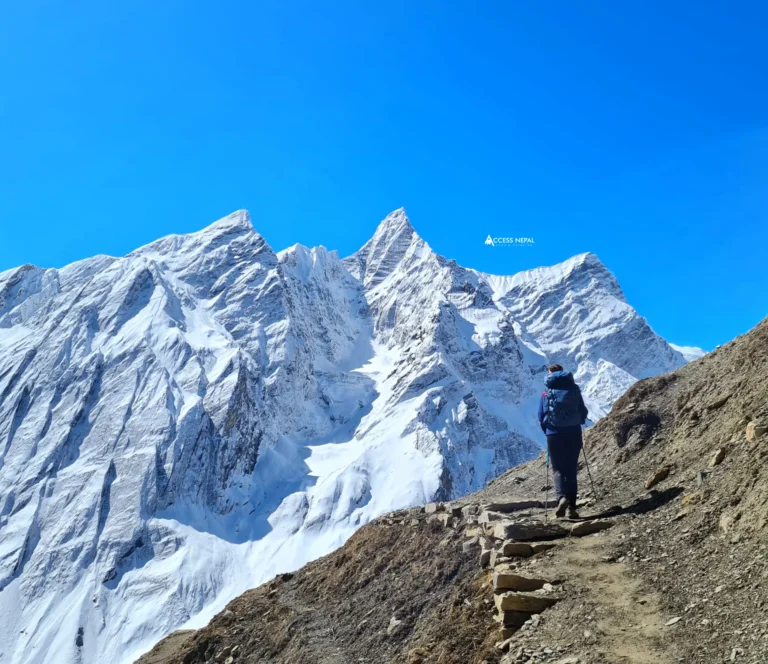
Tsum Valley Trek - 14 Days
- 3,700m/12,140ft
-
Moderate
- All
Inclusive Plan
Major Festivals of Tsum Valley
Lhosar
Lhosar is one of the biggest festivals of Tsum Valley. It is considered the new year of the Tibetan people. It is celebrated on various dates based on the location. The following festival is massively celebrated on the first day of the lunisolar Tibetan calendar.
It falls around the month of February or March, and it continues for around 15 days. While the main celebrations are of the first three days. The celebrations begin in advance by cleaning the houses, decorating with a variety of flowers. The walls are painted with auspicious signs symbolizing the sun, moon, and other key religious elements.
Saka Dawa
Saka Dawa is another widely known festival symbolizing Tibetan Buddhism. Saka Dawa is basically a month where the Buddha is remembered and honoured. It falls on the 15th lunar day of the full moon, especially in the month of May. The following day is very auspicious. It symbolizes the birth, enlightenment, and parinirvana of the Buddha himself.
The day offers an opportunity for the Tibetan people to reflect on the life of Buddha, his teachings, and follow the path of goodness. Saka Dawa refers to the ‘Fourth Month’ in the Tibetan language, and Saka means the star in the sky. During this day, different kinds of rituals are performed in the monasteries by the monks reciting mantras.
Dhachyang
Dhachyang is known as the festival of horses. It is celebrated widely in the Tsum Valley. It falls in the month of November or December. This festival is all about horse racing, and several horses are decorated beautifully and are taken to participate in the race.
The horse racing begins with a grand ceremony, and the men riding the horses are dressed traditionally with jewellery. Women, on the other hand, watch the game and enjoy the festival by singing and dancing. Apart from horse racing, archery also takes place, and chyang (local beer) is served during this day.
Mani Rimdu
Mani Rimdu is a 19-day festival celebrated hugely in the Manaslu region and Tsum Valley. This festival is celebrated to symbolize the birth of Buddhism by Guru Rinpoche Padmasambhava. Various celebrations and shows are held at different monasteries of the region.
A total of thirteen different acts take place, including dance, drama, and several other ceremonies. Mainly, Lama and Sherpa gather in the monastery in huge numbers, celebrating by dancing, clapping, and singing. Different kinds of dance can be experienced here, covering faces with masks, praying, and sharing joy.
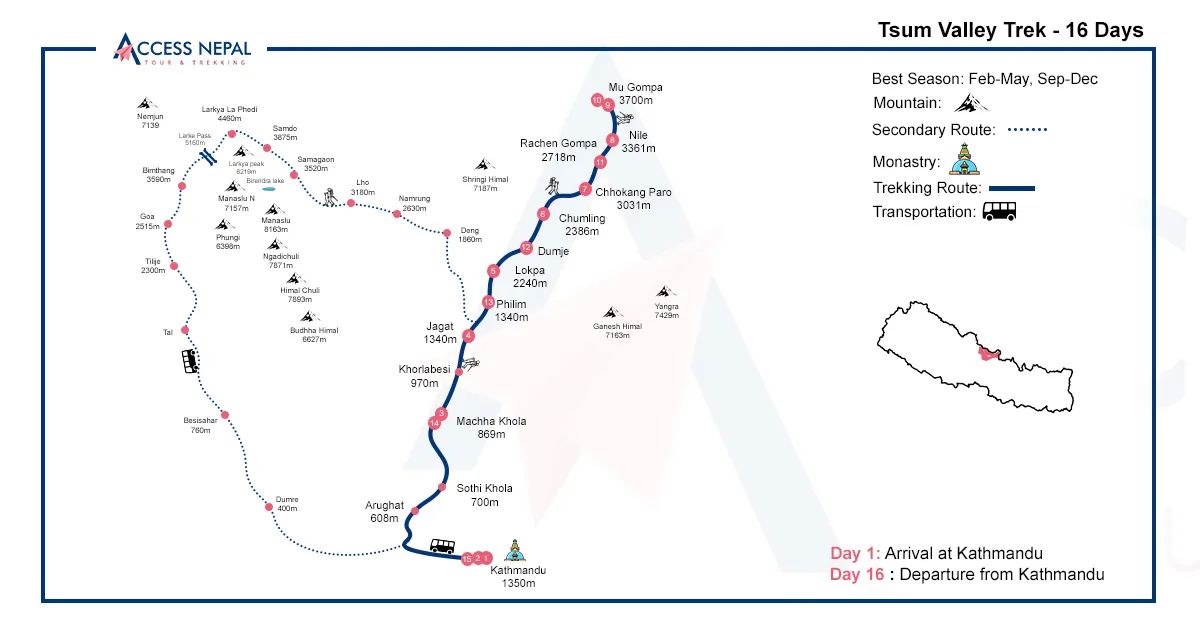
Tsum Valley Trek Map
Tsum Valley Trek Photos

Awards and Achievements
Access Nepal Tour and Treks has been recognized with TripAdvisor’s prestigious Travelers’ Choice Award for multiple consecutive years, reflecting our unwavering commitment to quality and clients’ satisfaction.










Leave Your Comment