OFF
Discounts are solely based on your group size. We do not add anyone to your group.
- Best Price Guarantee
- Hassle-Free Booking
- Team of highly experienced Experts
- Your Happiness Guaranteed
Book Now. No Booking or Credit Card Fee
- Schedule Your Own Dates
- Group Discounts
- Guaranteed Departures
- Easy Cancellation
- 60% Repeated Customers
-

- Duration
- 18 Days
-

- Transportation
- Private Vehicle & Flight
-

- Trip Grade
- Moderate
-

- Accomodation
- Teahouse & Hotel
-

- Primary Activity
- Trekking
-

- Meals
- B|L|D: Trek, |B|: KTM
-

- Best Season
- Spring & Autumn
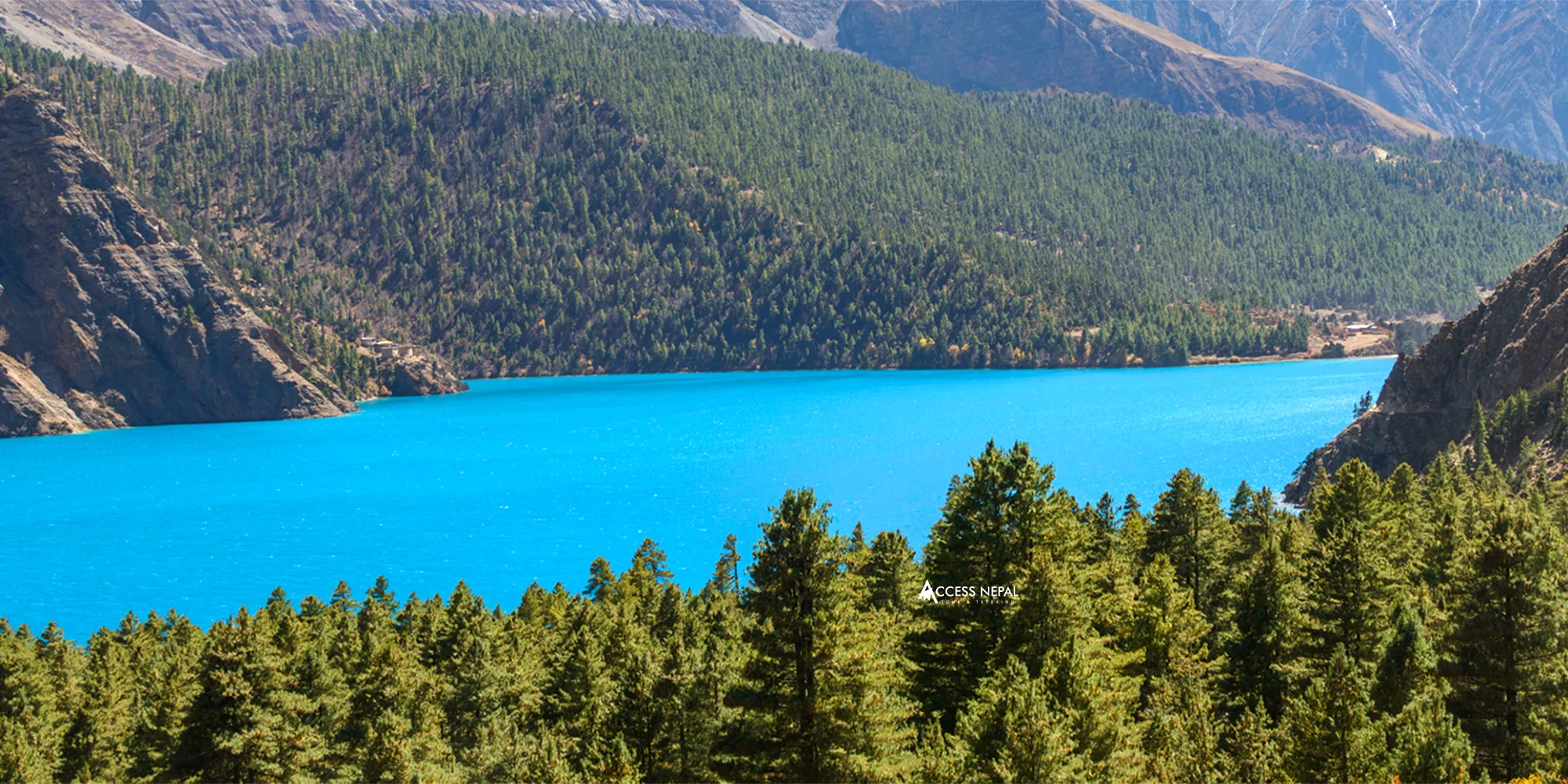
The Lower Dolpo Trek, Nepal, is an off-the-beaten-path adventure to the remote valley. This trek is a natural paradise, with every corner filled with breathtaking views. The scenic landscapes, a shining Himalayan peak at dawn, and a still emerald-blue alpine lake.
Our Lower Dolpo Trek itinerary consists of 18 days, where trekkers get to enjoy the untouched beauty of this region. It is a popular trekking destination and a must-have in a bucket-list Nepal adventure.
Lower Dolpo, Nepal, is located in the remote Dolpa District of Karnali Province in Northwestern Nepal. It is part of the Shey Phoksundo National Park, home to hundreds of species of wildlife and plants. This expedition is suitable for travelers who love thrilling treks away from the crowd and seeing the authentic beauty of the Himalayas. This trek is one of Nepal’s hidden jewels that takes you high in the Himalayas.
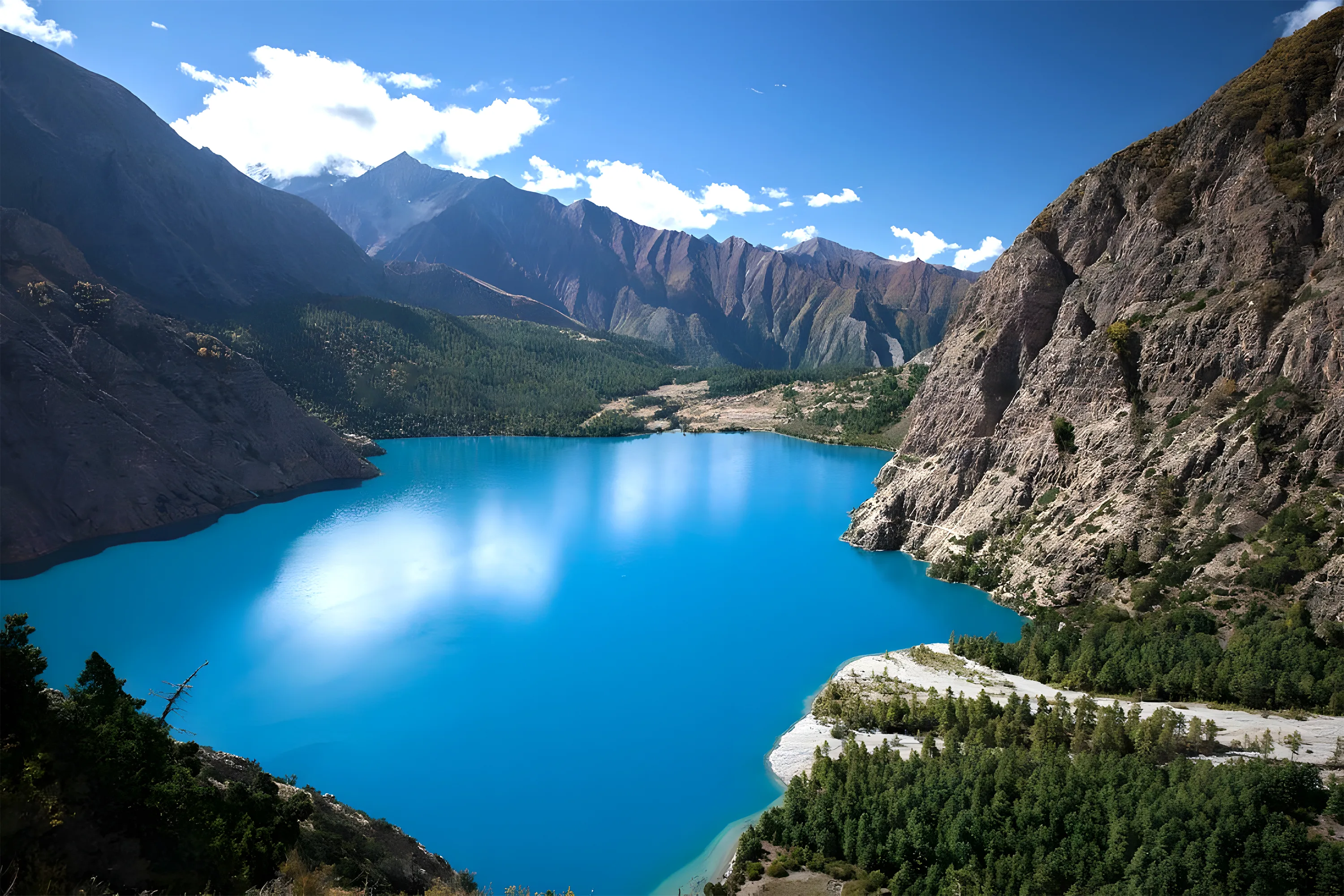
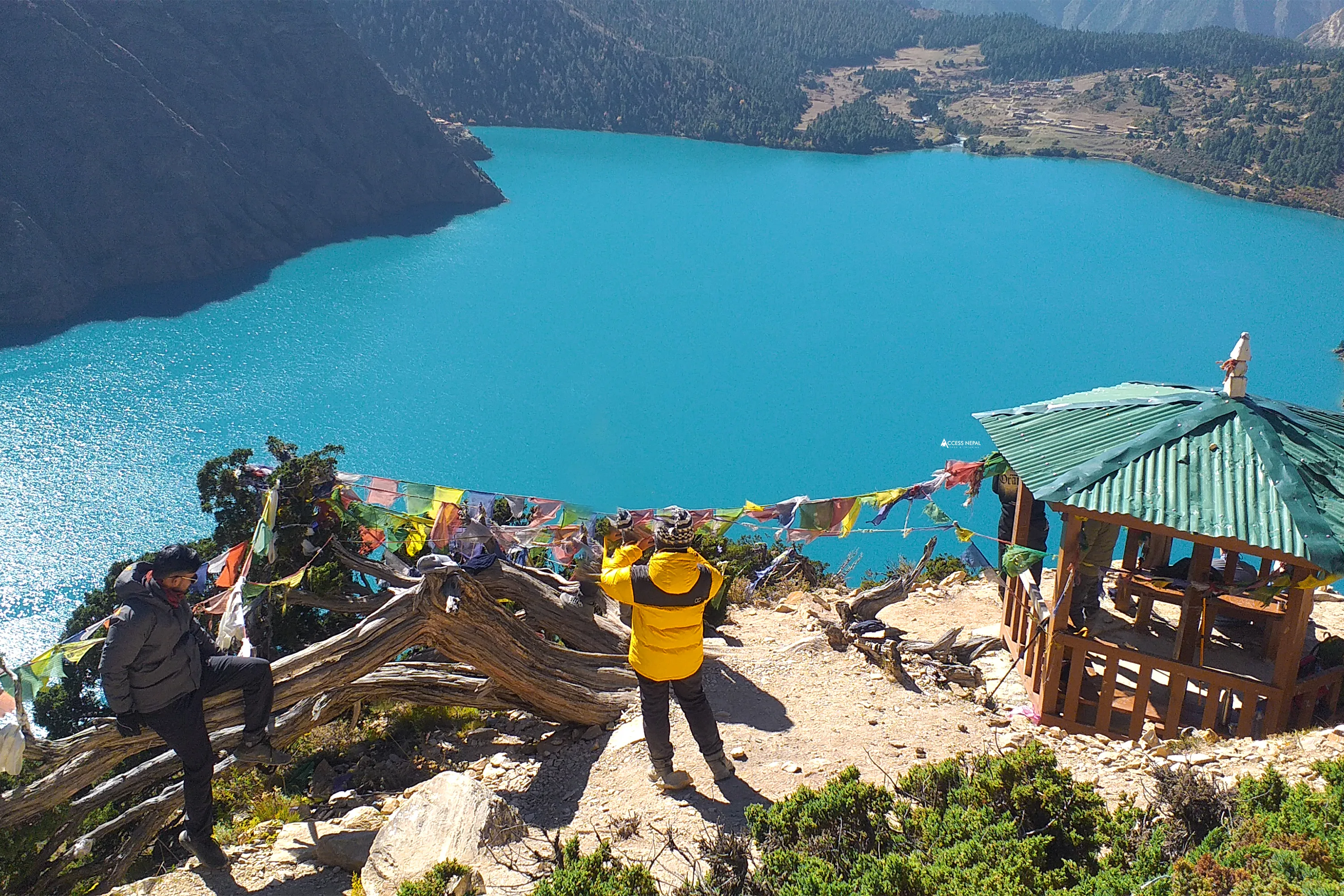
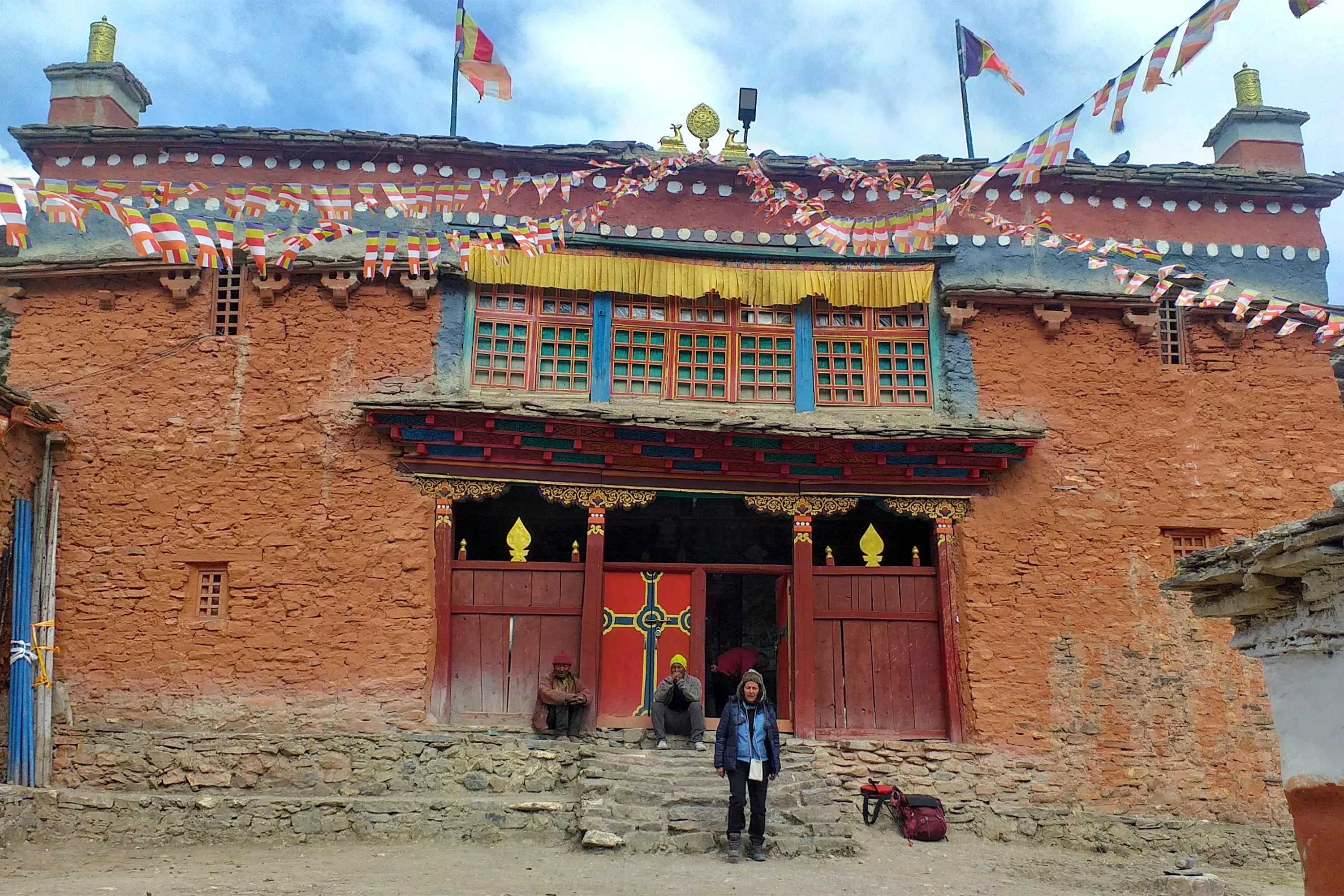
Trekking to Shey Phoksundo Lake at 3,611 m in a wild high desert is a once-in-a-lifetime experience. The Lower Dolpo Trek route takes travelers through Tibetan villages and ancient monasteries. The majority of the people here follow Buddhism and Bon, as you can find trails dotted with centuries-old Bon monasteries, prayer flags, and mani walls.
The 18-day Lower Dolpo Trek itinerary includes two major passes (Numa La 5,190 m and Baga La 5,070 m) and a hike to Phoksundo Lake, Nepal’s deepest and one of the world’s highest alpine lakes.
You can explore the Everest Base Camp trek with kids, which can be a rewarding family adventure when planned with proper acclimatization, shorter trekking days, and safety precautions.
Each day spent during the Lower Dolpo Trek is worth it. Trekking inside the remote region, watching pure nature, crossing suspension bridges and alpine meadows, listening to the waterfalls or the tinkling of yak bells, and spending nights under sparkling stars over silent stone villages heals you.
The journey of the Lower Dolpo Trek is unforgettable. Its solitary and natural beauty is worth exploring. This is a true gem for adventure travel, far from tourist routes, trekkers will be surrounded by only mountain silence.
Lower Dolp Trek Itinerary Highlights
- Hike to beautiful sapphire-blue Shey Phoksundo Lake (3,611 m), the deepest lake in Nepal (145 m deep).
- Stop by the 12th-century Shey Monastery (Shey Gompa), a 500-year-old Bon temple.
- Experience Tibetan culture and ancient pre-Buddhist Bon traditions, and try tsampa and yak-butter tea.
- Trek inside the Shey Phoksundo National Park Wildlife, Nepal’s largest national park.
- Watch wildlife like rhesus monkeys, blue sheep, goral, thar, langur, musk deer, Himalayan snowcocks, and rare animals like snow leopards, Himalayan brown bears, red foxes, and red pandas as well.
- Pass by remote Tibetan-Style villages, Tarakot (known for medieval fortress ruins), Laini’s apple orchards, and Dho Tarap, one of the world’s highest inhabited villages at 4,067 m.
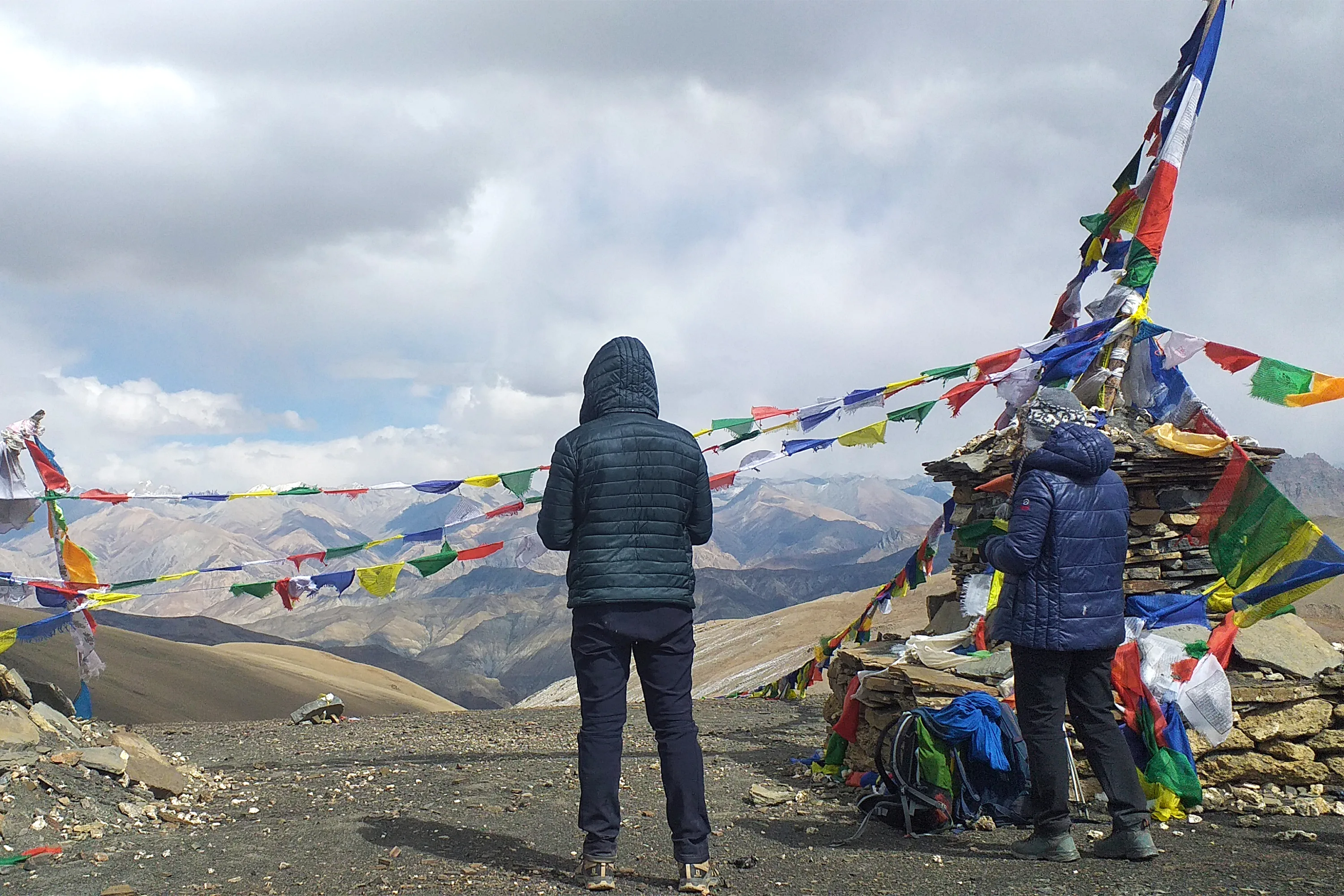
- Cross high passes Numa La (5,190 m) and Baga La (5,070 m), with prayer flags snapping overhead.
- Enjoy 360-degree panoramic views of 8,000 m Himalayan giants like Annapurna (8,091 m) and Dhaulagiri (8,167 m), as well as jagged Kanjiroba (6,883 m).
- Away from the crowd, the trek winds through high-altitude terrain, pine forests and meadows dotted with wildflowers, grey glacial moraines and red desert badlands.
Lower Dolpo Trek Itinerary Overview
The starting point of the Lower Dolpo Trek is Kathmandu at 1,400 m. Day 2 of the itinerary includes another day in Kathmandu for sightseeing of Swayambhunath, Boudhanath Stupa, Pashupatinath, and Kathmandu Durbar Square. This day is helpful for trek preparation and acclimatization.
The following day, the traveller flies from Kathmandu to Nepalgunj (150 m), a subtropical plain. We stay for an overnight. On day 4 of the Lower Dolpo Trek itinerary, we again fly from Nepalgunj to Jhupal (2,475 m) in Lower Dolpo. From Jhupal, the trek officially begins toward Dunai (2,850 m). Air and temperature gradually change as we travel from the plain of Terai to the Himalayan region. Views of Mt. Dhaulagiri and Annapurna greet you as you arrive in the dusty airstrip of Jhupal.
The trek starts along the terraced lower Tarap valley to Dunai village (2,850 m). It’s a small mountain village. From here on, you will get a taste of mountain village life. Carrying the excitement of starting the adventure, we pass by the ruins of the Tarakot fortress on the ridge above as you cross the suspension bridge. After arriving at Dunai, we rest for a night and prepare for tomorrow’s adventure.
Day 5 of the Lower Dolpo Nepal Trek begins early in the morning. The destination for today is to reach Tarakot (2,545 m). The trail leads us through oak and juniper forests. Along the way, trekkers can see yak herds grazing at the hamlet of Tarakot. We arrive around midday in this stone-built village. Tarakot has lots of prayer walls, and the climate here is mild. From here, trekkers can see a wide valley decorated with alpine scenery.
As the day moves ahead, you will experience the altitude gain gradually. On day 6 of our itinerary, we trek to Laini (3,170 m). The trail climbs through forested gorges, ancient mani walls, and rhododendron groves. Spring is especially beautiful as the whole route blooms in colorful flowers. After a few hours of hiking, we arrive at Laini village at 3,170 m, just behind an orchard. With this much attitude, we can feel the cool and thin air. Enjoying the views of Pokhara below and Annapurna over the head, we rest for a night at a family-run teahouse.
Leaving behind this peaceful village, our Lower Dolpo Trek continues toward Nawarpani (3,545 m). From here on, trekking gets more challenging and adventurous. At this height, there is a high risk of getting altitude sickness. The route leading to Nawarpani is tough due to the zigzags up. Similarly, you will also feel the changes in landscapes. Now, we trek high above the tree line, and green vegetation turns into scrub. Nawarpani is a small seasonal settlement with a few huts. This village offers panoramic views of the Dolpo range. This is dry, wind-swept country. Nightfall brings freezing temperatures, so bundle up in your sleeping bag.
The Lower Dolpo Trek itinerary continues toward Dho Tarap (4,067 m) on day 8. Climbing steep hills with frequent breaks, we arrive at Dho Tarap. This village is one of the world’s highest permanent villages. Trekking in the mountains is very fun. Every step you take shows you something new, like whitewashed Mani stones and isolated stone house villages decorated with prayer flags that feel like some photography. From the Tarap, trekkers can see sweeping views of giant mountain peaks, and just below, you will see gargantuan rock spires. The peaceful scenery and surroundings make it a perfect place to take a rest.
Acclimatization is key for high-altitude trekking like Lower Dolpo. Therefore, on day 9, we rest for a day at Dho Tarap. It helps our body to acclimatize to altitude and minimizes the risk of getting altitude sickness. During this day, we will take it easy. To watch a beautiful sunrise, you can go for a short hike and explore a gompa (monastery) and village. Do not push too hard since it’s a rest day. Night high in the Himalayas is absolutely breathtaking. Try to have some warm Tibetan tea or coffee and gaze at the Milky Way above silent stone villages and eerie desert sky at night.
The Lower Dolpo adventure continues towards another major destination, Numa La Base Camp (4,440 m). Leaving behind this beautiful village, we climb above 4,500 m. We rest for a night at base camp on day 10.
Brace yourself because today is one of the most challenging, and we are reaching the highest point of this adventure. The trail leads through shrubby alpine meadows and frozen streams. Finally, we reach the top of Numa La Pass (5,190 m) by late afternoon. The view from this height is just magical. Only jagged snow peaks with no settlements around, just piles of rocks and prayer flags hanging on them, are the most intimate you get to be with nature. The endless Himalayan panorama from the top is just mind-blowing and unforgettable.
After enjoying this sublime, we continue ahead to conclude our day 11 of Lower Dolpo Trekking. The trail comes down toward the far side into the Phoksundo Valley. We rest for a night at Pelung Tang (4,445 m). This village is an isolated grassy plateau. From here trekkers can get a first sight of Phoksundo Lake. Sleep tight because another thrill will join us tomorrow.
We wake up early enough to catch the morning glow. Today we are climbing another high pass called Baga La (5,070 m) and trekking to Dajok Tang (4,080 m) on the 12th. The route to Baga La Pass (5,070 m) is challenging due to steep and rocky terrain. Climb gradually; take frequent breaks for deep breaths. This helps with altitude sickness. The view from the summit of Baga La is as beautiful as Numa La.
Adventure continues, and we slowly descend on the far side into a deep gorge. As you get nearer to Dajok Tang, you can see the change in landscapes. Green juniper forests and rushing rivers welcome you again. We continue hiking until reaching the village situated at a small grassy clearing on the rim of the Phoksundo valley.
Day 13 takes us toward Ringmo Village (3,600 m). Today’s journey is much easier, unlike the past two days. The trails leading to Ringmo are narrow and pass through pine forests and gradually come down toward the lake. We finally reach Ringmo (3,600 m) in the afternoon. This village is located on the northern shore of Phoksundo. We rest for a night at one of the teahouses in Ringmo, carrying the excitement of seeing the emerald of the Dolpo Region.
Today’s itinerary is the heart of this Lower Dolpo trek package. Finally, we are going for a hike to Shey Phoksundo Lake (3,612 m), a lake in Nepal. We wake up at dawn and hike along the lakeshore trail. As the sun hits the surface of Phoksundo Lake, the water glows golden. To add more beauty, a few meters away, toward the southern end of this turquoise lake, is Phoksundo Waterfall. This waterfall is the highest waterfall in Nepal. After this magical experience, we return back to Ringmo village to rest for a night.
After exploring the gem of Dolpo, on day 15, we head towards Shyanta (2,520 m). We set out after breakfast and enter the forested canyons again. The return journey is much easier as it slowly takes us out of the valley. We reach Shyanta Village by midday. It’s a small village surrounded by alpine pasturelands. Here you can find fields of buckwheat, and the temperature feels warmer in comparison to a few days ago.
Our return journey continues from day 16. We arrive back in Juphal (2,475 m). The final trekking day. Following the same familiar path, we descend through forest and farmland. After arriving at Juphal, we rest for a night. Reconnecting some memories together, we conclude our last day of the Lower Dolpo Trek.
The trek officially concludes on day 17 as we fly from Juphal to Nepalgunj and then to Kathmandu. Morning charter flight out of Dolpo to Nepalgunj, then catch your connecting flight back to Kathmandu. In the evening, we gather again for the last time to say farewell. Access Nepal Tours and Trekking will host a farewell dinner to congratulate you on successfully completing this adventure to the remote Dolpo region of Nepal. The Lower Dolpo trekking itinerary finishes in 18 days as you return back to your home.
Day 01Arrival Day in Kathmandu
-

- 1,400m/ 4,600ft
-

- 1,440 m/ 4,724 ft
Day 02Kathmandu Sightseeing and Prepare for Lower Dolpo Trek
-

- 20 km/ 12.4 mi
-
- 1,440 m/ 4,724 ft
-
- 6-7 hrs of tour
-
- 1,440 m/ 4,724 ft
Day 03Fly Kathmandu to Nepalgunj
-
- 400 km/ 248 mi
-
- 1,440 m/ 4,724 ft
-
- 1.5 hours flight
-

- 150 m/ 492 ft
Day 04Fly Nepalgunj to Juphal then Trek to Dunai
-
- 11 km/ 6.8 mi
-
- 2,320 m/ 7,611 ft
-
- 2-3 hrs of trek
-
- 2,140 m/ 7,020 ft
Day 05Trek Dunai to Tarakot
-
- 16 km/ 9.9 mi
-
- 2,543 m/ 8,343 ft
-
- 5-6 hrs of trek
-
- 2,543 m/ 8,343 ft
Day 06Trek Tarakot to Laini Odar
-
- 14 km/ 8.6 mi
-
- 3,370 m/ 11,056 ft
-
- 6-7 hrs of trek
-
- 3,370 m/ 11,056 ft
Day 07Trek Laini Odar to Nawarpani
-
- 11 km/ 6.8 mi
-
- 3,545 m/ 11,630 ft
-
- 5-6 hrs of trek
-
- 3,545 m/ 11,630 ft
Day 08Trek Nawarpani to Dho Tarap
-
- 20 km/ 12 mi
-
- 4,097 m/ 13,441 ft
-
- 7-8 hrs of trek
-
- 4,097 m/ 13,441 ft
Day 09Acclimatization Day at Dho Tarap
-
- 2 km/ 1.2 mi
-
- 4,097 m/ 13,441 ft
-
- 2-3 hrs of hike
-
- 4,097 m/ 13,441 ft
Day 10Trek Dho Tarap to Numa La Base Camp
-
- 12 km/ 7.4 mi
-
- 4,440 m/ 14,566 ft
-
- 6-7 hrs of trek
-
- 4,440 m/ 14,566 ft
Day 11Cross Numa La Pass; Trek to Phelung Tang
-
- 18 km/ 11 mi
-
- 5,309 m/ 17,417 ft
-
- 7-8 hrs of trek
-
- 4,465 m/ 14,648 ft
Day 12Cross Baga La Pass; Trek to Dajok Tang
-
- 10 km/ 6.2 mi
-
- 5,175 m/ 16,978 mi
-
- 6-7 hrs of trek
-
- 4,080 m/ 13,385 ft
Day 13Trek Dajok Tang to Ringmo
-
- 11 km/ 6.8 mi
-
- 3,733 m/ 12,247 ft
-
- 4-5 hrs of trek
-
- 3,733 m/ 12,247 ft
Day 14Exploration Day at Ringmo; Hike to Shey Phoksundo Lake
-
- 4 km/ 2.4 mi
-
- 3,733 m/ 12,247 ft
-
- 1-2 hrs of hike
-
- 3,612 m/ 11,850 m
Day 15Trek Ringmo to Shyanta
-
- 20 km/ 12.4 mi
-
- 3,733 m/ 12,247 ft
-
- 6-7 hrs of trek
-
- 2,838 m/ 9,311 ft
Day 16Trek Shyanta to Juphal
-
- 19 km/ 11.8 mi
-
- 2,838 m/ 9,311 ft
-
- 5-6 hrs of trek
-
- 2,320 m/ 7,611 ft
Day 17Flight Juphal – Nepalgunj – Kathmandu
-
- 400 km/ 248 mi
-
- 2,320 m/ 7,611 ft
-
- 3-4 hrs of flight
-
- 1,440 m/ 4,724 ft
Day 18Departure from Kathmandu
- Airport Transfer via private transportation (Pick-up and Drop-off).
- Traditional Nepali style welcome dinner along with cultural performances (day 1).
- Kathmandu Sightseeing with tour guide in private toursit vehicle (Monument fees included).
- 3 Nights (day 1,2 & 17) stay in a twin-sharing bedroom with attached bathrooms and breakfast included in Kathmandu (upgrade option available).
- Round trip flight tickets (Kathmandu-Nepalgunj-Juphal) (day 3, 4, & 17).
- 1 Night (day 3) stay in twin-sharing bedroom with brekfast and attached bathrooms in Nepalgunj.
- 13 Nights stay in tents during the trek (2-4 people per tent).
- Full board meals, seasonal fruits, 3 cups of tea/coffee throughout the trek.
- Essential gears and equipments for camping during the trek.
- 1 Highly experienced, Government-licensed, English-speaking, first-aid trained local guide for 7 trekkers (cost and insurance fees covered).
- 1 Porter per 2 trekkers with expense and insurance included.
- Farewell dinner at one of the reasturant in Kathmandu (day 17).
- All required Lower Dolpo Trek permits.
- Sufficient chlroine tablets.
- Basic first-aid kit with oximeter.
- Certificate of completing the trek.
- Required government taxes and fees.
- Down jackets and sleeping bags (must return after trek).
- Access Nepal T-shirt, duffel bag, and Lower Dolpo Trek map as a gift.
- Helicopter Evacuation and emergencies medical care (covered by your insurance).
- Nepal Tourist Visa
- International Flight Tickets
- Personal expenses like charging electronic devices, internet, laundry, and snacks
- Tips for porters and guides
- Meals in Kathmandu (welcome and farewell dinner included)
- Travel insurance
Our groups are small with maximum 14 people. We create groups of independent travelers, friends and families which maintains close interpersonal connection, engage more and get into depth of the journey. Choose a date from the calendar to reserve your spot.

Best Time to Visit Lower Dolpo Trekking
The best time to visit the Lower Dolpo trek is spring (March-May) and autumn (September-November). These are the peak trekking seasons. The weather and temperature change depending on the season. So, trekkers should choose a season that is comfortable and safe for trekking. Nights are still chilly and cold at high elevation.
During the spring season, the temperature ranges from 10-20°C during the daytime. The Lower Dolpo Trek Trail gets dotted with wildflower colors. Whole rhododendron forests glow with red and pink blooms. The weather is also more comfortable for trekking, and the surrounding scenery is excellent.
Similar to spring, autumn temperatures also get around 10-20°C during the day. The best part of trekking from September to November is stable weather conditions, clear blue skies, great mountain views, dry trails, and crisp mountain air.
The Lower Dolpo Trek is possible to do all year round. Therefore, a winter (December-February) trek has a different charm. The daytime temperatures reach around 6-15°C. Nights are especially cold as the temperature drops below -20°C. Especially at high altitude, it is extremely cold and high passes are not open due to heavy snowfall.
Summer (June-Aug) is warm with green hills and good for trekking. Further, since Dolpo lies in the rain shadow, trekking in summer is also great. Though fights to Juphal easily get delayed or cancelled due to bad weather and poor visiblity
Lower Dolpo Trek Elevation and Distances
This trek ranges from tropical lowlands to high alpine passes. Starting at Kathmandu (1,400 m), you fly to Juphal (2,320 m) and then trek up into high Dolpo. Along the way:
The highest point is Numa La pass at about 5,309 m. You’ll also cross Bagala La (5,175 m) a day later. Lower Dolpo includes many days above 4,000 m, peaking again at Shey Phoksundo Lake (3,612 m) for two nights.
Daily Distances: Treks vary from 6 to 20 km per day on foot. For example, Day 8 from Nawarpani to Dho Tarap is 20 km, a long day of hiking. Other days are shorter (Day 4: 11 km from Juphal to Dunai). Most trekking days last 5-7 hours.
Lower Dolpo Trek Difficulty
The Lower Dolpo Trek is rated strenuous. It’s remote, with days of high-altitude hiking and limited lodges. Every step reveals more majestic scenery but requires solid fitness and mental endurance. You’ll be out of mobile signal for much of the route, relying on your guide and team.
You’ll climb from 2,140 m (Dunai) up to 5,309 m (Numa La) and back down to 1,400 m (Kathmandu) by trip’s end. The big gains and losses make this trek high-difficulty, so training and acclimatization are essential.
Lower Dolpo, Nepal Distances
Over 10 trekking days, you cover roughly 130-150 km (plus additional easy walks for acclimatization).
There are steep ascents and descents. Early days gently climb 500-800 m (from Tarakot to Laini Odar). Later, you tackle huge climbs: Dho Tarap (4,100 m) to Numa Base (4,440 m) to Numa La (5,309 m) is a +1,200 m ascent, then a +1,300 m descent to Phelung Tang. Bagala La day adds +700m then -1,100m.
The trail transitions from forested river valleys (thick pine and fir) to rock-strewn arid plateaus. Some sections (around Laini, Tarap Khola) can be loose scree. Expect rugged mountain trails and some steep switchbacks.
Lower Dolpo, Nepal, Weather
Dolpo’s climate changes dramatically with elevation:
- Kathmandu/Nepalgunj (Days 1-3): Subtropical, warm. Kathmandu March-Nov: 15-25°C days. Nepalgunj can hit 30°C+. Nights in Kathmandu drop to 10°C or so.
- Trek Start (2,100-3,000 m): Pleasant spring/autumn days (8-20°C), cool nights (0-5°C). Forested valleys can be humid after rains in the monsoon.
- Mid Trek (3,500-4,400 m): Dry alpine climate. Daytime temperatures are 5-15°C (sunny) in peak seasons. Nights freeze well below 0°C (often -5 to -10°C). Early morning out of camp can be -15°C if there’s wind chill.
- High Pass Days (4,500 m): Cold and windy. On Numa La day, even afternoon winds can feel below -10°C. The sun is intense, though. Pack windproof layers.
- Rocky Descent to Phoksundo (3,000-3,700 m): Beech and spruce forests here. Day temps are 10-18°C in good weather. Night around 0-5°C.
- Weather Variability: Spring thundershowers can occur; autumn may have early snow in late Nov. Always prepare for sun, wind, and the possibility of light snow or rain on higher stretches.
Comfortable trekking in spring (April: 5-18°C) and autumn (October: 10-22°C). Expect temperatures around -10°C to -15°C at night at high camps (Laini, Dho Tarap, Numa).
Clothing Tip: Layering is key. Sun protection (hat, sunglasses) is vital in the strong high-altitude UV, even if air feels cool.
Lodging during the Lower Dolpo Trek
Accommodation is rustic but sufficient:
- Kathmandu & Nepalgunj: Hotels (3-star or tourist class), with private rooms and hot showers. Hotels for briefing and rest before/after the trek.
- Trek Lodging: Mostly tea houses and homestays (simple lodges run by locals) in villages (Tarakoṭ, Laini, Nawarpani, Dho Tarap, Ringmo, Shyanta). Rooms usually have twin beds and blankets. Camping (tented) is required in some sections (Laini camp, near Numa Base, Phelung Tang, Dajok Tang, and Chhepka). Our operator provides dining tents, a kitchen tent, and sleeping bags. Nights are cold; you’ll really appreciate the extra blankets.
Food
Food: On the trek, expect basic Nepali fare. Typical meals include dal-bhat (lentils, rice, curry), vegetable momos (dumplings), noodle or rice soups, eggs, and occasionally yak cheese or meat (buffalo or sheep). Breakfasts may be porridge, eggs, or omelettes. Guides/porters eat the same meals. In Kathmandu, enjoy diversified menus at restaurants (mogli, Tibetan, Indian).
Meals are communal and hearty. Locals will sometimes entertain you with tea or local bread. Fun Fact: A hot cup of Tibetan butter tea can be a lifesaver after a cold hike; it’s salty, rich, and warming.
Boiled or filtered water is available. Bottled water is sometimes sold in villages at a high markup. Carry a refillable bottle and add iodine tablets if unsure.
Carry energy bars, chocolates, or nuts. They’re handy on long treks (Bagala Pass day especially). Food on trek is included in the package, but personal snacks or extra drinks cost extra. Alcoholic drinks (like chiang, local millet brew) might be available in some villages (e.g. Dho Tarap has a home-brew) but are not guaranteed.
Visa Information for Lower Dolpo
All international visitors (except Indians and a few neighboring countries) need a Nepal tourist visa. It can be obtained on arrival at Kathmandu airport or consulates beforehand. Typical stays of 30 or 90 days are available.
- Cost: Around USD 30 for 15 days, USD 50 for 30 days (approximate, payable in cash). Visas can be extended in Nepal, but it’s best to sort it before the trek.
- Required Documents: Passport valid for 6+ months, filled application form (online or at arrival), and one passport photo (some sites say one photo; others accept printed online photos).
- Embassy Info: Nepalese consulates globally issue visas too. If passing through an Indian airport, note there are no direct Dolpo flights from India; all trekking groups fly via Kathmandu.
Remember, a visa and passport copy will also be needed to arrange Lower Dolpo permits.
Travel Insurance
Mandatory for this trek. Your insurance should cover:
High Altitude Rescue (up to 6,000 m) and emergency evacuation by helicopter if required. (Lower Dolpo’s remoteness means helicopter rescue is the only quick option if something goes wrong above 4,000m.)
Medical emergencies, including possible hospitalization for altitude sickness or injury. Weather can delay flights; travel insurance can cover extra lodging/food if needed. Carry a copy of your policy and emergency contact numbers. Share a copy with your guide as well.
Lower Dolpo Trekking Permits
Trekking Lower Dolpo requires special permits because it’s a restricted area. You cannot trek alone; agency-arranged tours with 2+ persons are compulsory. The required permits are:
- Lower Dolpo Restricted Area Permit: USD 20 per person per week (+ USD 5 for each additional day). So for a 20-day trek you’ll pay for 3 weeks (USD 60). Example: 10 days = USD 40.
- Shey Phoksundo National Park Permit: NPR 3,000 (≈USD 25–30) per person. (Lower Dolpo lies within the southern half of Shey-Phoksundo NP, and even on Lower Dolpo trek you pass through park territory up to Shyanta.)
Note: Access Nepal Tours and Trekking handles the process, and the cost is included in the package. You must present a passport and visa copy. No separate TIMS card is needed (because of the guides/permits). Both permits are issued in Kathmandu (Immigration Office and Dept. of National Parks). Often, guides will carry and check your permits daily.
Lower Dolpo’s permit requirements ensure minimal crowds: at times, you may trek alone for whole days without passing another foreigner. It keeps the trail quiet and the nature pure.
Safety Tips & Local Advice during the Lower Dolpo Trekking
The Lower Dolpo Trek is safe if you prepare properly. Major hazards are altitude and weather. With proper gear, acclimatization, and experienced guides, Dolpo is very trekker-friendly. Mountains and locals alike will warmly welcome respectful travelers. Still, things trekkers should be aware of during the Lower Dolpo Nepal trek are:
- Altitude Sickness: This is the biggest risk. Symptoms (headache, nausea, fatigue) start around 3,000-4,000 m. The itinerary has a rest day in Dho Tarap (4,097 m) for acclimatization. Listen to your body. If symptoms worsen, descend! Carry Diamox (acetazolamide) after consulting your doctor.
- Weather & Sun: High altitudes mean intense sun even if cool. Wear sunscreen, lip balm, sunglasses with 100% UV protection, and a hat. Hypothermia can be a risk in wet or windy weather; stay dry and layered.
- Waterborne Illness: Drink only boiled/treated water. Carry rehydration salts or ORS. Hand sanitizer and wet wipes help in places with limited washing facilities.
- Wildlife: Dolpo has protected snow leopards, wolves, and blue sheep. Sightings are rare but thrilling. Do not feed wildlife or leave food scraps. Leech bites occur below 3,000 m in monsoon.
- Trekking at Night: Not advised (due to altitude and terrain).
- Monastery Etiquette: Dolpo is Tibetan Buddhist/Bön country. Observe local customs: remove shoes in temples, pass religious monuments clockwise, and do not photograph people without permission.
- Solo Travel Rule: Remember, no solo trekking here. You must have guides and a partner, which is for both legal and safety reasons.
Altitude & Acclimatization in Lower Dolpo Trek
Ascending too fast can cause Acute Mountain Sickness (AMS). To climb Dolpo safely:
- Gradual Ascent: The itinerary gently increases sleeping altitude most days; there is an intentional extra rest day (Day 9) in Dho Tarap (4,097 m) to adapt.
- Drink Plenty: Hydrate well (2-3 L of water per day).
- Eat Carbs: High-energy foods help, and carbohydrates improve oxygen usage.
- Sleep Low, Hike High: If guides allow, do short climbs above camp (stay hydrated) and come down to sleep.
- Medication: Carry Diamox (some take 125mg twice daily on climb days), and a good personal first-aid kit.
- Know Symptoms: Watch for headache, dizziness, nausea, loss of appetite, or shortness of breath at rest. If any appear, rest or descend.
- Supplemental Oxygen: Rarely needed at 5,300m pass, but high-quality sleeping bags and warm clothing effectively counter altitude stress at night.
Remember, anyone can get altitude sickness, even fit people. Better to go slow and extra prepared than risk emergency evacuation. Many trekkers spend the extra rest day lounging by Dho Tarap’s stupa
, enjoying the rare spare time.
What is the Lower Dolpo Trek?
The Lower Dolpo Trek is an 18-day adventure to the remote Dolpo region of Nepal. The 18-day itinerary takes travelers to Shey Phoksundo Lake (the deepest lake in Nepal), high passes like Numa La (5,190 m) and Baga La (5,170 m), and peaceful Tibetan villages.
Where does the trek start and end?
How long does it take to complete the Dolpo trek?
What is the maximum altitude reached during the trek?
Can beginners do the Lower Dolpo Trek?
Is it safe to trek Lower Dolpo alone?
How do I get to the starting point of the Lower Dolpo Trek?
Do I need to book the Lower Dolpo Trek in advance?
How far is Dolpo from Kathmandu?
How cold does it get on the trek?
Can your guide speak English?
How experienced is your guide?
How well do they know the remote region?
Do I need a permit for the Lower Dolpo Trek?
What are the permits required for Lower Dolpo trekking?
Do I have to issue my permit for the Lower Dolpo Trek?
What documents do you need for the Lower Dolpo Trek permit?
What is covered in the amount I pay for the Lower Dolpo Trek?
How much money do you need for personal expenses during the Lower Dolpo trek?
What are the extra costs of the trek?
How much does it cost to trek the Lower Dolpo Trek?
How much money should I budget for the trek?
How can I book the Lower Dolpo Trek with Access Nepal Tours and Trekking?
What is the cancellation policy?
What kind of food is available on the trek?
What type of accommodations are available on the trek?
What kind of traditional food should I try?
Can I get a single room on the Lower Dolpo Trek?
Is it possible to have a shower on the trek?
Can I do laundry in the trek?
What is the ideal weight for my backpack in the Lower Dolpo Trek?
What is the weight limit of the porter?
Do you provide a storage facility at your office?
Do you accept the remaining payment in cash?
What currency do you accept?
What are the extra costs that I am not aware of?
How can I prevent altitude sickness?
How can I minimize my environmental impact?
What should I do with my trash?
Is there Wi-Fi available on the trek?
Are there medical facilities on the trek?
Can I charge my electronics on the trek?
What kind of wildlife can I expect to see?
What is the trail condition like?
Are there alternative routes within the trek?
Are there any dangerous animals on the trek?
How can I ensure my safety on the trek?
What should I do in case of an emergency?
Can I drink the water?
How do I avoid getting lost?
Can I do the Dolpo Trek during the monsoon season?
What should I pack for the trek?
Do I need to bring my own water purification method?
What kind of shoes are best for the trek?
Is travel insurance necessary?
Do I need trekking poles?
Are there any vaccinations required?
Can I rent trekking gear in Nepal?
What languages are spoken in Dolpo region?
What kind of cultural etiquette should I follow?
What festivals might I experience during the trek?
Are there religious sites along the Lower Dolpo Trek route?
Can I interact with local communities?
What are the main religions in the Dolpo region?
Is tipping expected?
How do locals dress in the Dolpo region?
Awards and Achievements
Access Nepal Tour and Treks has been recognized with TripAdvisor’s prestigious Travelers’ Choice Award for multiple consecutive years, reflecting our unwavering commitment to quality and clients’ satisfaction.