OFF
Discounts are solely based on your group size. We do not add anyone to your group.
- Best Price Guarantee
- Hassle-Free Booking
- Team of highly experienced Experts
- Your Happiness Guaranteed
Book Now. No Booking or Credit Card Fee
- Schedule Your Own Dates
- Group Discounts
- Guaranteed Departures
- Easy Cancellation
- 60% Repeated Customers
-

- Duration
- 18 Days
-

- Transportation
- Private and Sharing Jeep
-

- Trip Grade
- Difficult
-

- Max-Altitude
- 5,000 m/16,400 ft
-

- Accomodation
- Hotel/Teahouse & Tented Camps
-

- Primary Activity
- Trekking, Sightseeing
-

- Meals
- All meals during trek
-

- Best Season
- Mar-May|Sept-Nov
-

- Distance
- 420 km
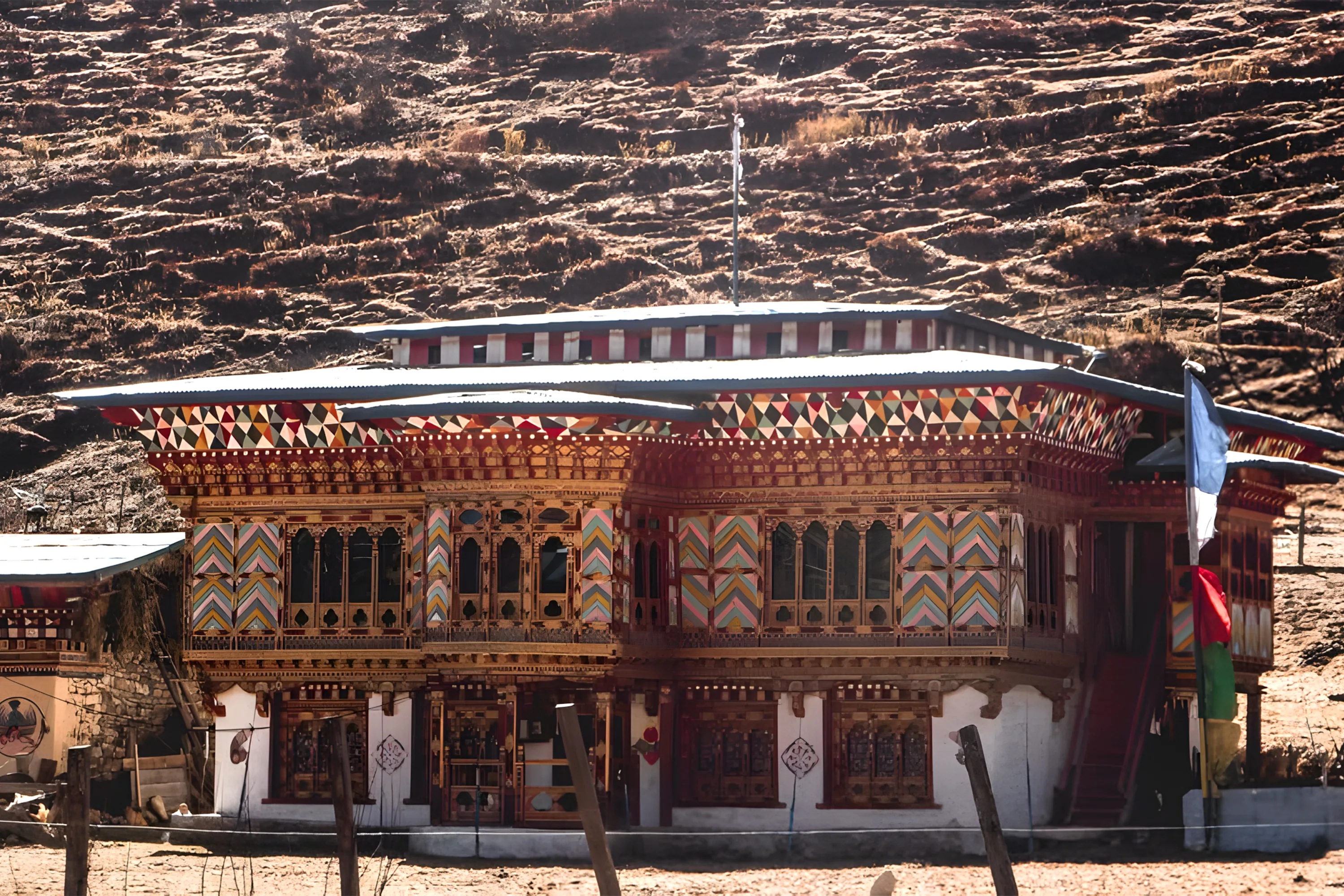
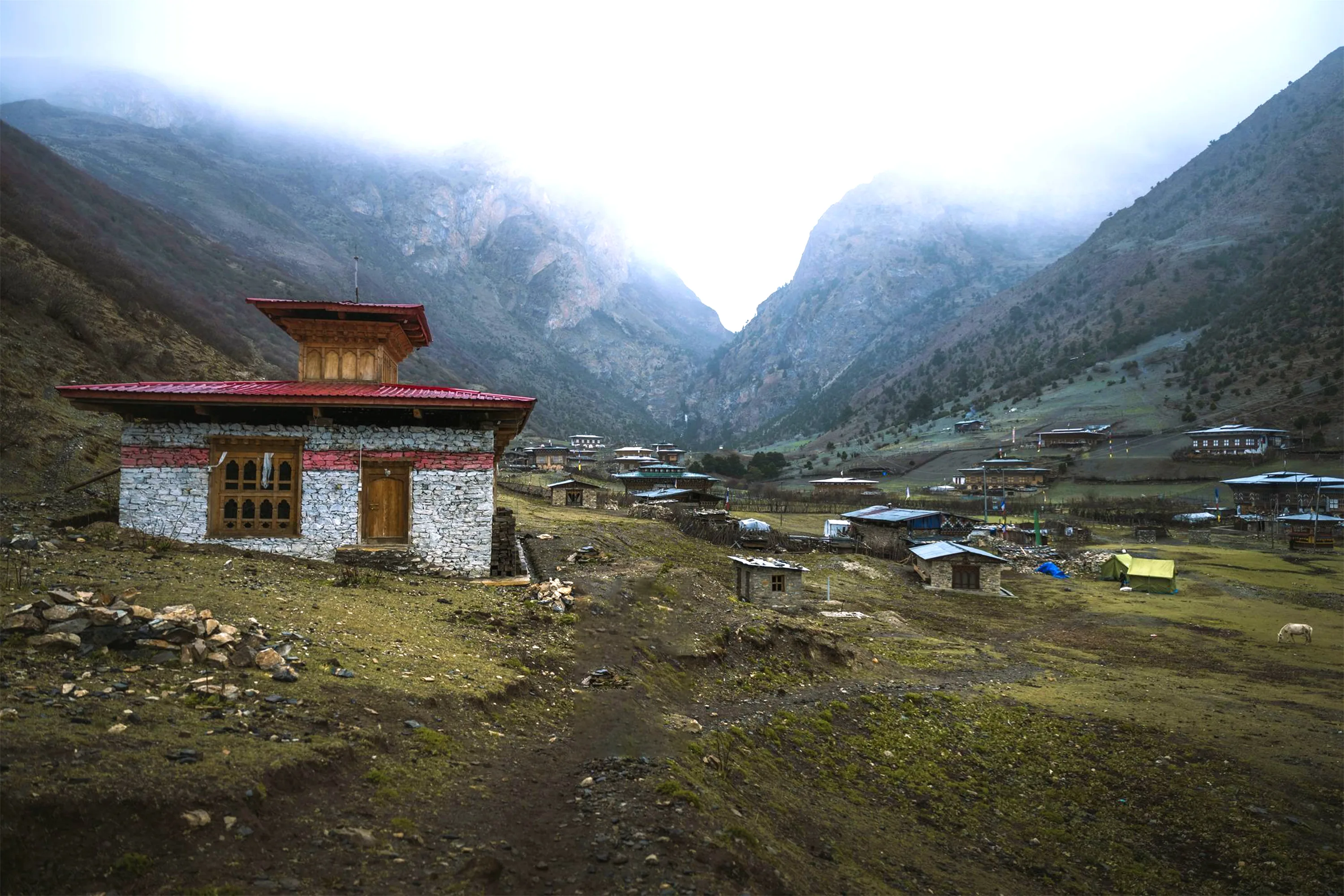
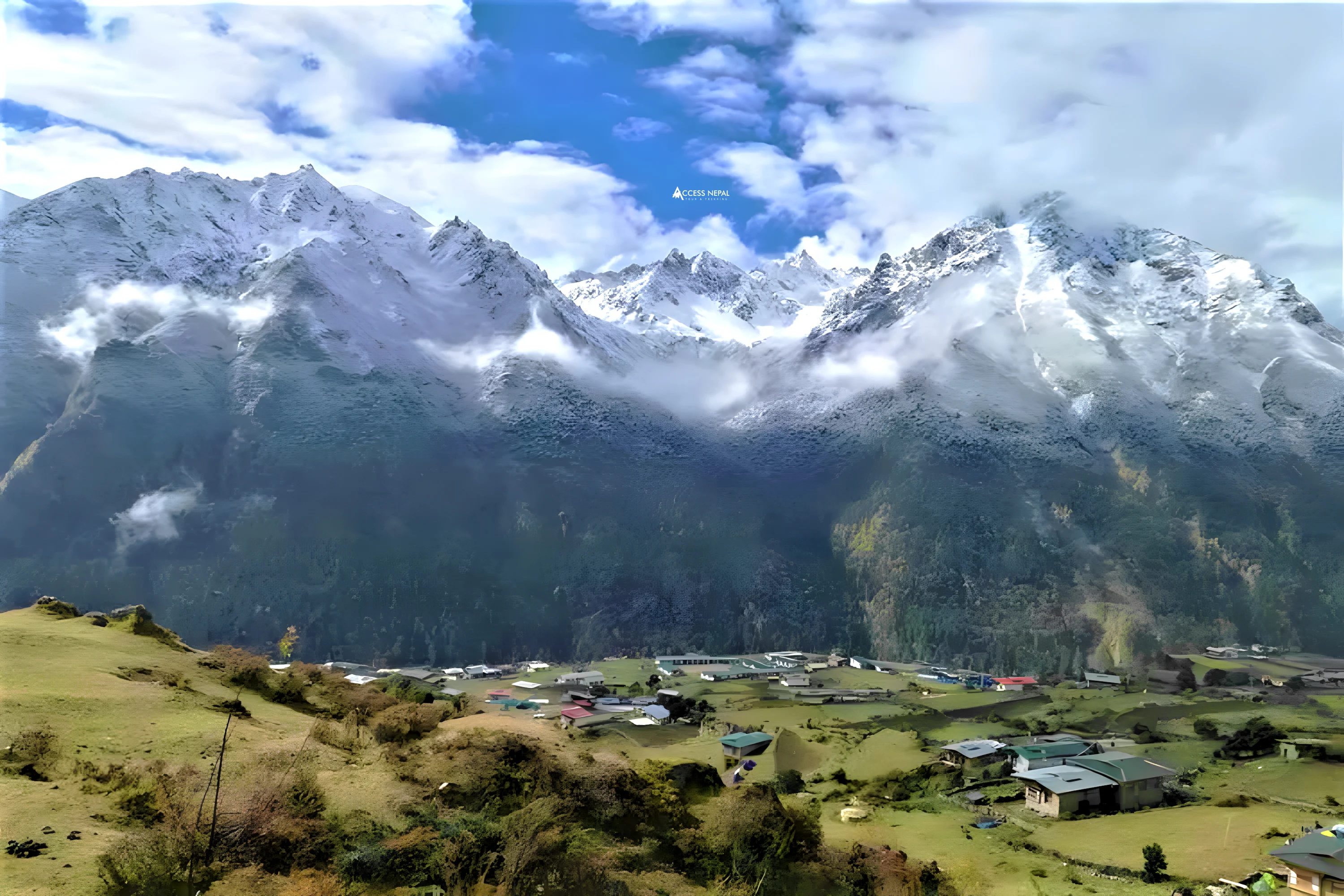
Laya Gasa Trek is one of Bhutan’s most beautiful multi-day treks along the Tibetan border. From here, you will get to see some of the most fascinating and stunning Himalayan landscapes. Not only does this trek provide you with the opportunity to see diverse landscapes, but you’ll also get glimpses of peaceful farmlands, blue pine forests, and, on top of that, some breathtaking mountain views.
The whole trek is all about walking and immersing in the border regions of Tibet. The journey begins from Paro Valley and heads north, offering you a memorable trekking experience. In between, there are plenty of scenic beauty that captures your eyes from enticing farmlands to dense forests and alpine meadows.
This trekking trail takes you to lush green forests, including several flora and fauna such as rhododendrons, oak, blue pine, juniper, and many more. During this journey, you will get to see plenty of humongous peaks, such as Mount Jumolhari, Tsherim Gang, and Jichu Drake.
Additionally, you’ll cross high passes that are above 4500 meters. You’ll walk for around 5 to 7 hours a day, and the itinerary we’ve created takes care of potential risks, including altitude sickness.
One thing is for sure: this trek will test your endurance to some extent, at the same time rewards you with some of the finest experiences and memories in the Himalayas. This Laya Gasa trek is a must for travelers who are seeking to experience Bhutan’s pristine wilderness and cultural beauty with a complete off-beaten experience.
Highlights of Laya Gasa Trek
- Get to explore Laya, which is one of the popular cities of Bhutan.
- Cross one of the highest passes of Bhutan, Shinche La Pass at 5,000 meters.
- Gasa Hot Springs brings a different kind of relaxation and a moment of joy for travelers.
- Get a chance to do a full sightseeing tour of Paro and a brief cultural experience.
- Explore Thimphu, one of the modern cities of Bhutan.
- Meet the Bhutanese people on the way and get to know their lifestyle and more.
- Taste local Bhutanese cuisines and other exotic dishes.
Day 01Arrival at Paro Airport
-
- 2,200m/7,217ft
Day 02 Taktsang Monastery Sightseeing
-
- 16 km
-
- 3,120m/10,240ft
-
- 4 to 6 hours
-

- 920m/3018ft
Day 03Drive to Drukgyal Dzong and trek to Shana
-
- 17 km
-
- 2,800m/9,186ft
-
- 6 to 7 hours
-

- 320m/1049ft
Day 04Trek to Thangthangka from Shana
-
- 22 km
-
- 3,575m/11,729ft
-
- 7 to 8 hours
-
- 775m/2542ft
Day 05Trek to Jangothang from Thangthangka
-
- 19 km
-
- 4,044m/13,267ft
-
- 5 to 6 hours
-
- 469m/1538ft
Day 06Rest day in Jangothang
-
- 4,044m/13,267ft
Day 07Trek to Lingshi from Jangothang
-
- 19 km
-
- 4,149m/13,612ft
-
- 6 to 7 hours
-
- 105m/344ft
Day 08Trek to Chebisa from Lingshi
-
- 16 km
-
- 3,850m/12,631ft
-
- 4 to 6 hours
-
- 299m/980ft
Day 09Trek to Shakya Pasang from Chebisa
-
- 14 km
-
- 4,000m/13,120 feet
-
- 5 to 6 hours
-
- 150m/492ft
Day 10Trek to Robkuthang from Shakya Pasang
-
- 16 km
-
- 4,160m/13,648ft
-
- 7 to 8 hours
-
- 160m/524ft
Day 11Trek to Limithang from Robkuthang
-
- 16 km
-
- 4,160m/13,648ft
-
- 6 to 8 hours
Day 12Trek to Laya from Limithang
-
- 10 km
-
- 3,850m/12,631ft
-
- 4 to 6 hours
-
- 310m/1017ft
Day 13Rest day in Laya
-
- 3,850m/12,631ft
Day 14Trek to Taktsimakhang from Laya then drive to Gasa Hot Springs
-
- 60 km
-
- 2,220m/7,283ft
-
- 5 to 6 hours
-
- 1,630m/5,347ft
Day 15Rest in Gasa Hot Springs then drive to Punakha
-
- 75 km
-
- 1,242m/4,074ft
-
- 2 to 4 hours
-
- 978m/3,208ft
Day 16Full-day sightseeing in Punakha
-
- 1,242m/4,074ft
Day 17Drive to Thimphu from Punakha and drive to Paro
-
- 140 km
-
- 2,200m/7,217ft
-
- 4 to 5 hours
-
- 958m/3,143ft
Day 18Transfer to the international airport for departure
- Standard 3-star accommodation in main cities like Punakha, Paro (in twin-sharing rooms).
- 12-nights tented accommodation during the camping trek.
- We provide two-man tents, dining tents, kitchen tents, toilet tents, shower tents, and many more.
- Full-board meals throughout the stay, besides the arrival and departure days.
- All airport transfers on a private vehicle.
- Private transportation with a personal driver during the trekking period.
- A licensed English-speaking, first aid-experienced Bhutanese tour guide.
- 1 porter for every two people with insurance and personal expenses covered.
- Sightseeing tour in Punakha by private vehicle.
- Kitchen helper/also a chef.
- Bhutan visa.
- As a souvenir, an Access Nepal duffel bag, a T-shirt, and Trekking maps.
- Provides sleeping bags and down jackets if needed.
- Adventure certificate.
- Basic first-aid kits with an oximeter included.
- All monument entry permits and fees.
- Sustainable Development Fee of US$100 per person per night.
- All government taxes and other charges.
- International flight to Paro.
- Internet, travel insurance, charging electric devices, and personal expenses.
- Meals during Day 1 & Day 18
- Tips for guides and porters.
- Extended stays and trips in Bhutan.
Our groups are small with maximum 14 people. We create groups of independent travelers, friends and families which maintains close interpersonal connection, engage more and get into depth of the journey. Choose a date from the calendar to reserve your spot.

Passports, Visas, and Entry Requirements for Bhutan
PASSPORT
A valid passport is mandatory if you’re looking to travel to other countries. Just keep in mind that your passport should have 6 months of validity remaining before you arrive here for the trek.
VISAS
Visa processes need to be carried out earlier because it normally takes several weeks to process. Therefore, you should keep a note of the requirements as soon as possible, right after booking the following trek.
All travelers must have a pre-approved Bhutan visa before they pack their bags for this trek. Interestingly, Indian, Bangladeshi, and Maldivian citizens don’t require a visa to visit Bhutan. We take care of all these visa processes for you, so you don’t have to worry about that.
You just have to send us a copy of your passport and a passport-sized photo. Make sure to send a bit earlier. We don’t charge you extra for handling all the visa processing. The cost is included in the tour package itself.
Bhutan Flight Information
Flight runs to Paro on a daily basis if you’re a citizen of one of these South Asian countries or cities. This includes Nepal, Kathmandu, Delhi, Singapore, and Thailand.
Druk Air, also called Royal Bhutan Airlines and Bhutan Airlines, both provide direct flights from these South Asian nations on a regular basis.
Most specifically, Druk Air runs the most frequent direct flights from Kathmandu to Paro. Bhutan Airlines is equally good, too, as it also provides direct flights. It only runs on specific days like Mondays and Fridays.
Key Permits & Requirements for the Laya Gasa Trek
Independent trekking is not allowed in Bhutan. Therefore, you must get all these required permits and documents from the licensed Bhutanese trek operator. Some of the required permits or documents are as follows:
Visa
The first and foremost is the tourist visa. It is required for the majority of international travelers.
Trekking Permit
Since the Laya Gas trek goes to the villages of Laya and Gasa, you need to obtain a special permit. This is because the Laya and Gasa falls on the restricted areas of Bhutan.
National Park Entry Permit
This permit is only required if you walk towards the path of protected areas such as Jigme Dorji National Park. Otherwise, it is not required.
All these permits and documents are taken care of by the tour operator you’ve chosen. They are responsible for taking care of all these aspects so that your entire focus remains only on experiencing and enjoying the trek.
In this case, Access Nepal Tour and Trekking takes care of these documents and permits to make your trekking experience memorable and fun. A licensed guide is also a must for this trek, and we assign you one, too.
Best Time/Season for Laya Gasa Trekking
The best times or the season for the Laya Gasa Trek are spring (April to May) and autumn (September to October). In general, the spring and autumn are considered the trekking seasons in Bhutan. This is because the weather remains clear, with the sky opening up beautifully, and the visibility is top-notch.
Trekking in spring means you’ll get to see the trails blooming with rhododendrons and the wildflowers. The weather is ideal for trekking with clear blue skies and a perfect atmosphere. You may experience a bit of cold during the morning and at night, but a very good time to do the trek.
If you do the trekking in the autumn season, you’ll experience authentic fresh mountain air, and the panoramic mountain views don’t get better than these months. The weather is also ideal, not too cold nor too hot. The ideal temperatures make it a perfect time to do the trek.
You should avoid trekking during the summer and winter seasons in Bhutan. This is because the summer (June to August) months bring heavy rainfall here, making it extremely difficult to do trekking.
Another time you should not do trekking at all is the winter season (December to February). At higher altitudes, the weather remains freezing cold with heavy snow, too. The high passes also remain closed during this time.
So the best time to arrive for this Gasa to Laya trek is during the autumn or spring season.
Major Festivals of Bhutan
There are several festivals that the people of Bhutan celebrate. Some of the major ones are:
1) Paro Tshechu
Paro Tshechu is one of the major festivals of Bhutan that is vibrant and equally exciting. It is basically a spring festival celebrated by wearing masks and dancing enthusiastically.
The following festival is celebrated as the birth anniversary of the renowned figure of Buddhism, Guru Rinpoche. It usually falls in the months of March and April, widely celebrated inside the building of Rinpung Dzong.
2) Thimphu Tshechu
The Thimphu Tshechu is another popular and also the biggest festival of Bhutan. It runs for exactly three days, falling in the months of September and October. Similar to the Paro Tshechu, masked dances are performed by the monks, remembering the Tibetan legend, Guru Rinpoche.
3) Punakha Drubchen & Tshechu
Punakha Drubchen and Tshechu are widely celebrated annual festivals of Bhutan. During the Punakha Drubchen, a popular act is conducted, remembering the 17th century war against the Tibetan invaders.
Guru Rinpoche is also honored here with the celebratory dances, wearing masks. It usually falls in the months of February and March.
4) Jambay Lhakhang Drup
Jambay Lhakhang Drup is celebrated inside the oldest temple of Bhutan. This usually runs for around 4 to 5 days, where plenty of enthusiastic dances are performed. These mainly include fire and naked dance.
The celebration takes place to honor the founder of the Jambay Lhakhang temple, King Songtsen Gampo, and Guru Rinpoche, too. It usually falls in the months of October or November.
Culture and Lifestyle of Bhutan
You would be aware that the number one religion that is widely followed is Buddhism, especially the Vajrayana Buddhism in Bhutan. The country is rich in history and culture and is one of the epicenters of spiritual beliefs.
Bhutanese people are warm in nature and treat foreigners with immense respect. They wear a Gho as a male, which is basically a knee-length cloth. Whereas the females wear an ankle-length dress called a Kira.
Mahayana/Vajrayana Buddhism is immensely followed here. The numbers also suggest that way, as almost 70 to 80% of Bhutanese locals follow this religion. Hinduism holds the second place here.
This is why there are numerous dzongs or stupas, ancient temples in Bhutan, along with an immense population of monks. The majority of people here are dependent on agriculture for their livelihood. The production of rice, maize, wheat, and potatoes is common.
Accommodation Available during the Laya Gasa Trek Bhutan
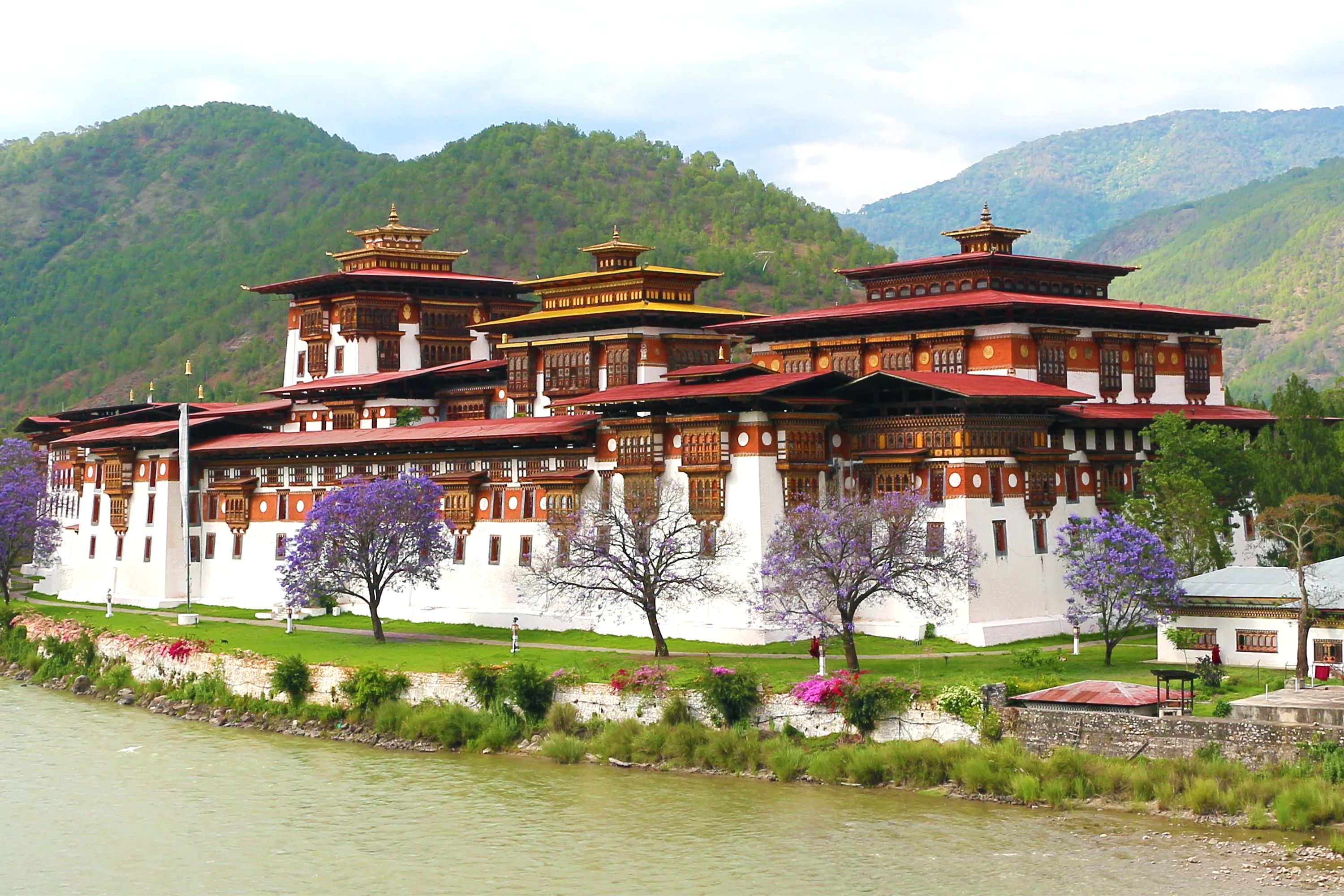
For this Laya Gasa trek, you will be staying in comfortable 3-star hotels, especially at Paro and Punakha. These hotels feature relaxing, big rooms with all the modern amenities, such as attached bathrooms, ceiling fans, and many more.
Mainly, these hotels have a great ambience and a quiet atmosphere, which you will simply love. These will make your stay fun and memorable. Additionally, the toilets will also mostly be of a western-style. There is also a higher probability of getting showers with both hot and cold water.
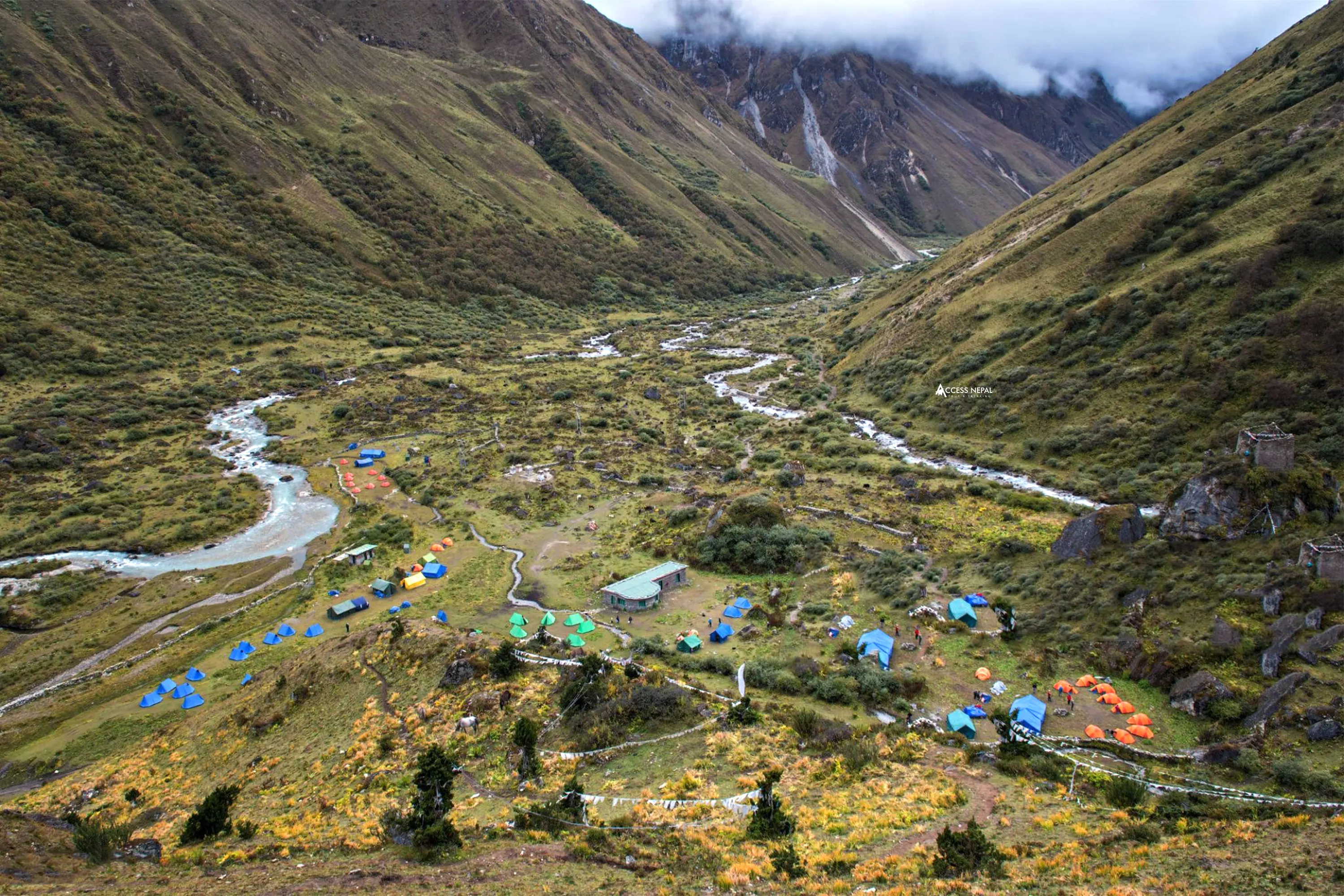
Once you head higher on the trek, you have to stay in tented camps because of the shortage of facilities like lodges and hotels. You will stay in tented camps once you reach Shana up until you get back down to Punakha.
We also assign you a separate team with you. They will be responsible for setting up the camp, preparing food, etc. The tents are of high-quality to tackle any type of weather. They are pretty big as well (two trekkers can adjust and sleep comfortably in a single tent).
To make the stay comfortable, we even provide a sleeping mat, a toilet, dining, and kitchen tents.
Internet Facilities
- Internet services will be available during your stay at the 3-star hotel in Bhutan. During the tented camps, there won’t be internet services. You might have to depend on the mobile data connection there.
Communication During Trekking
- Please buy a local SIM card from the streets in Bhutan.
- Buy a data package during your stay in tented camps to communicate with your near and dear ones.
Meals on the Gasa to Laya Trek
Meals on the Gasa to Laya trek will be nutritious and yummy at the same time. These meals are a bit different in taste and more flavorful. Some of the meal options are buckwheat pancakes, Tibetan breads, toast, eggs, Ema Datshi, momos, red rice, vegetable soups, vegetable curry, Phaksha Paa (pork and radish), mushroom stew, pasta, etc.
Besides the day of arrival and departure, every single day there will be full board meals provided by us, including breakfast, lunch, and dinner. Tea, coffee, and fruit juice will also be provided to provide a morning refreshment.
Currency in Bhutan
The currency used in Bhutan is Bhutanese Ngultrum (NU). The INR is accepted as the currency is tied to the Indian Rupee. Foreign currency, such as USD and EUR, can be exchanged at the Paro International Airport easily.
We recommend that you carry your money in the form of Traveler’s Checks (American Express or US dollars in cash). Banks in Bhutan may not accept credit cards. There is some chance that the Visa Card and the American Express credit card will be accepted.
Bhutan’s country code is + 975. Free Wi-Fi and internet service will be available in the 3-star hotels where you stay.
Tipping Culture in Bhutan
Generally, tipping is not a must. It’s fully upto you, you can provide some extra cash to drivers, cooks, or guides on the tour.
Roads and Transportation during the Laya Gasa Trekking
The road condition is pretty good, with mostly paved roads. Muddy and uneven roads may only be found when trekking at higher altitudes. You’ll arrive at the Paro International Airport first. For the airport transfers and sightseeing tours, a private vehicle will be used.
This will be a private four-wheeler jeep with enough space, making your journey comfortable and relaxing.
Travel Insurance for Laya Gasa Trek
Travel insurance is not mandatory for the Laya Gasa trek, but we recommend that you purchase it, given the altitude at which you’re going. Anything can happen when trekking at such high altitudes; travel insurance is there to cover any unforeseen events or circumstances.
The trek is long, too, so you can’t afford to get any travel-related risks. We don’t provide the facility of travel insurance on any kind of tour or trek packages. Thereby, you must purchase it on your own. Here are some of the things you need to consider before purchasing. Make sure it covers things like medical needs, cancellations of tour, injuries, etc.
How Safe Are You on the Laya Gasa Trek With Us?
We, Access Nepal Tour and Trekking, take the safety of our clients seriously. We try our best to make sure safety protocols are intact. Our trek guides are experienced and have tremendous knowledge of the entire roads and routes of Bhutan.
Firstly, our trek guides are highly experienced and are knowledgeable about the routes of Bhutan. Only local guides are assigned.
Not only that, but they also carry knowledge regarding high-altitude trekking and first-aid training. Even if you get injured or any emergency situation arises, our guides will take care of the essential rescue operations.
Altitude Gain During the Gasa to Laya Trek
The altitude gain will be immense during the Gasa to Laya trek. The trek begins with an altitude of 2,200m in Paro, which is the starting point. The trek reaches the maximum height, which is 4,160m, at Robkuthang.
On the majority of the days, you’ll be doing the ascents and descents of around 500 to 1000m. Since we reached an altitude of over 4000m, there is a good chance of getting caught by altitude sickness.
The acclimatization schedule is also maintained in the itinerary, and the acclimatization is only done through ‘Climbing high but sleeping in a lower altitude.’ Proper hydration is another element that needs to be followed strictly.
Altitude Sickness and the Need for Acclimatization
A person gets caught by altitude sickness only when he/she can”t get adjust to the thinner oxygen levels, especially when ascending to the higher altitudes. This is caused by ascending to the higher altitudes quickly without giving your body enough rest.
Proper rest and acclimatization are all required to prevent it. Some of the common symptoms of altitude sickness are headache, nausea, vomiting, sleep difficulty, loss of appetite, etc.
Descending is the best option if you feel any of these symptoms. The guide should be informed as soon as possible, as they will take immediate rescue action.
Things to Do
- Walk at a normal pace.
- The altitude gain will be around 500 meters
- Don’t hurry or give your body extra pressure.
- Follow the guide’s instructions seriously.
Laya Gasa Trek Difficulty
The Laya Gasa trek is graded as challenging and is ideal for trekkers with some experience. You should have good physical fitness to achieve this trek successfully. A good high-altitude experience is needed. Even the beginners with solid physical preparation might try out this trek.
How to Prepare for the Laya Gasa Trek in Bhutan?
Months or more of extended physical preparation are needed for the Laya Gasa trek in Bhutan. The preparation should mainly focus on cardio & strength training.
The exercises that you should focus on are running, walking, jogging, cycling, and swimming. For strength training, it is better to do exercises such as lunges, squats, and planks, giving the main attention on leg area.
Packing List for Gasa to Laya Trek
You’ll be trekking at higher altitudes, so there are plenty of items that are needed. You should be fully ready to conquer the weather and everything for that. Here are some gears and items that you need:
Gears & Clothing
- Down Jacket
- Fleece Jacket
- Waterproof Jacket
- Thermal wears
- T-shirts
- Trekking pants
- Underwear and bras (for women)
- Woolen or synthetic gloves
- Warm gloves
- Pairs of socks
- Trekking boots
- Walking shoes
- Sunglasses
Other Equipments
- Sleeping bag
- Duffel bag
- Daypack
Facility of Guides for Laya Gasa Trek
For this Laya Gasa trek, we provide a local guide with experience. They have immense knowledge of roads and routes in Bhutan. Similarly, we also provide different guides for the sightseeing tour.
They are also trained for high-altitude, too. They will also provide information regarding the major attractions of Bhutan, such as dzongs and monasteries. On top of that, they will also help you to navigate the trails.
What Documents Should You Carry For Laya Gasa Trek?
- Valid passport with at least six months of validity period.
- Take 4-5 passport-sized photographs.
- Proof of travel insurance. (if purchased)
Laya Gasa Trek Cost
Our Laya Gasa trek package is all-inclusive and has a price of USD 6980 per person. All-inclusive, meaning we take care of every trekking needs covering visa, accommodation, meals, transportation, etc.
The cost depends on the group size and preferences.
Why Book This Laya Gasa Trek With Access Nepal Tour and Trekking?
Here’s why Access Nepal Tour and Trekking is the best choice for the Bhutan trek:
- All the visa processes for Bhutan are handled by us.
- All-inclusive trek package, managing all aspects such as accommodation, meals, guides, and much more.
- We provide experienced, licensed guides.
- We provide safety and emergency support.
- No hidden charges included.
How to Book the Laya Gasa Trek Package?
The booking process is simple for the Laya Gasa trek package. Simply follow these steps:
- There lies a package details section on the right side. On the lower part lies the Book Now button; click on it.
- By clicking that button, you will be redirected to the booking procedure.
- Keep in mind that you have to pay 30% of the total amount of the trek cost in advance.
- The rest of the payment should be made within 24 hours after arriving here.
We accept wire transfers and card/online payments. If you are interested in booking the Laya Gasa trek package, follow this link: Book Laya Gasa Trek in Bhutan.
If you’re looking for more classic treks to Bhutan, the Jomolhari Trek provides magical Himalayan scenery, and the route is also somewhat similar. For trekkers with a short time and less difficulty, the Druk Path Trek in Bhutan is perfect.
What is the distance of the Laya Gasa trek?
The distance of this 18-day Laya Gasa trek is around 420 km. The trail lengths largely depend on the trekking days. The distance also fluctuates based on the itinerary and the starting point. Normally, it takes about 12 to 18 days to complete.
How much difficult is this Laya Gasa trek?
How is the climate there in spring season?
How is the climate there in autumn season?
When is the best time to do the Laya Gasa trek?
Is this trek ideal for beginners?
What kind of permits are required for the Laya Gasa trek?
Is Sustainable Development Fee (SDF) mandatory in Bhutan?
What are the documents needed for this Laya Gasa trek?
How can I book the Laya Gasa Trek?
Do I need travel insurance for this trek?
Is solo trek allowed in Bhutan?
How much weight is allowed for this trek?
Where is the location of Laya Gasa trek in Bhutan?
Is Laya Gasa trek a popular trek of Bhutan?
Are the necessary permits included in the trekking package?
What type of accommodation is available during the Laya Gasa trek?
Is it safe to trek during the monsoon or winter seasons?
Are there any health risks I should be aware of?
How to prevent from altitude sickness during this trek?
In case of emergency, what procedures are in place during the trek?
Awards and Achievements
Access Nepal Tour and Treks has been recognized with TripAdvisor’s prestigious Travelers’ Choice Award for multiple consecutive years, reflecting our unwavering commitment to quality and clients’ satisfaction.