Discounts are solely based on your group size. We do not add anyone to your group.
- Best Price Guarantee
- Hassle-Free Booking
- Team of highly experienced Experts
- Your Happiness Guaranteed
Book Now. No Booking or Credit Card Fee
- Schedule Your Own Dates
- Group Discounts
- Guaranteed Departures
- Easy Cancellation
- 60% Repeated Customers
Kanchenjunga Circuit Trek - 22 Days
- (48 Reviews in Tripadvisor)
- Recommended by 90%% of the travelers
-

- Duration
- 22 Days
-

- Transportation
- Private Vehicle & Flight
-

- Trip Grade
- Challenging
-

- Max-Altitude
- 5,143m/16,873ft
-

- Accomodation
- Teahouse & Hotel
-

- Primary Activity
- Trekking, Sightseeing
-

- Meals
- All meals during trek
-

- Best Season
- Mar-May|Sept-Nov
-

- Distance
- 160 km
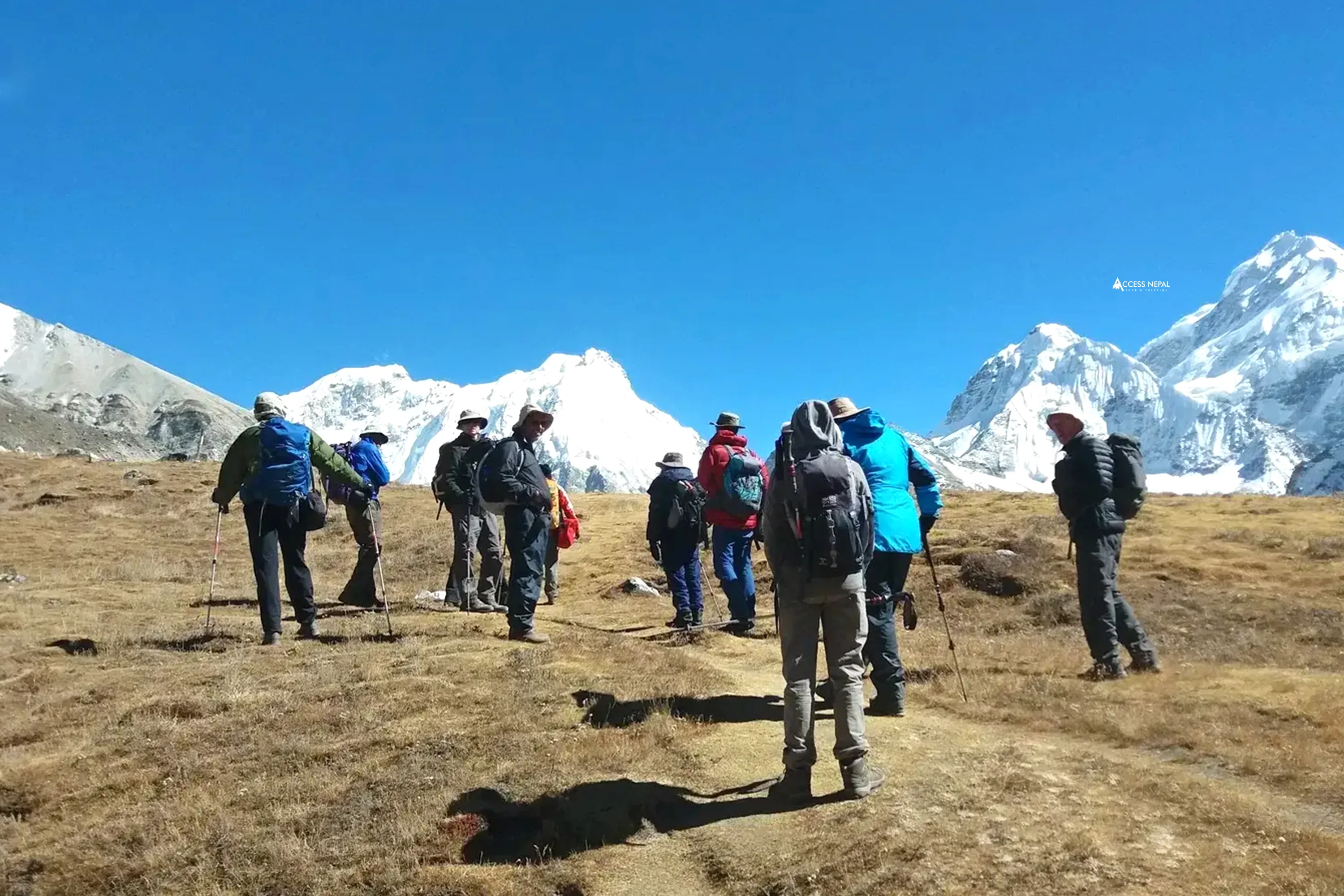
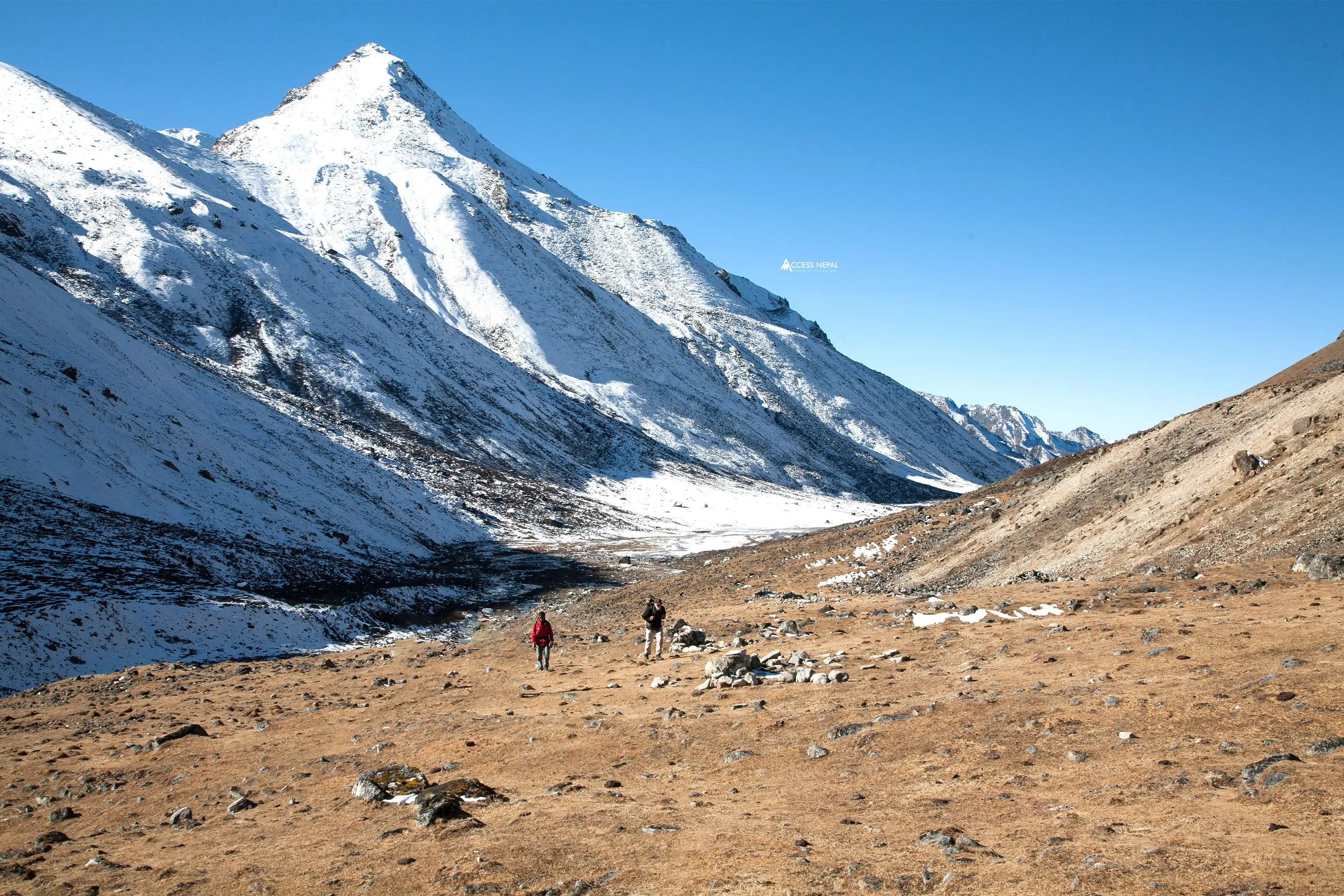
The Kanchenjunga Circuit Trek is one of the best remote treks of Nepal, taking you to the base of Mount Kanchenjunga. This tough, at the same time, remarkable trek gives you the opportunity to walk through some of Nepal’s most beautiful landscapes. During this trek, you’ll get to see both the north and south base camps of Kanchenjunga.
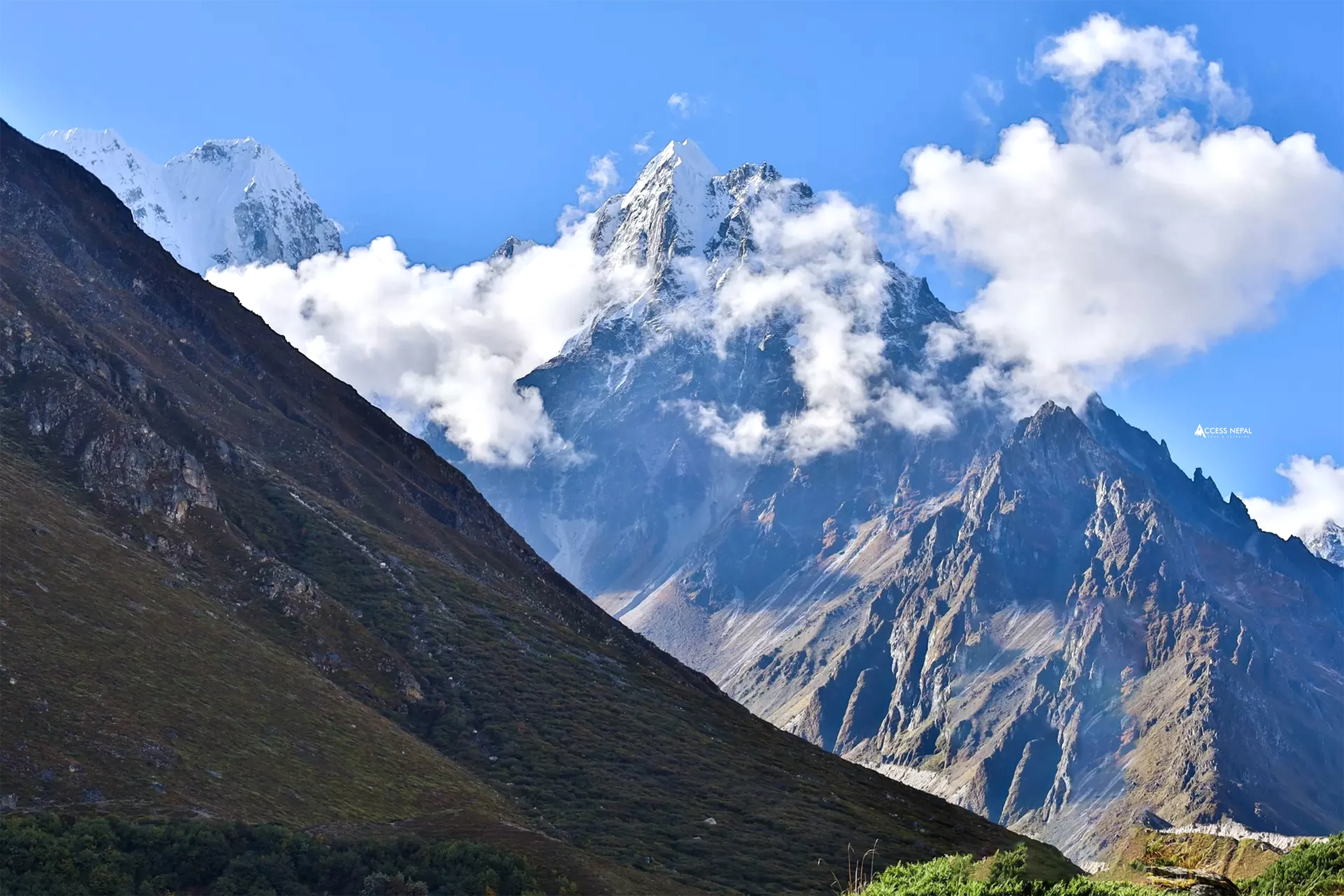
The combination of exquisite views of the Mt Kanchenjunga, Tibetan-influenced villages, and high-altitude terrain makes this trek an unforgettable adventure. Mt Kanchenjunga lies on the far eastern side of Nepal and is the third-highest mountain in the world. The trail is mostly through remote villages, dense alpine forests, and high-altitude terrain. In between, you’ll get the stunning panoramic mountain vistas in the background.
The Kanchenjunga region was only opened after mid-1980, and today it is under the observation of the Kanchenjunga Conservation Area. In order to do the trekking in this area, you need a trekking permit. In this trekking journey, you will be treated to pristine Himalayas such as Kanchenjunga West, Kambachen, Jongsong, Janu, Kabru, etc. Altogether, there are nearly twenty peaks that are over 7000m, and a few are around 8000m.
Trekking in this region is a different kind of adventure with excitement, thrill, and challenge, making it equally memorable and fun. If you’re a trek lover who wants some challenge with a high-altitude trek, then it is perfectly suited for you. The memorable portions of the route are the Arun Valley, filled with supreme natural beauty, and the wide Kanchenjunga Conservation area.
The area spans across 2035 square kilometers, giving you the ideal opportunity to see wildlife, too. The area is rich in terms of flora and fauna, and the wild animals you can see are red panda, wild boar, musk deer, and black bear. There will be some occasional sightings of the snow leopard, too.
Our 22-day itinerary starts with the flight from Kathmandu to Bhadrapur. The flight is then followed by the drive towards Fikkal and eventually to Taplejung. Taplejung is also the starting point of the following trek.
You can explore the Everest Base Camp trek with kids, which can be a rewarding family adventure when planned with proper acclimatization, shorter trekking days, and safety precautions.
Highlights of Kanchenjunga Circuit Trek
- Experience the diverse flora and fauna of this region with extreme wilderness and preservation.
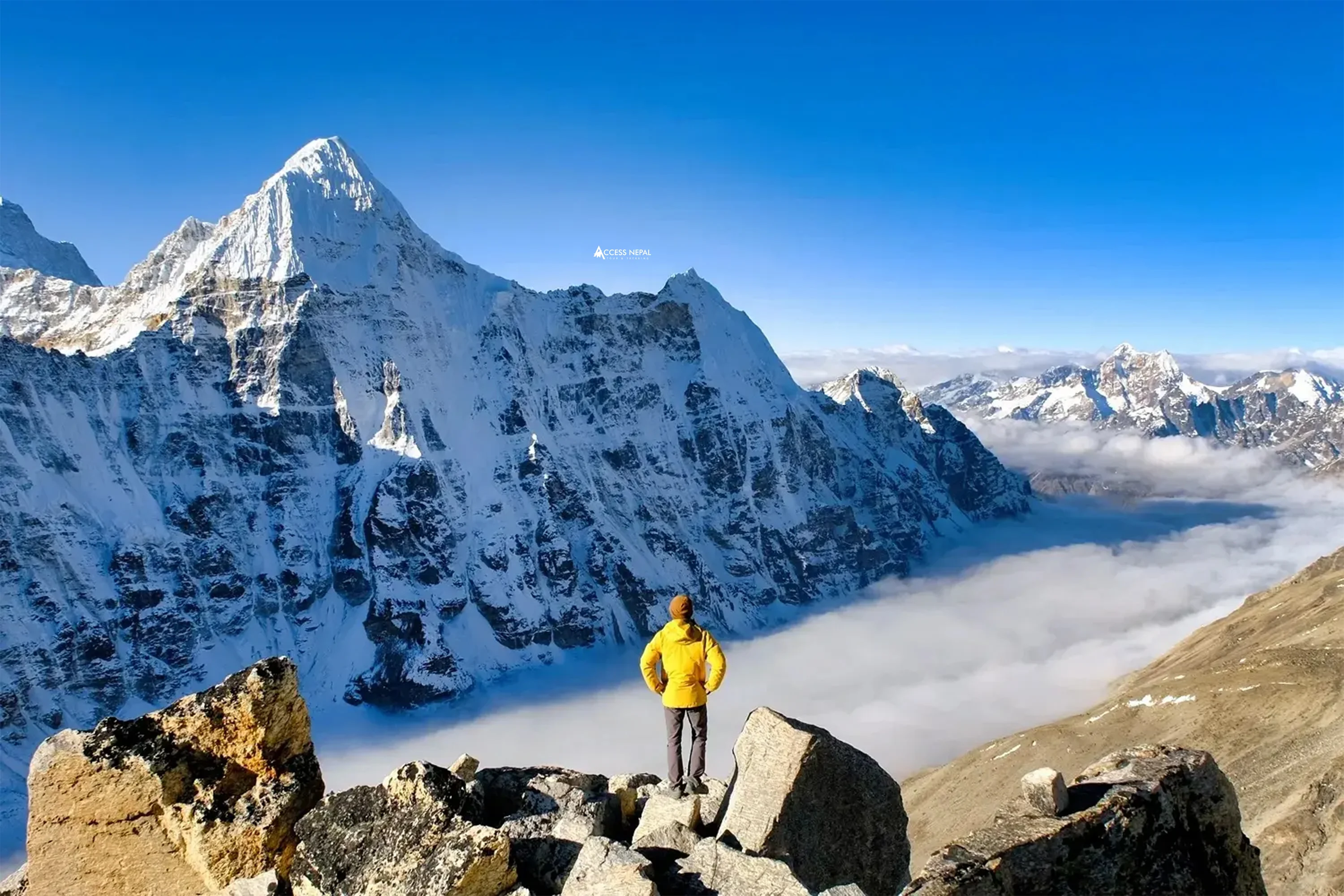
- Get one of the unique opportunities to reach both the Kanchenjunga North Base Camp and the Kanchenjunga South Base Camp.
- Experience the third-highest mountain in the world, Mount Kanchenjunag, from a really close angle.
- Walk around the renowned and pristine glacial lakes of the region.
- Explore the Kanchenjunga Conservation Area, filled with biodiversity and terrific beauty.
- Experience diverse landscapes from glacial moraines, rugged terrains, to the plain farmlands of the Terai region.
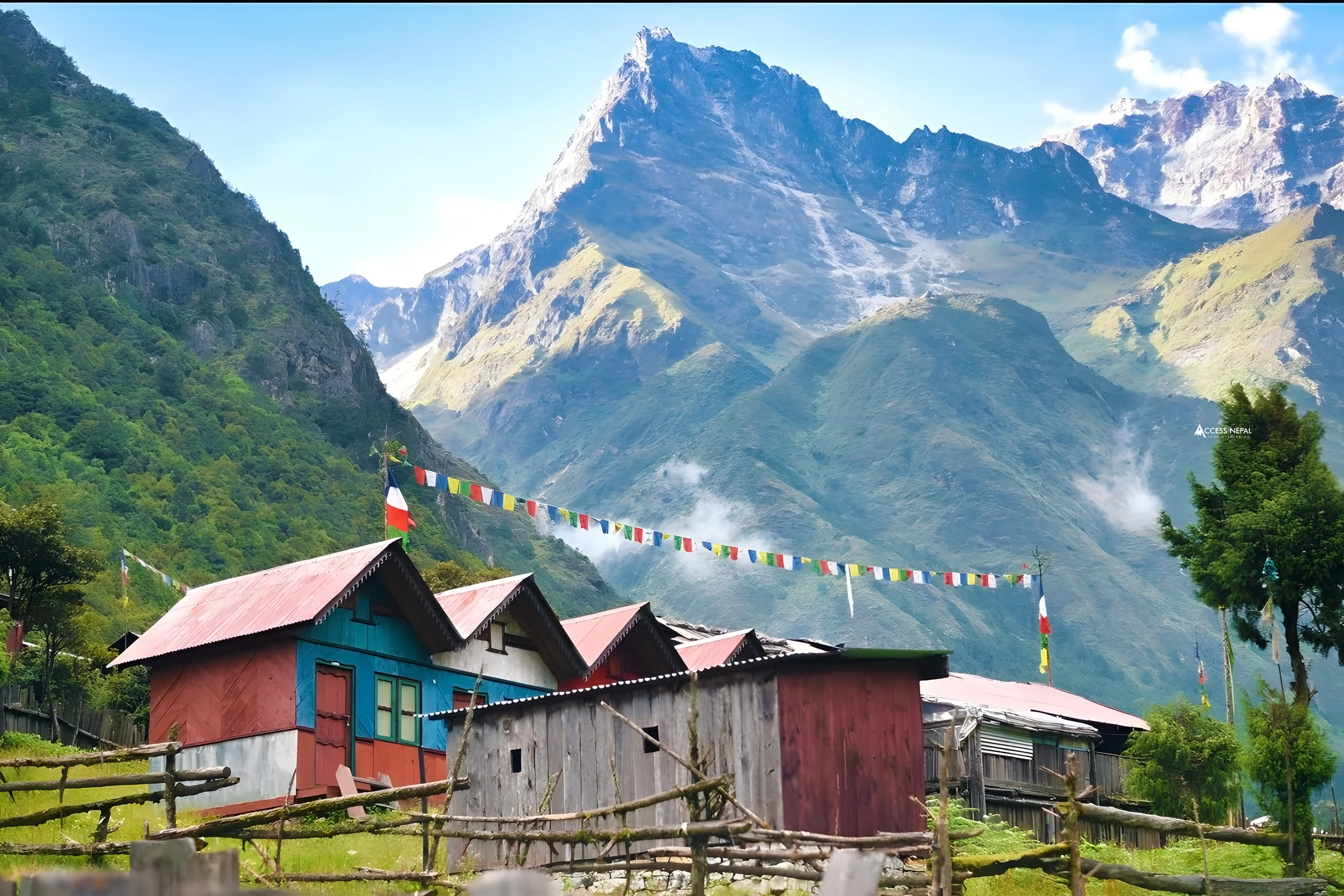
- Walk past several remote, Tibetan-influenced villages.
- Get to experience a scenic flight from Kathmandu to Bhadrapur.
- Get the opportunity to cross high mountain passes, especially the Sele Le.
- Chance to spot wildlife, including red pandas, blue sheep, musk deer, and more.
- Thoughtfully created itinerary with proper acclimatization and rest days.
- Taste local foods and get to meet locals to get insights related to their lifestyle.
- Fantastic chance to walk in the remote region with peaceful trails and fewer crowds.
Day 01Arrival in Kathmandu
-
- 1,400m/4,593ft
As soon as you land at the Tribhuvan International Airport in Kathmandu, you will be greeted in a proper Nepali style. One of our Access Nepal representatives will be there to welcome you and take you to the hotel.
You will be transferred to your hotel via a private vehicle. The hotel accommodation will be 3-star with a relaxing atmosphere. During the evening, there will be a detailed orientation session regarding the trek. You will get to know your guide, safety guidelines, and more.
A welcome dinner party will also be held for you, along with the cultural program at night.
Included: Airport transportation and accommodation.
Day 02Flight from Kathmandu to Bhadrapur and drive to Fikkal
-
- 80 km
-
- 1,500m/4,921ft
-
- 3 to 4 hours
-

- 100m/328ft
After the morning breakfast, you will be taken to the Tribhuvan International Airport. From there on, we will be going to Bhadrapur on a short flight from Kathmandu. The flight will be nearly 45 minutes, giving you glimpses of the surrounding valleys and mountains.
You can enjoy the stunning views of the Himalayan range during the flight journey. After landing at Bharatpur, we will move towards Fikkal in a private vehicle. It will be around a 5-hour drive, which will provide you with brief insights into the lower Terai region.
Bhadrapur is much more of a hot area, and as the road journey continues, it will start feeling a bit cold as Ilam is cooler. The fresh greenery and the tea-covered hills of Ilam are very popular, and many tourists visit here.
In between lies Kanyam tea gardens as well, which is another famous tourist destination. The wide tea bushes, along with green hills, make it such a pretty place. You can walk inside the tea bushes or take pictures.
The route also provides you with the scenic panoramic Himalayan views. Mount Kanchenjunga and Mount Makalu can be seen clearly. Fikkal is widely known for local food products such as churpi (hard cheese).
Additionally, you will see plenty of traditional villages, giving you first-hand experience of eastern Nepal and the people.
Included: Hotel Accommodation with Full Board Meals (Breakfast, Lunch, Dinner)
Day 03Drive from Fikkal to Taplejung
-
- 190 km
-
- 1,820m/5,971ft
-
- 6 to 7 hours
-
- 320m/1,049ft
Today on the Kanchenjunga Circuit trek, we will be heading deeper into eastern Nepal, Taplejung. The journey begins from Fikkal with a drive in a private vehicle, getting past the lush tea gardens. Ilam district is widely famous for its lovely tea gardens.
The journey towards Taplejung gives you clearer sightings of the Himalayan peaks, such as the Kanchenjunga range. In this specific route, there will be plenty of villages and market towns. This will also show you the lifestyle of the people there and the Limbu culture.
There is a major influence of the Limbu culture, specifically in the Panchthar and Taplejung districts. The road journey will be scenic and fun, giving you sightings of several valleys and rivers.
The drive also takes you to the main junction of Suketar or Phungling, which is also known as the main market of Taplejung. From here begins the start of the trekking to the very renowned Pathivara Devi Temple.
Included: Hotel Accommodation with Full Board Meals (Breakfast, Lunch, Dinner)
Day 04Trek from Taplejung to Sekathum
-
- 16 km
-
- 1,650m/5,413ft
-
- 6 to 7 hours
-

- 170m/557ft
Trekking begins today officially. After breakfast, we will start the trek, which will be a nearly 5 to 6-hour walk. The following route acts as the gateway to the Kanchenjunga North Base Camp trek.
At first, you have to descend to the Tamor River Valley. The trail maybe bit uneven with rocky terrain. You will be passing several villages and several rivers, such as the Tamor and Ghunsa Khola rivers.
After passing Tapethok, the route is a bit narrow, and the permits can be checked at the check post of the Kanchenjunga Conservation Area. Sekathum is one of the entry points of the Kanchenjunga region.
Included: Teahouse Accommodation with Full Board Meals (Breakfast, Lunch, Dinner)
Day 05Trek from Sekathum to Amjilosa
-
- 12 km
-
- 2,300m/7,545ft
-
- 4 to 6 hours
-
- 650m/2,132ft
Today will be quite a steep climb, testing your endurance and physical condition. There will be a suspension bridge that you will have to cross just over the Ghunsa Khola. You’ll pass through tons of smaller villages such as Solima, Jonggim, and Ghaiyabari.
The elevation gain will be quite intense today, with around 850m. The steep trails will be challenging. The route will take you through dense forests of rhododendron and bamboo. In the background lie the snow-capped mountains and the scenic beauty.
Amjilosa is a bit of a Tibetan-style village with a decent number of people. Here you will find several teahouses to stay.
Included: Teahouse Accommodation with Full Board Meals (Breakfast, Lunch, Dinner)
Day 06Trek from Amjilosa to Gyabla
-
- 9 km
-
- 2,730m/8,956ft
-
- 4 to 5 hours
-
- 430m/1,410ft
You will have to do more of an uphill walk to reach Gyabla. Following a gentle upward path alongside the Ghunsa Khola river, you will get closer to the destination. You’ll surpass the lush green forests of bamboo, fir, and rhododendron.
Walking gradual climbs with the scenery of high waterfalls adds a different kind of feeling. You will also be rewarded with glimpses of snowy peaks. Right before reaching the village of Gyabla, you have to cross narrow wooden bridges.
The following section is rich in terms of flora and fauna, giving you a solid chance of wildlife sightings. Some of the animals you can spot are the red panda and the black bear.
As you traverse the journey, you will get a closer look at the culture and more of a Tibetan influence here. The locals of this region rely more on yak herding and farming as their primary source of income.
Gyabla is a remote village with traditional houses and few amount of people.
Included: Teahouse Accommodation with Full Board Meals (Breakfast, Lunch, Dinner)
Day 07Trek from Gyabla to Ghunsa
-
- 15 km
-
- 3,400m/11,154ft
-
- 5 to 6 hours
-
- 670m/2,198ft
We start out early this morning towards the Ghunsa village. Following the Ghunsa Khola, the trail takes us to the Phale. Before reaching there, you have to pass through thick, lush forests of rhododendron and bamboo.
The trail has steep steps and flat sections, too. Here you can use trekking poles to lessen the impact on the knees. Phale is one of the popular villages of this Kanchenjunga circuit trek route, which you have to surpass in order to reach Ghunsa.
The background of the mountain views on both sides, while crossing suspension bridges and immersing in nature, is one of the best parts of this trek. There are some landslide-prone areas as well, which require extra caution from your side.
Breathtaking views of the Mt. Kumbakarna can be seen on a clear day as you enter a narrower valley.
Included: Teahouse Accommodation with Full Board Meals (Breakfast, Lunch, Dinner)
Day 08Acclimatization Day
-
- 3,400m/11,154ft
This is going to be a proper rest day before we go to an even higher altitude. We will be relaxing and acclimatizing at Ghunsa. There is a surrounding monastery as well, which you can explore.
Additionally, there is a ridge to climb as well. From the top, you’ll get the surreal views of the Jannu Peak. Acclimatization helps our bodies to adjust well to higher altitudes.
Included: Teahouse Accommodation with Full Board Meals (Breakfast, Lunch, Dinner)
Day 09Trek from Ghunsa to Kambachen
-
- 12 km
-
- 4,050m/13,287ft
-
- 5 to 6 hours
-
- 650m/2,132ft
The starting journey will be a bit of an ascent alongside the Ghunsa Khola. You will be presented with the breathtaking views of Mt. Jannu. The trail will also be beautiful, filled with rhododendron forests.
To add more, you’ll even get glimpses of larch and juniper forests.
Just before reaching the village of Rampuk Kharka, there are a few landslide-prone sections where you have to show extra caution. Right at the edge of the Kambachen village, we will see scenic high pastures.
Kambachen is a small village and is a also a very popular stop.
Included: Teahouse Accommodation with Full Board Meals (Breakfast, Lunch, Dinner)
Day 10Acclimatization Day
-
- 4,050m/13,287ft
After reaching Kambachen we will be again taking the acclimatization break. It will help us to prepare our bodies to the altitude. This day will be vital as we get closer to the North Base Camp.
We can climb another ridge allowing us to get gorgeous mountain scenes especially of Kanchenjunga.
Included: Teahouse Accommodation with Full Board Meals (Breakfast, Lunch, Dinner)
Day 11Trek from Kambachen to Lhonak
-
- 10 km
-
- 4,780m/15,682ft
-
- 5 to 6 hours
-
- 730m/2,395ft
We ascend from Kambachen surpassing riverbank and rocky fields. After walking for a couple of hours you will reach a small village named Ramtang. There is even a special monastery (Ramtang Monastery) which you can visit.
The day will be tough as the ascent is pretty significant. The trail passes rocky fields and moraines with the remarkable views of Kanchenjunga’s north face and Wedge Peak.
From Ramtang, the trail takes you to a different moraine of the Kanchenjunga Glacier. Extreme caution should be maintained as the path is steep and tight. Lhonak is a popular high-altitude desert-like village. Snowfall occurs on a regular basis here.
Included: Teahouse Accommodation with Full Board Meals (Breakfast, Lunch, Dinner)
Day 12Trek to Kanchenjunga North Base Camp from Lhonak
-
- 17 km
-
- 5,143m/16,873ft
-
- 6 to 9 hours
-
- 363m/1,190ft
This day is continuous uphill walking through rugged terrain and moraines. We’ll get glimpses of Kanchenjunga’s north face, Wedge Peak, and Tent Peak. At night, we have to get back to Lhonak for the night.
After a brief walk, you will reach Pangpema, followed by the return journey. The altitude gain will be quite good today, with an equal amount of high-altitude risk too.
The trail conditions will be quite tough as you walk on the edge of the Kanchenjunga glacier. There will be plenty of landslide-prone areas and rocky moraines, making the section a bit more difficult.
Pangpema also called as north base camp gives you a surreal view of the Himalayan peaks such as Kanchenjunga North Face, Jannu, and Chang Himal. On top of that, the merging view of the huge Kanchenjunga glacier with mountain peaks makes the experience worthy.
Rockfall usually happens in these sections, so maintain attention and caution as well.
Included: Teahouse Accommodation with Full Board Meals (Breakfast, Lunch, Dinner)
Day 13Trek from Lhonak to Ghunsa
-
- 23 km
-
- 3400m/11,154ft
-
- 5 to 8 hours
-
- 1,743m/5,718ft
The downhill journey begins today on the Kanchenjunga Circuit trek. The path moves alongside the Ghunsa Khola. The trail passes the villages of Ramtang and Kambachen with dense rhododendron forests in the way.
Though the descent gets easier with the alpine meadows and amazing natural scenery. First of all, you will head to the village of Kambachen, which is a proper descent journey.
The trail goes even more downward towards the Ghunsa Khola, meeting rhododendron forests in between. Before reaching Ghunsa, you’ll have to cross some glacial moraines and rocky sections. From Ghunsa, you will get pleasant views of the snow-capped peaks.
Included: Teahouse Accommodation with Full Board Meals (Breakfast, Lunch, Dinner)
Day 14Trek from Ghunsa to Sele Le
-
- 13 km
-
- 4,290m/14,074ft
-
- 5 to 6 hours
-
- 890m/2,919ft
The ascent journey will be quite long today, with nearly 800m. Sele Le is a major point of this trek as it connects both the north and south camps. The journey is filled with supreme natural beauty, with the lush green forests of juniper and rhododendron.
Careful walking is recommended, as the snow leopard can be visible at times. The terrain is also steep and full of snow. Right before reaching Sele Le, the weather opens up beautifully with stunning Himalayan views of Kanchenjunga, Jannu, and Makalu.
After reaching Ghunsa, the road parts away towards Gyabla. The steep, nonstop climb takes you to the village of Shele Le.
Included: Teahouse Accommodation with Full Board Meals (Breakfast, Lunch, Dinner)
Day 15Trek from Sele Le to Cheram
-
- 20 km
-
- 3,870m/12,696ft
-
- 7 to 10 hours
-
- 420m/1,377ft
This day is continuous uphill walking through a lush and high-altitude environment. We will be crossing multiple high passes, including Le Pass, Mirgin La, and Sinelapche La.
The trail goes through glacial moraines and alpine meadows with stunning views of the Jannu and Makalu. We head towards the first pass after doing the steep climb from the Sele Le High Camp.
Crossing the three high passes is going to be a major milestone. The panoramic views of the snow-capped peaks, along with rare sightings of Everest, add a different flavour of beauty.
After surpassing the last pass, the short descent journey begins, taking you to the destination, Cheram village.
Included: Teahouse Accommodation with Full Board Meals (Breakfast, Lunch, Dinner)
Day 16Trek to Kanchenjunga South Base Camp and return to Cheram
-
- 14 km
-
- 4,580m/15,026ft
-
- 6 to 7 hours
-
- 710m/2,329ft
Today is another significant day on the Kanchenjunga circuit trek as we head to the trek from Cheram to Kanchenjunga South Base Camp. The alpine meadows and the glacial moraines in between the journey add a bit of thrill and adventure.
From Cheram to Ramche, it is a pretty ascent journey. We will be walking in an open valley, which is not that tough considering the fact that the terrain is quite flat. Breathtaking views of the mountains can be experienced from there.
A couple of hours’ walking from Ramche takes you to the viewpoint of Oktang. Careful walking is essential in this section, as the terrain is a bit rocky. Oktang provides surreal glimpses of Kanchenjunga, Kabru, Rathong, etc.
Similarly, the return trip to the Ramche is a short descent journey.
Included: Teahouse Accommodation with Full Board Meals (Breakfast, Lunch, Dinner)
Day 17Trek from Ramche to Torongding
-
- 11 km
-
- 2,340m/7,677ft
-
- 5 to 7 hours
-
- 2,240m/7,349ft
This day will be all about a steep descent journey, falling from nearly 4000m to 2000m. The trail goes through glacial moraines, steep sections, and subtropical forests, especially of rhododendron and pine.
The landscape shifts all of a sudden, transitioning into dense forests. Near the Simbuwa Khola, there are some landslide-prone sections you should be aware of. Following the descent journey, you will reach the village of Cheram.
There will be significant changes in the lush greenery with dense forests and views of the Yalung Glacier. Chances to spot wild animals like deer, Himalayan monals, and others.
Trekking poles are recommended when walking in these sections due to the steep and slippery trails. Stunning mountain views, especially of Mount Kabru, can also be experienced.
Included: Teahouse Accommodation with Full Board Meals (Breakfast, Lunch, Dinner)
Day 18Trek from Torongding to Rani Pul
-
- 9 km
-
- 1,500m/4,921ft
-
- 7 to 8 hours
-
- 840m/2,755ft
We are coming to the end of the trekking days in the Kanchenjunga circuit trek. We head from Torongding to Rani Pul, which will be a long descent journey. The terrain will be tricky and narrow, so careful walking is needed.
We will be walking in the forested areas of the Kanchenjunga Conservation Area, with sightings of flora and fauna. Walking down the river valley meets up with the Rani Pul village.
Rani Pul is a small roadside settlement near the Tamor River. There lie landslide-prone areas as well.
Included: Teahouse Accommodation with Full Board Meals (Breakfast, Lunch, Dinner)
Day 19Drive from Rani Pul to Taplejung
-
- 160 km
-
- 1,820m/5,971ft
-
- 4 to 5 hours
-
- 320m/1,049ft
The drive from Rani Pul to Taplejung will be in a private vehicle. The road journey goes through rural hills and passes several villages like Chirwa. The road condition is pretty mixed, with gravel and paved roads equally.
The drive follows the Kabeli River and gives you glimpses of farmlands and valleys. The following road journey also marks the conclusion of the Kanchenjunga circuit trek.
The roads can be blocked during the monsoon season. A 4×4 jeep is best suited for this rough road.
Included: Hotel Accommodation with Full Board Meals (Breakfast, Lunch, Dinner)
Day 20Drive from Taplejung to Bhedetar
-
- 200 km
-
- 1,420m/4,658ft
-
- 7 to 9 hours
-
- 400m/1,312ft
The drive from Taplejung to Bhedetar takes you to the hilly landscapes straight from the high mountains. The journey will be immersive as you will get to see the pristine Tamor River.
After separating from Mechi Highway, it continues along the Tamor corridor along the Tamor River, crossing different settlements. While returning, the road separates from Ganeshchowk, Panchthar.
Bhedetar is a popular hill station where tons of travelers visit every single year. Bit chilly and cold, from there you can get the surreal views of Makalu and Kanchenjunga.
Included: Hotel Accommodation with Full Board Meals (Breakfast, Lunch, Dinner)
Day 21Drive from Bhedetar to Biratnagar and flight to Kathmandu
-
- 60 km
-
- 1,400m/4,593ft
-
- 3 to 4 hours
-
- 20m/65ft
The drive from Bhedetar to Biratnagar can be summed up as the transition from cold to hot, as Bhedetar is a bit chilly and cold place, whereas Biratnagar is the complete opposite.
We will continue the road journey, downwards from Bhedetar, reaching the lower part of Terai. After an hour of riding, the Terai plains can be visible as you reach Dharan Bazar. Dharan is one of the vibrant and popular cities of Eastern Nepal.
The travel heads south to a more tropical region, taking you to Biratnagar. The temperature is hotter as you reach there. Biratnagar is Nepal’s second-largest city, and the population is quite huge there.
From Biratnagar, there is a direct flight taking you to the Kathmandu Valley. The flight will be short, around 45 minutes, and scenic, making sure you land at the Tribhuvan International Airport in Kathmandu.
Included: Hotel Accommodation with Full Board Meals (Breakfast, Lunch, Dinner)
Day 22Departure from Kathmandu
As your Kanchenjunga Circuit trek comes to an end, you will depart from Kathmandu on this day.
Depart from here with a smile on your face, carrying precious memories of this trek and a sense of accomplishment too.
Have a safe journey! We hope to see you soon on another adventure trek with us.
Included: Airport Transfer in a private vehicle
- Airport transfer (pick up and drop off)
- Welcome dinner at a good Nepali restaurant, along with a cultural performance
- Twin-sharing accommodation for 2 nights at the Apsara Boutique Hotel
- Domestic flight from Kathmandu to Bhadrapur and Biratnagar to Kathmandu
- Private jeep drive from Bhadrapur to Fikkal, from Fikkal to Taplejung, from Rani Pul to Taplejung, and from Taplejung to Bhedetar.
- 20-night accommodation at a comfortable mountain teahouse.
- 3 meals (breakfast, lunch, and dinner), seasonal fruits, and 3 cups of tea/coffee. (Apart from arrival and departure days)
- 1 Experienced, government-licensed, English-speaking guide for a maximum of 7 trekkers with insurance and expenses covered.
- 1 Porter for two trekkers with insurance and expenses covered.
- Hot showers and attached toilet bathroom facilities (in some teahouses).
- Adequate Chlorine Tablets for water purification.
- Access Nepal T-shirt, duffel bag, and trekking map as a complementary gift.
- Sleeping bags and down jackets upon request.
- Adventure certificate.
- Basic first-aid kits.
- Farewell dinner at a good restaurant in Kathmandu.
- All required trekking permits.
- Nepal Visa
- Travel Insurance
- Wi-Fi, charging devices, and other personal expenses.
- Tips for guides and porters
- Only the welcome and farewell dinners are provided in Kathmandu
- Extended trips and stays in Nepal
Our groups are small with maximum 14 people. We create groups of independent travelers, friends and families which maintains close interpersonal connection, engage more and get into depth of the journey. Choose a date from the calendar to reserve your spot.
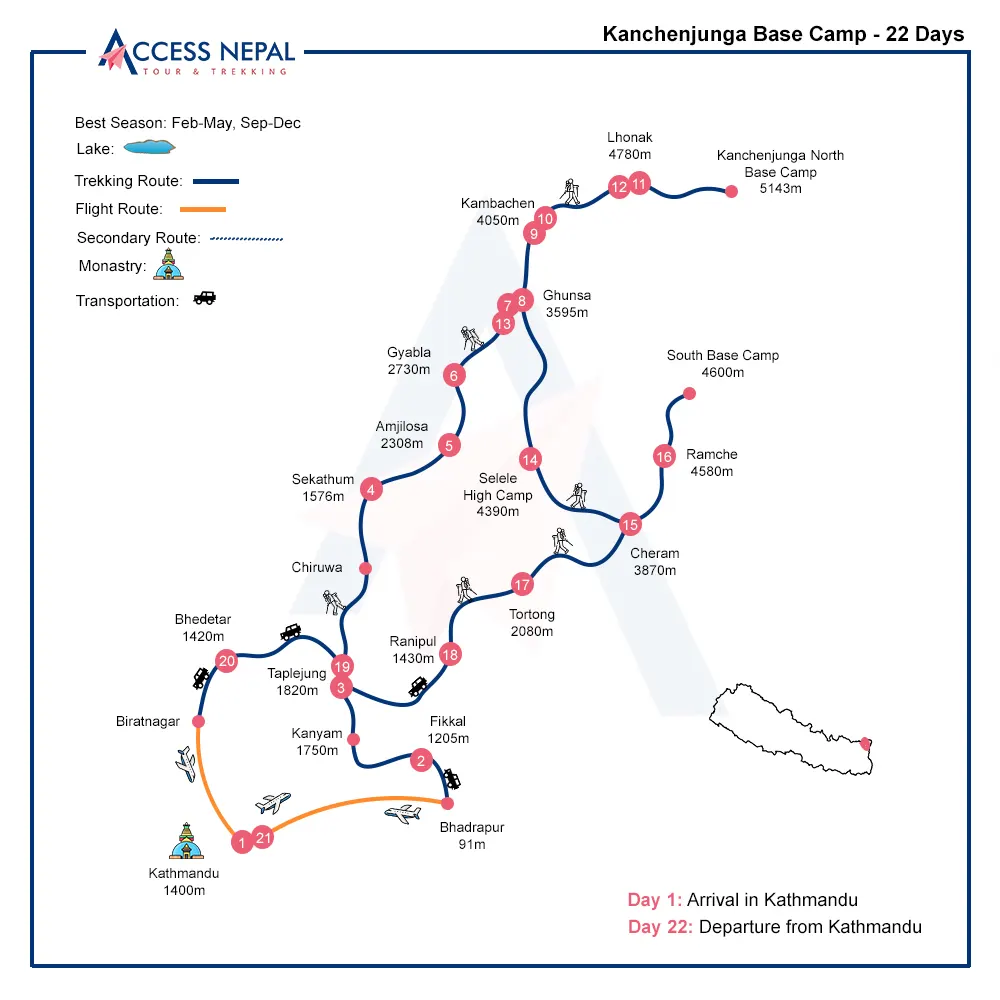
Kanchenjunga Circuit Trek Route
Since the Kanchenjunga Circuit trek is 22 days, the route will be really long, beautiful, and adventurous at the same time. The region falls on the eastern side of Nepal, and our route gets in touch with both the base camps of Mount Kanchenjunga, which is also the highlighting part of this trek.
When you are on the journey of the Kanchenjunga Circuit trek, especially on the hunt to reach base camps, you will pass through several valleys, dense forests, and even high passes.
The region is highly dedicated to the Tibetan culture, and you will see plenty of traditional Tibetan villages, both small and large. Our highly awaited journey starts from Kathmandu with a scenic flight connecting you to Bhadrapur.
After that, two days of driving begin, first taking you from Bhadrapur to Fikkal and followed by Fikkal to Taplejung.
The real trekking begins from Taplejung as you head towards Sekathum. The journey will be mainly downward, giving you glimpses of the Tamor River Valley too. When you reach the major settlements of Amjilosa and Gyabla, you will feel the landscapes shifting more towards rugged and rough.
Ghunsa is another popular spot in between, where the majority of the trekkers take a rest day/acclimatization day, and we will do the same. The beauty of Ghunsa village will give you immense peace with several lush green forests of rhododendron and pine. Buddhism is widely followed here.
The terrain changes to more alpine meadows and glacial moraines as you head to Kambachen and walk towards Lhonak. In between the Himalayan backdrops will be picturesque. One of the major days arrives as you reach the Kanchenjunga North Base Camp, giving you surreal views and experiences.
Panoramic mountain views of Mount Kanchenjunga and the surrounding peaks give a different, peaceful feeling. The route again falls back to the same upward journey, taking you to Ghunsa. Before walking to the southern base camp, there will be another acclimatization day.
The area is more remote and rugged mainly the reason behind that maybe beacause less tourists visit here. You will surpass high ridges following Cheram and march towards the other base camp, the Kanchenjunga South Base Camp.
The top of the base camp can’t be described in words, as you see close-up views of glaciers and mountain vistas. Till this point, we’ve completed the major parts of this Kanchenjunga trek, the circuit of both the base camps.
The return journey heads towards more of a lower Terai region with villages such as Torongding and Rani Pul. Terraced farmlands, dense forests, and several ancient villages are the main highlights of this descent path.
Trek concludes from here as you reach Taplejung. The drive begins again, taking you back to Bhadrapur via a private vehicle. You will stay another day in the chilly place of Bhedetar and relax with a drive from Bhadrapur.
After spending a joyful day in Bhedetar, you head to Biratnagar in a four-wheeler, followed by a return flight to Kathmandu.
The overall trek will be enjoyable, memorable, and thrilling as you reach the remote region and experience both base camps in a single trek.
Things You S
Should Know Before You Book the Kanchenjunga Circuit Trek
- You should not trek alone at all. Independent trekking is restricted.
- You should hire a licensed trek guide for this Kanchenjunga Circuit trek.
- You should have permits for this trek.
- High physical fitness and high-altitude trekking experience are needed.
- The major accommodation is the teahouse.
- Possess high-altitude risks.
- You need to put extra attention on cardiovascular and strength training
- Purchase travel insurance for this trek.
- Pack only items that are essential.
- Carry water purification tablets alongside you.
PASSPORT
A valid passport is a must if you’re looking to do trekking in other countries. You need to have your passport ready and make sure it has at least 6 months of validity. Before you head for the trek, check all the information.
VISAS
Visa processes need to be carried out in advance. Normally, the visa processes can take around 2-3 weeks to complete. All of the foreign nationals who are keen to be part of the trek activities should have a Nepal visa.
If you’re from another country, a visa is a must to visit this country unless you’re from India, Bangladesh, or Malaysia. Citizens from these countries don’t need a visa to enter Nepal.
Don’t worry if you’re not aware of these visa processes, as Access Nepal Tour and Trekking takes care of it fully. All you have to do is send us a copy of your passport and a passport-sized photo.
Needed Permits for Kanchenjunga Circuit Trek
There are two different types of permits required for the Kanchenjunga Circuit trek. These are:
- Kanchenjunga Conservation Area Permit (KCAP)
- Restricted Area Permit
1) Kanchenjunga Conservation Area Permit
The Kanchenjunga Conservation Area Permit is needed, as you will be trekking in the conservation area. In all the conservation areas, you need a permit to enter and do the trekking activities. It costs USD30 per person to obtain this permit.
The collected fees will be distributed for the conservation and preservation of the area.
2) Restricted Area Permit
The Restricted Area permit is another mandatory permit for foreign trekkers. If you’re trekking in any restricted area, you need such restricted area permits. Kanchenjunga being a restricted region, this permit is needed.
It costs USD 20 per person per week for the first four weeks. If you’re staying for more than four weeks, the costs will be even higher.
These permits can only be obtained through a registered Nepali trekking agency. And these permits are issued to a minimum of two international trekkers.
Required Documents for These Permits
- Valid passport with 6-month validity
- Nepal visa
- Passport-sized photos
Distance of Kanchenjunga Circuit Trek
The Kanchenjunga circuit trek distance is approximately 160 km. In order to complete the trek, you need to manage around 21 to 25 days. Here’s the distance breakdown as per the route:
Trek from Taplejung to Sekathum – 16 km
Trek from Sekathum to Amjilosa – 12 km
Trek from Amjilosa to Gyabla – 9 km
Trek from Gyabla to Ghunsa – 15 km
Trek from Ghunsa to Kambachen – 12 km
Trek from Kambachen to Lhonak – 10 km
Trek from Lhonak to Kanchenjunga North Base Camp – 17 km
Trek from Lhonak to Ghunsa – 23 km
Trek from Ghunsa to Sele Le – 13 km
Trek from Sele Le to Cheram – 20 km
Trek to Kanchenjunga South Base Camp and return to Cheram – 14 km
Trek from Ramche to Torongding – 11 km
Trek from Torongding to Rani Pul – 9 km
Guide & Porter for Kanchenjunga Circuit Trek
Guide and porter are an essential part of any trek. To make the trek successful, these two play a pivotal role. Similarly, their crucial help and support will be handy in this trek, which goes above 5000m.
Since the Kanchenjunga region falls in the restricted areas, a licensed trekking guide is mandatory. Guides are the backbone of treks, providing you with crucial help when needed and showing you the pathway. They make sure you are safe and sound throughout the journey.
They also make you aware of the route, key places, cultural insights, information about the region, etc.
Porters equally play a crucial role in helping to carry the heavy weights for you and walk in the higher altitudes. They are also physically strong in nature, which makes their job a bit easier.
Access Nepal Tour and Trekking offers 1 licensed, English-language-proficient guide for a maximum of six travelers. And 1 porter for a minimum of two trekkers. This will be included in all our trek packages. Just to let you know, our porters can carry 15 kg easily, including the backpack and gear.
Transportation Facilities on This Trek
Our Kanchenjunga circuit trek package makes your journey relaxing and comfortable with the medium of transportation for transfers between routes.
First of all, we will arrange the flight tickets from Kathmandu to Bhadrapur. And then another flight from Biratnagar to Kathmandu. These flights are conducted in the morning because of the weather conditions.
We will also arrange a private four-wheeler vehicle for domestic airport transfers. In between the trekking journey, there will also be a jeep drive from Bhadrapur to Fikkal. There will be another drive on Day 3 from Fikkal to Taplejung, followed by the drive from Rani Pul to Taplejung.
On the latter part of the trek, there will also be jeep transfers, especially from Taplejung to Bhedetar and Bhedetar to Biratnagar.
Kanchenjunga Circuit Trek Difficulty
The Kanchenjunga Circuit trek is graded as a challenging one. Remote adventure, and given a high-altitude a person goes adds up as one of the significant reasons. Another major factor is the rough terrain and the glacier slopes.
Since you will be walking at an altitude of over 5000m, which will be mainly the North and South Base Camps. Given the days you have to walk and the heavy amount of hours will be a toll on your body.
By looking at all these aspects, you need to have a strong physical fitness and have some experience with high-altitude trekking. On top of that, there is also a good chance of getting caught by altitude sickness. You have to be careful when doing the ascent journey, don’t rush, and don’t forget to acclimatize.
Accommodation on the Kanchenjunga Circuit Trek 22 Days
Accommodation during the Kanchenjunga circuit trek will mainly be teahouses, and the secondary one is a hotel/lodge. At the major cities such as Kathmandu, Fikkal, Taplejung, Bhedetar, etc., you will stay in comfortable hotels with two single beds.
The room also features a relaxing mattress, blanket, pillows, and all other essential items. Mostly, the rooms will also have an attached bathroom with a hot shower facility.
As soon as you start trekking, there will be basic teahouses where you have to stay with minimal facilities. The bathrooms may not be attached, but only common bathrooms. These teahouse accommodations are simple yet quite relaxing. Most importantly, rooms are basic, clean, and equipped with basic amenities.
Food on the Kanchenjunga Circuit Trek
Just to let you know, our Kanchenjunga circuit trek provides one course each of breakfast, lunch, and dinner. On top of that, we will also provide tea/coffee, especially in the morning hours. You’ll have options to choose from, as you’ll most likely get Nepali and Western cuisine during your stay.
Breakfast Options:
- Tea & Coffee
- Oats
- Porridge
- Toast
- Eggs
- Muesli
- Cornflakes
- Bread
- Pancakes
Lunch & Dinner Options:
- Momo (Dumplings)
- Noodles
- Fresh vegetables
- Rice
- Dal Bhat (Rice, vegetable curry)
- Curry
- Pasta
- Lentil Soup
- Pizza
Drinking Water
One thing you should always keep in mind is that you have to drink plenty of water. Staying hydrated is key when you’re trekking at such high altitudes. Dehydration can make the journey very difficult.
Therefore, we recommend that you drink around 3 to 4 litres of water each day. The best is to carry water bottles alongside you. Besides that, you also need to carry water purification pills. You can simply buy from the local store in Thamel.
Refill the water bottles at natural water sources during the trek if you want to. However, don’t fill everywhere you can; only refill after consulting with your guide. Don’t forget to use a water purification tablet before drinking the water.
Electricity and Charging of Your Devices
There won’t be any problem with electricity during your stay in the hotel/lodges. There will be plenty of electric plugs where you can easily charge your mobile devices.
On the other hand, when you are trekking at higher altitudes, there will be teahouses, which may be a bit of a hindrance in such facilities. To avoid any problems or obstacles, you can carry a power bank or a solar charger as a backup.
Internet Facilities
- During your hotel stay in the major cities, there will be Wi-Fi services. The connection will also be quite good, allowing you to watch the feeds or talk with your near and dear ones. Internet services won’t be available during the teahouses, so you can depend on the mobile data connection there.
Communication During Trekking
- In order to get in touch with your near and dear ones, you can buy a local SIM card from the streets of Thamel.
- For accommodation in the teahouse, you can depend on the mobile data. Buy a data package to stay connected.
Weather & Climate of the Kanchenjunga region
The weather in the Kanchenjunga region changes rapidly. The climatic conditions can be different in subtropical and arctic areas. The lower-altitude regions experience much warmer temperatures.
On the other hand, on the higher-altitude base camps, the temperatures can fall up to -25 degrees Celsius. Normally, in the trekking seasons like Autumn or Spring, the temperatures reach around 10 to 15 degrees Celsius in the daytime.
At night, however, the temperatures drop significantly, reaching even zero degrees Celsius, which means freezing cold. The weather changes are quite unpredictable at higher altitudes, with risks of avalanches and extreme snowfall.
People and Culture of the Kanchenjunga Region
The Kanchenjunga region falls in eastern Nepal, and the area is pretty much remote and culturally vibrant. Most of the people living here are of the Limbu, Rai, Sherpa, and Tamang caste and ethnic groups.
These people are mainly devotees of the Hinduism and Buddhism religions. Apart from that, it connects with the ancient route towards the Tibetan border. People of this area are warm, cheerful, and greet tourists with immense affection. There are also plenty of small monasteries and the pristine views of Mount Kanchenjunga.
Traditions & Lifestyle
The lifestyle is much more traditional and relaxed here in the Kanchenjunga region. The massive influence and the wide presence of the Rai, Limbu, Sherpa, and Tibetan communities. They live in remote villages, with the main economic source being agriculture and animal husbandry.
Recently, the teahouse tourism is shaping up to be the economic development of the region. People here are cheerful, warm, and pleasant. The main attractions of this region include vibrant festivals, aesthetic attire, and the eye-catching Kanchenjunga peak.
In the lower regions, you will see the majority of the Limbu and Rai communities. On the other hand, the higher altitude areas are mostly ruled by the people of Sherpa and Tibetan origin.
Buddhism is the main religion followed here, with plenty of monasteries and mani walls featured in this area. Similarly, the other widely followed religions are Hinduism and Mundum. There is also an interesting fact that the locals here have named Mount Kanchenjunga as the ‘Five Treasures of Snow’.
The locals of this area provide tea and offer trekkers a pleasant stay in family-run teahouses. They mostly eat traditional dishes such as lentils, rice, vegetables, etc.
Major Festivals
- Lhosar or Losar: Lhosar is one of the major festivals of this area, as it is the Tibetan New Year. It is widely celebrated in the high-altitude areas by performing prayers and rituals.
- Futuk Festival: Futuk festival is another popular festival which is celebrated in Olangchung Gola or Walung. This festival is celebrated by performing masked dances resembling the legends of this region.
- Sakela: Sakela is a renowned festival celebrated by the Rai communities. The group dancing in this festival is also quite viral, also known as ‘Sakela Cham’. There will also be other rituals done to remember and honor ancestors.
- Sakadawa & Ngyungnay: This specific festival is celebrated by Buddhist followers. In this festival, the ultimate life of the Buddha, his principles, and his legacy are honored by doing prayers and fasting.
- Dashain and Tihar: Dashain and Tihar are the first and second biggest festivals of Nepal. It is widely celebrated with joy, laughter, and seeking blessings from seniors. Celebrated in all parts of Nepal by the Hindus.
Travel Insurance for this trek
As you’re aware, you have to go beyond 5000m altitude during this trek, so it can be risky at times. Thus, the best thing to do is purchase travel insurance.
The journey won’t be easy, and any unfortunate events or accidents might occur. From our side, we will try our best to provide proper safety throughout the trek. Buying travel insurance gives you the facility of financial coverage throughout the trekking duration. We urge you to buy travel insurance before arriving for the trek.
We remind you that our trek packages don’t include travel insurance. Thereby, you must purchase travel insurance on your own.
When choosing travel insurance for this Kanchenjunga circuit trek, make sure it covers
- Altitude Sickness
- Accidents or Injuries
- Tour Cancellations
- Helicopter Evacuation
Altitude Sickness
The Kanchenjunga Circuit Trek is a high-altitude trek posing an immense threat and risks. Due to the challenging sections, steep climbs, and high-altitude walking, the chances of altitude sickness are high.
Our customized itinerary also shows that you will stay at an altitude of around 3000 to 4000m for numerous days. Keeping all these factors in mind, there is a higher chance of altitude-related problems.
Altitude sickness is experienced once you go above 3000 meters. The problem can be severe, and most importantly, all age groups can suffer from it. The main reason it happens is when you start ascending at a rapid or a quick pace. You should allow your body to adjust to the new conditions or heights.
People usually find it harder to adjust when ascending due to the changing oxygen levels. As you go higher and higher, the oxygen levels also start decreasing. The body can’t resist such transitions quickly; it needs time.
What is Altitude Sickness?
Altitude sickness is a common problem that happens when you are trekking at higher altitudes. This happens when you climb or ascend during the trek at a pace higher than normal. Thereby, it is always suggested to walk at a normal, relaxed pace, giving your body enough time to adapt and adjust.
If you get caught by it, you may feel symptoms such as sleeping problems, breathing difficulties, nausea, vomiting, an increase in heart rate, etc. Symptoms like these, if encountered, must be reported to your guide immediately.
- We follow the strict rules to prevent altitude sickness, which is ‘Climb High, Sleep Low’. Throughout the trekking period, we walk at a normal pace, and there are some extra rest days included as well at different key stops.
Prevention
- You should climb slowly.
- Take your time and allow your body to get used to the higher altitude.
- Acclimatization and rest days.
- Descent to a lower altitude when your body feels uneasy.
- Rest at a lower altitude if any symptoms arise.
- Always listen to your body.
How to Prepare for the Kanchenjunga Circuit Trek
Due to the challenging conditions, remote terrain, and high altitude, the Kanchenjunga Circuit trek is hard to achieve. You need to do rigorous training and be in excellent physical condition. for this trek.
As a trekker, you must focus entirely on cardio and leg strength training, especially for this trek. Intense training for a few months is needed.
The average walking hour for a day is around 5 to 8 hours, so trekkers must be in good shape and form, enough to walk easily for long hours.
Apart from physical fitness, some high-altitude trekking experience is also needed for this trek. It is not an ideal trek for beginners. Some of the exercises that you should do on a regular basis are walking, running, jogging, swimming, cycling, etc.
To focus on leg muscles and strengthen them, you can do exercises such as lunges, squats, and planks.
Kanchenjunga Circuit Trek Best Time
The best season for the Kanchenjunga Circuit trek is spring (March-May) and autumn (September-November). If you trek in the Kanchenjunga region during these months, you will experience more ideal weather conditions and crystal clear skies.
In the spring season, especially from March to May, the temperatures will be pretty warm, not too hot nor too cold. The trails will be filled with colorful rhododendron flowers. Similarly, in the autumn season, the months of September to November, the weather conditions will be perfect for trekking.
The air gets crisp with clear visibility and stunning panoramic mountain views. Overall, the spring and autumn seasons provide great visibility and clear skies.
Packing List for the Kanchenjunga Circuit Trek
In order to make the Kanchenjunga trek successful, smart packing should also be considered. For your comfort and safety, your gear and equipment list is crucial. The list of gear and equipment you will need is.
Upper Body
- Waterproof Jacket/windproof shell jacket
- Down Jackets
- Raincoat
- Layered warm clothing
- Thermal base layers
- Fleece mid-layers
- A couple of shirts
- Woolen hat
- Neck gaiter
- Sports Bra (for women)
Hands
- Waterproof gloves
- Insulated gloves/mittens
Lower Body
- Waterproof pants
- Trekking pants
- Around 4 pairs of underwears
Feet
- Multiple pairs of wool or synthetic socks
- Trekking boots
- Sandals
Toiletries
- Soap
- Shampoo
- Toothbrush
- Towel
- Toothpaste
- Toilet paper
- Hand Sanitizer
First Aid
- Water purifying tablets
- Anti-nausea medication
- Mosquito and insect repellent
Gears & Other Items
- Duffel Bag (complimentary gift)
- -20 Degree sleeping bag (available upon request)
- Backpack (30 to 40L) for daily items
- Water bottles (We provide free water purification tablets)
- Moisturizer
- Sunglasses or glacier goggles
- Sunscreen/high-SPF lip balm
- Camera
- Two-pin charging plug
- Personal Medication
- Trekking poles
- Headlamp with extra batteries
- Power Bank
Essential Documents/Materials to Carry
- A passport (with validity for at least six months)
- Carry some passport-sized photos
- Tourist Visa
- Photocopies of the Passport
- Kanchenjunga Circuit Trek Permits (We take care of these for you)
- Travel Insurance paper
- Booking Confirmation
- Copy of flight tickets with date of arrival and departure
Kanchenjunga Circuit Trek Cost
Our Kanchenjunga Circuit trek package is all-inclusive and has a price of USD per person. The package is all-inclusive, meaning we take care of every essential in this trek. It covers visa, permits, guides, porter, accommodation, meals, etc.
The cost depends on the group size and preferences.
How to Book the Kanchenjunga Circuit Trek Package?
The booking process of the Kanchenjunga Circuit trek is quite simple and easy. To make a booking and grab a seat in advance, make sure to contact Access Nepal Tour and Trekking. You can get in touch via email, WhatsApp, or simply from our website.
To secure the booking, you have to pay a 10% deposit of the total trip cost. The rest of the payment can be made within 24 hours of your arrival in Nepal. We accept online payment by credit card or bank transfer.
Once we get the deposit, the booking will be confirmed along with the flights, permits, accommodations, etc. After booking the Kanchenjunga Circuit Trek package, the trip is guaranteed to operate on the estimated dates.
Benefits of Booking the Kanchenjunga Circuit Trek with Access Nepal
Access Nepal Tour & Trekking provides an all-inclusive package along with a customizable option. Our Kanchenjunga circuit trek itinerary is especially designed to provide safety and comfort to all trek lovers. Access Nepal Tour and Trekking is a reputable local company with decades of experience. Some of the benefits of booking with us are listed below:
- Highly experienced, English-speaking guides who are also government licensed.
- We take care of all the required permits and government charges.
- All logistics taken care of, including accommodations, meals, transportation, etc.
- We do airport transfers, both arrival and departure.
- We take care of hotels in Kathmandu and all trek meals.
- Personalized attention and priority in safety.
- Our guides are trained in first aid.
- Guaranteed departure dates.
- Top-notch customer service.
If you’re more interested in remote region trekking in Nepal, then we have similar trek packages as well, including the Upper Dolpo Trek and Dhaulagiri Circuit trek. These treks will provide you with stunning landscapes, panoramic mountain views, and other immersive experiences.
Can I trek solo in Kanchenjunga?
No, you cannot. Trekking solo in the Kanchenjunga region of Nepal is not allowed since it falls in a restricted area. You need a licensed guide as mandatory, even if you get the permits as a single individual.
Where is the Kanchenjunga Circuit Trek?
The Kanchenjunga Circuit trek is situated in the far eastern side of Nepal. It just lies in the middle part surrounded by Sikkim and Tibet from the other side. During this trek, you will move around the third-highest peak, Mount Kanchenjunga.
How long is the Kanchenjunga Circuit trek?
The Kanchenjunga Circuit trek is a lengthy, remote trek taking you about 18 to 28 days. Based on the different itineraries, the total trekking distance will be around 200 to 250 km.
What is the best season for the trek?
Generally, for this and most of the treks in Nepal, if you’re willing to do it, then the best time or season is the spring (March-May) and autumn (September-November) seasons.
How difficult is the Kanchenjunga trek?
The Kanchenjunga trek is rated as a challenging one because of the rugged terrain, steep climb, and higher altitudes. The trek is fully lengthy, and you have to pass over 5000m.
Do I need a special permit for the Kanchenjunga Circuit Trek?
Yes, you need special permits for the Kanchenjunga Circuit Trek. Since the route passes through a restricted area, you need permits such as the Kanchenjunga Restricted Area Permit (RAP) and the Kanchenjunga Conservation Area Project (KCAP).
What is the highest altitude on the trek?
During this Kanchenjunga Circuit trek, you will reach the maximum height of 5, 143m which is the Kanchenjunga North Base Camp.
Is altitude sickness a concern?
Yes, altitude sickness is a huge threat since you’ll be going to the higher altitudes. You’ll be traveling to an altitude of over 5000m.
What kind of accommodation is available on this trek?
The accommodations for this trek will mainly be hotels/lodges in major city areas such as Kathmandu. When you start trekking in the higher altitudes, you will stay in comfortable teahouses.
What kind of food is available on this trek?
The food available on this trek will mainly be Nepalese and Western cuisine. These include dal bhat (lentil, rice, vegetable curry), momo (dumpling), noodles, sandwich, pizza, etc.
How do I get to the Kanchenjunga Trek starting point?
The Kanchenjunga trek starting point is usually Taplejung. In order to reach there, you must fly from Kathmandu to Bhadrapur. And from there you can take a jeep ride to reach Taplejung.
Is travel insurance required for this trek?
Travel insurance is required for this trek as you will go beyond 5000m. It provides financial coverage throughout the trek and makes your journey less stressful.
How should I prepare for the Kanchenjunga Circuit Trek?
The Kanchenjunga Circuit trek is a challenging trek, so thereby intense preparation is required. You must get involved in physical training, such as cardio and strength training.
What type of backpack should I carry?
You should always choose a lightweight backpack of around 15L for this trek. It should also allow you to move easily and quickly, making sure the trek becomes comfortable.
What kind of trekking boots should I wear?
The trekking boots should be mid to high-cut, which allows easy walking and, most importantly, relaxation. Even on uneven trails, it provides good ankle support and is lightweight too.
What kind of sleeping gear do I need?
One of the most important items that you shouldn’t miss is a sleeping bag. A sleeping pad can also be carried, which promotes insulation, especially from the cold ground.
What trekking gear is necessary for the Kanchenjunga circuit trek?
Some of the most essential trekking gears are hiking boots, sleeping bags, thermal layers, waterproof jackets, down jackets, etc.
Are there charging facilities along the trek?
Yes, charging facilities will be available for the trek. During the hotel stay, there will be charging ports where you can charge your electronic devices easily.
How do I handle waste on the trek?
You should pack out all the trash materials and properly dispose of human waste during the trek. Follow the ‘leave no trace’ principle seriously.
What kind of food should I bring?
You can bring energetic foods and snacks during this trek, as it is much longer and you have to walk at higher altitudes. Carry protein bars and healthy fruits alongside you.
What is the starting point of the Kanchenjunga Circuit Trek?
You will fly from Kathmandu to Bhadrapur at first, followed by a jeep drive taking you to Fikkal and then to Taplejung. The trek begins instantly from the Taplejung.
What is the total duration of the trek?
Normally, the total duration of the Kanchenjunga circuit trek is 18 to 28 days. Our customized itinerary is 22 days in total, allowing you to walk at a decent pace with important rest days in between.
What are the key stops along the trek route?
Some of the key stops of this trek are Ghunsa, Kambachen, Kanchenjunga North Base Camp, and the Kanchenjunga South Base Camp, where we will take a vital rest and go higher.
How long is each day of trekking?
Every day you have to walk for around 5 to 7 hours, depending on the altitude and the terrain. The average hours are just right in between, as per our itinerary.
Are there acclimatization days included in the itinerary?
There will be two acclimatization days in the itinerary of the Kanchenjunga circuit trek. These rest days are crucial in terms of preventing altitude sickness and getting prepared to walk in the higher altitudes.
What is the terrain like on the Kanchenjunga circuit trek?
The terrain on the Kanchenjunga circuit trek will be rugged and rough. The remote terrain moves from terraced farmlands to the higher-altitude glacial moraines and even higher mountain passes.
What are the highest and lowest points of the trek?
The highest point of this Kanchenjunga circuit trek is 5,143 m/16,873 ft, which is the Kanchenjunga North Base Camp. Similarly, the lowest point is Bhadrapur with an altitude of 91 m/299 ft.
Can the itinerary be customized of this Kanchenjunga trek?
Yes, our Kanchenjunga trek package is fully customizable and can be changed based on your timing and schedule to match your needs.
What is the best season of this Kanchenjunga trek?
The ideal time or season to do the Kanchenjuna trek is the spring (March–May) and autumn (September–November). During these months, the trails will be beautiful, the skies will be clear, and the weather conditions will be suitable.
What are the risks of altitude sickness on the trek?
There are higher chances of getting caught by altitude sickness during this trek. Once you go above the 3000m altitude, the oxygen levels start decreasing, hence increasing the chances.
What should trekkers do in case of severe altitude sickness?
The trekkers if suffered by severe altitude sickness must consult the guide immediately and descend quickly. Sleeping at a lower altitude helps a lot in the majority of cases.
Are there any health facilities available on the trek?
Yes, first aid will be carried by the guide who will be responsible for providing your safety. Helicopter rescues can also be done with the help of travel insurance.
What are the common injuries or illnesses on the trek?
Some of the most common injuries or illnesses on the trek are headache, nausea, vomiting, and trouble falling asleep. These are also the signs and symptoms of altitude sickness.
How safe is the water on the trek?
The majority of the natural water sources on this trek are pure and include fresh water. Whereas some don’t. That’s why the best is to purify first using purification tablets and drink.
What measures are taken for emergency evacuations?
The guide will play a major role in taking care of the emergency evacuations when such a situation arises. Emergency evacuations are done through a helicopter ride, but must be insured first.
What are the safety protocols for landslide-prone areas?
There aren’t specific safety protocols, other than walking cautiously and following the guide’s guidance. This is the safety protocol for the landslide-prone areas.
How should trekkers deal with wildlife encounters?
The trekkers should maintain a distance and should not go near the wild animals when encountered with wild animals. Avoid eye contact, keep distance, and mind your own business.
What permits are required for the Kanchenjunga Circuit Trek?
There are two mandatory permits required for the Kanchenjunga circuit trek. These include the Kanchenjunga Restricted Area Permit (RAP) and the Kanchenjunga Conservation Area Permit (KCAP).
Do you accept the remaining payment in cash?
Yes, our trek agency accepts the remaining payment in cash once you land in the Kathmandu valley. We accept the payment just before the trip departs.
What currency do you accept on this trek?
Even though we list all our trek packages in USD, we accept the majority of foreign currencies. This includes EUR, GBP, or Nepali Rupees (NPR). If you’re booking online, we also accept Visa, MasterCard, etc.
How much extra money do you recommend on the Kanchenjunga Circuit trek?
Since the Kanchenjunga Circuit trek will be 22 days, we recommend you bring USD 400 to 600 per person. This extra cash might be handy in paying for Wi-Fi services, battery charging, tips for guides and porters, and other personal expenses.
Awards and Achievements
Access Nepal Tour and Treks has been recognized with TripAdvisor’s prestigious Travelers’ Choice Award for multiple consecutive years, reflecting our unwavering commitment to quality and clients’ satisfaction.