

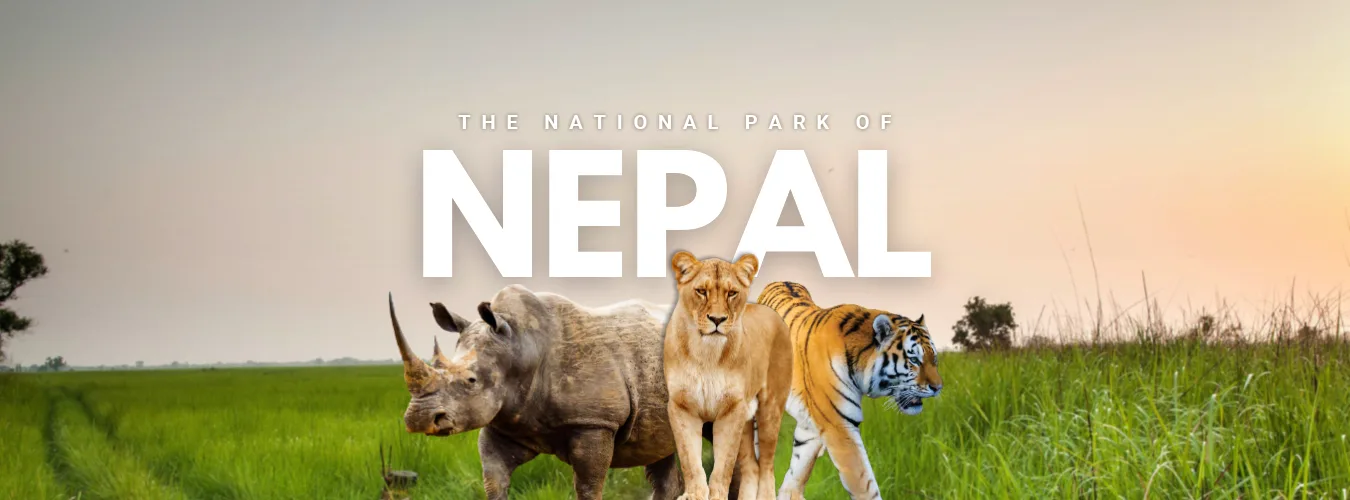
The National Park of Nepal
- Information
- By Shrijan budhathoki
The national parks of Nepal are known as the primary attractions that protect the unique natural resources and rare species. All the mountain ranges, glaciers, and most of the rivers are protected by national parks. Biodiversity in national parks, conservation areas, wildlife reserves, and hunting spots represents the entire Terai, Hilly, and Himalayan ecosystem of Nepal.
The national park on Nepal protects and provides support for the large number of plants and animals. Some rare and endangered species areas are preserved by the Forest Conservation Department. These areas protect the homes of animals and establish the perfect balance where people and animals can naturally live together without harming each other.
Nepal is small in land area compared to its neighbouring countries, India and China. Nepal is a landlocked country and home to multiple religions, castes, cultures, and traditions. Nepal is mostly popular for its mountains, but the national parks of Nepal are the hidden treasure that protects the rarest animals, birds, and plants.
If you are planning to visit Nepal for an expedition, “Access Nepal” will provide you with the most experienced guide and the most comfortable journey, being cost-friendly. Here is a complete guide for the best time to visit Nepal with month-wise suitable treks, day tours, sightseeing, and more.
Nepal’s Protected Areas
Nepal currently manages 12 national park areas specially made for birds, plants, and animals. Nepal even protects six conservation areas, one wildlife reserve, one hunting reserve, and 13 buffer zones covering about 23% of Nepal’s land. This is the highest number in Nepal, which is protecting its culture and history for the future generation.
Nepal’s national parks are vast, and each of them has its own rules and regulations so the animals and birds can have a comfortable place to stay. The national park of Nepal even protected the highly endangered animals like the one-horned rhinoceros and snow leopard.
There are many mountains and villages located near or inside the national park of Nepal. The locals of that area have their own stories and beliefs, so you have a golden opportunity to experience both natural and cultural significance in one location.
This blog will help you to know the importance of the national parks and their role in conservation. You can join “Access Nepal” for a comfortable and cost-friendly journey with our experienced guides.
List of National Parks of Nepal
1. First National Park of Nepal Chitwan National Park
The first national park of Nepal, established in 1973 AD, is Chitwan National Park. This park also falls under a UNESCO World Heritage Site located in the subtropical lowlands of southern Nepal. It covers an area of 932 square kilometers, preserving and protecting the endangered animals, birds, plants, and more than 500 species of other birds and animals. This park preserves the unique ecosystem of the Terai region and becomes the most famous place for observing wildlife and the biggest achievement in conservation.
The one-horned rhinoceros is the major attraction of Chitwan National Park. Chitwan is known as the home of the one-horned rhinoceros and holds the most successful conservation stories. In the 1960s, the number went below a hundred, and through continued protection and the help of the government, more than 600 rhinoceroses are now found in Chitwan National Park. Visitors can see them on safari in a jeep or on elephant back in open fields or bathing in mud holes.
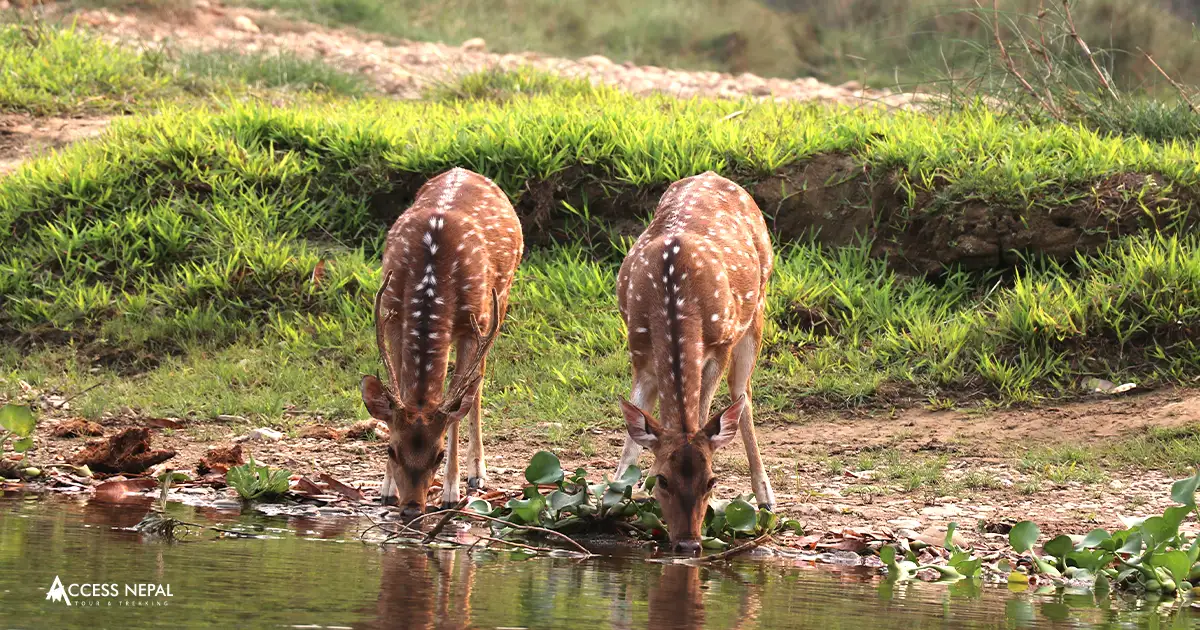
Chitwan National Park
Chitwan National Park even protects a large number of mammals, including the Bengal tiger. There are more than 120 tigers found in Chitwan being protected in their conserved area. You can even find many species of deer, leopards, and wild boar being protected inside the area of Chitwan National Park. There are more than 600 species of birds found there, and 100 kinds of waterbirds are protected inside the national park.
The Chitwan National Park has a different fee structure based on your nationality. The entry fee for Nepali citizens is NPR 150. The SAARC nations, including India, pay NPR 1,000, and for other nationalities, it’s NPR 2,000 per person. You have to pay additional costs for the activities inside the National Park, so make sure to look at the package of “Access Nepal” for the most exciting journey of your life.
2. Sagarmatha National Park
The Sagarmatha National Park is the home of the world’s tallest peak, Mount Everest. The name of the national park also comes from the Nepali word for Mount Everest. It covers the 1,148 square kilometers of the most popular mountain area. This national park has been classified as a UNESCO World Heritage Site since 1979. It is located within the Dudh Koshi River Basin, which is also surrounded by eight other mountains. The lower area of the Sagarmatha National Park is covered with rhododendron and other different trees.
The Sagarmatha National Park of Nepal is the most popular destination for the mountaineers and the adventure seekers. But it also protects and conserves the home of Himalayan wildlife. The rare and endangered snow leopard can still be found in the different parts of the park, and still it is rare to spot them. In the lower elevation of the park forest, you can spot red pandas eating bamboo and tree lichens. You can also spot other mammals like musk deer, Himalayan black bears, wolves, and pikas, also known as Himalayan mice.
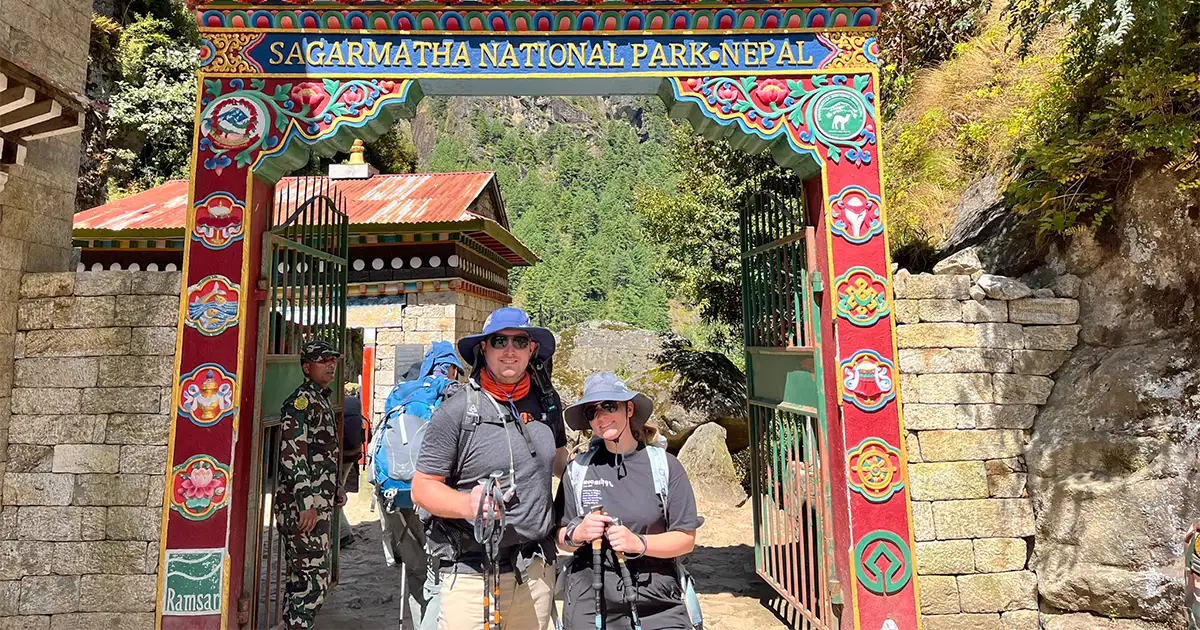
Sagarmatha National Park
This national park is also famous for the diversity of bird species. The last record shows that it is the home of more than 150 bird species, many being the birds that grow around the high-altitude environment. The national bird of Nepal, the Himalayan monal, and other birds, including the pheasant, snowcock, yellow-billed chough, and Himalayan griffon vulture, are also found there. The monal’s body is covered with the unique color shades of metallic blue, green, and purple, which are the most exciting thing for the bird watcher.
The entry fees are based on the nationality of the travelers. The Nepali citizens will pay NPR 100, while SAARC nationals will pay NPR 1,500, and the others will pay NPR 3,000 for the park entry. The visitors have to purchase an extra permit from Khumbu Rural Municipality, which costs NPR 3,000. You can also purchase the park permits from the entrance gate located at Monjo or at the Namche Bazaar.
3. Langtang National Park
The Langtang National Park of Nepal is known as the first conservation area of the Nepal mountain region. It was created in 1976 AD to protect and support the wide variety of wildlife and is one of the most popular hikes for trekkers. The national park covers 1,710 square kilometers of land and is located near Kathmandu. The name originated from the Tibetan words “Lang,” which means yak, and “tang,” which means follows. The name reflects the traditional grazing area for animals and the variety of vegetation zones with forests of oak and rhododendron.
The village of Langtang was affected by the 2015 earthquake, which killed more than 300 people. The local residents and the Tamang people of that area showed amazing dedication and helped to rebuild the homes and the trekking infrastructure and restore the entire village. You can still see the damage done by nature in a few areas of the village with broken, unfixed houses and infrastructure.
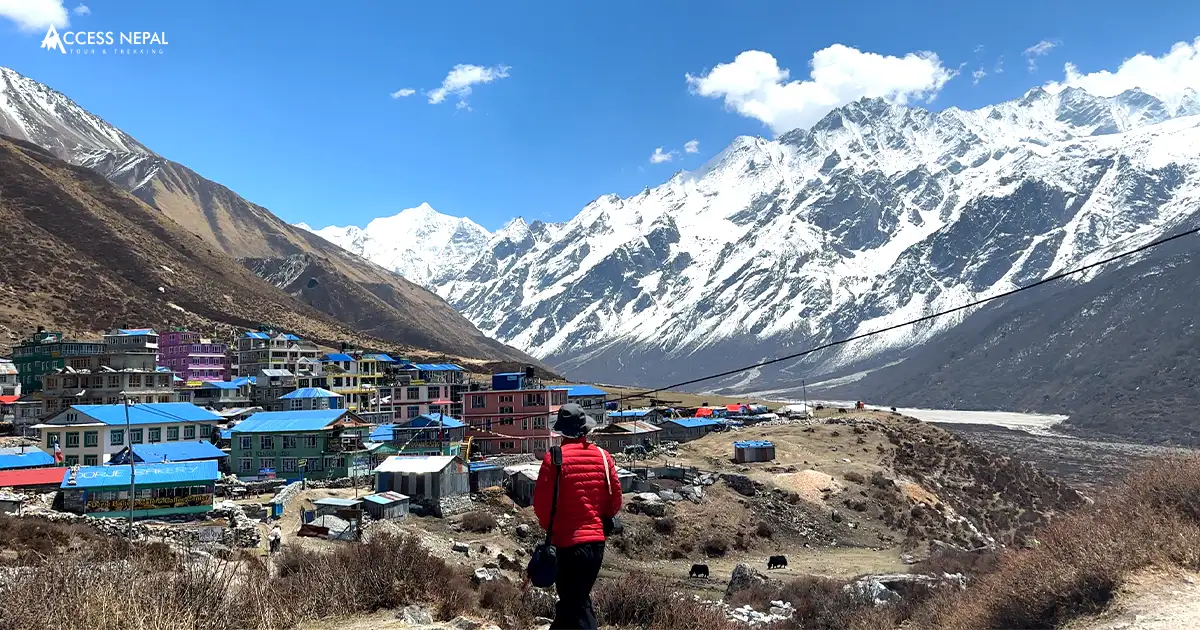
Langtang National Park
The national park supports many endangered and different species of birds and animals. The rare red panda, Himalayan black bears on higher mountains, and snow leopards in the lower areas of the mountains. You can even find musk deer, langur, tahr, and the rarest Chinese pangolin roaming inside the lower area of the mountains. The park is also home to more than 250 different bird species. The birds, like the kalij pheasant, koklass pheasant, and different types of high-altitude habitat birds, can be found, which is the beautiful thing for bird watchers.
The visitors have to pay the price according to their nationality. The entry fee for Nepali citizens is NPR 100. The SAARC nation’s citizens have to pay NPR 1,500, and finally, the other foreign country citizens have to pay NPR 3,000 per person. You can obtain the permit from the different places of Kathmandu, but the best option is the Nepal Tourism Board’s office in Kathmandu. You will need your passport and a passport-sized photo to apply for the permit.
4. Bardia National Park
The Bardia National Park is located in the western part of Nepal. In 1988 it was established as the royal hunting reserve, and later it was converted into a national park protecting and conserving the different varieties of wildlife. It only covers 968 square kilometers of land, also known as the largest lowland park of Nepal. Bardia National Park is not as popular as Chitwan National Park; you will notice fewer crowds and guests around the area. But still it provides the unique experience of wildlife.
The national park is popular for the healthy population of tigers, around 50, and the one-horned rhinoceroses, around 70. The lack of guests makes a more comfortable environment for the animals, as they can stay in peace and live their own lives. It is not as popular as Chitwan National Park, but you will have a higher chance of spotting tigers because of its good numbers and small protected area. It is also home to 40 to 50 wild Asian elephants, which provides a spectacular experience to tourists.
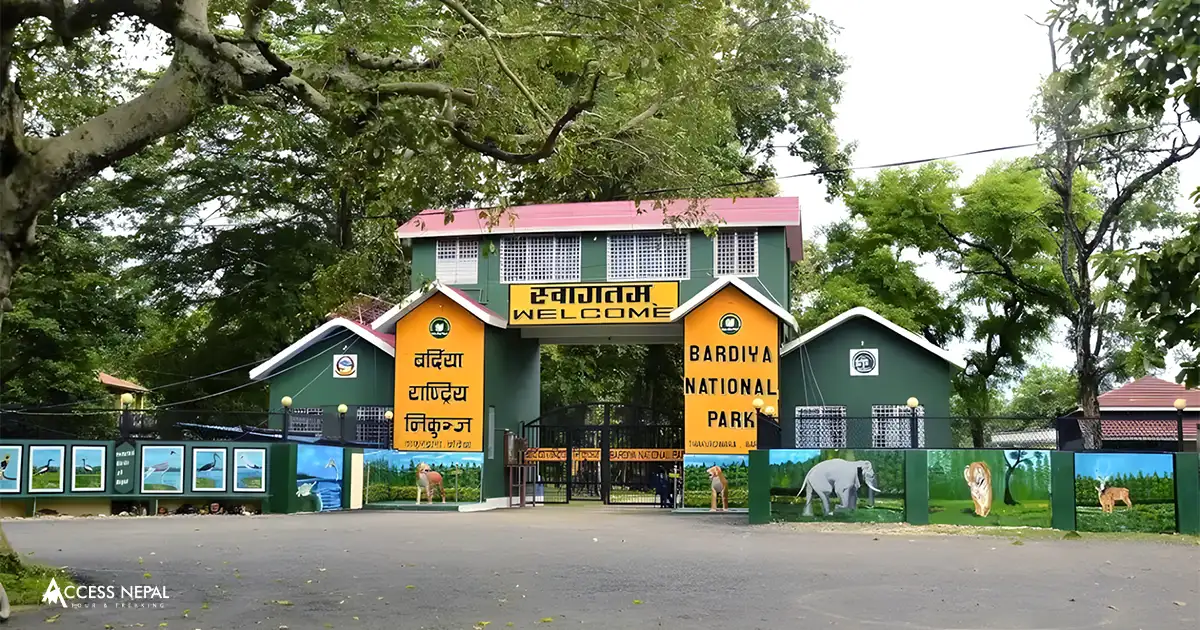
Bardia National Park
Bardia National Park is the most peaceful and the best location for the bird watchers. You can find more than 450 different species and types of birds inside the park. You can also find the many endangered species like the Bengal florican, white-rumped vulture, and sarus crane. We can say that between October and May is the best time to visit because you will notice animals and birds gathering near the water in the dry months of the year.
While planning to visit the Bardia National Park, always remember that the entry fee price is based on the visitor’s nationality. The Nepali citizens have to pay NPR 100 to 150 per person. The SAARC country citizens have to pay NPR 750 per person, and other countries’ tourists have to pay NPR 1500 per person. The additional park activities, like safari, rafting, and jungle walks, will cost you an extra additional charge according to their own personal interest.
5. Rara National Park
The Rara National Park of Nepal is located in the northwest of Nepal between the Mugu and Jumla districts. It was established in 1976 AD, preserving the wildlife of 106 square kilometers of land. The national park’s main attraction is “Rara Lake.” It is spread around 10.8 square kilometers and located 2,990 meters above sea level. It is also referred to as the “Queen of Lakes,” with clear water and the snow-capped mountain providing the majestic view of the surroundings.
The lake is located in a remote location, so it has been untouched by the large number of tourists. You have to take a flight to Talcha Airport and then hike around 2 hours to reach the park, or you can spend a few days hiking from Jumla if you are craving adventure. The north side of the park has a dense forest where you can find a variety of species inside the forest. Due to its extreme weather conditions and the altitude, the number of species found here is different than those found at lower altitudes.
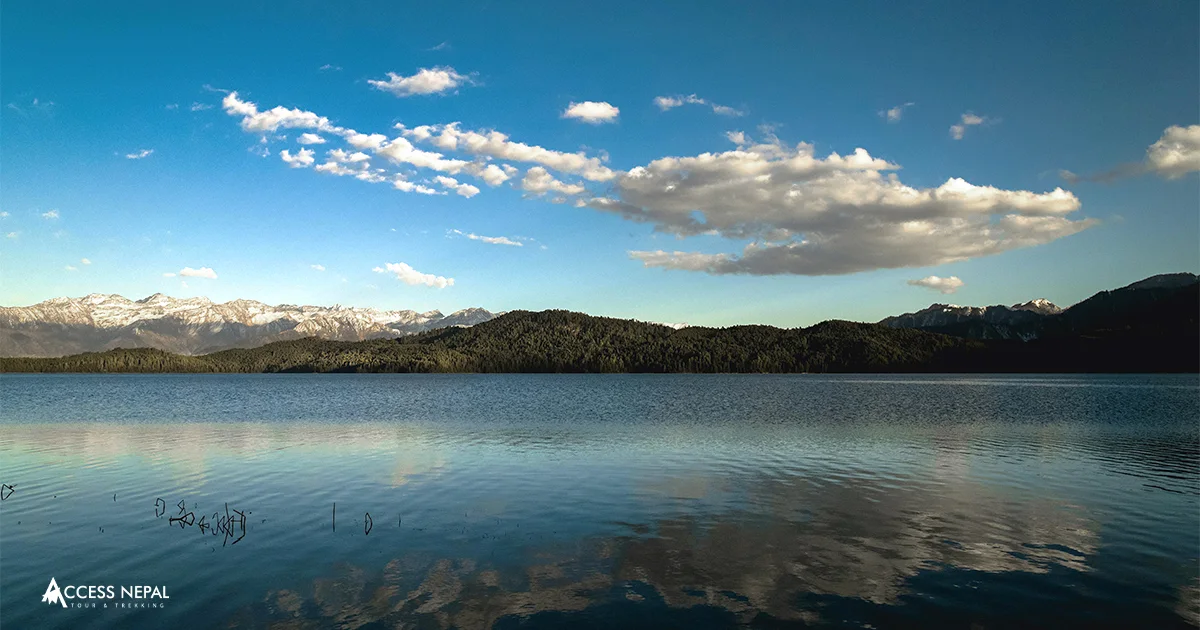
Rara National Park
The national park protects and preserves the home of different species like the Himalayan black bear, leopard, yellow-throated marten, Himalayan tahr, serow, musk deer, and red panda, which are also seen sometimes. The more than 500 different species of waterbirds migrate to the park during the winter months of the year. The birds like coots, great crested grebes, black-necked grebes, red-crested pochards, and common mergansers. They have even recorded over 214 other species of birds, which makes it a wonderful place for bird watchers.
The entry fee for Nepali citizens is NPR 100. The SAARC nations pay NPR 1,500, and other foreign countries pay NPR 3,000 per person. So we can see that the entry fee is different according to the nationality of the visitors. You can buy the entry permit from the entrance of the park, which is located in Hutu. Activities like boating, trekking accommodations, and other activities can cost you additional charges.
6. Shey Phoksundo National Park
The Shey Phoksundo National Park is known as the largest national park in Nepal. It was established in 1984 AD, covering an area of 3,555 square kilometers located in the Dolpo district of Nepal. It is known as the least disturbed and most beautiful ecosystem in Nepal. The Phoksundo Lake is the major attraction of the park, located at an elevation of 3637 meters and 145 meters deep. It also holds the title of the deepest lake in Nepal.
Phoksundo Lake is one of the most photographed places in Nepal because of its turquoise color. The surroundings, covered with pine forests and snow-capped peaks, have attracted many travelers and filmmakers over the years. The southern forest of the park is covered with blue pine, spruce, hemlock, cedar, birch, and poplar. The national park supports the rare animal species, birds, and plants that are in worldwide demand for medicinal purposes.
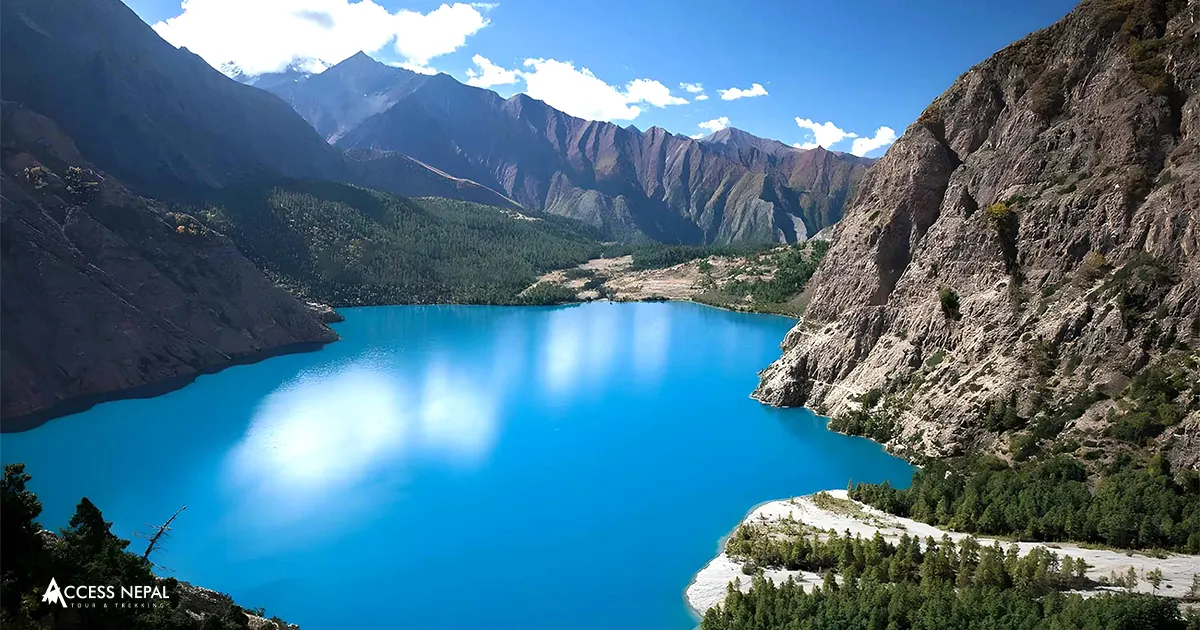
Shey Phoksundo National Park
The Shey Phoksundo National Park is the most suitable and the best place to see snow leopards. There are around 50 to 75 snow leopards inhabiting the area. There are many important mammals found inside the park, like the Himalayan wolf, Himalayan black bear, Himalayan brown bear, goral, serow, and argali, the largest wild sheep in the world. There are more than 200 bird species, including species like the Tibetan snowcock, Himalayan snowcock, Tibetan partridge, and bearded vulture.
The entry fees are different according to your nation. The citizens of SAARC countries have to pay NPR 1,500, and the other countries have to pay NPR 3,000 per person. But the citizens of Nepal have to pay only 100 to 150 per person. Children below 10 years can enter the park for free. The permits can be obtained at the entrance gate of the Dolpa and Mugu regions. There will be additional according to your interest and the activities you choose to do.
7. Makalu Barun National Park
The Makalu Barun National Park was established in 1992 AD, preserving 1,500 square kilometers of wildlife and supporting their habitat. The fifth tallest mountain on earth, Mount Makalu, standing tall at 8,485 meters above sea level, is the major attraction of the national park. The most interesting thing is that it conserves and supports the ecosystem from below 435 meters to the summit of Mount Makalu. The forest of the park is filled with rhododendrons and magnolias at higher altitudes and protects the rare animals and birds.
The park has 25 different types of forest protecting over 400 species of birds, 88 species of mammals, 3,000 species of flowering plants, and many unique species restricted to the park itself. The park conserves the endangered mammals like red pandas, snow leopards, clouded leopards, common leopards, Asiatic wild dogs, and Himalayan black bears. And in lower elevations you can find mammals like the goral, the serow, the barking deer, and the wild boar. It is also the home of the rarest birds, like the olive-backed pipit, the brown bullfinch, and the rufous-bellied woodpecker.
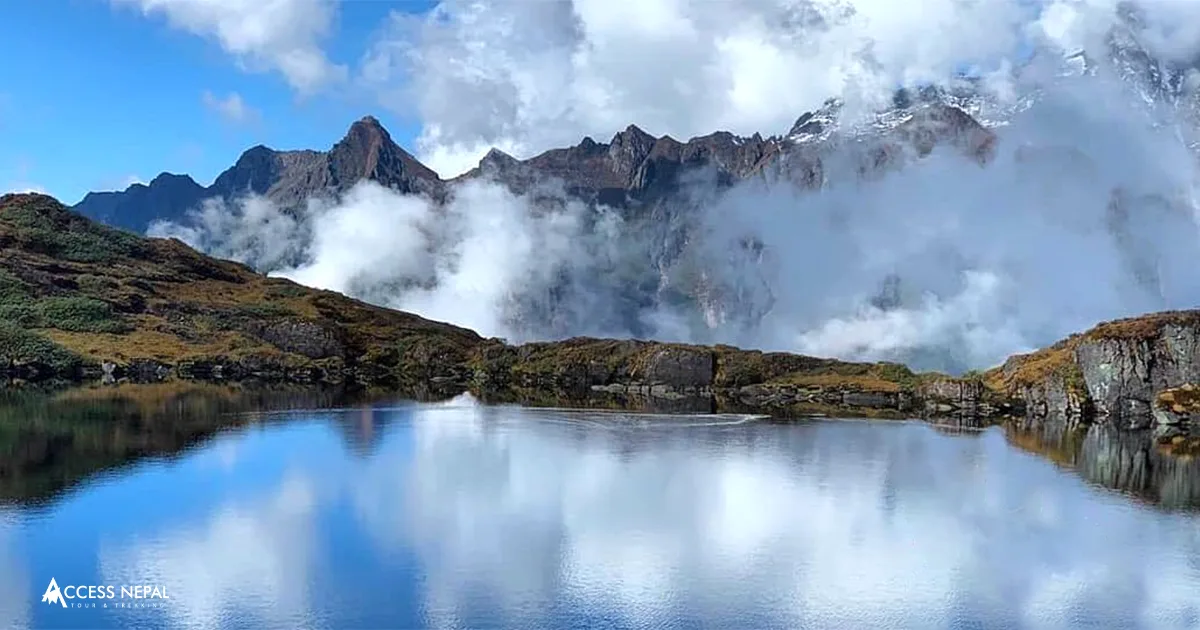
Makalu Barun National Park
The Makalu Base Camp Trek is considered one of Nepal’s most difficult and rewarding treks. It takes 18 to 21 days to complete the trek exploring the Rai, Sherpa, and Tamang cultures, their languages, and their traditions. Due to its difficulty level, there are a low number of visitors on the trail, which will provide you with peace and a unique experience throughout your journey. The best time to trek is between March and May and October and November.
The entry fee rule is the same as other national parks in Nepal. The price can be different according to your nationalities. The Nepali citizen has to pay NPR 100. The SAARC nation’s citizens have to pay NPR 1,500, and the other nation’s citizens have to pay NPR 3,000. The children below 10 are free to enter, and you will need a passport to purchase the entry permit for the park. You will have to pay additional charges for the activities, food, and hotels according to your interest.
8. Khaptad National Park
The Khaptad National Park is located in the Doti district of the far western side of Nepal. It was established in 1984 AD, covering 225 square kilometers of the surrounding area. The park holds the religious and spiritual value of a leader known as Khaptad Baba, who practiced meditation for decades before his passing. It conserves both the natural and cultural heritage of the country. The climate of the park is suitable for casual walkers, families, and children compared to other national parks.
The area of the park is covered with rhododendron trees, oak trees, and fir trees. In the months between March and May, you will notice the rhododendron trees blooming in different colors like red, pink, and white. The area is also filled with 270 different species of flowering plants. Many of the plants are used for medicinal purposes due to their healing properties traditionally used by local people of that area.
The national park does not support a large number of wildlife like other parks, but still it has a low number of snow leopards, black bears, yellow-throated martens, wild barking deer, and goral. The visitors can also find the low number of carnivorous animals like the lingsang and jungle cat.
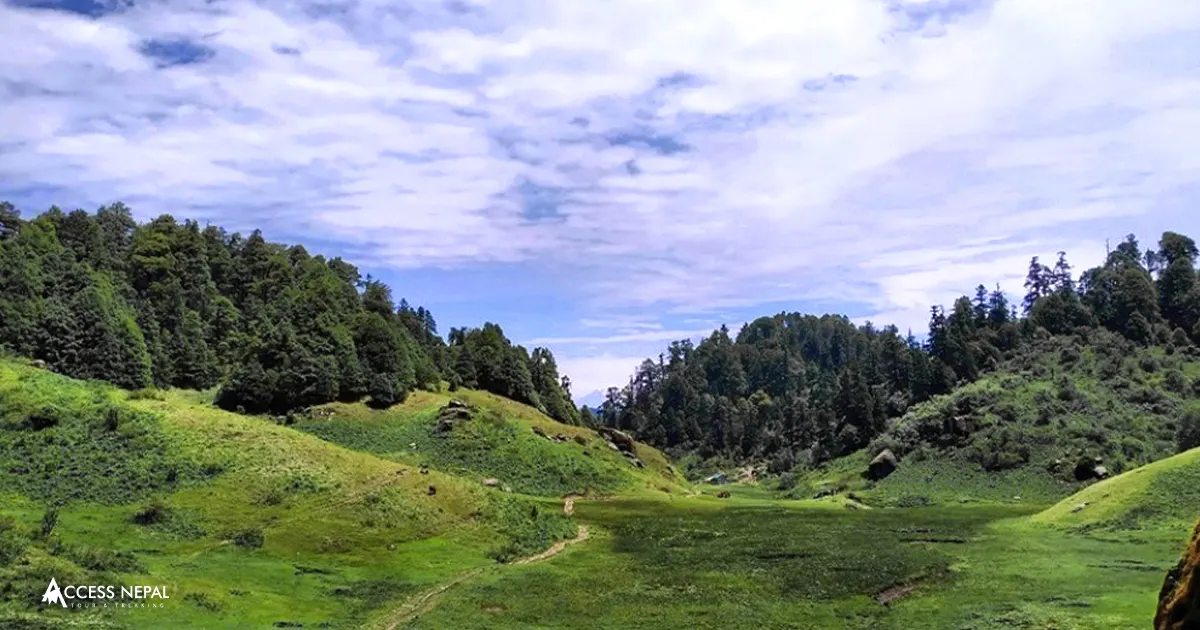
Khaptad National Park
The park is facing the problem of conserving the large number of wildlife due to its small area. The government and local authorities are currently working on solving its problem to increase the visit of tourists. But it is a good place for bird watchers. You can find around 270 different species of birds. The smaller crowd and peaceful environment attract many birds to this place.
The permits can only be obtained from the entry gate or the authorized trekking agencies in Kathmandu. The price can be different sometimes, so you have to confirm with the Nepal Tourism Board regarding price. But normally the entry fee rule is the same as other national parks of Nepal. The price can be different according to your nationalities. The Nepali citizen has to pay NPR 100. The SAARC nation’s citizens have to pay NPR 1,500, and the other nation’s citizens have to pay NPR 3,000.
9. New National Park of Nepal Banke National Park
The Banke National Park is the newest national park, which was established on July 12, 2010, in the Lumbini Province of Nepal. The park covers 550 square kilometers of total area. The combined area of Banke National Park and Bardia National Park shares around 1,518 square kilometers of area known as the tiger conservation unit Banke-Bardia.
The national park has eight different types of ecosystems, like Sal forest, deciduous riverine forest, savannah forest, hardwood forest, and floodplain communities. The park contains 113 different types of trees, 107 herbs, 34 types of mammals, over 300 types of birds, 58 fish species, and 24 reptile species and protects 21 Royal Bengal Tigers. The national park also protects species like hyenas, four-horned antelope, giant hornbills, and gharials.
The best time to visit Banke National Park is between October and early April. The weather is mostly dry, and the temperature can reach up to 45 degrees Celsius in May, and June is known for its monsoon rain. You can reach the park in one hour from Nepalgunj. The travelers can enjoy jungle safaris, bird watching, elephant walking, and camping. In 1988 Nepal developed this area to protect its cultural and traditional significance. Later it became the important part of the Terai region.
The entry fee for Banke National Park for Nepali citizens is NPR 100. The SAARC pay NPR 750, and for other nationalities, it’s NPR 1,500 per person. You have to pay additional costs for the activities inside the National Park. The children below are allowed free entry inside the park.
10. Shivapuri Nagarjun National Park
The Shivapuri Nagarjun National Park is known as Nepal’s 9th national park, which was later opened to the public in 2002. The park is located at the northern part of Kathmandu Valley, covering 159 square kilometers in area. Shivapuri peak is located just 12 kilometers from Kathmandu at the altitude of 2,732 meters. The park covers the three parts of the districts of Kathmandu, Nuwakot, and Shindhupalchowk, which makes it easily accessible for the people visiting the park.
The park has subtropical and temperate climates, which are good for seasonal plants, animals, and birds. You can find 2,122 different types of flowering plants and herbs. There are four different types of forest with trees like pine trees, oak trees, and rhododendron trees. The area protects 24 species of mammals and nine endangered mammals like clouded leopards, pangolins, Assamese macaques, and leopard cats. You can find over 177 different types of birds and almost 106 species of butterflies and moths.
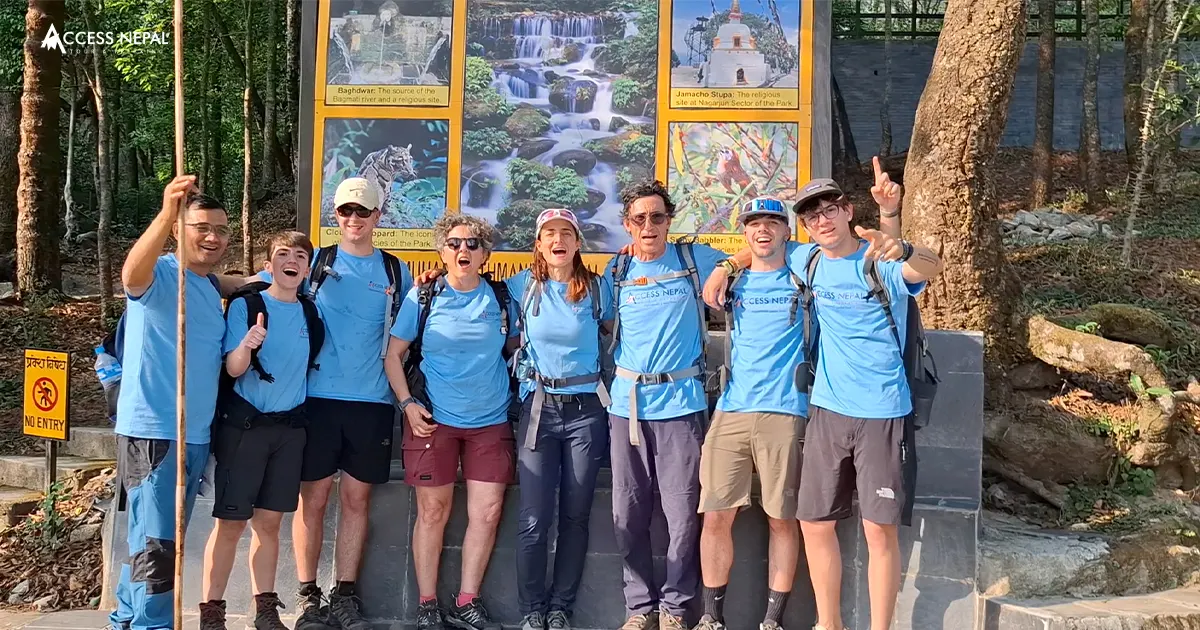
Shivapuri Nagarjun National Park
The park holds religious and spiritual importance to the Hindu and Buddhist religions. Many people during the new year visit the temple and Nagi Gompa Monastery to worship for better days. The sacred Bagamati and Bishnumati rivers are also the source of worship for thousands of people. The park also has the option of hiking, trekking, bird watching, cycling, and jungle walking. The travelers can enjoy the majestic view of Kathmandu Valley from Shivapuri Peak.
To enter the park, the visitors have to pay the entry fees according to their nations. The Nepali citizens have to pay NPR 100 per person. The SAARC nation citizens have to pay NPR 600, and other nation’s citizens have to pay NPR 1,000. The vehicle entry fees are based on their bikes and scooters having to pay NPR 150 and cars, jeeps, taxis, and vans having to pay NPR 300. The minibuses, buses, and trucks have to pay NPR 500. The visitors can pay for the permit according to their need and interest.
11. Parsa National Park
The Parsa National Park of Nepal was established in 1984 AD to protect and conserve the Asian elephant. It is located in the southern part of the Terai region, covering a total of 627.39 square kilometers in area. This park connects the western part of Chitwan National Park and Valmiki Tiger Reserve in India, and together they are known as the Tiger Conservation Unit.
The park protects many endangered species, like Asian wild elephants, sloth bears, leopards, pangolins, and royal Bengal tigers. You can find 919 different species of flowering plants, including 298 vascular plants, 234 dicots, 58 monocots, five pteridophytes, and one gymnosperm. The park is also home to over 500 different species of birds, like the giant hornbill, paradise flycatcher, and white-breasted kingfisher.
The park is known for its four different seasons. The winter, summer, monsoon, and spring. The winter months from October to December are known as the best season to visit. In daylight, the temperature is suitable for walking and sightseeing, but during nighttime, the temperature can go below 0 degrees Celsius.
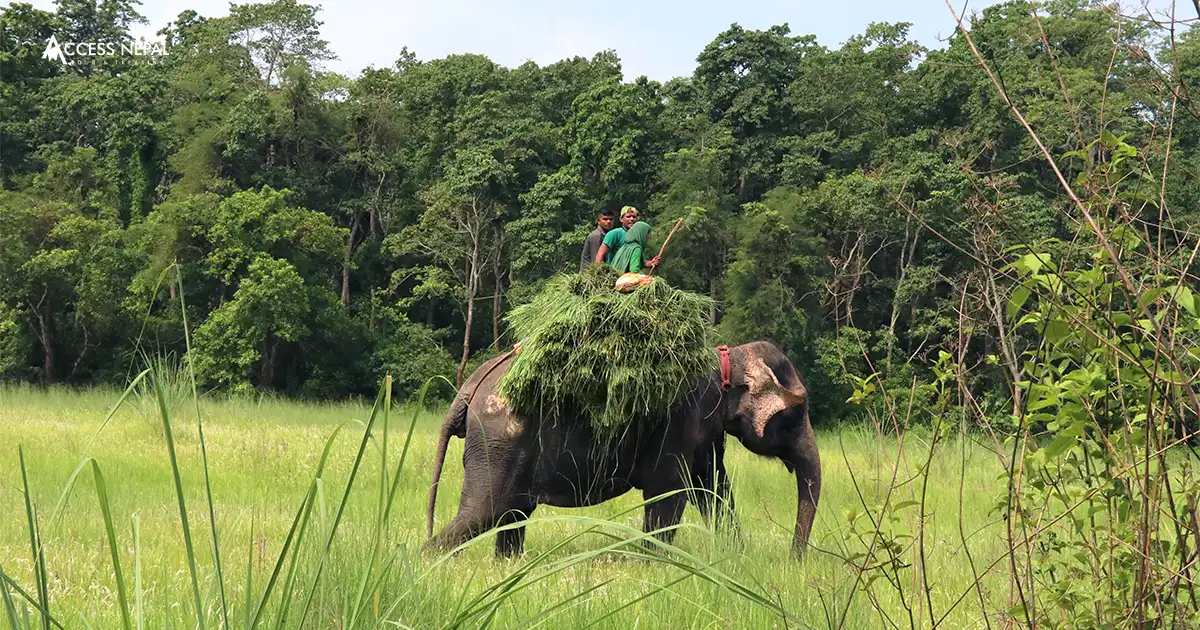
Parsa National Park
During spring temperatures start to rise, and water shortages are common in that area. In summer, temperatures can be extremely hot and reach up to 40 degrees Celsius. In monsoon season the rainfall can be a major problem for sightseeing.
The park is generally open between 10 AM and 5 AM for visitors and sometimes 4 AM and 7 PM for specific functions or activities. The entry fee for Nepali citizens is NPR 100 per person. The SAARC nation citizens have to pay NPR 750, and other nation’s citizens have to pay NPR 1,000 plus 13% VAT per person. The various activities, like jeep safaris, elephant safaris, and guided walks, can cost you additional charges.
12. Shuklaphanta National Park
The Shuklaphanta National Park was established in 1976 AD as a protected area, and later in 2017, it was converted into a national park. It is located in the western part of the Terai region of Nepal, covering 305 square kilometers of land. Before, in 1969 AD, it was known as the royal hunting reserve, a popular location for the royal family, where they hunted animals for fun. But later, due to the mistreatment of animals, it was converted into a protected area.
The park now supports and protects more than 456 bird species, 700 flowering plants, 56 reptile species, 15 amphibian species, and more than 2,300 swamp deer. 52% of the area is covered with sal forest, 30% grassland, 10% wetlands, 16% river forest, and 2% mixed forest. The park supports bird species like sarus cranes, swamp francolins, hornbills, and many flycatchers and warblers.
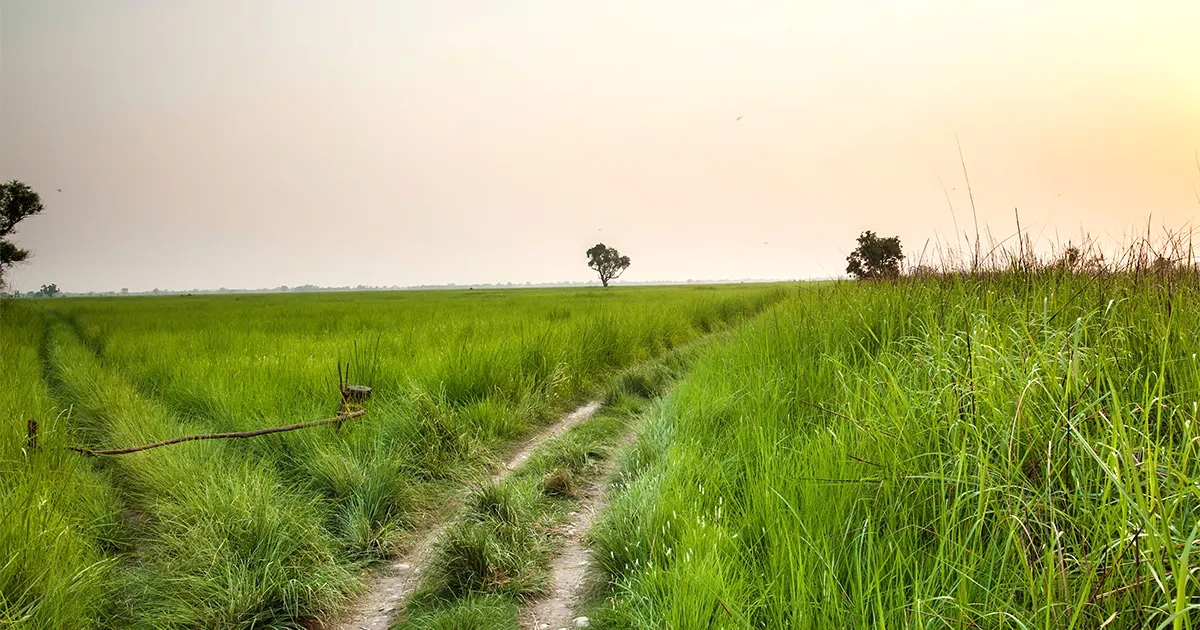
Shuklaphanta National Park
The wetlands and grasslands support 28 different species of fish, reptiles, and amphibians. The ancient kingdom of the Tharu people is found near Rani Tal inside the park. The park experiences around 1,579 mm of rainfall every year. So the best time to visit the park is around mid-autumn to early spring because the climate around these months is suitable for visitors to enjoy the majestic view of the park.
The entry fee of Shuklaphanta National Park for foreign citizens is NPR 1,000 to 1,500. The SAARC nations pay NPR 500 to 750 per person, and for Nepali citizens, it’s NPR 50 to 100 per person. You have to pay additional costs for the activities inside the National Park. The children below are allowed free entry inside the park.
If you are planning to explore or visit any of the national parks or the adventurous places in nepal, make sure to contact our “Access Nepal” team. We will provide you all the detailed planned route according to your need with a budget friendly cost. Our professional guides will help you throughout your journey and we can provide you potters according to your need. We wll take care of your logistic things like permits, transports, accommodations and food so you can enjoy your journey freely.
FAQ’S On National Park of Nepal
1. What is the name of the 12 National Parks of Nepal?
The name of 12 National park of nepal are Chitwan National Park, Sagarmatha National Park, Langtang National Park, Bardia National Park, Rara National Park, Shey Phoksundo National Park, Makalu Barun National Park, Khaptad National Park, Banke National Park, Shivapuri Nagarjun National Park, Parsa National Park and Shuklaphanta National Park.
2. Which is the largest national park in Nepal?
The Shey Phoksundo Natonal Park is known as the nepal largest national park covering 3,555 square kilometer of total area.
3. Which is the 13th national park of Nepal?
The Chhayanath National Park is known as the 13th national park of nepal which was established in 2025 located in Mugu district of nepal.
4. Which is the 3rd largest National Park in Nepal?
The Makalu Barun Natonal Park is known as the 3rd largest national park of nepal covering the area of 1,500 square kilometer and established in 1991 AD.
Awards and Achievements
Access Nepal Tour and Treks has been recognized with TripAdvisor’s prestigious Travelers’ Choice Award for multiple consecutive years, reflecting our unwavering commitment to quality and clients’ satisfaction.










Leave Your Comment