

Holi Festival of Colours
- Festivals
- By accessnepaltour
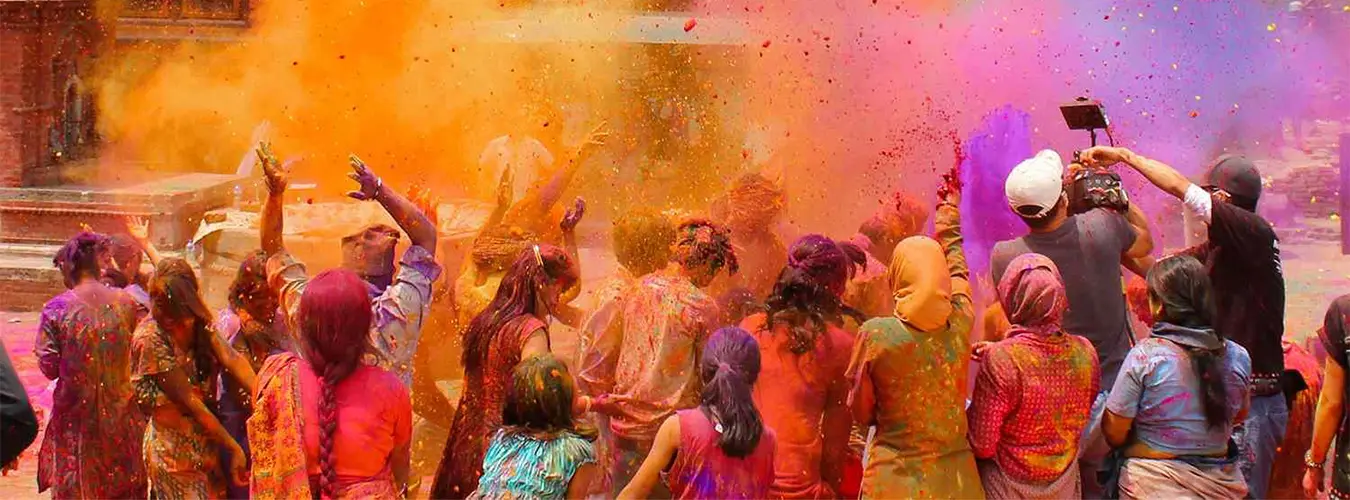
Holi, a festival of joy and colors. Yes, it’s a festival where people play with colors only. During this festival, whole Nepal gets bathed in a rainbow of colors: pinks, blues, reds, greens, purples, and yellows. If you are culture enthusiasts, it’s worth travelling to Nepal during this festival time.
This is celebrated each spring (in late February or March) by Hindu followers. Since the majority of people in Nepal follow the Hindu religion, the whole country goes into blast mode. Putting colors to each other, dancing to music, eating food, and enjoying the moment.
This festival is celebrated for the victory of good over evil. So, it’s more than colors. It is a deeply rooted ancient festival that carries great history and meaning. It’s a moment of forgiving, building unity, and renewing new good relationships. Applying the color of love and happiness, all differences disappear, and people become one.
Nepal has two public holidays during this festival: Holi in Pahad (hilly) and Holi in Terai. This festival is not private; whole nations come outside and play with color. Putting colors on people’s faces, even if they don’t know each other. Tourists can also join local families to celebrate the color festival.
This blog about Holi will tell you everything you need to know about Holi. So, after the end of the blog, if you feel like experiencing it, then just inquire with us.
History of Holi: Legends and Mythology
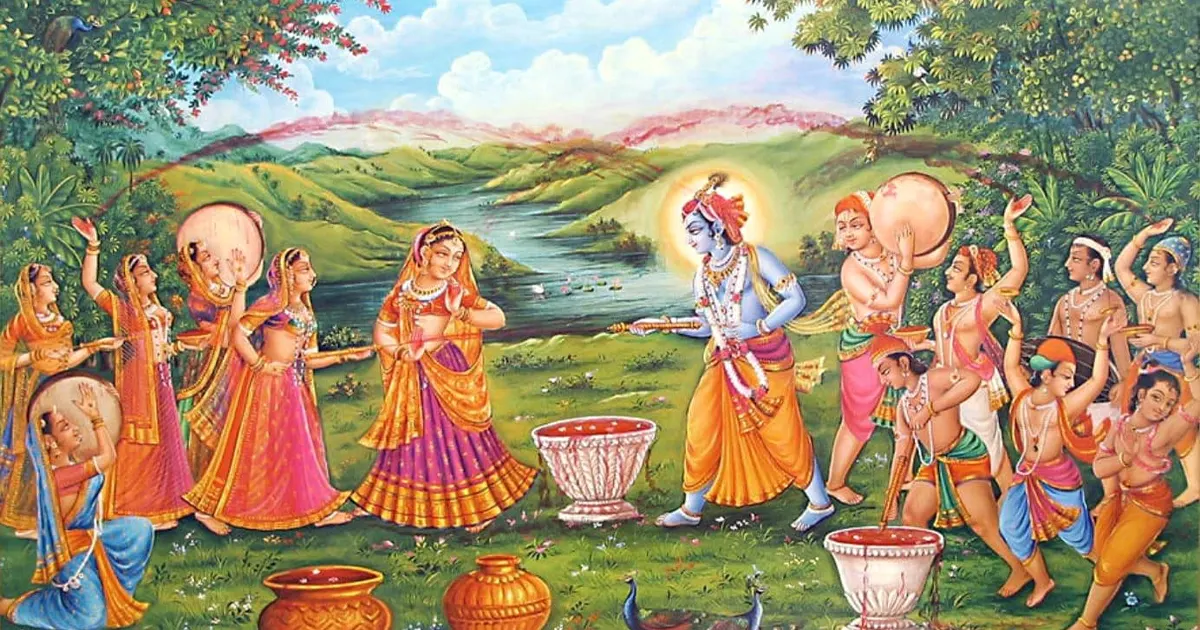
The festival of colours has been celebrated for many centuries. It is deeply rooted in Hindu mythology. One of the popular myths is related to Prince Prahlad and the demon king Hiranyakashipu. When Holika, Hiranyakashipu’s sister, tried to burn Prahlad on a pyre, he was unscathed because of a divine blessing, and instead Holika perished.
History of Holi Legends and Mythology
Therefore, to celebrate the victory of good over evil, people sprinkled the prince with colored water and powders. That’s when the festival came to be celebrated.
Similarly, another favorite tale is when young Lord Krishna mischievously applied color to Radha’s face on Holi. When applying the holi, Krishna said, “If I can color one cheek of my beloved, why not do the other too? ”
This is how the festival of colours came into celebration over many decades. It’s a beautiful way of enjoying a good thing and life while coloring each other. According to Hindu scriptures, it is mentioned that the festival of colours has been celebrated for thousands of years; it was celebrated as far back as the Mahabharata era. As the generation evolves from generation to generation, this festival has now become a spring harvest festival.
Holi
Why is Holi celebrated with colors?
Holi, also known as the festival of colors, is celebrated not just for fun. It carries a deep religious meaning and culture. Along with being fun, this festival is also very symbolic. Holi is celebrated with colors to honor goodness over evil.
Another popular tale related to why Holi is celebrated is the Krishna-Radha story. It is said that Krishna got teased by his mother for his dark skin. She compared him to Radha’s fair complexion. Likewise, Krishna also splashed Radha’s face with red color, saying, “Now we both are the same.” This led to the celebration of this festival for many generations. Now, it’s a way of showing love, equality, and the idea that external differences don’t matter.
Holi, Festival of Colour
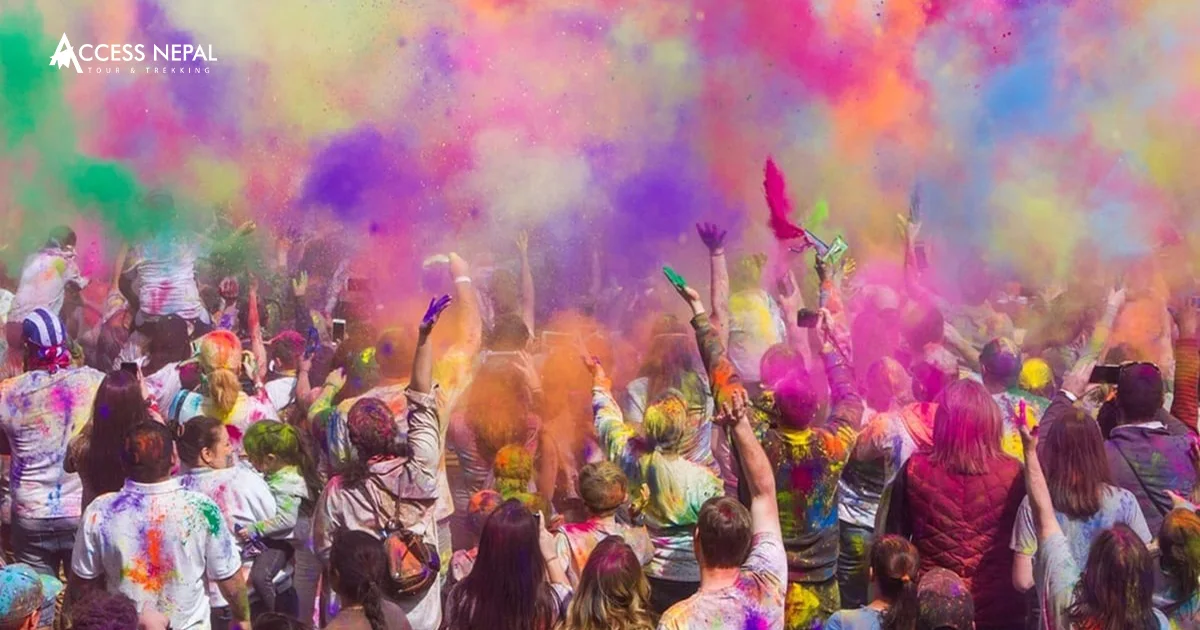
Nowadays, this festival of colors has become a way of welcoming spring. During the celebration, people can let go of their worries and celebrate together. Everyone gathers together in a public space, putting colors on each other.
People now use artificial color, but in the past, it was different. People used to use organic colors. They used to make colors from grinding flowers like the bright palash (flame-of-the-forest) to make gulal (colored powder). Palash blooms yield vivid red, orange, and yellow pigments.
It’s a moment of joy when the whole nation is covered in these colors. It’s a way of spreading the “new life” and vitality of spring.
Now, if you visit Kathmandu, you will get a chance to experience it. During Holi, people roam around the city, through streets with water guns, packets of colorful powdered colors, and lola (water-filled toy balloons).
Another best part is that there will be lots of public music festivals and live music. People dance together, eat Holi food, and enjoy the movement. One more fun part is that it’s kind of a tradition to wear all white clothes and do face painting. Wearing all whites, it’s like a free canvas to paint each other, looking like a rainbow.
Special note: While playing with colors, use gentle, organic colors only, which are skin-friendly. Beware, Lolas, as you walk; even strangers freely throw your colors, water, water balloons, and water guns as well. This festival is not suggested for those who do not interact with strangers.
Who Celebrates Holi and Why?
Holi is mostly celebrated by Hindu followers in Nepal and India. But besides the religious beliefs, this festival can be celebrated by everyone. It doesn’t matter what race, color, or nationality you are. Spirits matter the most, not the religion.
Especially in regions that are Krishna’s devotees, like Mathura, Brindaban, and Kathmandu, Holi is celebrated.
As of now, Holi is celebrated beyond two nations and one religion. In other nations, such as South Korea, Australia, the US, the UK, Canada, and lots of other countries, this festival of colors is celebrated.
These days, it has become a way of breaking down social barriers: caste, creed, age, or nationality. It just fades away once the colors start flying and you dance among the strangers.
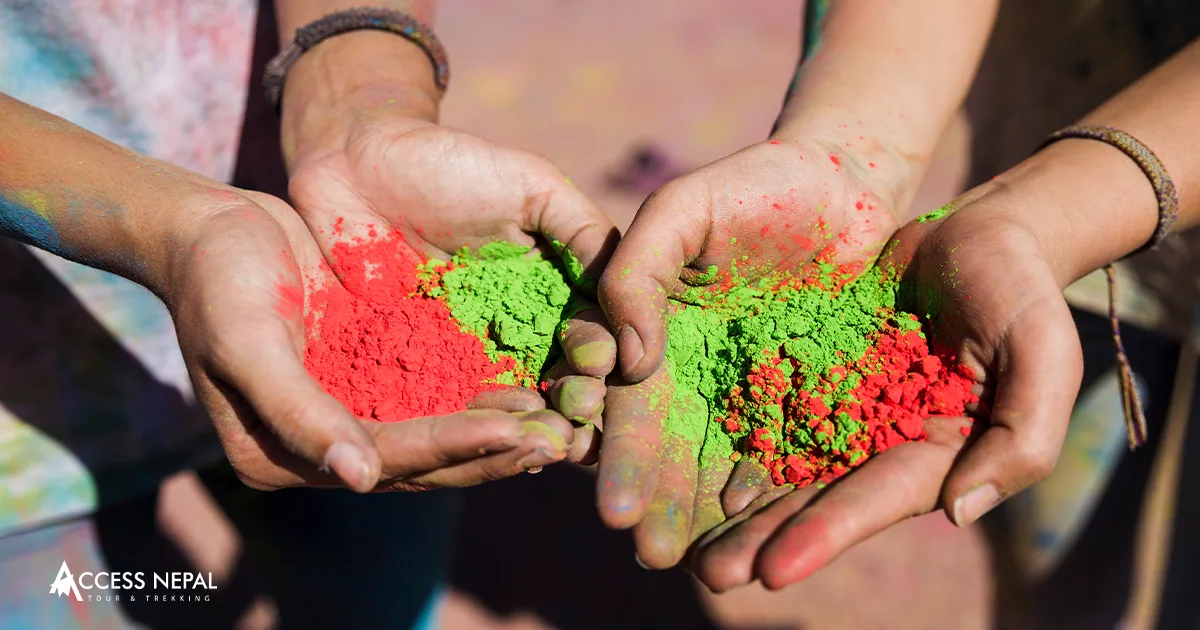
Holi is a vibrant Hindu “Festival of Colours” love, and spring celebrated in Nepal, India
There is a popular saying, “When playing Holi, everyone and everything is fair game.” You know what? As you walk around the alleys during Holi, kids gleefully target strangers (especially fun-loving tourists) with balloons, colors, and water guns. It’s just a one-day opportunity to play, laugh, forgive, forget, and mend relationships.
Spiritually, it is celebrated for good over evil and springtime renewal. And another reason why it’s celebrated is for fun, where local families, from your next-door neighbor’s, exchange dances in the streets.
The Two Days of Holi Festival: Holika Dahan & Rangwali Holi
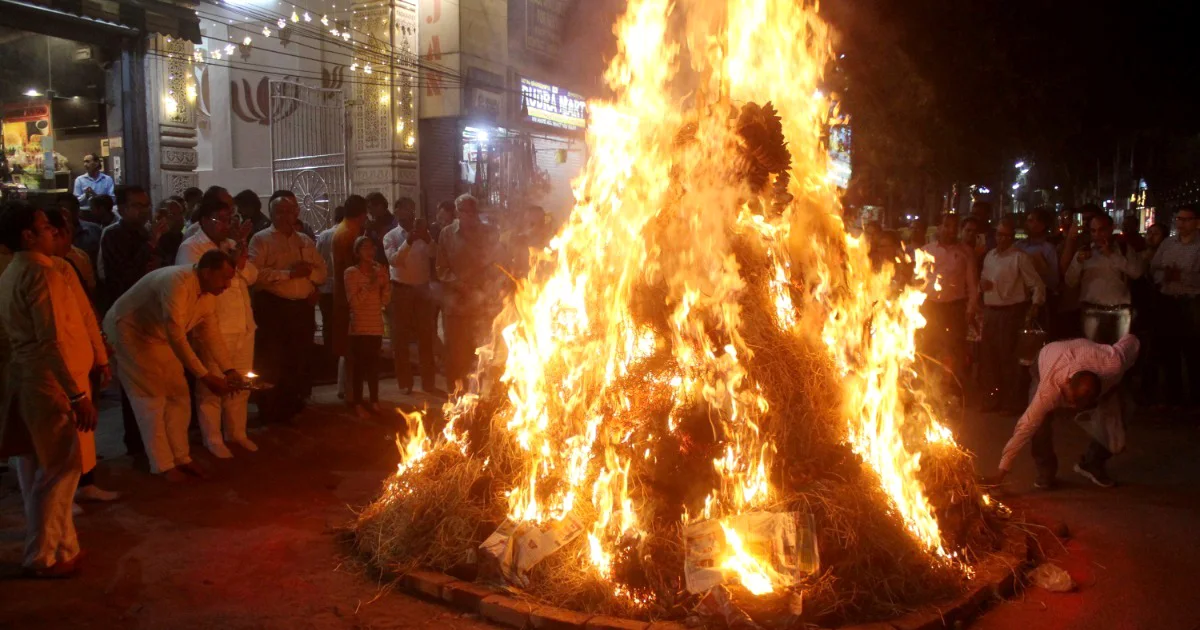
This festival is celebrated for two days. Day 1 of Holi is called Holika Dahan or Chhoti Holi. On this day, all neighbors gather together to light bonfires at dusk. This ritual symbolizes the burning of evil. They all gather around the fire and circle around singing folk songs and praying for protection.
Similarly, Day 2 is called Rangwali Holi, which is celebrated in a full-blown color party. The main color fight and water battles happen on Rangwali Holi morning.
It starts with people applying abir powder before the celebration. Moreover, names and ways of playing differ from place to place. But generally, it’s all about splashing each other with colored powders and colored water.
During Holi, Nepal has two public holidays. Day one is celebrated in the hilly Kathmandu region, called Phagu Purnima, and day 2 is celebrated in the Terai plains.
This 2026, Holi falls on Monday, March 2, whereas the Terai celebrates on Tuesday, March 3.
Holi Date 2026: When Is Holi?
This year, 2026, the Holi festival of colors falls on Monday, March 3, and Tuesday, March 4. This festival does not have a fixed date. It changes each year because it follows the lunar calendar. March 3 is celebrated in the Hilly region, and 4 is in the Terai region, so plan accordingly.
Is Holi 2026 on 3 or 4 March?
The answer to this question is “both” because it depends on which place you are visiting in Nepal. This festival falls on both the 3rd and 4th of March. In the hilly region, like Kathmandu, it is celebrated on Monday, 3rd March, 2026. In the Terai region, it is celebrated on Tuesday, March 3, 2026.
If you are planning a trip during this festival, our tour covers both days. You can plan your Holi festival itinerary accordingly. Access Nepal Tours and Trekking will make sure you won’t miss a moment of Nepal’s festive fun.
Holi Date 2027
The Holi date of 2027 is on Sunday, March 21, and Monday, March 22. Booking for the festival of color is now exclusively open. Book now, reserve your seat, and be a part of this amazing color festival.
Festival of Colors Package Itinerary Outline:
- Day 1: Arrival in Kathmandu
- Day 2: Celebrate Holi in Kathmandu with locals
- Day 3: Sightseeing of Bhaktapur and Overnight at Nagarkot
- Day 4: Kathmandu Valley sightseeing (UNESCO World Heritage Sites)
- Day 5: Departure from Kathmandu
Holi Food: Delicious Treats and Sweets
Besides the fun part, the festival obviously means delicious food. Just like that, Holi is also incomplete without tasty Holi food.
Sweets are the most popular Holi food, like gujiya (fried pastry stuffed with khoya and nuts), malpua (syrupy pancakes), barfi, and peda. Similar to these sweets, there are other popular dishes like dahi vada, papri chaat, and samosa chat.
The fun part is the traditional drinks, which are shared among locals. They drink thandai (a spiced nut milk), which often contains a hit of bhang (a cannabis-spiced milk potion). All of them drink these and play along. It’s super fun.
During the festival of colours, local families cook tasty dishes. Common Holi-time dishes include sel roti (a sweet, ring-shaped fried rice doughnut), malpua, and various homemade sweets. Local families also exchange Holi food with each other and offer it to guests. The festival is all about sharing and caring as well.
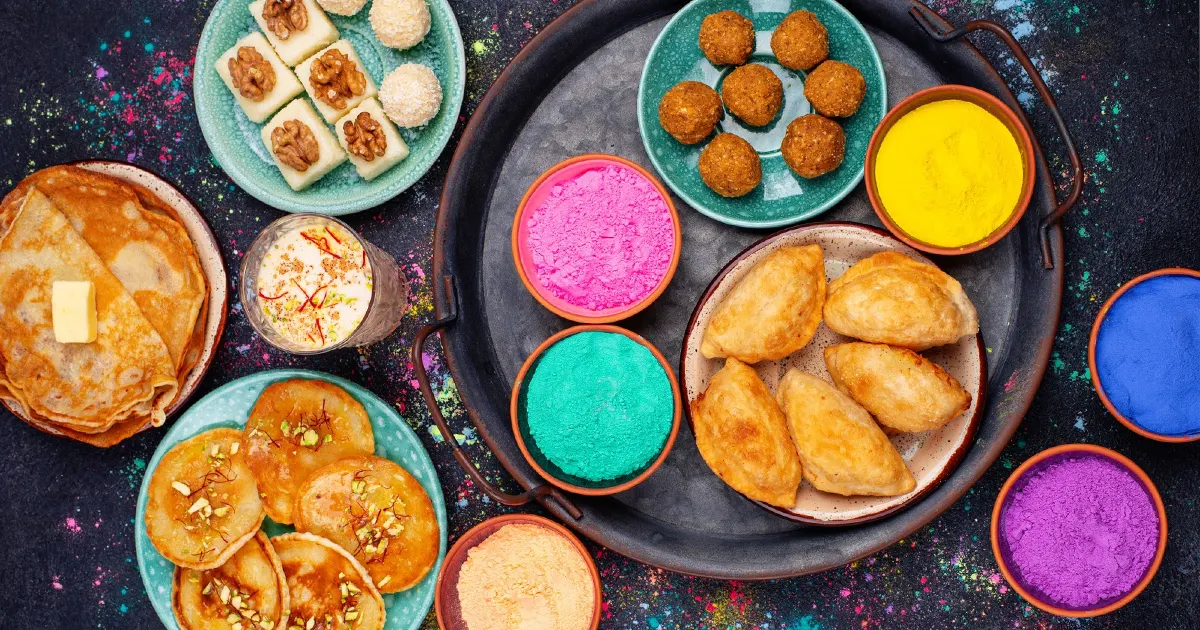
If you are a culture enthusiast, then visiting during this festival is the perfect time. You can try those traditional drinks and eat some delicious Holi food. Nothing tops warm sel roti and aloo dum at morning stops and tangy chaats on Thamel street. Make it simple; along with colors and fun, Holi food is also an integral part of the celebration.
Holi Games and Traditions
To add more fun to the festival. It also has lots of games. The young generation usually plays Holi games like applying colors and water to strangers or the person they are interested in.
As you walk along the narrow street, locals will throw water pichkaris (guns) and balloons. So prepare yourself as part of the fun; you might become part of an impromptu color skirmish around Durbar Square or be chased by giggling kids armed with water balloons in Thamel. Another Holi game includes people tossing gulal in the air or throwing lolas.
The most popular activity that draws hundreds and thousands of people is live music and concerts. Most of all, they are usually free passes. At these festivals, young and old dance wildly to dholak drums and DJ music, throwing powdered color like confetti as they whirl.
During Holi, it’s all chaos and cheer. Tourists can be mobbed with friendly color attacks, and water balloons also pop at them. You don’t have to be shy. You can also throw some powder, water, and lola back at them. Just enjoy and take it with a playful heart.
Holi is really playful and friendly because “Bura na mano, Holi hai!” (“Don’t mind, it’s Holi!”).
Fun Facts about Holi
- Colors and Culture: In ancient times, colors were sourced from nature, like flowers, herbs, and spices. For example, brilliant red was made from palash flowers, green colors from neem leaves, and yellow from turmeric. Today, artificial dyes are more common. While purchasing colors, we suggest you buy skin-friendly ones only.
- Festive Forgiveness: This festival is celebrated to honor the triumph of goodness over evil. So during this color festival, long-held grudges are forgotten. People apply colors to each other, hug, and wish happiness to each other. All the Holi games are friendly and playful acts. Even strangers become friends during the Holi celebration.
- Holiday: The government gives two public holidays. Shops throughout the nation are closed, and all of them come out on the streets to play together.
- Global Reach: Festival is celebrated throughout the world. Even nations like Trinidad, Mauritius, Singapore, Dubai, and Western cities that have many Nepali communities celebrate it. They organize Holi-themed festivals and celebrate together.
- Costumes: During this festival, all of the guests wear white clothes. It can be a new white kurta or T-shirt. So, those splashed colors show up vibrantly on white clothes. You can just buy those white Holi clothes for a few dollars, but it’s not mandatory to wear white only. Besides these, they also carry hats, sunglasses, and bandanas to protect your eyes and hair (especially handy when kids are armed with balloons).
- Music & Dance: Most town squares have free music festivals, and people also play loud Holi music blasts during Holi. At Kathmandu Durbar Square, you will find DJs, a setup speaker, and people dancing.
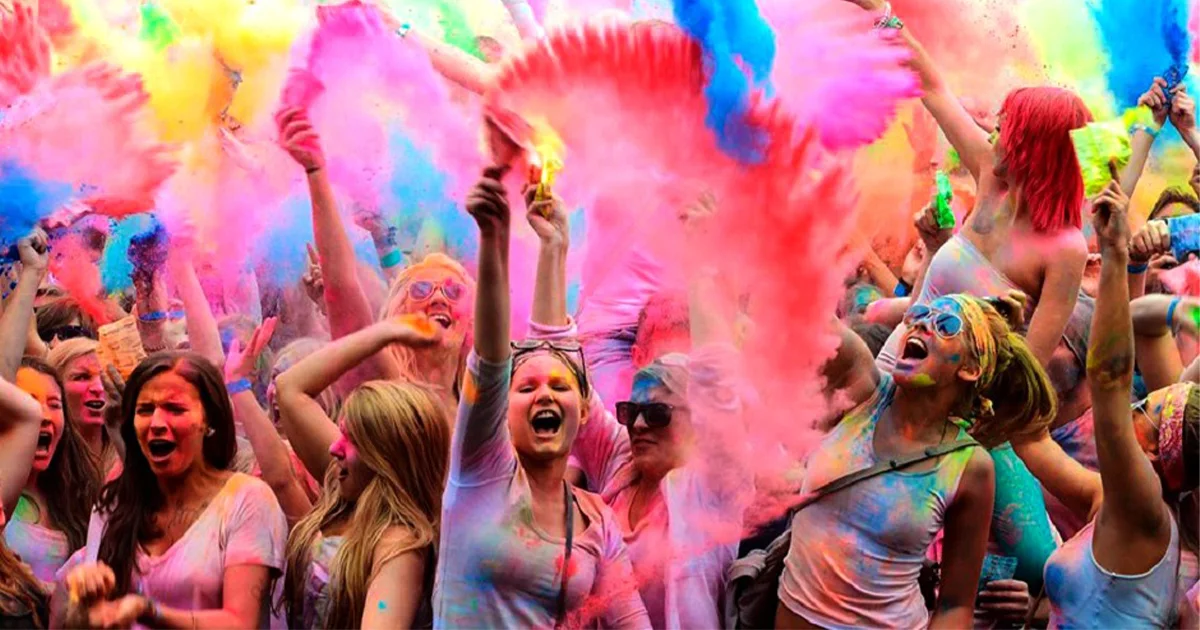
Celebrating Holi in Kathmandu
Kathmandu glows in colors on this day. All major landmarks in Kathmandu transform during this festival. Kathmandu Durbar Square (Basantapur) organizes one of the biggest music festivals of Nepal during this festival. Streets and places get swarmed in a sea of color and dance. You will find tourists and locals all smearing each other from head to toe in every hue.
As you walk down the alley, the only thing you will hear is the playful voices of people playing the Holi festival of colors. All the alleyways of Kathmandu, especially the Thamel area and Lazimpat district, get blocked by dancing crowds and painted faces grinning under festive headgear.


Awards and Achievements
Access Nepal Tour and Treks has been recognized with TripAdvisor’s prestigious Travelers’ Choice Award for multiple consecutive years, reflecting our unwavering commitment to quality and clients’ satisfaction.




Leave Your Comment