

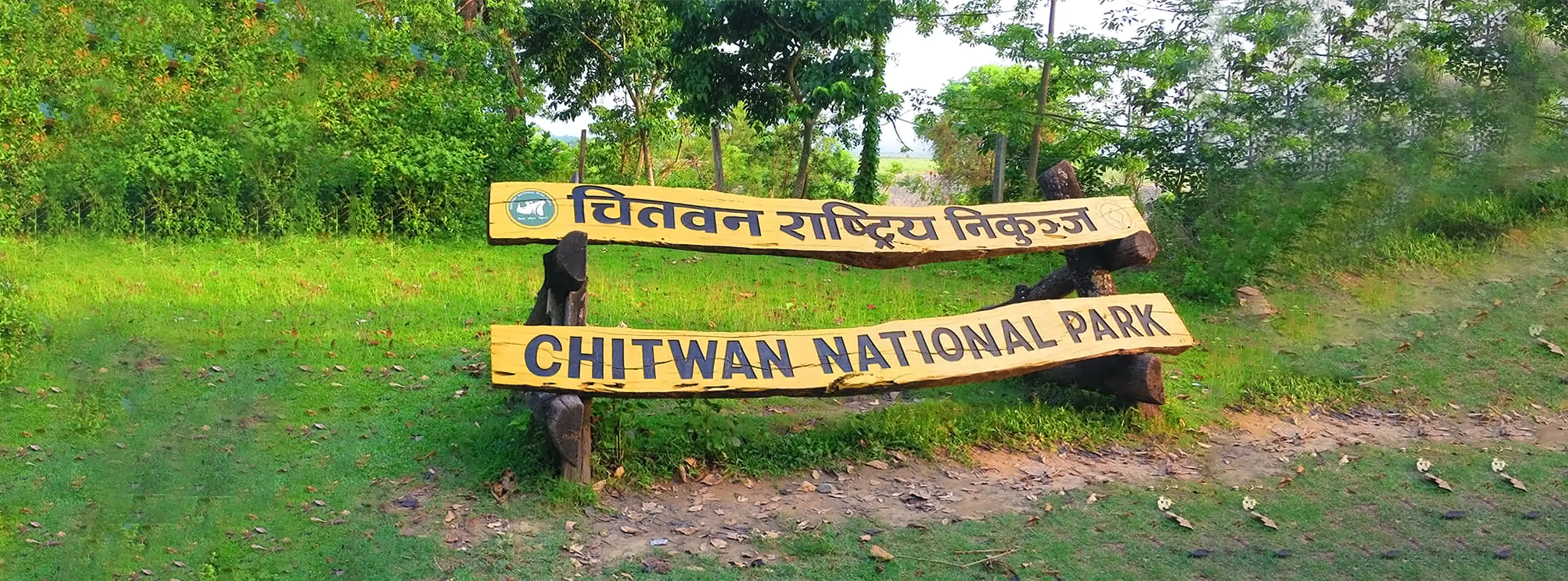
Guide to Chitwan National Park
- Places
- By Sanchita Pokharel
Chitwan National Park is a UNESCO World Heritage Site. It was established in 1973, making it the first national park in Nepal. Today, it has become a jewel of Nepal and a popular destination among nature lovers. The main beauty of Chitwan is the wilderness. It is located in the subtropical Terai lowlands, covering a 952.6 km² area.
The national park is covered with thick Sal forests and riverine grasslands, dotted with winding rivers. This wild forest is home to hundreds of flora and fauna, like s, endangered Bengal tigers, crocodiles, dolphins, and 544 bird species.
The adventure to Chitwan overloads travelers with its natural beauty, culture, and biodiversity. Visiting this national park is highly recommended for nature and outdoor activity lovers.
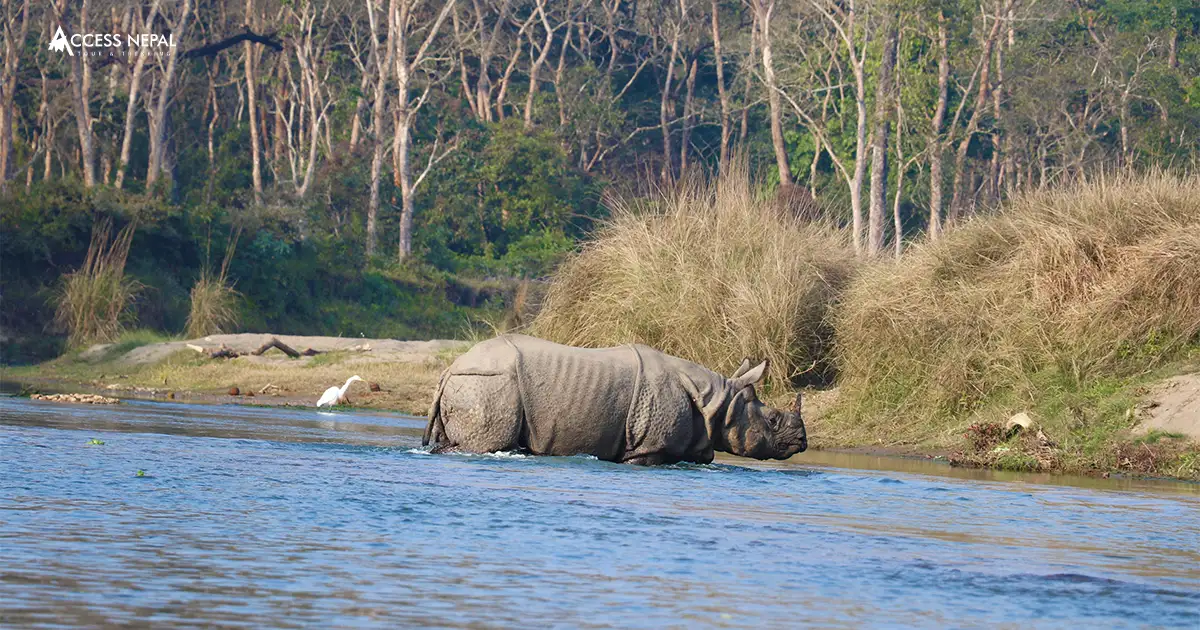
Nothing tops the view of you canoeing on the Rapti River as it fills with the scent of damp earth and blooming flame-of-the-forest trees, and a rhino grazes quietly on the bank. Another major highlight of Chitwan is watching the sunrise while doing a jeep safari. The twilight’s glow over the green lush forests is too beautiful and memorable.
And yes, Chitwan is alive and real. Its breathing ecosystem is crucial for this jungle. This national park is home to hundreds of animals and plants. The national park protects 22 species of mammal, which are globally endangered, among 68 mammal species in total.
Chitwan National Park has vast biodiversity, as it houses the world’s largest land mammal, the elephant, and its tiniest, the pygmy shrew. This jungle is a haven to birds like the critically endangered Bengal florican and vultures. Most of all, the rivers of the park also have the rare Gangetic dolphin.
If you are a conservationist and a lover of plants and animals, Chitwan is the best choice. Moreover, it’s not that hard to make it to Chitwan. Just follow our guide to Chitwan National Park, and you will be here. This blog will give you detailed information about this park so that you can plan your next dream destination.
Guide to Chitwan National Park:
Why is Chitwan National Park important?
The national park Chitwan is a protected and conserved park in Nepal. As the first national park in the whole nation, it has been conserving the ecosystem of the Terai. It is also very important due to its location. This national park is located in the center of the Terai Arc Landscape. This region is one of Asia’s most biologically rich areas.
The park is dotted with forests, rivers, and grasslands, and even has a Ramsar wetland, a convention to protect wetlands. It is the major resource that feeds the ecosystem of plants and animals of the park. It feeds many endangered animals like megafauna, the one-horned rhino, and the Royal Bengal tiger.
Related Packages
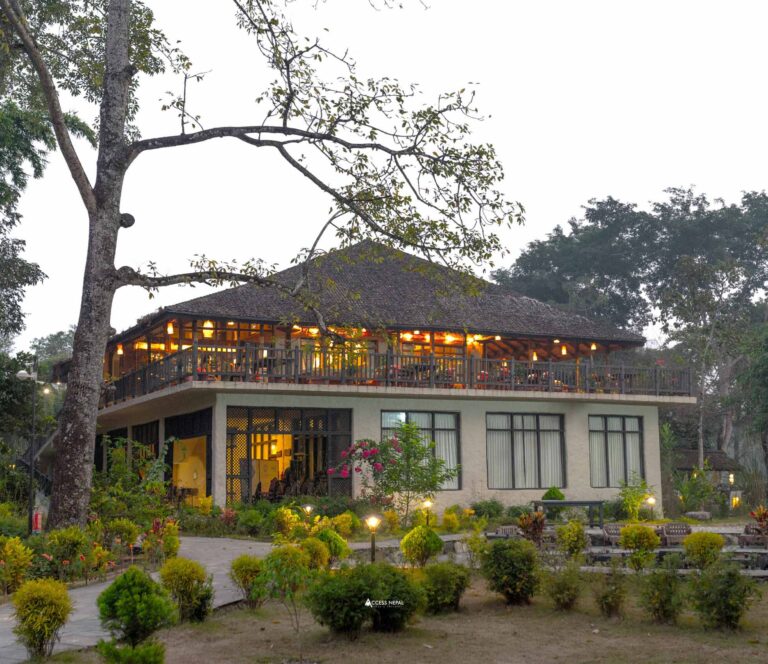
Chitwan Jungle Safari - 3 Days
 1,400 m / 4,593 ft.
 Easy
Easy All
Inclusive Plan
All
Inclusive Plan
Besides its rich biodiversity, Chitwan is abundant in cultural heritage, like the Balmiki Ashram in Tribeni and the Tharu culture, indigenous people. The national park covers 952.6 km², where 750 km² is a buffer zone designated for local communities. The buffer zone is a major income source area for the local people, income from eco-tourism and sustainable forest products.
Chitwan National Park is a gem of Nepal. It has successfully protected many endangered animals and plants. It is also effortlessly working on the tourism sector, which has been a major funding source and motivation for conservation.
What is Chitwan National Park famous for?
Chitwan National Park is famous for its natural beauty, biodiversity, and ecosystem. The thriving of human settlement between the national parks makes it famous among tourists. The main superstar of this park is the one-horned rhinoceros. Even outside the forests, if you are strolling through the town, you will see dozens of them wandering around.
The Nepal animal conservation team has been actively working on anti-poaching and increasing the endangered Royal Bengal Tiger population. This has led to Chitwan being the world’s largest population of rhinos (540+ as of recent counts). At Chitwan, you will find them everywhere. Yeah, and it’s perfectly safe to travel around from a safe distance.
Though Bengal tigers’ population has increased, they are rarely spotted due to their shy nature. To watch them, a guided jeep safari is a great opportunity. The safari takes you inside the thousands of grassland acres where you can spot tigers in the wild. Other animals like sloth bears, leopards, gaur (Indian bison), hog deer, barking deer, wild elephants, and different species of birds are easily spotted.
Similarly, the park’s rivers are inhabited by hundreds of gharial crocodiles and mugger crocodiles. Though rare, if you are lucky enough, you can also spot Gangetic dolphins in the Narayani River at the northern edge.
Another great part about Chitwan is the birds. This park is one of the world’s best places to observe the birds. It is highly recommended for bird observers, as Chitwan has 544 recorded bird species. These birds migrate depending on the seasons. Visitors can get to see rare Bengal florican, giant hornbills, marsh harriers, hundreds of waterfowl (bar-headed geese and Brahminy ducks), and migratory songbirds. Doing meditation or yoga at dawn and twilight with the chirping sounds of birds in the background is truly healing.
Related Packages
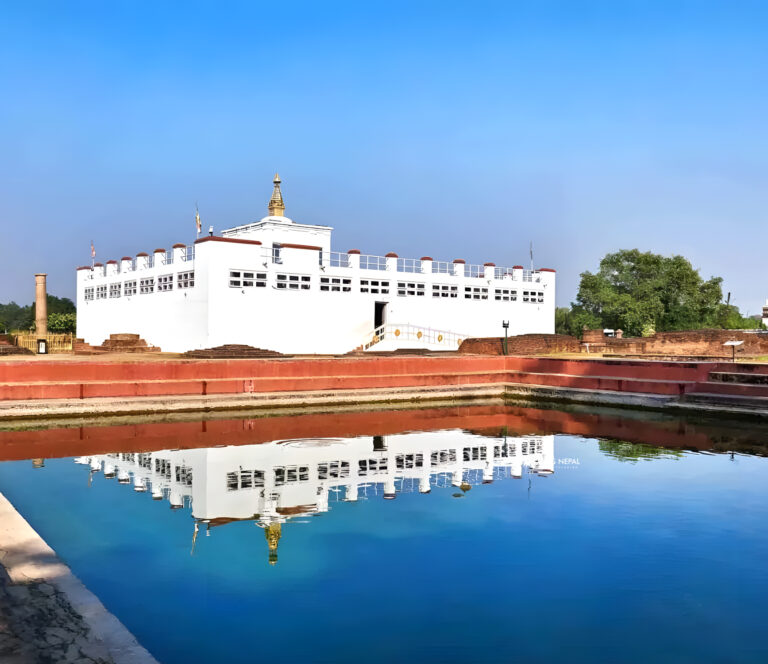
Nepal Wildlife Safari Tour with Lumbini Visit - 11 Days
- 1400m/4593ft
-
Easy
- All
Inclusive Plan
Do you know Chitwan National Park was once a royal hunting ground (hence “Royal Chitwan NP” pre-2006) and has one of the highest concentrations of wildlife anywhere? It is hard to find a park this beautiful with so many contrasts anywhere.
How to Visit Chitwan National Park?
Visiting a national park is simple. With our easy-to-understand guide to Chitwan National Park instructions, you won’t feel lost. Packages like Chitwan Jungle Safari and Kathmandu, Pokhara, and Chitwan are the best options that take you there. Itineraries vary depending on our operator and packages.
The standard route starts from Kathmandu or Pokhara. From Kathmandu, you can visit Kasara, Chitwan’s headquarters, by road. It is about 21 km from the city of Bharatpur. From Kathmandu to Chitwan, the total distance is about 146 km (about 90 miles). The route passes through rolling hills over Mugling Highway and parallel to the Trisuli River. The drive takes about 6 to 7 hours. Time may fluctuate depending on traffic jams at Kathmandu’s Kalanki junction or Mugling.
You can easily get bus tickets to Chitwan. Tourist, deluxe, and local buses run daily from Kathmandu to Sauraha, which you can choose depending on your budget. The itinerary starts early in the morning, and you will arrive at Chitwan by afternoon. Buses are comfortable and air-conditioned (only on deluxe and tourist buses) with meal stops along the way. If you prefer comfortable and private travel, you can, but it is costlier.
If you have a time limit, you can also visit Chitwan by air. You can take a domestic flight from Tribhuvan International Airport to Bharatpur Airport (Betouli). Flight time is quite short, taking 20-25 minutes only. After arriving at Bharatpur, take a taxi to Sauraha, which is 16 km away and takes only another 20-30 minutes. This option is suitable for travelers who prefer comfort and speed.
After arriving at Sauraha, Chitwan, you can stay in one of the hotels. There are lots of hotel and restaurant options. If you are visiting in peak season, it is best to book early. Due to high popularity, services get booked fast and quickly. Some other fun activities you can try for a more local experience are tuk-tuks and rental bikes. Along with taxis, these are the best transportation for short hops.
You must have a park permit to visit. They will be checked at the entry points of the park, Kasara Gate (near Sauraha on the Rapti River) and Patihani Gate. If you are traveling with Access Nepal Tours and Trekking, everything will be handled by our team.
Chitwan National Park Timings and Best Season
The best season and timing to visit Chitwan National Park are springs (March-May) and autumn (September-November). Besides these months, you can visit, and the national park is open year-round. But if you want the best of the best experiences, choose peak seasons.
Talking about timings, the park is open to visitors from 6:00 AM to 6:00 PM daily. About safari times, it depends on the safari operators and the weather. To enter the park, you need permits, which are handled by your tour operators. Permits are usually valid from sunrise to late morning or afternoon. It is best to go for a wildlife excursion at dawn or dusk. This time is best because animals are most active around this time.
During the autumn and spring season weather and temperature are highly favorable for traveling. Temperatures are mild, skies get clear, and grasses are shorter after the dry season burn. Migratory birds also return at this time. Similarly, it also has high chances of animals spotting. Especially in March, tiger and rhino spotting increases. The best part of visiting in spring is the lush green and colorful environment. The whole park thrives with colourful wildflowers, rivers, and forests.
Summer (June-July) and winter (December-February) are also good times to come visit here, but not the best. Summers are extremely hot and humid. The temperature goes up to 35°C. Summer also bring heavry rains and flooding on lower areas. The trails may get inaccessible due to heavy rainfall. On the other hand, wildlife gets rich, as animals crowd around remaining water sources. If you’re okay traveling in summer, prepare accordingly.
Safety Note: For Chitwan National Park tour bring long pants and shirts, and carry insect repellent. Since , you are visiting forest area and Teraithere are lots of mosquitoes and insects. To avoid getting dengue and malaria, especially in rainy and summer season do not wear short clothes and roam around without insect repellent. Sunscreen, hats and drink lots of water. Follow your guide’s advice at all times in the jungle.
Things to Do in Chitwan National Park:
Trips get fun only if you know how to enjoy them. Chitwan National Park has lots of activities you can do during your visit. And the thing is, none of it is boring. Some of the must-do activities in Chitwan National Park are given below:
- Jungle Jeep Safari: This wild safari is a must-do activity in Chitwan. A Jeep safari takes you inside the deep jungle and wildlife of the region. You will ride a jeep along with a naturalist guide. Besides being fun and thrilling, it is an educational trip. The Chitwan jeep safari lasts for 3-4 hours. For timing, it depends on the Jeep tour operator. Some have fixed times, and some give you the flexibility to choose. A Jeep safari is a good option for wildlife lovers, as you can get to see wild animals in their natural habitat. During safari, you can spot rhinos, deer, boar, and tigers. It is very thrilling as you drive over the dirt tracks into thick jungles. In between, there will be frequent stops to watch animals as you scan for movement. You can do a shared jeep drive or a private jeep, depending on your budget. For a safari, avoid wearing bright colors and do not make loud noises.
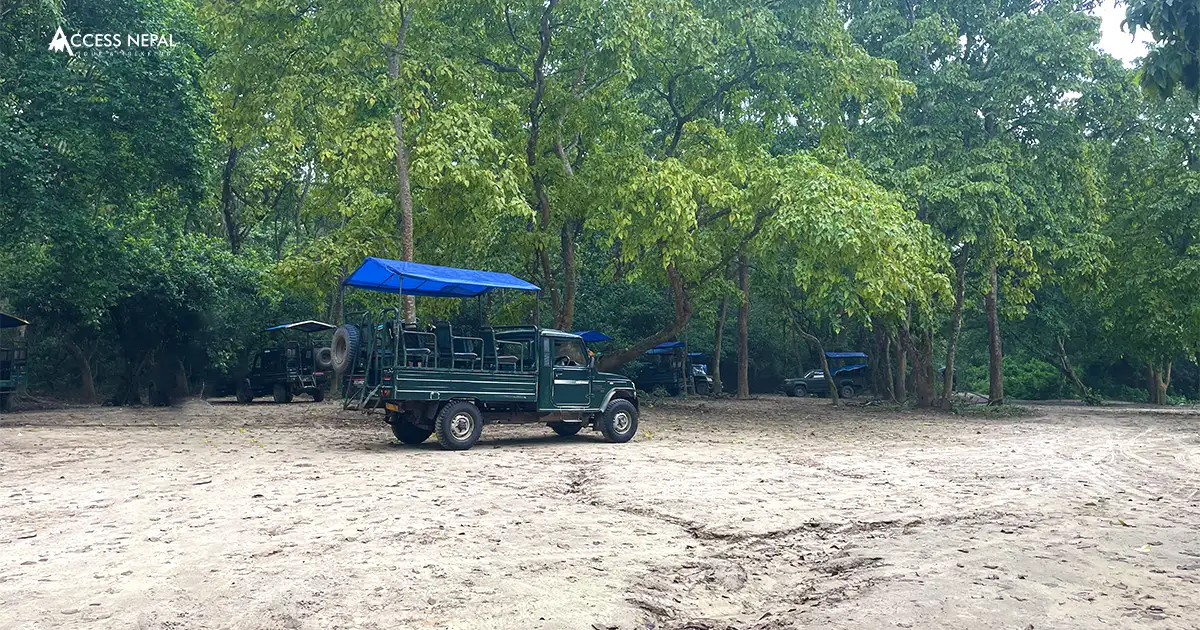
- Walking Safari: It may sound wild, but yes, it’s safe and fun. Walking safaris are guided jungle treks. This activity takes you within a safe area on foot. You won’t be alone, as rangers will accompany you through the activity. In comparison to a jungle safari, it is much slower, but you can feel and be closer to nature more intimately. Hiking inside dense forests, as the leaves crunch with every few steps and birds are chirping in the background, is a way to heal. Watch out for animal footprints, and you might also encounter some wild animals, but avoid getting close and follow the guide’s instructions.
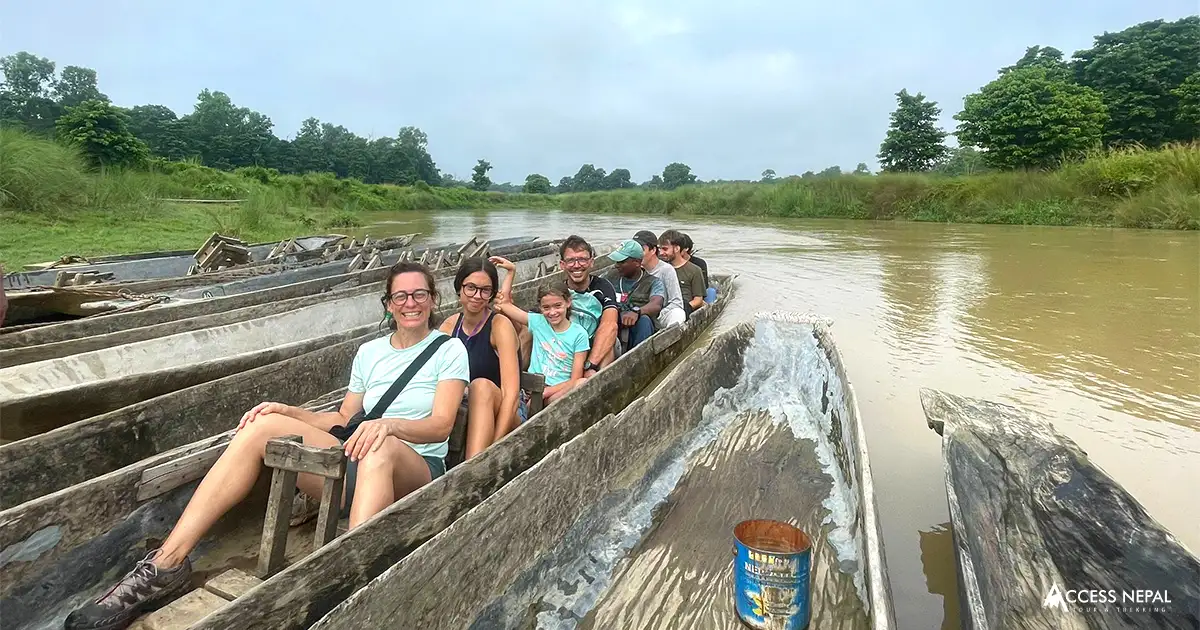
- Canoe Ride on the Rapti River: This activity is another bucket-list thing to do. A canoe ride is for adventurous souls. You should go for a canoe ride early in the morning, or anytime you want, along the river’s edge. The Rapti River is famous for canoeing activities. You will see lots of people doing it. As you ride, you can see crocodiles and fish in the rivers and langur monkeys chattering inside the forests. It is thrilling and fun. Enjoying the sound of the splash of the paddle, it is another good activity to do during your visit to Chitwan National Park.
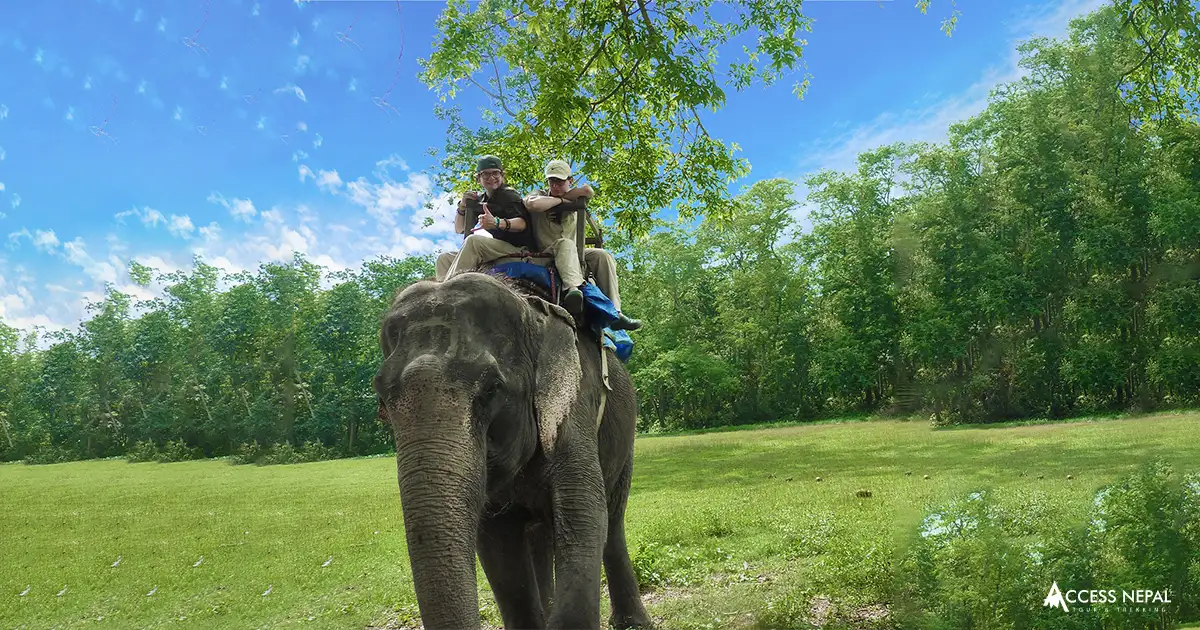
- Elephant Safari: It’s a traditional yet controversial safari. It is optional, depending on person to person. In an elephant safari, you ride atop an elephant’s back. These elephants will carry you inside the jungle and give you more chances to spot other wildlife. You will be accompanied by an experienced elephant rider. These elephants are domestic and safe to ride. Some try it, and some avoid due to their personal ethics and animal welfare.
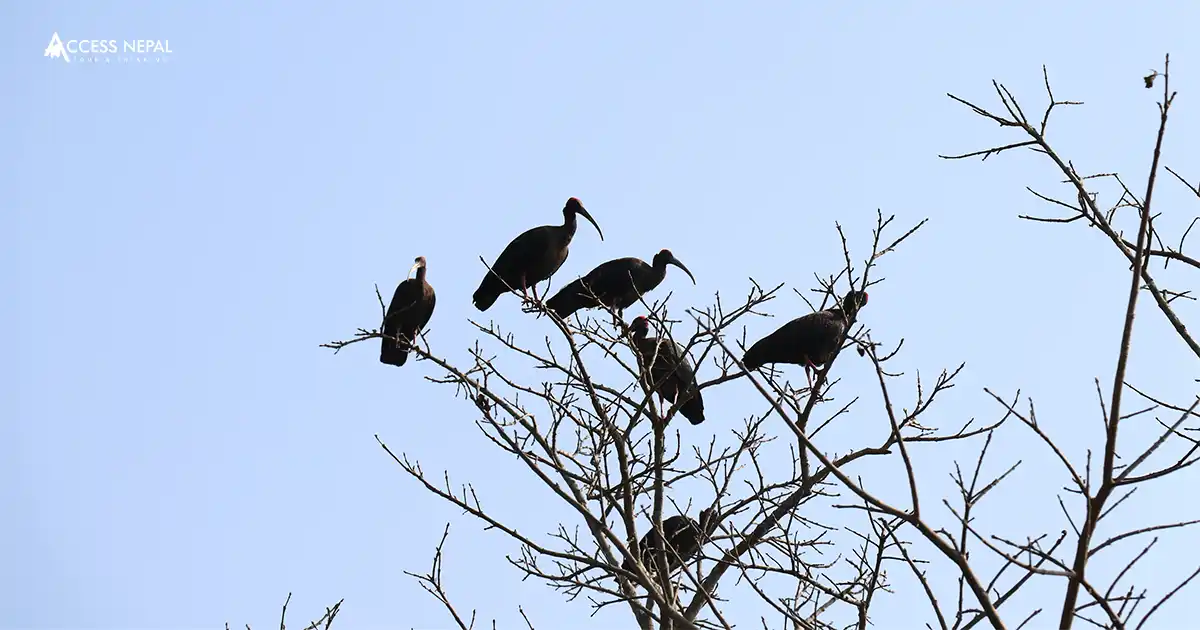
- Bird Watching: When you think of Chitwan, birdwatching comes to mind without any doubt. It’s a haven for birds. Do not forget to bring binoculars or a camera with a good zoom. Hundreds of species of birds live in the Chitwan Jungle. During the bird watching, you might spot colorful kingfishers, hornbills, cuckoos, raptors, and many more. Especially in the evening, birdwatching from a quiet riverside stroll offers the best experience. Along with others, you can see flycatchers, jungle mynas, and rare migratory ducks. Canoe rides and bird watching are a good combination.
- Tharu Village Visits: Chitwan is full of charms. Besides animals and plants, it is also famous for the beautiful Tharu culture. These people are one of the indigenous ethnic groups of the Terai. Chitwan has a huge Tharu community. Many Chitwan package itineraries include a visit to a Tharu village. Watching the lifestyle of the people living here is culturally immersive. Tharu people’s houses are made up of traditional mud and thatch; it gives you the new opportunity to learn about it. You can also observe Tharu fishermen weave baskets and cast nets in the Rapti. Folklore dance performances at night are a must-watch activities. You can try dancing together with them and try Tharu jewelry and costumes.
Chitwan National Park Jeep Safari
Visiting Chitwan National Park and not doing a jeep safari doesn’t make sense at all. The Chitwan National Park Jeep Safari is a must-do activity during your visit in Sauraha. These safaris take you deep inside the forests, which gives you a chance to spot rare animals and plants.
During the jungle safari, you can also take a short walk to observe the surroundings. These jeep safaris are guided and very useful for information. Observers can also take photos of animals.
However, they are highly advised not to enter inside water, go near or touch animals, make loud noises, wander at nights, or fail to follow guide instructions. If the rhinos or other animals get startled, they can charge towards you.
We advise visitors to bring binoculars, a camera with a good zoom lens, a hat, water, sunscreen, mosquito repellent, and long sleeves during the safari. Carry a mid-size backpack to put these essentials.
Key Conservation Facilities & Centers in Chitwan:
Chitwan National Park houses many government-run conservation centers. These facilities centers are very important and actively working on protecting the biodiversity and ecosystem of the park.
- Gharial Breeding Center: This entrance is within the park headquarters. Its main job is collecting, hatching, and rearing Gharial eggs. They work on increasing the population of garial crocodiles in the Rapti and Narayani rivers.
- NTNC Biodiversity Conservation Center (BCC): It’s a center where conservicts work on managing tiger and rhino populations and safety. They also do research and community-based projects like habitat management. It is in Sauraha.
- Elephant Breeding Center: Just as its name implies, it’s a breeding facility located at Khorsor. Their main work is the domestication, care, and breeding of elephants. Visitors can see newborn calves and know about the elephant breeding process.
- Anti-Poaching Units: Crucial core team that has been working on protecting animals. They are a patrol team that does “Gaida Gasti” (Rhino Patrol) 24/7. Their main work is protecting rhinos from poaching. All the rhinos that roam around the park and community are under surveillance, supported by camera traps and watchtowers.
- Visitor Center & Museum (Sauraha/Kasara): It’s a museum where you can learn about conservation initiatives, wildlife history, and the park’s biodiversity.
These centers are an essential part of the trip to learn more about animals and parks’ initiatives on protecting them. To visit these facilities and units, you have to pay some amount of entry fees (generally a small amount).
In conclusion, this is a comprehensive guide to Chitwan National Park. It is a popular destination among nature and wildlife enthusiasts. If you are interested in this trip, Access Nepal Tours and Trekking is open to guide you. Bookings for Chitwan National Park trips are exclusively open. All these Chitwan packages are inclusive and flexible. You can just choose to do a fixed itinerary or customize it. If you are returning after some trekking adventure from the Himalayas, like Everest and Annapurna, you can add this relaxing trip to Chitwan at the end of your itinerary. It’s time to get close to nature.

Awards and Achievements
Access Nepal Tour and Treks has been recognized with TripAdvisor’s prestigious Travelers’ Choice Award for multiple consecutive years, reflecting our unwavering commitment to quality and clients’ satisfaction.









Leave Your Comment