

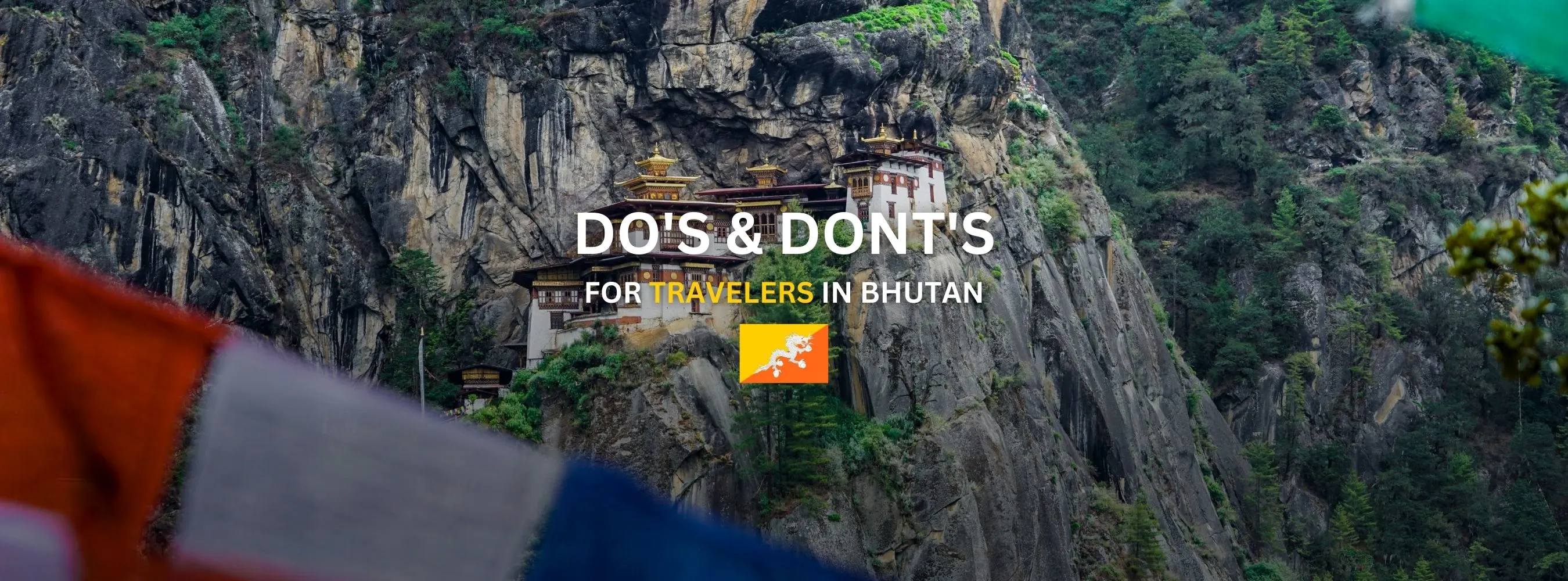
30 Dos and Don’ts for Travelers in Bhutan
- Places
- By Shrijan budhathoki
Exploring Bhutan is more than a vacation; travelers have long seen it as an opportunity to experience its culture and embark on unforgettable adventures. The small Buddhist-influenced kingdom attracts many travelers to Bhutan to explore and experience its rich culture.
The country is smaller than Nepal, but it has successfully protected its culture, forest, temples, and monasteries. The government has been very responsible toward tourism in Bhutan and has made certain restrictions to maintain the high value of its history. The rules and regulations help the country to maintain its infrastructure and avoid the overflow of travelers in Bhutan.
Bhutan is more than just a vacation or sightseeing; it is a perfect opportunity to enjoy its Buddhist culture and its respect for natural resources. The travelers in Bhutan must respect and follow all the rules sincerely if they want to explore this culturally rich small country. Access Nepal has always been helping travelers in Bhutan to complete their expedition without harming their beliefs.
Why does etiquette matter in Bhutan?
The country is small and deeply influenced by Mahayana Buddhism. They don’t treat the monasteries as sightseeing objects or the prayer flags as decorations. The people of this nation treat their history with respect and always respect their ancestors’ contributions for guiding them in their daily lives.
The country respects the travelers in Bhutan but does not treat tourism as an earning industry. They have created strict rules and charges to avoid the overflow of travelers in Bhutan, which can harm their culture and the peaceful environment that their ancestors have been protecting. These rules help to maintain the place’s value and respect their beliefs, whether you are exploring, trekking, or clicking photographs.
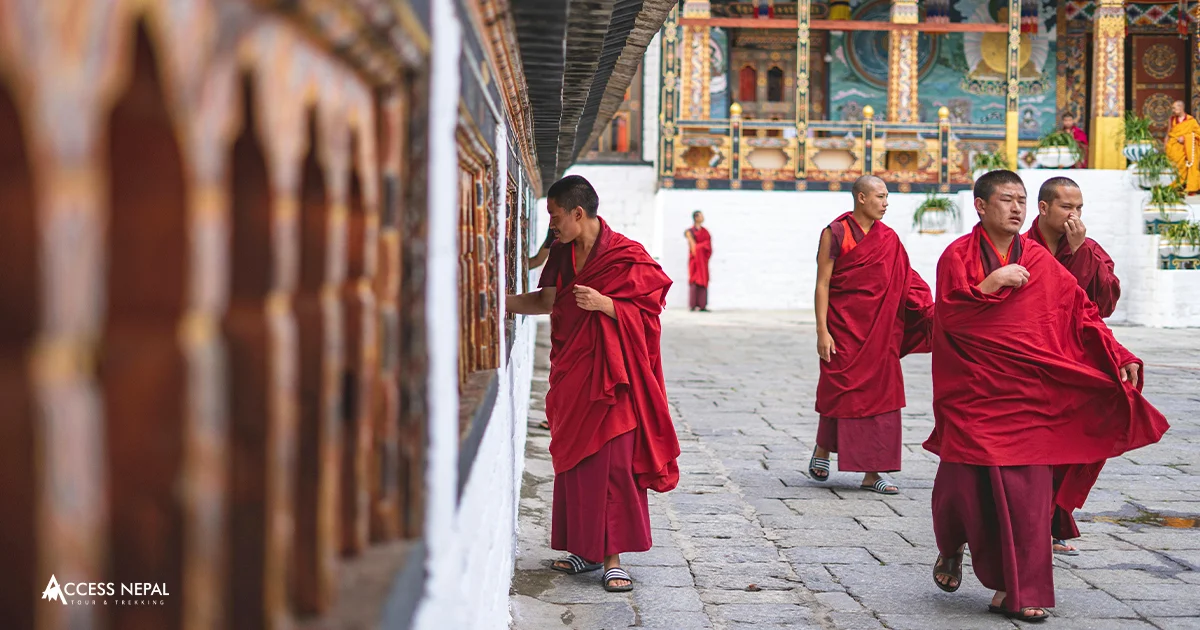
Mahayana Buddhism
This blog will tell you dos and don’ts with 35 important things that travelers in Bhutan must follow and learn before planning their journey. If you’re worried about permits, transport, accommodation, and food, you can just relax and let the team of Access Nepal handle all the logistical things, and you can focus on enjoying your journey while creating unforgettable memories.
Best Things to do in Bhutan
Do Respect their Culture and Traditions:
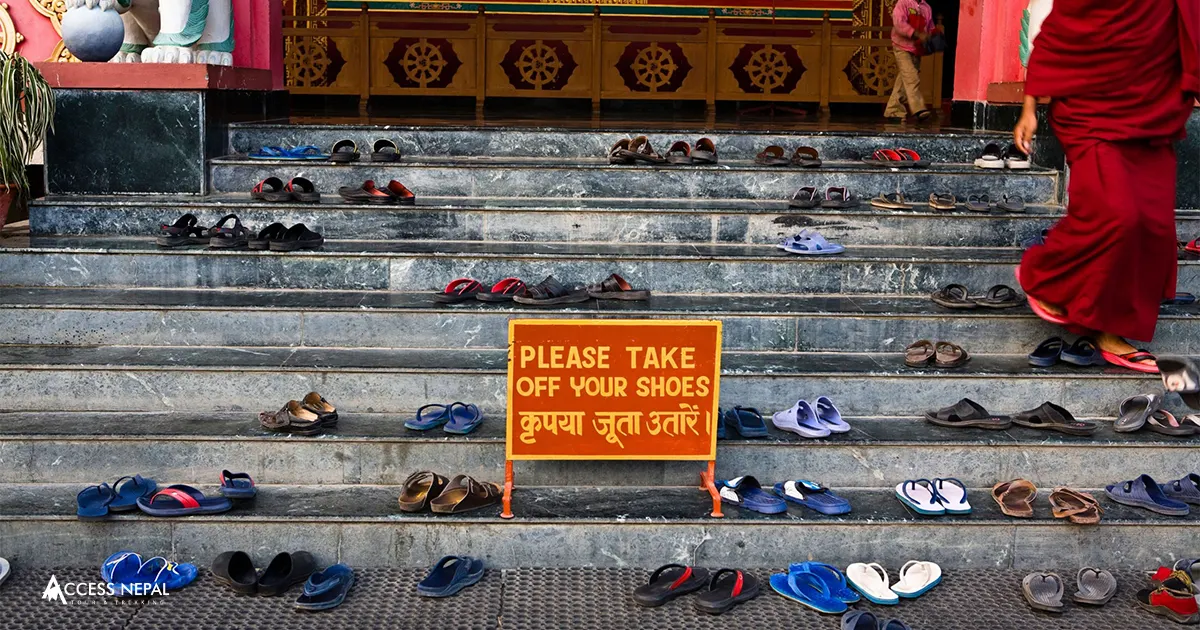
The people of Bhutan treat the monasteries as more than just a museum or sightseeing place. So taking off your shoes is very important before entering the temples or monasteries. It shows that you respect their beliefs, as in every traditional place, you must remove your shoes before entering these heritage sites. Observe your surroundings and learn their customs and the way they treat elders and children, and follow them accordingly.
Dress politely at religious sites:
The religious places follow a certain dress code, so it shows their respect and devotion to their cultural history. Both men and women must wear clothes that cover their knees and shoulders while visiting sacred places like monasteries and dzongs. The men and women must wear clothes long enough to cover their body parts or traditional clothes like Kiras and Ghos. It might feel a little inconvenient, but they are following these rules to preserve the culture and to demonstrate their way of living.
Clockwise walk around the religious structures:
It is known as one of the fundamental practices around stupas, mani walls, and prayer wheels to walk clockwise around the religious structures. According to the locals, it is a Tibetan Buddhist practice to walk in a clockwise direction and follow the path of the sun’s revolution with every step, which brings good luck. It is important to remember and practice this clockwise movement because doing the opposite walk is considered disrespectful to their beliefs and culture.
Do a gentle spin of prayer wheels:
The prayer wheels hold a deep spiritual importance and are treated with great respect by both locals and travelers in Bhutan. The wheels are cylindrical, engraved with a mantra, and they are considered a source of blessing if you rotate them correctly in a clockwise direction. You must touch and spin the prayer wheels in a clockwise direction only with the right hand, as the left hand is considered dirty. Travelers in Bhutan must respect and approach their culture and beliefs politely and gently.
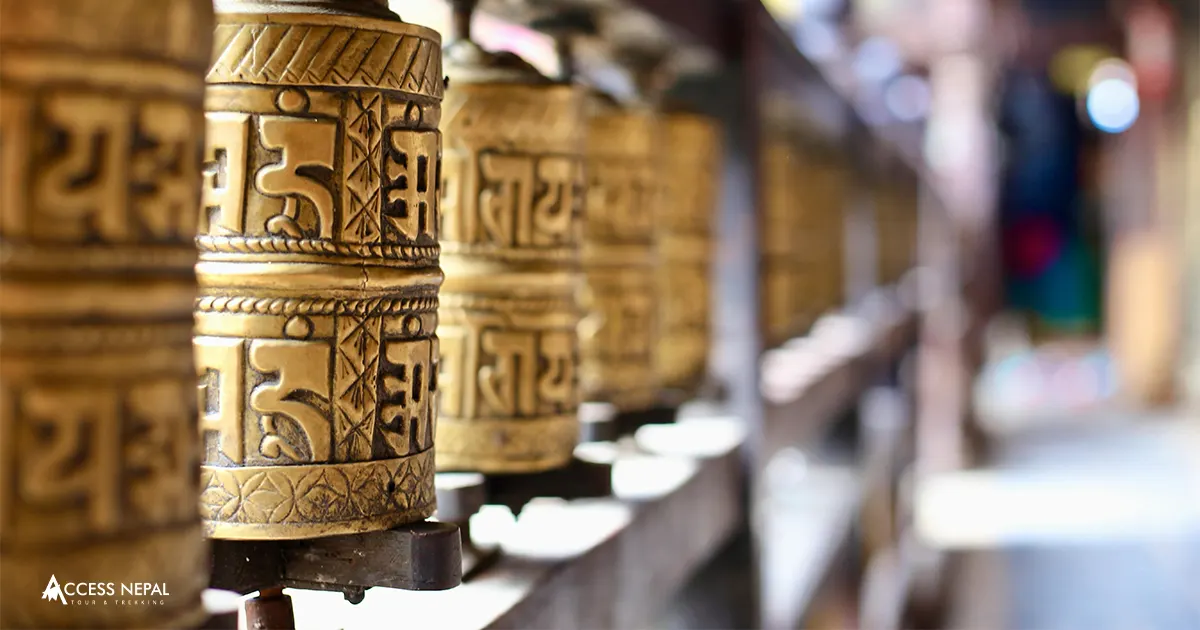
Do a gentle spin of the prayer wheels
Do take permission before photographing:
As in Bhutan, many festivals and programs have historic and cultural importance, so these things are never meant to attract attention on social media. It is very important to ask permission or ask your tour guide before clicking pictures of any religious structures, monks, or any place with spiritual beliefs. You are allowed to take pictures with a few restrictions, and you need special permission to record those events, like sacred dances.
Do Accept the White Scarf:
You will notice in many monasteries and religious places of Bhutan, the monks or elders will offer you a white silk scarf known as a Khata. You must accept it with both hands and bow your head down with a smile as a symbol of respect. The khata is the sign of a warm welcome and blessing according to Bhutanese culture. You must wear it around your neck and fold it carefully before storing it away. Many travelers in Bhutan take a Khata with them as a respectful gift with memories.
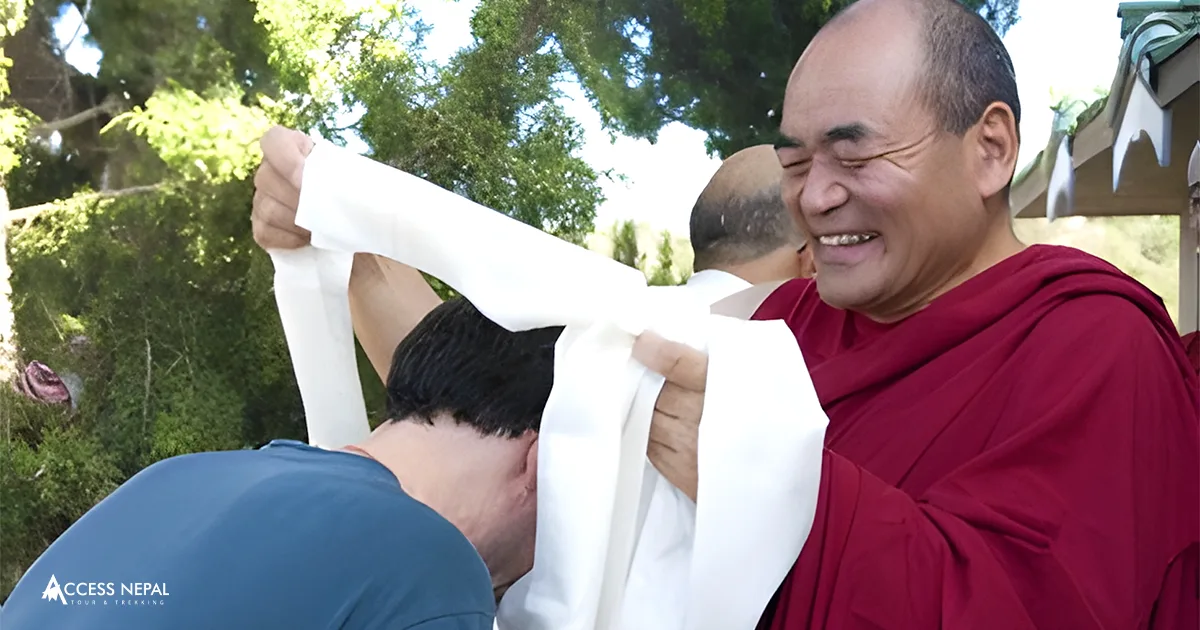
Monks offering khata
Do learn basic Dzongkha:
Dzongkha is known as the national language or the mother tongue of the Bhutanese people. If you want to be close to the culture and know more about it, you must learn a few basic or simple phrases in Dzongkha. This simple gesture shows your respect for their culture and beliefs. Even the simple words can help you to connect to the people of the country and the locals. The people will appreciate your efforts and show more attention towards you, a perfect opportunity to know more about them.
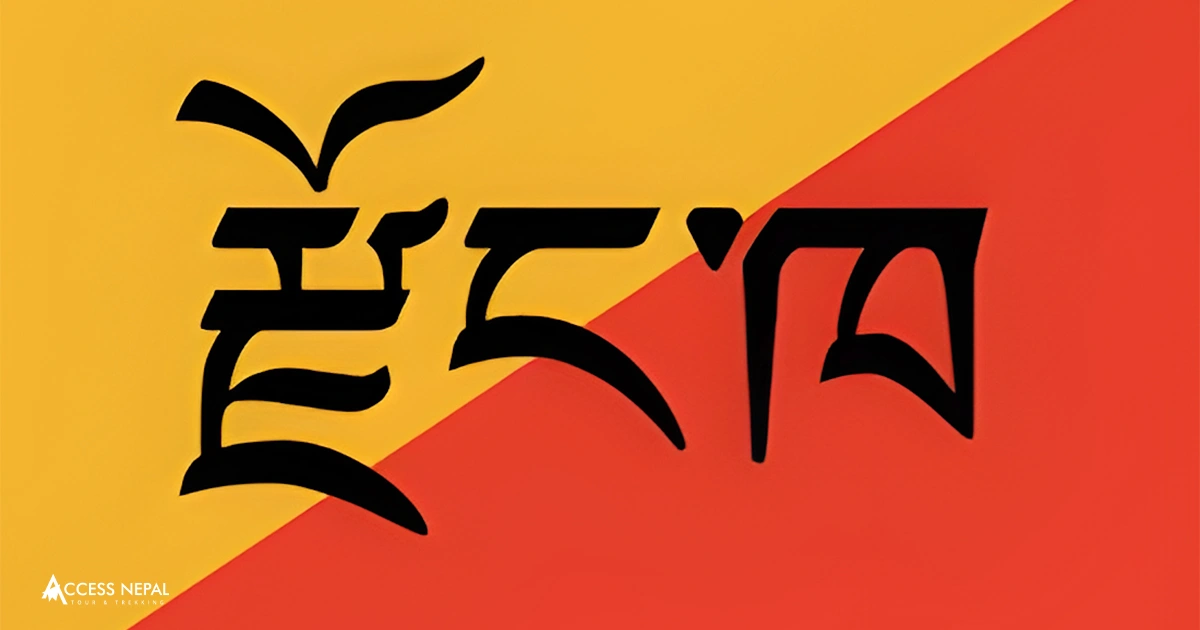
Dzongkha
Do wear their traditional dress:
The gho and the kira are the traditional dress of males and females in Bhutan. The length of the dress is from your shoulders, and it is a long ankle dress that covers your entire body. Many hotels and guesthouses offer the traditional dress upon your arrival. You must accept and bow your head down as a gesture of gratitude. You will take part in many traditional and sacred dance and singing events, and wearing traditional dress can help you to connect with your surrounding local communities.
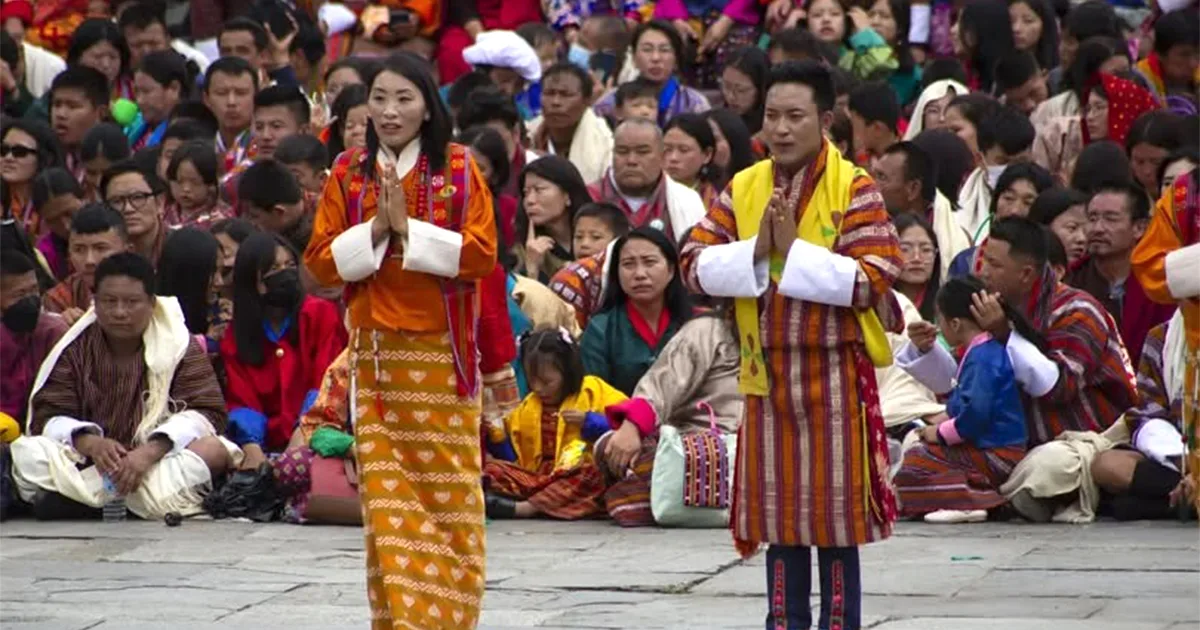
Traditional and national dress for men in Bhutan
Do accept food and drinks:
Sometimes locals will invite you to their house and offer you a cup of butter tea known as “suja” or “ara.” You must not refuse, as it is considered rude and may hurt their feelings. Even if you do not like the taste, you at least take a sip as a gesture of gratitude. And you must put your hand above the cup after finishing your tea, or they may fill it again for you. The travelers in Bhutan must try their national food, Ema Datshi, a fiery chili pepper cooked in local cheese sauce, the main dish of Bhutanese culture.
Do carry all of your trek waste:
Bhutan is smaller than Nepal in land and population. But 72% of the land in Bhutan is covered with forest. The trails of mountains, valleys, and other Himalayan region trekking routes are clean and well-maintained by the locals and the government of Nepal. So the travelers in Bhutan are requested to pack the wrappers, water bottles, tissues, and any other type of trash to bring with them and keep the expedition area clean. Bhutan is not just a place to enjoy, but it is also a place to learn to keep your surroundings clean and healthy.
Do respect silence in monasteries and religious places:
Monasteries are known as the major attraction of Bhutan. Many travelers in Bhutan have to follow certain rules when visiting those religious places. These places are used by monks and gurus for meditation, prayers, and religious studies. So the visitors must keep silent and adjust themselves according to their surroundings without disrespecting their culture and beliefs.
Do attend local festivals:
Tshechu is one of the most popular religious festivals of Bhutan. The streets are filled with masked cham dances, silk thangkas, and sacred music celebrated all over the Bhutan monasteries and dzongs. The Paro and Thimphu Tsechu are the most famous festivals in Asia. Travelers in Bhutan must visit during spring and autumn to take part in and enjoy their unique culture with the local communities.
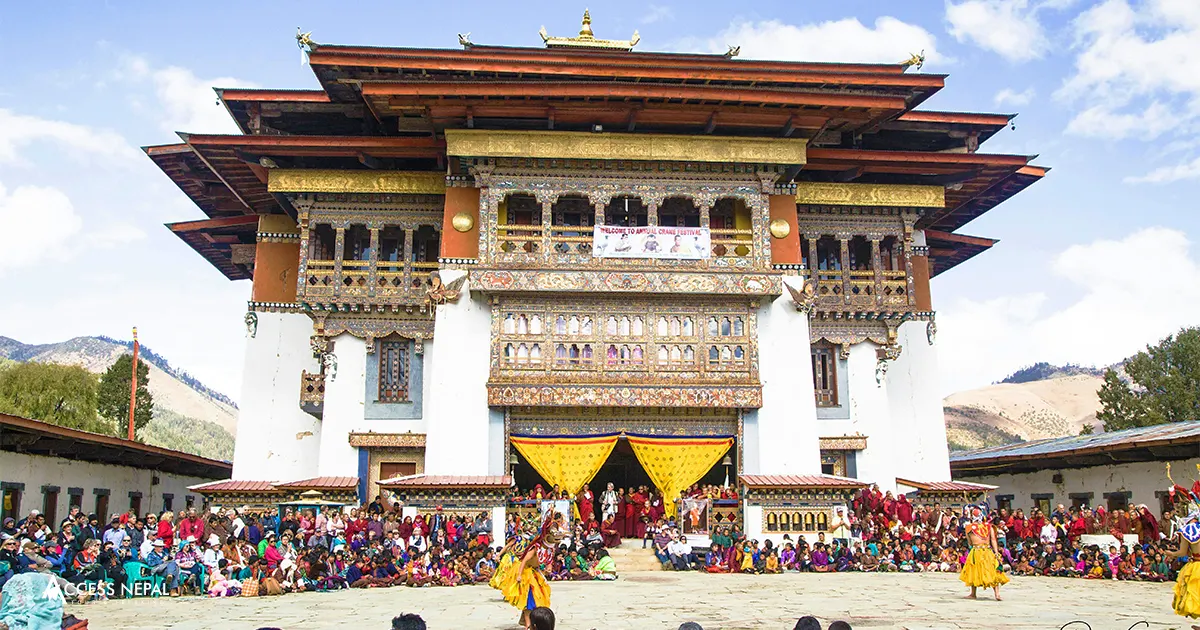
Local Festivals of Bhutan
Do respect the country’s tobacco regulations:
The government of Bhutan has restrictions on tobacco products. Selling any tobacco-related products is considered illegal, but travelers in Bhutan can carry a limited amount, only for their consumption. But always remember that there are restrictions on smoking in public places, so the government has separated areas for consuming tobacco around the country. You must avoid carrying or smoking in religious places. It is considered disrespectful toward their religions and beliefs.
Do use eco-friendly products:
Bhutan values its traditions and culture and follows the rules very seriously. The country never treated tourism as an industry, so they keep restrictions to protect its heritage values and beauty. So the government always requests that travelers in Bhutan use local products over imported plastic products. You must avoid any kind of products that harm nature and damage the water sources. If the country starts to face more nature-harming products, it might close the tourism industry in Bhutan.
Do follow the marked trekking trails:
The high-altitude trekking can be unpredictable and dangerous. Bhutan is known as the home of snow leopards, Bengal tigers, black-necked cranes, and many other rare and dangerous wildlife. So the travelers in Bhutan are always requested to follow the marked trekking trails so they can navigate the route easily and safely. Avoid any kind of disturbance to the wildlife and follow your tour guide’s instructions seriously.
Do get travel insurance:
The government has been making improvements in medical facilities every year, all over the country. But still, if you suffer any serious injuries or diseases, you will have to go to Bangkok or New Delhi by helicopter for your emergency treatment. Trekking and exploring Bhutan is expensive because you have to pay high amounts of stay fees. So it is important to purchase the insurance for travelers in Bhutan if you are planning to explore the high-altitude parts of the country. Always check the policy and the rules before submitting your form.
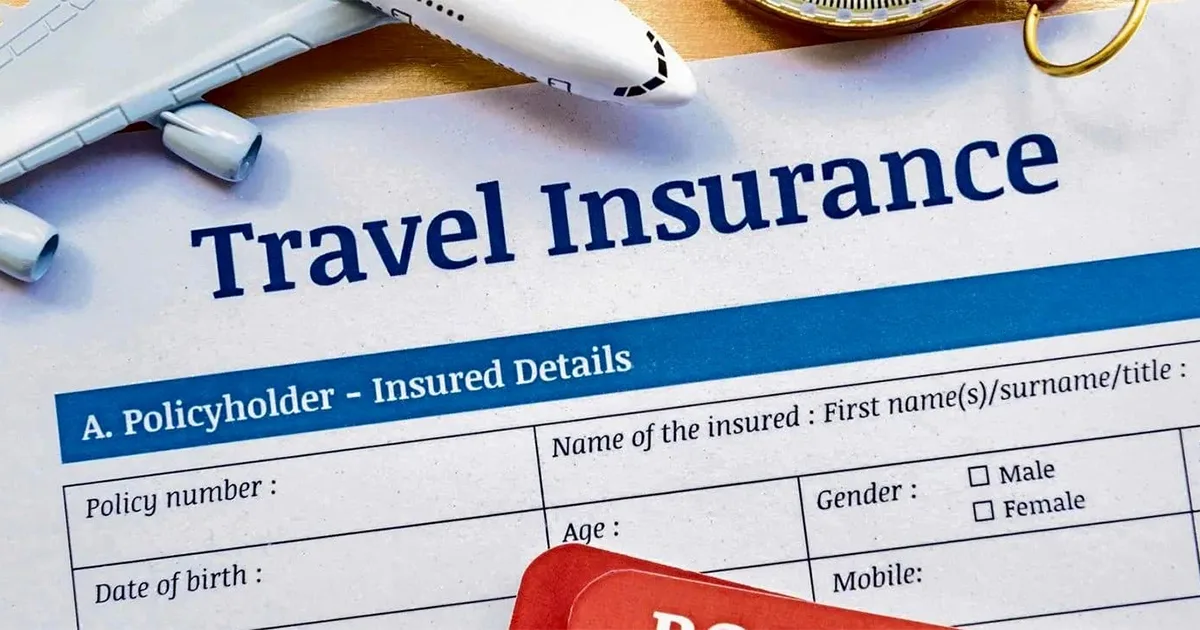
Travel Insurance
Do travel with a licensed guide:
All travelers in Bhutan must hire a licensed and experienced guide according to the Bhutan tourism policy. The language can be the biggest barrier for tourists, so guides will help you to understand the rules and regulations so you can enjoy your journey without harming their cultures and beliefs. They will help you to remove language barriers, and you can get close to the local communities easily.
Don’ts for travelers in Bhutan: What to Avoid
Don’t touch religious objects:
The monks and gurus have devoted their entire lives to worshiping God, and they have been protecting the religious sites. So it is important for travelers in Bhutan to respect, treasure, and treat their beliefs by maintaining their spaces. You are not allowed to touch, remove, change, or dirty any of the items used for worship, like statues, butter lamps, thangkas, and offerings.
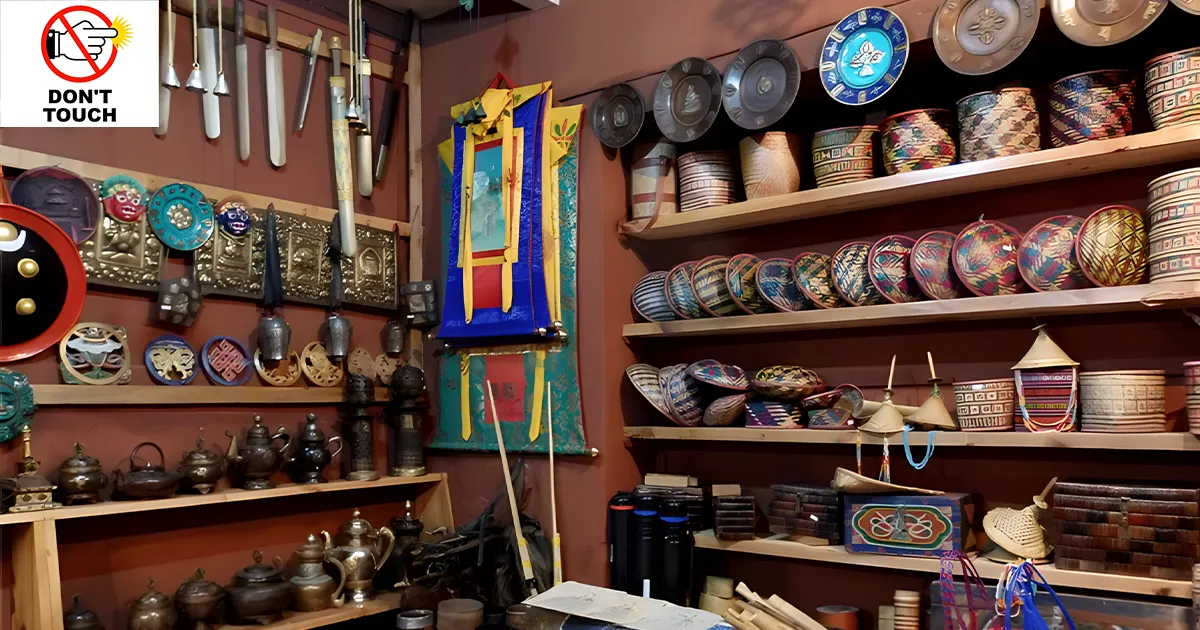
Don’t touch religious objects
Don’t point your feet at altars or people:
In the Buddhist culture all over Asia, legs are considered the unclean part of the body. So pointing your feet at religious places or people is considered the most disrespectful behavior. You must cross your legs, keeping your feet tucked inside while praying in monasteries and temples. Pointing feet at a statue or any religious objects will hurt the local community’s feelings, and you might even get banned for this disrespectful behaviour.
Don’t climb or sit on stupas and walls:
The mani walls and the statues are a respectful structure. According to the Buddhist religion, you must treat them with care and affection, which shows how devoted you are toward the gods. These are monuments that tell you different stories and the sacrifices they have made for this place. Travelers in Bhutan must treat them with respect, as they are not some photo platforms or resting benches.
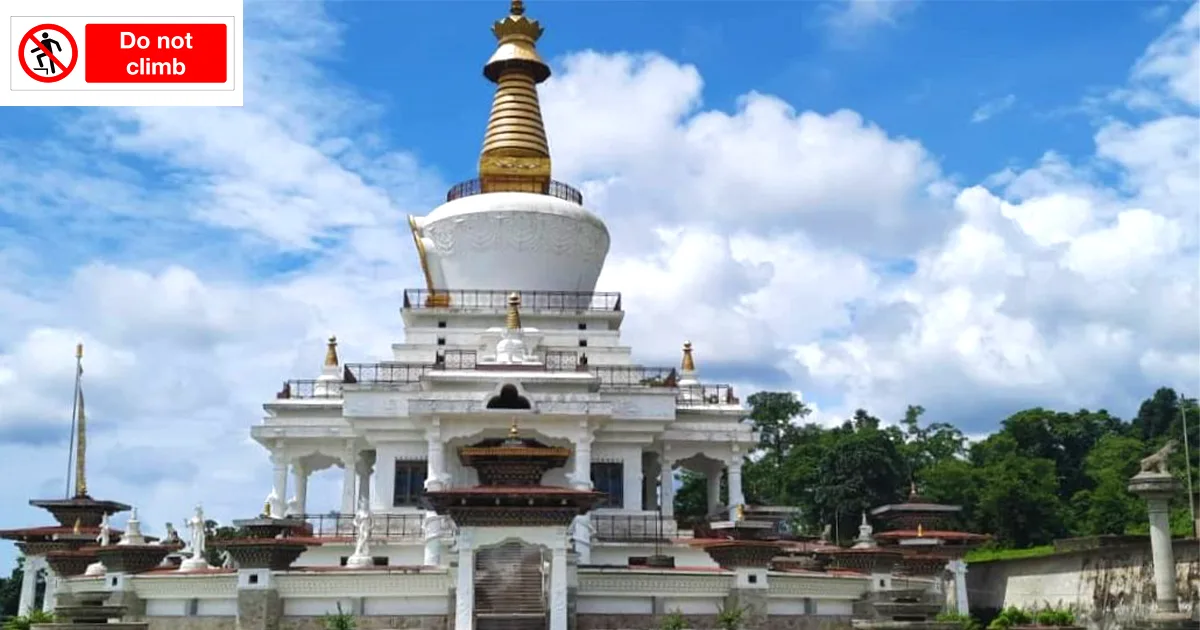
Don’t climb or sit on stupas and walls
Don’t smoke in public places:
Bhutan has restricted all tobacco sales and use for its citizens. But travelers in Bhutan can bring a certain amount of these products with them, but they are not allowed to sell them or smoke in any public or religious places. There are different smoking zones all over the country. The government considers it illegal, and the local communities can get angry at you for violating their rules and regulations.
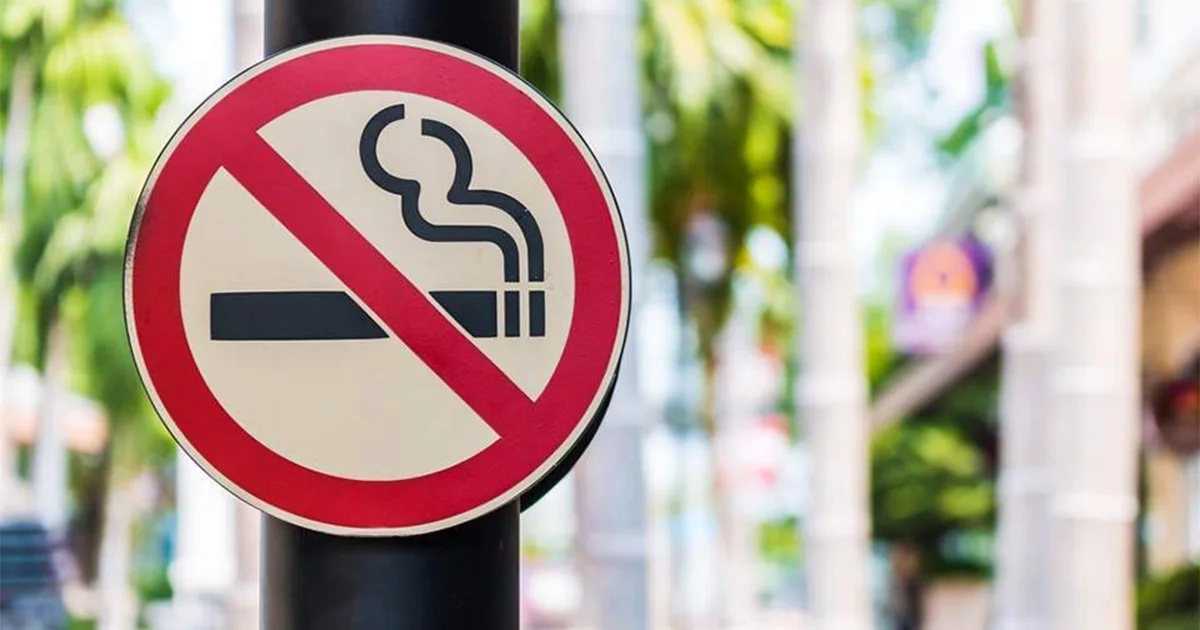
Don’t smoke in public places
Don’t enter religious places or Dzongs under the influence of alcohol:
The religious places hold the spiritual powers. Entering monasteries and temples while being influenced by alcohol is restricted and is considered disrespectful behavior towards their religion. Bhutan produces its own liquor, but drinking in public places is considered inappropriate. Travelers in Bhutan must wait till they are fully sober and can take a bath, removing all the negative energy before entering religious places.
Don’t raise your voice in public places:
The people of Bhutan speak with a calm voice and avoid expressions like yelling or aggressive body language. This kind of behavior will create a bad image and is considered disrespectful towards their culture. Travelers in Bhutan must speak calmly and maintain their composure in public places. You must show polite behavior while speaking with the locals and sellers because raising voices and improper behavior are considered impolite.
Don’t wander into a restricted area:
The many areas of temples, monasteries, and different places require a special permit from the government to explore those areas. Make sure to listen to your travel guide and look at the signs. Travelers in Bhutan must respect the rules and the laws of the country. These restricted places are protecting the history of Bhutan and the religious stories.
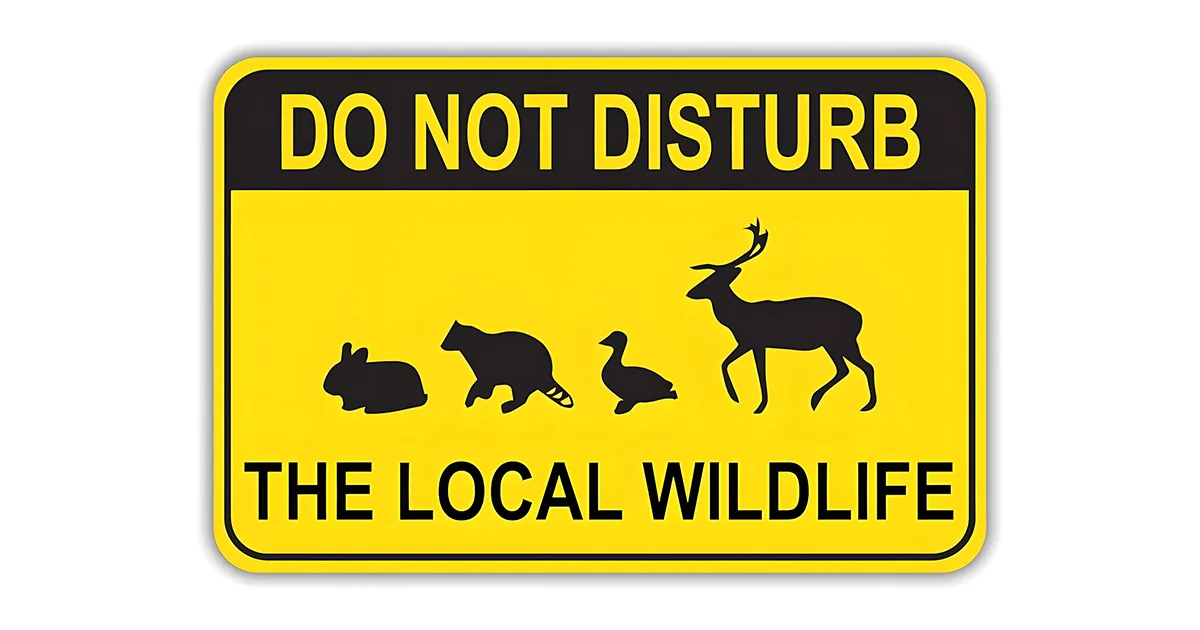
Don’t disturb wildlife:
Bhutan has very strict rules against hunting animals. The land is covered in 72% forest, and many endangered animals are protected, such as snow leopards and insects. Bhutan has more than 770 species of birds and 200 different species of mammals. Fishing is allowed, but catching and killing them is prohibited, and you must get the permit and follow all the instructions properly.
Don’t disturb wildlife
Don’t disrespect prayer flags:
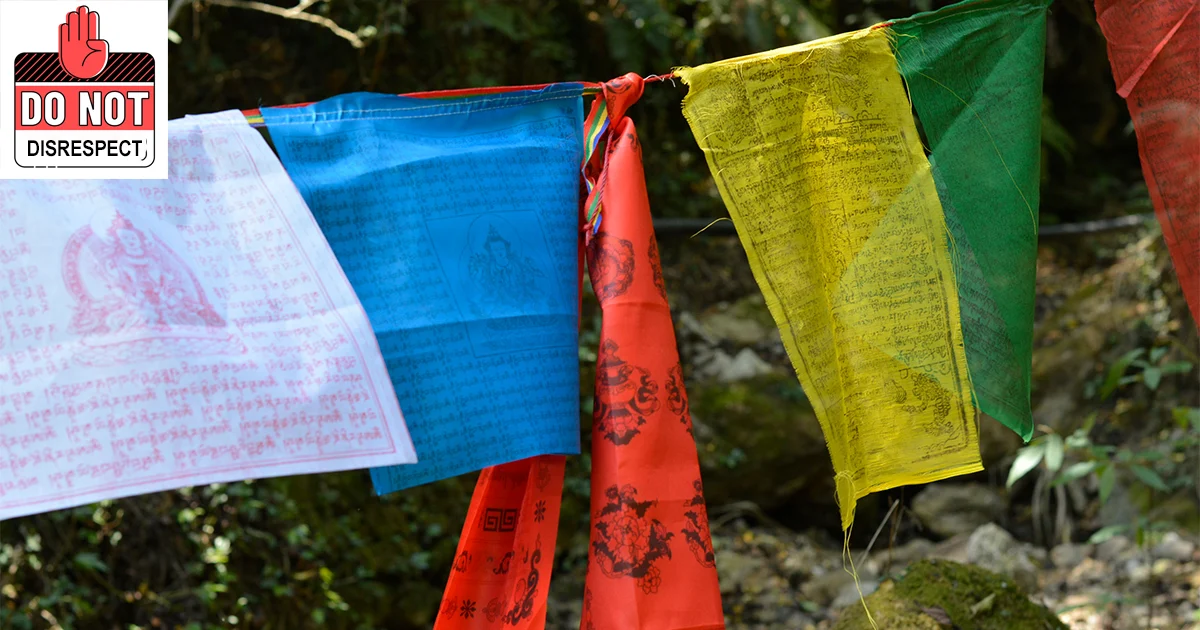
Bhutan is influenced by Buddhist culture and beliefs, so all the places are filled with flags. The mountains, trekking trails. Rooftops, bridges, monasteries, and entire kingdoms are filled with the colorful rectangular pieces of cloth. The flags are five colors that represent elements. The blue represents sky, white for wind, red for fire, green for water, and yellow for earth. The flags spread positive energy, as each flag is carefully engraved with mantras, prayers, and symbols.
Don’t disrespect prayer flags
Don’t use plastic items:
Bhutan is trying to reduce the use of plastic products, as they bring harm to nature. The plastic packaging can cause a burden on the environment, so they are shifting towards more reusable and recyclable stuff. The government has banned many plastic items and replaced them with reusable and environmentally friendly products. Travelers in Bhutan must collect their waste and avoid throwing trash in the forest or other places.
Don’t take photos in prohibited areas:
Bhutan is not totally open for tourism, and there are many restrictions travelers must follow. Many temples, monasteries, religious places, and public places have been prohibited from taking photographs. The different festivals have events like dance and singing, and you are not allowed to take a picture without permission. You must ask for permission before taking pictures of local people or any religious places.
Don’t rush your itinerary:
Bhutan is a culturally rich country, and traveling cost is expensive compared to other places in the world. You must spend 7 to 10 days exploring the different places and towns. The autumn and spring are known as the best seasons, as the most popular festival, Paro and Thimphu Tsechu, is celebrated during this time of year. So don’t rush your itinerary and make a perfect plan before starting your Bhutan journey.
Don’t wear revealing clothes:
Bhutan is a country influenced by Buddhist culture, and the place is filled with different religious sites like temples and monasteries. You are not allowed to wear revealing clothes while visiting those religious places, as it is considered disrespectful towards their culture and beliefs. At many festivals, like Paro and Thimphu Tsechu, streets are filled with traditional dress, and travelers in Bhutan must wear a dress covering their shoulders and knees, or the country’s traditional dress, Kira and Ghos.
Bhutan offers the perfect adventure filled with religious, cultural, and spiritual journeys. The most popular and beginner-friendly trekking destinations, like Druk Path, are where you will start your journey from Paro and reach Thimphu at the end of your journey. Travelers in Bhutan can enjoy the majestic looks of the Himalayan region, exploring the higher parts of the country while enjoying their food, festivals, and many other places filled with spiritual power.
The best time to visit Bhutan, known as the land of the thunder dragon, is during autumn and spring. Many important festivals are celebrated during this time, and you will be able to enjoy the true beauty of your journey. Traveling to Bhutan or even Nepal can be difficult if you are not guided properly. Access Nepal will help you to deal with all of your logistical things like permits, accommodations, transport, and most importantly, an experienced travel guide, all of them at the most budget-friendly cost. We will make sure your journey is filled with unforgettable memories and adventure without compromising your traveling comfort.
Awards and Achievements
Access Nepal Tour and Treks has been recognized with TripAdvisor’s prestigious Travelers’ Choice Award for multiple consecutive years, reflecting our unwavering commitment to quality and clients’ satisfaction.




Leave Your Comment